


Your partner elbows you awake again. Apparently, you sounded like a freight train all night. After a few weeks of hearing this, a quiet worry starts to settle in. Is it just snoring, or is something more serious happening?
Plenty of people who snore are perfectly healthy. Others are living with a sleep disorder they don’t even know they have.
The line between harmless noise and a real medical issue isn’t always clear, and that’s exactly why this question keeps so many people up at night.
Vivid or disturbing dreams tied to overnight oxygen dips are more connected to breathing disruptions than most people realize, and for many, they’re the first unexplained sign something is off.
So does snoring mean sleep apnea? Not always, but it can be a warning sign worth paying attention to. Snoring and sleep apnea exist on a spectrum called sleep-disordered breathing, and understanding where you fall on that spectrum is what really matters.
What Snoring is and Why it Happens
Snoring happens when air can’t move freely through your nose and throat while you sleep. As you doze off, the muscles in your mouth, tongue, and throat relax, which narrows your airway.
When air squeezes through that tighter space, the soft tissue at the back of your throat vibrates. That vibration is the sound you hear.
How loud or rough the snoring sounds depends on how narrow the airway gets and how hard you’re breathing.
As per the American Medical Association, snoring comes from everyday causes that aren’t serious on their own:
- Sleeping on your back, which lets the tongue drop toward the throat
- Drinking alcohol before bed, since it relaxes throat muscles even more
- A stuffy nose from colds, allergies, or dry air
- Carrying extra weight around the neck
- Smoking, which irritates and swells the airway
Your body’s natural shape matters too. People with narrow airways, large tonsils, a long soft palate, or a structural issue with their nasal passage tend to snore more often, and in some cases, anatomy alone is enough to narrow the airway and trigger persistent snoring.
A few other triggers include late dinners that lead to acid reflux, sleeping in very dry air, being overtired, and some sleep medications or muscle relaxants.
Snoring can produce other effects beyond the noise itself. People who snore regularly may also toss and turn, wake with a dry or sore throat, feel tired during the day, experience morning headaches, feel moody or irritable, or have difficulty focusing. When these symptoms accompany the snoring, it’s worth paying closer attention.
What Sleep Apnea is (Quick Overview)
Sleep apnea is a sleep disorder where breathing repeatedly stops and starts during the night. The most common type is obstructive sleep apnea (OSA), which happens when throat muscles relax too much and block the airway.
The brain senses the drop in oxygen and briefly wakes the body up to restart breathing. This can happen dozens or even hundreds of times a night without the person remembering it.
The main difference from regular snoring is that breathing actually stops, not just gets noisy. Someone with sleep apnea might snore loudly, go silent for several seconds, then suddenly gasp or choke as their body kicks back into breathing.
These pauses can last 10 seconds or longer and lower the body’s oxygen levels. Over time, this strain on the heart affects daytime energy, focus, and long-term health.
Snoring vs Sleep Apnea at a Glance
The gap between noisy breathing and complete cessation of breathing is significant. It’s also where most of the confusion about snoring and apnea begins.
| Feature | Snoring | Sleep Apnea |
|---|---|---|
| Sound | Steady, ongoing noise | Loud snoring broken by silent gaps |
| Breathing | Continuous | Pauses lasting 10+ seconds |
| Wake-ups | Rare | Brief wake-ups, often unnoticed |
| Oxygen levels | Stay normal | Drop during pauses |
| Daytime effects | Usually none | Tiredness, headaches, brain fog |
| Long-term risks | Mostly low | Heart strain, high blood pressure |
Telling the two apart isn’t always easy from the outside. That’s part of the reason so many sleep apnea cases go undiagnosed for years.
Signs That Snoring Might Be Sleep Apnea
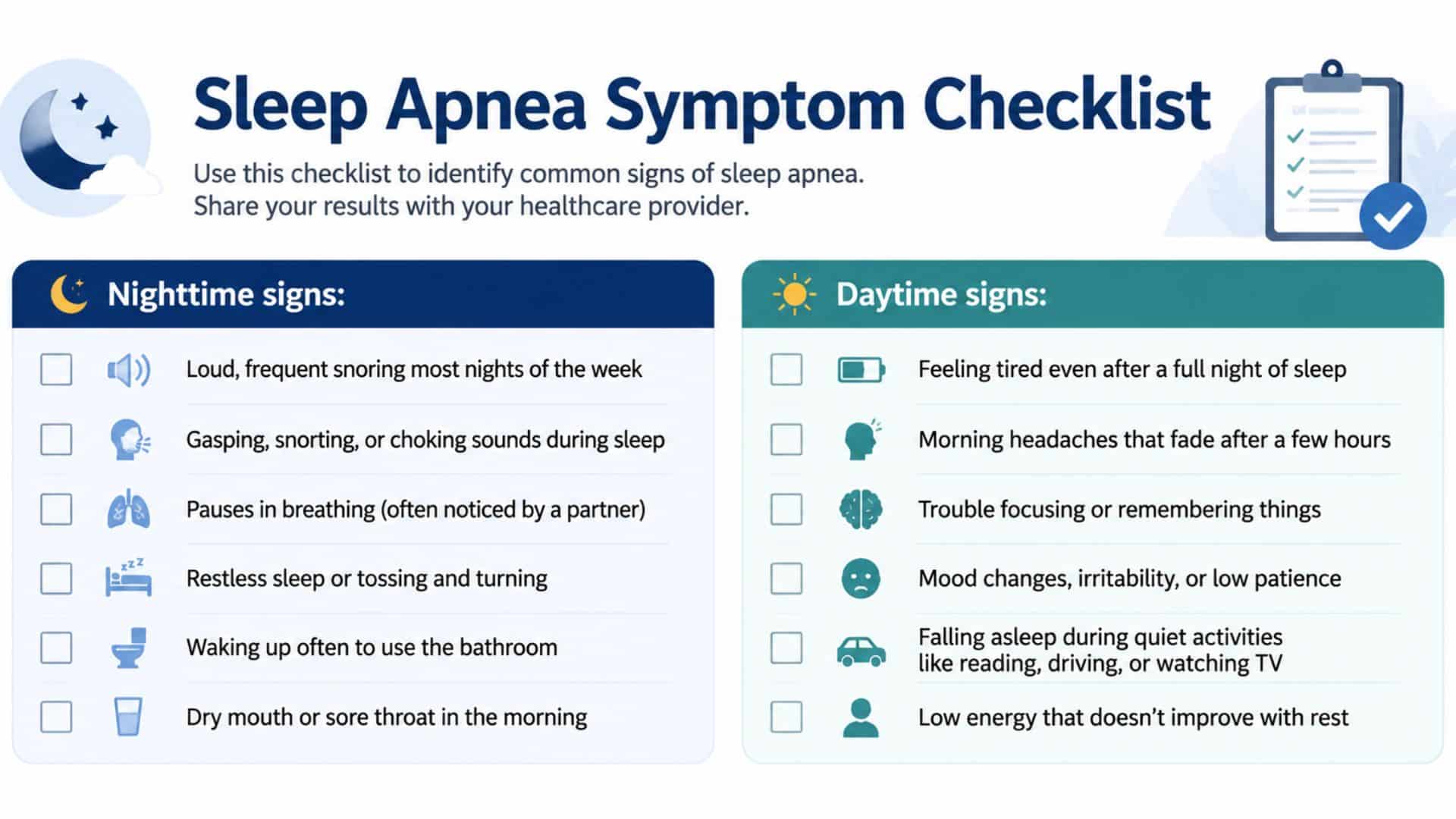
Snoring on its own is rarely the only clue. When sleep apnea is in the picture, it often presents with other symptoms, both at night and during the day.
The more of these signs that line up, the higher the chance that something more is going on.
According the Harvard Health Publishing, some symptoms only appear while you’re asleep, which makes a partner’s input really helpful. Others sneak into your daytime life in ways that are easy to miss until they pile up.
If you can check off a few of these, especially gasping, breathing pauses, or daytime sleepiness that won’t go away, a sleep evaluation is a smart next step.
None of these signs confirms apnea on its own. But when several appear together, it’s a strong reason to get checked out.
Sleep Apnea Symptoms in Women
Women with sleep apnea often don’t present with the classic loud snoring pattern. Instead, they are more likely to report insomnia, fatigue, headaches, mood changes, or depression, symptoms that are often attributed to stress or hormonal changes rather than a breathing disorder.
This is one reason women are significantly underdiagnosed; quiet breathing disruptions with no obvious snoring are easy to miss and rarely flagged without a partner’s input.
If you are a woman experiencing chronic unexplained fatigue or disrupted sleep, mentioning it to your doctor is worthwhile even if you don’t think of yourself as a snorer.
Does Snoring Always Mean Sleep Apnea?
No, snoring doesn’t always mean sleep apnea. Plenty of people snore now and then without having any sleep disorder at all.
A noisy night after a glass of wine, a head cold, or sleeping on your back doesn’t point to anything serious on its own.
Snoring is a symptom, not a diagnosis. It can have many causes, and most of them are harmless. People often wonder whether snoring always indicates sleep apnea, but the truth lies closer to the opposite. Most snorers do not live with apnea.
Snoring by the Numbers:
|
The trick is figuring out what kind of snorer you are. Light, occasional snoring with no other symptoms usually isn’t cause for concern.
But if the snoring is loud, frequent, and paired with breathing pauses or daytime fatigue, sleep apnea becomes more likely.
Does Everyone Who Snores Have Sleep Apnea?
The short answer is no. Not everyone who snores has sleep apnea, even though many people assume the two go hand in hand. Snoring is far more common than apnea, and most snorers are healthy sleepers with nothing serious going on.
The myth-buster box below clears up some of the most common mix-ups:
| Myth | Fact |
|---|---|
| Anyone who snores has sleep apnea. | Only some do. Most people snore for harmless reasons. |
| Loud snoring always means apnea. | Loudness matters less than the pattern. Loud, steady snoring is different from snoring broken by silent pauses. |
| Quiet snorers are always safe. | Some people with mild apnea snore softly. Other symptoms still matter. |
Snoring by itself isn’t a red flag. The bigger concern shows up when it’s accompanied by other signs that breathing isn’t smooth at night.
How is Sleep Apnea Diagnosed?
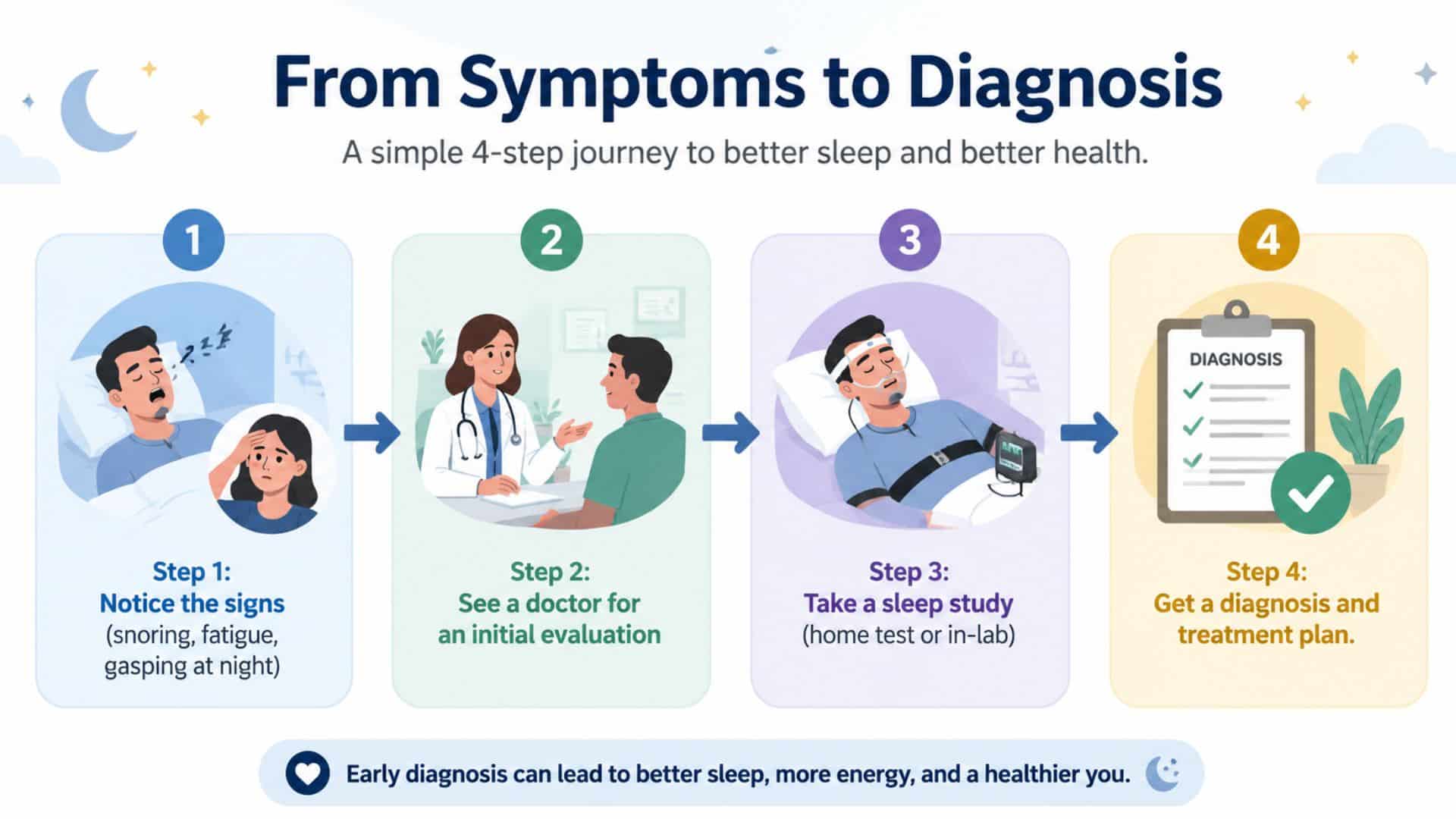
Diagnosing sleep apnea usually starts with a doctor’s visit. They’ll ask about sleep habits, snoring, daytime energy, and anything a partner has noticed at night. Weight, family history, and lifestyle also come up.
If apnea is suspected, the next step is a sleep study.
- Home sleep apnea test: A small device worn overnight monitors breathing, oxygen levels, and heart rate. These are widely available and easy to complete in your own bed. A home sleep apnea test is often the first-line option for adults with straightforward symptoms.
- In-lab polysomnography: Performed at a sleep center, where a technician monitors brain activity, breathing, and oxygen throughout the night. More comprehensive and typically recommended when home testing is inconclusive.
Results are measured using the Apnea-Hypopnea Index (AHI) — the number of breathing disruptions per hour. An AHI under 5 is normal; 5–14 is mild OSA; 15–29 is moderate; 30 or above is severe.
Risk Factors That Link Snoring to Sleep Apnea
Snoring on its own doesn’t always lead to sleep apnea. But certain factors raise the chances that snoring is part of something bigger. Knowing where you stand helps decide whether to bring it up with a doctor.
- Age Risk goes up with age, especially after 40. Throat muscles lose tone over time, which makes the airway more likely to narrow during sleep.
- Extra weight — Fat around the neck can press on the airway, increasing the risk of breathing problems at night. The relationship also runs the other way; untreated apnea disrupts hormones that regulate hunger and metabolism, making weight harder to manage over time.
- Anatomy is designed to narrow the airway. Larger tonsils, a longer soft palate, a deviated septum, a recessed jaw, or a thicker tongue can all play a role.
- Alcohol drinking close to bedtime relaxes throat muscles. The airway becomes more likely to collapse, which can turn light snoring into something more serious.
- Smoking irritates and swells the airways, raising the risk of apnea. Smokers face a much higher chance of obstructive sleep apnea than non-smokers.
Other factors include family history, being male, menopause for women, and chronic nasal congestion.
Conclusion
Snoring is one of the most common things that happens during sleep, and most of the time, it doesn’t point to anything serious.
Plenty of healthy people snore, especially after a long day, a few drinks, or a night spent on their back.
Sleep apnea is a different story. When snoring is accompanied by gasping, breathing pauses, daytime fatigue, or morning headaches, it may be more than just noise.
The more of these signs stack up, the more it makes sense to stop guessing and take a closer look at what’s going on.
If your snoring is loud, frequent, or accompanied by any symptoms from the symptom checklist, don’t brush it off. Talk to your doctor or schedule a sleep study.
A short evaluation often gives clear answers and leads to nights that actually feel restful.
Frequently Asked Questions
Can You Have Sleep Apnea without Snoring?
Yes. Some people, especially those with central sleep apnea or thinner builds, stop breathing during sleep without making a noise. Other symptoms still persist, such as daytime fatigue.
What Happens if Sleep Apnea is Left Untreated?
Untreated sleep apnea raises the risk of high blood pressure, heart disease, stroke, type 2 diabetes, and accidents from drowsiness. Long-term effects build up gradually.
Can Children Have Sleep Apnea?
Yes. Children can develop sleep apnea, often from enlarged tonsils or adenoids. Signs include loud snoring, mouth breathing, restless sleep, bedwetting, and daytime behavior issues.
What’s the Difference Between Obstructive and Central Sleep Apnea?
Obstructive sleep apnea happens when the airway is blocked during sleep. Central sleep apnea occurs when the brain fails to send proper signals controlling the breathing muscles.







One Response