


Choosing the right pillow can make a huge difference in your sleep quality and comfort. Latex and memory foam are two of the most popular pillow materials, each offering unique benefits for different types of sleepers.
Both materials have their loyal fans, but they work in very different ways. Latex provides bouncy, responsive support that keeps you sleeping “on” the pillow.
Memory foam offers slow, contouring support that cradles your head and neck.
Understanding these differences helps you pick the pillow that matches your sleep style, health needs, and personal preferences.
This guide will compare both materials across all the factors that matter most for a good night’s sleep.
Material Overview: Latex vs Memory Foam
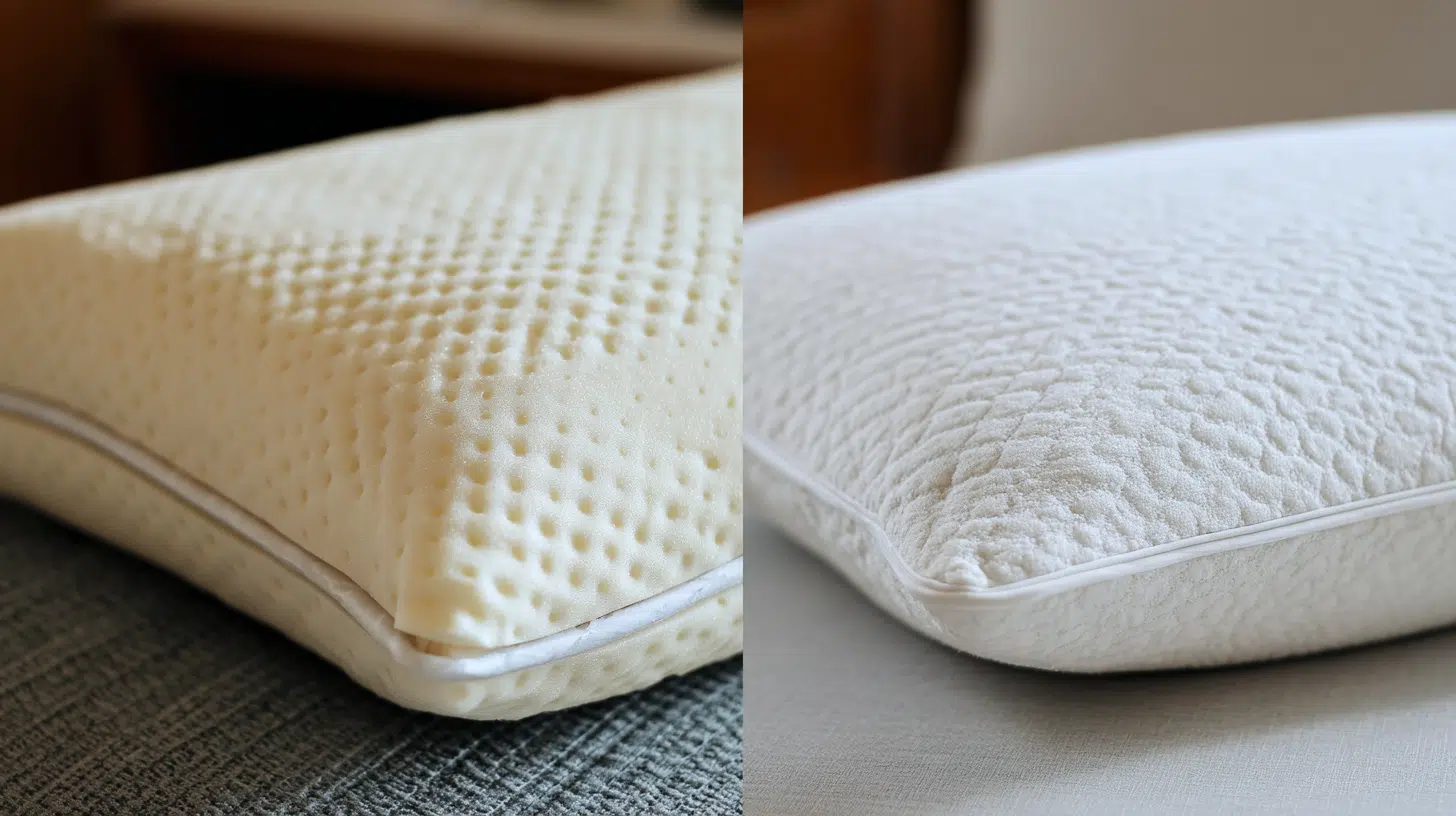
Latex pillows are made from rubber tree sap or synthetic rubber compounds. The material has a naturally bouncy, responsive feel that springs back quickly when pressure is applied.
Latex has an open-cell structure that allows air to flow freely through the material.
Memory foam is a synthetic material also called viscoelastic foam. It was originally developed by NASA and responds slowly to pressure and heat.
The foam gradually molds to match the shape of your head and neck.
Both materials can be made in different densities and firmness levels. However, their basic properties remain the same regardless of how firm or soft they are.
Key Differences Between Latex and Memory Foam
Both materials offer unique benefits, but they work in completely different ways. Understanding these core differences helps you choose the pillow that matches your specific sleep needs and preferences.
1. Comfort & Support
Latex provides buoyant, responsive support that pushes back against your head and neck. The material doesn’t compress much, so you sleep “on” the pillow rather than sinking into it.
Memory foam offers deep contouring support by slowly molding to your head and neck shape. This creates a “cradling” or “hugging” sensation that many people find very comfortable.
Note: Latex provides consistent firmness while memory foam adapts to your body shape and temperature.
2. Durability & Maintenance
Latex pillows typically last much longer than memory foam options. High-quality latex can maintain its shape and support for 5-10 years or even longer.
The material naturally resists sagging and doesn’t break down as quickly as other pillow materials.
Memory foam pillows are durable but tend to soften and lose their shape faster than latex. Most quality memory foam pillows last 2-5 years before needing replacement.
Heavy use can cause the foam to compress permanently over time.
Note: Latex’s natural resistance to dust mites and bacteria makes it more hygienic with less upkeep required.
3. Cooling & Breathability
Latex offers superior airflow thanks to its open-cell structure and natural properties. Air moves freely through the material, helping regulate temperature throughout the night.
Traditional memory foam tends to retain body heat, which can make some people feel warm or even hot during sleep. The dense structure traps heat and restricts airflow through the material.
Newer memory foam pillows often include gel infusions or ventilated designs to address heat retention.
Note: Newer memory foam includes gel infusions and ventilation, but latex remains naturally cooler overall.
4. Hypoallergenic Properties
Latex is naturally hypoallergenic and antimicrobial. The material naturally resists dust mites, mold, and bacteria without needing chemical treatments. However, some people are allergic to latex itself, so always check for latex sensitivity before purchasing.
Memory foam’s dense structure blocks dust mites and other allergens from penetrating the pillow. This provides good protection for allergy sufferers, though it’s not naturally antimicrobial like latex.
The hypoallergenic qualities can vary depending on the cover fabric and any chemical additives used.
Note: Latex offers natural protection while memory foam provides physical barrier protection – both effective but through different mechanisms.
Price, Sustainability, & Other Features
Cost and environmental impact are important considerations for many pillow shoppers. These factors can help you decide which material fits your budget and values.
| Feature | Latex Pillow | Memory Foam Pillow |
|---|---|---|
| Price Range | $80-$200+ | $25-$100+ |
| Lifespan | 5-10+ years | 2-5 years |
| Eco-Friendliness | High (if natural latex) | Low (synthetic material) |
| Heat Retention | Cool sleeping | Warm sleeping |
| Response Time | Immediate bounce | Slow molding |
| Weight | Heavier | Lighter |
Note: Natural latex pillows cost more upfront but often provide better long-term value due to their extended lifespan and durability.
Pros and Cons Comparison
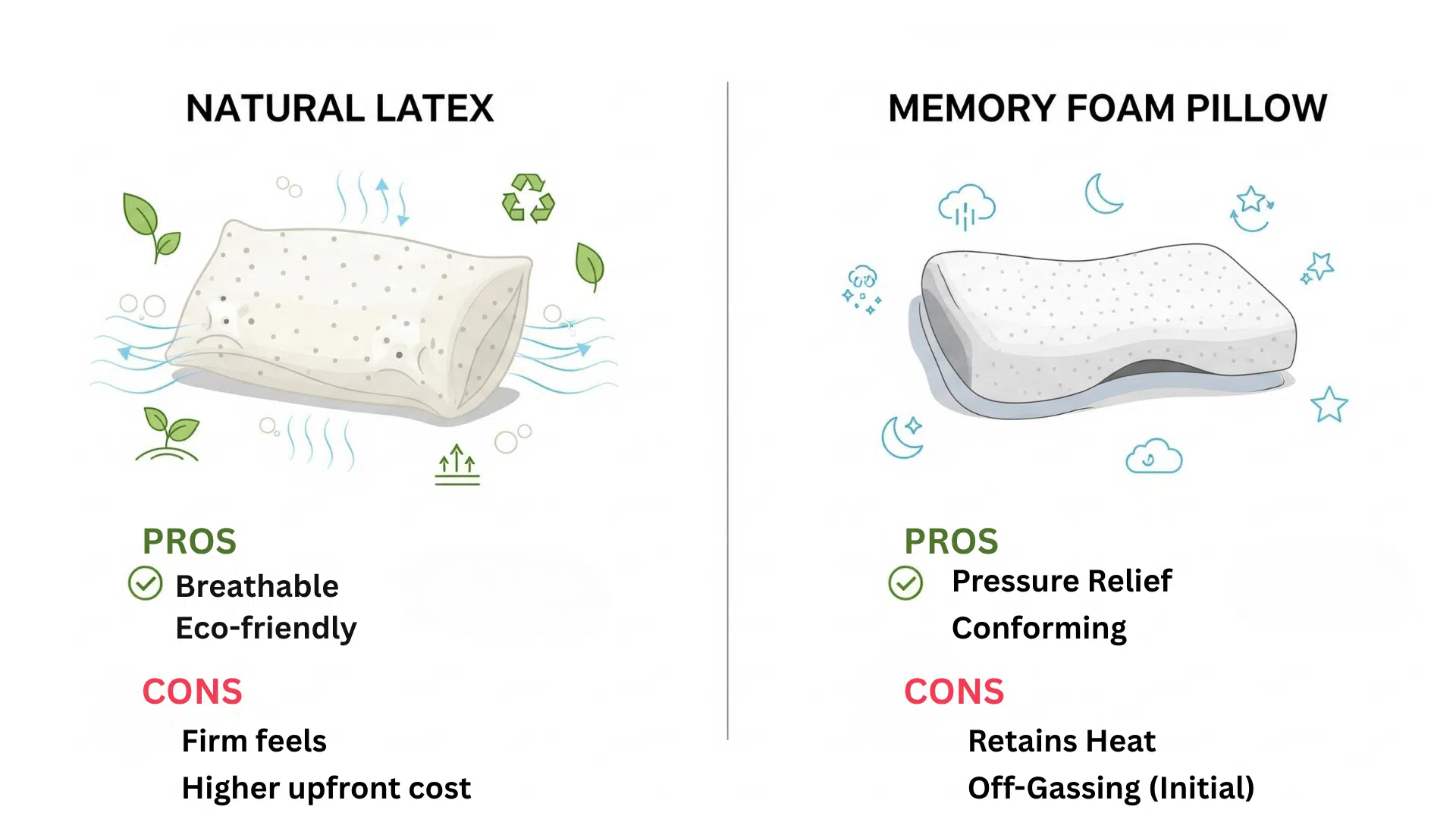
Understanding the advantages and disadvantages of each material helps you weigh what matters most for your sleep needs.
These side-by-side comparisons highlight the key trade-offs between latex and memory foam pillows.
1. Pros Comparison
Here are the main advantages each pillow type offers to help you see their strongest benefits.
| Latex Pillow Pros | Memory Foam Pillow Pros |
|---|---|
| Superior cooling and breathability | Excellent pressure point relief |
| Long-lasting durability (5-10+ years) | Deep contouring for neck support |
| Naturally hypoallergenic and antimicrobial | Wide range of firmness options |
| Responsive, bouncy support | Budget-friendly pricing |
| Eco-friendly (if natural latex) | Great for chronic pain sufferers |
| Low maintenance requirements | Slow, molding response |
Cons Comparison
Understanding the potential drawbacks helps you decide which limitations you can live with.
| Latex Pillow Cons | Memory Foam Pillow Cons |
|---|---|
| Higher upfront cost | Retains heat, can sleep warm |
| Heavier than other pillows | Shorter lifespan (2-5 years) |
| Strong rubber smell initially | Chemical odor when new |
| Not suitable for latex-allergic people | Less environmentally friendly |
| Limited contouring compared to memory foam | Can feel too soft over time |
| Firm feels may not suit all sleepers | Slow response frustrates some users |
Who Should Choose What?
Your sleep habits, health needs, and personal preferences should guide your pillow choice. Here’s how to match your specific situation with the right pillow material.
Choose Latex if:
- You sleep hot and need better temperature regulation during the night
- You change positions frequently and want responsive support that adjusts quickly
- You prefer firm support that maintains spine alignment without deep sinking
- You have allergies and want naturally antimicrobial, hypoallergenic materials
- You want long-term value and don’t mind paying more for a pillow that lasts years
Choose Memory Foam If:
- You have neck or back pain and need pressure point relief from contouring support
- You sleep in one position most of the night, and like a “hugging” sensation
- You’re on a budget and want quality support without a high upfront investment
- You prefer softer support that molds closely to your head and neck shape
- You don’t sleep hot, and temperature isn’t a major concern for your comfort
Conclusion
Both latex and memory foam pillows offer unique benefits that can improve your sleep quality.
The best choice depends on your personal sleep preferences, temperature needs, and budget considerations. Neither material is universally better than the other.
Consider your sleep style, any pain issues, and how much you’re willing to invest in a pillow. Quality matters with both materials, so choose reputable brands that offer good warranties or trial periods.
Take time to think about what bothers you most about your current pillow.
Have you tried latex or memory foam pillows before, or are you still deciding between them?
Share your experiences and questions in the comments below to help others choose the perfect pillow for better sleep.
Frequently Asked Questions
Which Type Lasts Longer?
Latex pillows typically last much longer than memory foam options. Quality latex can maintain support for 5-10 years, while memory foam usually needs replacement after 2-5 years.
Do Latex and Memory Foam Pillows Need Special Care?
Latex pillows need minimal care beyond regular pillowcase washing and occasional fluffing. Memory foam may need periodic airing out to prevent odor buildup, but shouldn’t be machine-washed.
Can I Try Before Buying?
Many pillow companies offer sleep trials that let you test the pillow at home for 30-90 nights. This is especially helpful since comfort is very personal and hard to judge from a quick store test.