





Late nights and too little sleep often come with a familiar morning consequence: a pounding head. The connection is not random. Can lack of sleep cause headaches?
Yes, lack of sleep can cause headaches, and the science supporting this is well-established.
Studies link sleep deprivation to several types of headaches, and once the reasons are clear, the pattern starts to make complete sense. This is not medical advice.
Results vary by person. A doctor should be consulted if headaches are frequent or severe.
Can Lack of Sleep Cause Headaches?
Lack of sleep can cause headaches, and the connection is backed by clinical research. When the body does not get enough sleep, the brain struggles to regulate pain.
Key neurotransmitters like serotonin and dopamine drop, lowering the pain threshold and making the head more sensitive to discomfort. At the same time, cortisol levels rise, causing inflammation and widening blood vessels in the brain.
The result is often a dull pressure or throbbing pain that appears on waking. Research links sleep deprivation to at least four types of headaches, making poor sleep one of the most common and overlooked headache triggers.
How the Lack of Sleep Triggers Headaches?

The brain performs several important functions during sleep, such as clearing waste, resetting chemical levels, and adjusting pain sensitivity.
When sleep is cut short, multiple processes can break down, leading to increased pain sensitivity and headache.
1. Hypothalamus
This small region regulates both sleep and pain. It contains neurons that control the intensity of pain and houses the suprachiasmatic nucleus (SCN), which syncs the body’s internal clock to natural light and darkness.
When sleep is disrupted, the SCN is thrown out of balance, leading to an irregular sleep-wake cycle and heightened pain sensitivity.
2. Pineal Gland
This sleep-related structure produces melatonin, the hormone that signals the body to sleep.
Studies show that low melatonin levels are linked to migraines and cluster headaches, and may increase the likelihood of waking up with a headache.
3. Neurotransmitters and Cortisol
Serotonin and dopamine help regulate sleep, mood, and pain perception. Poor sleep can disrupt these neurotransmitters, lowering the body’s pain threshold and increasing headache sensitivity.
Sleep deprivation also raises cortisol, the body’s stress hormone. Elevated cortisol is linked to inflammation and altered pain signaling, both of which may contribute to headaches or make existing headaches feel worse.
What Research Says About Sleep And HeadachesResearch shows a strong link between poor sleep and headache disorders. One 2011 study in The Journal of Pain found that REM sleep deprivation may increase proteins involved in trigeminal nerve sensitization, which can play a role in headache and migraine pain. Still, the relationship is not limited to REM sleep alone. A later review found that overall sleep loss appears to be a major driver of increased pain sensitivity, while REM loss by itself may not fully explain the effect. |
The Sleep–Headache Cycle Explained
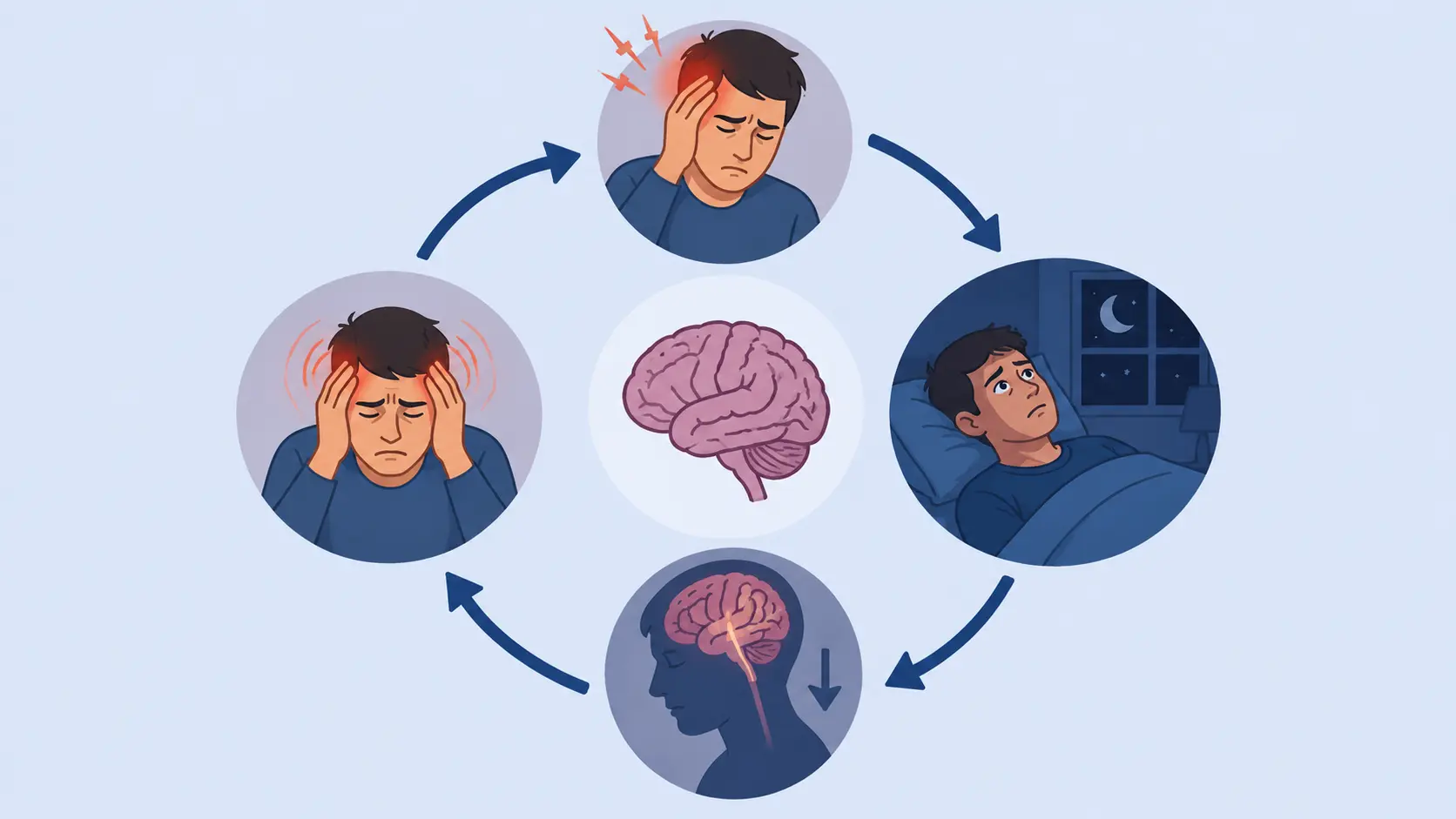
The connection between sleep loss and headaches forms a cycle. While sleep loss causes headaches, the pain from headaches makes it harder to sleep, which in turn leads to more headaches the following day.
This ongoing pattern is one of the main reasons why chronic headaches are difficult to break.
How the Brain Contributes to the Cycle:
- Headache Triggers Stress: When a headache strikes, the body’s stress response increases cortisol levels, keeping the nervous system on high alert.
- Difficulty Sleeping: High cortisol makes it harder to fall asleep and reduces the amount of deep, restorative sleep.
- Lower Pain Threshold: Less deep sleep weakens the body’s pain tolerance, increasing sensitivity and triggering the next headache before the previous one has fully resolved.
Research published by the National Institutes of Health (PMC) confirms that sleep disorders and headache disorders share common brain pathways.
Treating one condition without addressing the other often leads to limited results. The most effective way to break the cycle is to manage both sleep quality and headache triggers simultaneously.
Types Of Headaches Linked With Poor Sleep
Not all sleep-related headaches feel the same. The Sleep Foundation and the American Migraine Foundation both link sleep deprivation to four distinct headache types.
| Type of Headache | Description | Associated Factors | Typical Timing |
|---|---|---|---|
| Tension Headaches | Pressure around the forehead and head, caused by tight neck and shoulder muscles. | Muscle tightness, low serotonin, and pain sensitivity. | Appears on waking, eases with rest or a mild pain reliever. |
| Migraine Headaches | Severe pain on one side; may include nausea, sensitivity, and visual changes. | More common with sleep disorders, disrupted sleep may worsen migraines. | Frequent with sleep issues, intensity increases with poor sleep. |
| Hypnic Headaches | Dull or throbbing pain that wakes the person at the same time each night. | Low melatonin is more common in people over 50. | Occurs at the same time each night, lasts 15 mins to 4 hours. |
| Cluster Headaches | Sharp pain around one eye, often at night or early morning. | REM sleep transitions, disrupted circadian rhythms, and sleep apnea. | Occurs at night or early morning, typically lasts 15 minutes to 3 hours. |
Anyone experiencing frequent or severe headaches should consider their sleep habits and speak to a healthcare provider for appropriate advice and treatment options.
How Much Sleep is Needed to Prevent Headaches?
Most adults need between 7 and 9 hours of sleep each night to keep the brain’s pain-regulation systems functioning properly.
Dropping six hours below consistently raises the risk of a sleep deprivation headache, as the body’s pain threshold weakens with each lost hour.
Even modest sleep loss may trigger headaches in people who are already prone to them.
Beyond total hours, consistency matters just as much. Going to bed and waking at the same time each day helps the body maintain stable neurotransmitter levels, reducing the chance of waking up with head pain.
What Helps with Headaches Caused by Lack of Sleep?

There is no one-size-fits-all solution for headaches caused by sleep deprivation, but several strategies supported by research and clinical practice may help reduce intensity and frequency.
- Consistent Sleep Timing: A regular sleep schedule and reduced screen exposure before bed may help reduce migraine frequency and intensity by improving sleep quality and circadian rhythm stability.
- Hydration: Dehydration from sleep loss can worsen headaches. Drinking water upon waking may help relieve head pain.
- Short Naps: A 20-minute nap can reduce headache intensity without affecting nighttime sleep. Naps longer than 90 minutes may disrupt sleep.
- Caffeine: Small amounts may provide short-term relief for tension and migraines by narrowing blood vessels, but regular use can lead to rebound headaches.
- Magnesium Support: Magnesium supplements may help reduce headaches and improve sleep in some people, with stronger evidence for magnesium oxide or citrate than for glycinate.
Incorporating these tips into a daily routine may help reduce sleep-related headaches, but a healthcare provider should always be consulted before starting new treatments or supplements.
When to See a Doctor About Sleep Deprivation Headaches?Headaches appear most mornings on waking |
Key Takeaway
Lack of sleep can cause headaches through several proven pathways: lower melatonin, rising cortisol, dropping serotonin, muscle tension, and increased pain-causing proteins from lost REM sleep.
The four types most connected to sleep deprivation are tension headaches, migraines, hypnic headaches, and cluster headaches. Sleep and head pain feed each other, with one making the other worse over time.
A consistent sleep routine, good hydration, and treating any underlying sleep disorder are the most practical starting points. When headaches persist despite these changes, a sleep doctor or neurologist can help identify the underlying cause.
Frequently Asked Questions.
What are the Long-Term Effects of Sleep Deprivation on Headaches?
Long-term sleep deprivation can make the brain more sensitive to pain, increasing chronic headache frequency over time.
Can a Sleep Disorder Cause Chronic Headaches?
Yes, sleep disorders like sleep apnea and insomnia disrupt sleep quality and raise chronic headache frequency over time.
How Does Sleep Quality Impact the Severity of Headaches?
Poor sleep quality raises pain-causing protein levels and disrupts serotonin, making headache episodes more intense and frequent.