


If your partner keeps nudging you awake at night, there is a good chance they are hearing something that deserves your attention. Sleep apnea does not sound like regular snoring.
It follows a distinct pattern: loud snoring, then a sudden silence, then a gasping or choking sound as the body forces itself to breathe again. That cycle can repeat dozens of times every hour.
Knowing what sleep apnea sounds like is often the first step toward getting a real diagnosis. Keep reading to learn exactly what to listen for, why it happens, and what you should do next.
What is Sleep Apnea?
Sleep apnea is a condition where your breathing stops and starts during the night. These interruptions, known as apneas, can last from seconds to over a minute and can occur many times.
These pauses usually happen when your airway gets blocked or collapses. Sometimes your brain sends incorrect signals to maintain even breathing. Either way, your body wakes up for a moment to begin breathing again, usually without you noticing.
These pauses can lower the oxygen your body gets. Over time, this can lead to poor sleep quality, daytime tiredness, and increased strain on the heart, which can cause high blood pressure and affect overall health.
What Does Sleep Apnea Sound Like?
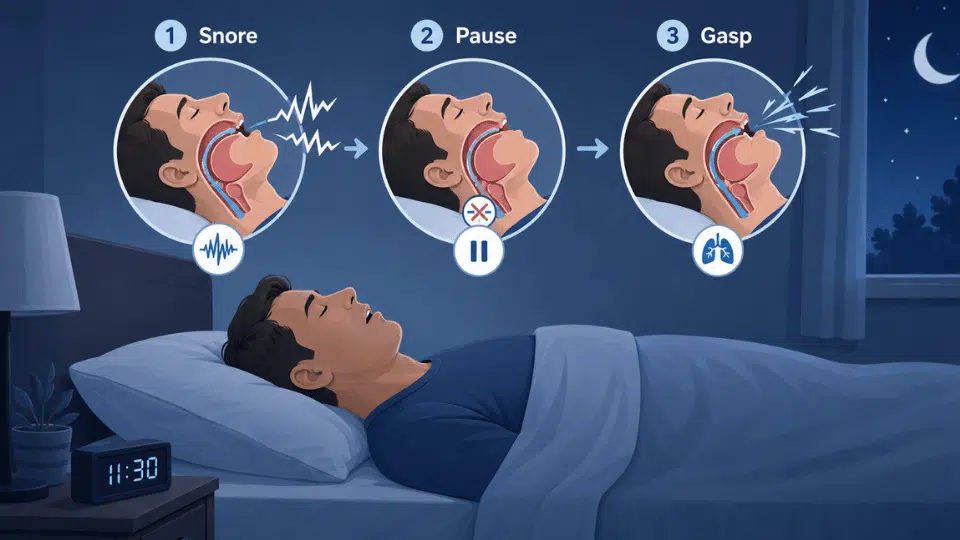
Sleep apnea doesn’t sound like regular, steady snoring. Instead, it creates an irregular, disrupted breathing pattern characterized by repeated pauses in airflow.
Rather than a smooth, continuous sound, what you hear is often a cycle of noise, silence, and sudden recovery breaths.
1. Loud and Erratic Snoring
Unlike regular snoring, sleep apnea snoring is uneven, strained, and unpredictable in volume. The airway partially blocks airflow, causing it to fluctuate rather than stay consistent.
In severe cases, snoring can exceed 90 decibels, roughly as loud as a lawnmower. Often described as “explosive” or startling, erupting suddenly rather than building gradually.
2. Gasping, Snorting, and Choking Sounds
Sleep apnea often includes sudden gasping, snorting, or choking sounds, especially after a pause in breathing. When the airway reopens, the body quickly pulls in air, creating a sharp and sometimes alarming sound.
These noises can briefly wake the person or disrupt deep sleep, even if they don’t remember it the next day. For many people, this is one of the clearest warning signs that breathing is being interrupted during sleep.
3. Noticeable Pauses in Breathing
One of the most important warning signs is complete silence between sounds. During these moments, breathing temporarily stops, even though the body is still trying to get air.
These pauses are clinically defined as lasting at least 10 seconds and can extend to 20 seconds or longer in more severe cases. Because there’s no sound at all, they’re often easiest for a sleep partner to notice rather than the person experiencing them.
4. Snoring Pattern Cycle
A person may snore loudly, then suddenly go quiet for several seconds as breathing stops. This silence is followed by a gasp, snort, or choking sound as breathing resumes, as a pattern:
Snore → silence → gasp → repeat |
This cycle can occur multiple times per hour, creating a fragmented and restless breathing pattern throughout the night.
Beyond sound, people often notice sudden jerking, thrashing, or abrupt changes in position right after an apnea event. These physical reactions happen as the brain and body scramble to restore normal airflow and are part of the same pattern.
Normal Snoring vs Sleep Apnea Sounds
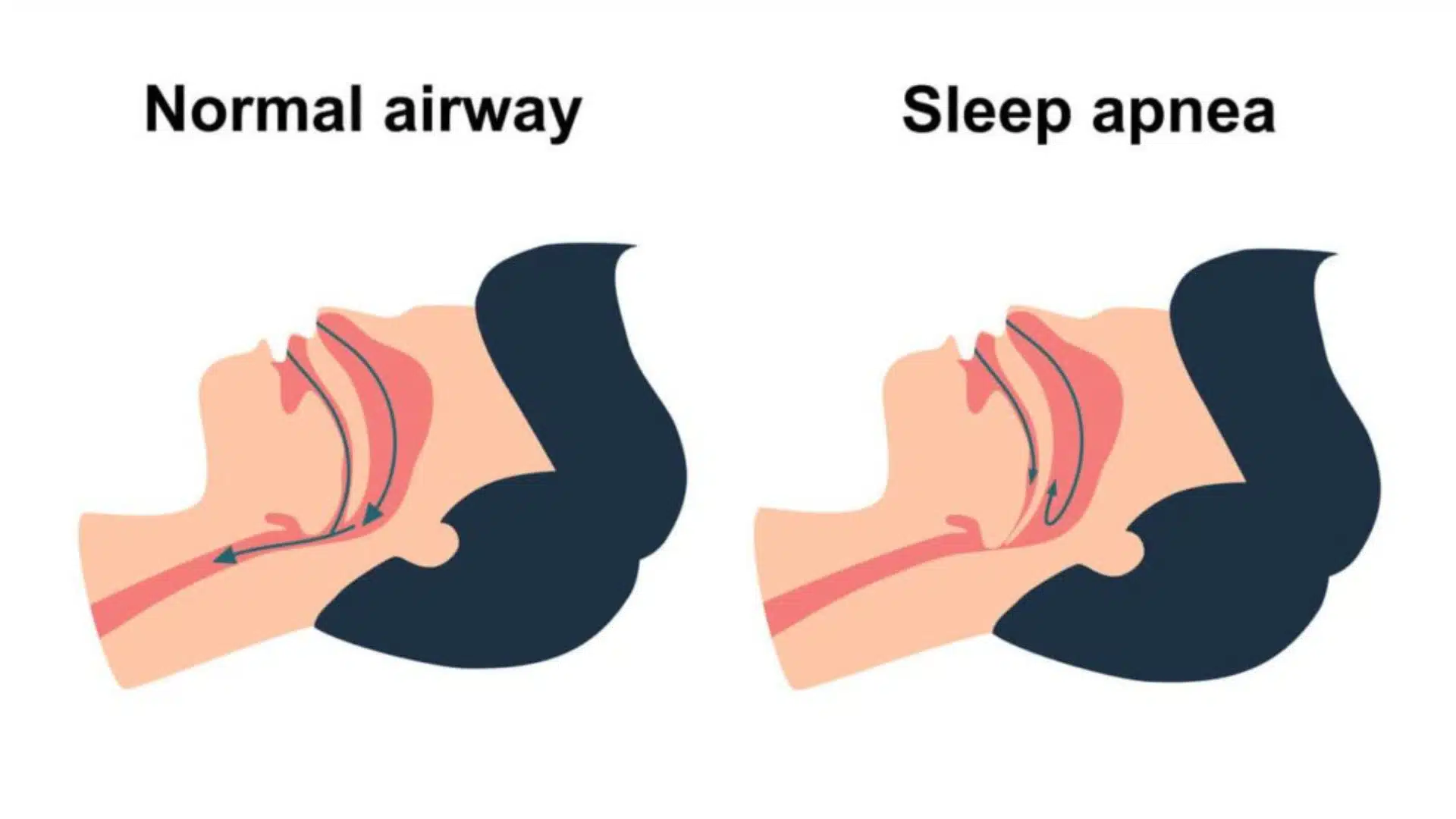
Many people snore occasionally, but does snoring mean sleep apnea? Not always. Sleep apnea-related sounds are different because they involve interrupted breathing, not just noisy airflow.
| Feature | Normal Snoring | Sleep Apnea |
|---|---|---|
| Sound Pattern | Steady and rhythmic | Irregular and interrupted |
| Breathing | Continuous | Pauses in breathing |
| Volume | Mild to loud | Often very loud and disruptive, can exceed 90 dB in severe cases |
| Pauses | Rare or none | Frequent silence followed by gasping |
| Sleep Quality | Usually unaffected | Poor, fragmented sleep |
| Awareness | Often unnoticed | Frequently noticed by a partner |
If snoring includes pauses, gasping, or irregular breathing, it may be a sign of sleep apnea rather than harmless snoring.
What Do Different Types of Sleep Apnea Sound Like?
Not all sleep apnea sounds alike. The types of sleep apnea determine how breathing disturbances occur and how noticeable they are during the night.
- Obstructive Sleep Apnea (OSA): This is the most common type, easily recognized by loud, heavy snoring, clear pauses in breathing, and sudden gasps or choking sounds. The snore–pause–gasp pattern is noticeable and can repeat often during the night.
- Central Sleep Apnea (CSA): Unlike obstructive sleep apnea, this type is often quiet. Breathing pauses occur without airway obstruction, resulting in minimal snoring or choking. You may notice silent gaps in breathing and subtle changes in rhythm.
- Mixed Sleep Apnea: This type has characteristics of both obstructive and central sleep apnea. You may have periods when you snore loudly and gasp, followed by pauses in quiet or silent breathing. This can lend an irregular and unpredictable appearance to the overall pattern.
While sound patterns can be a strong indicator of sleep apnea, they don’t always tell the full story. In many cases, the condition also shows up through how you feel during the day and how well you sleep at night.
How Are Sleep Apnea Sounds Detected?

Sleep apnea often goes unnoticed since it occurs during sleep. Recognizing unusual breathing sounds is vital for diagnosis and is supported by tests such as overnight polysomnography. This overnight test monitors your breathing, oxygen levels, heart rate, and sleep stages.
Sleep partners are key in detecting sleep apnea, often the first to notice symptoms. They may hear pauses in breathing, gasping, or irregular snoring at night.
While tests help identify unusual sleep sounds, they may not reflect the impact. Look beyond nighttime symptoms and recognize daytime signs like fatigue or poor concentration.
Signs That Your Snoring Could Indicate Sleep Apnea
While unusual sounds during sleep may suggest underlying problems, they don’t tell the whole story. Sleep apnea can significantly impact your energy levels during the day and the quality of your sleep at night. Some of the key indicators to watch out for:
- Excessive daytime fatigue
- Morning headaches
- Dry mouth or sore throat upon waking
- Poor or unrefreshing sleep
- A partner noticing breathing pauses
When these signs occur alongside irregular snoring or abnormal breathing patterns, they become much more indicative of sleep apnea. Being aware of the consequences of both day and night behaviors is crucial for recognizing when to take these signs seriously.
When to See a Doctor
See a doctor if your snoring is loud enough to wake others, or if a partner has noticed breathing pauses during the night. You should also seek evaluation if you consistently wake unrefreshed despite adequate sleep hours.
Sleep apnea tends to worsen over time and carries real cardiovascular risk when left untreated. A home sleep test or in-lab polysomnography can confirm a diagnosis and suggest treatment before the condition progresses.
Early medical advice is crucial since untreated sleep apnea can lead to serious long-term health issues that can affect life expectancy.
Final Thoughts
Now you know that sleep apnea sounds nothing like ordinary snoring. That gasping, choking, and stop-start breathing pattern is your body sending a clear signal that something is off.
And the longer it goes unaddressed, the more it chips away at your sleep quality, your energy, and your overall health. Catching it early makes a real difference.
So if any of this sounds familiar, whether it is your own sleep or someone you share a room with, do not brush it off. Talk to your doctor, ask about a sleep study, and get the answers you need. Better sleep is possible, and it starts with taking that first step.
Frequently Asked Questions
IS Loud Snoring Always a Sign of Sleep Apnea?
No, loud snoring alone doesn’t always indicate sleep apnea. It becomes concerning when accompanied by pauses in breathing, gasping, or irregular breathing patterns.
What Does Gasping in Sleep Mean?
Gasping during sleep often occurs when breathing resumes after a pause, which can be a key sign of sleep apnea.
Can You Hear Your Own Sleep Apnea?
Most people are unaware of the sounds of their own sleep apnea. However, recordings or feedback from a partner can help identify unusual patterns.
How can I confirm if I have sleep apnea?
A sleep study (polysomnography), either at home or in a lab, is the most reliable way to diagnose sleep apnea and assess its severity.






One Response