





Waking up with lower back or hip pain after a full night of sleep is exhausting in a way that compounds quickly. If you have sacroiliac joint pain, your sleeping position is rarely neutral.
It is either working for you or quietly making things worse. Finding the right sleeping position for sacroiliac joint pain relief does not require major changes.
Small, deliberate adjustments to how you position your body and support your hips can reduce pressure on the joint, minimize morning stiffness, and help you actually wake up rested.
What Is SI Joint Pain?
The sacroiliac (SI) joints connect the sacrum, the triangular bone at the base of your spine, to the iliac bones of the pelvis.
There are two of them, one on each side, and their primary job is to absorb shock and transfer forces between your upper body and your legs.
Inflammation or dysfunction in these joints causes pain in the lower back and buttocks, and sometimes down the back of the thigh toward the knee. Symptoms often worsen with prolonged standing or sitting and tend to become more noticeable at night.
What Causes SI Joint Pain?
Understanding what triggers or aggravates your SI joint helps you make smarter choices about sleep positioning and daily habits. Common causes include:
- Injury or trauma: a fall, car accident, or sudden twisting movement that strains the joint
- Pregnancy: hormonal changes cause the ligaments around the SI joint to loosen in preparation for childbirth, increasing instability and nighttime pain
- Arthritis: osteoarthritis or inflammatory conditions like ankylosing spondylitis can cause joint degeneration and chronic pain
- Prolonged poor posture: repeated asymmetrical loading from sitting, standing, or lifting incorrectly
- Leg length discrepancy: even a small difference in leg length can alter how weight is distributed across the SI joint
If your pain consistently wakes you in the early morning hours and actually improves once you get up and move, that pattern can indicate an inflammatory condition rather than a mechanical one. Mention this to your doctor, as it may warrant further investigation.
Why Is SI Joint Pain Worse at Night
Pain from the sacroiliac (SI) joint often intensifies at night, complicating sleep. Lying down removes the active muscular support you rely on when standing, which means the joint depends more heavily on its ligaments and your sleeping position for stability.
There are three main reasons this happens. First, when you’re in one position for hours, the supporting muscles around the joint relax and lose their active stabilizing role, leaving the joint more vulnerable to uneven pressure.
Second, even small adjustments in bed, like rolling over, compress the joint space and can trigger a sharp flare. Third, as the body settles into rest, pain perception often heightens: what felt manageable during the day becomes noticeably worse once you stop distracting yourself with activity.
Best Sleeping Positions for SI Joint Pain Relief
Choosing the right sleeping position is one of the most effective ways to reduce Sacroiliac (SI) joint pain. The goal is simple: keep your spine, hips, and pelvis aligned so the SI joint isn’t under uneven pressure while you sleep.
Most people with SI joint pain find relief in either back sleeping or properly supported side sleeping. The key is not just the position itself, but how well your body is supported within that position.
1. Back Sleeping (Best Overall)
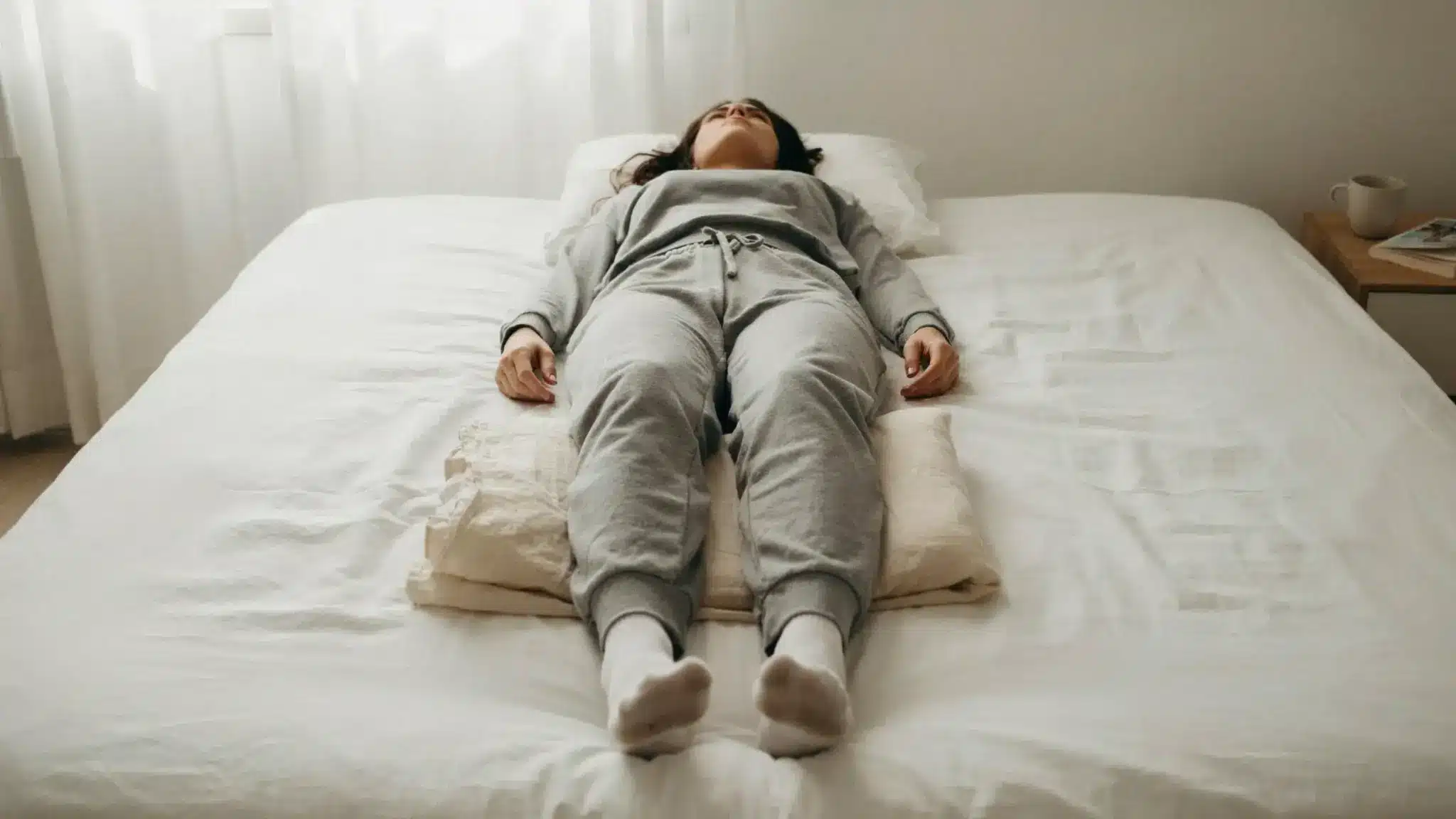
Back sleeping is often considered the most balanced position for SI joint pain because it distributes weight evenly across the spine and pelvis. To make it more effective:
- Place a pillow under your knees to reduce lower back pressure
- Keep your head and neck supported with a neutral-height pillow
- Avoid excessive arching of the lower back
- Keep your legs relaxed and slightly apart if needed
2. Side Sleeping (With Proper Support)
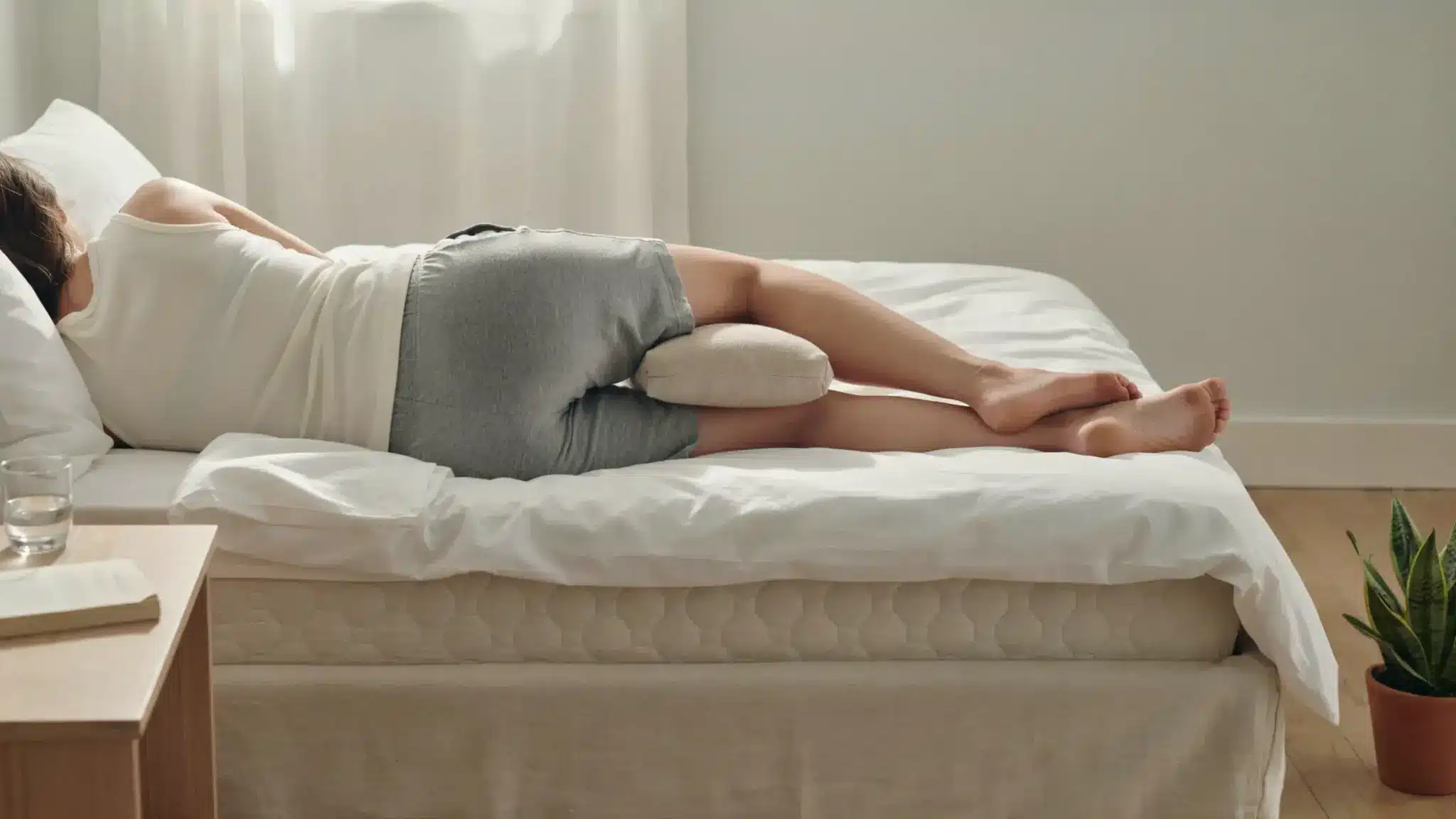
Side sleeping can also be highly effective when done with proper support, especially for those experiencing discomfort. To maintain alignment:
- Place a firm pillow between your knees
- Keep hips stacked evenly, one above the other
- Avoid twisting your upper body forward or backward
- Use a thicker pillow if there is a gap between your waist and the mattress
For some people, if the SI joint is more painful, try sleeping on the less painful side with a proper pillow support to reduce direct pressure on the affected joint.
3. Supported Fetal Position
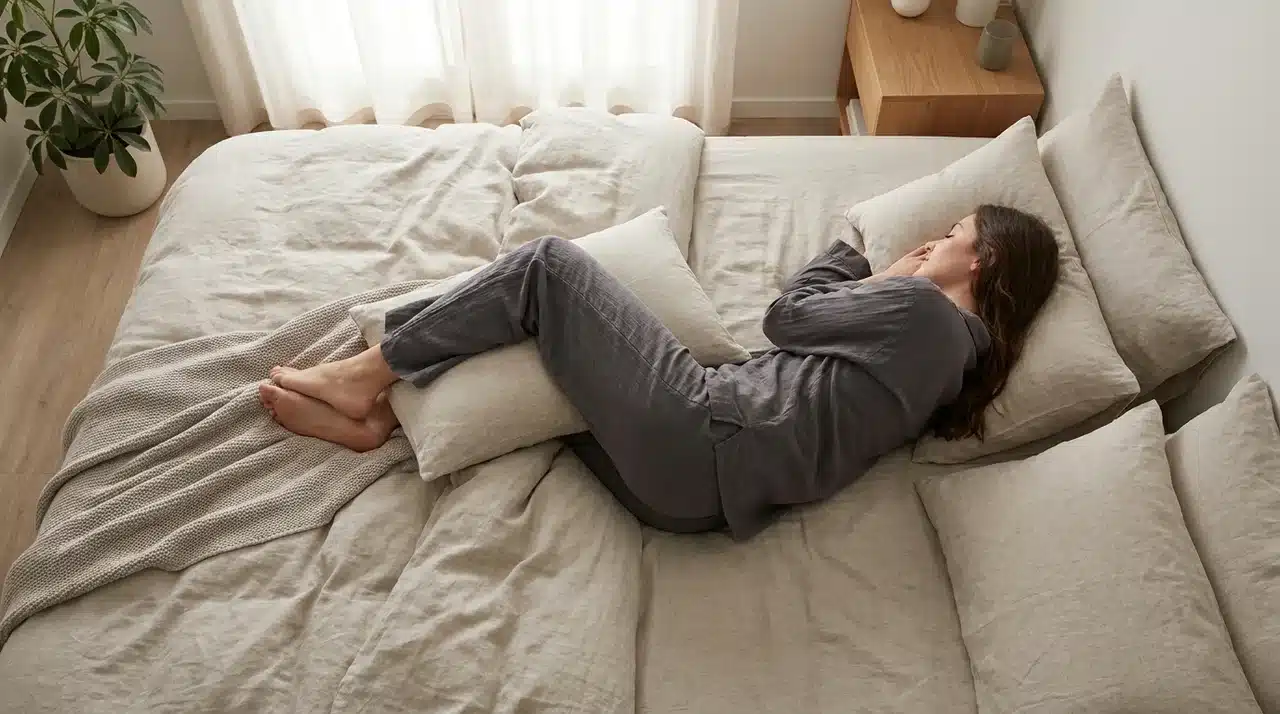
The fetal position can help reduce tension in the lower back when done correctly, but it must be supported to avoid misalignment. This variation offers moderate relief but should be used with proper support to maintain alignment. To do it safely:
- Keep a pillow between your knees
- Avoid curling too tightly, which can compress the pelvis
- Maintain a gentle bend rather than a tight curl
4. Reclined Sleeping Position

A slightly reclined position can be particularly beneficial during flare-ups when lying flat feels uncomfortable. This position allows for better alignment and relief from pressure on the lower back and SI joint.
To try this position:
- Use a wedge pillow or adjustable bed to elevate your upper body
- Keep your knees slightly bent with support if needed
- Maintain a neutral spine without slouching
How to Get In and Out of Bed Without Worsening SI Joint PainGetting into bed:Sit on the edge of the mattress. Keep your knees together and lower yourself onto your side as a single unit, using your arm for support. Once on your side, use your arms to guide yourself into your preferred sleeping position without twisting. Getting out of bed:Roll onto your side with your knees together, moving your whole body as a unit. Swing your legs off the edge of the bed while pushing up with both arms. Pause for a moment on the edge before standing to let your pelvis stabilize. Do a few gentle stretches once standing before walking. Swinging both legs in or out at the same time, rather than one at a time, keeps your hips level and reduces torsional stress on the SI joint during the transition. |
Sleeping Positions to Avoid for SI Joint Pain
Some sleeping positions can unintentionally increase stress on the sacroiliac (SI) joint and make pain worse over time. Avoiding or limiting these positions can help reduce stiffness and improve sleep quality.
- Stomach position: forces the lower back into an unnatural arch, increasing pressure on the SI joint and surrounding muscles.
- Overly tight fetal position: can compress the pelvis and restrict natural alignment, which may worsen joint irritation.
- Twisted side position: the upper body and hips are misaligned, which can create uneven pressure on the SI joint and lead to morning stiffness.
- Unsupported leg position: letting one leg fall forward or backward without a pillow can misalign the hips and increase strain on the pelvis.
- Sleeping on the affected side: direct body weight and pressure directly on the inflamed joint, which usually aggravates the pain.
Avoiding these positions, especially during flare-ups, helps maintain better alignment and reduces unnecessary strain on the SI joint while you sleep.
SI Joint Pain vs. Sciatica: Know the Difference
Both conditions cause lower back pain, but they are not the same thing. Treating one like the other can slow your recovery, so knowing which one you are dealing with matters before you change how you sleep.
| Feature | SI Joint Pain | Sciatica |
|---|---|---|
| Origin | Where the lower spine meets the pelvis | Compressed or irritated sciatic nerve in the lumbar spine |
| Pain location | Lower back, buttock, upper thigh | Lower back through the buttock, down the leg, sometimes to the foot |
| Travels below the knee? | Rarely | Yes, commonly |
| Worsens with | Prolonged standing, sitting, rolling over in bed | Sitting, bending forward, sneezing, or coughing |
| Best sleeping position | Back or side with knee pillow for hip alignment | Side sleeping with knees drawn up to take pressure off the nerve |
| Who to see | Physiotherapist or orthopedic specialist | Physiotherapist or neurologist |
If the pain runs past your knee into your calf or foot, get a proper diagnosis before adjusting your sleep setup. The right position for SI joint pain is not always the right one for sciatica.
Choosing the Right Mattress and Pillow for SI Joint Pain
Your mattress and pillow play a major role in how well your body stays aligned during sleep. Even the best sleeping position for SI joint pain may not provide relief if your support setup allows your hips to sink or your spine to shift out of alignment.
- Mattress Support and Firmness: A medium-firm mattress helps keep the spine and hips aligned, preventing excessive sinking or pressure buildup, which can reduce strain and improve comfort for SI joint pain.
- Pillow Placement for Proper Alignment: Correct pillow placement supports the hips and spine, preventing rotation or collapse during sleep. This helps maintain alignment and reduces pressure on the SI joint overnight.
- Support Aids During Flare-Ups: Aids like wedge pillows, cushions, or SI belts can improve stability during flare-ups by reducing pressure and helping maintain a more comfortable sleeping position.
While proper mattress support and pillow placement create a strong foundation for alignment, improving sleep with SI joint pain often requires additional habits and lifestyle adjustments.
Other Ways to Improve Sleep with SI Joint Pain
A short pre-sleep routine makes a real difference in how well you sleep with SI joint pain. Spend 5–10 minutes on gentle stretches before bed.
The knee-to-chest stretch decompresses the lower back, the figure-4 stretch releases tightness in the outer hip and piriformis, and trunk rotations loosen the lower spine before you lie down for the night. Hold each stretch for 20–30 seconds per side, keeping the movements slow.
Beyond stretching, deep core exercises performed consistently throughout the day stabilize the pelvis and reduce the amount of strain that builds up by bedtime.
Kinesiology taping provides gentle overnight support without restricting movement, and a short evening walk boosts blood flow and eases stiffness before sleep.
When to See a Doctor?
Sacroiliac (SI) joint pain can often be alleviated through proper sleeping positions and alignment. However, certain symptoms may signal a more serious condition that necessitates medical evaluation.
If pain continues or intensifies despite rest and position adjustments, or if you experience difficulty standing, walking, or bearing weight, consult a healthcare provider.
Additionally, if pain radiates down your legs, includes numbness or tingling, or consistently disrupts your sleep, it’s essential to seek medical advice. Urgent care is advised if pain arises suddenly after an injury or significantly limits daily activities.
Mistakes That Can Worsen SI Joint Pain at Night
Even with the correct sleeping position, minor habits and setup errors can irritate the sacroiliac (SI) joint, delaying recovery and worsening discomfort. Avoiding these improves sleep quality.
- Twisting during sleep: Twisting your hips or upper body while sleeping creates uneven pressure on the SI joint. This can lead to stiffness and increased pain by morning.
- Using the wrong mattress or pillow support: Using a mattress or pillow that does not properly support your spine and hips can disrupt alignment. This may cause the pelvis to tilt, increasing joint strain.
- Ignoring discomfort at night: Staying in a painful position without adjusting allows pressure to build on the SI joint. Making small position changes can help prevent worsening pain.
These mistakes can worsen SI joint pain at night, but simple tweaks to your sleep position and setup can often provide relief. If the pain persists or starts to affect your daily activities, it might be time to seek professional help.
Final Thoughts
Sacroiliac joint pain does not have to disrupt your sleep indefinitely. The right sleeping position for sacroiliac joint pain relief, combined with proper pillow support and a short pre-sleep routine, addresses the root cause of nighttime discomfort rather than just masking it.
Start with one change tonight. Switch to your unaffected side with a firm pillow between your knees, or try sleeping on your back with a pillow under your knees if you have not already.
Most people notice a reduction in morning stiffness within a few nights of consistent positioning. If the pain persists beyond two weeks despite these adjustments, consult a healthcare provider.
Frequently Asked Questions
What is the Best Sleeping Position for Sacroiliac Joint Pain Relief?
Back sleeping with a pillow under the knees is ideal for maintaining spine neutrality and alleviating SI joint pressure. Side sleeping is effective with a knee pillow for hip alignment.
Is Side Sleeping Bad for SI Joint Pain?
Side sleeping is acceptable for SI joint pain if the hips are aligned. A firm knee pillow prevents pelvic misalignment, reducing joint strain.
Where Should I Place a Pillow for SI Joint Pain?
For side sleepers, place a pillow between the knees and ankles for hip alignment. Back sleepers should use a knee pillow to relieve pressure on the lower back and SI joints.