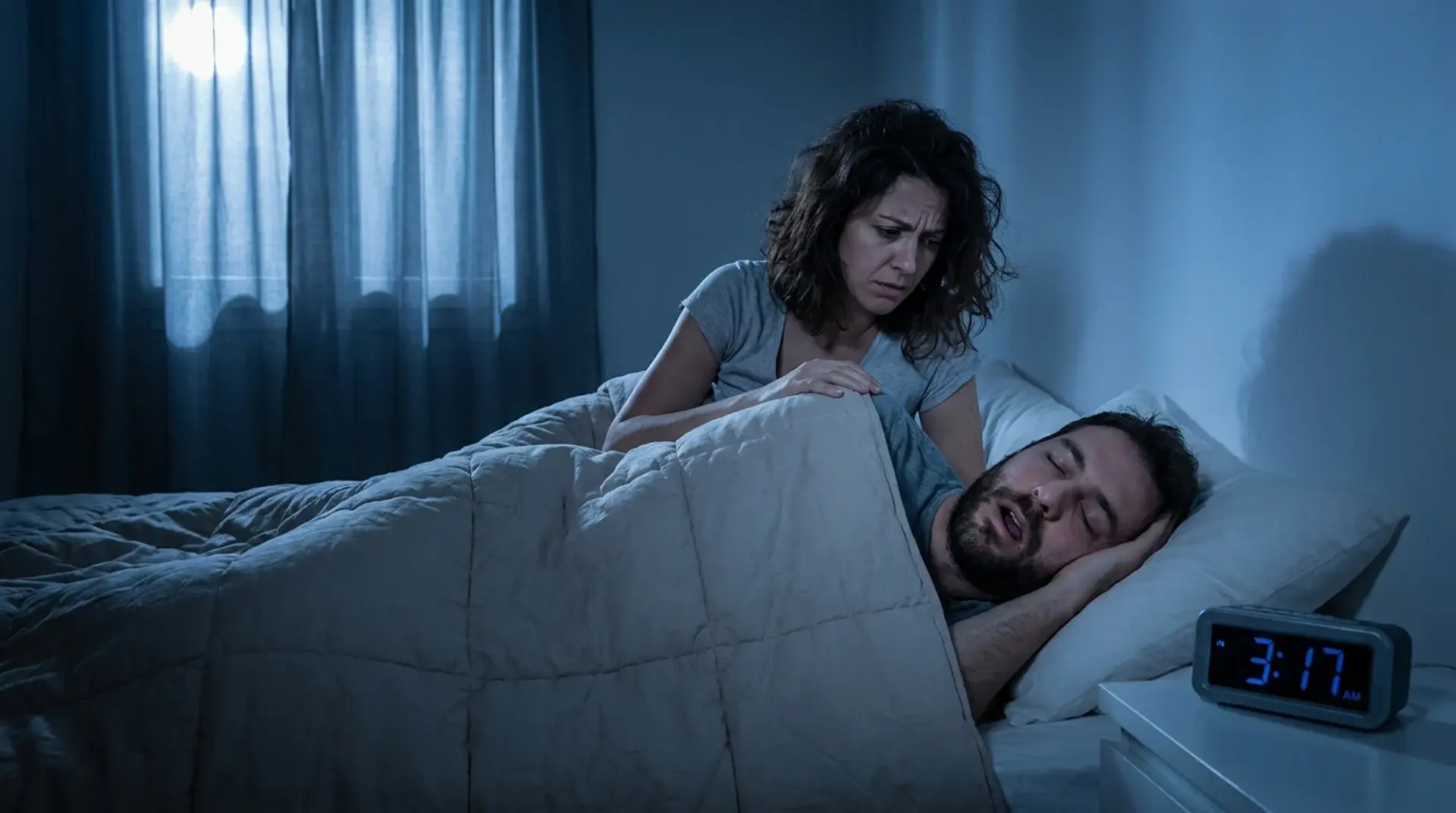




Sleep apnea and high blood pressure often co-occur, but most people don’t realize they’re connected. You might think your restless nights and rising blood pressure are separate problems.
They’re not. When you stop breathing dozens of times each night, your body goes into panic mode. Your heart races. Your blood vessels tighten.
And over time, this nightly chaos doesn’t just disturb your sleep. It quietly damages your cardiovascular system while you’re unconscious.
Understanding Sleep Apnea and High Blood Pressure
Your body needs oxygen constantly, even when you’re asleep. Sleep apnea blocks your airway repeatedly throughout the night. Each time this happens, your oxygen levels drop.
Your brain panics, waking you up just enough to start breathing again. This cycle repeats over and over. Now, here’s where high blood pressure comes in.
Every time your breathing stops, stress hormones flood your system. Your heart pounds faster, and your blood vessels constrict. Do this night after night, and your blood pressure stays high even during the day.
Risk factors that connect sleep apnea and high blood pressure
|
Warning Signs of Sleep Apnea and High Blood Pressure

You might have one or both conditions without realizing it. Sleep apnea and high blood pressure don’t always announce themselves loudly. But your body drops hints you shouldn’t ignore.
Sleep Apnea Symptoms:
- Loud snoring that disrupts your partner’s sleep
- Gasping or choking sounds during the night
- Waking up with a dry mouth or sore throat
- Morning headaches that fade as the day goes on
- Extreme daytime sleepiness, no matter how long you slept
High Blood Pressure Symptoms:
- Frequent headaches, especially in the morning
- Dizziness or lightheadedness
- Nosebleeds without a clear cause
- Blurred vision or seeing spots
When Both Coexist:
- Crushing fatigue that never lifts
- Difficulty concentrating or memory problems
- Mood swings and irritability
Pay attention when multiple symptoms appear together. Your body’s trying to tell you something’s wrong. Catching these early can prevent serious complications down the road.
Health Risks and Complications
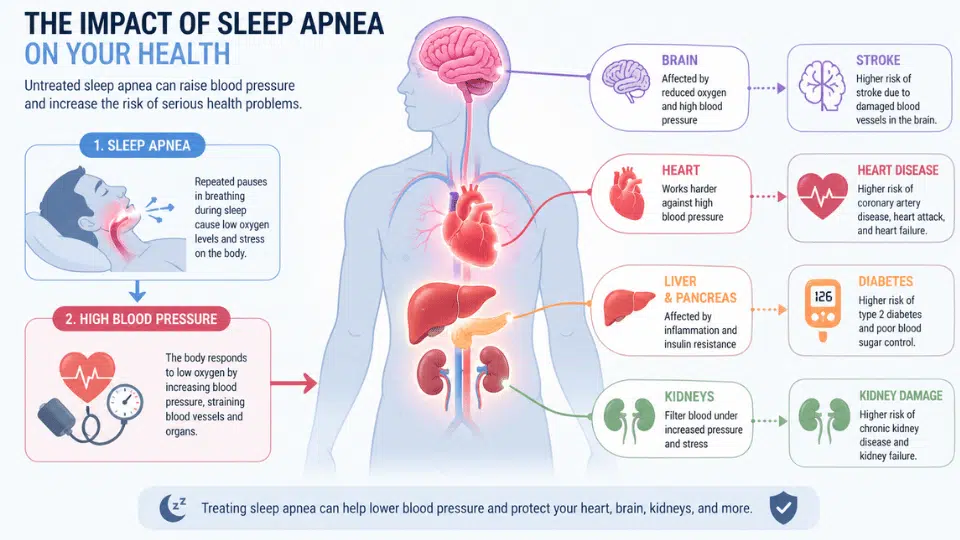
When sleep apnea and high blood pressure team up, they don’t just make you tired and dizzy. They can trigger serious health problems that affect your entire body.
- Heart disease and heart failure: Your heart works overtime every night, which can weaken it over time.
- Stroke: Blood clots form more easily when your blood pressure stays high, and oxygen dips repeatedly.
- Type 2 diabetes: Poor sleep messes with your insulin sensitivity and blood sugar control.
- Kidney damage: High blood pressure damages the tiny blood vessels in your kidneys.
- Atrial fibrillation: Irregular heartbeats become more common with untreated sleep apnea.
- Liver problems: Your liver can show signs of scarring and abnormal function.
These aren’t just possibilities. There are real consequences that develop silently while you sleep. The longer these conditions go untreated, the worse the damage becomes. These complications can significantly impact your life expectancy.
Best Ways to Treat Sleep Apnea and High Blood Pressure
Treating sleep apnea often lowers your blood pressure, too. That’s because fixing your breathing at night gives your cardiovascular system a chance to recover. But you’ll get the best results when you address both conditions together.
1. CPAP Therapy (Primary Treatment for OSA)
CPAP machines keep your airway open all night by delivering a steady stream of air through a mask. You wear it while you sleep, and it stops those dangerous breathing pauses.
Most people see their blood pressure drop within weeks of consistent CPAP use. The machine takes getting used to, but the payoff is worth it. Your oxygen levels stay stable, and your heart finally gets to rest.
2. Lifestyle Modifications
Even losing 10% of your body weight can reduce the severity of sleep apnea. Cut back on alcohol, especially before bed, since it relaxes your throat muscles too much. Quit smoking because it inflames your airways.
Sleep on your side, not on your back. Exercise regularly, but not right before bedtime. These changes lower both your blood pressure and the frequency of your apnea episodes.
3. Medical Management
Your doctor might prescribe blood pressure medications to quickly get your numbers under control. ACE inhibitors and beta-blockers work well for people with sleep apnea.
Some medications help more than others when both conditions exist. You’ll need regular monitoring to adjust dosages. Don’t stop taking your meds just because you start CPAP therapy.
4. Integrated Treatment Approach
Treating just one condition isn’t enough. You need a plan that addresses both sleep apnea and high blood pressure. Your primary doctor should work with a sleep specialist.
Track your blood pressure at home and your CPAP usage every night. Adjust your treatment based on the data. This coordinated care gives you the best shot at real recovery.
Combining these treatments works better than trying one thing at a time. Your body needs multiple forms of support to heal properly.
When to See a Doctor
Don’t wait until things get worse. Schedule an appointment if your partner says you stop breathing during sleep or if your snoring shakes the walls.
Go immediately if you’re gasping awake at night or your blood pressure readings consistently top 140/90. Chronic morning headaches, constant exhaustion despite sleeping 8 hours, and chest pain are red flags.
Your primary care doctor can refer you to a sleep specialist for a proper sleep study (though in some cases, you can get CPAP without a sleep study).
The sooner you get diagnosed, the sooner you can stop the damage. Putting this off only gives both conditions more time to harm your heart.
Final Thoughts
Sleep apnea and high blood pressure feed off each other in a vicious cycle. You stop breathing, your blood pressure spikes, and your heart suffers the consequences. But you’re not stuck with this.
Treatment exists, and it works when you commit to it. CPAP therapy, lifestyle changes, and proper medication can break this cycle. Your sleep will improve. Your energy will return.
And your cardiovascular system gets the relief it desperately needs. The connection between these two conditions is real, but so is your ability to fight back. Talk to your doctor today and take control of your health before permanent damage sets in.
Frequently Asked Questions
Is High Blood Pressure from Sleep Apnea Reversible?
It can improve with treatment, especially CPAP. But some people may still need blood pressure medicine.
What is the 3% Rule for Sleep Apnea?
It means a sleep apnea event is counted when oxygen drops by 3% or more, or sleep is briefly disturbed.
What is the Pillow Trick Against Sleep Apnea?
It means using a pillow to help you sleep on your side, which may reduce airway blockage.