



A futon can be one of the easiest ways to add an extra bed without giving up a whole room. But size matters more than most people think when trying to understand what size is a futon mattress.
The right futon mattress should fit the frame, fold without bunching, and still leave enough room to walk around when it opens flat.
That is where a little measuring saves a lot of frustration. A full futon may work well in a guest room, while a queen gives more comfort for daily sleep. Smaller sizes are better for dorms, kids’ rooms, and tight apartments.
Below, you’ll find each standard futon mattress size, how much space it really needs, and which one makes the most sense for your room.
Quick AnswerFuton mattresses come in five standard sizes: Twin (39 x 75 inches), Twin XL (39 x 80 inches), Full (54 x 75 inches), Queen (60 x 80 inches), and King (76 x 80 inches). Most match standard mattress dimensions but may vary slightly to fit folding frames. |
Standard Futon Mattress Sizes and Dimensions
Most futon mattresses follow standard U.S. bed dimensions. Here is a quick view of diverse dimensions:
| SIZE | DIMENSIONS (INCHES) | DIMENSIONS (CM) | SLEEPS | BEST FOR |
|---|---|---|---|---|
| Twin | 39″ x 75″ | 99 x 191 cm | 1 child or 1 adult | Kids’ rooms, dorms, small spaces |
| Twin XL | 39″ x 80″ | 99 x 203 cm | 1 taller adult | Taller individuals, narrow rooms |
| Full | 54″ x 75″ | 137 x 191 cm | 1 adult or 2 short-term sleepers | Guest rooms, living rooms, solo use |
| Queen | 60″ x 80″ | 152 x 203 cm | 2 adults | Couples, daily sleeping, and larger rooms |
| King | 76″ x 80″ | 193 x 203 cm | 2 adults or a family use | Large spaces, families |
Full and Queen are the most commonly purchased sizes. Twin works well for compact setups, and King is rare in futon form due to its width when folded into sofa position.
Futon Mattress Sizes Explained
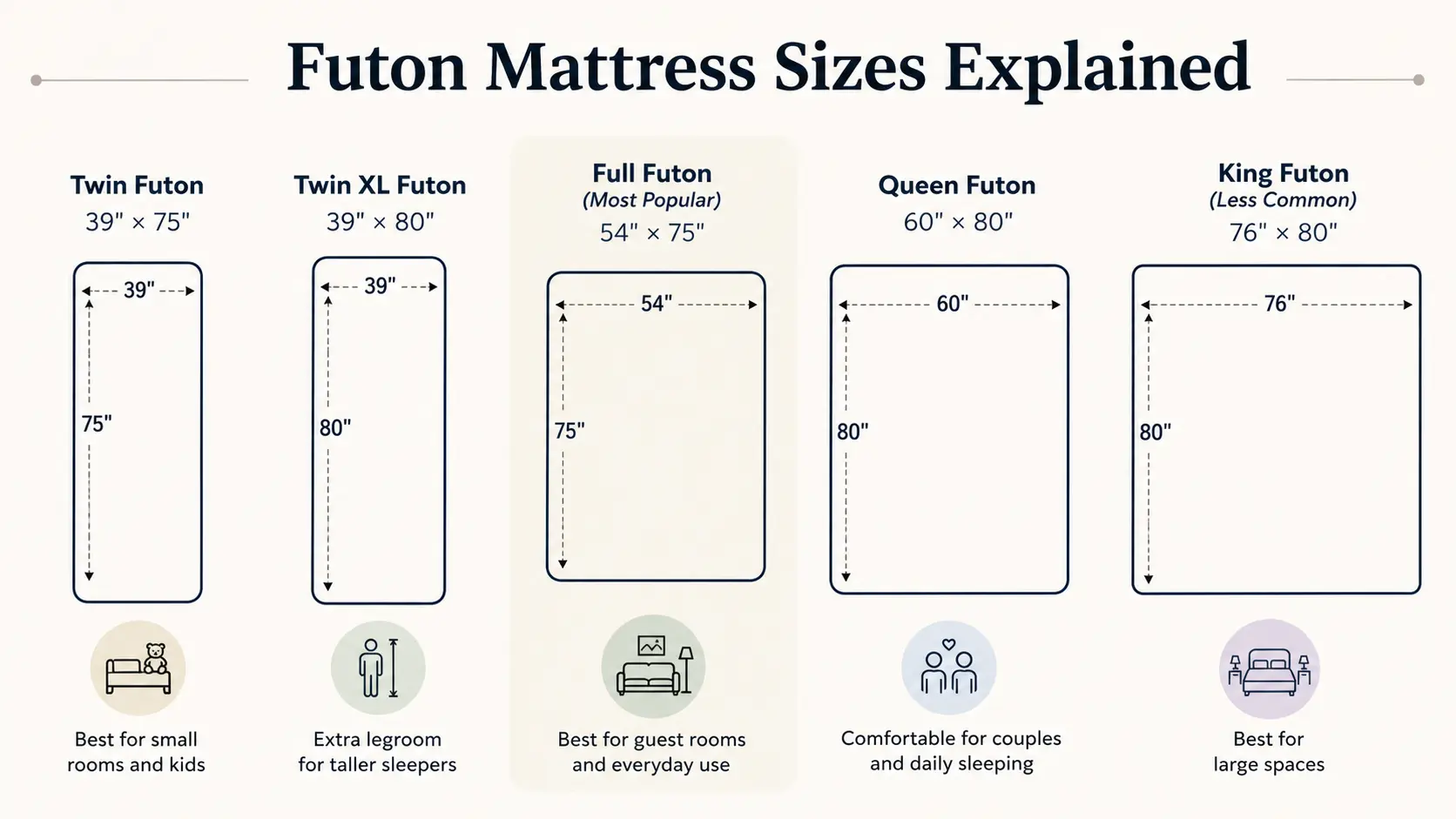
Futon mattresses come in a few standard sizes, and each one works differently depending on your space and how you plan to use it.
1. Twin Futon Mattress
At 39 by 75 inches, the twin futon is the smallest standard option. It folds into a compact loveseat or chair, making it a good fit for rooms with limited floor space.
Kids’ rooms, dorm rooms, and studio apartments are its natural home. Adults can sleep on a twin futon comfortably for short stays, though it gets tight for anyone who moves around during the night.
Best for: Kids’ rooms, dorms, small guest spaces, tight apartments
2. Twin XL Futon Mattress
The Twin XL adds five inches of length, bringing the dimensions to 39 by 80 inches. The width stays the same as a standard twin, so it still folds into a narrow sofa.
The extra length makes it a better option for taller sleepers who find the standard twin too short. It works well in narrow rooms where a wider mattress would not fit.
Best for: Taller individuals, narrow spaces, dorm rooms
3. Full Futon Mattress (Most Popular)
The full futon measures 54 by 75 inches and is the most popular size across most futon retailers. It folds into a sofa wide enough for two to three people to sit comfortably and opens into a bed that works well for one adult or two people sharing for occasional stays.
Guest rooms and living rooms are where full futons perform best. The dimensions are practical for most standard room sizes without taking over the space.
Best for: Guest rooms, living rooms, solo sleepers, occasional shared use
4. Queen Futon Mattress
At 60 by 80 inches, the queen futon offers the most comfortable everyday sleeping experience. It gives couples enough room to sleep without feeling crowded and accommodates taller individuals without the feet hanging off the edge.
As a sofa, a queen futon takes up more wall space than a full, so the room needs to support the extra width. It is the right choice when the futon will be used as a primary or near-daily sleeping surface.
Best for: Couples, taller sleepers, daily use, larger living rooms
5. King Futon Mattress (Less Common)
King futons measure 76 by 80 inches. They are the least common futon size because the width creates a bulky sofa that requires significant floor and wall space.
Most king futons use a tri-fold frame to manage the extra size. They work in large dedicated rooms where space is not a concern, and they suit families who want a generous shared sleeping surface for guests.
Best for: Large rooms, families, spacious guest setups
Are Futon Mattress Sizes the Same as Regular Mattresses?
While futon mattresses and regular mattresses often share the same width and length, they are built very differently. Understanding these differences in thickness, construction, and functionality helps you choose the right option based on comfort, flexibility, and intended use.
| FEATURE | FUTON MATTRESS | REGULAR MATTRESS |
|---|---|---|
| Width and Length | Matches standard mattress dimensions, such as full at 54 x 75 inches and queen at 60 x 80 inches | Follows the same standard mattress dimensions |
| Thickness | Usually ranges from 3 to 12 inches | Typically ranges from 10 to 14 inches |
| Construction | Built to flex and fold repeatedly without damage | Built with a rigid structure and not designed to bend |
| Best Use | Designed for sofa-bed conversion and flexible everyday function | Designed only for bed frames and stationary sleep setups |
| Bedding Compatibility | Uses standard bedding sizes, so full futons fit full sheets and queen futons fit queen sheets | Uses standard bedding sizes |
The main difference comes down to flexibility versus structure. Futon mattresses are designed to bend and adapt, while regular mattresses prioritize support and thickness.
Choosing the right one depends if you need a convertible seating solution or a dedicated sleeping surface.
Futon Frame Sizes and Why They Matter?
The mattress size means nothing if it does not match the frame. A mattress that is too wide will buckle when the frame folds. One that is too narrow will shift, leaving gaps. Always check the frame’s interior measurements before ordering.
- Bi-fold frames fold once along the length of the mattress. They are the most common type and work well in rooms with enough wall space to accommodate the full length when open. A full bi-fold needs roughly 75 to 81 inches of wall space.
- Tri-fold frames fold twice across the width. They take up less wall space but need more floor depth when opened. These frames often work with thinner mattresses since the mattress needs to bend at two points.
- Loveseat frames are designed for compact spaces. They often use a split mattress design, where the seat and backrest are separate pieces that unfold together to form a sleeping surface.
Some tri-fold and loveseat futons use an ottoman as the third sleeping section. In those cases, the mattress alone does not form a complete bed without the ottoman in position.
Additional Futon Sizes You Should Know
Some futon dimensions are available in smaller or split designs for compact rooms and flexible seating. These sizes are useful when a standard twin, full, or queen futon would take up too much space.
1. Chair Futon
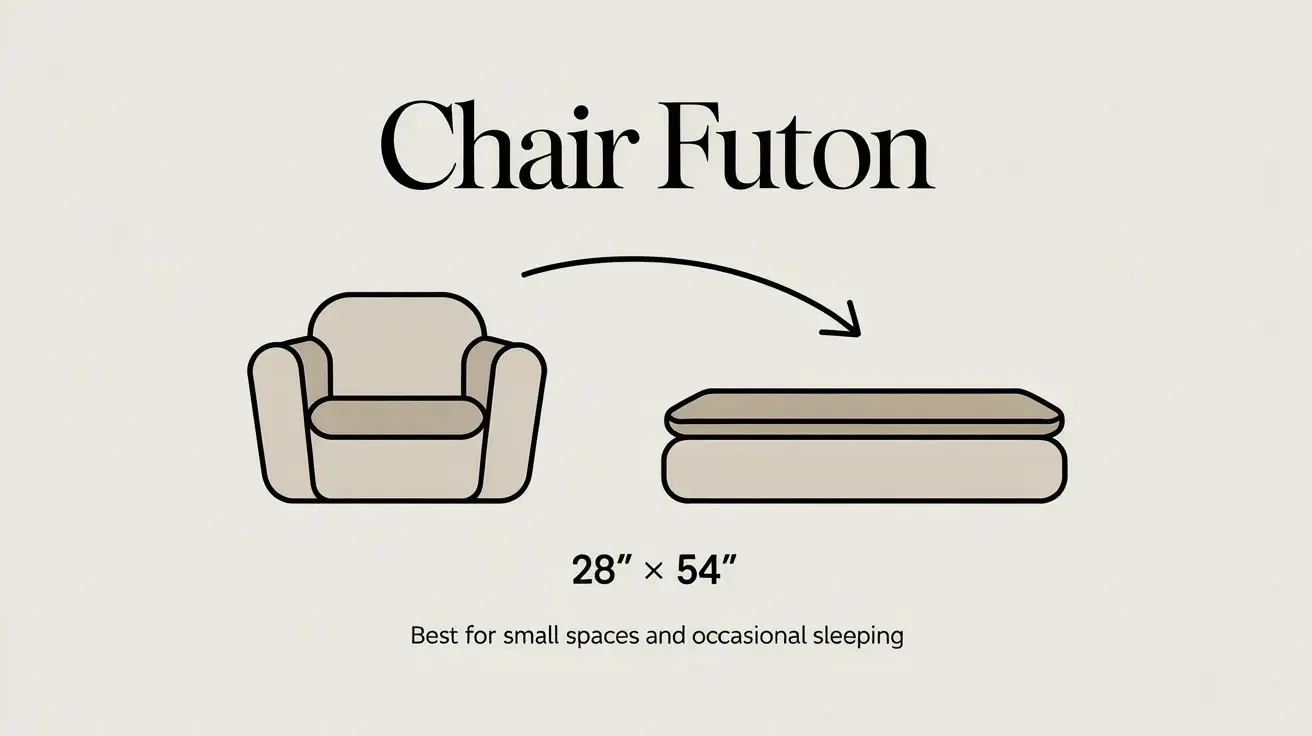
Chair futons measure roughly 28 by 54 inches. They fold into a single armchair and unfold into a small sleeping surface for one person.
These are best for compact offices, reading nooks, or spaces that need occasional sleeping without a full sofa setup.
2. Loveseat Futon
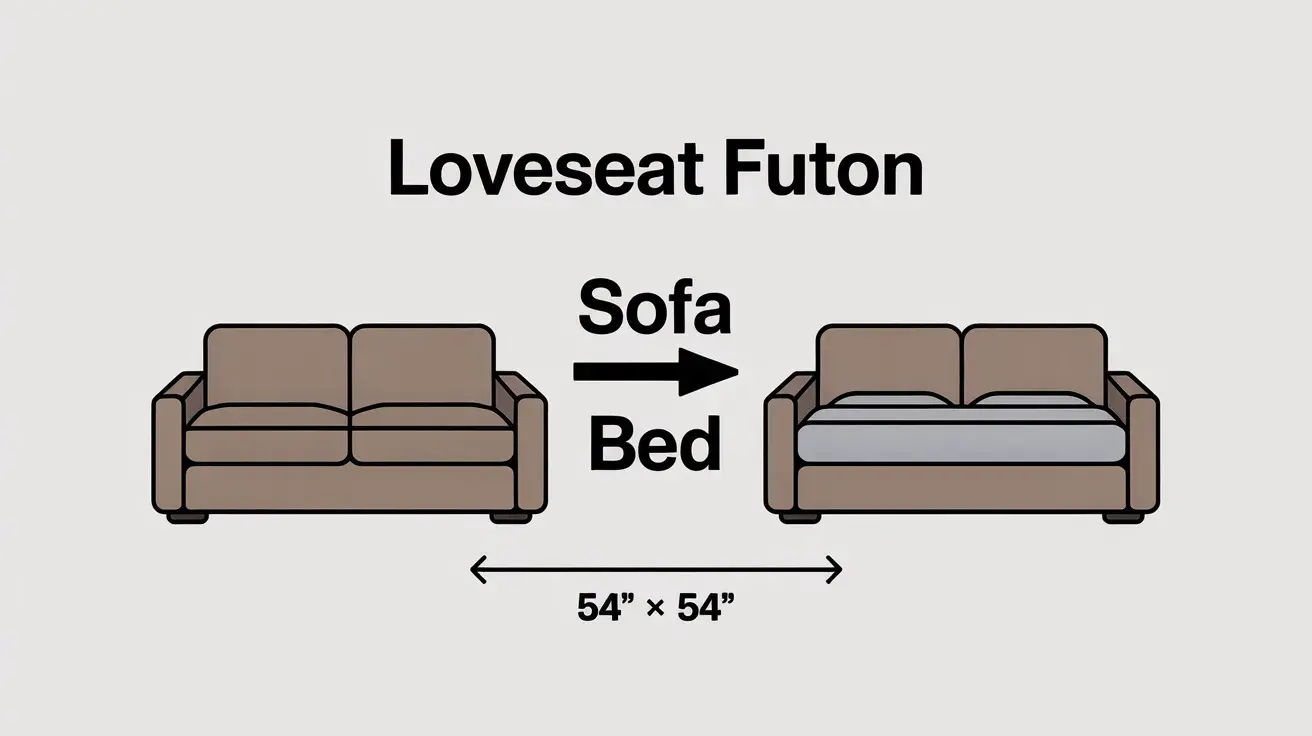
Loveseat futons are typically around 54 by 54 inches. They seat two people comfortably and convert into a bed suitable for one adult or two children.
They are a practical choice for studio apartments, offices, or any room that needs dual-purpose furniture without the footprint of a full sofa.
3. Split Futon Mattresses
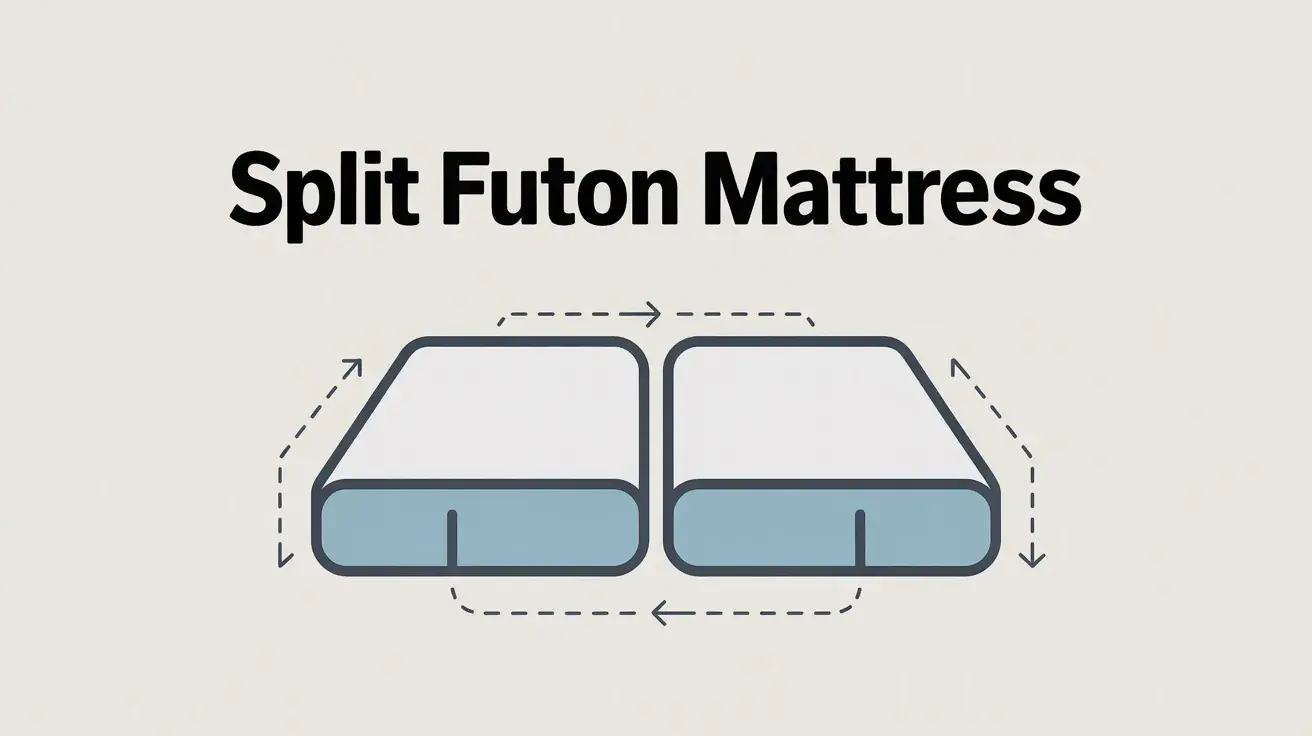
Split futons use two separate mattress pieces rather than one continuous surface. This design makes the mattress easier to move, carry, and store.
It also allows each section to fold independently, which is ideal for tri-fold frames and loveseat setups. The sleeping surface feels the same as a single-piece mattress once both sections are in position.
How Much Space Does a Futon Need?
This is where most buyers run into problems. A futon mattress has two sets of dimensions: its sofa size and its flat-bed size. These are not the same, and both need to fit in the room.
As a sofa, measure the wall space the frame will occupy. A full bi-fold frame needs approximately 54 inches of width and around 35 to 40 inches of depth from the wall.
As a bed, the frame opens outward and needs clear floor space in front. A full futon opened flat requires roughly 75 inches of floor depth from the wall. A queen needs around 80 inches.
Before buying, measure both the wall space and the open floor area. Leave at least 24 inches of walking space on each accessible side of the bed. A futon that cannot fully open is a futon that does not function.
How to Choose the Right Futon Mattress Size
Choosing the right futon size comes down to how much space you have and how you plan to use it day to day. A quick look at your room, sleeping needs, and number of users can make the decision much easier.
1. Based on Room Size
In a small room under 150 square feet, a twin or full futon is the practical choice. Either can fold into a compact sofa without crowding the room.
A queen futon works well in medium- to large-sized rooms where the extra width and floor depth can be accommodated without the room feeling tight.
2. Based on Use
If the futon will be used occasionally for guests, a full-size futon will cover most situations without taking up permanent space.
In case the futon will serve as the main sleeping surface, a queen is the better investment. The extra length and width make a real difference in sleep quality over time.
3. Based on the Number of Sleepers
One adult sleeper is comfortable on a full futon for regular use. Two adults sleeping together will find a queen far more practical for anything beyond a short stay.
Twin sizes work well for one child or one adult who does not need much sleeping width.
Common Mistakes to Avoid
|
Final Thoughts
Futon mattresses are only as useful as the size you choose. The full-size covers most situations, the queen is the right call for daily use or two sleepers, and the twin works best where floor space is tight.
If you are still thinking what size is a futon mattress, the answer comes down to matching the dimensions to your space and usage rather than just the label.
Before ordering, measure the frame, measure the room in both sofa and bed positions, and match the dimensions rather than the label. That one step saves most buyers from a return.
A guest room, a studio apartment, or a multipurpose living space all have different demands. Get the size right, and the futon does its job. Get it wrong, and it just gets in the way
Frequently Asked Questions
Can You Use a Regular Mattress on a Futon Frame?
A standard mattress is too rigid to fold with the frame and will crack or sag over time. Futon-specific mattresses are built to flex.
How Thick Should a Futon Mattress Be?
Most range from 6 to 8 inches. Thicker mattresses sleep better but fold less easily. Under 6 inches suits frequent converting.
Do Futon Mattresses Come in Custom Sizes?
Yes, some manufacturers offer custom dimensions for non-standard or older frames. Expect longer lead times and higher costs than standard sizes.
How Long Does a Futon Mattress Last?
With regular use, most futon mattresses last 5 to 10 years. Rotating and airing them out regularly extends their lifespan noticeably.