



A throw blanket is one of those home staples that most people own but rarely think twice about.
It sits folded over a sofa arm, gets grabbed on a cold evening, and somehow makes any room feel a little more put together.
But there is more to a throw blanket than just something to wrap around yourself on the couch.
If you have ever compared different bedding styles like blankets vs comforters, the differences start to matter more than they first seem.
From the materials and sizes to how you style and care for it, knowing what to look for makes a real difference in how much use you actually get out of it.
Here, we cover everything you need to know about throw blankets, including what they are, how they differ from regular blankets, and how to choose the right one for your home.
Throw Blanket vs Regular Blanket: Key Differences
When it comes to blankets, not all are made for the same purpose. Here is a quick breakdown of how a throw blanket and a regular blanket differ across size, use, weight, and placement.
| Feature | Throw Blanket | Regular Blanket |
|---|---|---|
| Size | ~50 x 60 inches | Twin to King sizing |
| Primary placement | Sofa, chair, reading nook | Bed |
| Main purpose | Casual warmth and décor | Sleeping and overnight warmth |
| Weight | Lightweight | Medium to heavy |
| Decorative use | Common, often displayed folded | Rarely used as décor |
| Travel friendly | Yes, easy to pack or carry | Not practical for travel |
| Washing frequency | Frequent, low effort | Less frequent |
Understanding these differences makes it easier to choose the right blanket for the right spot in your home.
Difference Between a Quilt, Throw, and Blanket
A quilt is made from three layers: a patchwork top, a batting middle, and a backing, all stitched together in a process called quilting.
A throw is smaller than a standard blanket, usually around 50 by 60 inches, and is designed more for draping over a couch or chair than for sleeping under.
A blanket is a single layer of fabric or woven material with no piecing or quilting involved, making it the simplest of the three.
The main difference comes down to construction.
Quilts are sewn and layered, throws are sized for casual use, and blankets are woven or knitted as one continuous piece.
Common Features of a Throw Blanket
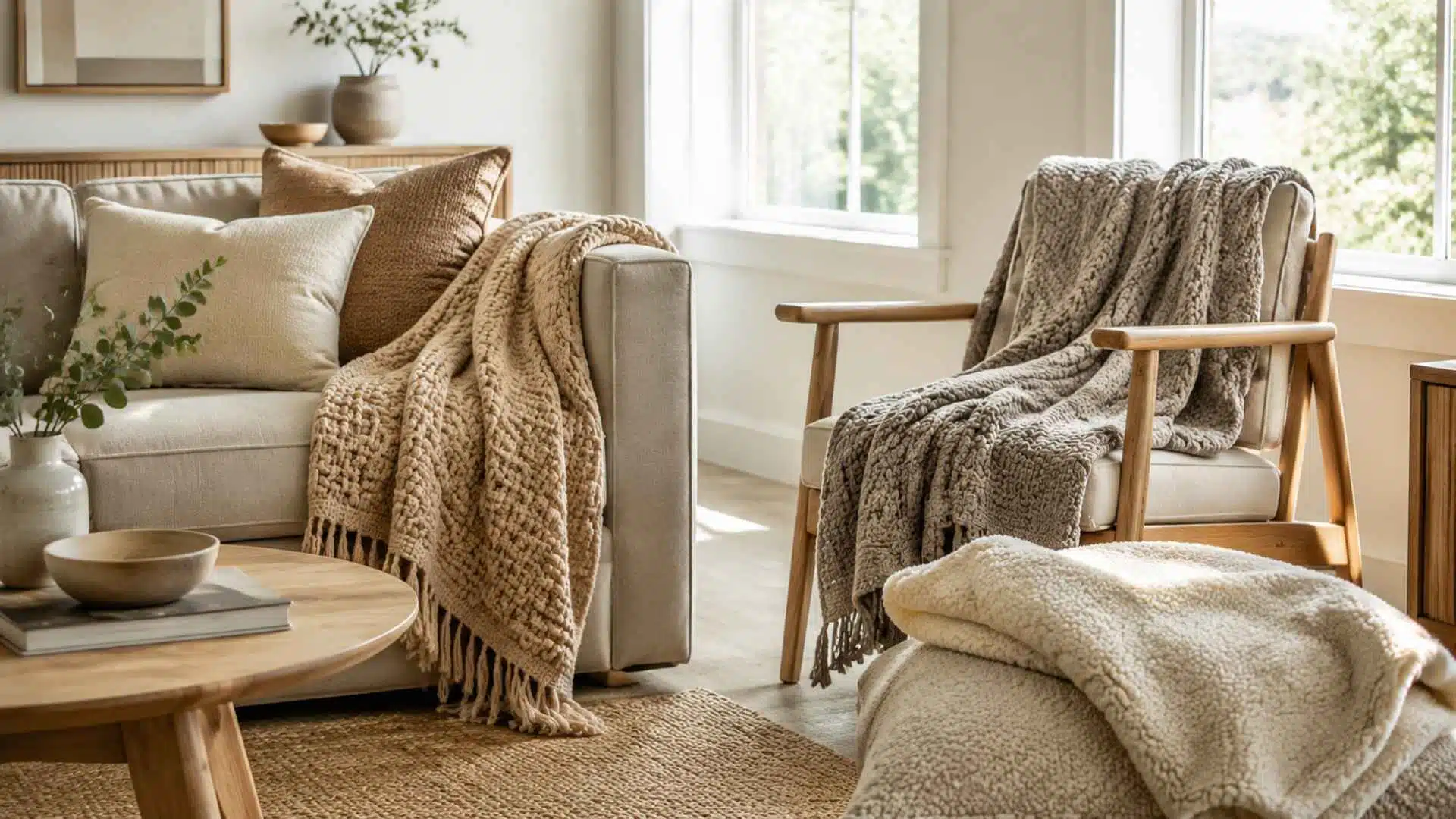
Throw blankets are defined by a specific set of qualities that set them apart from other bedding. Here are the features you will find in most throws, regardless of style or price point.
1. Lightweight and Portable Design
A throw blanket is designed to be easily moved around.
Its compact size and low weight mean you can carry it from the couch to the bedroom, fold it over a chair arm, or toss it in a bag for travel without it taking up much space.
That portability is one of the main reasons people keep more than one in a home.
2. Decorative Patterns and Textures
Most throw blankets are designed with appearance in mind just as much as function.
They come in a wide range of patterns, including stripes, geometric prints, cable-knit textures, and solid colors, all chosen to complement furniture and room palettes.
A throw draped over a sofa or accent chair is often as much a styling choice as it is a comfort one.
3. Soft and Comfort-Focused Materials
The materials used in throw blankets are chosen specifically for how they feel against the skin.
Fleece, sherpa, chunky knit, and woven cotton are among the most common options, all of which prioritize softness and a cozy feel.
Unlike heavier bedding blankets, throws are designed to feel gentle and inviting at first contact rather than building warmth slowly over time.
4. Seasonal Versatility
A good throw blanket works across all four seasons.
Lighter woven or cotton throws are comfortable during spring and summer when you want a small layer without heat buildup.
Thicker fleece or sherpa options are better suited for fall and winter when warmth matters more.
Many people keep a seasonal rotation of throws to match both the temperature and the look of their space throughout the year.
Materials Used in Throw Blankets
The material of a throw blanket determines how it feels, how warm it is, and how well it holds up over time.
Here is a look at the most common options and what makes each one worth considering.
1. Cotton Throw Blankets
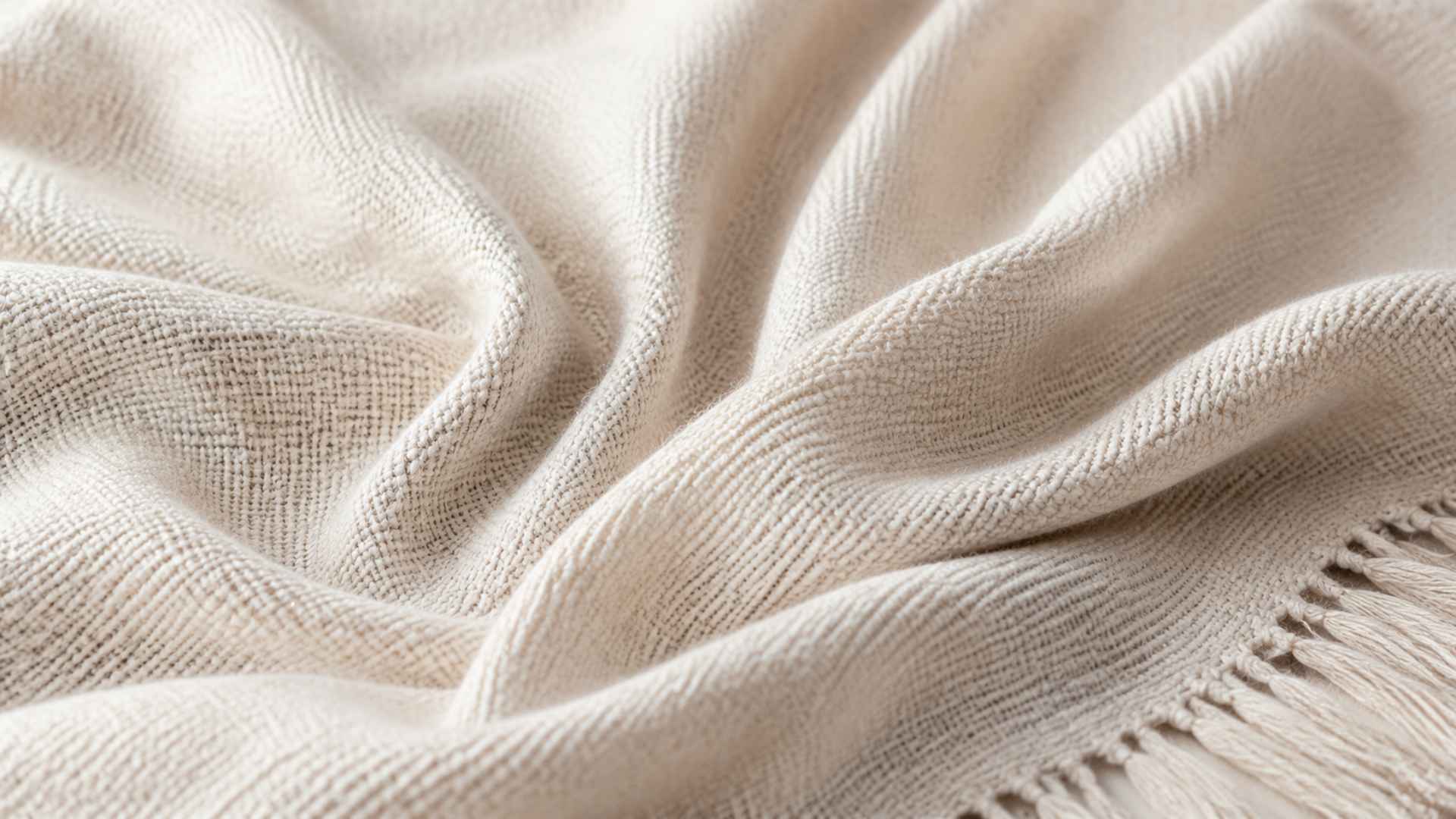
Cotton is one of the most practical choices for a throw blanket because it breathes well and works across multiple seasons.
It does not trap heat the way synthetic materials do, which makes it a comfortable option for warmer months or for people who tend to overheat easily.
Cotton throws are also easy to wash and tend to soften with each cycle, making them a reliable everyday option for the sofa or bedroom chair.
2. Fleece Throw Blankets
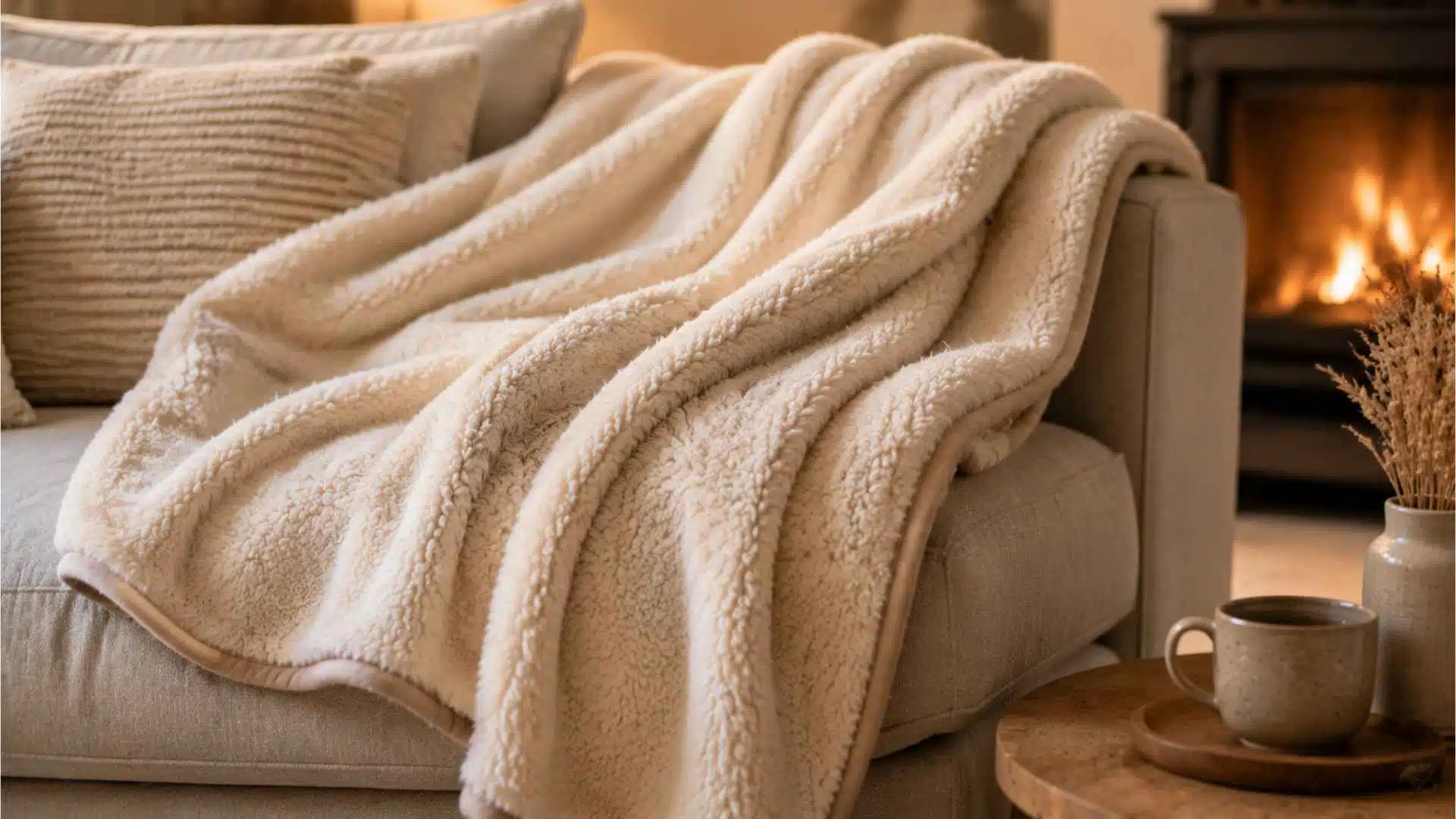
Fleece is one of the most popular materials for throw blankets for good reason.
It is warm, soft, and typically more affordable than natural fiber options, making it an easy pick for everyday use.
Fleece heats up quickly and retains warmth well, which makes it a go-to for cold evenings on the couch.
It is also lightweight despite its warmth, so it does not feel heavy or bulky when draped over your lap.
3. Wool Throw Blankets
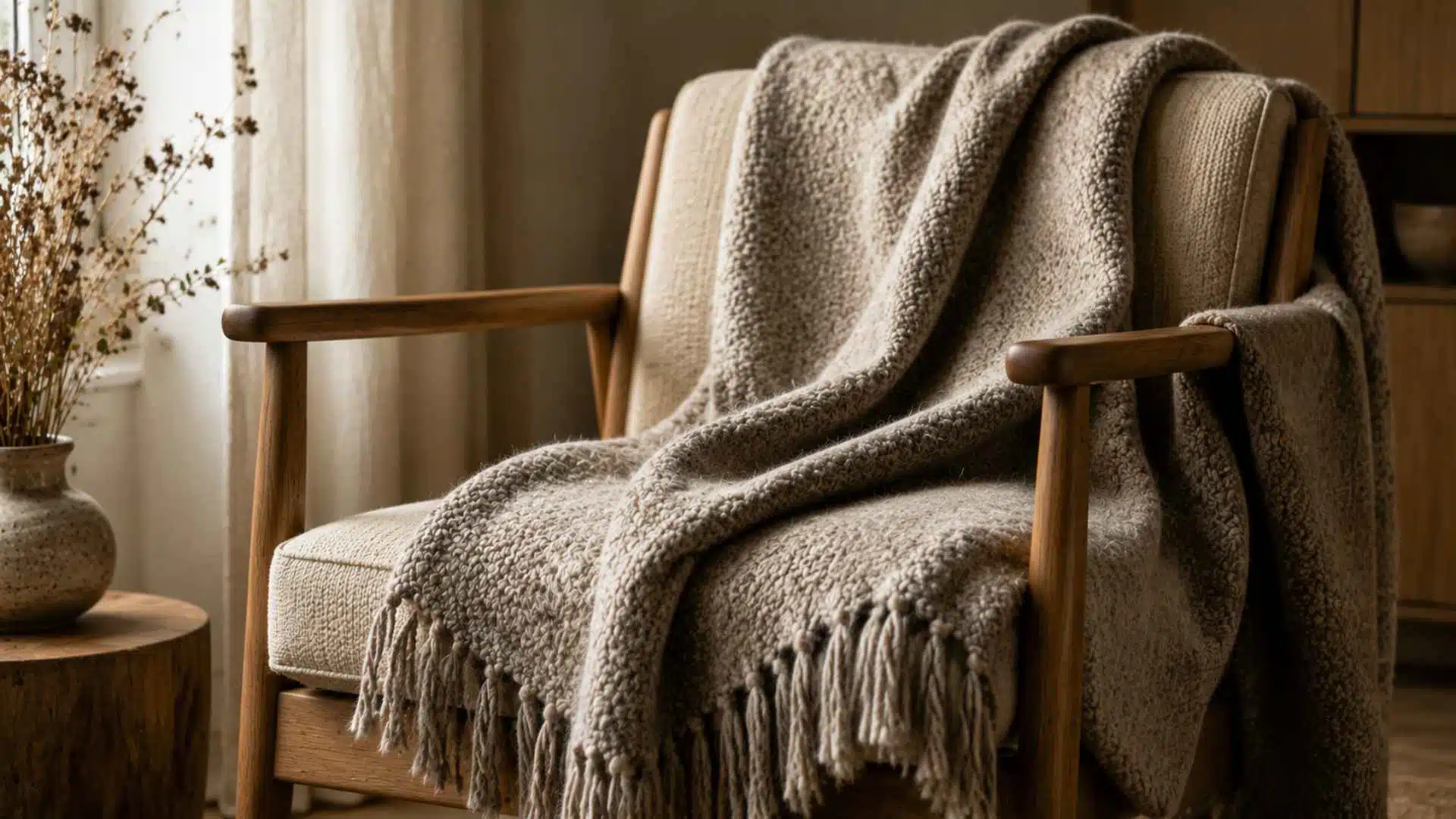
Wool offers a level of natural insulation that most synthetic materials cannot match.
It regulates temperature well, keeping you warm in cooler conditions without causing overheating, because wool fibers naturally wick away moisture.
Wool throws tend to be priced higher, but they are durable and develop a richer feel over time.
They also bring a classic, premium look that works well in more traditional or elevated home interiors.
4. Knit and Woven Throws
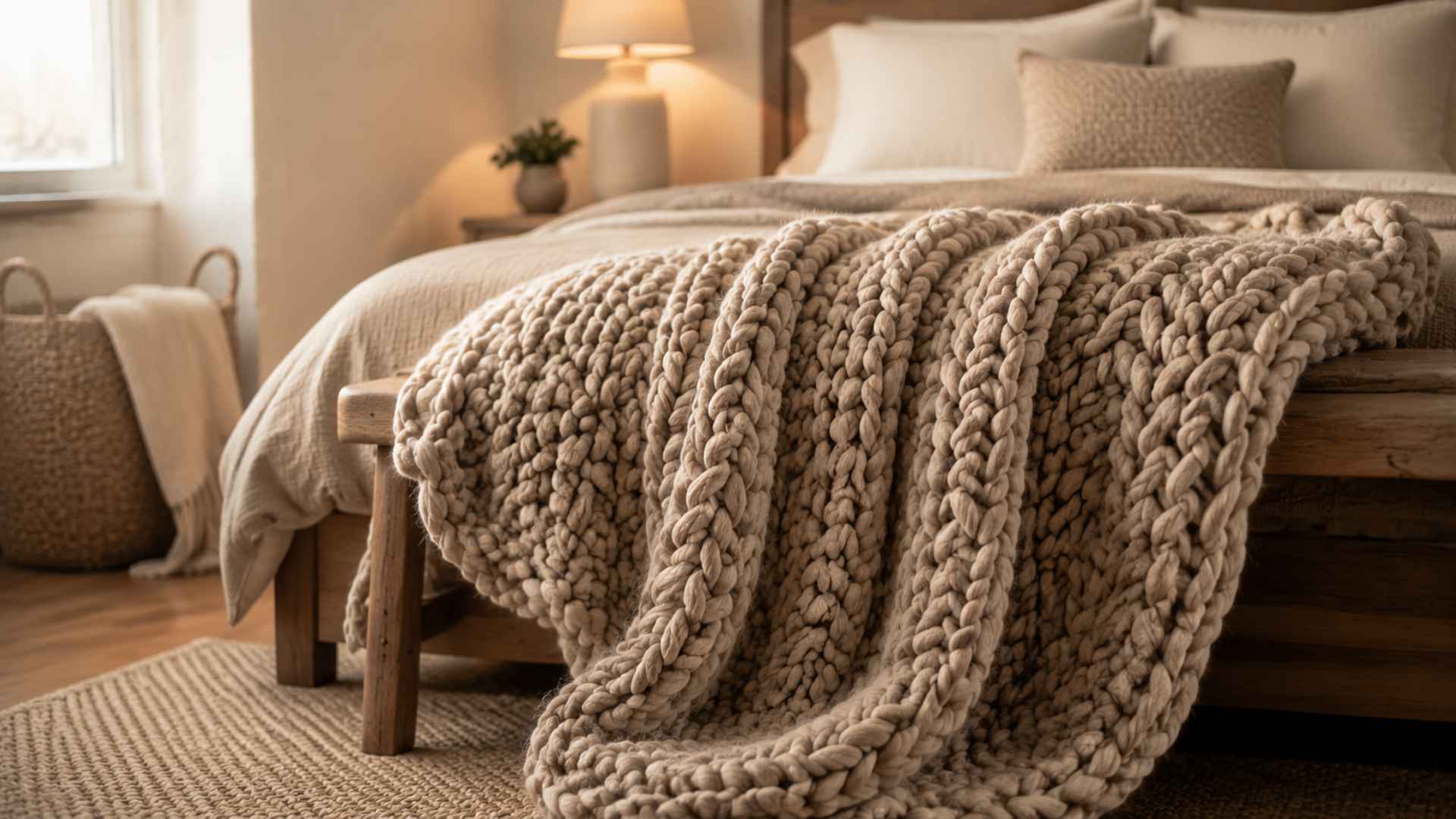
Knit and woven throws are as much about texture and visual interest as they are about warmth.
Chunky knit styles add a handcrafted, cozy look to a room and have become a popular choice for living room and bedroom styling.
Woven throws often feature patterns, stripes, or geometric designs that make them a strong decorative accent.
Both styles drape beautifully over furniture and tend to photograph well, which is part of why they appear so often in home décor settings.
5. Faux Fur Throw Blankets
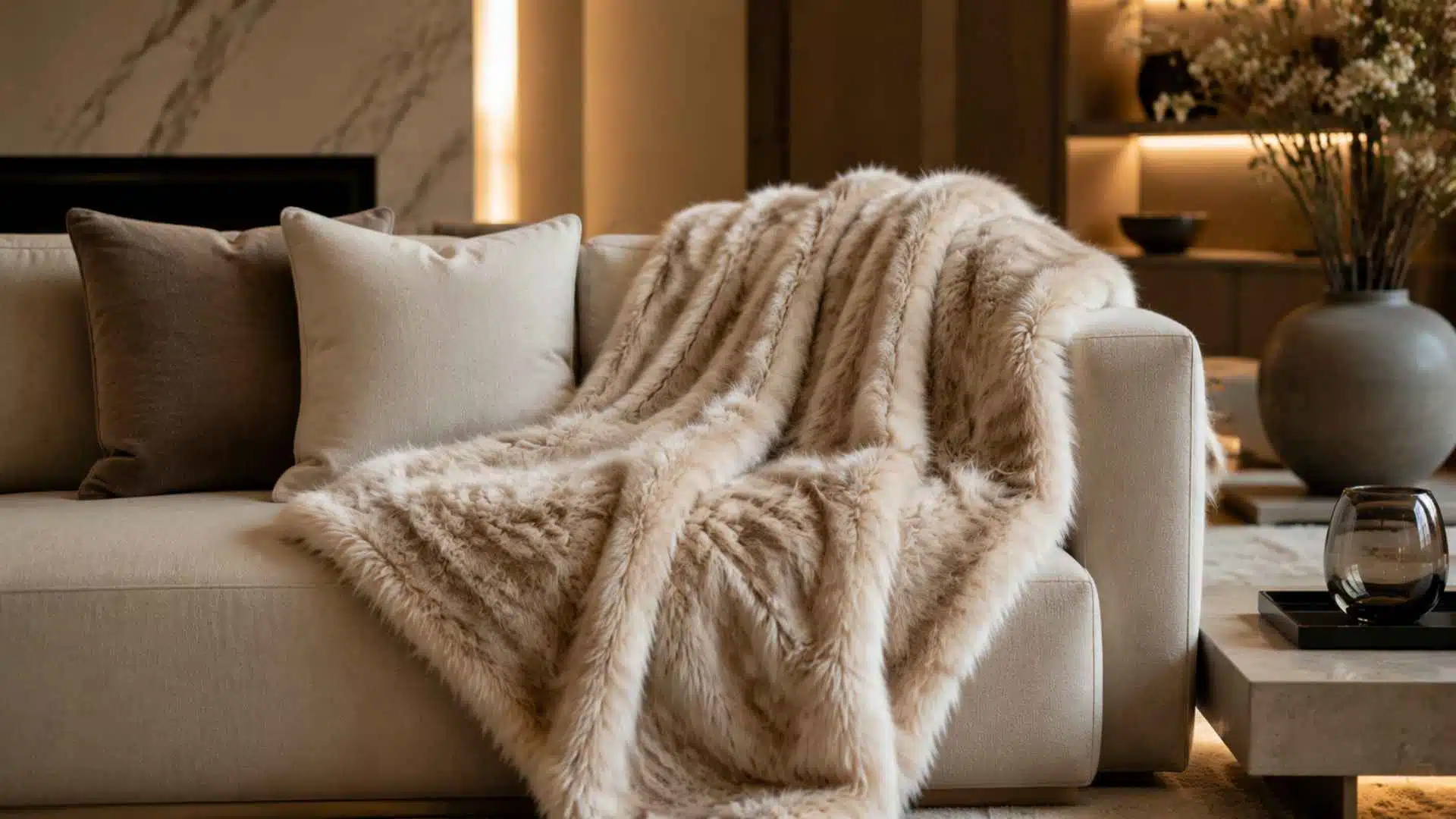
Faux fur throws are designed the evoke a sense of luxury without the cost or ethical concerns associated with real fur.
They have a thick, plush surface that feels indulgent and looks high-end, draped over a sofa or bed.
The visual weight of a faux fur throw makes it a strong statement piece in a room, and it pairs well with neutral or minimalist spaces where it can stand out.
Most options are machine washable, though they require a gentle cycle to preserve the texture over time.
How Size Affects Usage
Choosing the right size comes down to where the throw will live and what you need it to do on a daily basis.
For size details and how they fit sofas, beds, and chairs, check throw blanket sizes and their fit for different spaces and needs.
Sofa Throws
Most sofa throws are around 50 x 60 in, but going oversized makes sense if more than one person needs to share it.
- Covers one person comfortably from shoulders to feet while seated
- Folds neatly over an armrest or sofa back when not in use
- Go oversized at 60 x 80 in if two people need to share on a sectional
Bed Accent Throws
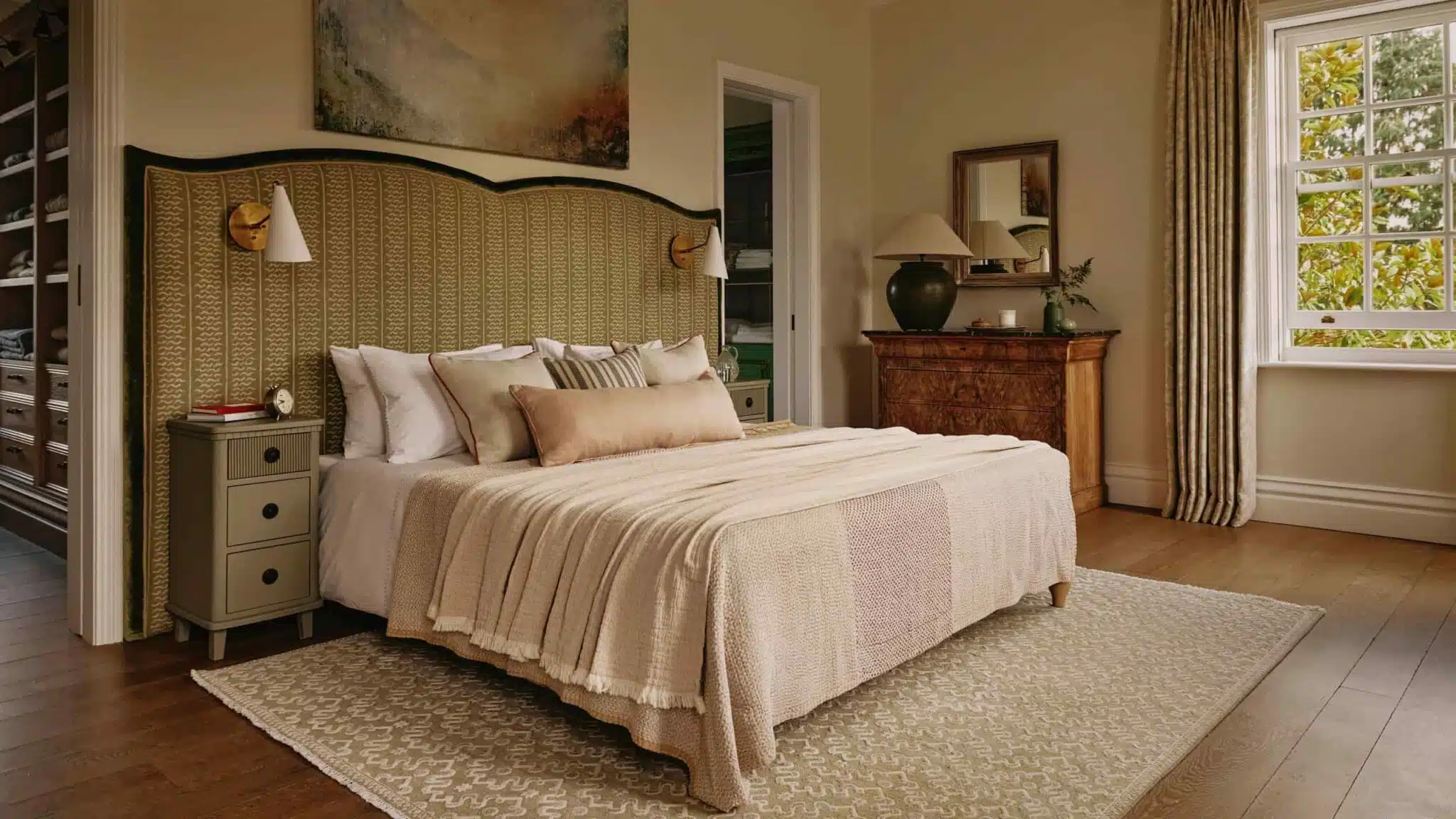
For bed use, the throw needs to span the width of the frame to look intentional rather than undersized.
- Standard or large-size drapes cleanly across the lower third of a bed
- Adds texture and visual depth without covering the full bed surface
- Chunky knit and woven styles in these sizes work best as decorative accents
Travel Throws
A small 40 x 50 in throw is the most practical option when you need warmth without the added bulk.
- Folds down compactly enough to fit in a carry-on or tote bag
- Light enough not to add noticeable weight to luggage
- Useful for long flights, road trips, and overnight stays
- A practical backup when hotel or rental bedding does not provide enough warmth
How to Choose the Right Throw Blanket and Its Benefits
Choosing the right throw blanket comes down to material, season, décor style, and budget.
Cotton suits year-round wear; fleece offers affordable warmth; wool provides premium insulation; and chunky knit or faux-fur styles lean more toward decoration.
Match the weight to your climate and the color to your existing room palette for the best result. Beyond the selection process, the benefits speak for themselves.
A throw blanket adds warmth without bulk, brings texture and color to any room without a full décor overhaul, and moves easily between spaces as needed.
Most options are machine washable and retain their softness over time, making them among the most low-maintenance comfort additions you can bring into a home.
How to Care for a Throw Blanket and Common Mistakes to Avoid
Getting the most out of a throw blanket comes down to how well you care for it and how thoughtfully you chose it in the first place.
- Machine-wash cotton and fleece on a gentle cycle; wool needs handwashing or a wool-safe detergent.
- Air-dry or use low heat for faux fur and chunky-knit throws to keep the texture intact.
- Store the throw, folded loosely, away from direct sunlight.
- Avoid buying a throw that is too small, as it will look out of place and provide insufficient coverage.
- Do not prioritize design over material quality, as low-grade blends pill quickly and lose softness fast.
- Match the throw to its intended purpose, since a decorative knit and a practical fleece serve very different needs.
A little attention to material care and a more intentional approach to buying will keep your throw blanket looking and feeling good for much longer than most people expect.
Final Thoughts
A throw blanket is one of the simplest and most useful things you can add to a home.
It covers the basics of everyday comfort, pulls a room together visually, and works across more spaces and situations than most people expect.
Whether you are shopping for your first one or looking to upgrade what you already have, knowing the right size, material, and care routine makes all the difference.
The right throw blanket is one you barely have to think about because it just works.
Frequently Asked Questions
Is a Throw Blanket the Same as a Regular Blanket?
No, a throw blanket is smaller, lighter, and designed for casual daytime use rather than as a primary bed covering.
Can a Throw Blanket Be Used on a Bed?
Yes, most people use them folded at the foot of a bed as a decorative accent or extra layer of warmth.
What is the Standard Size of a Throw Blanket?
The most common size is 50 by 60 inches, which is large enough to cover one adult comfortably while seated.