



Every bedroom has that one bedding debate. Quilt or comforter?
Both sit on top of your bed. Both keep you warm at night. But they are not the same thing. Picking the wrong one can mean waking up sweaty or reaching for an extra blanket at 2 AM.
Most people just grab whichever looks nice in the store and deal with it later. That usually does not work out too well.
The quilt vs comforter decision is not complicated. One runs light and breathable. The other runs thick and warm. Both work great, just not for the same person or the same season.
All the real differences are laid out below in plain, simple words. No complicated terms, no confusion. Just straightforward, honest information so the right bedding choice becomes easy and sleep finally feels the way it should.
Quilt vs Comforter: 7 Key Differences at a Glance
Both quilts and comforters go on top of your bed, but they are built differently and feel very different. Here is a quick side-by-side look.
| Feature | Quilt | Comforter |
|---|---|---|
| Layers | 3 stitched layers | 2 layers with fill |
| Thickness | Thin and flat | Thick and fluffy |
| Warmth | Light warmth | High warmth (lighter in weight, higher in loft) |
| Design and Appearance | Flat, stitched, decorative look | Puffy, soft, cozy look |
| Cleaning & Maintenance | Easy home wash | May need a large washer |
| Durability | Long-lasting stitched structure | Filling may flatten over time |
| Price | More affordable | Can be expensive |
The table above gives you the basic picture. The right choice really comes down to your climate, sleep style, and budget. Keep reading to find out which one suits you best.
What is a Quilt?
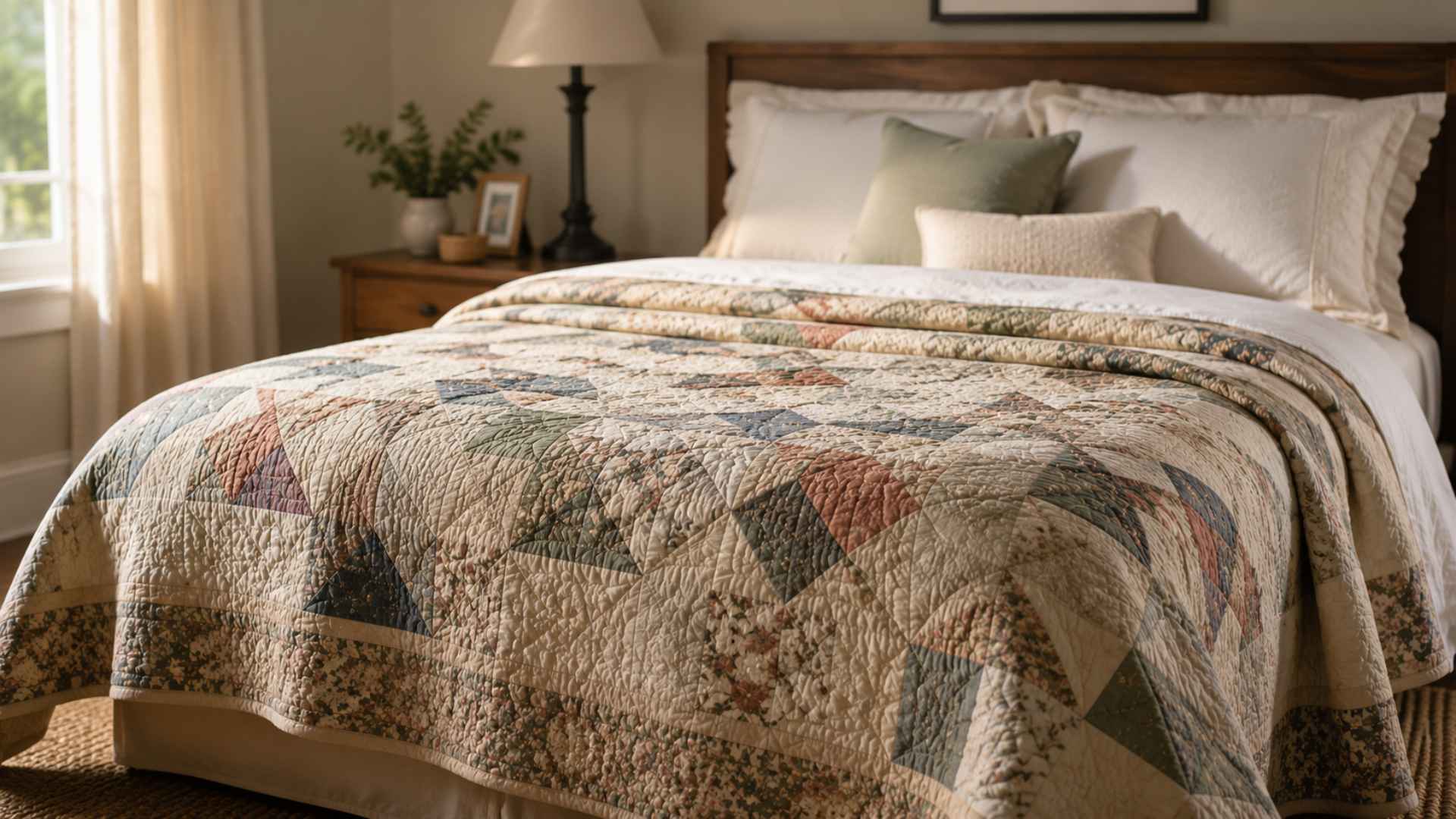
A quilt is a type of bedding made of three layers stitched together. The top layer is usually a decorative fabric, often patchwork or printed.
The middle layer, called batting, is a thin padding made from cotton, polyester, or wool. The bottom layer is a plain backing fabric. All three layers are sewn together in decorative patterns, which is where the word “quilting” comes from.
Quilts are flat, lightweight, and breathable. That is why they work so well in warmer months or moderate climates.
They have a long history in American homes, often passed down through generations as handmade keepsakes.
Think of the classic patchwork quilt you might have seen on a farmhouse bed or a grandmother’s couch. They are easy to fold, simple to wash, and versatile enough to use across different seasons.
What is a Comforter?
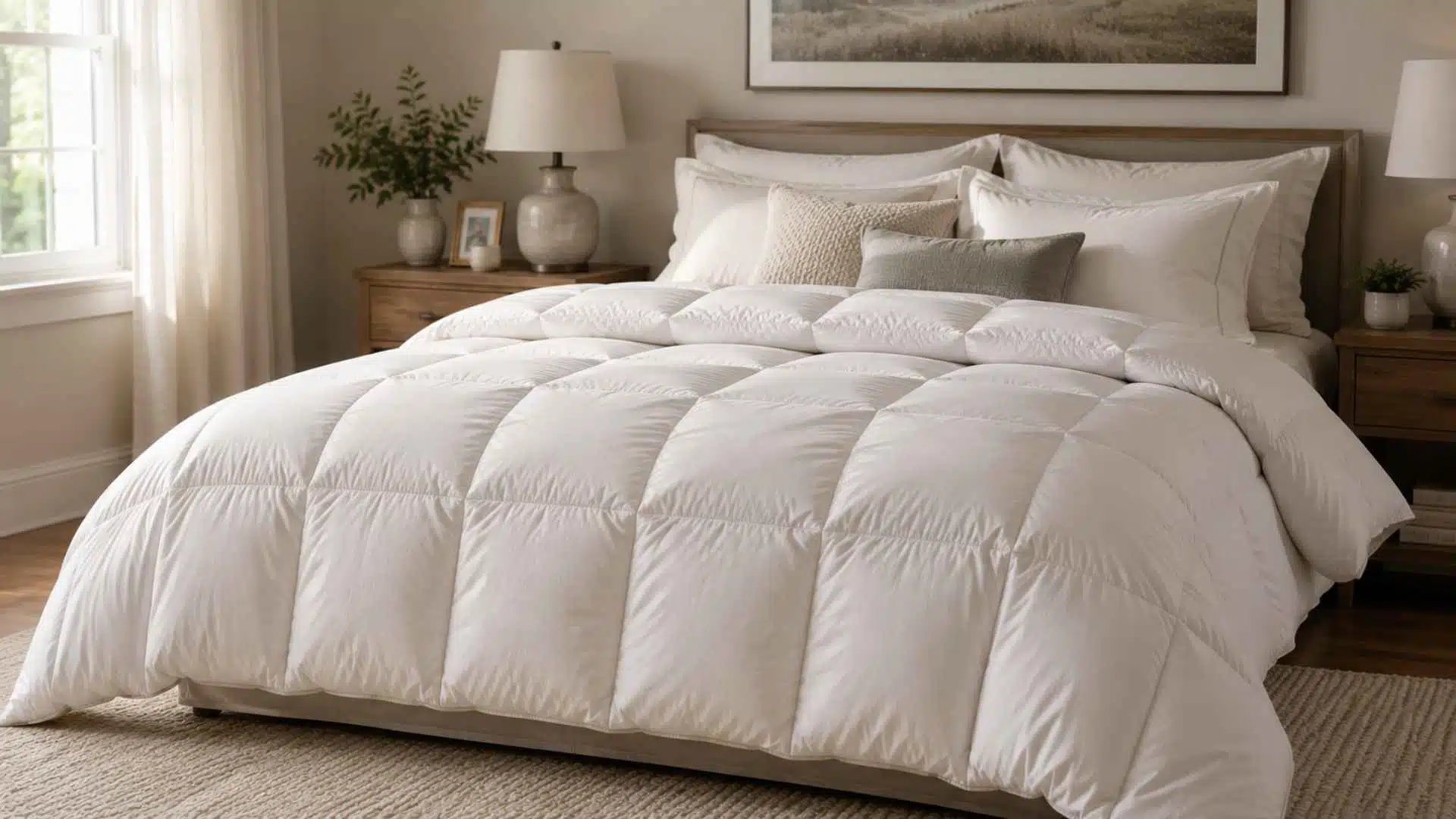
A comforter is a thick, fluffy bedding layer made of two pieces of fabric stitched together and filled with an insulating material.
That filling is usually down, polyester, or microfiber, which gives it that puffy, cloud-like appearance.
The two outer layers are sewn together in a box or grid pattern to keep the filling evenly distributed and prevent it from bunching up.
Unlike a quilt, a comforter is not meant to be decorative through stitching. Its main job is to keep you warm. It is loftier and traps more heat than a quilt.
Though comforters appear bulkier, quilts are often heavier in actual physical weight due to their denser fabric layers
You have probably seen this style of bedding in hotels, where that thick, oversized cover sits perfectly fluffed on the bed. Comforters are typically used as the sole top layer without additional blankets.
Main Differences Between Quilt and Comforter
Quilts and comforters differ in thickness, warmth, weight, design, cleaning, durability, and price. These points help you choose bedding that fits your room and sleep style.
1. Layers
A quilt usually has three layers stitched together. These include the top fabric layer, a thin middle batting layer, and the backing fabric.
All three layers are sewn together in decorative patterns, which is where the word quilting comes from, and many classic styles begin with a simple quilt pattern.
A comforter usually has two main parts, the outer fabric and the thick inner filling. Because of this, comforters feel puffier and softer compared to quilts.
Key note: Quilts use three stitched layers, while comforters mainly have fabric and filling layers.
2. Thickness
A comforter is thicker because it has more filling inside. It looks fluffy and gives the bed a fuller shape. A quilt is thinner because it has less filling and tighter stitching.
It sits flatter on the bed and feels lighter during sleep. For example, a comforter feels like hotel bedding, while a quilt feels more like a layered cotton blanket.
Key note: Choose a quilt for light bedding and a comforter for extra thickness.
3. Warmth
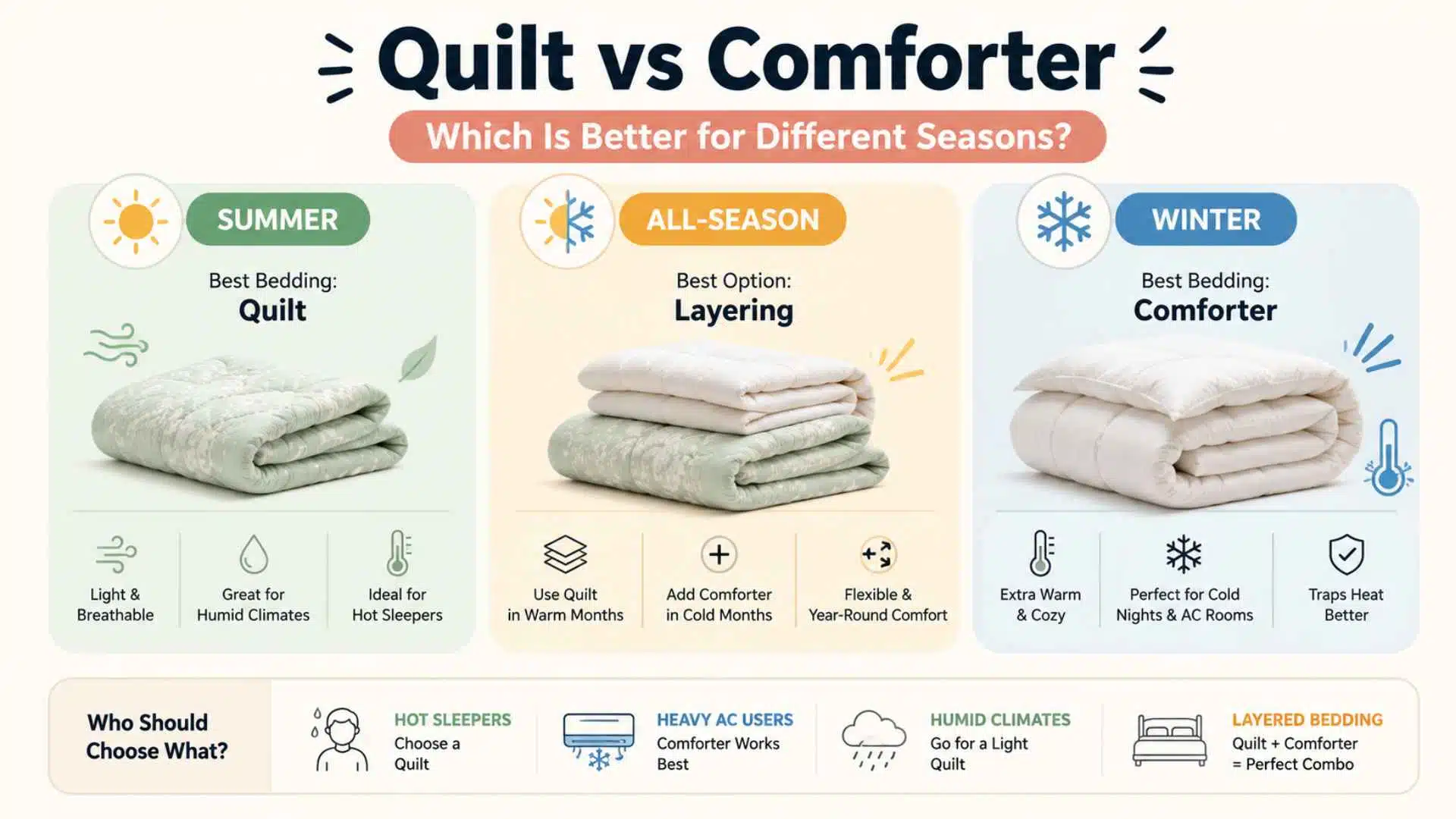
Comforters are usually warmer because the filling traps more heat. They work well in winter, cold rooms, and places where air conditioning runs at night.
Quilts are more breathable and better for warm weather or hot sleepers. If you live in a humid area, a quilt may feel easier to sleep under without overheating.
Key note: Comforters suit cold sleepers, while quilts work better for warm sleepers.
4. Design and Appearance
Quilts often have stitched patterns, patchwork designs, or textured details. They give the bed a clean, layered look. Comforters look softer, puffier, and more relaxed.
They are often used for a cozy bedroom style. A quilt suits farmhouse, minimal, or classic rooms. A comforter works well for hotel-style or winter bedding.
Key note: Quilts look more detailed, while comforters look fuller and softer.
5. Cleaning and Maintenance
Most cotton quilts are easy to machine wash at home. However, handmade or silk quilts may require dry cleaning. Always check the care label, as material, not just size, determines how a quilt should be cleaned.
Comforters can be harder to clean because they are bulky and take longer to dry, so a simple care timeline helps keep them fresh without over-washing. Always check the care label before washing either type of bedding.
Key note: Quilts are often easier to wash and dry at home.
6. Durability
A good quilt can last for years because the stitching keeps the layers in place. It may also handle regular washing better if made from strong cotton.
Comforters can also last well, but the filling may shift, flatten, or clump over time. Quality matters for both. Better stitching and fabric usually mean longer use.
Key note: Quilts often hold their shape better with regular care.
7. Price Difference
Quilts and comforters both come in budget and premium options. Simple cotton quilts can be affordable, while handmade quilts may cost more.
Comforters with polyester fill are usually cheaper than down or high-quality cotton comforters. The best choice depends on your budget, climate, and how often you plan to use it.
Key note: Prices vary, but material and construction affect the final cost.
Common Mistakes People Make When Buying Bedding
Many people choose bedding based solely on appearance and later find it uncomfortable to use daily. A few simple mistakes can affect comfort, sleep quality, maintenance, and long-term durability.
- Choosing bedding only for appearance can lead to uncomfortable sleep and bedding that does not suit daily use.
- Ignoring local climate can lead to overheating, poor airflow, or insufficient warmth across different weather conditions throughout the year.
- Buying oversized bedding can make beds look messy, especially when it is not matched to the right bed dimensions and mattress depth.
- Skipping wash instructions may damage fabric, cause bedding to shrink, or reduce softness and durability after repeated cleaning cycles.
- Choosing heavy bedding in humid climates can trap heat, making sleeping feel sweaty and uncomfortable on warmer nights.
- Choosing low-quality filling materials may cause flattening, uneven texture, or reduced comfort with regular indoor use over time.
- Not checking fabric breathability can reduce airflow and cause discomfort for hot sleepers in summer or humid weather.
Taking a little extra time before buying bedding helps avoid common comfort and maintenance problems. The right choice should match your climate, sleeping habits, room style, and everyday lifestyle needs.
Quilt vs Comforter vs Duvet: What Is the Difference?
Quilts, comforters, and duvets all sit on top of your bed but work very differently. Here is a quick breakdown of how each one compares.
| Feature | Quilt | Comforter | Duvet |
|---|---|---|---|
| Structure | 3 stitched layers | Thick filled blanket | Insert with removable cover |
| Warmth | Light warmth | High warmth | Adjustable warmth |
| Breathability | Very breathable | Less breathable | Depends on filling |
| Best Season | Spring and summer | Winter and cold rooms | All season |
| Maintenance | Easy home wash | Bulky to wash | The cover is easy to remove and wash |
All three options have their own strengths. Your best pick depends on your climate, how warm you sleep, and how much upkeep you are comfortable with.
Worth Knowing: You can use a quilt and a comforter together. Layer the comforter underneath for warmth, then place the quilt on top, or fold it at the foot of the bed for a flexible, season-ready setup.
Conclusion
Choosing between a quilt and a comforter comes down to your climate, sleeping habits, maintenance preference, and bedroom style.
Quilts are lighter, breathable, and easier to layer, while comforters provide extra warmth and a cozy feel during colder months.
Understanding the differences in layers, warmth, durability, and care makes it easier to pick bedding that actually fits your everyday comfort needs. You can even combine both for a flexible setup that works across seasons.
The right bedding should help you sleep comfortably, not just look good on the bed. Which one fits your sleep style better, a lightweight quilt or a warm, fluffy comforter?
Frequently Asked Questions
Is a Quilt Better than a Comforter for Summer?
Yes, quilts are lighter and more breathable, making them more comfortable for warm weather and humid sleeping conditions during summer.
Can You Use a Comforter without a Duvet Cover?
Yes, many people use comforters alone, but duvet covers help protect the fabric and reduce the need for frequent washing and maintenance.
Which Bedding Lasts Longer, a Quilt or Comforter?
Quilts usually last longer because stitched layers stay in place better and handle regular washing more effectively over time.