

If you have ever slept on a traditional spring mattress, you have already experienced what a coil mattress feels like.
Coil mattresses are one of the oldest and most widely used mattress types on the market, and for good reason.
They offer firm support, natural breathability, and a responsive feel that many sleepers still prefer over newer foam alternatives.
But not all coil mattresses are built the same way.
Understanding how the coil system works, what sits on top of it, and why construction quality matters more than coil count alone will help you make a much smarter buying decision.
How a Coil Mattress System Works
A coil mattress is built around a steel spring core that forms the foundation of the bed.
This support core distributes body weight evenly and keeps the spine aligned through the night.
When you lie down, the coils compress under pressure and spring back once that pressure is removed.
Comfort layers made from foam, latex, or fiber sit on top to control softness and pressure relief.
The type of coil used in the core directly influences how the mattress handles motion, support, and long-term durability, which is why coil design matters more than most shoppers initially expect.
Types of Coils Used in Mattresses
The type of coil in a mattress affects how it feels, how long it lasts, and how well it supports your body.
Each design has its own strengths, so knowing the difference helps you pick the right mattress for your sleep style.
| Coil type | Bonnell | Offset | Continuous Wire | Pocketed |
|---|---|---|---|---|
| Mattress Price Range | Budget | Mid-range to High | Budget | High to Premium |
| Typical Coil Count | 400 to 600 | 500 to 2,000 | 400 to 800 | 800 to 1,200 |
| Typical Gauge | Low to High | Medium to High | Medium to High | High |
| Shape | Hourglass | Hourglass with squared sides | Single wire formed into loose coils | Cylindrical springs encased in fabric |
| Joining Agent | Metal helicals and wire extensions | Metal helicals | Metal helicals | Glue or other bonding materials |
Each coil type suits a different budget and sleep need, so the right choice comes down to how much support, motion control, and durability you are looking for in a mattress.
1. Bonnell Coils
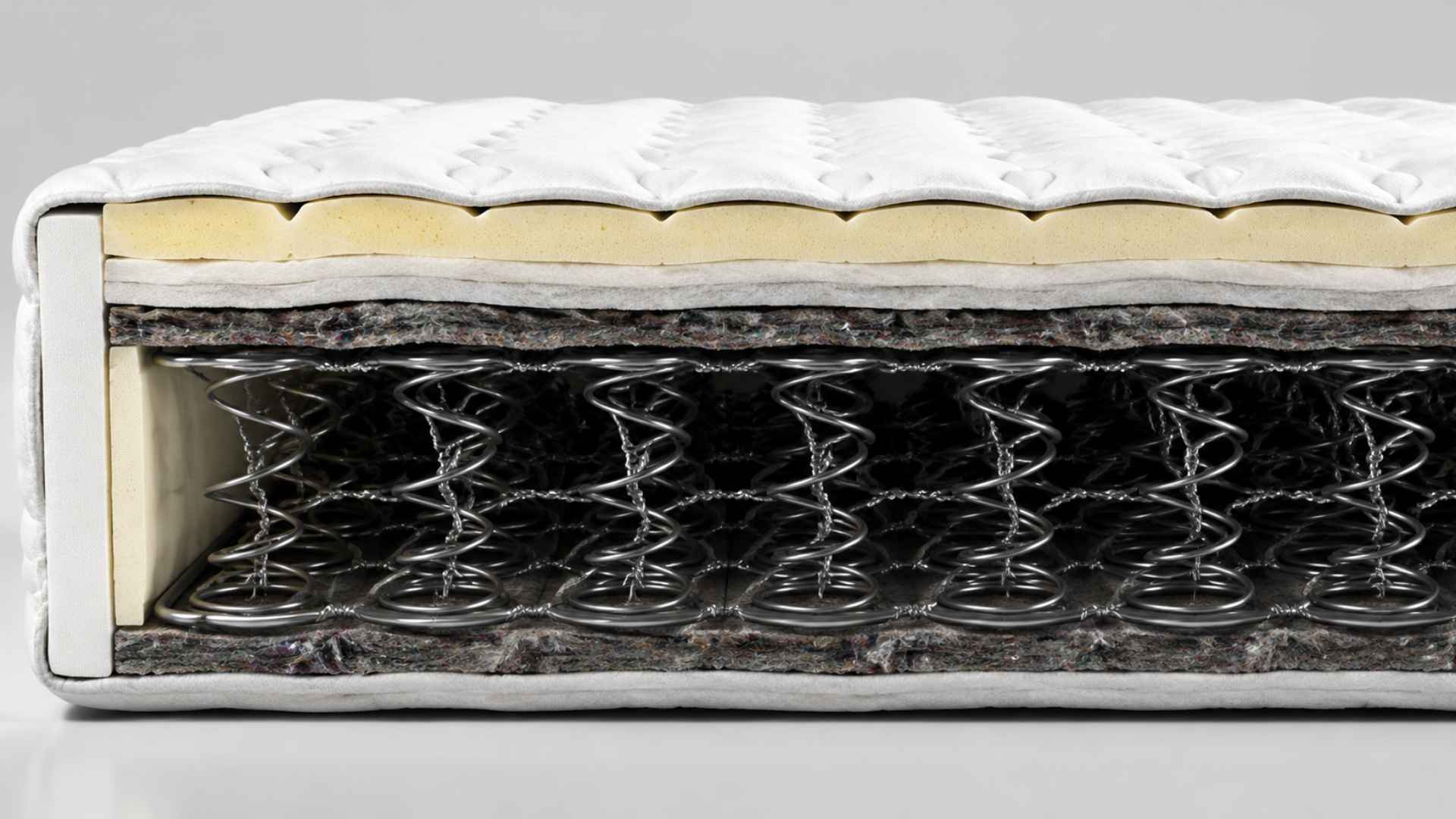
Bonnell coils are the oldest and most widely used coil design in mattresses.
They have an hourglass shape that gets firmer as you press down, which gives them a traditional bouncy feel.
These coils are connected in a grid pattern, meaning when one moves, the others around it move too.
They are inexpensive, durable, and responsive, making them a common choice in budget-friendly mattresses.
The trade-off is that they produce more motion transfer and offer less contouring than modern coil systems, so they are not the best fit for couples or those who need pressure relief.
2. Offset Coils
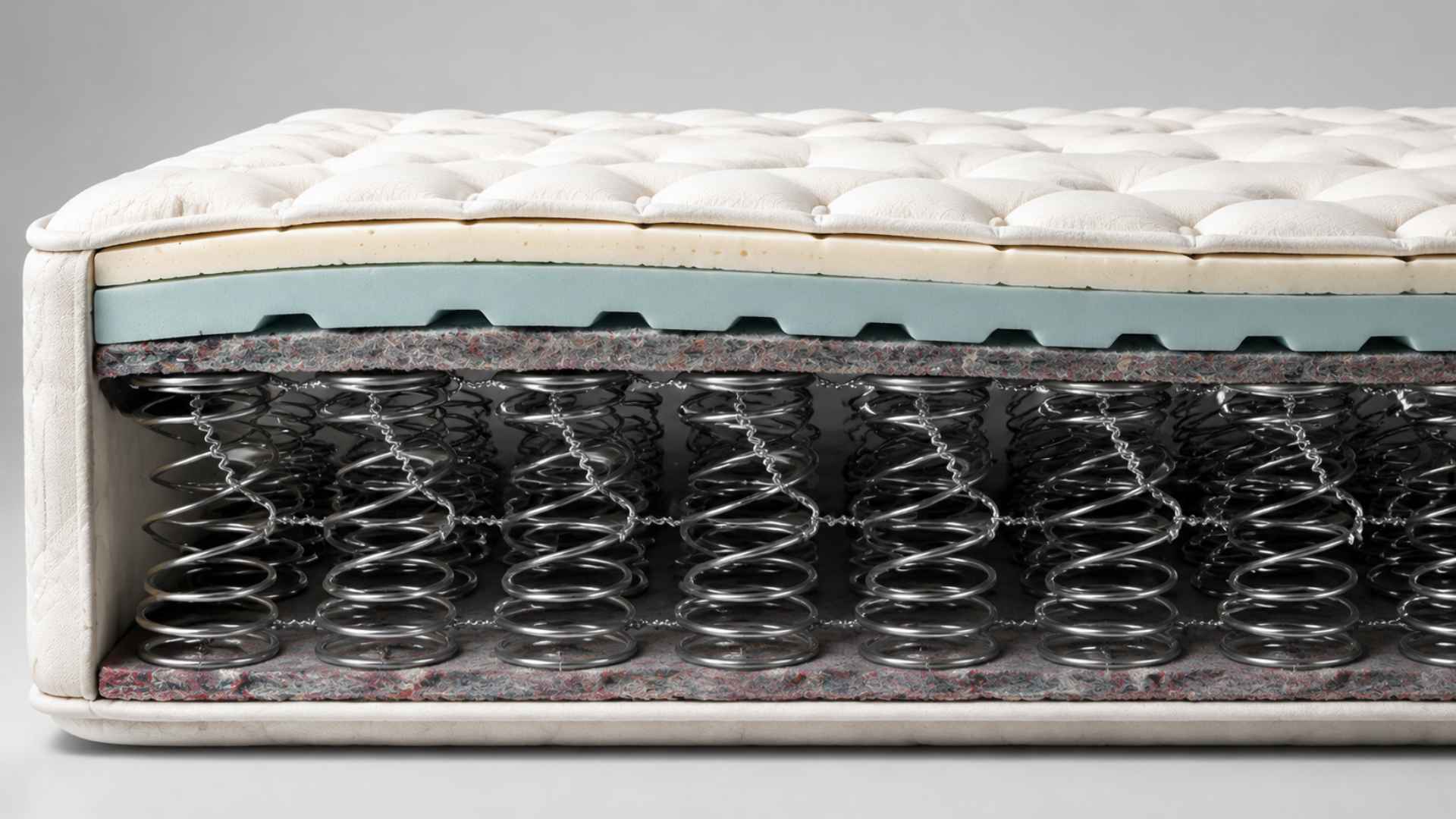
Offset coils are similar in shape to Bonnell coils but have a hinged design at the top and bottom.
That hinge allows each coil to flex more independently, giving the mattress better contouring along the curves of your body.
They tend to offer more support than traditional Bonnell coils without giving up durability.
The hinged design makes them highly supportive, with increased contouring and reduced motion transfer compared to Bonnell coils.
They are more expensive and can still produce more motion transfer than pocketed coils, which is worth keeping in mind for light sleepers.
3. Continuous Coils
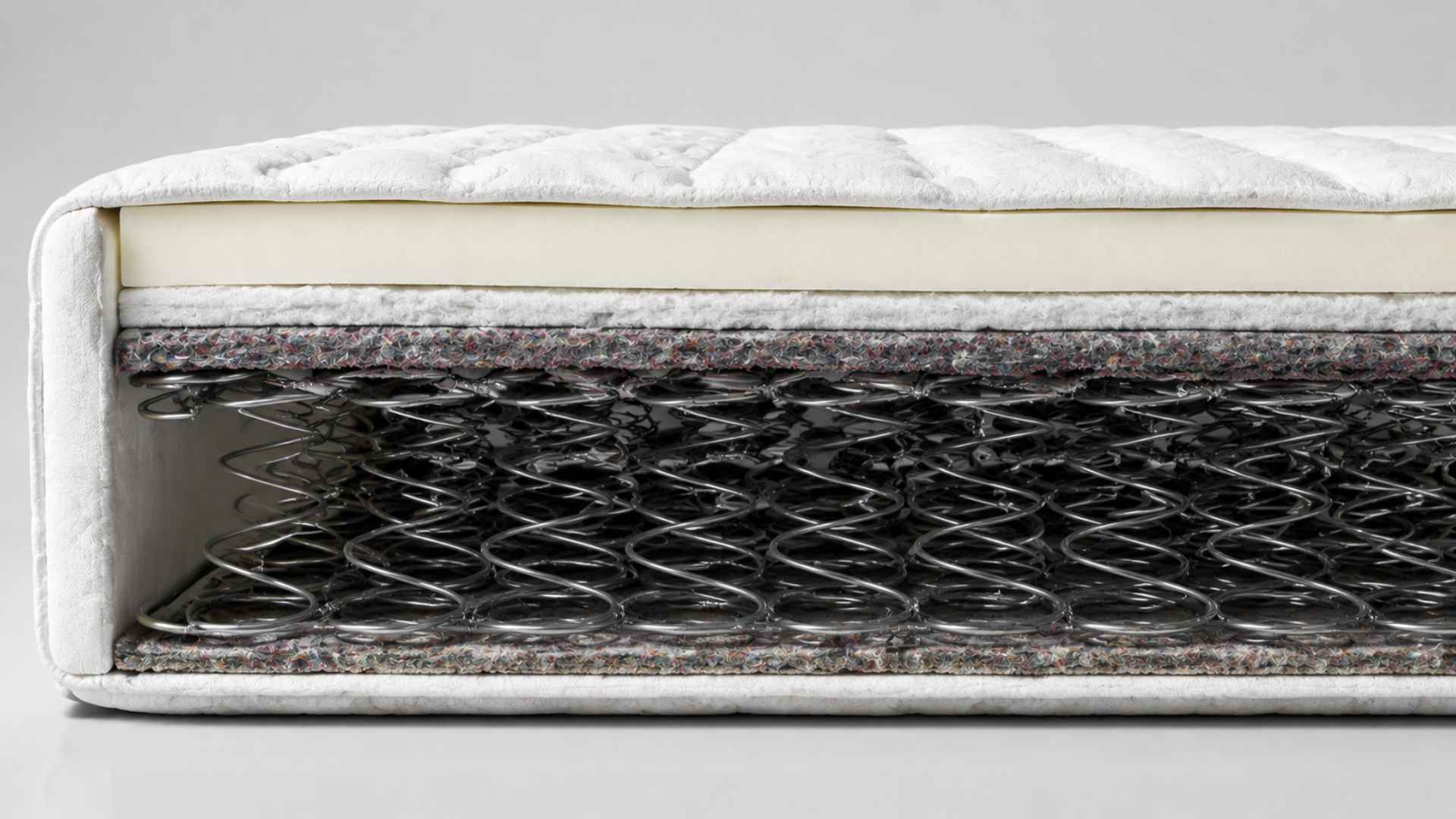
Continuous coils are made from a single wire that runs in rows from the head to the foot of the mattress.
The entire support system is essentially one connected piece, making it very stable and resistant to sagging over time.
This design is especially good at evenly distributing weight across the mattress.
They are inexpensive and sturdy, making them one of the most durable options at a lower price point.
The downside is that the connected structure allows motion to transfer across the surface and offers minimal contouring compared to pocketed designs.
4. Pocketed Coils
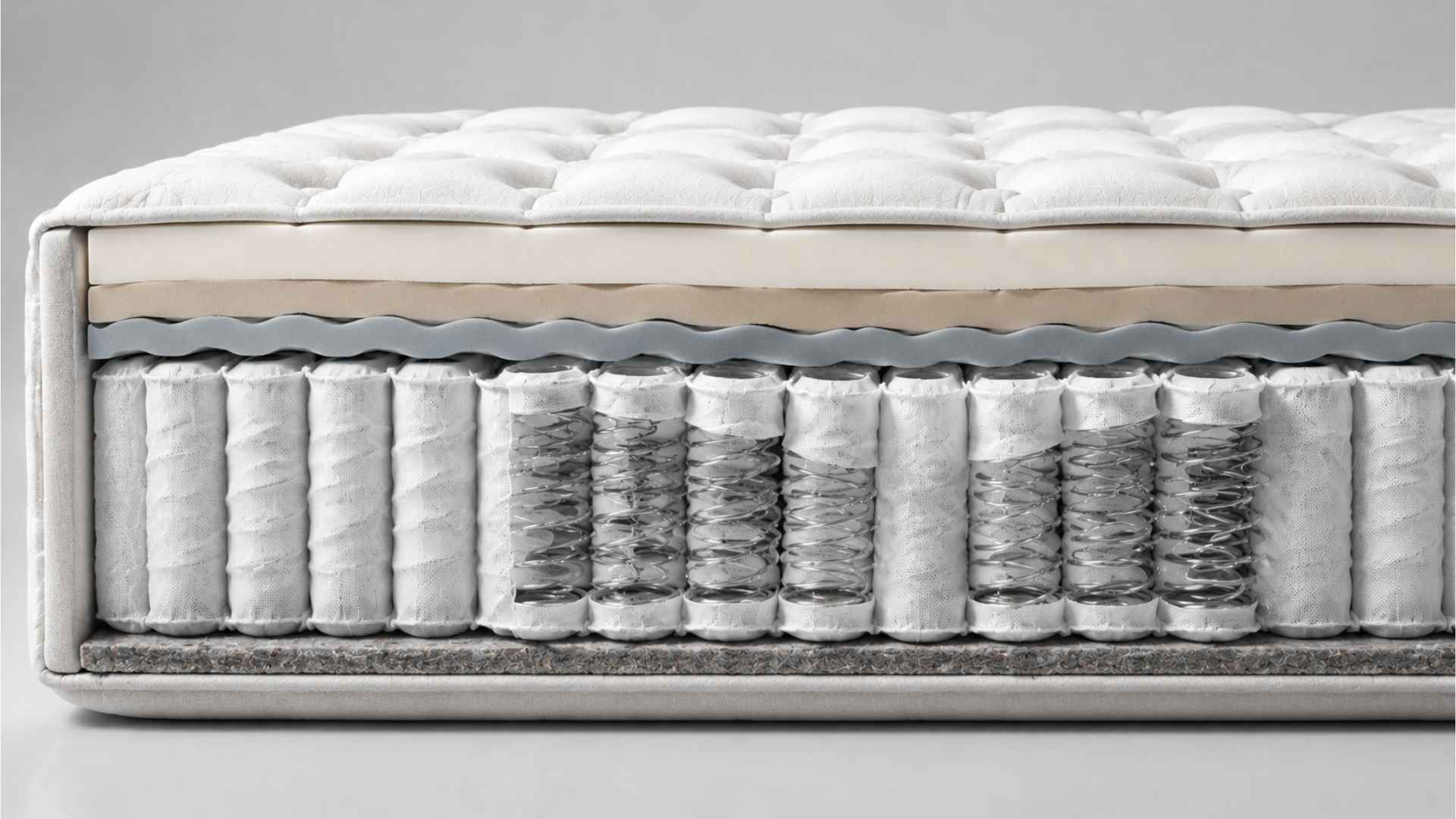
Pocketed coils, also called individually wrapped coils, are each enclosed in their own fabric pocket.
Because they move independently of one another, they respond directly to pressure rather than pulling neighboring coils along.
This makes them one of the best options for motion isolation, which is ideal if you sleep with a partner.
They offer closer contouring and minimal motion transfer and noise, making them the most popular coil type in modern mattresses.
The main drawback is cost, as pocket-coil mattresses are at the higher end of the price range.
5. Microcoils
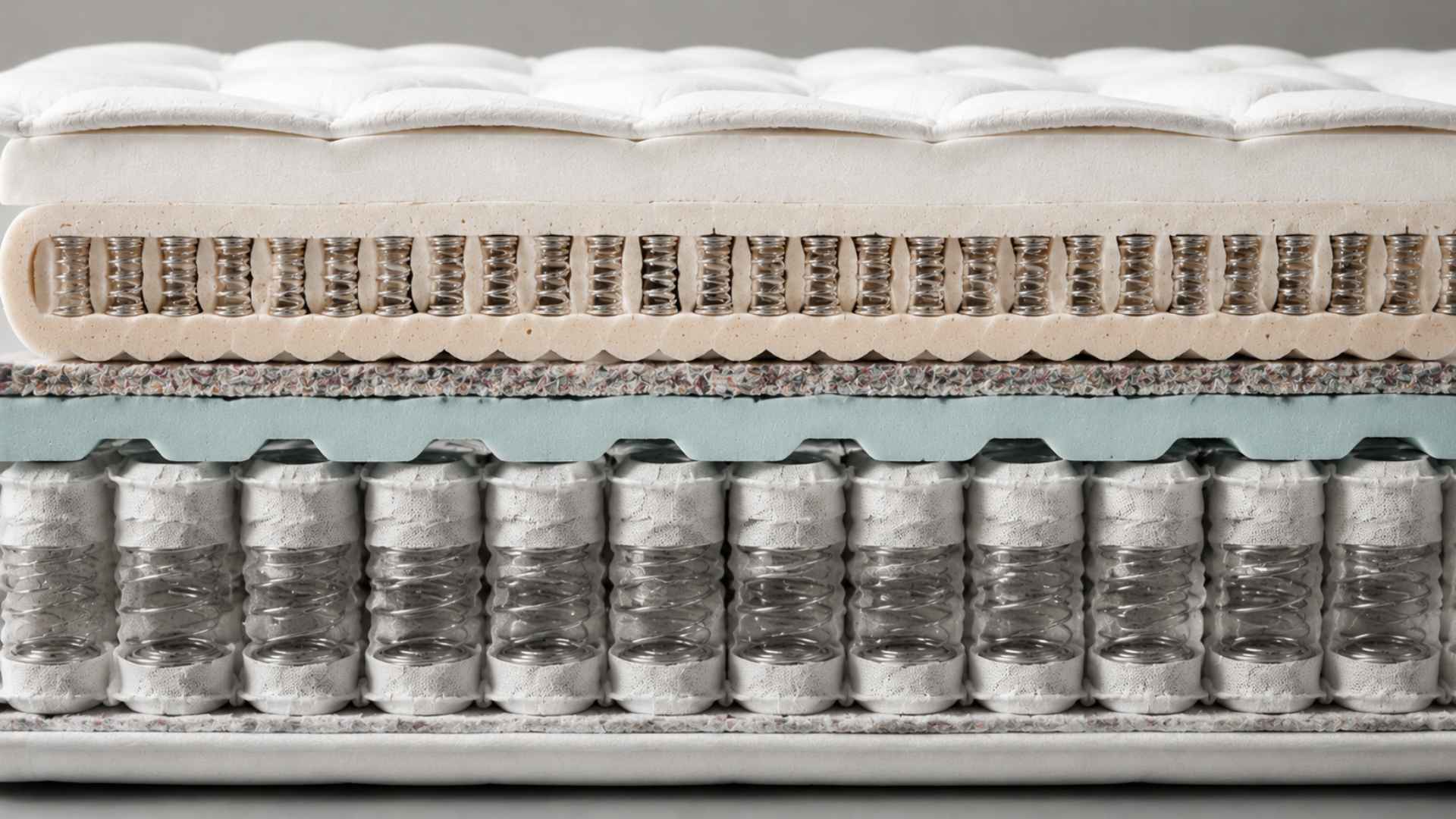
Microcoils are much smaller than standard support coils and are built into the comfort layers of a mattress rather than the base.
Their compact size allows them to respond to pressure with greater precision, adding a layer of adaptive cushioning that foam alone cannot replicate.
You will often find microcoils in hybrid mattresses paired with memory foam or latex, where they help the mattress breathe better and add a gentle springiness to the comfort layer.
Coil Mattress vs Foam Mattress
Choosing between a coil mattress and a foam mattress comes down to understanding how each one performs where it matters most to you.
| Category | Coil Mattress | Foam Mattress |
|---|---|---|
| Support and Feel | Firm and responsive with a pushback feel that supports spinal alignment | Soft and contouring, molds around the body for pressure relief |
| Motion Isolation | Transfers movement across the surface, especially with connected coil systems | Absorbs movement at the source, ideal for couples with different sleep schedules |
| Breathability and Cooling | Open coil structure allows natural airflow, sleeps cooler overall | Dense material traps heat, though gel infusions and open-cell foam can help |
| Durability and Lifespan | It can develop sagging or squeaking over time as springs lose tension | Prone to body impressions in high-pressure areas with lower-density foam |
| Average Lifespan | 7 to 10 years, depending on coil quality and construction | 7 to 10 years, depending on foam density and materials used |
| Best For | Stomach sleepers, hot sleepers, and heavier body types | Side sleepers, couples, those with joint or back pain |
| Price Range | Budget to premium depending on coil type | Budget to premium depending on foam quality and density |
Neither mattress type is universally better than the other.
The right choice depends on what you personally need from your sleep surface, and in many cases, a hybrid combining both materials can offer the best of both.
What is a Good Coil Count for a Queen Mattress
Coil count is one of the most talked-about specs when shopping for a mattress, but it is often misunderstood and used more as a marketing tool than as a true measure of quality.
Average Coil Count Range for Queen Size Mattresses
A queen-size mattress typically contains 400 to 1,000 coils, depending on the coil type and construction.
Pocketed coil mattresses tend to run higher, often between 600 and 1,000, while traditional innerspring models usually fall in the 400 to 600 range.
Anything above 1,000 is considered high, but a higher number does not automatically mean better support or longer life.
Does Coil Count Actually Matter
Coil count gives a rough idea of how many spring points are supporting your body, but it tells you very little on its own.
What matters more is coil gauge, which refers to the wire thickness, and how well the coils are tempered.
A mattress with 600 high-quality tempered steel coils will consistently outperform one with 800 thin, poorly made coils.
Manufacturers sometimes inflate counts using thinner wire to make a mattress sound more impressive on paper, so always look beyond the number.
Recommended Coil Count by Sleep Type
Your sleep position and body weight play a bigger role in choosing the right coil count than most people realize.
| Sleep Type | Recommended Count | Why It Works |
|---|---|---|
| Side Sleepers | 600 to 1,000 | More coils with independent movement contour better to the shoulders and hips |
| Back Sleepers | 400 to 800 | Mid-range count with good coil quality delivers even spinal support |
| Heavy Sleepers | 600 to 1,000+ | A higher count with lower-gauge wire handles greater weight without breaking down. |
For most queen-size sleepers, a count between 600 and 800 with quality pocketed coils is a reliable sweet spot that balances support, durability, and value.
Benefits of Coil Mattresses
Coil mattresses have remained popular for decades because they deliver on the fundamentals that most sleepers care about.
- Strong support and spinal alignment: Firm coil resistance keeps hips and shoulders from sinking out of alignment overnight.
- Better airflow and cooling: An open-coil structure allows air to circulate freely, making coil mattresses naturally cooler than foam mattresses.
- Long-term durability: Tempered steel coils resist bending and fatigue, helping the mattress hold its shape for years.
- Edge support: Pocketed coils along the perimeter stay firm and stable, extending the usable sleep surface to the border.
- Responsive feel: Coils react quickly to movement, giving the mattress a lively feel that foam cannot replicate.
- Wide price range: Coil mattresses are available across nearly every budget, from basic innerspring to premium hybrid builds.
A coil mattress is a practical, well-rounded choice for sleepers who prioritize support, temperature comfort, and a mattress that holds up over the long haul.
Drawbacks of Coil Mattresses
Coil mattresses have a lot going for them, but there are a few trade-offs worth knowing before you buy.
- Motion transfer: Lower-quality connected-coil systems move as a unit, so movement on one side of the bed is easily felt on the other.
- Noise issues: Older coil designs, particularly Bonnell and offset coils, can develop squeaking and creaking as the metal springs wear down over time.
- Sagging over time: Coils that are poorly tempered or made from thin-gauge wire are prone to losing tension, leading to soft spots and uneven support.
- Less pressure relief: Coil mattresses push back against the body rather than contouring to it, which can create pressure buildup at the hips and shoulders for side sleepers.
- Construction quality matters most: A high coil count means little if the wire gauge is thin, the coils are poorly tempered, or the comfort layers above them are low quality.
No mattress type is perfect, and most of these drawbacks stem from build quality rather than the coil design itself.
Choosing a well-constructed coil or hybrid mattress from a reputable brand eliminates many of these concerns before they become a problem.
Final Words
A coil mattress is a solid choice for sleepers who want firm support, natural cooling, and a responsive feel that holds up over time.
The coil count matters far less than the quality of the wire, the coil type, and the comfort layers built on top.
Focus on how the mattress is constructed rather than the specs on the label, and you will be in a much better position to find the right fit.
At the end of the day, the best coil mattress is simply the one that helps you sleep well night after night.
Frequently Asked Questions
What is the Lifespan of a Coil Mattress?
Most coil mattresses last between seven and ten years with proper care and maintenance.
Are Pocketed Coils Better than Foam?
It depends on your needs; pocketed coils are better for airflow and edge support, while foam wins for pressure relief and motion isolation.
Do Coil Mattresses Cause Back Pain?
A worn-out or low-quality coil mattress can, but a well-built one with the right firmness level typically supports the back well.