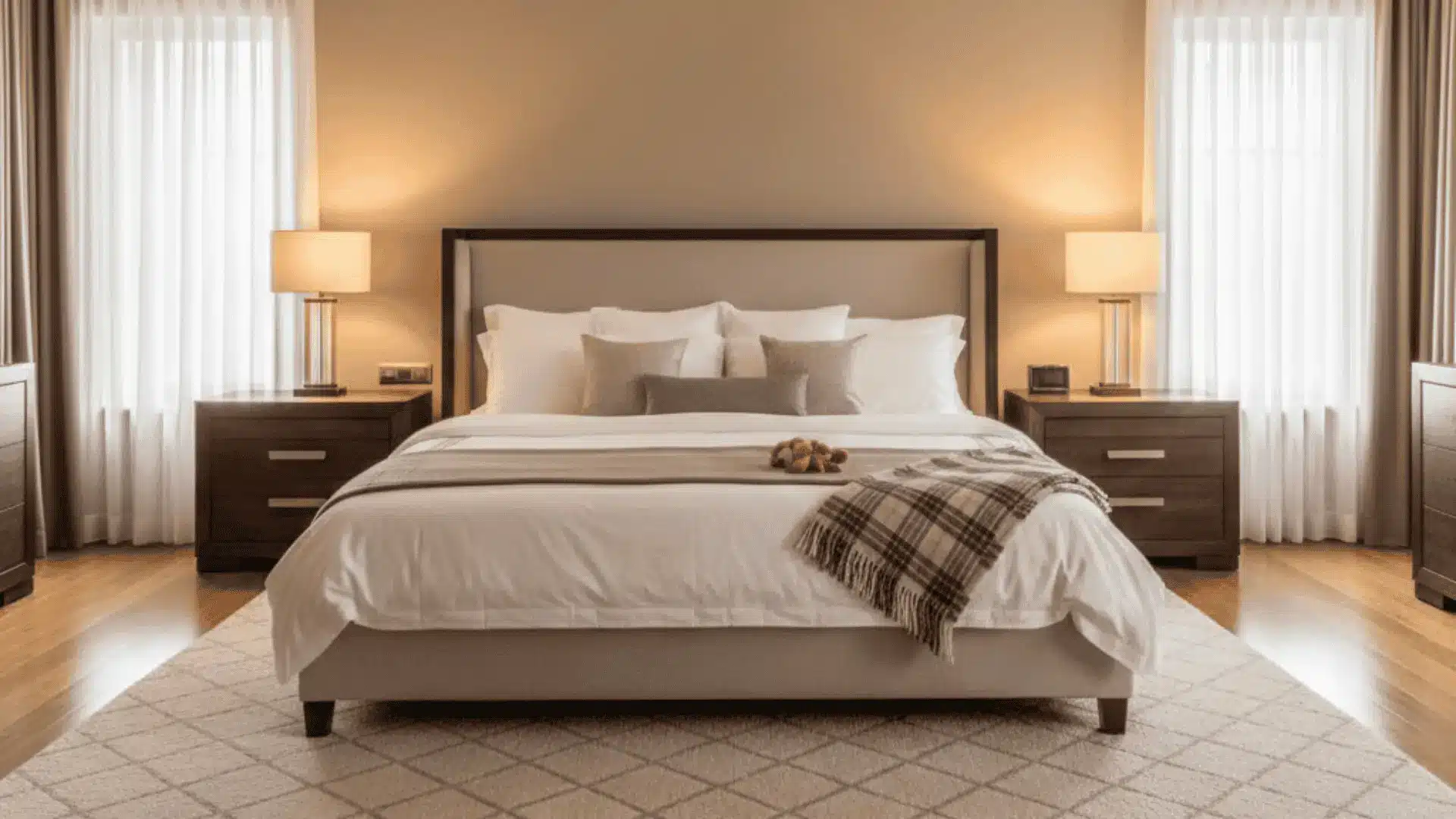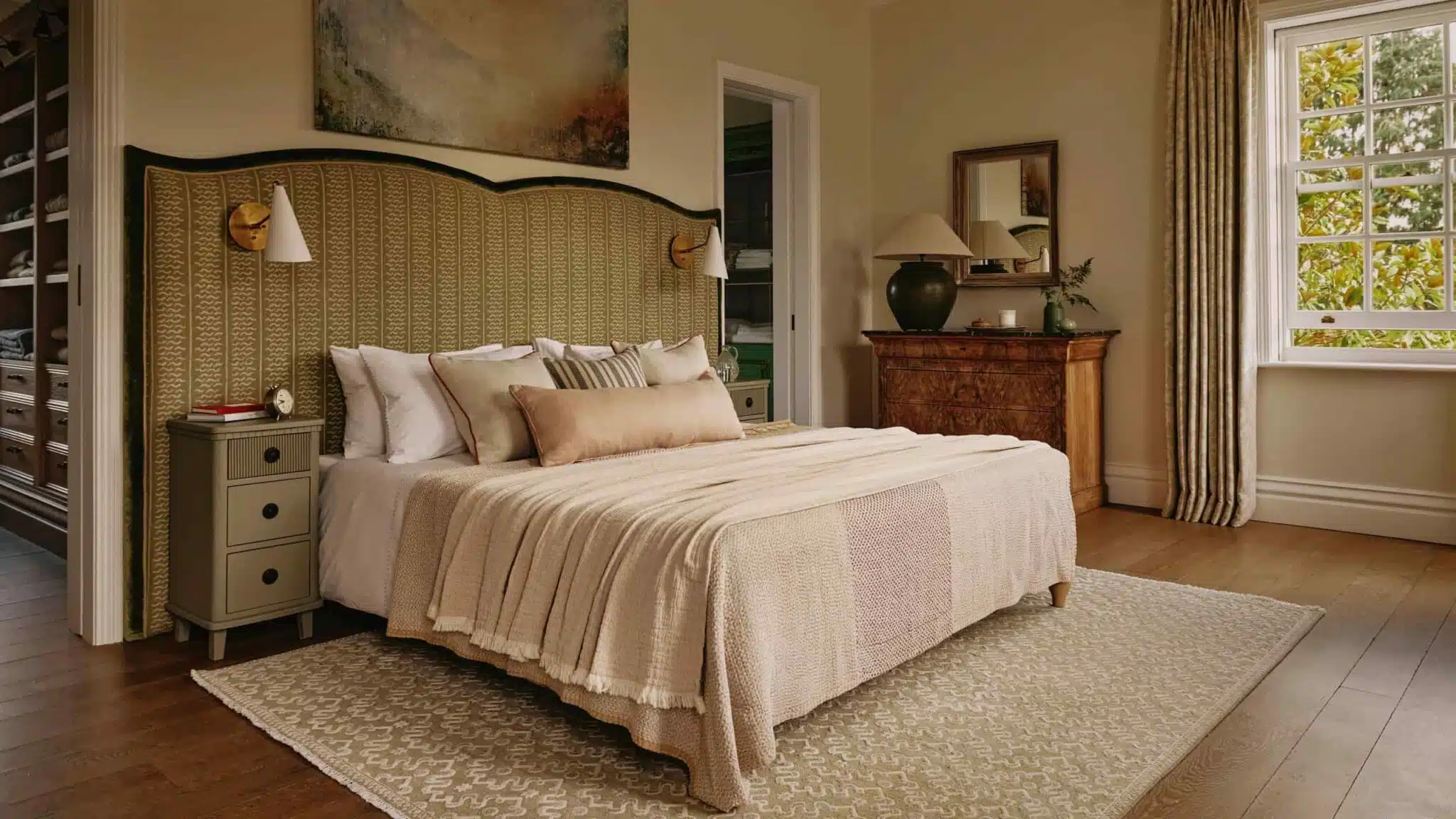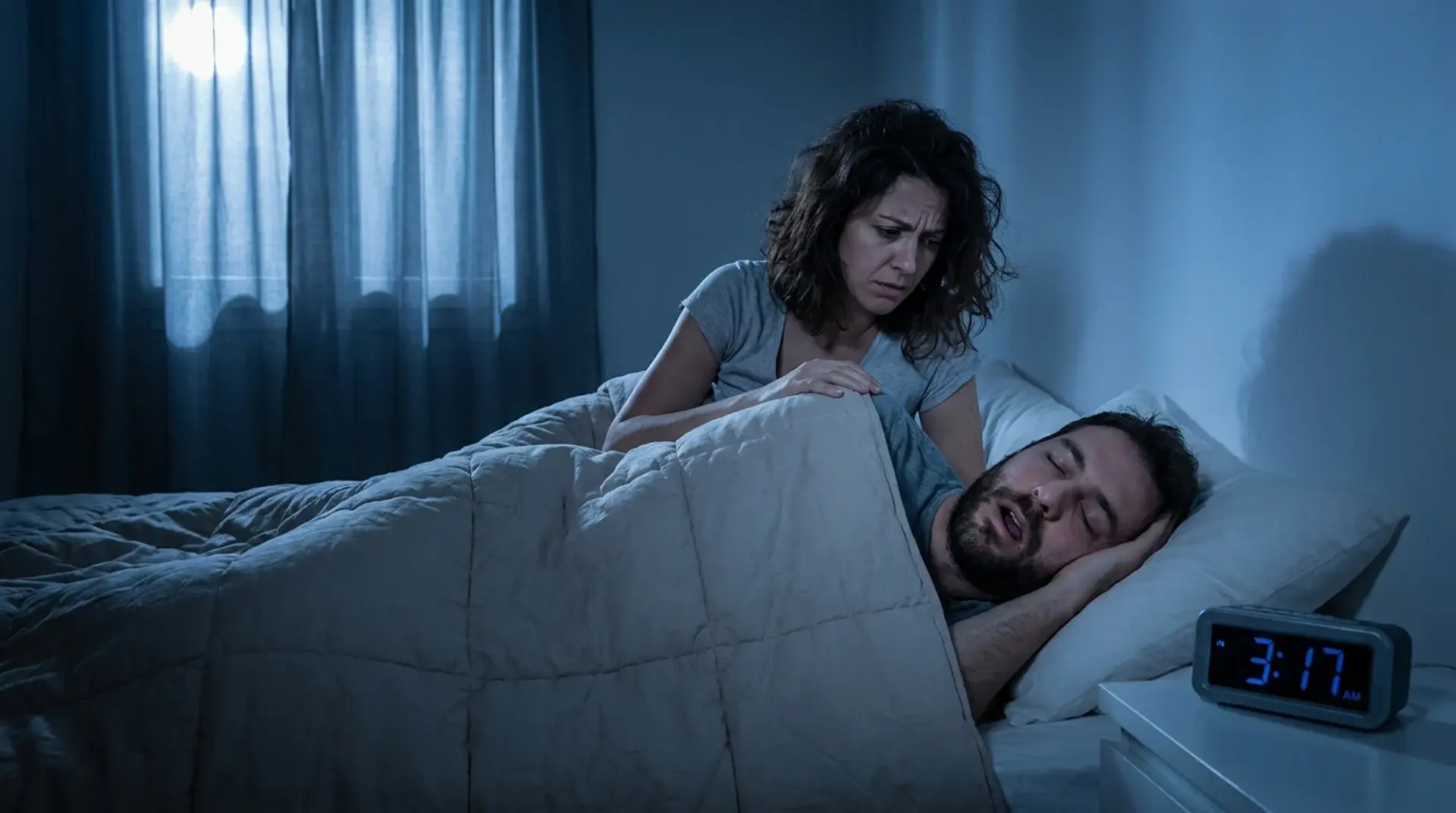

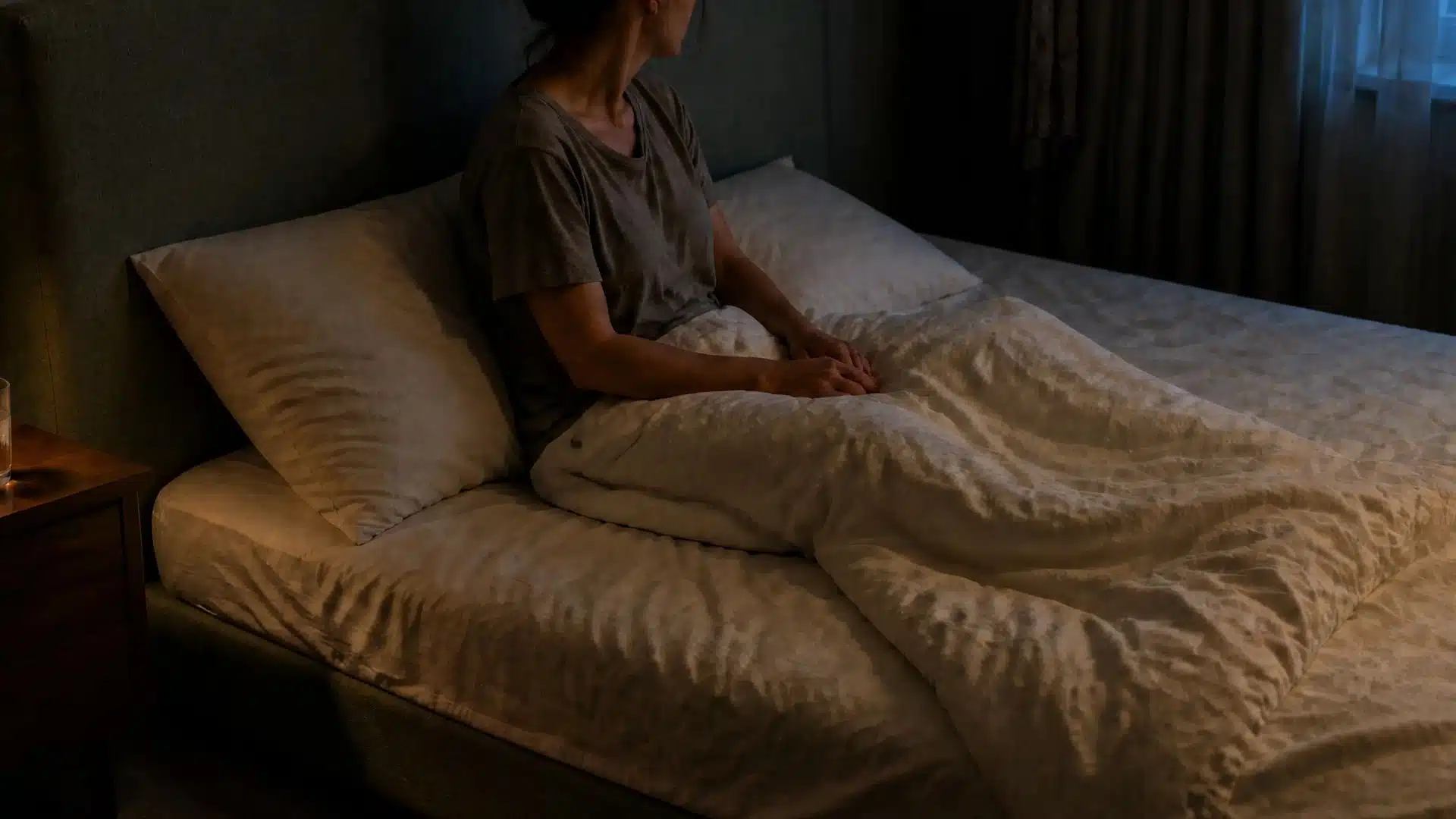
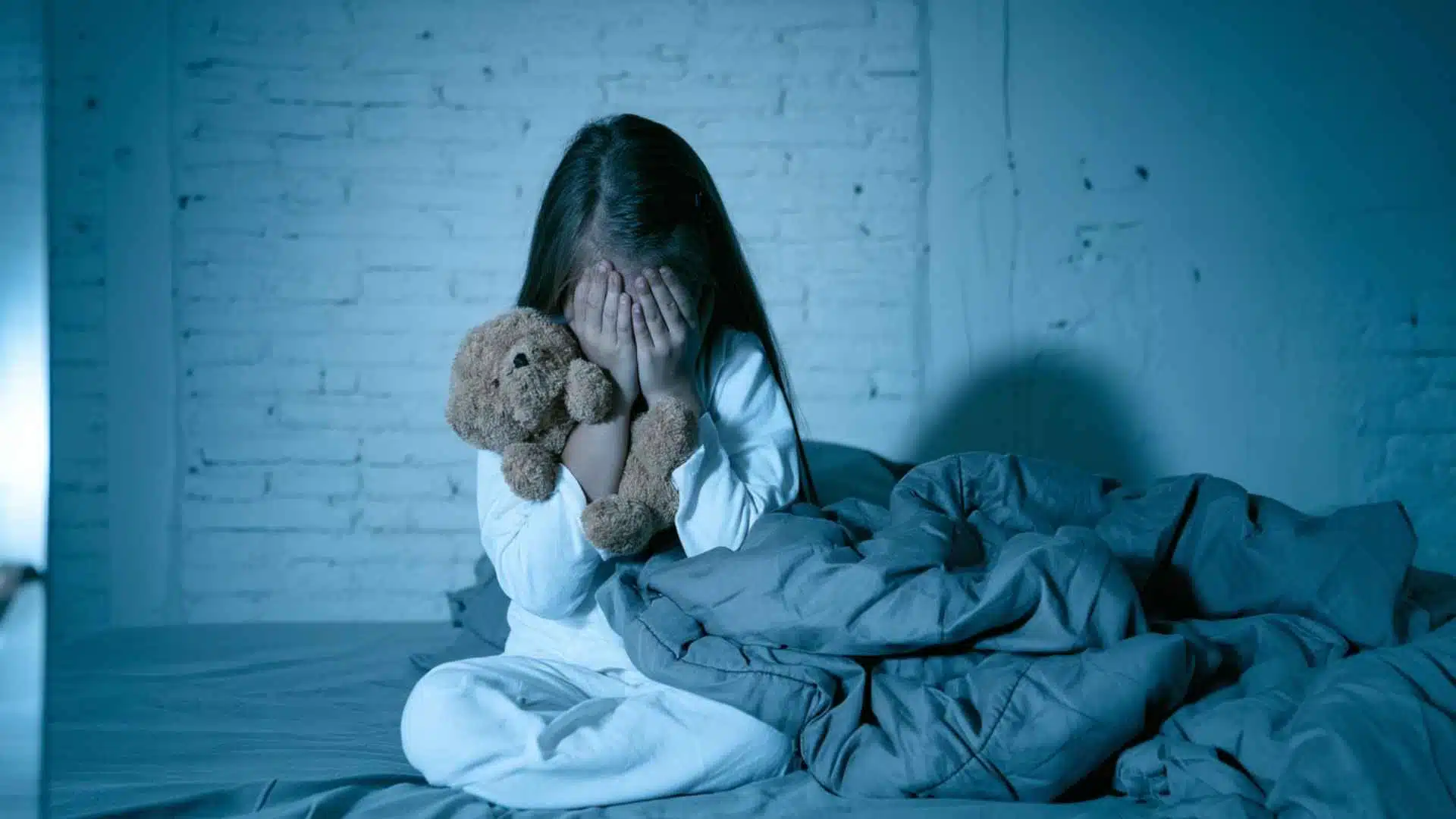
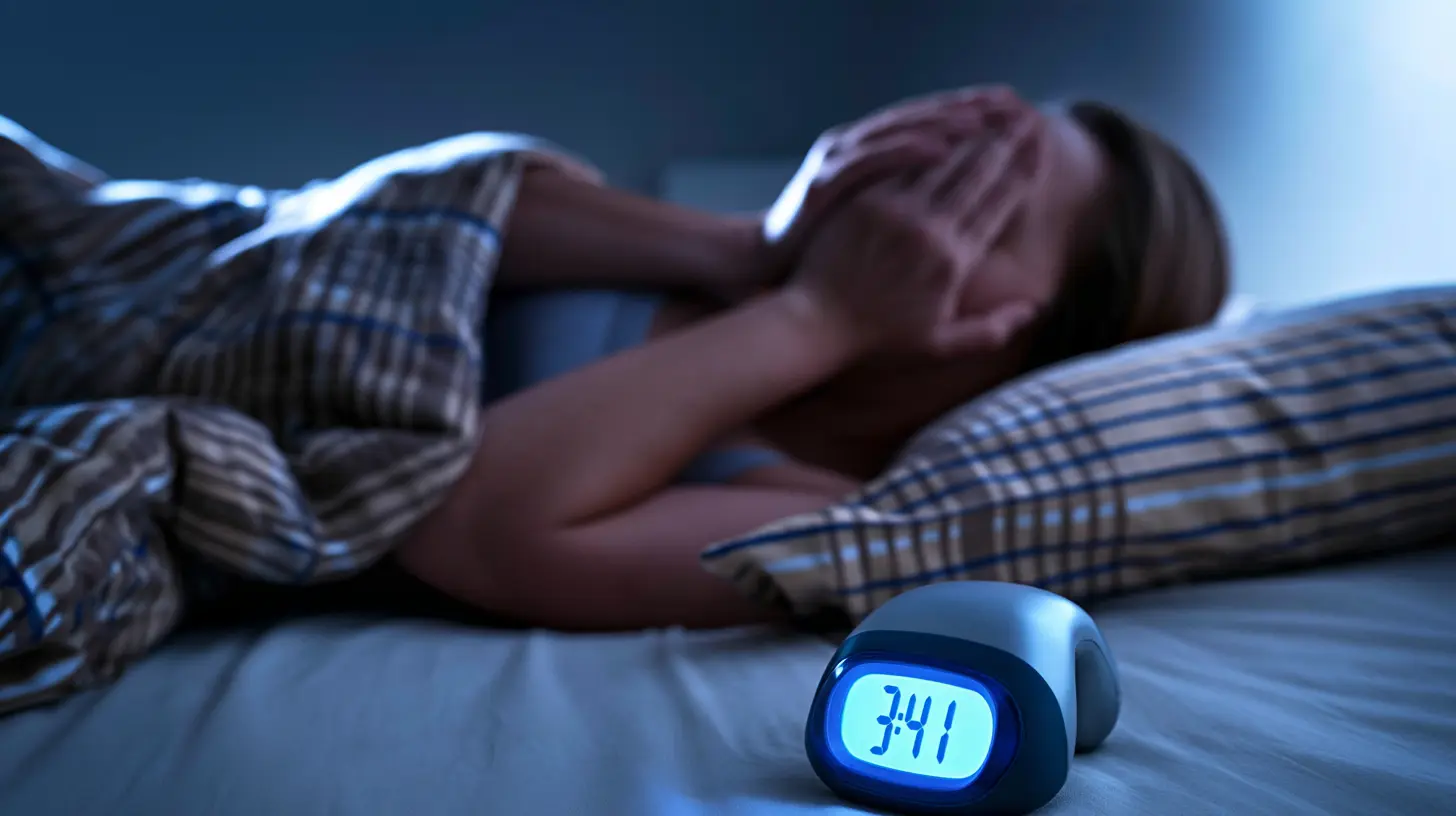
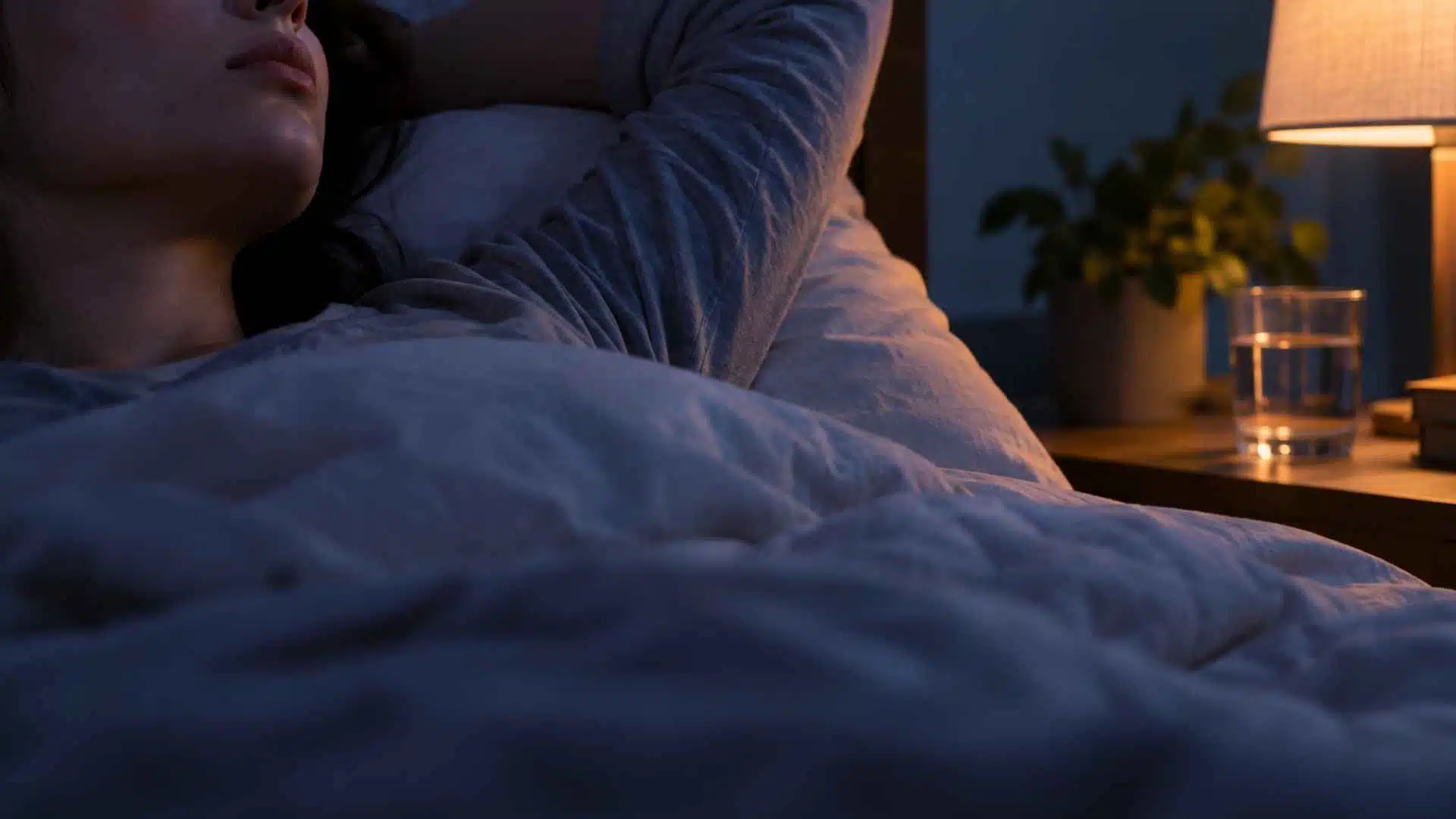
Colors can play an important role in people’s sleep cycles. The color of the lights can affect people’s internal biological clocks, which regulate the sleep-awake cycle.
In this article, we are going to learn about what colors help you sleep better and what colors should be avoided in the bedroom.
Colors not only determine the sleep cycle, but they can also affect your emotions. It is very important to have the right colors in your bedroom to have better sleep and emotional regulation.
Quick answer Red and amber light colors are the most sleep-friendly because they sit at the long-wavelength end of the visible spectrum and have the least impact on melatonin. For bedroom walls, soft blues, muted greens, and warm neutrals tend to create the calmest environment. These are different questions with different answers, and both matter. |
Does the Bedroom Light Affect Sleep?
Melatonin is a hormone secreted by the brain that signals the body to sleep. A study in ScienceDirect has shown that the color of the lights can profoundly affect the secretion of melatonin, which can disrupt our sleep cycle.
The brightness in your bedroom, along with its color, can significantly affect your sleep quality. Exposure to bright artificial light may make it harder to fall asleep, cause frequent awakenings, and shorten your sleep cycle.
Choosing the right bedroom color is an essential first step in improving your sleep. It can have a major impact on your ability to fall asleep and enjoy a restful night.
What Colors Help You Sleep Better
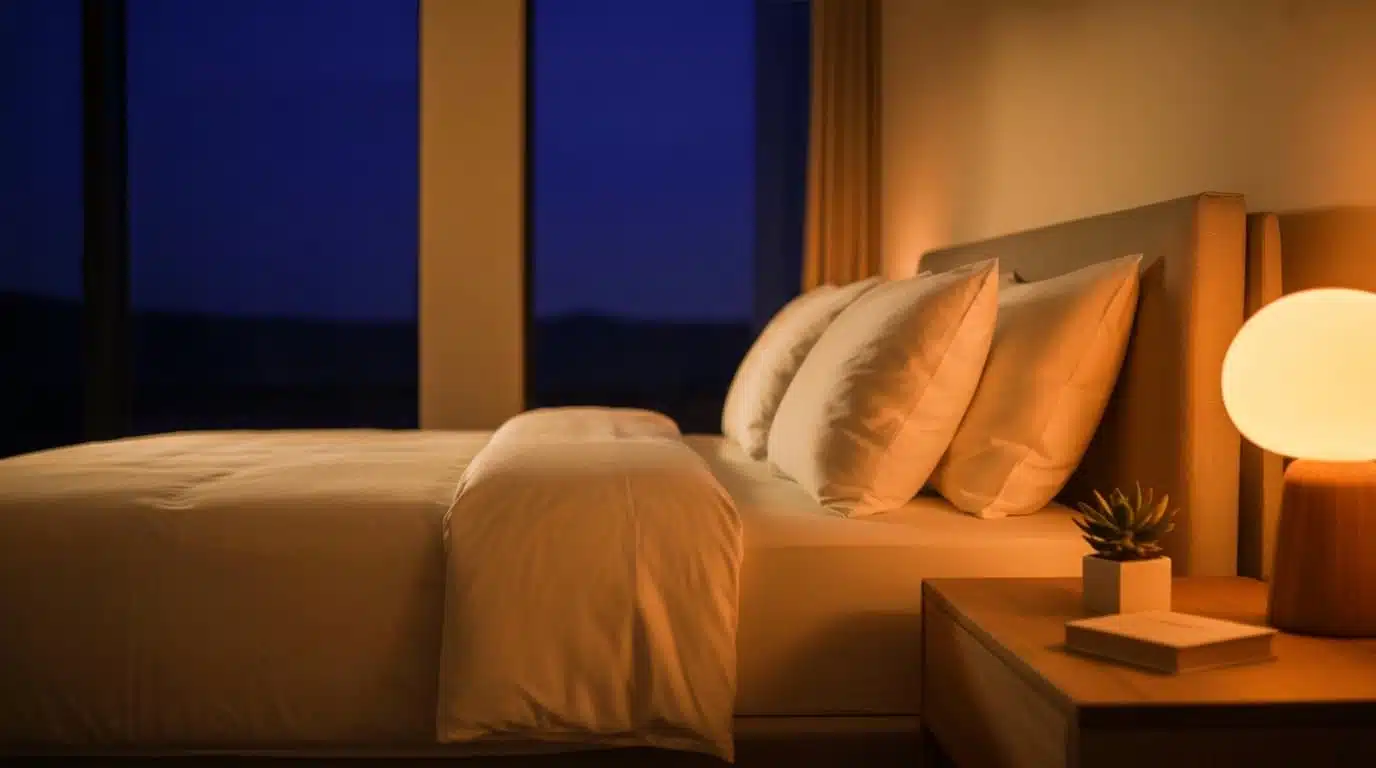
Most people spend hours picking the right mattress or pillow and never once think about the color of their bedroom light.
Yet light is one of the first signals your body receives at night, and it helps reduce tossing and turning while you sleep.
A dark room is still best for sleep, since darkness helps your body release melatonin.
Warm shades like red, amber, and soft orange can make bedtime feel softer and easier. A small lighting change can make your bedroom feel calmer when your body is ready to slow down.
Red Light
Red light sits at the far end of the visible spectrum, which means it carries the least energy of any color. It tends to interfere less with melatonin compared to cooler light, which may help the body stay in a more relaxed state at night.
If you want to make one change to your bedroom lighting, swap out white bulbs for red ones after dark. Some people find it easier to wind down with warmer lighting.
Amber and Warm Yellow Light
Amber and warm yellow tones are close to the color of a natural sunset, and the brain is wired to read them as a signal to wind down.
When you switch to these tones in the evening, the body starts to pull back from alertness and prepare for sleep. They work well in bedside lamps, salt lamps, and any fixture that stays on past 8 PM.
Soft Orange and Peach Tones
Soft orange and peach tones keep stimulation low without making the room too dark to move around in.
They sit in a sweet spot between warm and dim, which is useful for adults who read before bed and for children who need a gentle light to fall asleep. These tones are easy to find in warm LED strips and smart bulb settings.
Getting better sleep does not always mean buying something new. Sometimes it just means screwing in a different bulb.
The Best Color for Sleep
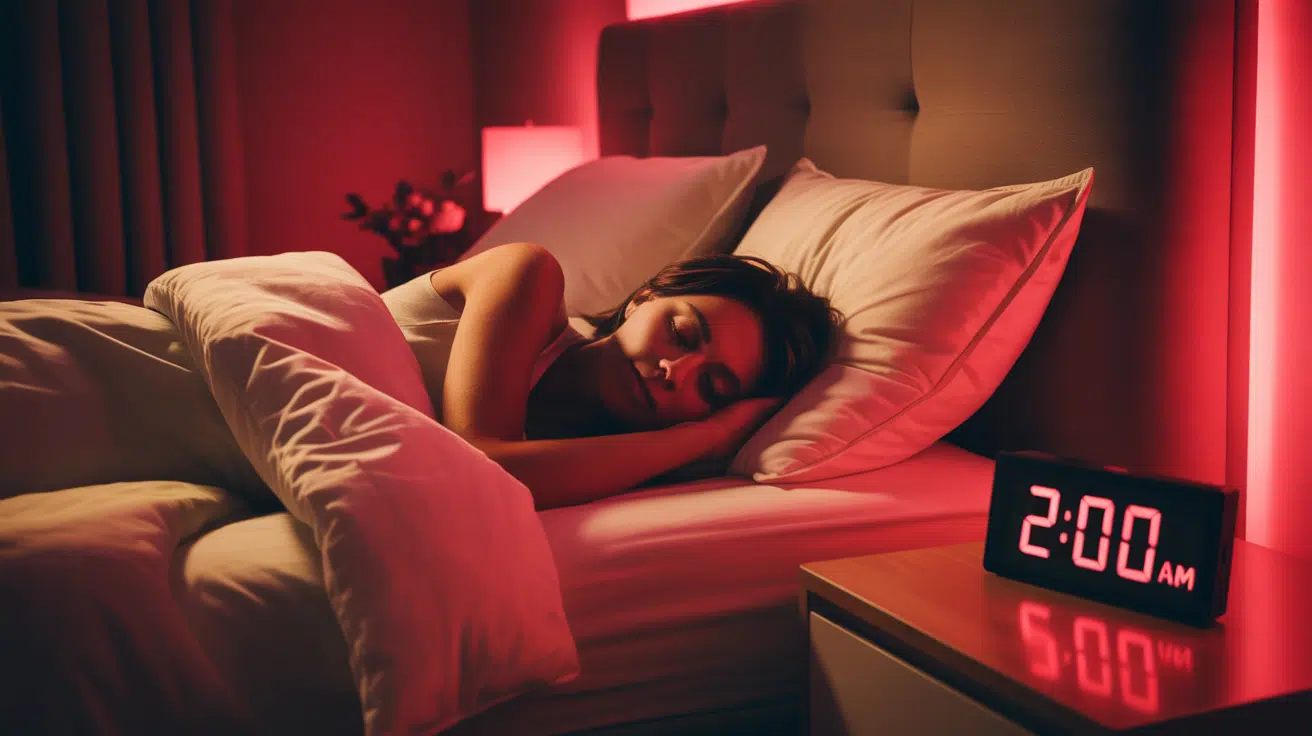
Red light is one of the least disruptive options, though dim, warm lighting overall is what matters most. A study published in the Journal of Athletic Training found that red light may support better sleep, though more research is needed to confirm this for most people.
Red light has a longer wavelength and tends to affect melatonin less than blue light, the hormone your brain releases to make you feel sleepy. This is why having red light in the bedroom makes you fall asleep faster.
Bedroom Colors That Feel Calm
Changing a wall color costs less than a new mattress and lasts just as long. The way a room looks can influence how calm you feel before bed, which may, in turn, affect how easily you fall asleep. Yet the shade around you each night quietly shapes how calm or restless your body feels before bed.
1. Blue Bedrooms
People in blue bedrooms average nearly 8 hours of sleep a night, according to survey data, more than any other color group.
Lighter, muted blues tend to work better than bright or dark shades. They keep the room feeling open without overstimulating the brain. Warm lighting at night helps blue walls lean calm rather than cold.
Note: This refers to blue wall paint, not blue light. Blue-toned light bulbs (above 4000K) are disruptive to sleep, but a soft blue wall under warm amber light is one of the most sleep-friendly bedroom setups you can create.
2. Green Bedrooms
Soft green is one of the few wall colors that manages to feel both calm and alive at the same time.
Muted shades like sage and seafoam are especially good at reducing mental tiredness after a full day. Bold greens shift the room toward energy rather than rest, so the quieter the shade, the better it tends to work.
3. White Bedrooms
White works well in a bedroom as long as it leans warm rather than sharp. Pure white walls under cool light feel more like a hospital room than a place to rest.
Off-white or cream, paired with warm bulbs, keeps the clean look without the harshness. That one shift makes a bigger difference than most people expect.
4. Soft Gray and Beige Bedrooms
Warm gray and beige tones are consistently ranked among the most calming neutral options for bedrooms.
They recede visually, which keeps the brain from latching onto stimulation in the room. Pair them with warm bulbs and layered textures to avoid the room feeling flat or sterile.
5. Lavender Bedrooms
Lavender sits at the cooler end of the color spectrum but tends to read as gentle and restful rather than activating.
Muted lavender walls are a solid choice for people who want color in their room without the boldness of a saturated hue. Pair with warm lighting to offset the cool undertone.
Colors That Can Make it Harder to Sleep
You can have the right wall color and still sleep badly if the lighting in your room is working against you. The body reads light like a clock, and bright, cool, or blue-toned light after dark sends one message to the brain: stay awake.
Three types of light do this most consistently, and most people have at least one of them in their bedroom right now.
They all interfere with the same process, melatonin production, just from different sources and in slightly different ways.
Knowing which one affects you most makes it much easier to decide what to change first.
| Factor | Blue Light from Screens | Bright White Light | Cool-Toned Lighting |
|---|---|---|---|
| Sources | Phones, tablets, TVs, and LED screens | Overhead ceiling bulbs and bright LEDs | Office-style bulbs and high-kelvin LEDs above 4000K |
| What it does | Keeps the brain alert instead of tired | Combines all visible wavelengths, including sleep-disrupting ones, keeping mood and alertness high | Mimics midday sunlight, confusing the brain’s natural cues for rest |
| When to avoid | Stop screen use 1 to 2 hours before bed | After sundown, switch to lower, warmer light sources | Replace with bulbs rated below 3000K for evening use |
None of these light sources is a problem during the day since the body needs them to stay alert and on schedule.
The issue starts when they stay on into the evening, right when the body is supposed to be shifting into rest mode.
Best Light Colors for Children’s Sleep
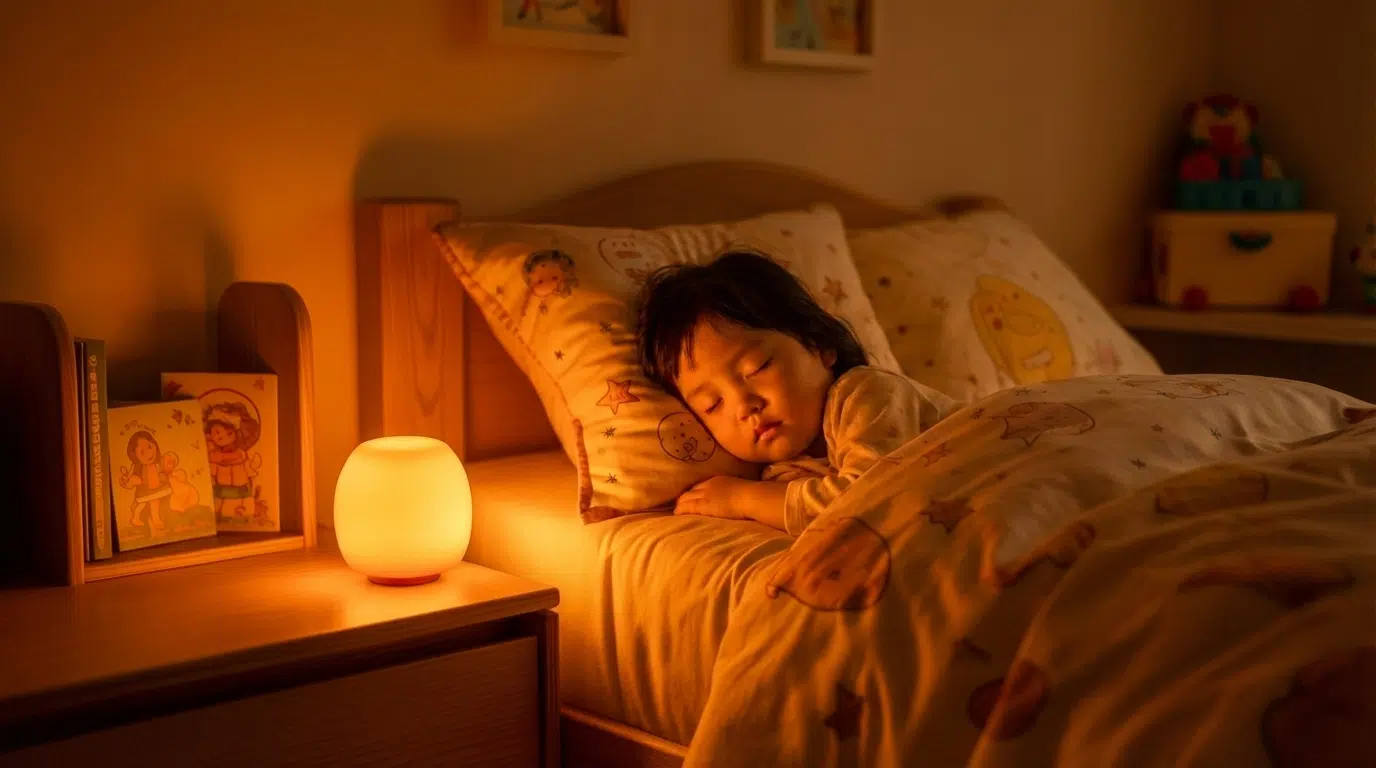
The same bedroom light that an adult barely notices can take a child much longer to recover from. A child’s eyes are far more sensitive at bedtime, and even a very dim glow can cut melatonin levels.
Keeping the light dim and warm gives a child’s body the best chance to wind down on time. Soft red or amber light is the safest pick for a child’s room, since it sits at the end of the light spectrum and barely affects melatonin.
Adults have a higher tolerance, but warm lighting still matters. Bright white or cool-toned bulbs keep the brain in alert mode long after the lights should have shifted toward rest.
Dropping the brightness level in the evening works just as well as picking the right bulb color.
Does Brightness Matter as Much as Color
Color gets most of the attention, but brightness plays just as big a part in how the body settles at night.
- Dim light helps melatonin rise on schedule. Even moderate indoor lighting in the evening can delay melatonin release in some people, which may push back sleep timing.
- Bright light, even warm-toned, keeps the brain alert longer than most people expect. Color helps, but a high brightness setting still slows the body down well past a healthy bedtime.
- Keeping lights low in the evening gives the body a clear signal that the day is ending, and people tend to fall asleep earlier as a result.
Warm tones at low brightness, starting a couple of hours before bed, is the most practical way to get both pulling in the same direction.
Tips for Better Sleep
Creating the right lighting in your room can help your body relax and sleep better. Small changes in light color and brightness can make a big difference.
- Use dimmable lights so you can lower the brightness at night. Dim light helps your body feel calm and ready for sleep.
- Switch to warm bulbs around 2700 K or lower. These lights are soft and will disturb your sleep hormone.
- Avoid screens before bed, such as phones or TVs. Blue light from screens can keep your brain active.
- Use night lights effectively. Pick soft red or warm light to avoid disturbing your sleep.
- Try the 10-3-2-1-0 sleep rule and stop caffeine 10 hours before bed, food and alcohol 3 hours out, all work 2 hours out, and screens 1 hour out. In the morning, hit snooze zero times.
Good lighting helps your body follow a natural sleep cycle. Try these simple tips to fall asleep faster and wake up feeling refreshed.
Conclusion
The way you light your room at night can quietly shape how well you sleep. Your body follows light to know when to rest, and soft, warm lighting helps it stay in a natural rhythm.
When you reduce exposure to bright, cool lights, your brain can release melatonin, which makes you feel sleepy and calm.
Simple habits like dimming lights and avoiding screens can make nights more peaceful. Over time, these small changes can help you fall asleep faster and wake up feeling more refreshed.
A calm and cozy lighting setup is one of the easiest ways to improve your sleep every day.
Frequently Asked Questions
What Color Helps You Sleep the Best at Night?
Red and amber lights are often the best choices for sleep because they do not significantly affect melatonin levels. These warm tones help your body stay relaxed and make it easier to fall asleep without feeling alert or restless.
Is Blue Light Really Bad for Sleep?
Blue light can make it harder to fall asleep because it tells your brain to stay awake. It reduces melatonin levels and can delay your sleep cycle, especially when you use screens or bright lights before bedtime.
Should You Sleep in Total Darkness or Use a Night Light?
Total darkness is best for sleep. For safety, use a dim red or amber night light placed away from the bed.