





People hear that sleeping with legs elevated solves everything. It doesn’t. While propping up legs might help with circulation and swelling, there’s a flip side that most people conveniently skip over.
Back strain. Hip discomfort. Sliding down the bed in the middle of the night. Nerve pressure that wasn’t there before. For some, this so-called sleep hack creates more problems than it fixes.
The truth is, elevation works beautifully for certain bodies and backfires for others. Same position, completely different results.
What Does Sleeping with Legs Elevated Mean?
Sleeping with legs elevated means resting with the legs raised above the usual flat level of the bed, often with the feet and calves supported.
People often do this by placing pillows under the lower legs, using a wedge cushion, or adjusting the lower part of an adjustable bed.
The goal is usually to ease mild swelling or to help venous blood and fluid return to the heart more easily. This position can help some people, but the setup matters.
The legs should be supported in a steady, comfortable way so the back, hips, and knees are not left in an awkward position. Anyone with heart, lung, nerve, or circulation problems should check with a doctor before trying it.
Why People Choose to Elevate Their Legs While Sleeping
People often raise their legs at night to ease swelling, support blood return from the legs, or add comfort during recovery. These reasons can make sense in some cases, but they do not remove the need to watch for pain, numbness, or poor sleep.
- Swelling: Raising legs may help fluid move upward, which can ease foot and ankle swelling overnight. This swelling in the extremities is medically known as edema, a condition where fluid builds up in body tissues.
- Blood flow: Some people use this position to help leg veins return blood to the heart more effectively.
- Recovery: After long days or minor injuries, leg support may reduce pooling and improve comfort overnight.
- Health needs: Doctors may suggest elevating the legs for some people with edema or vein problems.
These points explain why some people try this sleep position, but the main concern is still whether it causes new problems.
Possible Risks of Sleeping with Legs Elevated

Sleeping with the legs raised can help in some cases, but it can also cause new problems if the body is not well supported or if a health condition is present. These points matter most when the position is used for extended periods.
1. Can Cause Lower Back Pain
Raising the legs changes how the pelvis and lower spine rest on the bed. If the knees, hips, and lower back are not supported naturally, the lower back muscles and joints can feel strained in the morning.
This risk is often higher in people who already have back pain, stiff hips, or poor mattress support.
2. Numbness or Tingling in Legs
If the legs rest at a steep angle or press into a firm pillow edge, nerves and soft tissues can become irritated.
That may lead to tingling, numbness, or a pins-and-needles feeling after lying still too long. The risk of this problem increases when support is uneven or when a person remains in one position for hours.
3. May Affect Comfort and Circulation if Positioned Poorly
A mild leg raise may help reduce swelling and support circulation in some people, especially after prolonged standing or sitting.
However, if the legs are positioned poorly or too much pressure builds behind the knees or calves, it can create uncomfortable pressure points.
That pressure may make the legs feel tight, sore, or uncomfortable over time. People with vein disease, nerve problems, or other circulation concerns should be especially careful with positioning.
4.Fluid Shift to the Upper Body
When fluid moves out of the lower legs, it does not leave the body right away. In some cases, especially in people with underlying conditions such as heart failure or other circulation problems, some of that fluid can shift upward, making the face feel puffy or contributing to a sense of chest fullness.
People who already get short of breath when lying flat should be extra careful, because these fluid shifts can affect breathing comfort at night.
5. Sleep Discomfort and Disturbance
Sleep can suffer when the body feels stuck in one setup for too long. Pillows may slide, wedge supports may feel too firm, and turning over can become harder than usual.
Even if the legs feel better at first, poor support can lead to more waking during the night and less restful sleep by morning.
6. Not Suitable for Some Sleep Conditions
This position is not ideal for every sleep problem. A setup that bends the knees too much or feels awkward can make it harder to settle and stay asleep.
People who already have broken sleep, discomfort at night, or breathing trouble when lying down may notice that leg support does not help and may make sleep feel less natural.
The safest choice is a moderate height, even support, and awareness ofhow different positions affect sleep comfort over time.
Important: Know the Warning Signs of a Blood Clot (DVT)Deep vein thrombosis (DVT) can cause swelling in one leg, along with warmth, redness, or a dull ache in the calf. Leg elevation does not treat DVT and may be unsafe if a clot is present. If your swelling affects only one leg and comes on suddenly, do not rely on elevation; seek medical attention promptly. A blood clot that travels to the lungs is a life-threatening emergency. |
Is Sleeping with Legs Elevated Safe for Everyone?
Sleeping with legs elevated is not safe for everyone. The right setup depends on health needs, sleep posture, and proper support under the legs. People with certain medical problems should be more careful before using this position through the night.
- Heart problems: People with heart failure should ask a doctor before raising their legs overnight regularly.
- Breathing issues: Trouble breathing while lying flat can point to heart or lung disease first.
- Back pain: Chronic low back pain may worsen when leg support changes, leading to overnight changes in spine alignment.
- Nerve conditions: Neuropathy or pressure-sensitive nerves can increase the likelihood of tingling and numbness at night.
- Medical advice: Ask a doctor first if symptoms worsen or health conditions affect sleep comfort.
For healthy people, this position may help mild swelling when done with steady, even support. But if it causes pain, numbness, chest symptoms, or poor sleep, it is a sign to stop and get medical advice.
Signs That This Position is Not Right for You
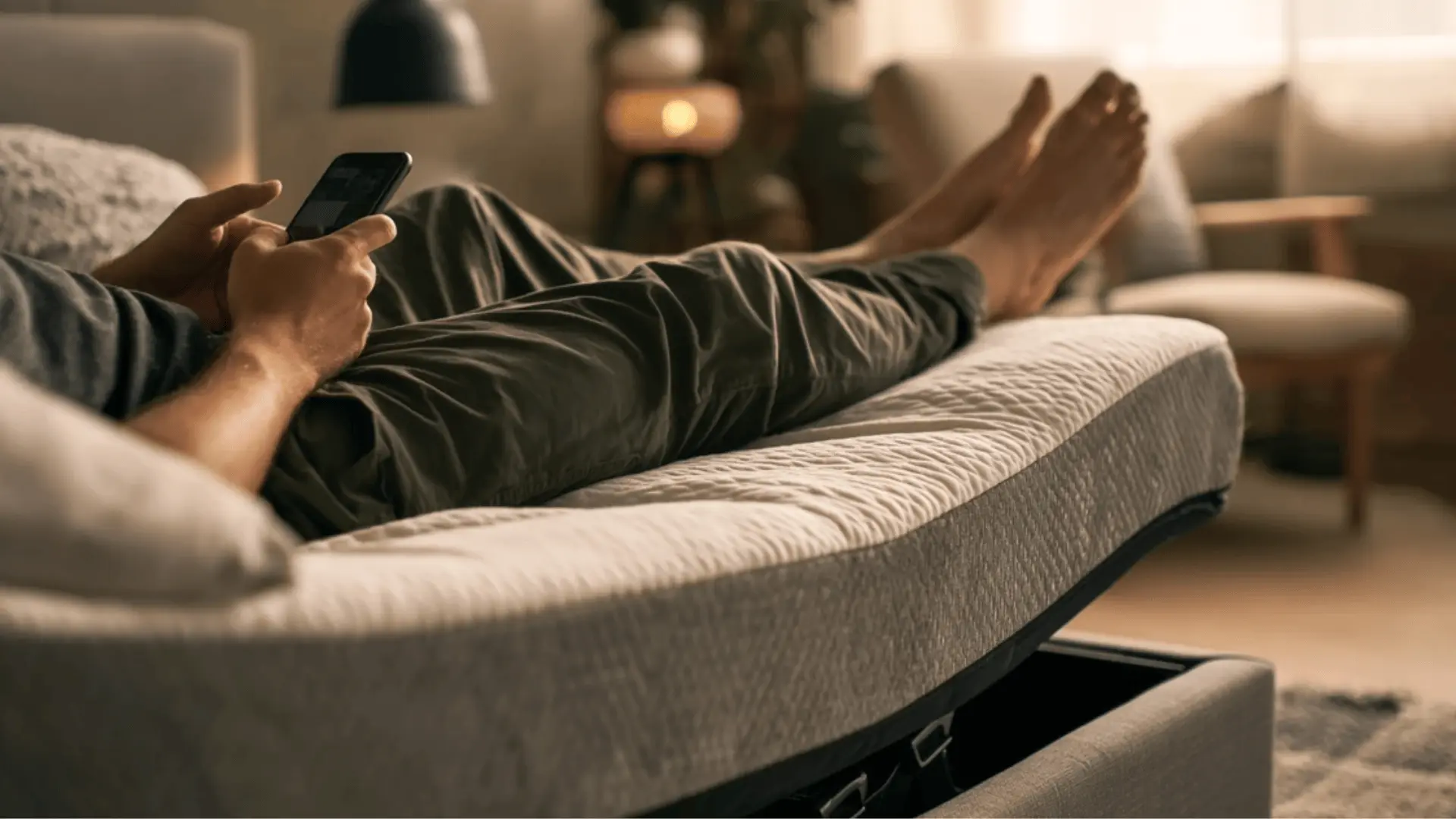
Some warning signs can suggest that sleeping with the legs raised is not working well for the body. Pain or stiffness in the lower back, hips, knees, or calves may mean the legs are not supported the right way.
Numbness or tingling in the legs or feet can happen when pressure builds on soft tissue or nerves. Poor sleep is another sign, especially when a person wakes often, feels restless, or struggles to change position.
In some cases, fluid may move upward instead of staying in the legs, which can lead to facial puffiness, chest fullness, or more trouble breathing while lying down. If these problems keep happening, it is best to stop and speak with a doctor.
Common Mistakes When Elevating Legs During Sleep
Common setup errors can make this sleep position less helpful and more uncomfortable. Good support, a mild angle, and room to move all night when the legs are raised, helping improve circulation and reduce pressure on the lower back.
Height: Raising legs too high can strain the lower back and place joints in awkward angles.
Support: Poor support under the knees or calves can create pressure points and leave muscles tense overnight.
Movement: Staying in one position too long may cause stiffness, tingling, and less comfortable sleep overall.
Stability: Unstable pillows can shift during sleep, altering leg posture and requiring the body to work harder.
Proper leg elevation improves circulation and helps prevent swelling, making it an important habit for long-term comfort.
Best Methods for Leg Elevation
When it comes to elevating the legs during sleep, choosing the right method can significantly improve comfort and support.
| Method | Best For | Limitations |
|---|---|---|
| Stacked regular pillows | Occasional, short-term use | Compresses and shifts during the night; inconsistent support |
| Wedge pillow (foam) | Consistent nightly use | Fixed angle; may need different sizes for different needs |
| Leg elevation pillow (contoured) | Full-leg support with knee comfort | Bulkier; may feel warm in summer |
| Adjustable bed base | Long-term or medical use | High cost; requires a compatible mattress |
Understanding the pros and cons of each leg-elevation method helps individuals select the best option for their specific needs. Whether for short-term comfort or long-term use, finding the right solution ensures better rest and improved health.
How to Set Up a Comfortable and Safe Leg Elevation for Sleep
If leg elevation is needed, careful setup can reduce the risk of pain, numbness, and poor sleep. Keeping the sleep setup clean also matters, and can help support a healthier space.
Height: Keep legs raised slightly above heart level to limit strain and maintain comfort overnight.
Even support: Support the calves and lower legs evenly, so joints stay relaxed and steady.
Pressure points: Avoid hard edges behind the knees or ankles, as they can press on nerves overnight.
Time: Start with short periods instead of all night to check comfort and body response.
By following these simple tips, individuals can enjoy the benefits of leg elevation while minimizing discomfort and potential risks. Prioritizing comfort and listening to the body ensures a restful, healthy sleep.
When Should You Talk to a Doctor?
A doctor visit is a good idea if pain, stiffness, numbness, or poor sleep persist after raising the legs at night.
Medical advice also matters when a person already has heart disease, lung disease, vein problems, nerve problems, or long-term swelling, because those conditions can change what is safe.
Swelling that does not get better, gets worse, or affects only one leg should not be ignored. Trouble breathing while lying down requires prompt medical attention because it can be a sign of heart or lung problems.
If breathing difficulty is due to sleep apnea, natural remediessuch as positional therapy, weight management, and breathing exercises may provide relief without the need for medical devices.
Final Thought
Sleeping with legs elevated may help mild swelling for some people, but it is not right for everyone.
Sleeping with the feet elevated can ease fluid buildup in the lower legs, but poor support or the wrong angle can lead to back pain, tingling, disrupted sleep, or increased discomfort.
Elevating legs while sleeping also needs extra care for people with heart, lung, nerve, or circulation problems, especially if breathing feels worse when lying down.
The safest choice is a moderate height, even support, and close attention to how the body feels during the night.
If symptoms persist or worsen, or if new problems develop, speak with a doctor. For more practical sleep and support tips, keep reading and review the options carefully.
Frequently Asked Questions
Can Sleeping with Legs Elevated Cause Knee Pain?
Yes, if the knees are bent at an awkward angle or not supported well, it can lead to knee stiffness or pain over time.
What is the Best Way to Support Legs While Sleeping?
Using a firm pillow, wedge cushion, or adjustable bed can help keep the legs steady and reduce pressure points.
Should Side Sleepers Elevate Their Legs?
Side sleepers can try a slight leg support, but full elevation may feel awkward and disrupt their natural sleep posture.