

Good sleep starts with the right sheets. Most people spend hours picking the perfect mattress, but barely think about what goes on top of it. The fabric you sleep on every night affects how cool, comfortable, and rested you feel.
Two names come up a lot in the bedding world: percale and Egyptian cotton. But what do they actually mean? And how different are they, really?
When comparing percale vs. Egyptian cotton, many people assume one is simply better than the other. The truth is a little more layered than that.
One is a weave. One is a fiber. And understanding that difference can save time, money, and a lot of guesswork when buying sheets that actually work for the way you sleep.
What is Egyptian Cotton?
Egyptian cotton comes from cotton plants grown in Egypt, mainly near the Nile River. The warm, humid climate there helps the cotton fibers grow longer than usual.
These longer fibers are called “extra-long staple” cotton. They produce threads that are finer and stronger.
When woven into sheets, Egyptian cotton feels soft and smooth against the skin. It can get softer with washing, but this depends on the quality of the cotton and the weave, so results may vary.
This type of cotton holds up well and resists pilling, making it a popular choice for bedding.
When comparing percale vs. Egyptian cotton, one thing to note is that Egyptian cotton is a raw material. Percale is a weave style. The two are different things, and understanding that difference matters.
What is Percale?
Percale is a type of weave, not a type of cotton. If you want to know how this fabric is made, it is worth a closer look. It uses a simple one-over, one-under pattern to create the fabric.
This is called a plain weave. The result is a tight, flat, and matte finish.
Percale sheets feel cool and crisp, similar to a freshly pressed shirt. Many people who sleep hot prefer this fabric because it breathes well. Percale typically has a thread count in the range of about 180 to 200 or higher.
Higher thread counts tend to feel even smoother. When comparing cotton percale vs cotton in other weaves, percale stands out for its lightweight, breathable qualities.
It can be made from different types of cotton, including Egyptian cotton.
Percale vs. Egyptian Cotton: How They Compare
Both percale and Egyptian cotton are popular bedding choices. But they differ in how they feel, how they perform, and how they hold up over time. Here is a simple breakdown to help you decide.
1. Feel & Tactile Experience
Percale feels crisp and cool, like a clean cotton shirt. Egyptian cotton feels smooth and a little heavier right from the start.
If you like a fresh, airy feel, percale is a good choice. If you prefer something that feels rich and dense, Egyptian cotton may suit you better.
2. Breathability & Temperature Regulation
Percale is the stronger choice here. Its tight plain weave allows air to move freely. This makes it a good fit for warm sleepers or hot climates.
Egyptian cotton breathes too, but its heavier weight can trap more heat. It works better in cooler rooms or during colder months.
3. Durability & Longevity
Both options last a long time with proper care. Egyptian cotton is strong because of its long fibers. It resists tearing well.
Percale is also durable, but it can wear thin over many washes if the thread count is low. For long-term use, high-quality Egyptian cotton tends to hold its shape better.
4. Softness Over Time
Egyptian cotton gets noticeably softer after each wash. Percale starts crisp and stays that way. It does soften slightly, but not as much.
If you want sheets that improve with age, Egyptian cotton has the edge. Percale keeps its firm, cool texture throughout its life.
5. Skin Sensitivity & Hypoallergenic Properties
Both are good choices for sensitive skin. Egyptian cotton is natural and gentle. Its smooth fibers cause less friction against the skin.
Percale, when made from 100% cotton, is soft on the skin, though its resistance to dust mites is not strongly supported. Neither is treated with harsh chemicals by default, but always check the product label to be sure.
6. Price & Value
Egyptian cotton usually costs more. The longer fibers take more effort to grow and process. That raises the price. Percale sheets are available at a wider range of prices. You can find good-quality percale without spending too much.
For budget-friendly bedding that still feels comfortable, percale offers solid value. Egyptian cotton is worth the cost if softness and durability are the priority.
Now that percale and Egyptian cotton have been compared, it helps to understand how cotton percale differs from regular cotton overall.
Cotton Percale vs Cotton: What’s the Difference?
The terms cotton and cotton percale are often used interchangeably, but they mean different things. The breakdown below makes it easy to see how they compare.
| FEATURE | COTTON PERCALE | COTTON |
|---|---|---|
| Meaning | Cotton fabric made with a percale weave | Natural fiber used to make different fabrics |
| Feel | Crisp, cool, and lightweight | Varies by weave and finish |
| Breathability | Generally breathable | Depends on fabric construction |
| Best For | Hot sleepers, crisp feel preference | General bedding needs |
| Weave Type | One-over, one-under (percale) | Can be percale, sateen, jersey, etc. |
| Softness | Starts crisp, softens over time | Depends on cotton quality and weave |
| Durability | Durable when well-made | Varies by type and construction |
| Appearance | Matte, structured look | Can be matte, shiny, or textured |
| Price | Mid-range to premium | Wide range depending on quality |
How to Choose the Right Sheets for Your Sleep Style
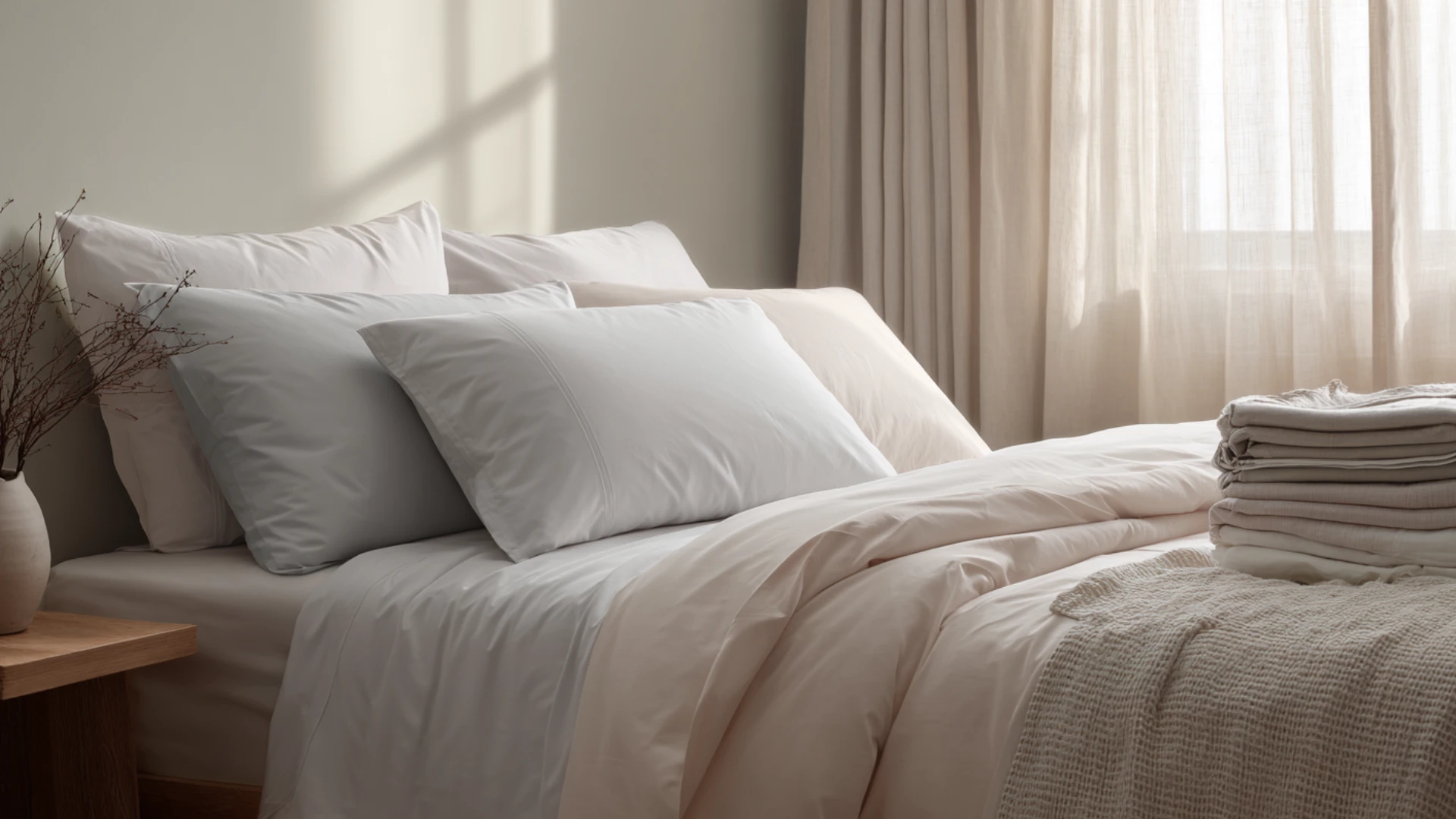
Not sure where to start? Your sleep habits, body temperature, and comfort preferences can help you choose the right bedding.
Choose Percale If You Want
- A crisp, cool feel at night
- Lightweight sheets that breathe well
- Budget-friendly options that last
- A matte, flat finish on your bed
Choose Egyptian Cotton if You Want
- Sheets that soften with every wash
- A smooth, dense feel against the skin
- Long-lasting bedding with strong fibers
- A heavier, more substantial sleep surface
Still not fully decided between percale vs Egyptian cotton? There is a third option worth knowing about that combines the strengths of both fabrics into one sheet.
Can You Get the Best of Both?
Yes. Egyptian cotton percale exists, and it combines the strengths of both.
It uses Egyptian cotton fibers woven in a percale style. This means you get the long, fine fibers of Egyptian cotton with the crisp, breathable feel of a percale weave.
The result is a sheet that feels cool and lightweight, yet softens with every wash.
It works well for people who run warm at night but still want a fabric that improves over time.
The trade-off is price. Egyptian cotton percale tends to cost more than regular percale.
But for those who want quality without giving up comfort, it sits right at the middle ground between percale vs Egyptian cotton.
How to Care for Your Sheets
Knowing how to wash your sheets properly extends their life considerably, and this is an area most buyers overlook until something goes wrong.
For percale sheets:
- Machine wash in cold or warm water to prevent shrinkage. Avoid hot cycles
- Tumble dry on low heat; remove while slightly damp to reduce wrinkles
- Avoid fabric softeners because they coat the fibers over time and reduce breathability.
- Percale smooths out easily if you shake it straight out of the dryer
For Egyptian cotton sheets:
- Machine wash on a gentle cycle with a mild, non-bio detergent
- Tumble dry on low heat; Egyptian cotton can shrink in hot water or high heat
- Line drying is a good option when possible because it preserves the fibers longer.
- With proper care, quality Egyptian cotton sheets can last well over a decade
What to Look for When Buying
Shopping for sheets can feel confusing. Knowing what labels and numbers actually mean helps you pick bedding that delivers real comfort and lasts longer.
- OEKO-TEX Standard 100 Certification: This label means the fabric has been tested and is free from harmful chemicals and substances.
- Cotton Egypt Association Mark: This certification confirms the cotton is genuinely grown in Egypt, not just labeled as Egyptian-style.
- Thread Count Between 200 and 400: This is the reliable range for percale sheets. Numbers above 400 are often misleading and do not mean better quality.
- Avoid Inflated Thread Count Claims: Thread counts of 800 to 1000 are usually achieved by counting individual threads multiple times.
- Check the Fiber Label Carefully: The label must read “100% Egyptian Cotton.” Terms like “Egyptian-style” or “Egyptian feel” do not indicate authentic material.
- Weave Type Matters: If you want the crispness of cotton percale vs cotton in other weaves, confirm the product specifically states a percale weave.
With these details in hand, choosing sheets becomes much simpler and helps you sleep better from the very first night.
Wrapping It Up
Choosing between percale vs Egyptian cotton does not have to be complicated.
Percale is a good choice for warm sleepers who want something cool, crisp, and breathable. Egyptian cotton suits those who prefer softness that builds over time and a heavier, smoother feel.
Both are quality choices. The right one depends on how you sleep, what your body needs, and what fits your budget.
Always check certifications, read fiber labels carefully, and stick to a percale thread count between 200 and 400. Better sleep often starts with small, informed choices. Sheets matter more than most people realize.
Found this helpful? Bookmark this page for the next time you shop for bedding, and share it with someone who is still sleeping on the wrong sheets.
Frequently Asked Questions
Is Egyptian Cotton Percale Better than Regular Percale?
Not always. Egyptian cotton can be softer and more durable due to longer fibers, but high-quality percale made from other long-staple cottons can perform just as well.
Does Percale Get Softer Over Time?
Yes. It softens with washing but still keeps a slightly crisp feel.
Which is Cooler, Percale or Egyptian Cotton Sateen?
Percale is usually cooler due to its breathable weave. Sateen tends to retain more heat.