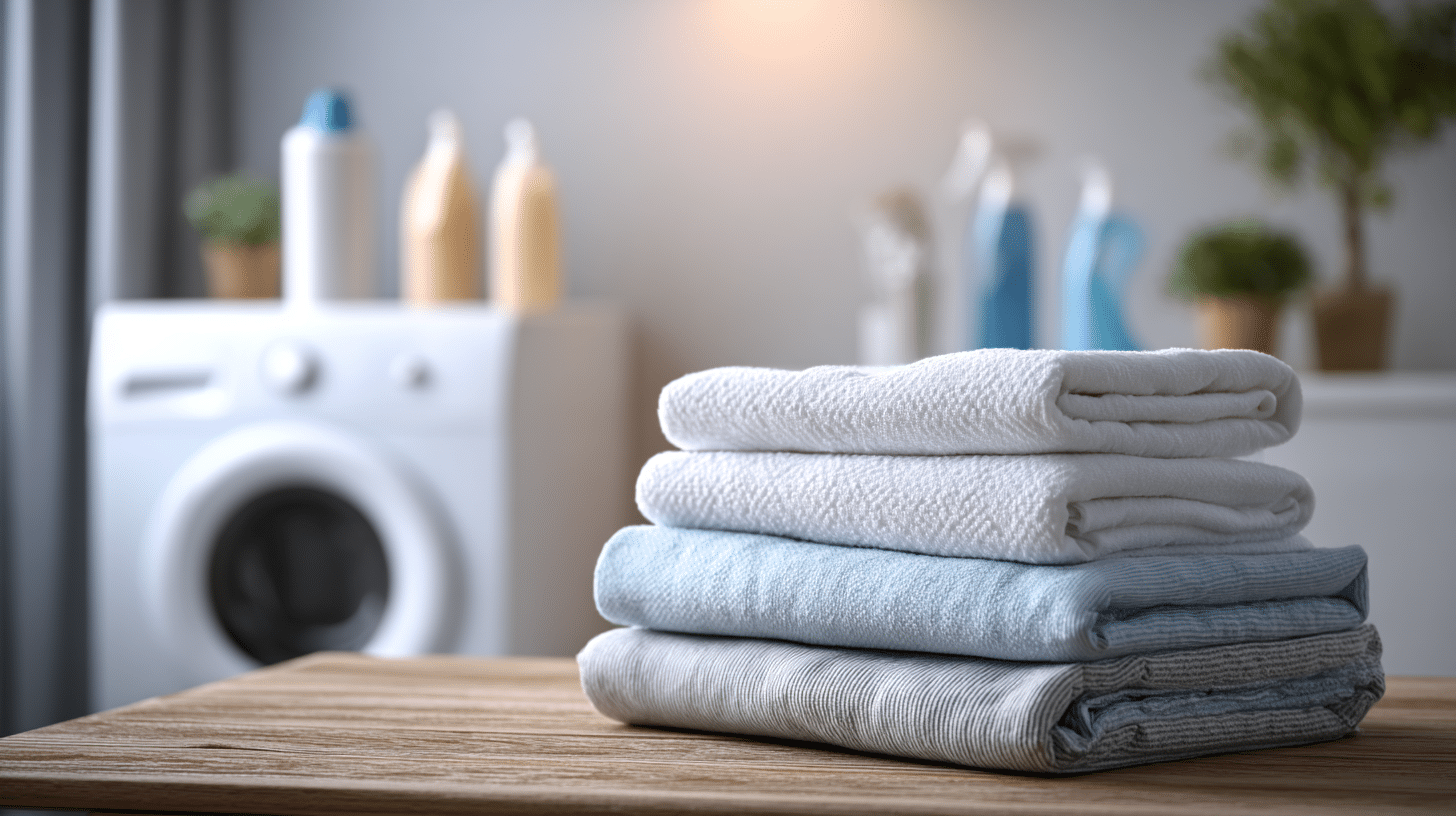


Yes, you should wash new sheets before using them. I know that sounds like an easy answer, but it holds up every time. New sheets may look perfectly clean out of the package, but that packaging doesn’t mean they are ready for your bed.
Manufacturing leaves behind more than you’d expect, including finishing chemicals, dye residue, and factory dust. Washing first also gives you a chance to catch a loose seam or manufacturing defect while you’re still inside the return window.
A single wash clears most of that out and leaves the fabric softer against your skin. Washing instructions still depend on the fabric, so cotton, linen, and bamboo each need a slightly different approach.
Should You Wash New Sheets Before Using Them?
New sheets may look fresh straight from the package, but they are not untouched. Before reaching your bedroom, they go through multiple manufacturing and handling stages that can affect how the fabric feels and smells.
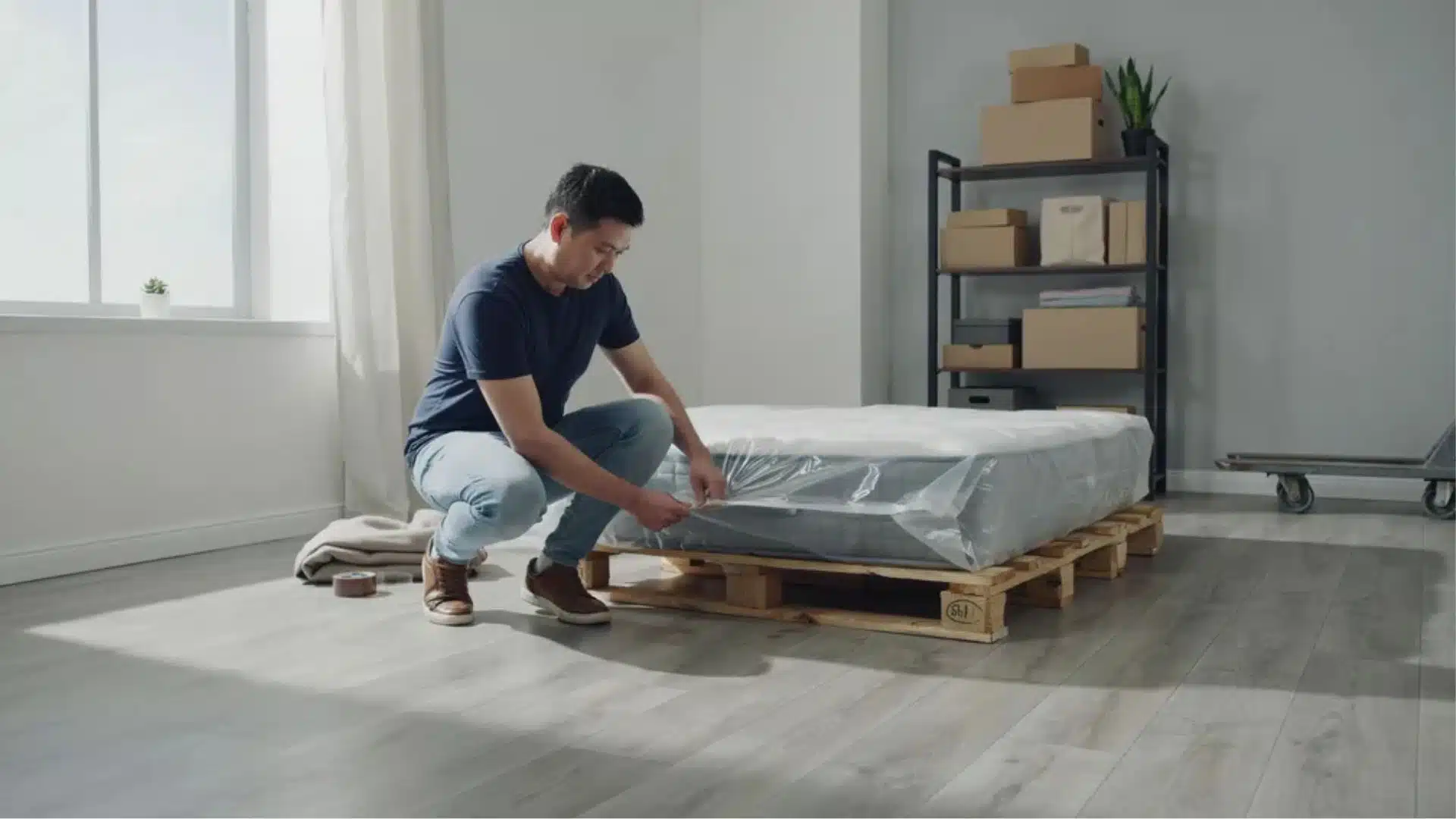
That plastic wrapping keeps sheets looking neat in the store, but it doesn’t clean them. A quick wash removes leftover residues, cuts down on that sharp new fabric smell, and softens fibers that feel stiff right out of the bag.
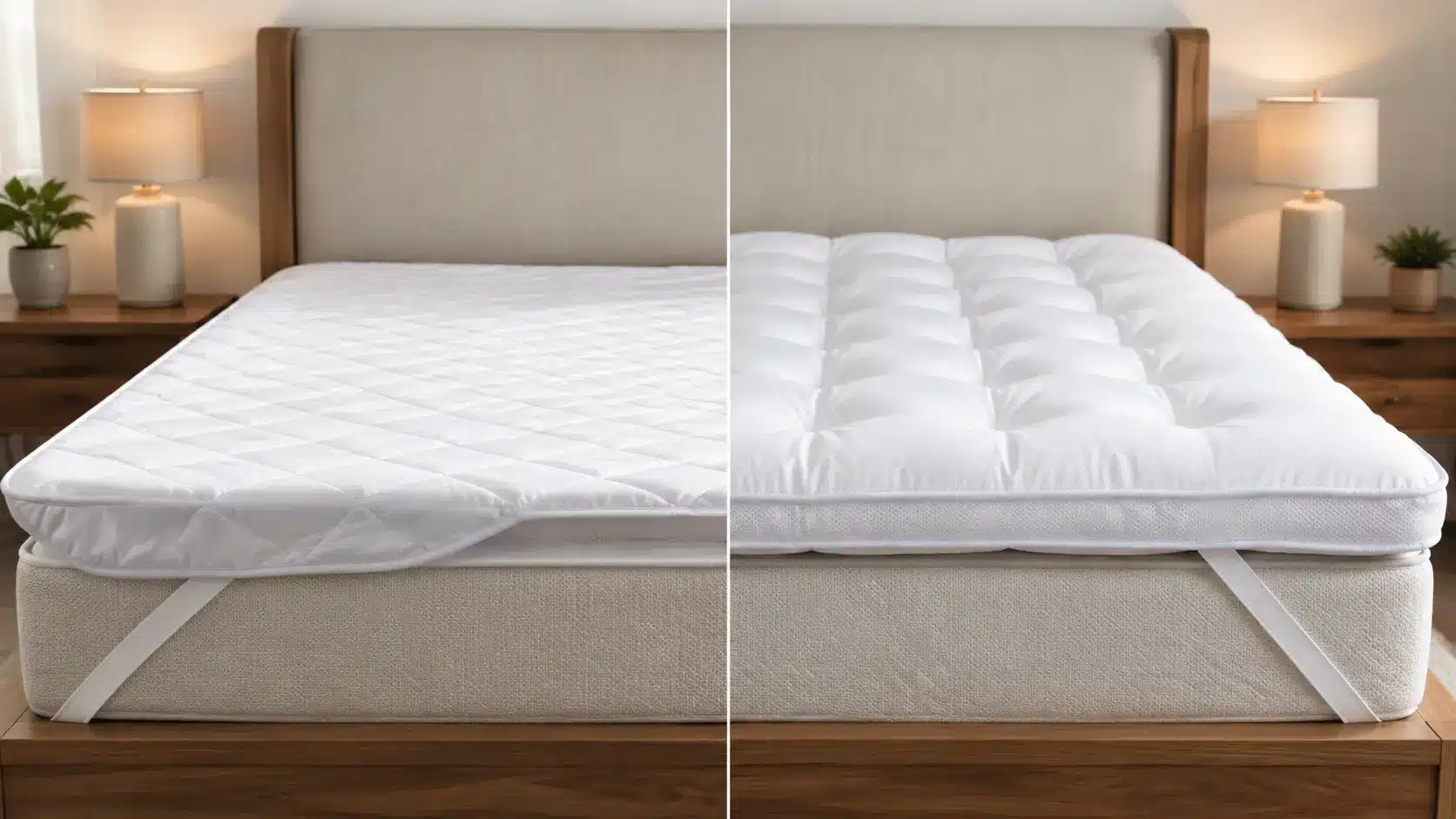
Not every piece of bedding needs the same urgency: a bed skirt or a mattress protector that never touches skin directly can wait, though a wash still doesn’t hurt. It also gives you a cleaner surface to sleep on from night one, which matters more than most people realize.
What’s Left on New Sheets, and What Happens If You Skip Washing
New sheets pass through cutting, dyeing, and finishing before they reach a shelf, and each step can leave something behind:
- Sizing, a starch coating that keeps fabric crisp in the package
- Formaldehyde-based wrinkle-resistant treatments
- Dispersed dyes that haven’t fully set
- Dust picked up during production and storage
Skipping that first wash means sleeping directly against these residues, which can leave sensitive skin itchy or irritated, plus a stiffer, more chemical-smelling fabric than you’d get after one cycle.
How to Wash New Sheets Before First Use
Washing new sheets isn’t complicated, but using the right method matters if you want to protect the fabric. Follow these steps to wash sheets properly and prevent residue buildup, fading, and unnecessary wear over time.
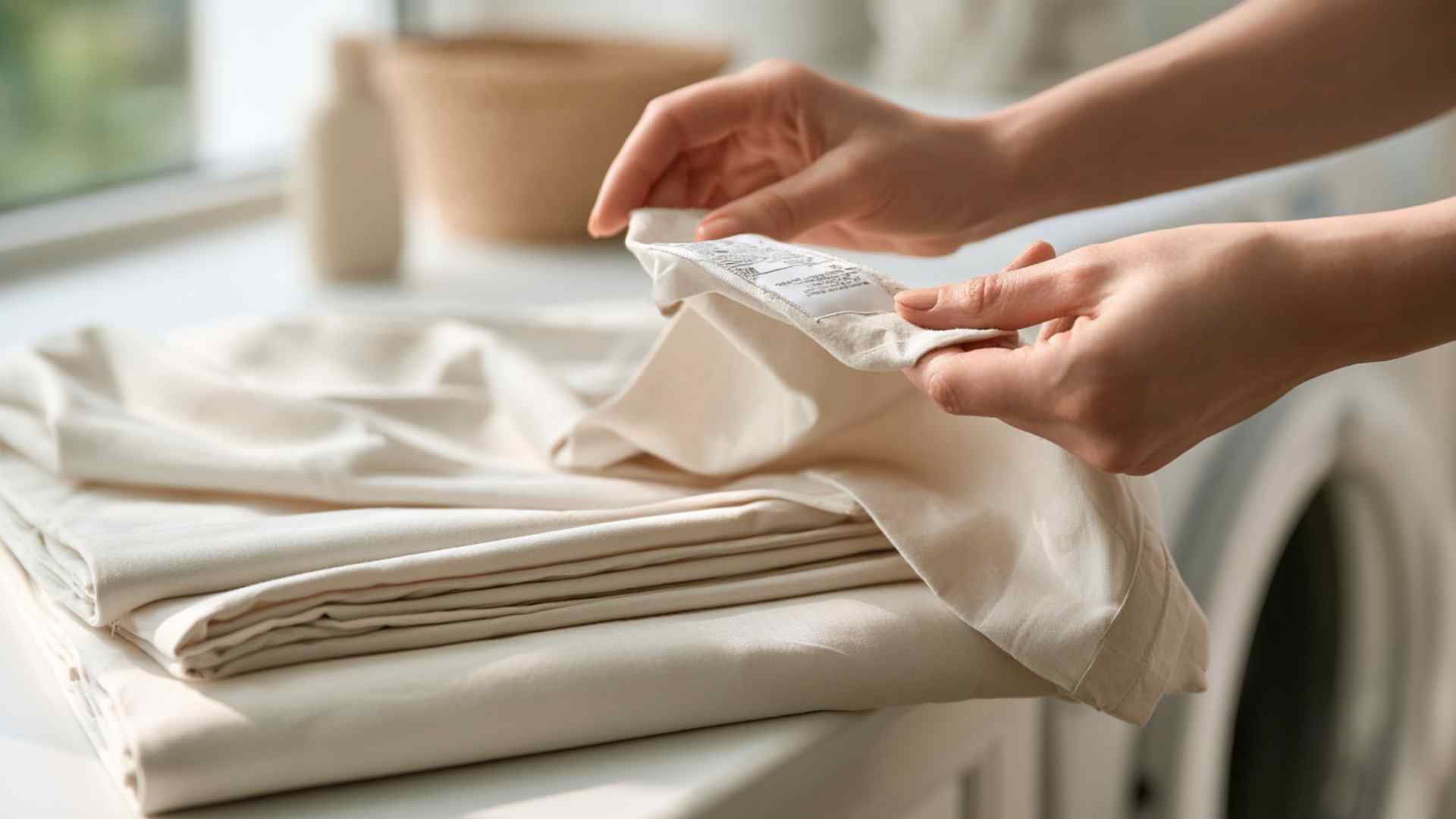
Check the Care Label First
Every set of sheets comes with a care label, and it is worth thirty seconds before you start the machine.
Manufacturers list the safest water temperature, drying method, and any treatments to avoid for that specific fabric, from bleach to certain detergents.
Tip: Skip bleach on that first wash, even if the label allows it later, since a stripped-down cycle is gentler on brand-new fibers.
Use the Right Washing Method
Give new sheets their own cycle instead of tossing them in with regular laundry, which can leave behind lint or trapped detergent residue.
Wash sheets separately when possible, with a mild, dye-free detergent, and skip the fabric softener on this first wash too, since it coats the exact fibers you’re trying to strip clean.
Load the washer only about half full so water and detergent can reach every fiber evenly.
Tip: If your machine has a bedding or bulky-items cycle, use it here. It runs a longer soak that pairs well with a half-full load.
Dry Sheets Properly
How you dry sheets matters almost as much as how you wash them. Air drying protects fibers and colors, though it takes longer than a dryer cycle.
High heat wears down fibers faster and fades color sooner, so if you do use a dryer, choose a low setting and pull the sheets out while they’re still slightly damp.
Tip: Toss in two or three clean dryer balls. They stop sheets from twisting into a tangled knot, so everything dries more evenly.
Once the label is checked, the wash is done, and the sheets are dry, your bed is finally ready for that first comfortable night.
Washing Sheets by Fabric Type
Not every sheet set can handle the same wash cycle, and treating them all the same is one of the fastest ways to wear out good fabric. Fiber type changes how sheets respond to heat, detergent, and agitation.
Sheet Material | Washing Tips |
|---|---|
Cotton | Warm water works well; avoid high-heat drying |
Linen | Use a gentle cycle and skip high heat entirely |
Bamboo | Wash with mild detergent in cooler water |
Microfiber | Skip fabric softener, since it dulls the fabric’s softness |
Matching the wash to the fabric keeps sheets in good shape for years, not months.
How to Make New Sheets Softer After Washing
New sheets often feel stiff at first, but consistent care helps the fabric soften and feel more comfortable with each wash. Beyond the wash and dry steps above, a couple of extra habits keep that softness building over time:
- Shake sheets out and turn them right-side out before folding, since this loosens fibers matted down in the dryer
- Use the right amount of detergent to avoid buildup that can make fabric feel rough
- Choose suitable drying settings to protect the fibers and maintain a smooth texture
- Avoid harsh chemicals like bleach that may weaken delicate materials
- Wash sheets regularly to keep them fresh, soft, and comfortable over time
Most sheets need a few washes before reaching their best feel. Cotton and bamboo usually soften faster, but they feel different and have different durability and care needs.
If you are comparing both materials, learn more about whether bamboo sheets are better than cotton before choosing your next set.
Should You Use Fabric Softener on New Sheets?
Fabric softener isn’t necessary on new sheets, and it can work against you. It coats fibers in a waxy layer that traps some of the same starch and finishing residue you’re trying to wash out, and it can make fabric feel less breathable over time. A splash of distilled white vinegar in the rinse cycle softens fabric in a similar way without the coating, making it the better choice for that first wash or two.
How Often Should You Wash Your Sheets After the First Use?
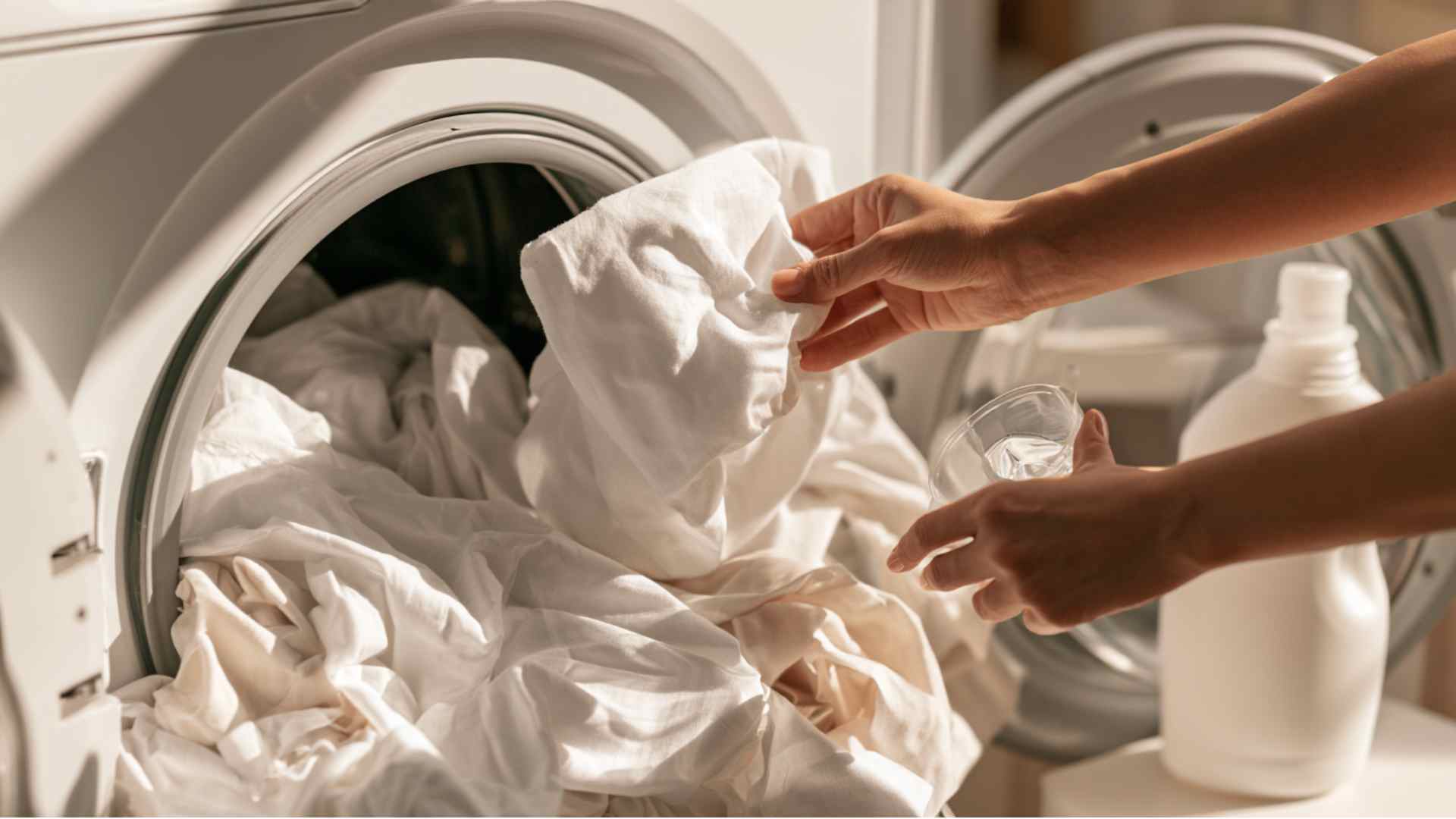
After the first wash, the next question is keeping up a routine. This part is more about consistency than getting it perfect.
- General recommendation: Wash sheets weekly. This is the general guideline for controlling skin oils, sweat, and dust between washes.
- Heavy sweating: Wash every three to four days if you sweat heavily overnight or live somewhere warm.
- Pets on the bed: Wash every three to four days if pets sleep with you, since they add hair, dander, and outdoor dirt.
- Allergies: Wash twice a week if you deal with allergies or sensitive skin, since dust and residue build up fast between cycles.
Sticking to a schedule matters more than hitting the exact number of days on the calendar.
Set a reminder if you tend to forget, since sheets rarely look dirty even when they are overdue for a wash and quietly collecting oils, sweat, and dust in the background.
Common Mistakes People Make When Washing New Sheets
A couple of habits are easy to fall into that go beyond the checklist above:
- Using too much detergent, which leaves a stiff, soap-like residue that mimics the very stiffness you’re trying to wash out
- Mixing brand-new dark or saturated sheets into regular laundry loads too soon, since residual dye can keep transferring for the first few washes
Linen keeps its naturally crisp texture even after regular use, which many sleepers enjoy for its breathable feel. If you prefer a relaxed bedding style, learn more about whether linen sheets are comfortable for everyday use.
A few small changes to your laundry routine help sheets stay softer and last longer. Proper washing habits can also protect colors, texture, and overall fabric quality.
Bottom Line
Yes, wash new sheets before putting them on your bed. It takes one laundry cycle and makes a real difference once you climb in for the night.
You get a cleaner feel, less of that sharp packaging odor, softer fabric against your skin, and better overall sleeping comfort.
It is a small step that costs almost nothing and pays off every night after. Before your next sheet set even makes it to the bed, run it through the wash first. Your future self, tucked into soft, fresh sheets, will thank you for it.
Frequently Asked Questions
What Happens If You Don’t Wash New Sheets?
Sleeping on unwashed sheets for one night is unlikely to cause serious harm. But leftover sizing and finishing chemicals commonly cause a stiffer feel and, for people with sensitive skin or eczema, itching or mild contact dermatitis.
Do New Sheets Need to Be Washed Twice Before Use?
One wash removes most surface residue and is enough for most people. If you have sensitive or reactive skin, washing twice can help, since a single cycle doesn’t strip out every trace of finishing chemical.
Is It Safe to Sleep on New Sheets Without Washing If You Have Sensitive Skin?
Not ideal. Leftover finishing residue is more likely to bother sensitive skin, so washing first is the safer, more comfortable choice, and it aligns with what dermatologists recommend for eczema-prone skin.
Do Colored Sheets Bleed Dye in the First Wash?
Darker or saturated colors can bleed slightly in the first cycle. Washing them alone in cool water protects lighter items nearby in future loads.