



Your grandmother probably slept on linen sheets, and so did ancient Egyptian pharaohs.
This fabric has been keeping people comfortable for thousands of years, yet many modern sleepers have never experienced its unique benefits.
With social media buzzing about linen bedding and luxury hotels switching to linen, you might wonder: are linen sheets comfortable enough to justify all the attention?
Linen sheets offer a completely different kind of comfort than regular cotton bedding. They’re not soft and silky like bamboo or smooth like percale cotton.
Instead, they provide a relaxed, breathable experience that improves over time. But are linen sheets comfortable for everyone, and do they live up to the hype?
Let’s break down everything you need to know about linen sheet comfort.
Are Linen Sheets Comfortable? How Are They Different?
Linen comes from the flax plant, not cotton fibers like most sheets. This makes all the difference in how it feels and performs.
The flax plant creates longer, thicker fibers that give linen its signature airy feel.
While cotton fibers are shorter and finer, flax fibers create a more open structure that lets air flow freely through the fabric.
The Best Types of Linen for Maximum Comfort
Not every type of linen feels the same when you first touch it. Some varieties are softer right away, while others need time to break in.
- Stonewashed Linen: Pre-treated with stones or enzymes for instant softness and a relaxed feel from day one
- Belgian/French Flax Linen: Premium quality that gets softer with each wash and lasts for decades
- Raw Linen: More textured initially, but develops incredible softness over time.
How Linen Sheets Feel When You First Use Them
Here’s the truth: brand-new linen sheets don’t feel like cotton. They have a slightly rough, textured feel that some people love and others need time to get used to.
Think of linen like a good pair of jeans – it starts stiff but becomes your favorite item once it’s broken in.
The texture is part of linen’s charm, and it gets remarkably soft and smooth after 3-5 washes without losing its strength.
Cotton vs. Linen: The Big Differences That Matter
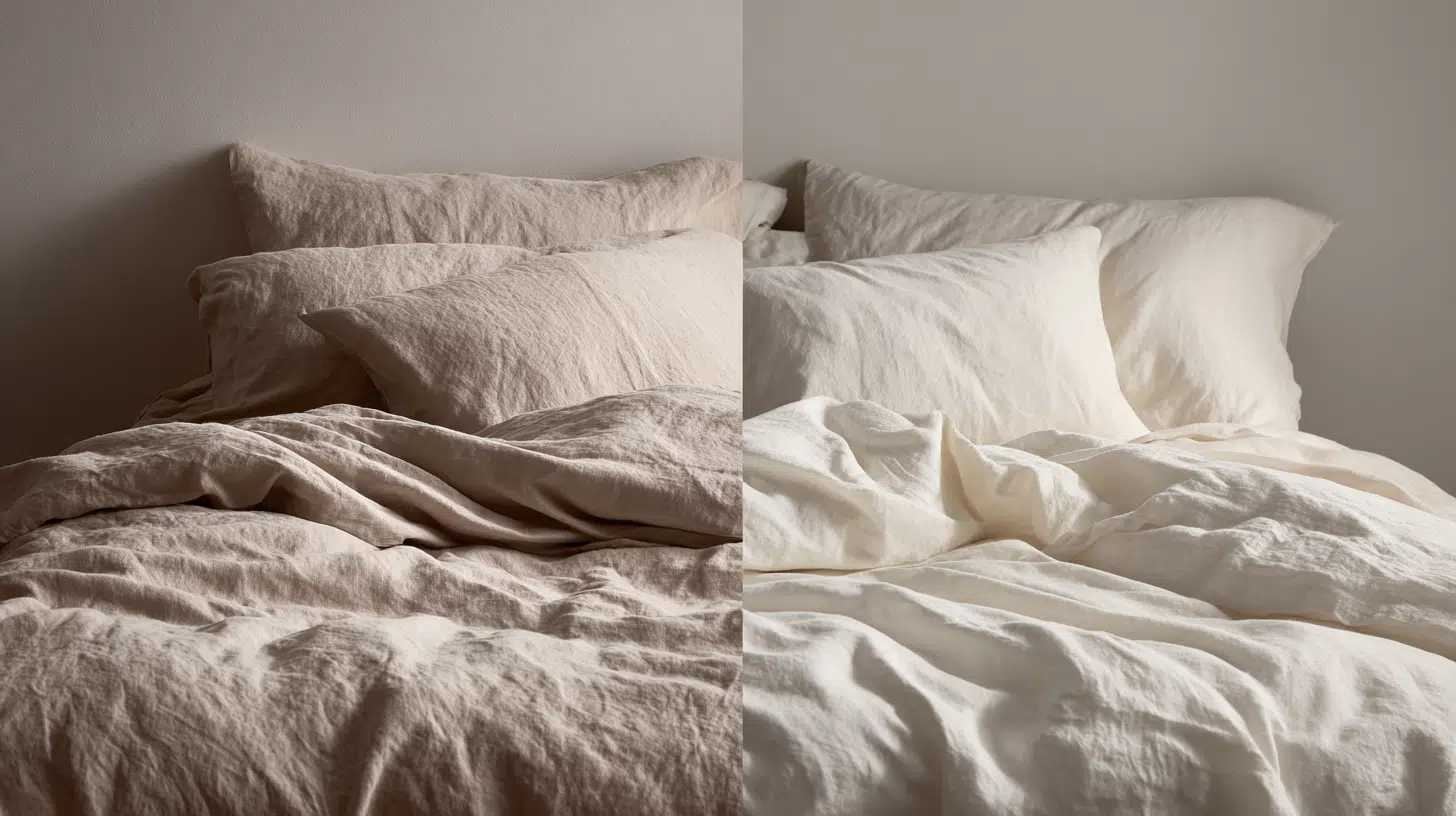
When choosing between these two popular options, several key differences stand out. Each material has its strengths and works better for different types of sleepers.
| Feature | Linen | Cotton |
|---|---|---|
| Feel | Textured, gets softer over time | Smooth and soft immediately |
| Temperature | Excellent cooling, very breathable | Good breathability, can trap heat |
| Durability | Lasts decades with proper care | Wears out faster over time |
| Maintenance | Wrinkles easily, low-maintenance washing | Easy to keep wrinkle-free |
| Cost | Higher upfront investment | More budget-friendly options |
Fun Fact: Linen gets stronger when wet, which is why it becomes more durable with each wash—the opposite of most fabrics!
Linen has been around forever, but it’s having a significant moment right now. The rise of minimalist home design and eco-conscious living has made linen the go-to choice for stylish, sustainable bedding.
Social media has also played a massive role in linen’s popularity. The naturally wrinkled, effortless look fits perfectly with the “perfectly imperfect” style that’s trending everywhere.
Temperature Control: Which Material Keeps You Comfortable?
If you sleep hot or live somewhere warm and humid, linen wins hands down.
Its loose structure and natural moisture-wicking properties keep air moving around your body, making it the ultimate cooling bedding choice.
Cotton can be breathable too, but it depends on the construction. High thread count cotton often feels warmer because the fibers are packed more tightly together.
Linen adapts to your body temperature better than most fabrics – in summer, it keeps you cool and dry, while in winter, it provides just enough warmth without making you overheat.
Cotton offers more insulation, which makes it better for people who tend to get cold at night. However, this same quality can make cotton uncomfortable for hot sleepers.
Quality Markers and Value: What to Look For
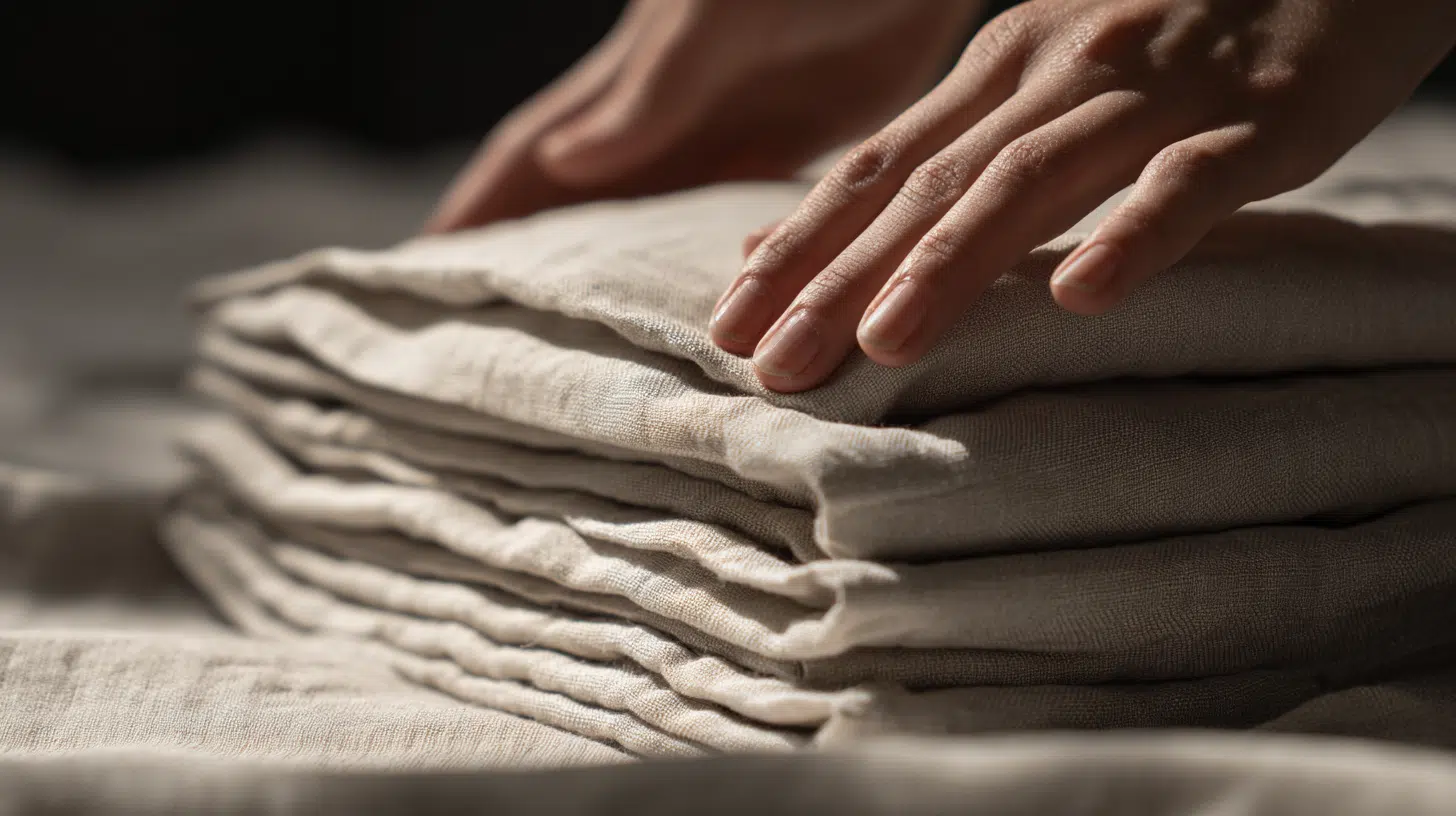
Thread count gets thrown around a lot in bedding marketing, but it’s one of the most misunderstood concepts in sheet shopping.
For cotton sheets, a thread count between 200-400 typically offers the best performance – numbers above 600 often mean thinner, weaker threads.
With linen, thread count is practically meaningless. Instead, look for GSM (grams per square meter) between 160-190 for optimal weight and breathability.
Cost vs. Value Breakdown:
- Linen costs 2-3 times more upfront than quality cotton
- Linen lasts 10-20 years with proper care
- Cotton typically needs replacing every 2-5 years
- Cost per year often favors linen in the long run
- Linen gets better with age, but cotton deteriorates over time
Fun Fact: Some of the world’s finest linen comes from Belgium and Northern France, where the cool, damp climate is perfect for growing flax
Pros and Cons: What to Expect from Each Material
Every bedding choice comes with trade-offs, and understanding these helps you set realistic expectations. Both linen and cotton have devoted fans, but they deliver comfort in very different ways.
Let’s break down the real advantages and challenges you’ll face with each option.
This honest comparison will help you decide which drawbacks you can live with and which benefits matter most for your sleep quality.
Linen Sheets: Things You Should Know
Linen has a reputation for being high-maintenance, but many of its “flaws” are features once you understand them.
The key is knowing what you’re signing up for and how to work with linen’s natural characteristics.
Here’s the reality of living with linen bedding and what you can do to maximize the benefits:
| What You’ll Love | What Takes Getting Used To |
|---|---|
| Gets softer with every wash | Rough texture at first |
| Incredibly breathable and cooling | Wrinkles very easily |
| Lasts for years and years | Costs more upfront |
| Great for people with allergies | Needs several washes to reach peak softness |
| Eco-friendly choice | Can feel scratchy initially |
Pro Tip: To speed up the softening process, wash your new linen sheets with a cup of white vinegar on the first wash – it helps break down fibers naturally!
Cotton Sheets: Things You Should Know
Cotton is the reliable choice that most people grew up with, but it’s not perfect for every sleeper. Understanding cotton’s limitations helps you decide if its convenience is worth the trade-offs.
Modern cotton comes in many varieties, each with different performance characteristics.
Here’s what cotton brings to the table and where it might fall short:
| What You’ll Love | What Might Bother You |
|---|---|
| Soft and comfortable immediately | Not as cooling as linen |
| Easy to wash and maintain | Wears out faster over time |
| Available at many price points | Can feel stuffy in hot weather |
| Doesn’t wrinkle as much | May trap moisture and heat |
| Familiar thinks that most people expect | Less durable long-term |
Pro Tip: Wash cotton sheets in warm water (not hot) to prevent shrinking and fading.
How to Choose Between Linen and Cotton

Your decision should depend on your personal preferences and sleeping habits. Consider your climate, sleep temperature, and maintenance preferences.
Choose Linen If You:
- Sleep hot or live in warm climates
- Love sheets that improve with age
- Want a relaxed, casual bedroom look
- Value long-term quality and sustainability
- Don’t mind a textured feel initially
- Prefer natural, breathable materials
Choose Cotton If You:
- Want immediate softness and comfort
- Prefer low-maintenance bedding
- Are you shopping on a tighter budget
- Like a crisp, polished appearance
- Sleep cool or get cold easily
- Want familiar, predictable comfort
Fun Fact: Linen was so valuable in ancient Egypt that it was sometimes used as currency, while cotton didn’t become widely available until the Industrial Revolution!
Conclusive Thoughts
So, are linen sheets comfortable? The honest answer is yes, but with a twist.
Linen comfort isn’t about instant gratification like cotton. It’s about investing in bedding that changes over time into something truly special.
If you sleep hot, value sustainability, or want sheets that last for decades, linen is your match. If you prefer immediate softness and easy care, cotton still has its place.
The key is understanding what type of sleeper you are and what comfort means to you personally.
Both options can give you better sleep – it just depends on your priorities and patience level.
Ready to sleep cooler tonight? Choose the bedding that matches your sleep style and comment below to let others know as well.