


White sheets look crisp and clean when fresh, but can quickly turn dull, yellow, or stained without the right washing routine.
Knowing how to wash white sheets correctly makes a real difference in how long they stay bright and how comfortable they feel against your skin.
Many people toss them in the machine and hope for the best, only to find their sheets losing that fresh, hotel-quality appearance after just a few washes.
The great thing is that keeping white sheets genuinely clean does not require expensive products or complicated steps.
With the right water temperature, detergent, and a few simple habits, you can maintain brilliantly white, fresh-smelling sheets week after week.
Why You Should Wash Your White Sheets
White sheets stay bright longer when washed in cool or warm water with a gentle detergent and a small amount of oxygen-based bleach.
Avoid harsh chemicals and dry them in sunlight when possible, as it naturally helps maintain whiteness.
Wash sheets every 7–10 days to prevent sweat, oils, and dust from building up and causing yellowing.
Regular washing keeps fabric fresh and clean and helps preserve the crisp white look over time.
Tools and Materials Needed
Having the right tools and materials on hand before you start makes the entire washing process quicker, easier, and more effective.
| Item | Purpose |
|---|---|
| Laundry Detergent (gentle or oxygen-based) | Cleans fabric and removes everyday dirt and odors |
| Baking Soda | Brightens whites and eliminates odors, add to the wash cycle drum only |
| White Vinegar | Softens fabric and breaks down detergent buildup. Add to the rinse cycle dispenser only, never with baking soda in the same cycle |
| Borax (optional) | A powerful whitening booster, soak sheets overnight in half a cup per gallon of water before washing |
| Lemon Juice (optional) | Natural brightener, add half a cup to the wash or soak sheets overnight in a hot water solution |
| Stain Remover or Hydrogen Peroxide | Targets tough stains and yellowing |
| Soft Brush or Sponge | Gently scrubs stained areas before washing |
Important: Baking soda and white vinegar must never be used in the same wash cycle. Baking soda is alkaline, and vinegar is acidic; mixing them causes a reaction that cancels out the cleaning benefit of both.
Step-by-Step Guide To Wash White Sheets
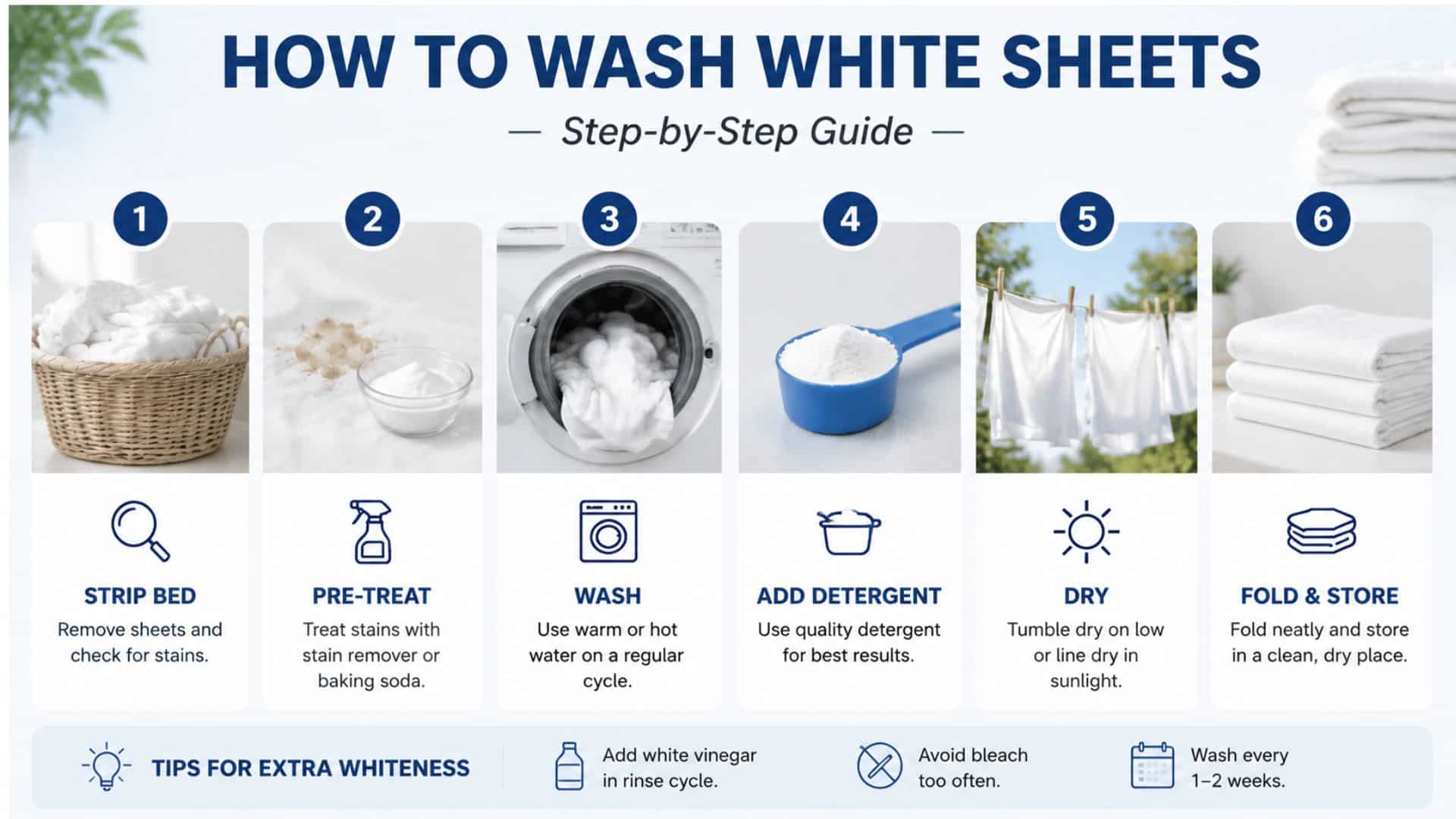
Washing white sheets the right way keeps them bright, fresh, and soft for years. Follow these simple steps to remove stains, choose the right cycle, and dry them properly without causing damage
Step 1: Pre-Soak for Yellow or Heavily Stained Sheets
If your white sheets have already yellowed or carry stubborn buildup, start with a pre-soak before washing.
Fill your machine or a large basin with warm water and add your chosen whitening agent, half a cup of baking soda, or the juice of one lemon per gallon of water.
Let the sheets soak for 30 to 60 minutes, or overnight if the yellowing is severe. After soaking, drain, then wash as normal.
Step 2: Pre-Treat Stains
Before loading your sheets into the washing machine, take a moment to address any visible stains.
Bed sheets commonly collect sweat, body oils, food spills, and accidental marks over time. Each of these needs a little attention before a regular wash cycle can do its job effectively.
Lay your sheets flat and inspect the fabric carefully. Apply a quality stain remover directly onto the affected spot.
Step 3: Sort and Prepare Sheets
Separate bed sheets from heavier items like towels and jeans, as mixing them causes unnecessary friction and uneven washing. Always wash white sheets in their own load.
Never overload; sheets need room to move freely for proper cleaning and thorough rinsing, especially when dealing with larger sets like king-size bedding that require extra space in the drum.”
Step 4: Choose the Right Wash Cycle and Temperature
Use warm water (90–110°F / 40°C) on a regular cycle for most white cotton sheets to effectively remove oils and dirt.
For deep cleaning after illness or heavy use, use hot water (130°F / 60°C) to kill bacteria and dust mites.
Avoid frequent hot washes, as they can weaken fibers, cause shrinkage, and reduce sheet lifespan.
Always check care labels, since linen, microfiber, and sateen require cooler temperatures to protect the fabric.
Step 5: Add Detergent and Whitening Boosters
Use a gentle or oxygen-based detergent and stick to the label amount to avoid residue buildup.
Add half a cup of baking soda at the start of the wash to help boost brightness.
During the rinse cycle, pour half a cup of white vinegar into the fabric softener dispenser to remove residue and soften fibers.
Do not mix baking soda and vinegar in the same cycle, as they cancel each other out.
Step 6: Dry White Sheets Properly
Once washed, drying your white sheets correctly keeps them fresh, bright, and wrinkle-free.
Air-drying in natural sunlight is the best option; UV rays act as a natural bleaching agent, brightening white fabric without any chemicals.
Hanging sheets outside even once a month makes a visible difference over time.
High heat causes shrinkage, weakens fibers, and makes sheets feel rough over time.
Step 7: Iron and Fold
Iron sheets after drying to achieve a smooth, crisp finish and remove wrinkles. Use medium heat for cotton and low heat for delicate fabrics, preferably while slightly damp.
Fold neatly into thirds or quarters to keep them compact and easy to store. Store each set in a matching pillowcase and ensure everything is completely dry to prevent mildew.
How Often Should You Wash White Sheets
Crisp, bright white sheets stay fresh and clean only when you wash them at the right time and frequency.
| Sheet Type | How Often | Reason |
|---|---|---|
| Every day, white bed sheets | Once a week | Removes sweat, oils, and bacteria buildup |
| Pillow cases | Every 2 to 3 days | Face and hair transfer oils faster than the body |
| Guest room sheets | Before and after every use | Sits unused and collects dust between guests |
| Sheets after illness | Immediately after recovery | Eliminates bacteria and prevents re-infection |
| Sheets in summer | Twice a week | Heat causes heavier sweating and faster buildup |
Wash your white sheets at least once every seven days. Maintaining a healthy rotation of bedding helps reduce wear and keeps every set feeling fresher between washes.”
Common Mistakes To Avoid
Even with the best intentions, small washing mistakes can leave your white sheets looking yellow, dull, or worn out. Knowing what to avoid makes a big difference in keeping them bright and fresh longer.
- Using Too Much Detergent: Excess detergent leaves a soapy residue on fabric that traps dirt over time, causing white sheets to look dull and yellowed rather than clean and bright.
- Washing in Hot Water Too Often: While hot water sanitizes, using it repeatedly weakens fabric fibers, causes shrinking, and gradually fades the white color of your sheets.
- Overloading the Washing Machine: Stuffing too many sheets into a single load prevents proper rinsing and cleaning, leaving detergent buildup and stains after every wash.
- Using Bleach Too Frequently: Regular bleach use breaks down cotton fibers over time, causing sheets to thin out, yellow, and wear through much faster than expected.
- Skipping the Pre-Treatment Step: Placing stained sheets directly into the wash without pre-treating often sets the stain deeper into the fabric, making it harder to remove later.
Avoiding these common mistakes takes a little extra effort but delivers noticeable results. Treat your white sheets with the right care, and they will stay crisp, clean, and bright, wash after wash.
Hacks to Keep Your White Sheet Looking New
Here are some practical tips to keep your white sheets looking crisp and bright over time.
Wash Regularly
Wash your white sheets every one to two weeks. The longer oils, sweat, and dead skin sit in the fabric, the harder they are to remove. Regular washing stops buildup before it can yellow or dull the fabric.
Use the Right Water Temperature
Hot water works best for white cotton sheets as it kills bacteria and loosens body oils. Check the care label first, though, as some fabrics like linen or microfiber do better in warm or cool water to avoid shrinking.
Add a Whitening Booster
Along with your regular detergent, add half a cup of baking soda or white vinegar to the wash. Baking soda brightens and removes odors, while vinegar breaks down soap residue that makes sheets look grey over time.
Use an Oxygen-Based Brightener
Products like OxiClean or any oxygen bleach are gentler than chlorine bleach and very effective at keeping whites bright. Add a scoop to your wash cycle every few weeks.
Dry in Sunlight When Possible
Natural sunlight is a free and powerful whitener. Hanging sheets outside to dry even once a month makes a visible difference. The UV rays naturally bleach the fabric without any chemicals.
Conclusion
Keeping white sheets bright and fresh does not have to be complicated.
Pre-treat stains before washing, use the right temperature for your fabric, skip chlorine bleach in favor of oxygen-based alternatives, and let sunlight do some of the work for you.
Small habits like washing weekly, adding white vinegar to the rinse cycle, and using wool dryer balls instead of fabric softener make a bigger difference than most people expect.
Follow these steps consistently, and your white sheets will stay soft, clean, and genuinely white, not just for a few washes, but for years.
Frequently Asked Questions
How Do I Remove Yellow Sweat Stains from White Sheets?
Apply a mixture of baking soda, hydrogen peroxide, and a small amount of dish soap directly onto the stain, let it sit for 15 minutes, then wash as usual.
Can I Use Bleach Safely on All White Sheets?
No, bleach is only safe for pure cotton white sheets and should be used sparingly, as frequent use weakens fabric fibers and causes yellowing over time.
What is the Best Temperature to Wash Cotton White Sheets?
For a routine weekly wash, 40°C is sufficient to remove body oils and keep sheets fresh. For a deep hygiene wash, especially after illness or heavy sweating, wash at 60°C, which kills up to 99% of bacteria.