



Baby bed bugs are often one of the earliest and most overlooked signs of a bed bug infestation.
Because they are so small and nearly colorless at first hatch, most people do not notice them until the problem has already grown.
From what they look like and where they hide to how they grow and what to do when you find them, everything covered here is designed to help you spot and stop them early.
Identifying them correctly from the start matters because misidentification leads to the wrong treatment and wasted time.
Bed bug populations grow fast. A single female can lay up to 500 eggs over her lifetime, and nymphs reach adulthood in as little as five weeks.
Catching them early is the single most effective way to stop an infestation before it spreads through your home.
What are Baby Bed Bugs
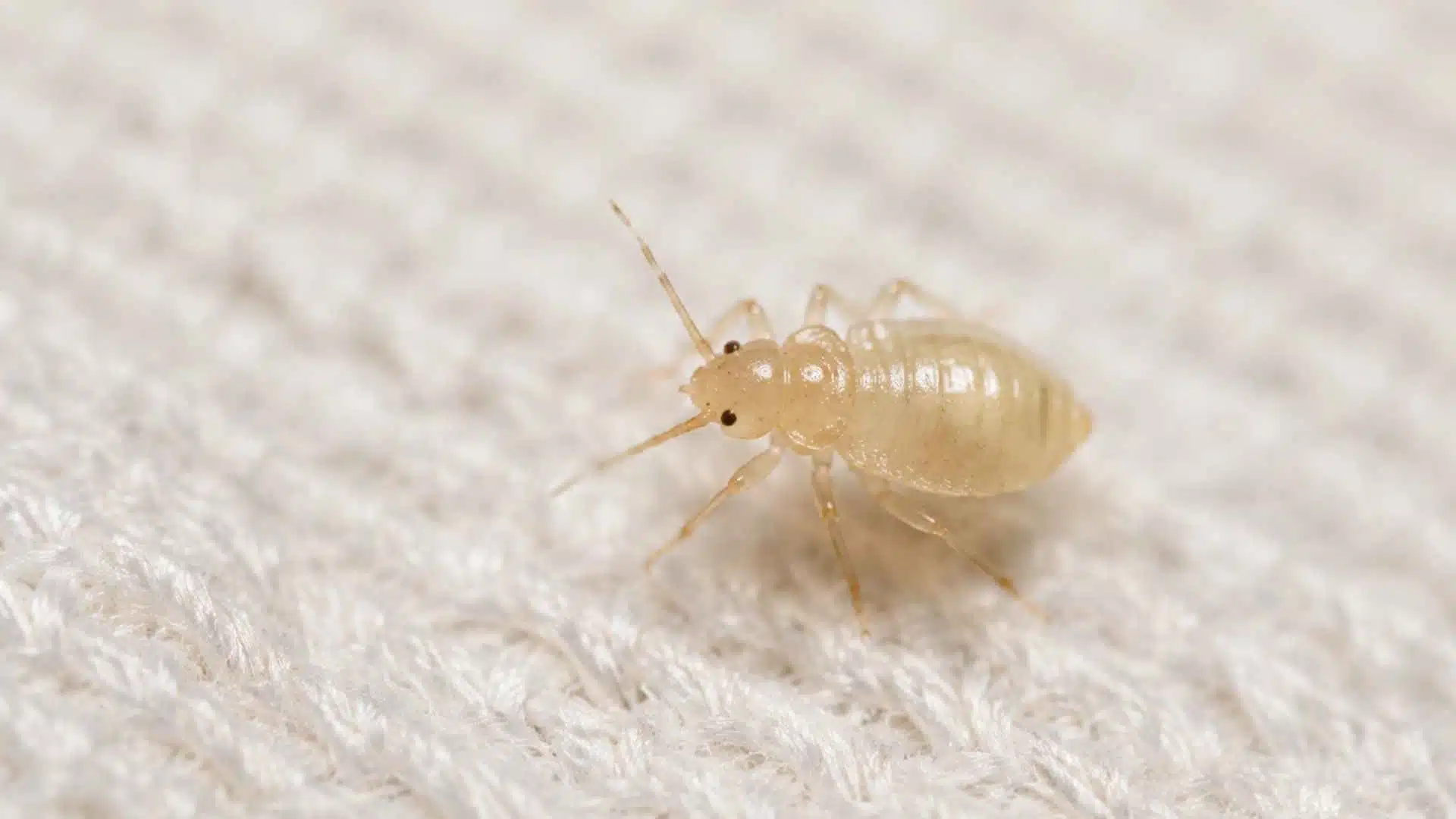
Baby bed bugs, known as nymphs, are the juvenile stage of Cimex lectularius, the common bed bug species.
They hatch from tiny pearl-white eggs laid in mattress seams, cracks, and hidden crevices near beds.
Eggs typically hatch in 6 to 10 days under warm conditions, though cooler temperatures can extend this to 12 days or more, and nymphs reach adulthood in as few as 37 days, roughly five to six weeks.
They start at around 1.5mm, nearly colorless and translucent, making them much harder to spot than the reddish-brown, flat adult bed bugs most people recognize.
What Do Baby Bed Bugs Look Like
Baby bed bugs are extremely small when they first hatch, measuring about 1.5mm, roughly the size of a pinhead.
They are flat, oval-shaped, and wingless, with six legs and two antennae.
Newly hatched nymphs are almost see-through or pale yellow, making them very easy to miss on light-colored bedding.
After feeding on blood, they turn a deeper reddish-brown and appear visibly bloated.
As they grow through five nymph stages, their size increases gradually up to about 4.5mm before reaching adulthood, with color darkening at each stage.
After Feeding: What Changes
A baby bed bug changes noticeably after feeding. The change happens quickly and makes identification much easier.
| Feature | Unfed Nymph | Fed Nymph |
|---|---|---|
| Color | Pale yellow/translucent | Reddish-brown |
| Body shape | Flat | Swollen and bloated |
| Visibility | Very hard to spot | More visible |
| Size appearance | Tiny and compact | Noticeably larger |
If you spot a small, dark, swollen bug near your mattress after waking up with bites, a fed nymph is likely what you are looking at.
Don’t Confuse Them With These Insects
Baby bed bugs are often misidentified. Treating for the wrong pest wastes time and money.
1. Lice: Elongated, found on the body or clothing, not hiding in mattresses or bedding
2. Fleas: Darker, harder, and can jump
3. Carpet beetle larvae: Fuzzy, elongated, and bristled
4. Tick nymphs: Eight legs, not six
When in doubt, seal the bug in a bag and take it to a pest control professional before starting treatment.
Baby Bed Bugs Life Cycle Explained
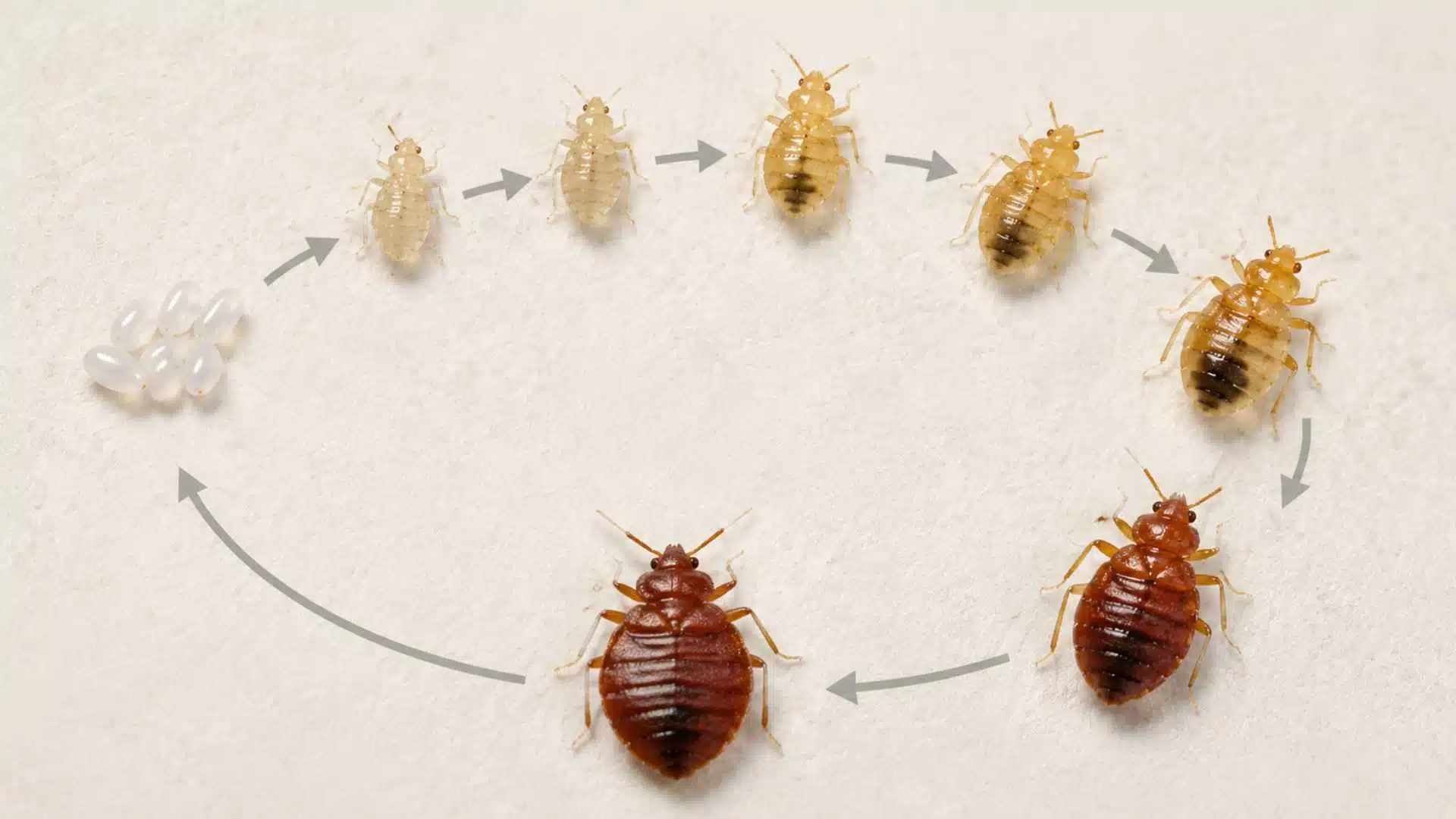
It all starts with the egg.
Understanding the bed bug life cycle and how each stage develops helps with accurate identification, especially when comparing early stages like eggs and nymphs with detailed references on bed bugs’ appearance and life cycle.
Adult females lay one to five eggs per day in hidden spots such as mattress seams, baseboards, and furniture crevices.
The eggs are tiny, white, and sticky, hatching within six to ten days in warm conditions.
The 5 Nymph Stages
Once hatched, a nymph must pass through five distinct growth stages before becoming an adult. Each stage requires at least one blood meal to progress to the next.
| Stage | Size | Key Trait |
|---|---|---|
| Nymph 1 | 1.5mm | Nearly invisible, translucent |
| Nymph 2 | 2mm | Slightly darker after feeding |
| Nymph 3 | 2.5mm | More visible, tan coloring |
| Nymph 4 | 3mm | Resembles a small adult |
| Nymph 5 | 4.5mm | Almost fully developed |
Feeding Habits and Growth Timeline
Nymphs typically feed every few days when a host is available but can survive without feeding for weeks, and in cooler environments, potentially several months.
This makes them hard to eliminate even in vacant rooms.
With regular access to a host and warm temperatures, a nymph reaches full adulthood in as little as five weeks.
In cooler or food-scarce conditions, that timeline stretches considerably. The faster the environment supports feeding, the faster the infestation spreads.
Where You Can Find Baby Bed Bugs in Your Home
Baby bed bugs hide in tight, dark spaces close to where people sleep. Here are the most common places to check:
- Mattresses: Focus on seams, tags, piping, and the underside
- Bed frames: Wooden joints, grooves, and screw holes are prime spots
- Furniture: Sofas, chairs, and nightstands with cracks or hidden joints
- Wallpaper and wall gaps: Peeling edges and loose sections near the floor
- Electrical outlets and baseboards: Small openings that nymphs easily slip into
- Luggage and clothing: Especially items used during travel or stored near infested areas
- Secondhand furniture: Always inspect before bringing any used piece indoors
If you find signs in even one of these spots, check all of them. Baby bed bugs rarely stay in just one location.
Signs of a Baby Bed Bug Infestation
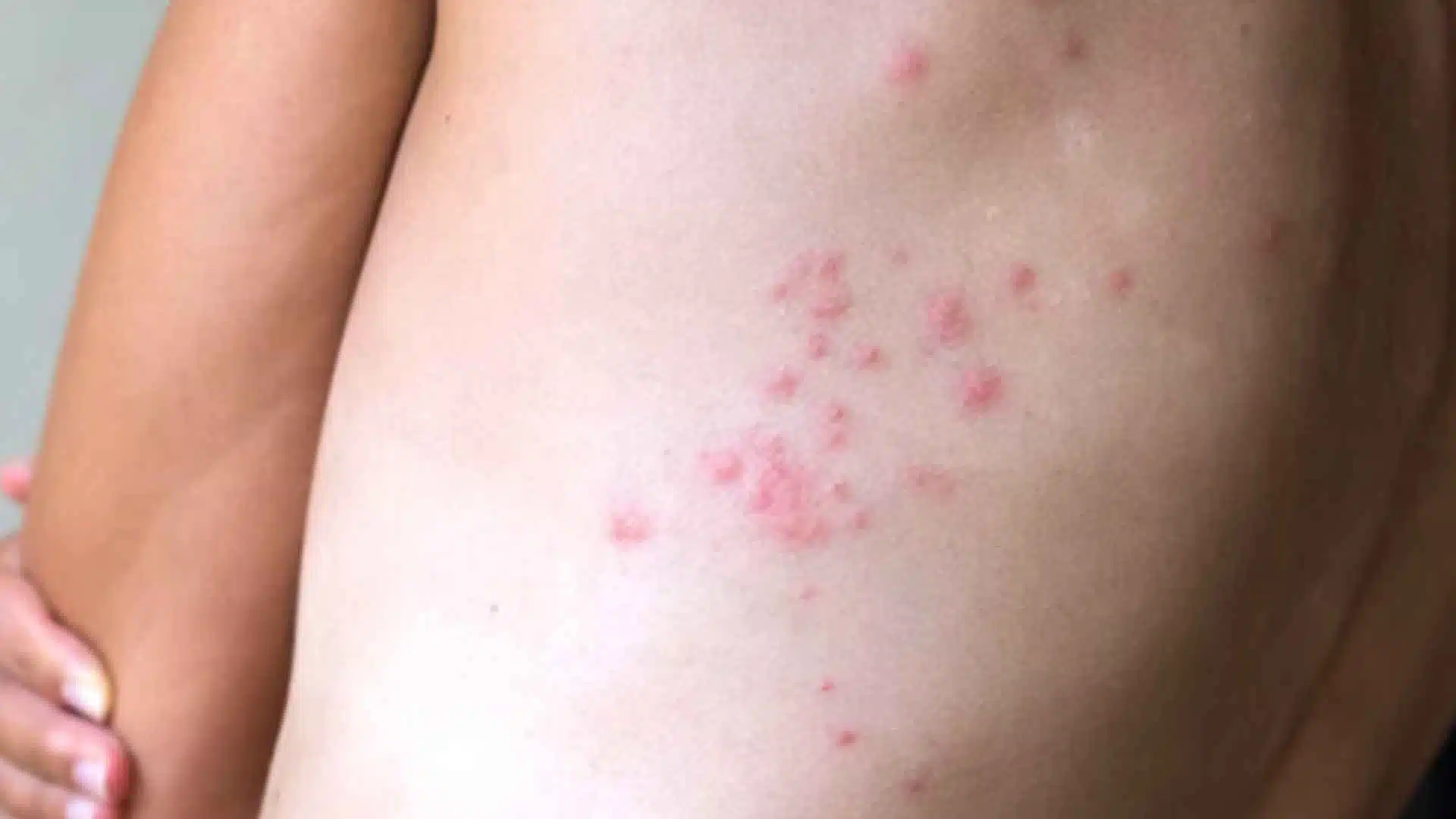
Identifying an infestation early depends on knowing what signs to look for.
These early warning signs are closely related to how bed bugs appear and develop, as explained in detail in guides on early signs of bed bugs.
Bites often appear in small clusters or as a line on exposed skin, such as the arms and neck, and sometimes take a day or two to show up.
Check your sheets for tiny rust-colored blood stains, which occur when a fed nymph is crushed during sleep.
Dark brown or black dots on mattress seams and bedding are fecal spots that smear when wiped with a damp cloth.
Shed skins, the translucent hollow casings left behind as nymphs grow, are one of the most reliable signs of an active infestation.
In heavy cases, a sweet, musty odor in the room is also a strong indicator.
How to Get Rid of Baby Bed Bugs
Acting fast is the most important step. The sooner you start, the less ground the infestation covers.
- Strip and bag all bedding without shaking it.
- Vacuum the mattress, seams, bed frame, and surrounding floor with a crevice tool.
- Dispose of the vacuum bag immediately outside the home.
- Wash all bedding and clothing at 60°C or higher and dry on high heat for 30 minutes.
- Run a steamer set above 120°F over mattress seams, frames, and upholstered furniture.
- Apply EPA-registered sprays or desiccant dusts to seams, baseboards, and wall gaps.
- Seal all cleaned items in plastic bags until the infestation is fully cleared.
- Repeat vacuuming and inspection every few days throughout treatment.
If none of these steps reduce activity within two weeks, contact a licensed pest control professional for heat treatment or commercial-grade options.
How to Prevent Baby Bed Bugs From Coming Back
Prevention is far easier than dealing with a repeat infestation. Inspect your mattress seams, bed frame, and nearby furniture regularly for early signs.
When traveling, keep luggage off the floor and check hotel bedding before settling in.
Wash and heat-dry travel clothing immediately after returning home. Reduce clutter around sleeping areas to eliminate hiding spots.
Use mattress encasements and box spring covers designed specifically for bed bug protection and leave them on permanently.
A few simple habits followed consistently are enough to help prevent baby bed bugs from returning.
Common Myths About Baby Bed Bugs
Baby bed bugs are not a sign of a dirty home. They hitchhike into any space regardless of how clean it is.
They cannot fly or jump either; they spread only by crawling or catching a ride on belongings.
Perhaps the most dangerous myth is that they die quickly without a host. Nymphs can survive weeks without feeding, and in cooler conditions, that stretch extends to several months.
Final Thoughts
Baby bed bugs are easy to miss in the early stages but difficult to eliminate once they spread.
Early detection starts with knowing what to look for: tiny, translucent nymphs, shed skins, fecal spots, and bloodstains on bedding.
Identifying them correctly prevents wasted effort treating for the wrong pest. Most importantly, act quickly.
The faster you respond after spotting the first signs, the better your chances of getting the infestation under control before it grows.
Frequently Asked Questions
What Do Baby Bed Bugs Look Like when They First Hatch?
They are about 1.5mm, nearly translucent, and pale yellow with a flat oval body.
How Small are Baby Bed Bugs Compared to Adults?
Newly hatched nymphs are roughly 1.5mm while adults typically measure 5 to 7mm, making them three to four times larger
Can Baby Bed Bugs Bite Humans?
Yes, nymphs bite humans at every stage of their development because they need blood to survive and grow.