

Most parents buy two or three crib sheets and quickly realize that is not enough. Babies are messy.
Blowouts happen at midnight. Spit-up does not wait for laundry day. The number of crib sheets you actually need depends on your baby, your laundry habits, and how much sleep you want to protect.
Some families do fine with four. Others need six or more. Below is everything you need to figure out the right number for your home, your routine, and your baby.
The Short Answer: How Many Crib Sheets Do You Actually Need? Most families do well with 3 to 5 crib sheets. If you do laundry often, 2-3 may be enough. Newborns, reflux babies, and messy sleepers usually need about 5 to 7 sheets because spit-up, diaper leaks, and nighttime messes can happen frequently. Families that do laundry only once a week may also need about 6-7 sheets to avoid running out. If you have twins, expect to need at least 8 to 10 crib sheets to keep up with daily changes. |
Why Babies Go Through Crib Sheets Faster Than Parents Expect
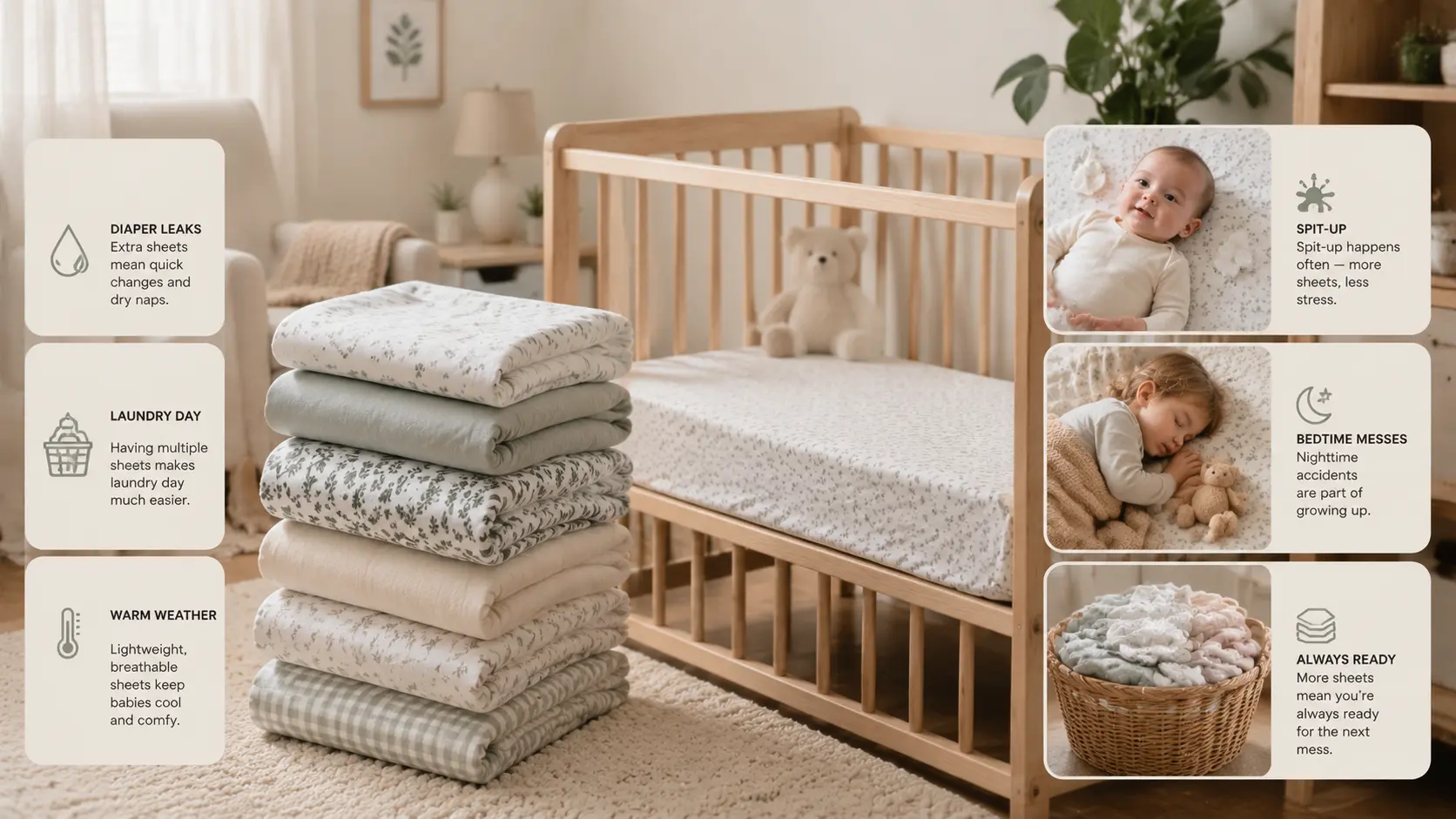
Most parents think a couple of crib sheets will be enough until the newborn stage starts. Diaper leaks, spit-up, reflux, drool during teething, sweat, and small milk spills can dirty sheets much faster than expected.
The issue is usually not one major mess but constant small accidents throughout the week. That is why many parents quickly realize that having only one or two crib sheets becomes inconvenient.
How Many Crib Sheets Do I Need for a Newborn?
Newborns need more sheets than older babies. In the first 3 months, many parents change crib sheets multiple times per week, and sometimes more than once in a single day. Here is why newborns go through so many:
- They feed more often, which means more spit-up
- Diaper leaks happen more at night
- Sleep is broken up, so accidents happen at odd hours
- You cannot always wait until morning to change the sheet
Starting with 5-6 sheets for a newborn is a smart move. You can always use fewer once the messiest phase passes.
How to Decide on the Number of Crib Sheets
There is no single number that works for every family. The right amount depends on your baby and your daily routine. Here are five things to consider before you buy.
Messiness and frequent changes
Some babies are messier than others. A baby who spits up a lot after feeds will go through sheets much faster than one who rarely does.
If your baby is in a phase where clothes and sheets are getting changed multiple times a day, you will need more sheets ready to go.
It is better to have a few extras than to be stuck doing an emergency wash at an inconvenient time.
Diaper leaks and accidents
Blowouts happen to every parent at some point. Sometimes a longer sleep stretch means a very full diaper by morning.
Other times, a stomach bug leads to multiple changes in one night. These things are hard to predict, which is why having a backup sheet or two is always a smart idea.
Laundry schedule
How often you do laundry plays a big role in how many sheets you actually need. If laundry happens daily, 2 to 3 sheets are probably enough.
If you wash once a week, you need at least 6 to get through the week without running out. Be honest with yourself about your real habits, not your ideal ones.
| Laundry Frequency | Recommended Number |
|---|---|
| Daily laundry | 2 to 3 |
| Every 2 to 3 days | 3 to 5 |
| Once a week | 6 to 7 |
Baby temperature and climate
Babies sweat more than most people expect. If you live somewhere warm or your home runs hot, sheets may need to be changed more often due to sweat alone.
A baby who sleeps hot will need fresh sheets more often, which increases the total number you should have on hand.
Unplanned toddler bedtimes
Toddlers sometimes crash early after a busy day, before bath time or a sheet change can happen. That means a sweaty, messy toddler going straight to bed on whatever sheet is already there.
When the morning comes, and the sheet needs changing, you will be glad you had a clean one waiting.
Taking all of this into account, most families do well with 4 to 5 sheets if they change them every few days. That gives you enough to handle high-use periods without needing to wash every single day.
How Often Should You Change Crib Sheets?
Crib sheets should generally be changed at least once a week, even if they do not look dirty. Babies spend a lot of time sleeping, and sheets quickly accumulate sweat, drool, skin oils, dust, and bacteria.
However, any spit-up, diaper leak, vomit, or nighttime accident should be cleaned immediately. Leaving a damp or soiled sheet on the crib can lead to odors, bacterial buildup, and skin irritation for your baby.
When accidents happen, remove the dirty sheet and mattress protector right away, wipe down the mattress if needed, and replace everything with a clean, dry set.
This is exactly why having extra crib sheets and backup mattress protectors makes life much easier during the newborn stage.
Knowing how to wash sheets properly also helps keep crib sheets soft, clean, and safe after repeated washing during the newborn months.
The Layered Crib Sheet Trick for Midnight Accidents
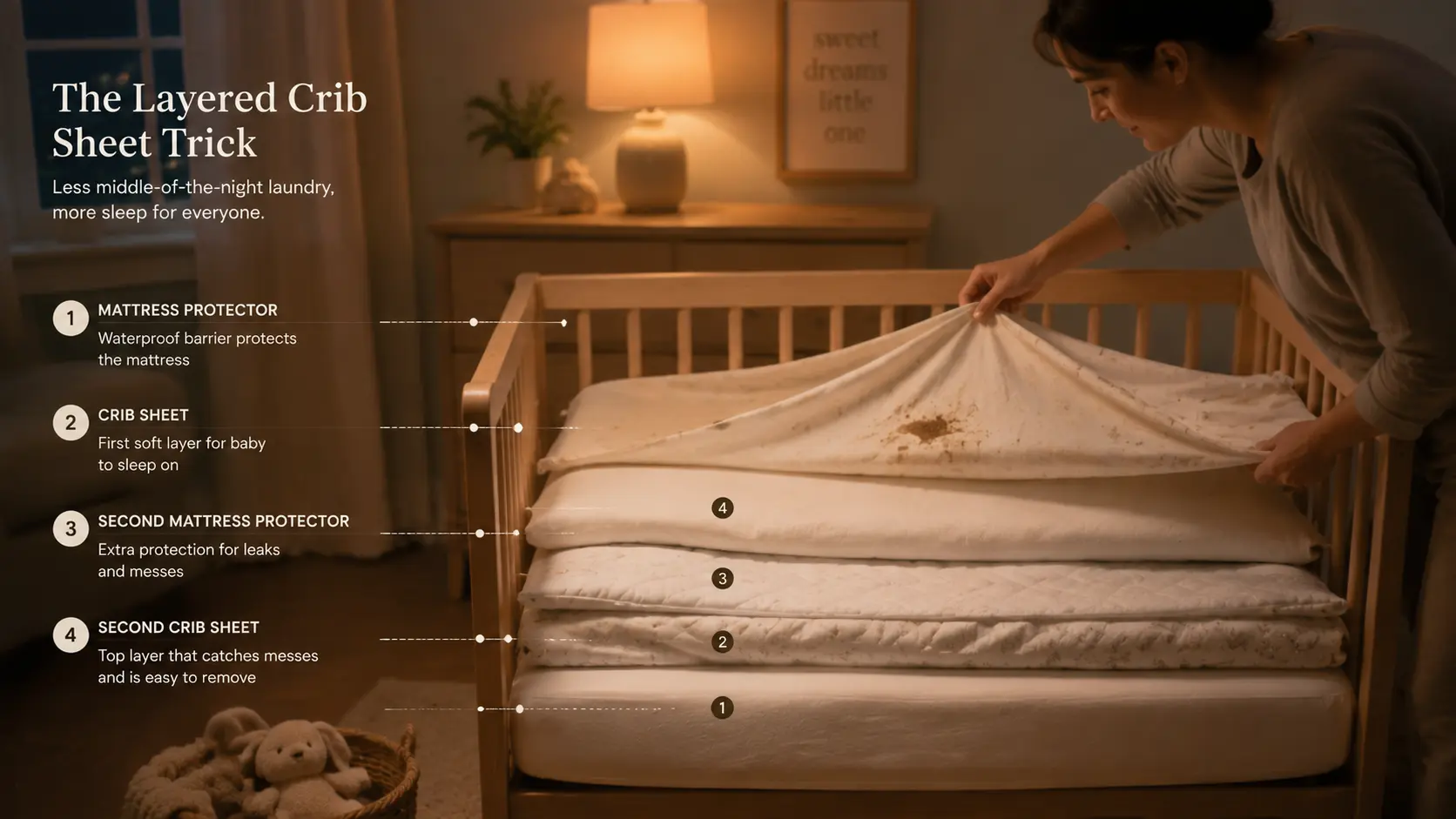
This is one of the most practical things you can do as a new parent. Instead of stripping the whole crib at 2 AM, you can set it up so clean bedding is already waiting underneath. Here is how to layer the crib to avoid a midnight accident:
- Mattress protector
- Crib sheet
- Second mattress protector
- Second crib sheet on top
When a mess happens at night, you pull off the top sheet and protector. A clean sheet is right there. No digging through the closet. No folding at midnight. You just go back to sleep.
This setup works best if you have at least 2 mattress protectors and 2 crib sheets. Many parents say this trick alone made their nights much easier.
Do You Need Waterproof Mattress Protectors Too?
Yes. Two waterproof mattress protectors are worth having. They sit between the mattress and the sheet to catch leaks before they soak through.
Without a protector, urine or spit-up can reach the mattress itself, which is harder to clean and can grow mold or bacteria over time. A protector keeps the mattress dry and extends its life. Having two protectors also lets you use the layering trick mentioned above.
Signs You Probably Need More Crib Sheets
Sometimes parents realize too late that they underestimated how many sheets they need. Here are a few signs you should buy more:
- You regularly run out of clean crib sheets before your next laundry day
- You find yourself washing the same sheets almost every day just to keep up
- Your baby has reflux or frequent spit-up that soils bedding often
- Nighttime diaper leaks happen regularly and require quick sheet changes
- Your baby sleeps in multiple places, such as a crib, bassinet, or Pack ’n Play
- Daycare or grandparents ask you to keep extra sheets available
Adding 2 or 3 extra crib sheets can make daily routines much less stressful, especially during the newborn stage. A small backup supply is usually cheaper and easier than constantly rushing to do laundry at the last minute.
Can You Have Too Many Crib Sheets?Yes. Having 10 to 12 sheets is more than most families will ever need. Babies grow fast and move out of the crib stage before you know it. Spending money on a large pile of sheets you will barely use does not make sense. Focus on quality over quantity. A few well-made sheets that fit properly and hold up through washing are better than a big stack of cheap ones. Three to five good sheets will serve most families well. |
What Types of Crib Sheets Should You Have?
Not all crib sheets are the same, and the type you choose matters more than most parents realize. The material affects how comfortable your baby sleeps, how well their body temperature is regulated, and how long the sheet lasts through constant washing.
A sheet that pills, shrinks, or loosens after a few cycles is not worth buying, no matter how cheap it is.
1. Material Choices: Comfort, Breathability, and Durability
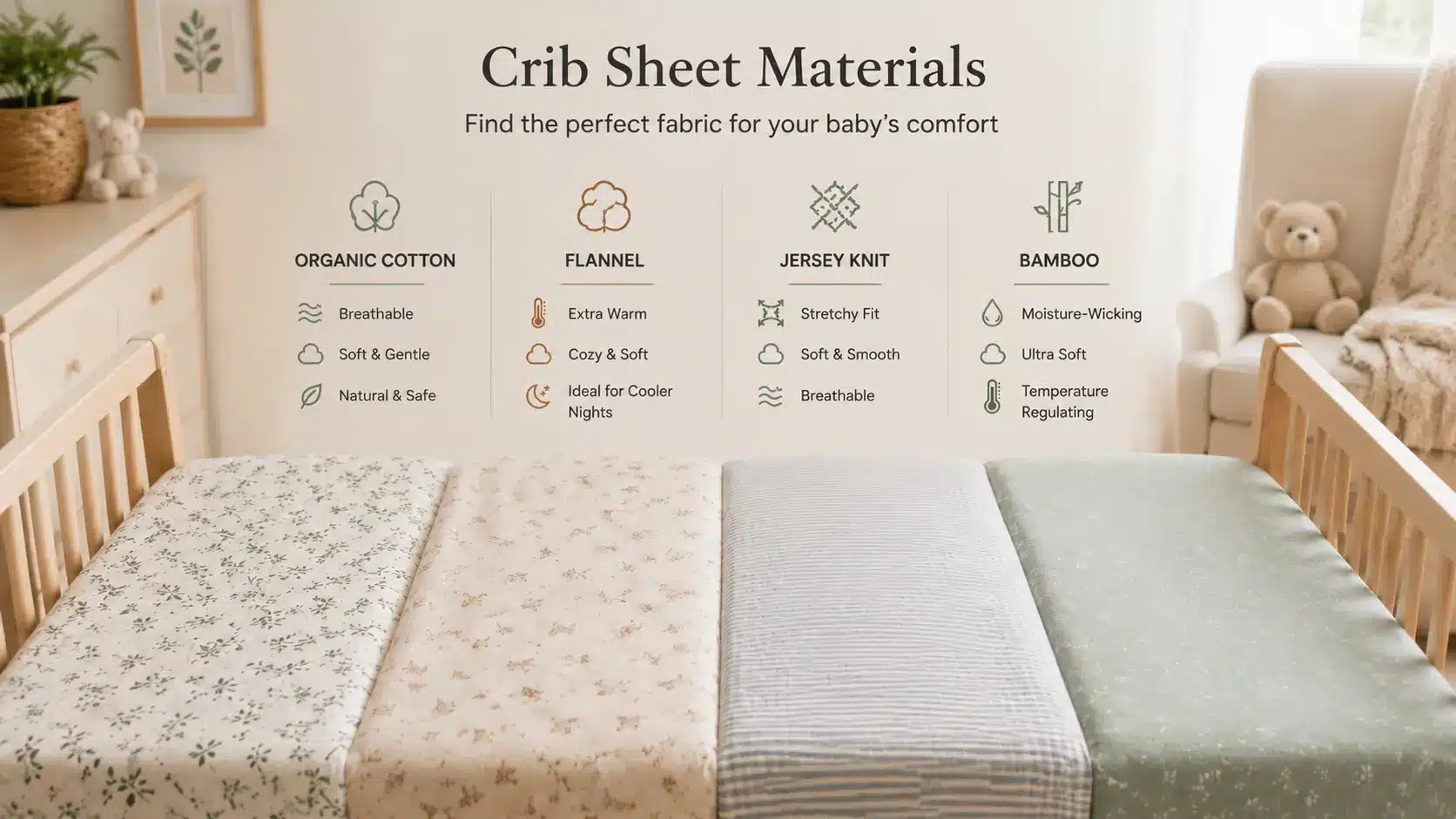
The single most important thing to look for in a crib sheet material is breathability. A sheet that traps heat can cause your baby to overheat during sleep, which is a known risk factor for SIDS.
- Organic cotton is a solid all-around choice. It is soft, breathable, and holds up well over many washes without getting rough or thin. It works in all seasons and is made without harsh chemicals, which matters for a baby sleeping on it every night.
- Flannel is warm and cozy, making it a good pick for cooler months or colder climates. Just keep in mind that it is heavier than other materials, so it is not ideal for summer.
- Jersey knit feels like a soft T-shirt and stretches easily, making it much easier to put the sheet on and take it off. The downside is that it can stretch out over time and may not stay as snug on the mattress after repeated washing.
- Bamboo is naturally moisture-wicking and works well for babies who sweat a lot during sleep or live in warmer climates. It stays cool and is gentle on sensitive skin.
2. Seasonal Crib Sheet Selection
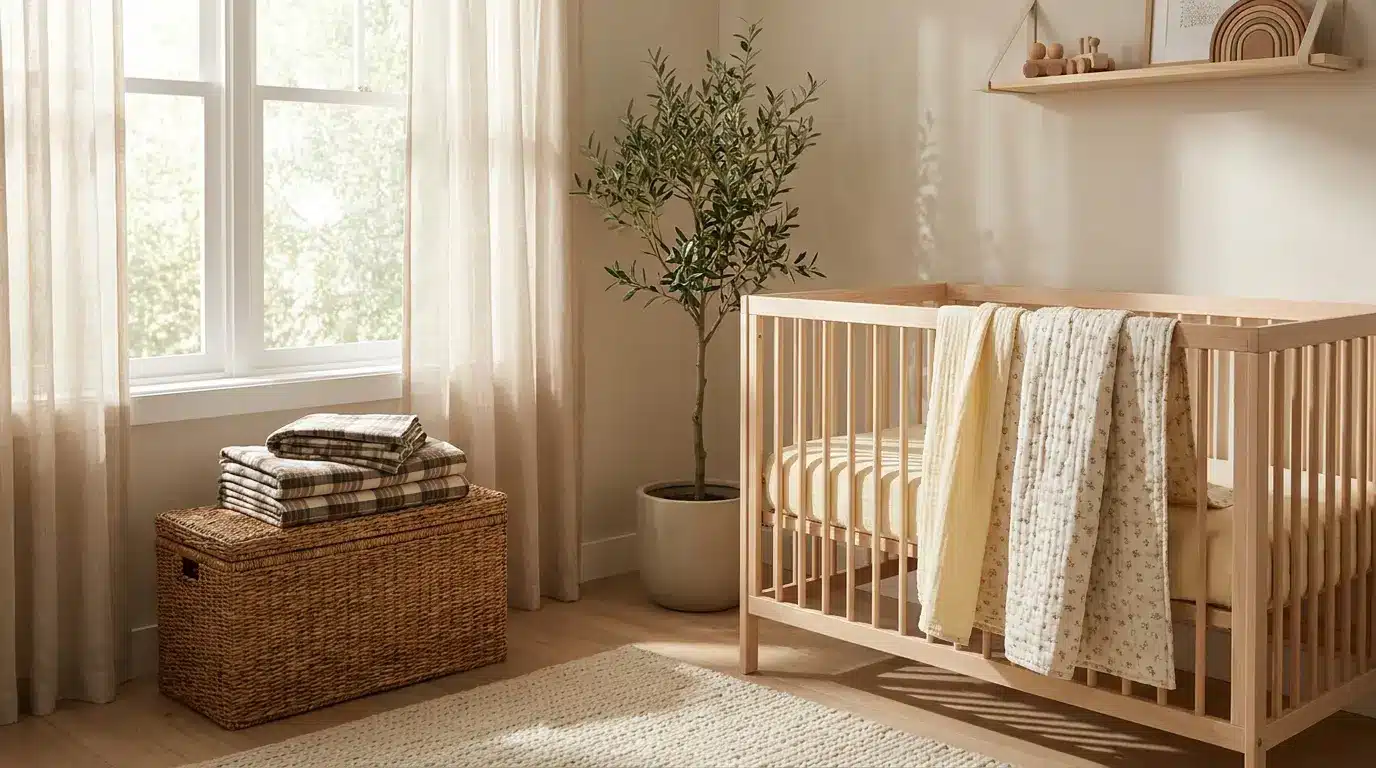
The best sheet for summer is not the best sheet for winter. In warmer months, go with lightweight options like organic cotton or bamboo.
They allow air to move freely and help keep your baby cool. In cooler months, flannel or heavier cotton keeps the sleep surface warmer without needing extra blankets, which are not safe inside a crib.
Breathable bedding matters even more in warmer climates where overheating during sleep can quickly become uncomfortable.
3. Crib sheet sizes and fit
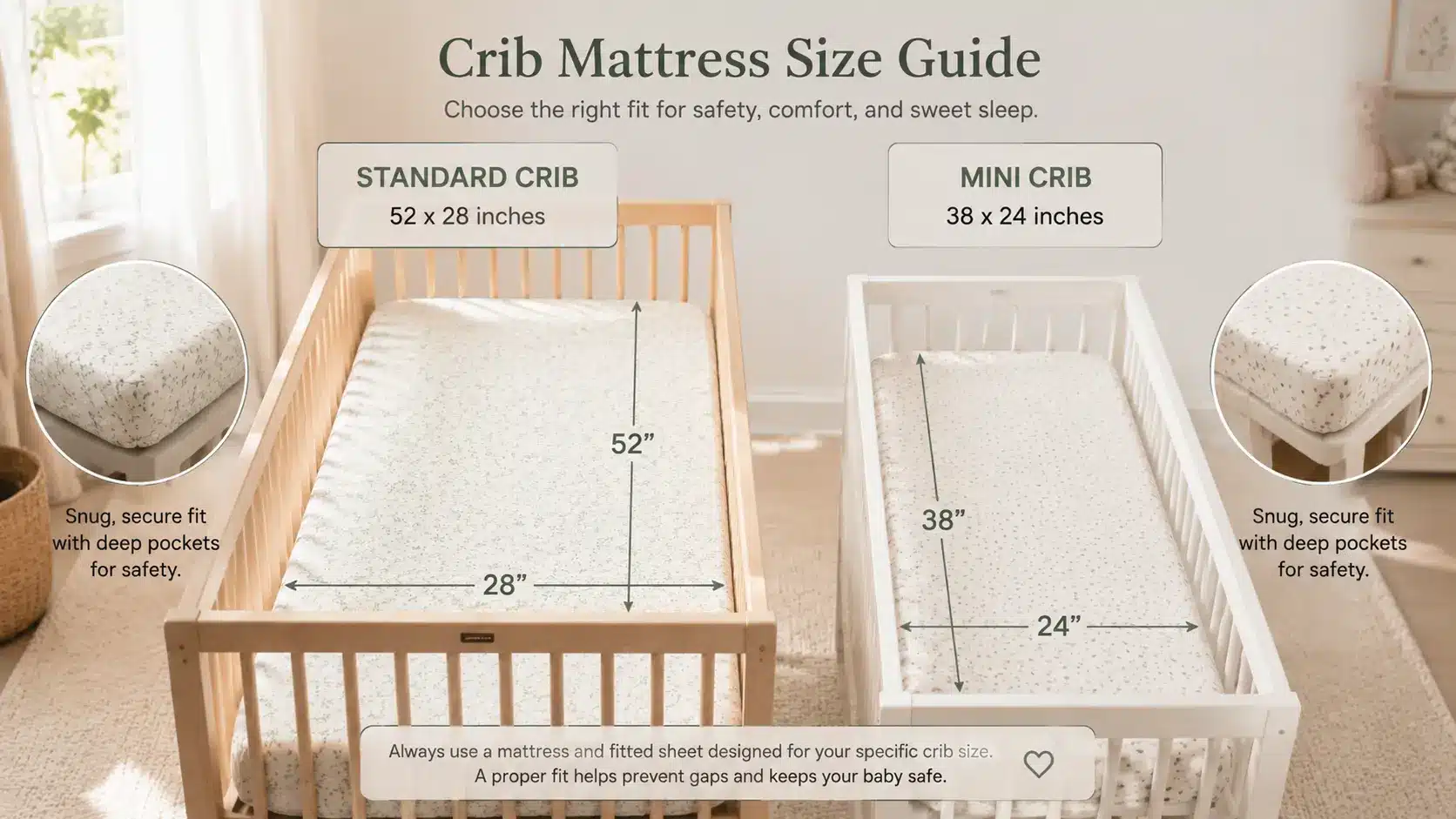
A fitted crib sheet needs to hug the mattress tightly on all sides. A loose sheet is a safety risk because it can bunch up and create pockets of fabric near your baby’s face. This is one area where getting the size right is not optional.
Standard crib mattresses are typically 52 inches long by 28 inches wide. Most sheets on the market are made for this size.
Mini cribs are smaller, typically 38 inches by 24 inches, and require sheets labeled specifically for mini cribs.
Always measure your mattress before buying. A sheet that is even slightly off in size will not fit the way it should, and a poor fit is not worth the risk.
If you are comparing different mattress setups around the house, understanding standard bed sheet sizes can also help avoid buying the wrong fit.
What to Consider When Buying Crib Sheets
Once you know how many sheets you need, focus on choosing ones that are safe, durable, and easy to maintain. The next step is knowing what to look for before you buy.
- Choose the correct fit: Standard crib mattresses are usually 28 x 52 inches. Mini cribs and Pack ’n Plays need different sheet sizes.
- Look for deep pockets: Sheets with full elastic around the edges stay in place better and are less likely to pop off the mattress.
- Pick durable materials: Crib sheets get washed constantly, so fabrics like cotton and jersey knit tend to hold up better over time.
- Prioritize softness: Babies have sensitive skin, so avoid rough or scratchy fabrics that may cause irritation.
- Avoid strong chemical smells: Heavy dyes or chemical finishes can irritate some babies, even after washing.
- Keep the design simple: Plain, well-made sheets are usually easier to clean and last longer than heavily decorated ones.
A good crib sheet should stay secure, feel comfortable, and survive frequent washing without wearing out quickly. Choosing quality over trendy designs usually saves money and frustration in the long run.
Conclusion
For most families, four to five crib sheets is the sweet spot. It gives you enough to handle messy nights and busy weeks without buying more than you need.
Newborns and babies with reflux may need a few more. If laundry only happens once a week, stock up on at least six.
Start with four, see how your routine goes, and add more if you keep running out. A little planning now saves a lot of scrambling at 2 AM later.
Frequently Asked Questions
Do Crib Sheets Need to Be Washed Before First Use?
Yes. New crib sheets can contain dust, packaging residue, or chemical finishes from manufacturing. Washing them before use makes them softer and safer for your baby’s skin.
Can You Use Toddler Sheets on a Crib Mattress?
Only if the mattress sizes match exactly and the sheet fits tightly around all corners. Loose sheets are unsafe because they can bunch up during sleep.
Is It Better to Buy Expensive Crib Sheets?
Not always. A well-fitting, breathable sheet made from durable fabric matters more than a luxury brand name or decorative design.