





The mattress you sleep on shapes how your back feels in the morning, how well your body recovers overnight, and how rested you actually wake up.
Most people settle the firm vs soft mattresses debate on a single assumption: firm is better for your back. That is not always true, and buying on that assumption alone often means years on the wrong surface.
What works for one body type and sleep position can actively cause discomfort for another. Everything you need to make the right call is covered here, based on how you actually sleep.
Firm vs Soft Mattresses: Key Differences
Choosing between a firm and a soft mattress goes beyond personal preference. Your sleep position, body weight, and health needs all play a role. Here’s what actually separates the two.
| Feature | Firm Mattress | Soft Mattress |
|---|---|---|
| Best for | Back & stomach sleepers | Side sleepers |
| Sinkage | Minimal | Moderate to high |
| Pressure relief | Lower | Higher |
| Spinal support | Strong | Depends on the build |
| Motion isolation | Lower | Higher |
| Sleeps cooler | Yes | Not always |
| Durability | Generally longer | Can develop sag faster |
| Ideal body weight | Average to heavy | Light to average |
The right choice isn’t about which mattress is objectively better. It is about which one matches how you sleep and how your body feels after a full night’s rest.
What is a Firm Mattress?
A firm mattress has a steadier, more resistant feel when you lie down. Instead of deeply contouring around the body, it keeps you closer to the surface with limited sinkage.
This can make it easier to turn over, get out of bed, and maintain a flatter sleeping posture. Firm mattresses usually fall around 7 to 8 on the firmness scale, while extra-firm options sit higher.
They are often preferred by back sleepers, stomach sleepers, and heavier sleepers who need a stronger lift from the mattress.
What is a Soft Mattress?
A soft mattress has more surface give and a cushioned feel. It allows the body to settle into the comfort layers, which can make the bed feel more cradling and pressure-relieving.
Soft mattresses usually fall around 3 to 4 on the firmness scale, while 5 is typically considered medium rather than soft, depending on how much contouring they provide.
They are often a better fit for side sleepers, lighter sleepers, and people who feel soreness around the hips, shoulders, or knees after sleeping on a harder surface.
If you’re thinking about the best soft or firm mattress for lower back pain, understanding your specific needs can help guide your decision.
Is a Firm or a SoftMattress Better?

There is no single right answer. A firm mattress may help one sleeper feel supported, while a soft mattress may help another feel less pressure.
The better choice depends on your sleep position, body weight, and morning pain patterns.
1. Sleep Position
Your sleep position is one of the clearest signs of which firmness level works best for you.
- Side Sleepers: Usually need a softer mattress, around 3 to 5, to cushion the shoulders and hips.
- Back Sleepers: Usually do best with a medium to medium-firm mattress (5 to 7) for even support.
- Stomach Sleepers: Usually need a firmer mattress, around 6 to 8, to keep the hips from sinking.
- Combination Sleepers: Often do best with a medium-firm mattress, since it works across different positions.
Choose firmness based on the position you spend the most time in, not the one you start in.
2. Body Weight Changes Everything
Body weight affects how deeply you sink into a mattress, so that the same bed can feel different to different people.
| Body Weight | What Tends To Happen |
|---|---|
| Under 130 lbs | Less sinkage, so a softer mattress often feels more comfortable |
| 130–230 lbs | Medium to medium-firm usually works for most sleep positions |
| Over 230 lbs | More sinkage, so a firmer mattress often gives better alignment |
The goal is to choose a mattress that lets your body rest without sinking too far or feeling unsupported.
3. Your Current Pain Patterns are a Clue
Morning pain can tell you whether your current mattress is too firm, too soft, or worn out.
- Hip or Shoulder Pain: Often means the mattress is too firm for your sleep position.
- Lower Back Stiffness: Often means the mattress is too soft or no longer supportive.
- No Pain but Poor Sleep: May point to heat, motion transfer, mattress age, or sleep environment.
Use these signs as a starting point, then pay attention to how your body feels after several full nights.
How is Mattress Firmness Measured?
Mattress firmness is usually measured on a 1–10 scale, with 1 being extremely soft and 10 being extremely firm. Most mattresses sold today fall between 4 and 7, which suits a wide range of sleepers.
| Scale | Label | What To Expect |
|---|---|---|
| 1–2 | Ultra Soft | Deep sinkage with very little resistance |
| 3 | Soft | Gentle cradling with a clear surface gives |
| 4 | Medium Soft | Noticeable contouring with mild support |
| 5 | Medium | Balanced feel with equal give and resistance |
| 6 | Medium Firm | Light contouring with stronger support |
| 7–8 | Firm | Minimal sinkage with a solid, stable feel |
| 9–10 | Extra Firm | Very rigid with almost no give |
While helpful, this scale does not account for personal factors such as body weight or sleep position, which can affect how firmness feels.
Firm vs Soft Mattressfor Back Pain and Health

The right mattress can ease back pain or make it worse. What matters most is how well it supports spinal alignment while reducing pressure on key areas like hips and shoulders.
According to the National Library of Medicine and sleep experts, the firmness of a mattress should match your body, not follow a fixed rule.
1. Firm Mattresses and Spinal Alignment
Firm mattresses help keep the spine aligned, especially for back and stomach sleepers, by preventing the hips from sinking too deeply.
This reduces strain on the lower back. However, for side sleepers, a lack of cushioning can create pressure at the hips and shoulders, leading to discomfort and poor alignment. (Cleveland Clinic).
2. Soft Mattresses and Pressure Relief
Soft mattresses reduce pressure by allowing the body to sink slightly, which helps distribute weight evenly.
This is useful for side sleepers and people with joint pain. However, too much softness can let the hips drop, misaligning the spine and worsening lower back pain in some cases. (Sleep Foundation).
3. Why Medium-Firm Works For Many People
Medium-firm mattresses offer a balance between support and comfort, making them suitable for most sleepers.
A study published in The Lancet found that, among adults with chronic low back pain, medium-firm mattresses were associated with better pain outcomes than firm mattresses.
However, the findings apply to a specific study group and should not be generalized to all sleepers. (The Lancet, 2003 Study).
Pros and Cons of Firm vs Soft Mattresses
Both mattress types have clear benefits and drawbacks. This table makes the trade-offs easier to compare before choosing.
| Mattress Type | Pros | Cons |
|---|---|---|
| Firm Mattress | Strong spine support | Pressure on hips and shoulders |
| Sleeps cooler | Adjustment period required | |
| Durable, keeps its shape | Too hard for light sleepers | |
| Easy to move on | More motion transfer | |
| Good for heavier sleepers | Can feel uncomfortable for side sleepers | |
| Soft Mattress | Excellent pressure relief | Can lack support |
| Contours of the body | Retains heat | |
| Better motion isolation | Wears and sags faster | |
| Suits lighter sleepers | Harder to move on | |
| Eases joint pain | Not ideal for heavier sleepers |
Use these pros and cons to understand the differences between the two, but let your sleep position, weight, and pain patterns guide you to what truly fits your body.
Common Myths about Firm vs Soft Mattresses
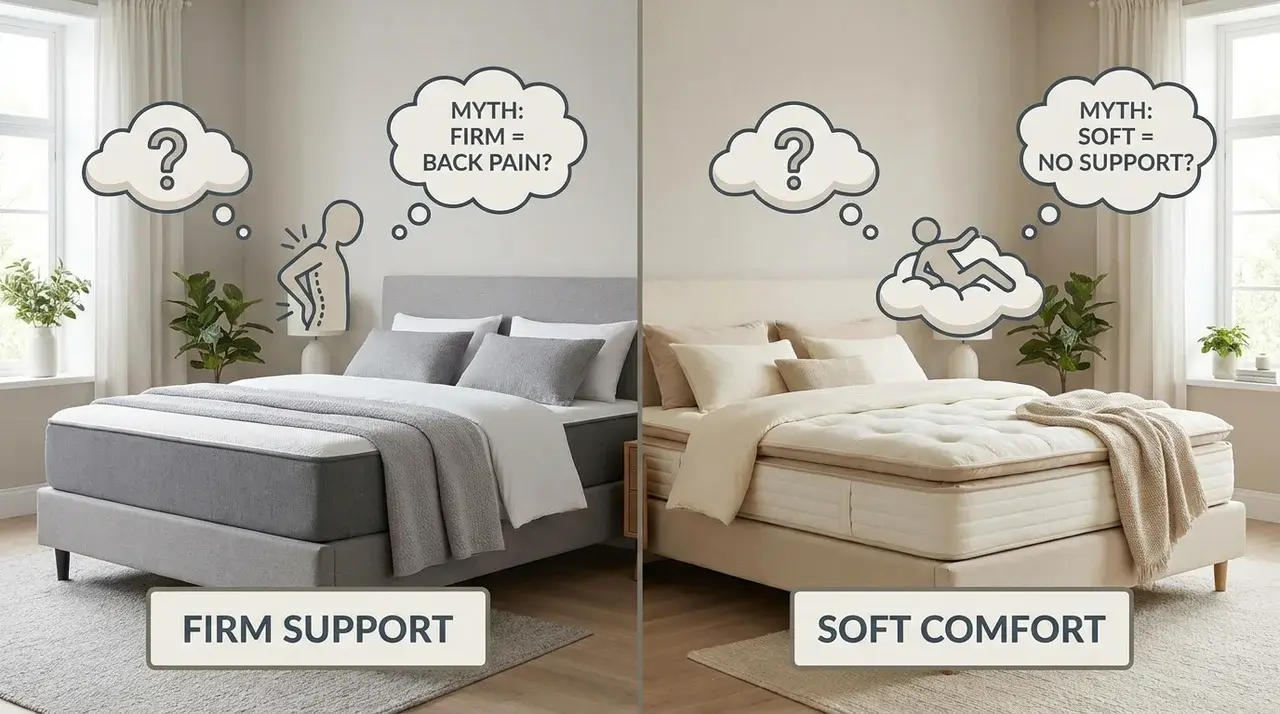
Mattress myths make shopping harder than it needs to be. Here are the biggest ones to ignore before choosing.
- Firm Mattresses Are Always Better for Your Back: Medium-firm often works best because both support and pressure relief matter.
- Soft Means Less Support: Support depends on construction, not just surface feel.
- Sleep on The Firmest Mattress You Can Tolerate: Too much firmness can create pressure instead of support.
- Soft Mattresses Cause Back Pain: They only cause problems when the hips sink too far out of alignment.
- Showroom Comfort Means It Is the Right Mattress: Real comfort becomes clear after weeks of actual sleep.
- Someone Else’s Experience Tells You What Will Work: Body weight, sleep position, and pain patterns change how a mattress feels.
Trust your body, sleep position, and pain patterns more than old rules, showroom tests, or someone else’s review.
How to Choose Between a Firm and Soft Mattress?
The right choice depends on how you sleep, your body weight, and where you feel pain or stiffness each morning. Once you understand those clues, choosing the right firmness becomes much easier.
Choose a Firm Mattress If:
- You Sleep on Your Back: A firm surface keeps your shoulders, hips, and lower back in alignment throughout the night.
- You Sleep on Your Stomach: Firm support helps stop your midsection from sinking and straining your lower spine.
- You Weigh Over 230 Pounds: A firmer mattress resists deep compression, helping support layers work properly.
- You Sleep Hot: Less sinkage usually means better airflow and less trapped body heat.
- You Dislike Feeling Stuck: Firm mattresses make it easier to move, turn over, and get out of bed.
Choose a Soft Mattress If:
- You Sleep on Your Side: A softer surface cushions your shoulder and hip while helping your spine stay straight.
- You Weigh Under 130 Pounds: Softer mattresses respond better to lighter body weight and provide more contouring.
- You Have Hip, Shoulder, or Joint Pain: Extra cushioning can reduce pressure on sensitive contact points.
- Your Partner Moves a Lot: Softer foam layers usually absorb motion better, helping reduce sleep disturbance.
- You wake with Numbness or Soreness: Pain that fades after moving often points to a mattress that is too firm.
Use these signs as a starting point, then test your mattress long enough to see how your body responds. Your morning comfort will tell you more than any showroom test.
Final Thoughts
Choosing between a firm and soft mattress comes down to your sleep position, body weight, pain points, and comfort needs.
Firm mattresses offer steadier support for back, stomach, and heavier sleepers, while soft mattresses give better cushioning for side sleepers, lighter bodies, and sore joints.
For many people, medium-firm is the safest starting point because it balances support and pressure relief.
Pay attention to how your body feels in the morning, not just how a mattress feels in a store.
If your current bed leaves you stiff, sore, hot, or restless, it may be time to reassess. Make the right choice and find a mattress that truly supports better sleep.
Frequently Asked Questions
Is a Firm Mattress Better for Back Pain?
Not always. Medium-firm often works best, supporting spinal alignment while reducing pressure that can worsen hip, shoulder, or lower back pain.
What is a Firm Mattress Best for?
Firm mattresses suit back sleepers, stomach sleepers, heavier sleepers, hot sleepers, and anyone needing easier movement or steadier support.
Can a Mattress be Too Firm or Too Soft?
Yes. Too firm creates pressure points, while too soft lets the hips sink, causing poor alignment and morning stiffness.
What Firmness Level is Best for Most People?
Medium-firm, usually 5 to 7, works for most sleepers because it balances pressure relief with steady spinal support.