




Most people wake up feeling fine without ever thinking about how they slept.
But for clients I have worked with who deal with chronic back pain, acid reflux, or persistent fatigue, the answer often comes down to something they had never considered: the way they position their body at night.
Sleep position shapes spinal alignment, neck support, breathing quality, and even how well the brain clears metabolic waste overnight.
The right position depends entirely on your health situation. A position that relieves one problem can quietly worsen another. Knowing the difference is where better sleep usually starts.
What Determines Your Sleeping Position?
Your sleeping position is determined by a mix of factors, including comfort, pain, and personal habits. Some people find that sleeping on the floor can influence sleep quality.
Some people have long-standing preferences for how they fall asleep, while others are forced to adjust due to medical conditions such as back pain or sleep apnea.
Other factors that influence your sleeping posture include your age, your lifestyle, and the type of mattress or pillow you use.
Most people also shift positions during the night without realizing it. Northwestern Medicine neurologist Dr. Phyllis Zee notes that “most people do not sleep in one position throughout the night. Repositioning from the back and from side to side occurs normally during sleep. The preferred position should be individualized for overall comfort, breathing, snoring, neck and back pain, and other health concerns.” This means the goal is less about locking into one position and more about understanding which positions support your specific needs.
Different Sleeping Positions and Their Names
Side sleeping is one of the most common positions, and it’s often the go-to for many people because of its comfort and health benefits. Here are some of the most popular side sleeping positions:
1. Left Lateral (Left Side Sleeping)
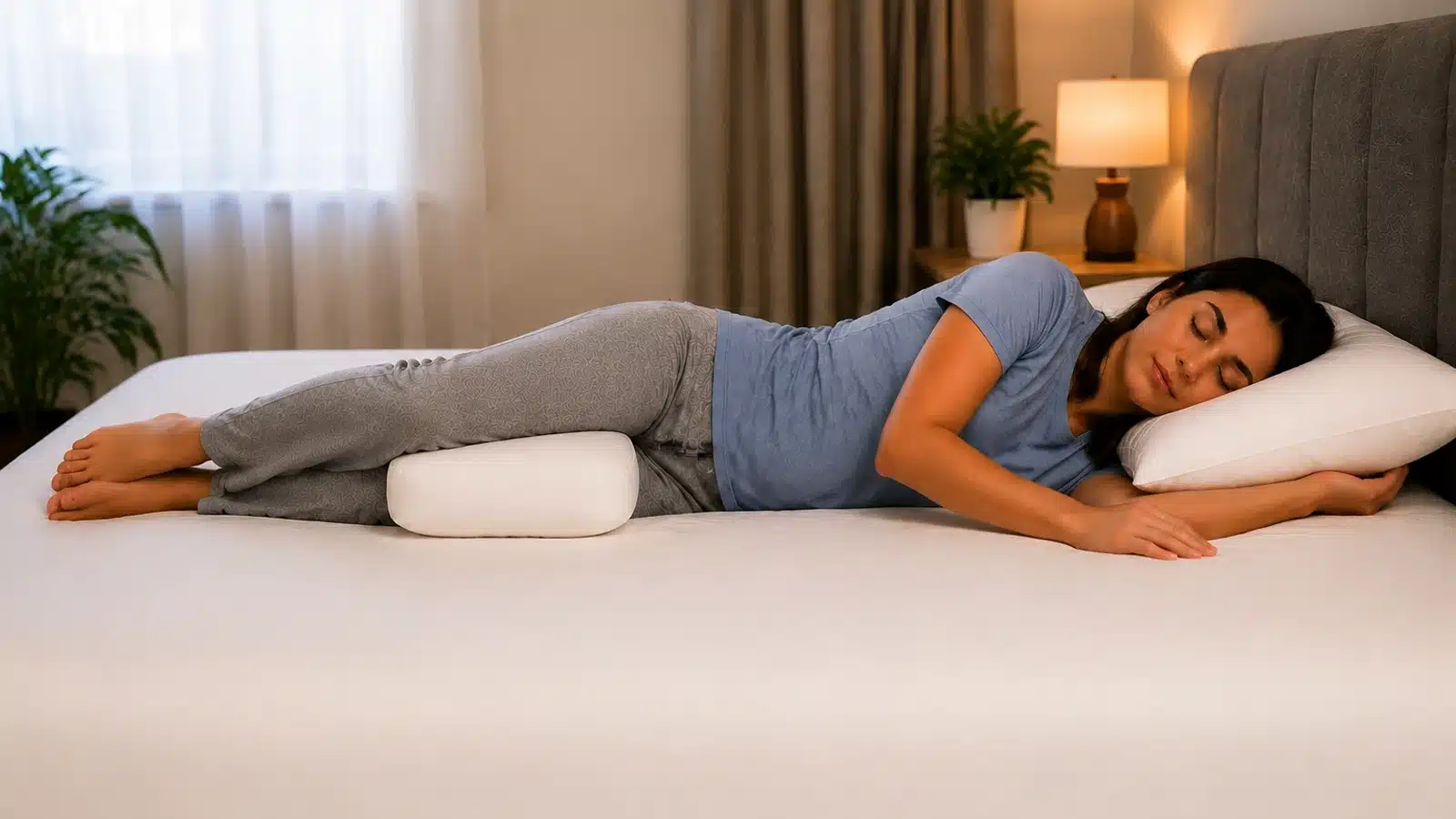
Left lateral sleeping involves lying on your left side with your body straight.
This position promotes optimal blood flow and helps maintain neutral spine alignment, making it ideal for reducing symptoms of acid reflux and heartburn, a condition where stomach acid flows back into the esophagus.
- Best for: Acid reflux relief and digestion support.
- Benefits: Left-side sleeping is often recommended to improve blood circulation and reduce acid reflux. It also supports breathing and can be easier on your heart.
- Drawbacks: Without proper pillow support, you may experience shoulder pressure or numbness.
2. Right Lateral (Right Side Sleeping)
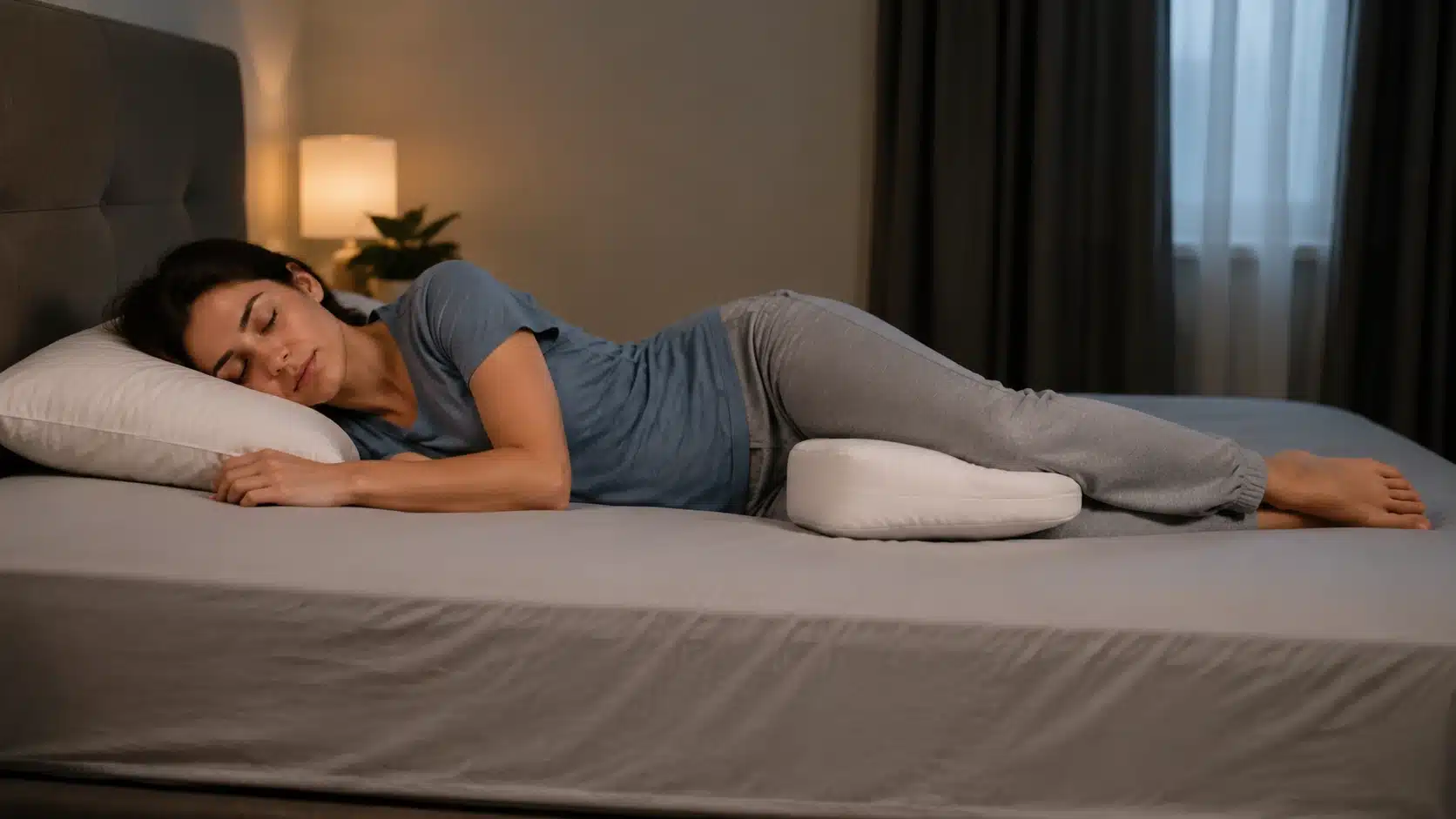
Right lateral sleeping involves lying on your right side, with your body aligned in a slightly relaxed posture. While similar to the left side position, it provides comfort and ease for many, but it’s less effective for acid reflux relief.
- Best for: Comfort and reducing snoring.
- Benefits: Right-side sleeping can help reduce snoring for many people and may be gentler on the body.
- Drawbacks: It doesn’t relieve acid reflux as effectively as the left side position.
3. Fetal Position
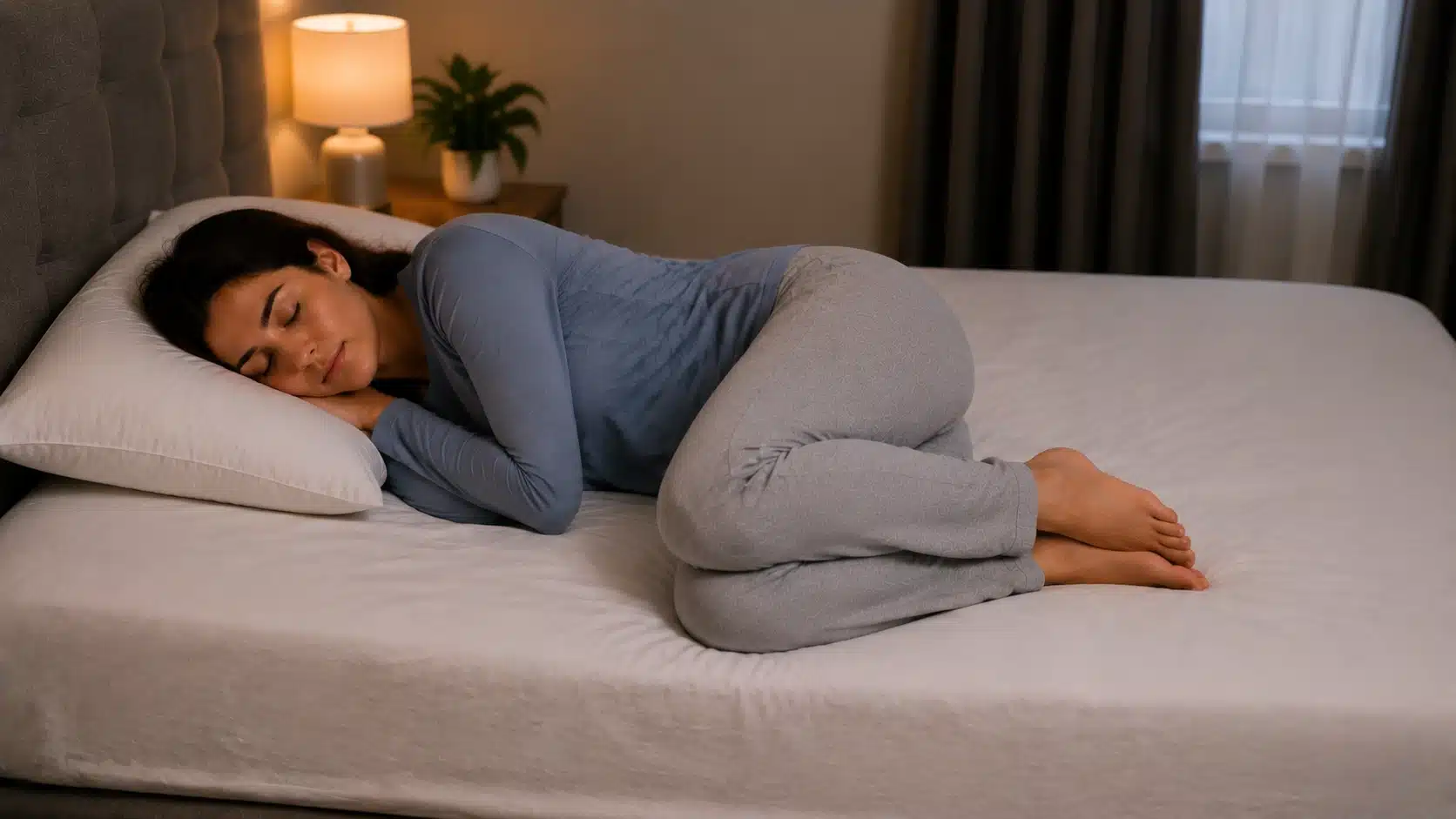
The fetal position is when you curl into a tight ball, drawing your knees toward your chest. This position mimics the posture of a baby in the womb and can provide comfort for those with lower back pain or pregnancy discomfort.
- Best for: Lower back pain relief and comfort during pregnancy.
- Benefits: This position can help ease back discomfort and reduce snoring.
- Drawbacks: If curled up too tightly, this position can restrict breathing and cause joint stiffness.
4. Log Position
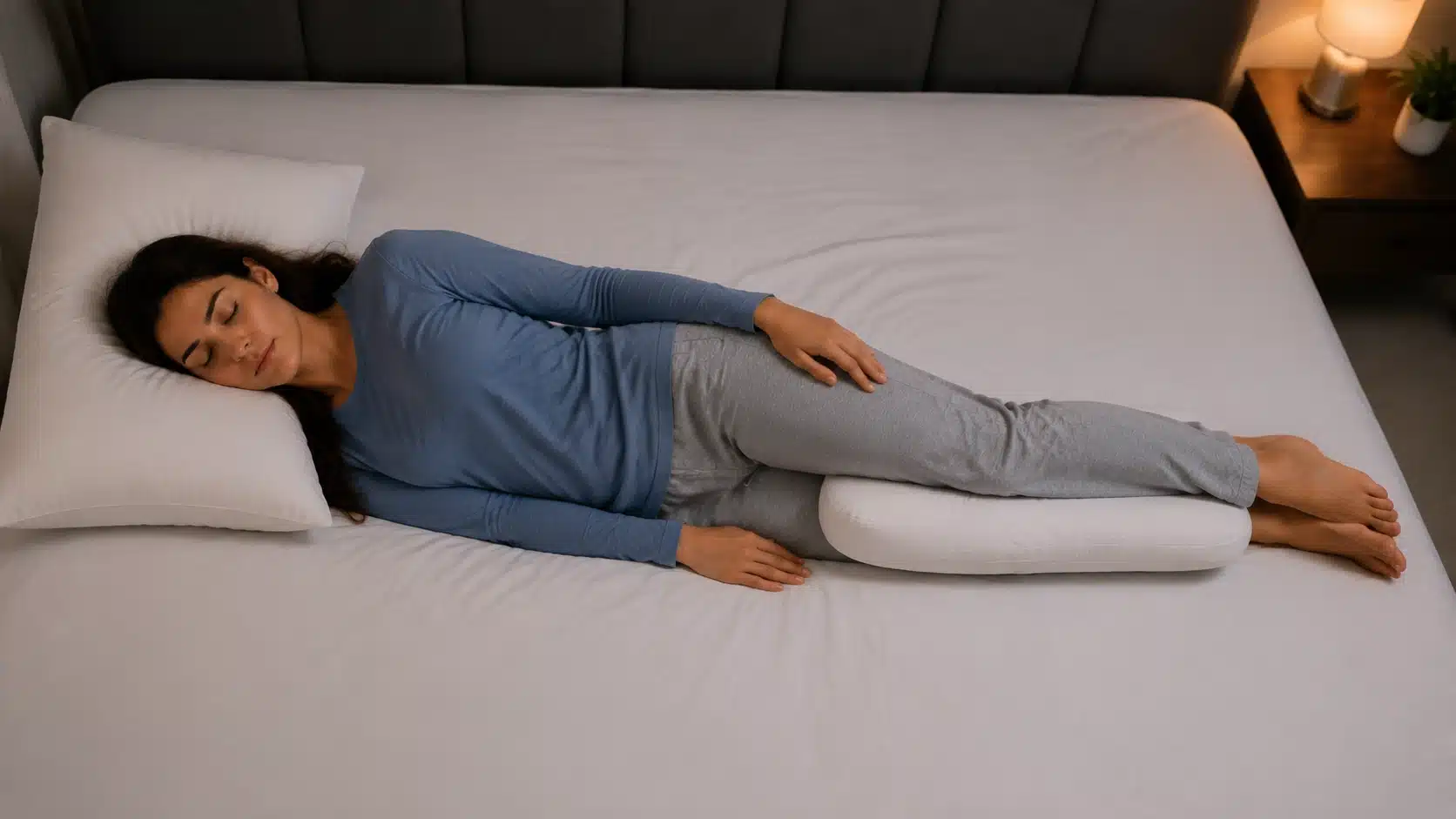
The log position involves lying on your side with both arms extended straight down by your sides. It’s a more neutral sleeping posture, often favored for spinal alignment and reducing discomfort caused by sleeping on your back or stomach.
- Best for: Neutral spinal alignment.
- Benefits: This position promotes a healthy spine and is great for those who experience neck or back pain.
- Drawbacks: The arms placed straight down can create shoulder discomfort during long periods of sleep.
5. Yearner Position
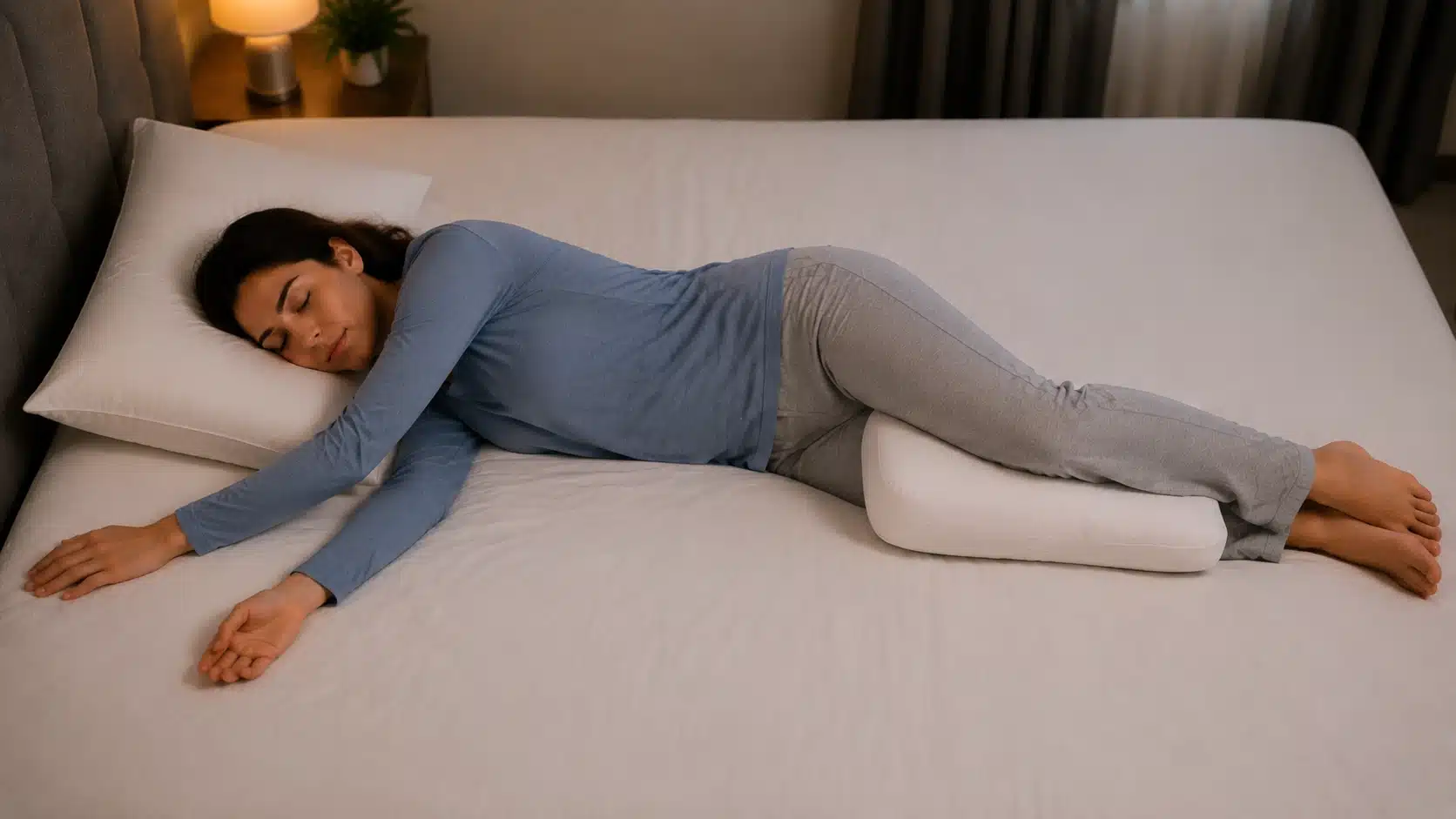
In the yearner position, you sleep on your side with both arms extended forward. This position resembles a reaching motion and is beneficial for improving airflow, helping to open airways and reduce snoring, while maintaining overall body alignment.
- Best for: Keeping your airway open during sleep.
- Benefits: This position can help with snoring and open up your airways, allowing for better breathing.
- Drawbacks: Holding the arms out for extended periods can cause numbness or discomfort in the shoulders.
Experiment with different side sleeping positions to find the one that best supports your comfort, health, and sleep quality.
Types of Back and Stomach Sleeping Positions
While side sleeping is popular, back and stomach sleeping are also common positions with their own benefits and drawbacks.
1. Soldier Position
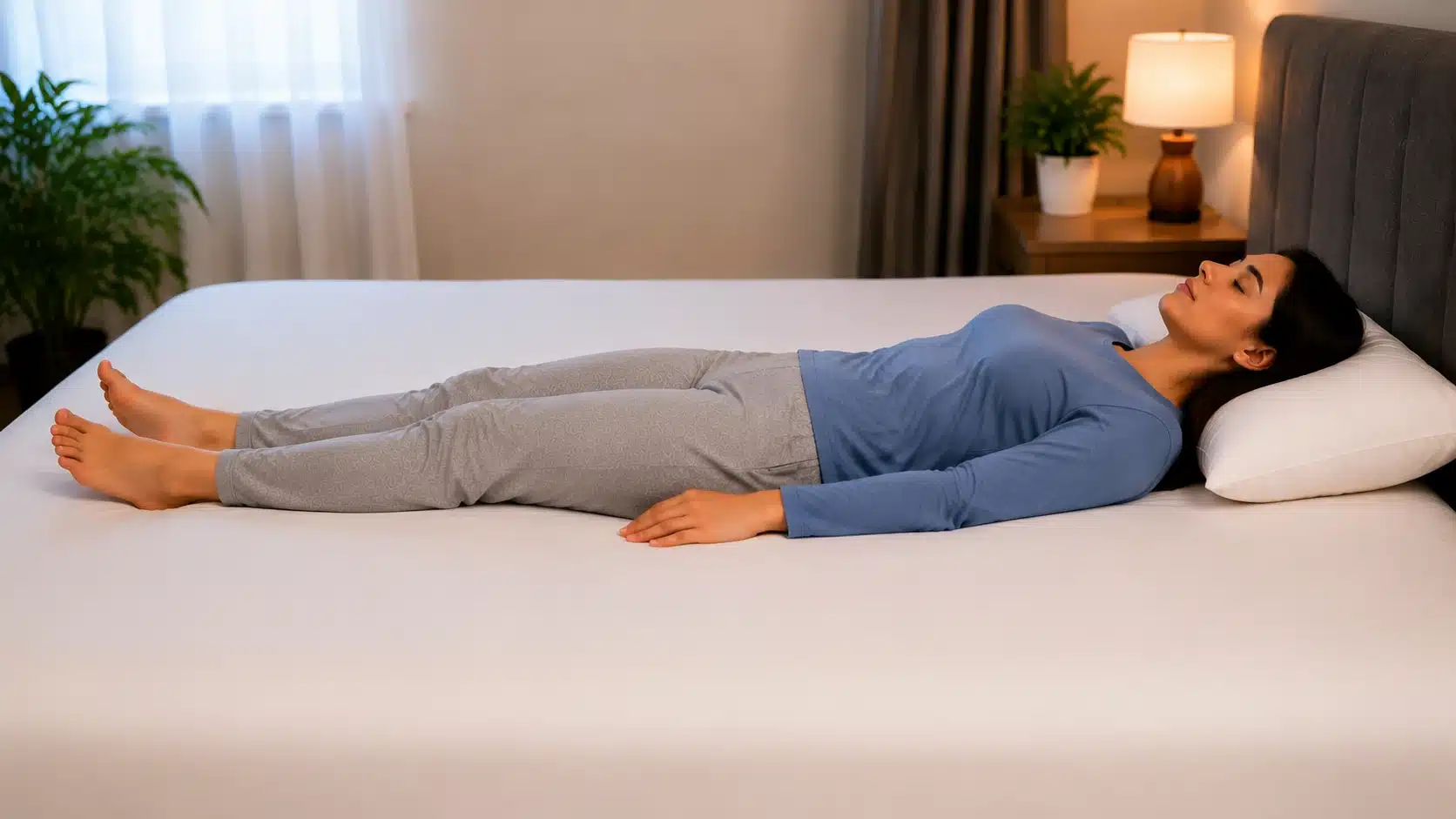
The soldier position involves lying flat on your back with both legs straight and arms resting by your sides. It aligns your spine, neck, and head in a neutral position, promoting even weight distribution and ensuring stability throughout sleep.
- Best for: Keeping your spine aligned and evenly distributing weight.
- Benefits: This position offers good spinal alignment and can reduce the risk of neck pain.
- Drawbacks: It may increase snoring and the risk of sleep apnea by constricting the airway.
2. Starfish Position
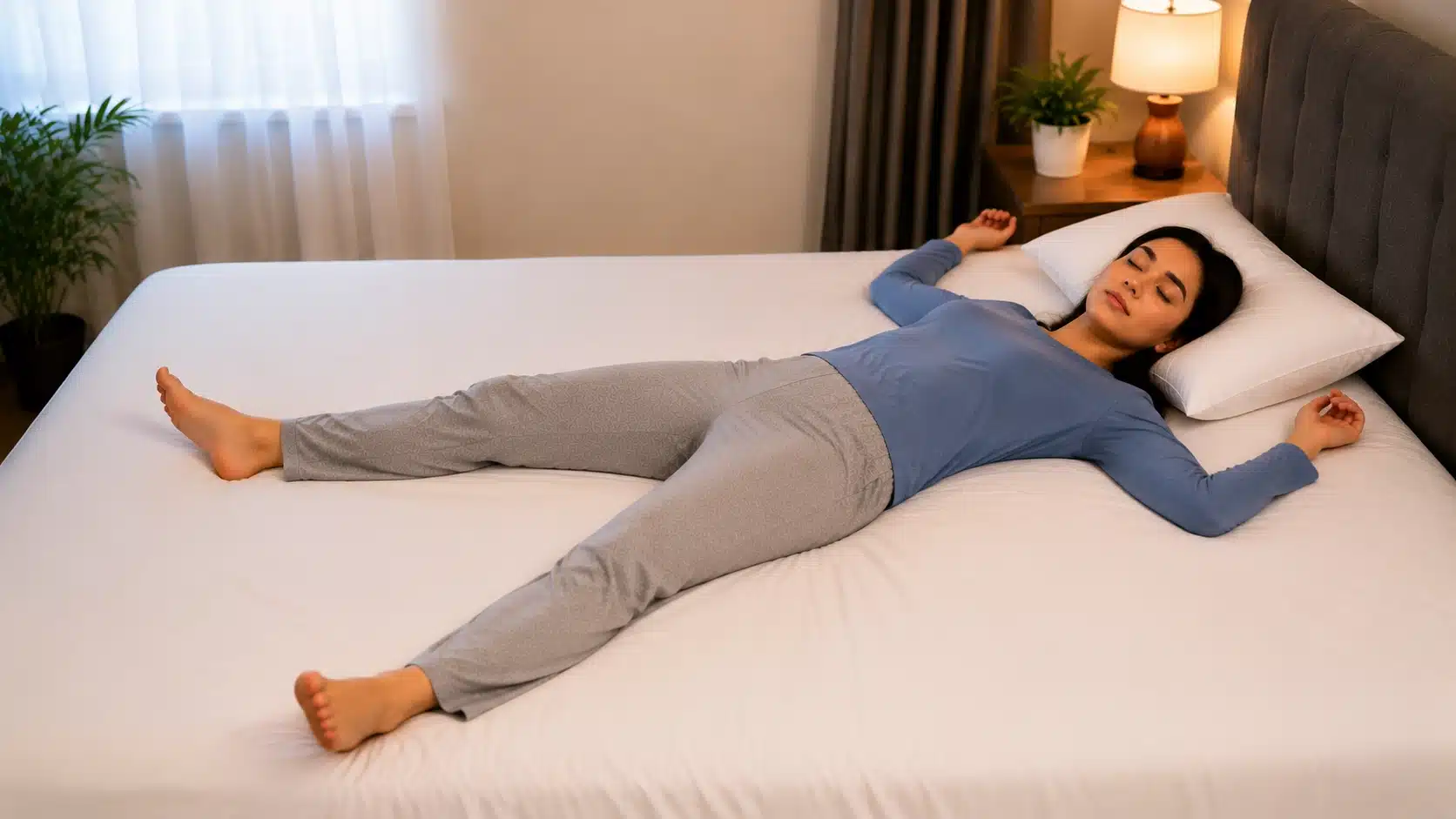
In the starfish position, you lie flat on your back with your arms raised near your head and legs slightly apart. This position creates a “star” shape with your body, offering more space and allowing for a relaxed, open posture.
- Best for: Shoulder and lower back comfort.
- Benefits: This position can help with overall spine alignment and reduce pressure on your shoulders and back.
- Drawbacks: Similar to the soldier position, starfish sleeping can increase snoring and the risk of sleep apnea.
3. Freefall Position
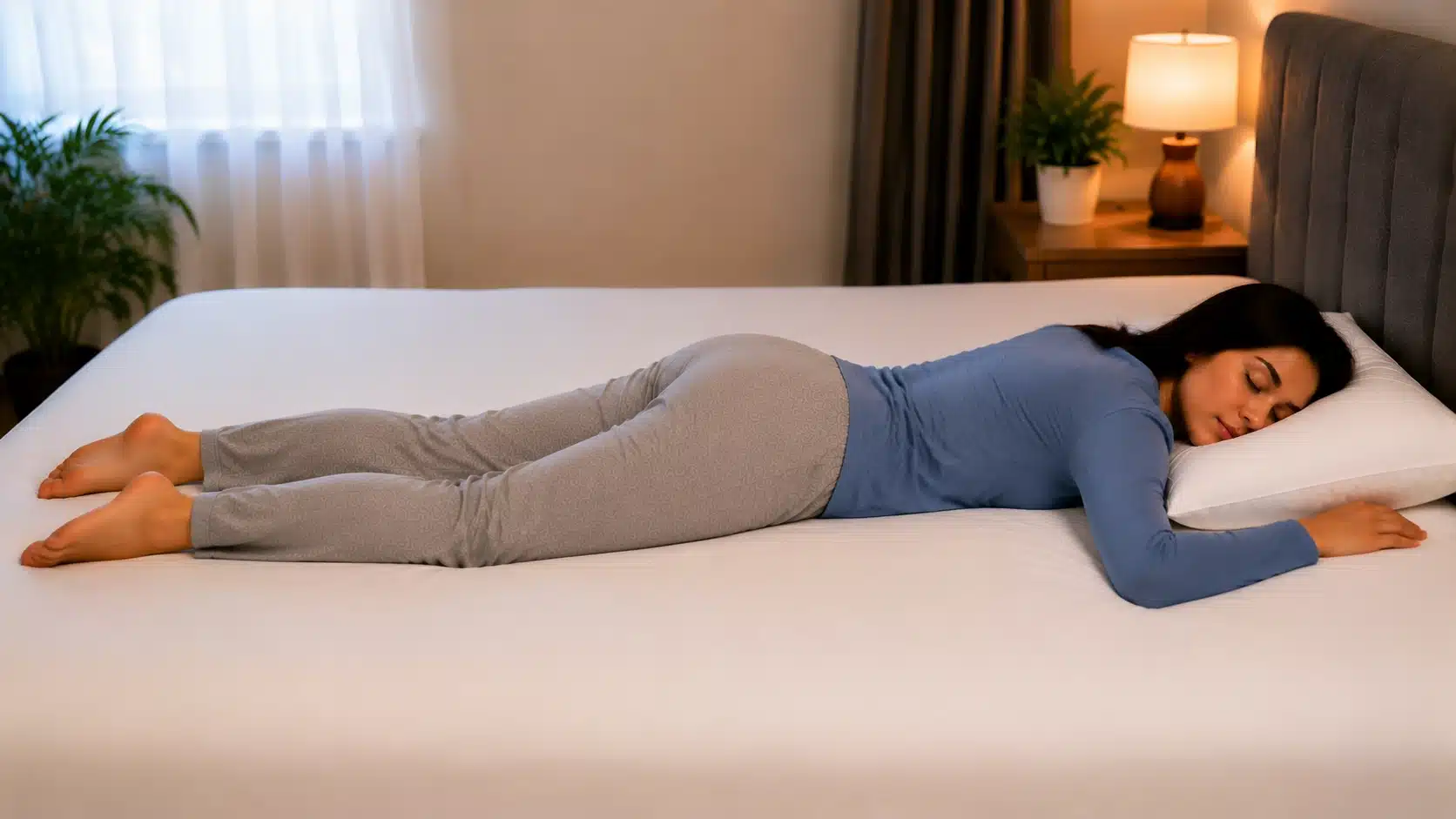
The freefall position has you lying on your stomach, your head turned to one side, and your arms either around the pillow or stretched out.
This posture resembles a “belly flop” and provides some sleepers with a sense of comfort and security.
- Best for: Temporary snoring relief.
- Benefits: Some people find this position comfortable and beneficial for easing snoring.
- Drawbacks: It can cause neck and lower back strain due to poor spinal alignment and may lead to stiffness or discomfort upon waking. Stomach sleeping is generally considered the least healthy long-term position because the head must rotate to one side for the entire night, placing prolonged rotational stress on the cervical spine.
Best Sleeping Positions by Health Condition
The right position often comes down to what your body needs. Here is a condition-by-condition breakdown to help you find the best fit.
Back and Neck Pain
Side sleeping with a pillow between the knees is widely recommended for lower back pain. It keeps the hips, pelvis, and spine aligned and takes pressure off the lumbar region.
Back sleeping with a pillow under the knees also works well. This guide on sleeping with lower back pain covers both approaches in more detail. Stomach sleeping is the worst option for back and neck pain because it forces the cervical spine into prolonged rotation.
Acid Reflux and Heartburn
Left-side sleeping is the most supported choice for acid reflux. The angle between the stomach and esophagus on the left side makes it harder for acid to travel upward.
Elevating the upper body slightly with a wedge pillow adds further protection. Right-side sleeping tends to worsen acid exposure, and flat back sleeping is also problematic if reflux is active.
Sleep Apnea and Snoring
Side sleeping keeps the airway open by preventing the tongue and soft palate from collapsing backward.
For people managing sleep apnea, consistent side sleeping is one of the most practical non-device adjustments. Back sleeping is typically the worst position for both snoring and apnea.
Pregnancy
Left-side sleeping is recommended from the second trimester onward. It improves blood flow to the heart and reduces pressure on the liver, which sits on the right side of the body.
Research published in the British Journal of Obstetrics and Gynaecology found that sleeping on the back from 28 weeks of pregnancy is associated with increased stillbirth risk, making left-side sleeping the safer default.
Pillows under the belly and between the knees can help maintain the position comfortably.
Positions to Avoid
Some sleeping positions may not be ideal for long-term health. Here’s a look at the positions to avoid:
- Stomach Sleeping: It puts undue pressure on your neck and back, leading to poor spinal alignment and discomfort. Use this position sparingly or with a thinner pillow to minimize strain.
- Curled Fetal Position (Too Tight): Over-curling can restrict breathing and put pressure on your joints, especially your back and neck.
- Freefall Position (with Hands Under Pillow): While some find this position comfortable, it can cause neck strain from the head being turned to one side for too long.
- Flat Back Sleeping with Acid Reflux or Apnea: Lying flat is the most likely position to worsen both conditions. If you prefer back sleeping, elevating the head of the bed or using a wedge pillow can reduce the risk.
Choosing the right sleeping position is key to better health and comfort. Experiment with options to find what works best.
How to Change Your Sleeping Position
Changing a long-held sleep position is harder than it sounds. Most people revert to their usual posture during deep sleep. A few strategies can help.
For side sleeping, placing a body pillow behind your back creates a physical barrier that discourages rolling onto your back during the night. For people trying to stay off their stomach, a pillow under the chest when lying on the side can make that position feel more natural.
Starting each night in the new position and being patient helps. Most people need several weeks of consistent effort before a new sleep habit takes hold.
If a specific medical condition is driving the need to change positions, it is worth consulting a doctor or sleep specialist before experimenting, since the best position can vary by condition severity.
Mattress and Pillow Tips for Better Sleeping Positions
Choosing the right mattress and pillows can make a significant difference in supporting your preferred sleeping position and comfort.
- Mattress: Choose a mattress that suits your sleeping position. Side sleepers may benefit from a softer mattress, while back sleepers typically prefer firmer support.
- Pillows: Select a pillow that supports your neck alignment. For side sleepers, a thicker pillow is necessary to fill the gap between their head and the mattress, while back sleepers may need a thinner pillow to avoid neck strain.
- Bedding Support: Use additional pillows to support your knees or lower back for added comfort and proper alignment.
Proper mattress and pillow choices enhance sleep quality, promoting better alignment and overall comfort for a restful night’s sleep.
Final Thoughts
Choosing the right sleeping position is essential for improving your health and getting quality rest.
Experiment with different postures to see what feels best for you, keeping in mind your specific needs, such as neck support, back pain, or digestion.
With the right pillow and mattress support, you can improve your sleep quality and wake up feeling more refreshed each day.
Frequently Asked Questions
What Sleeping Position is Best for Neck Pain?
Side sleeping, especially with a pillow that supports the neck’s natural curve, is often recommended for neck pain.
Is Side Sleeping Best for Back Pain?
Yes, side sleeping can help reduce back pain, especially if you use a pillow between your knees for added support.
Can Sleeping Position Affect Digestion?
Yes, sleeping on the left side can help with digestion and reduce acid reflux, making it ideal for those with digestive issues.
How Long Should I Stay in One Position?
It’s best to switch positions throughout the night to avoid muscle stiffness and pressure points.