




Choosing between a bedspread and a comforter can be challenging if you’re not sure what sets them apart.
Both add warmth and style to your bedroom, but they serve different needs. A bedspread is lightweight, decorative, and ideal for warmer seasons or layering over other bedding.
A comforter is thicker, fluffier, and perfect for keeping cozy during colder months. Your choice depends on your climate, style preferences, and comfort needs.
In this guide, we’ll compare their features, benefits, and drawbacks in detail.
You’ll also get practical buying tips and expert insights to help you decide which option is right for your space, so your bedroom not only looks great but also feels comfortable year-round.
Bedspread vs. Comforter: Side-by-Side Comparison
If you’re torn between a bedspread and a comforter, this quick guide will help you decide in seconds.
Here’s a clear breakdown of how they differ in weight, warmth, style, and upkeep, plus which option works best for your needs.
| Feature | Bedspread | Comforter |
|---|---|---|
| Weight | Light | Medium to heavy |
| Warmth | Low | High |
| Coverage | Floor-length | Mattress-sized |
| Best Season | Summer | Winter |
| Care | Easy to wash | May require dry cleaning |
| Best For | Gorgeous look in warm climates | Cozy warmth in cold climates |
Choose a bedspread for light in warm weather, or a comforter for cozy warmth during colder nights.
Bedspread vs. Quilt vs. Comforter vs. Duvet
Choosing the right bedding often comes down to understanding the key differences between popular options.
While bedspreads, quilts, comforters, and duvets all add style and warmth, they differ in construction, weight, and ideal use. Here’s a closer look at each.
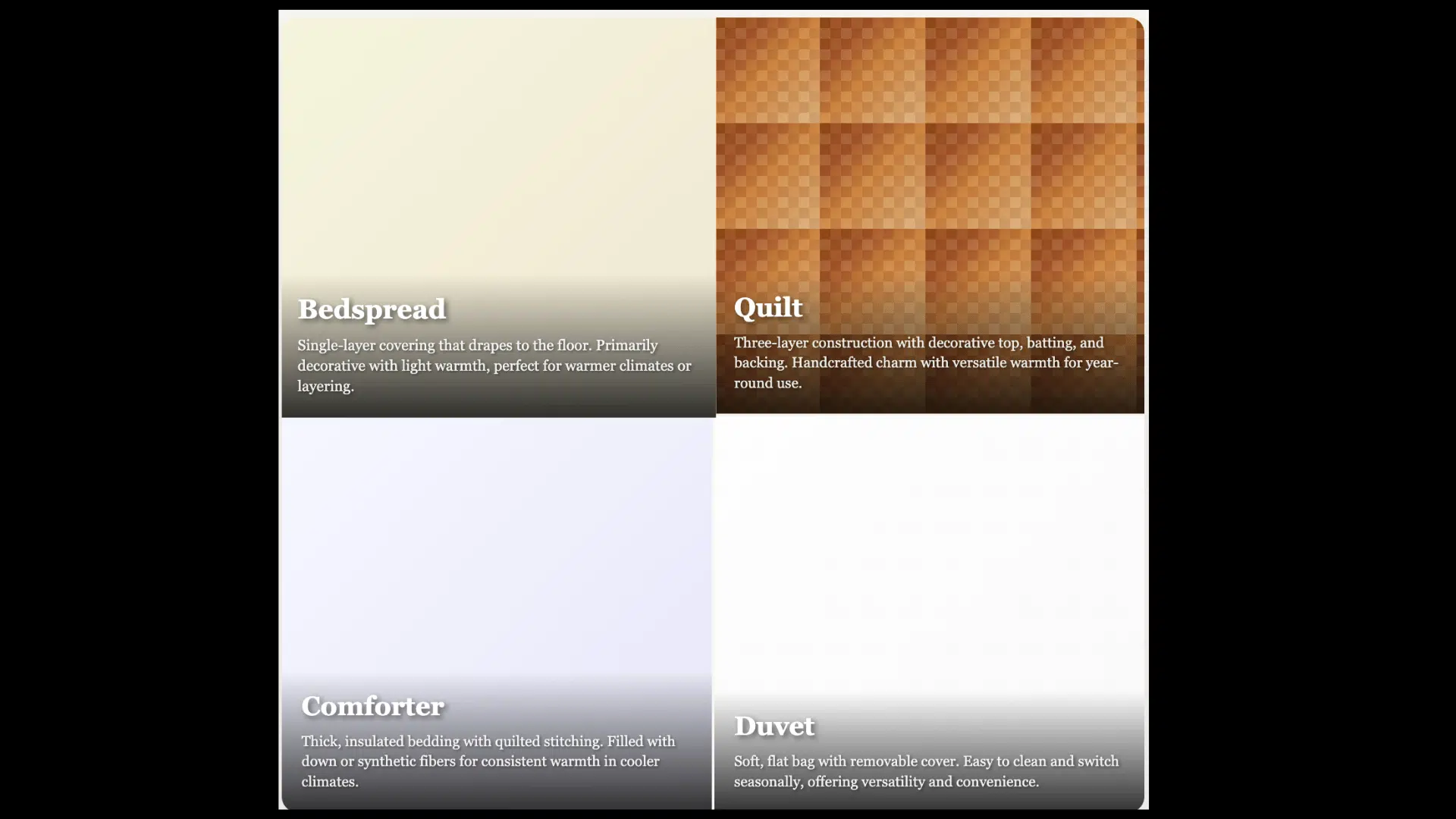
1. Bedspread
Single-layer covering that provides light warmth and full-bed coverage, often draping to the floor.
Primarily decorative, it’s best for warmer climates or as a layering piece over other bedding for added style without heavy insulation.
2. Quilt
Made from three stitched layers, a decorative top, an insulating batting, and a backing. Weight depends on the fill, making quilts versatile for year-round use.
They add texture, warmth, and a handcrafted charm to the bed.
3. Comforter
Thick, insulated bedding filled with down, down alternative, or synthetic fibers.
Quilted stitching keeps the fill evenly distributed, offering consistent warmth in cooler climates. Often sold with matching pillow shams for a coordinated look.
4. Duvet
A soft, flat bag filled with down or synthetic fibers, designed to be used with a removable cover.
Duvets are easy to switch out seasonally with different covers, making them highly versatile and simple to clean compared to a comforter.
Pros and Cons of Bedspreads vs. Comforters
When deciding between a bedspread and a comforter, it helps to weigh the advantages and drawbacks of each.
1. Bedspread: Pros and Cons
Bedspreads are known for their look and light coverage, making them a favorite in warmer climates or as a layering piece. Here’s a quick look at their strengths and limitations:
| Pros | Cons |
|---|---|
| Graceful and decorative | Not warm enough for winter without extra blankets |
| Lightweight and breathable | Can wrinkle easily |
| Easy to wash in a standard machine | Limited warmth in colder climates |
2. Comforter: Pros and Cons
Comforters offer plush warmth and a cozy look, making them ideal for cold weather or creating a relaxed bedroom feel. Here are the main benefits and drawbacks:
| Pros | Cons |
|---|---|
| Warm and cozy for cold nights | Bulky to store and wash |
| Fluffy and inviting look | It may be too hot in warm climates |
| Wide range of colors and patterns | Requires more care when cleaning |
Choose a bedspread if you want light refined and breathability in warm weather. Opt for a comforter if you need plush warmth during colder months.
Bedspread vs. Comforter: Detailed Feature Breakdown

Choosing between a bedspread and a comforter means understanding how each performs in key areas like weight, warmth, care, and seasonal suitability.
Here’s a concise feature-by-feature comparison to help you decide which best fits your bedroom needs.
1. Weight and Warmth Comparison
Lightness works well for quick bed-making and comfort in warmer conditions, while heavier designs provide added presence and greater heat retention.
Insulation levels vary, catering to both cooler-sleep preferences and those needing extra warmth.
| Feature | Bedspread | Comforter |
|---|---|---|
| Weight | Light, easy to handle, ideal for warm weather. | Medium-heavy, adds warmth, suited for colder climates. |
| Warmth | Minimal insulation, best for hot sleepers. | High insulation traps heat for cold nights. |
Finding the right balance between weight and warmth creates year-round comfort that matches personal sleeping habits and seasonal changes.
2. Best Season
Bedspreads suit summer and mild climates, offering style without trapping excess heat.
Comforters excel in winter, delivering insulation that keeps sleepers warm in freezing conditions and drafty spaces.
Choosing between them depends on seasonal needs, with each providing comfort and visual appeal tailored to different temperatures and preferences.
3. Price Range
Affordable options vary widely, with cost influenced by materials, craftsmanship, and design details. Choose based on budget and desired quality.
- Bedspread: Generally affordable, ranging from $40–$150, offering budget-friendly style and function for warmer climates.
- Comforter: Typically $50–$250, with price affected by fill quality, brand reputation, and extra design details.
Balancing price with durability ensures long-term comfort and satisfaction for your bedroom.
4. Design and Style Considerations
Bedspreads work beautifully in traditional or minimalist interiors, offering a sleek, tailored appearance that drapes neatly over the entire bed.
Their full coverage creates a polished, hotel-inspired look without overwhelming the space. Comforters, by contrast, bring softness and volume, lending a relaxed, inviting atmosphere to the bedroom.
They pair well with layered pillows and throws, making them ideal for cozy retreats or casual settings.
Maintenance Tips for Bedspreads and Comforters
Proper care helps extend the life of your bedding and keeps it looking fresh. While both bedspreads and comforters require attention, their cleaning methods and storage needs differ.
| Bedspread | Comforter |
|---|---|
| Machine wash on gentle cycle | Use a large-capacity washer or dry clean |
| Wash less frequently to maintain the fabric | Wash as needed, especially during winter |
| Air dry or tumble dry low | Tumble dry on low with dryer balls |
| Store folded in a cool, dry space | Store in a breathable bag to prevent moisture |
| Check stitching periodically | Check seams and filling distribution regularly |
Following the right maintenance routine will not only preserve the appearance of your bedding but also ensure it stays comfortable and functional for years.
Buying Guide: How to Choose

Not sure which bedding suits you best? This quick table compares bedspreads, quilts, comforters, and duvets so you can pick in seconds.
| Feature | Bedspread | Quilt | Comforter | Duvet |
|---|---|---|---|---|
| Climate | Warm/mild | All seasons | Cold/winter | Year-round |
| Warmth | Low | Moderate | High | Adjustable |
| Cleaning | Machine wash | Machine wash | Dry clean/large washer | Wash cover, occasional insert wash |
| Style/Storage | Sleek, compact | Textured, compact | Fluffy, bulky | Lofty, compact insert |
| Sheets | Flat + fitted | Flat + fitted | Flat + fitted | Fitted only; flat optional |
| Best For | Hot sleepers, summer use | All-season comfort | Cold sleepers, winter coziness | Style flexibility, adjustable warmth |
Tip: Warm climates call for a bedspread or quilt. Cold climates suit a comforter. For daily use, go with a duvet, or keep two types and swap seasonally.
Final Thoughts
Selecting the right bedding comes down to matching it with your climate, personal style, and upkeep preferences.
Lighter options add a modish and tailored look, perfect for warmer months or as a decorative layer.
Thicker, loftier choices deliver warmth and coziness, ideal for cold seasons or creating a relaxed, inviting space.
Each offers unique benefits, style, comfort, and practicality, so the best choice depends on how you sleep and the look you want to achieve.
For maximum flexibility, consider keeping both and switching them seasonally, giving you comfort and style year-round.
Ready to refresh your bedroom? Start by choosing the option that fits your lifestyle and enhances your space, turning your bed into the perfect retreat.
Frequently Asked Questions
Can You Use a Bedspread in Winter?
Yes, but pair it with blankets or a quilt for extra warmth and comfort during cold months.
Is a Comforter the Same as a Duvet?
No. A comforter is one piece, while a duvet requires a removable, washable cover for protection and style versatility.
Which Lasts Longer?
Both can last years with proper care, though bedspreads may wear more slowly since they’re washed less often.
Which Is Better for Kids?
Bedspreads are lighter, easier to clean, and more practical for kids’ rooms, making them ideal for everyday use.