



Your bedroom should feel like a place you actually want to be in. But sometimes, no matter what you do, something feels off. The bed sits awkwardly. The dresser blocks the light.
And the whole room just feels smaller than it is. Learning how to arrange bedroom furniture is not just about moving pieces around. It is about understanding how space, flow, and balance work together.
Get it right, and your room changes completely. And the best part? Most people never realize how close they already are to the perfect layout.
What to Consider Before Arranging Bedroom Furniture
Before you move a single piece of furniture, take a step back. A little planning goes a long way. Most people skip this part, and that is exactly why their room never feels quite right.
- Room size and shape: Know your dimensions. A long, narrow room needs a different approach than a square one.
- Natural light sources: Check where your windows are. You want light working for you, not against you.
- Door and window placement: Furniture should never block a door swing or cut off airflow.
- Your daily routine: Think about how you move through the room each morning and night.
- Focal point: Every bedroom has one. Usually, it is the bed, and your layout should be built around it.
Once you have these basics sorted, arranging furniture becomes far less of a guesswork. You start making decisions with an actual purpose.
How to Place the Bed, The Most Important Decision
The bed is the biggest piece in your room, so it sets the tone for everything else. Start here, and the rest falls into place. Place it against the wall opposite the door when possible.
This gives you a clear line of sight and makes the room feel more open. Avoid placing it directly under a window, as drafts and light can disrupt your sleep.
Keep space on both sides if you can. Even 18 inches can make a difference in movement. If you are unsure how much room your bed actually needs, checking a bed size reference chart first can save you from having to rearrange twice.
Bedroom Furniture Arrangement Ideas
There is no single right way to arrange a bedroom. Every room has its own shape, size, and personality. These ideas give you a starting point so you can find what actually works for your space.
1. Center the Bed on the Main Wall
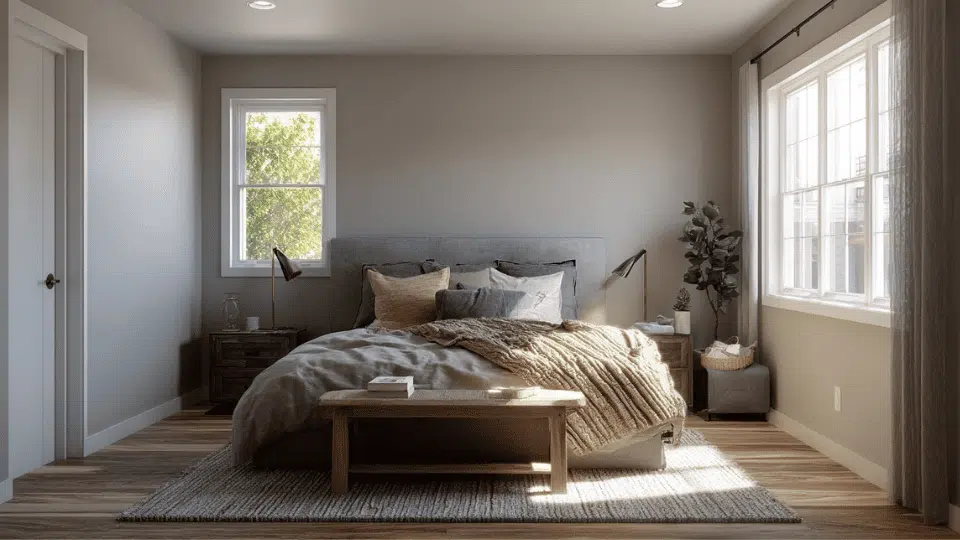
Place the bed against the largest wall to create a natural focal point. This layout usually makes the room feel balanced and easier to move around in.
It also gives you room to add furniture on either side without things feeling cramped. Simple, practical, and it works in almost any bedroom size.
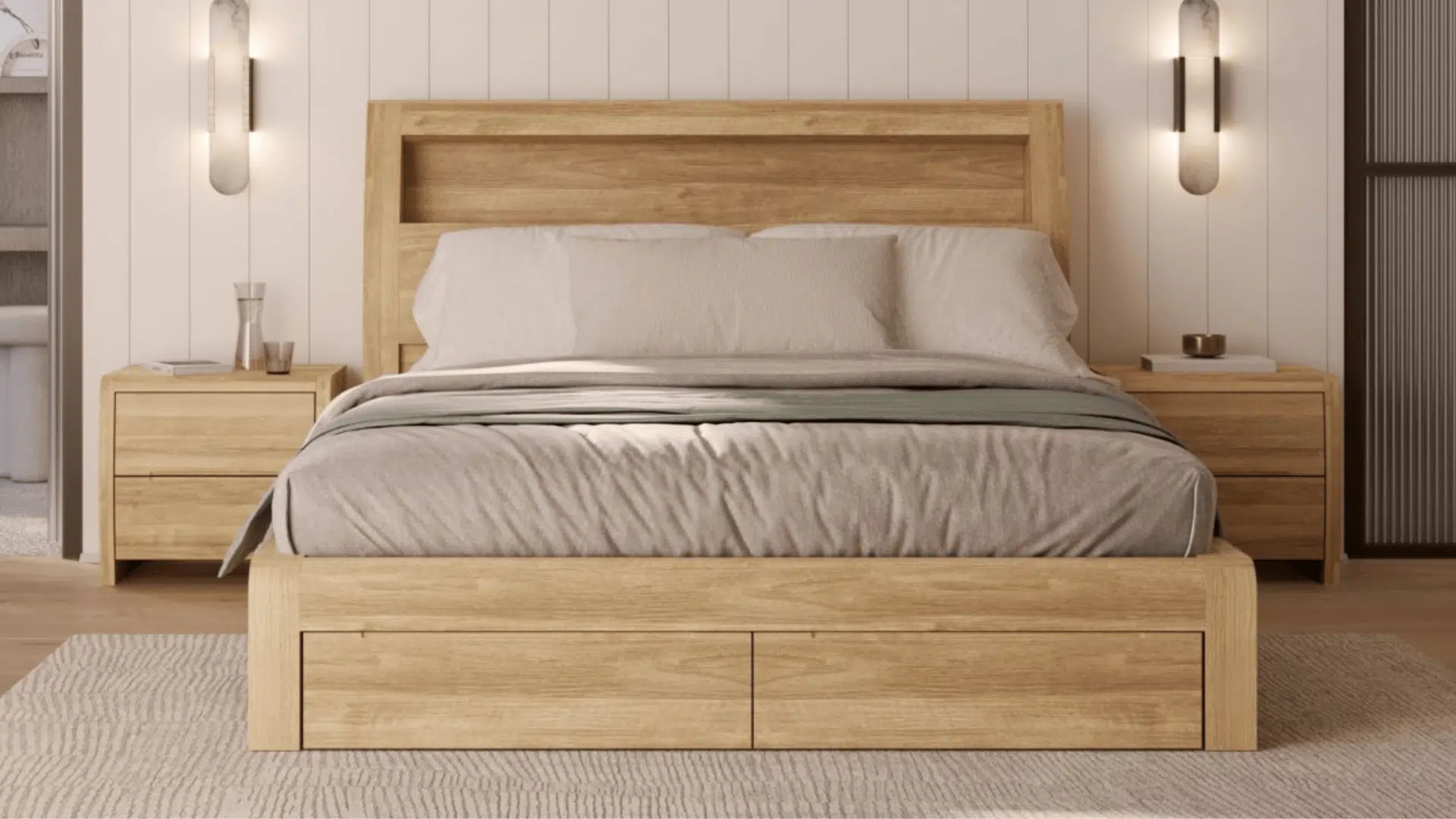
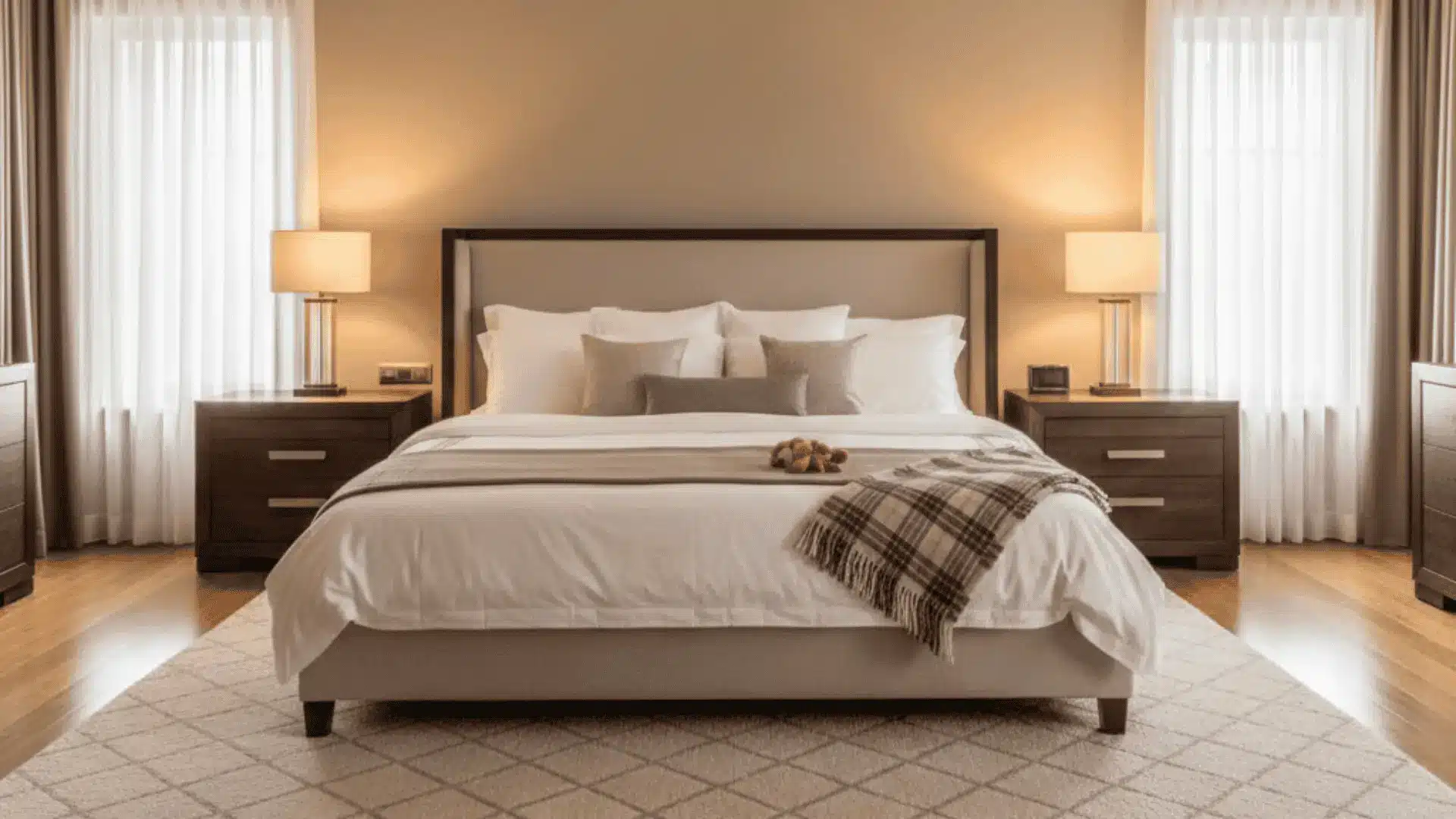
2. Use Matching Nightstands for Symmetry
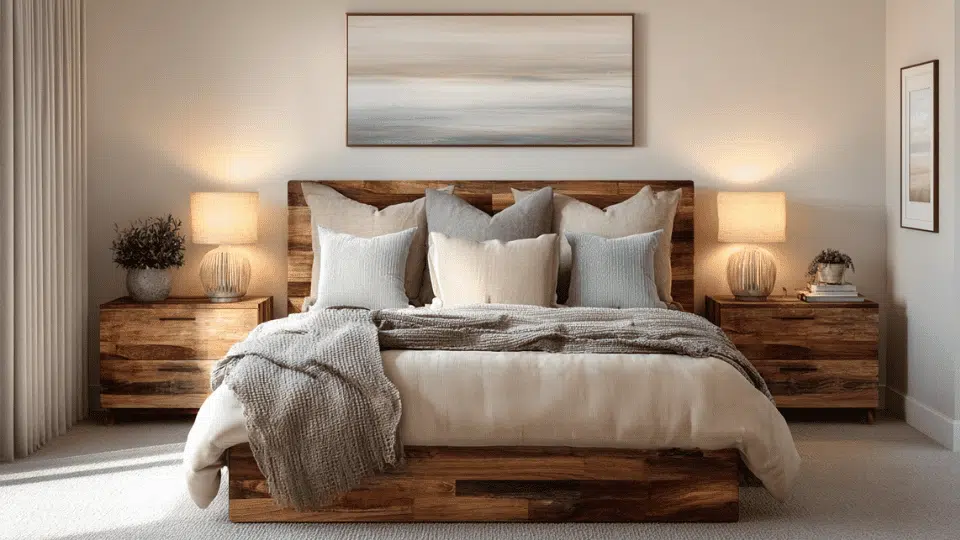
Two matching nightstands on either side of the bed instantly make a room look pulled together. It does not have to be expensive.
Even simple matching tables do the job. Symmetry creates a sense of calm, and your bedroom should feel like a place where you can actually unwind.
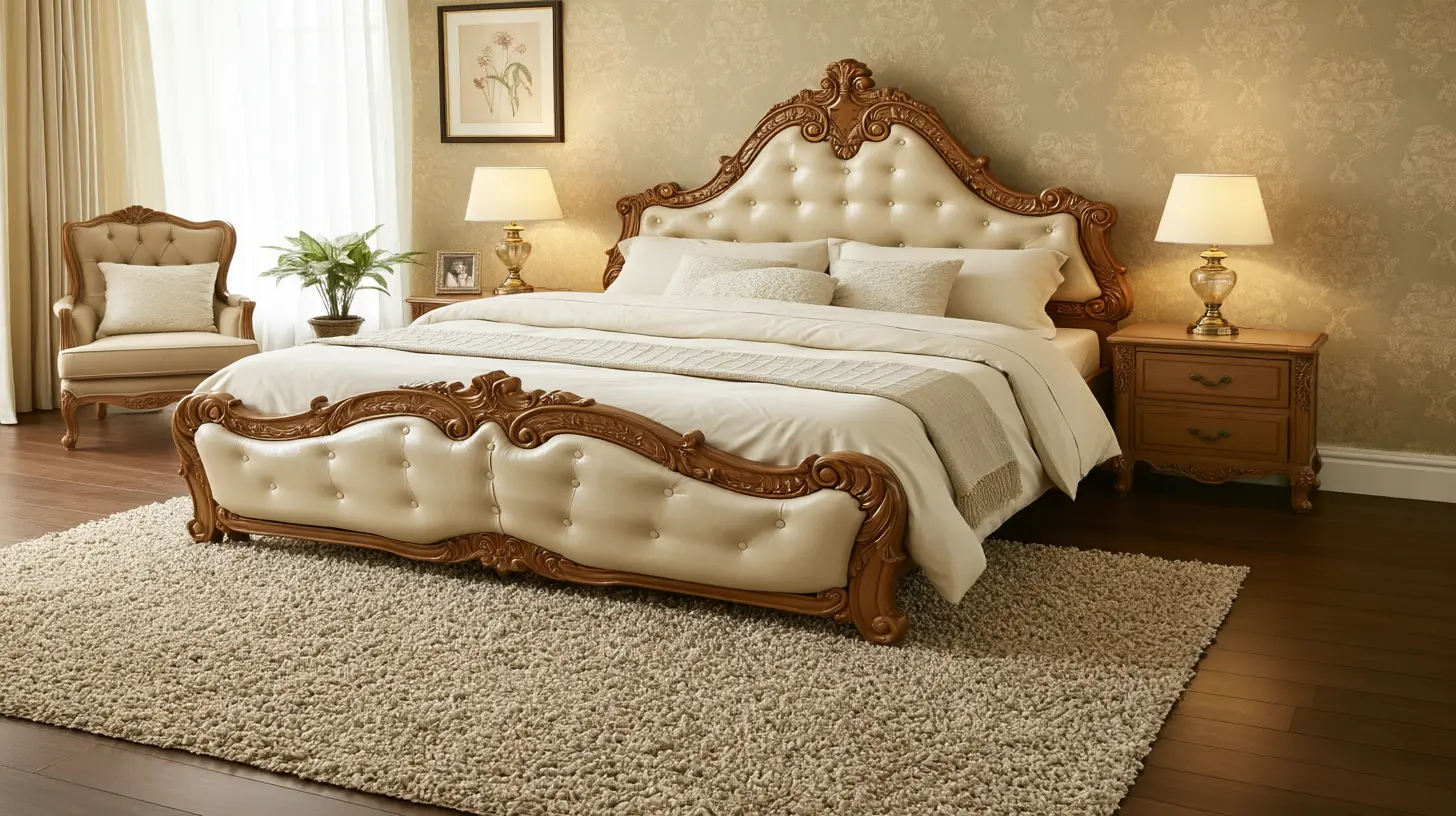
3. Place a Bench at the Foot of the Bed
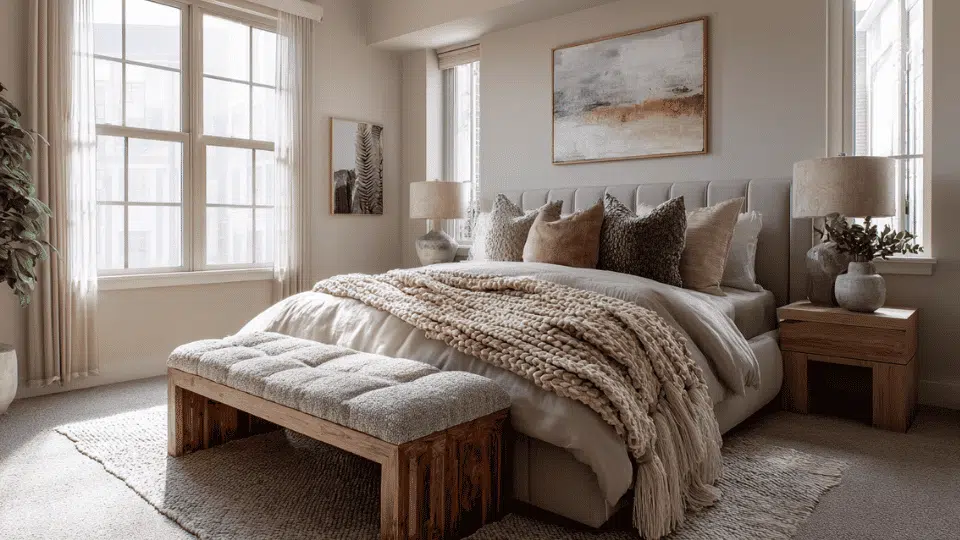
A bench at the foot of the bed adds function without taking up much space. You can use it to sit while getting dressed or toss a throw blanket over it for texture.
It also visually grounds the bed, making the whole layout feel more intentional and complete. Just make sure the bench height matches your bed frame’s height so the two pieces look right together.
4. Float the Bed Away From the Wall
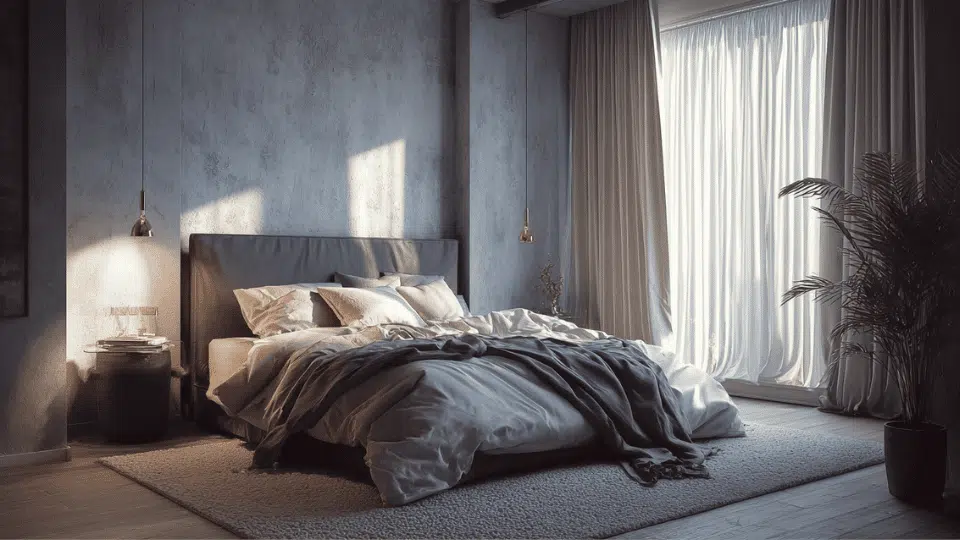
Pulling the bed slightly away from the wall works surprisingly well in larger rooms. It creates breathing room and gives the space a more relaxed, open feel. You can add a headboard to fill the visual gap. It is a small shift, but it makes the room feel noticeably bigger.
5. Keep Tall Furniture Away From Windows
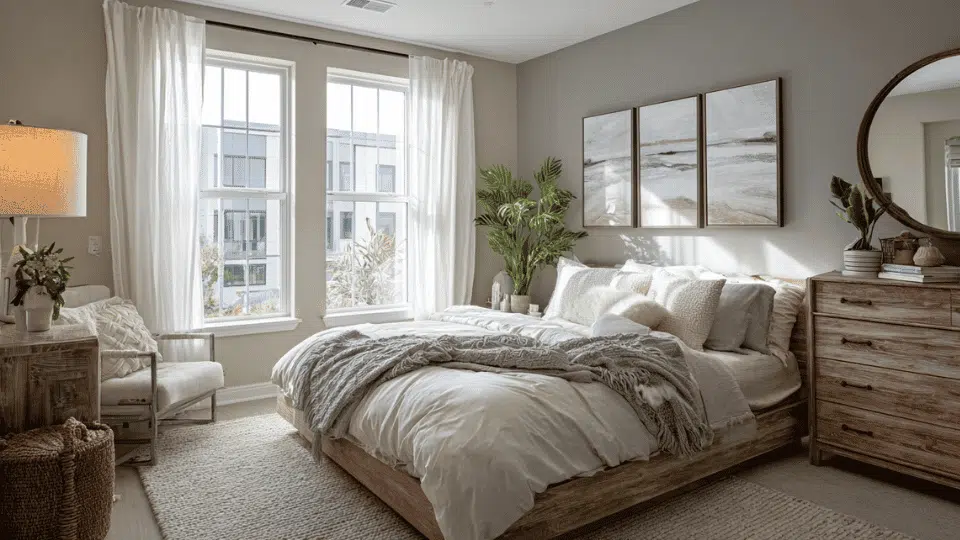
Tall dressers or wardrobes near windows block natural light, making the room feel closed in. Place them on walls without windows instead.
This keeps the light flowing freely across the room. And when a space gets good light, it automatically feels more open and comfortable to spend time in.
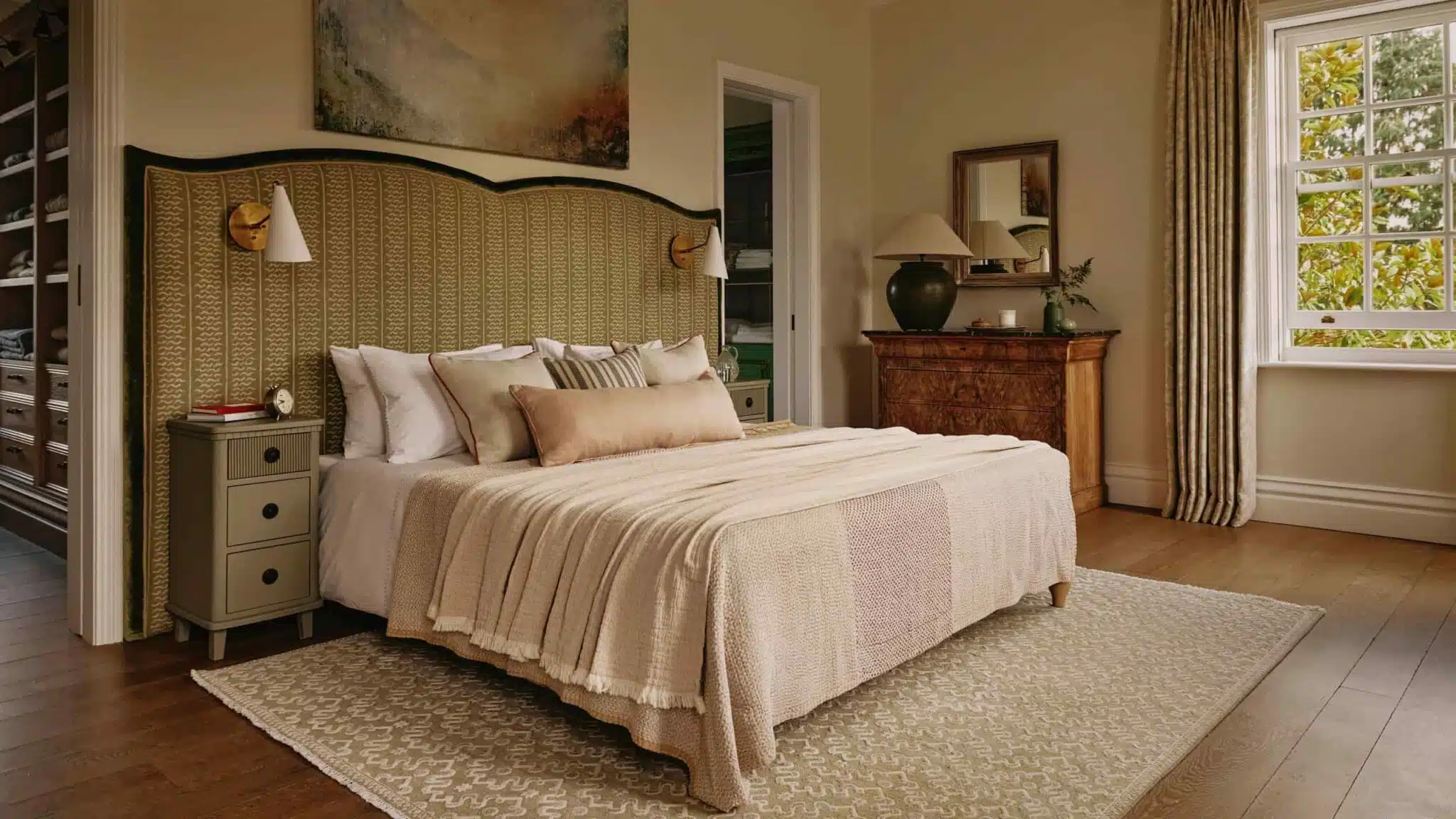
6. Use a Rug to Anchor the Space
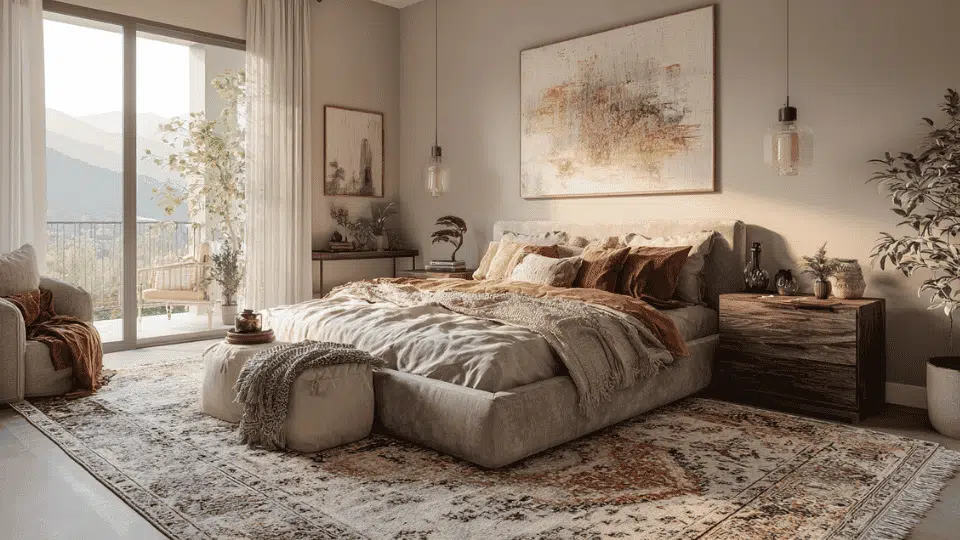
A rug under the bed ties everything together. It defines the sleeping area and makes the room feel more intentional.
Make sure it is wide enough to at least reach the outer edges of both nightstands. The nightstands do not have to sit on the rug, but if the rug is too short for their width, it is too small. A rug that’s too small can actually make the space feel more cluttered.
7. Try a Corner Bed Layout
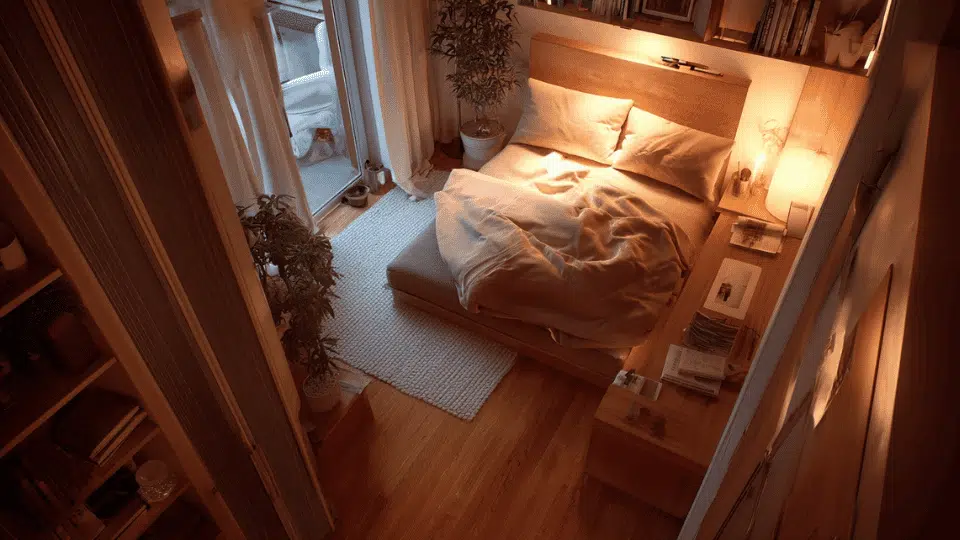
Placing the bed in a corner works well for smaller rooms or single sleepers. It frees up the rest of the floor space for other furniture or movement. The trade-off is that one side of the bed sits against the wall, so it works best when only one person uses the room.
8. Use Vertical Storage to Save Space
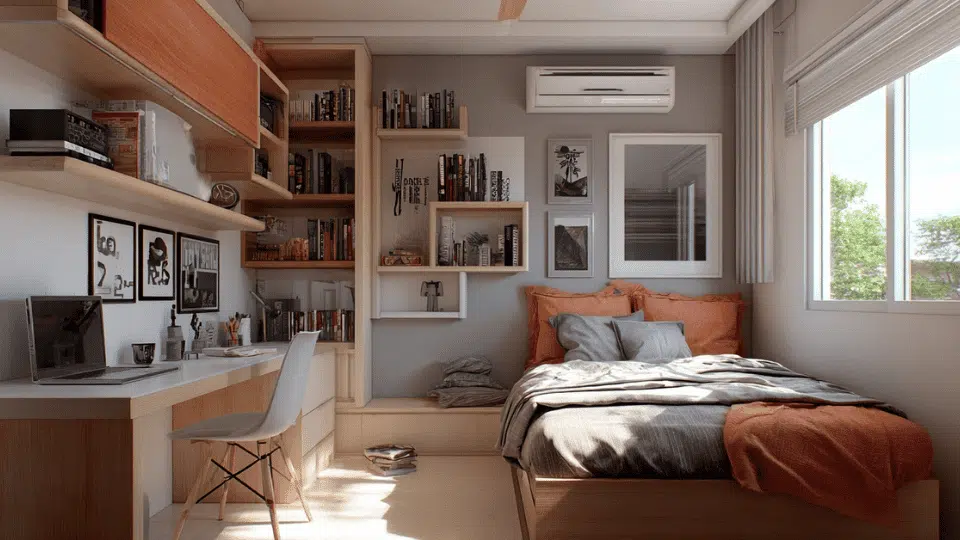
When floor space is limited, go up. Tall shelving units and wall-mounted storage keep things organized without eating into your walking space.
This works especially well in smaller bedrooms where every square foot matters. And keeping the floor clear makes even a tight room feel more open and less overwhelming.
9. Keep Walkways Open
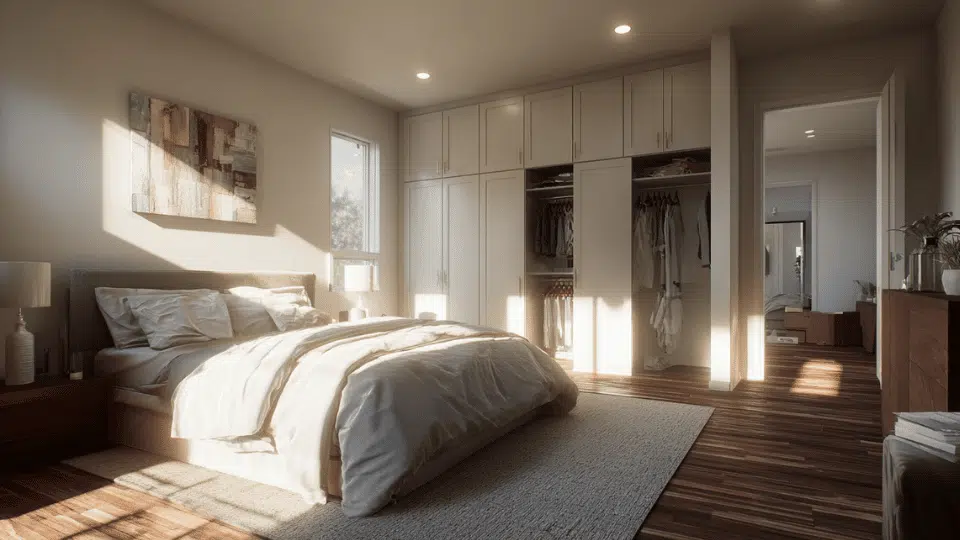
Every bedroom needs clear paths to the door, closet, and windows. Aim for at least 30 inches of walking space wherever you move regularly, and 36 inches along primary paths, such as the side of the bed.
Blocked walkways make a room feel chaotic, even when everything else looks fine. Open paths improve both the flow and the overall feel of the space.
10. Angle One Statement Piece
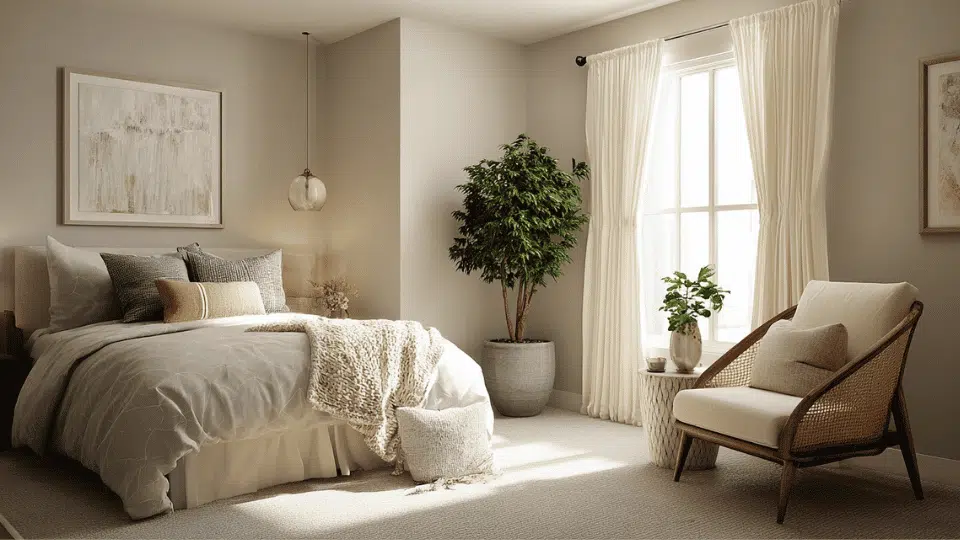
Angling a chair or small accent piece adds visual interest without a full redesign. It breaks the predictability of straight lines, giving the room a more layered, lived-in look. Just keep it to one piece. Too many angled items start to feel messy rather than intentional.
11. Try a Low-Profile Bed Frame
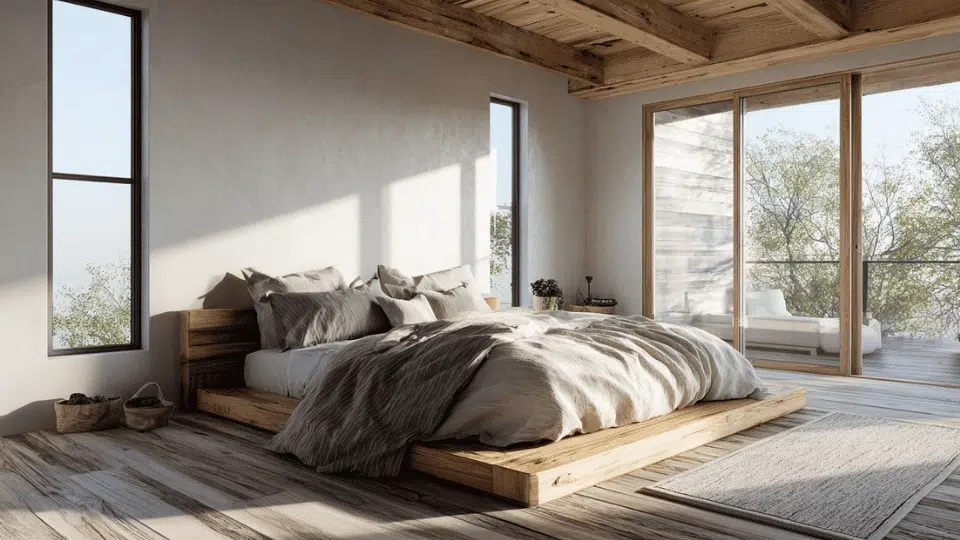
A low-profile bed frame keeps the visual weight close to the ground and makes ceilings feel taller. It works especially well in rooms with limited vertical space.
And since the bed sits lower, even a smaller bedroom can feel more open and airy without changing anything else in the room. If you are still deciding on a frame, looking at different frame styles can help you find one that fits both your space and your budget.
These are not rigid rules. Mix and match what fits your space, your habits, and your style. The goal is a room that feels good to come back to every single day.
Feng Shui Tips for Bedroom Furniture Arrangement
Feng shui is not just about aesthetics. It is about how energy moves through your space and how that affects the way you feel in it. A few simple shifts can make your bedroom feel noticeably calmer.
- Command position for the bed: Place your bed so you can see the door without being directly in line with it. This creates a sense of security.
- Avoid mirrors facing the bed: Mirrors reflect energy and can disrupt rest. Move them to the side or inside a wardrobe door.
- Balance both sides: Keep the furniture evenly spaced on each side of the bed to promote harmony and balance in the room.
- Clear under the bed: Storing clutter underneath blocks energy flow and can affect your sleep quality.
- Keep electronics to a minimum: Screens and devices bring active energy into a space meant for rest. Following a properroutine before bed helps reinforce that separation between activity and rest.
Once you apply even a couple of these tips, you will likely notice a shift in how the room feels. Small changes, real difference.
How to Arrange Furniture by Bedroom Type
Not every bedroom is the same, and what works in one space can feel completely wrong in another. Your room type shapes every decision you make. Here is a simple breakdown to point you in the right direction.
| Bedroom Type | Best Approach |
|---|---|
| Small bedroom | Use low-profile furniture, wall-mounted storage, and keep the floor as clear as possible |
| Large bedroom | Create zones for sleeping, seating, and storage to avoid the space feeling empty |
| Master bedroom | Prioritize balance, a strong focal point, and enough walkway space on all sides |
| Guest bedroom | Keep it simple, functional, and easy to move around in |
| Kids bedroom | Push furniture to the walls and leave the center open for play and movement |
Every room has its own set of challenges. But once you know your bedroom type, arranging furniture gets a whole lot easier and less confusing.
Common Bedroom Furniture Arrangement Mistakes to Avoid
A few small mistakes can throw off the entire feel of your bedroom. Most of them are easy to fix once you know what to look for. Here is what to watch out for.
- Pushing all furniture against the walls: It actually makes the room feel more hollow, not bigger. Pull pieces slightly inward instead.
- Ignoring traffic flow: If you have to squeeze past furniture daily, something needs to move.
- Choosing oversized furniture: A big bed or a bulky dresser in a small room can eat up floor space fast.
- Blocking natural light: Never place tall furniture in front of windows. Light changes everything.
- Skipping a focal point: Without one, the room lacks direction and feels unfinished.
Avoiding these mistakes does not require a redesign. Sometimes one small adjustment is all it takes to make your bedroom feel completely different.
Conclusion
Arranging a bedroom can feel tricky, especially when the space just does not seem to cooperate. But it does not have to be complicated.
Once you understand the basics of how to arrange bedroom furniture, things start to click. The right layout improves how your room looks and how it actually feels to live in.
Start small. Move the bed first, clear the walkways, and build from there. You do not need to overhaul everything at once. Take it one step at a time, and the results will follow. Ready to get started? Pick one change today and see what happens.
Frequently Asked Questions
What is the Current Trend in Bedroom Furniture?
Current bedroom furniture trends focus on natural wood, soft curves, multifunctional pieces, and simple designs that make the room feel calm and comfortable.
What Color Not to Paint Your Bedroom?
Very bright colors like neon yellow, strong red, or dark gray can make a bedroom feel stressful or too dark for relaxing and sleeping.
What is the 60 30 10 Rule for Bedroom Design?
The 60 30 10 rule means using 60% of one main color, 30% of a secondary color, and 10% of an accent color to create a balanced bedroom design.