





A squeaky bed can wake you up every time you roll over, making it hard to get a full night of rest. Learning how to stop a squeaky bed can help you sleep more comfortably and avoid constant nighttime interruptions.
Most squeaks come from three main spots: the mattress, the bed frame, or the box spring. Loose bolts, worn-out springs, and wood rubbing against metal are the most common reasons a bed starts to make noise.
Most of these problems are easy to fix at home with basic tools and a little time.
Many people online report that the squeak turned out to be the floor contact rather than the mattress itself.
Why Do Beds Squeak?
A bed starts to squeak when two parts rub together, shift out of place, or wear down over time. The noise can come from more than one spot, making it hard to pin down.
Loose bolts and screws allow metal or wooden parts to shift and rub against each other. Wood-on-wood or metal-on-metal contact gets worse with movement.
Coils inside innerspring or hybrid mattresses can wear down and squeak under pressure, often in the same general area.
A frame that sits unevenly on the floor rocks each time you move. Slats not sitting flat or properly seated press against the frame and creak near the middle or sides.
How to Find Where Your Bed Is Squeaking
Before reaching for a wrench or a can of WD-40, take five minutes to isolate the source. Starting with the wrong part wastes time and often leaves the real problem untouched.
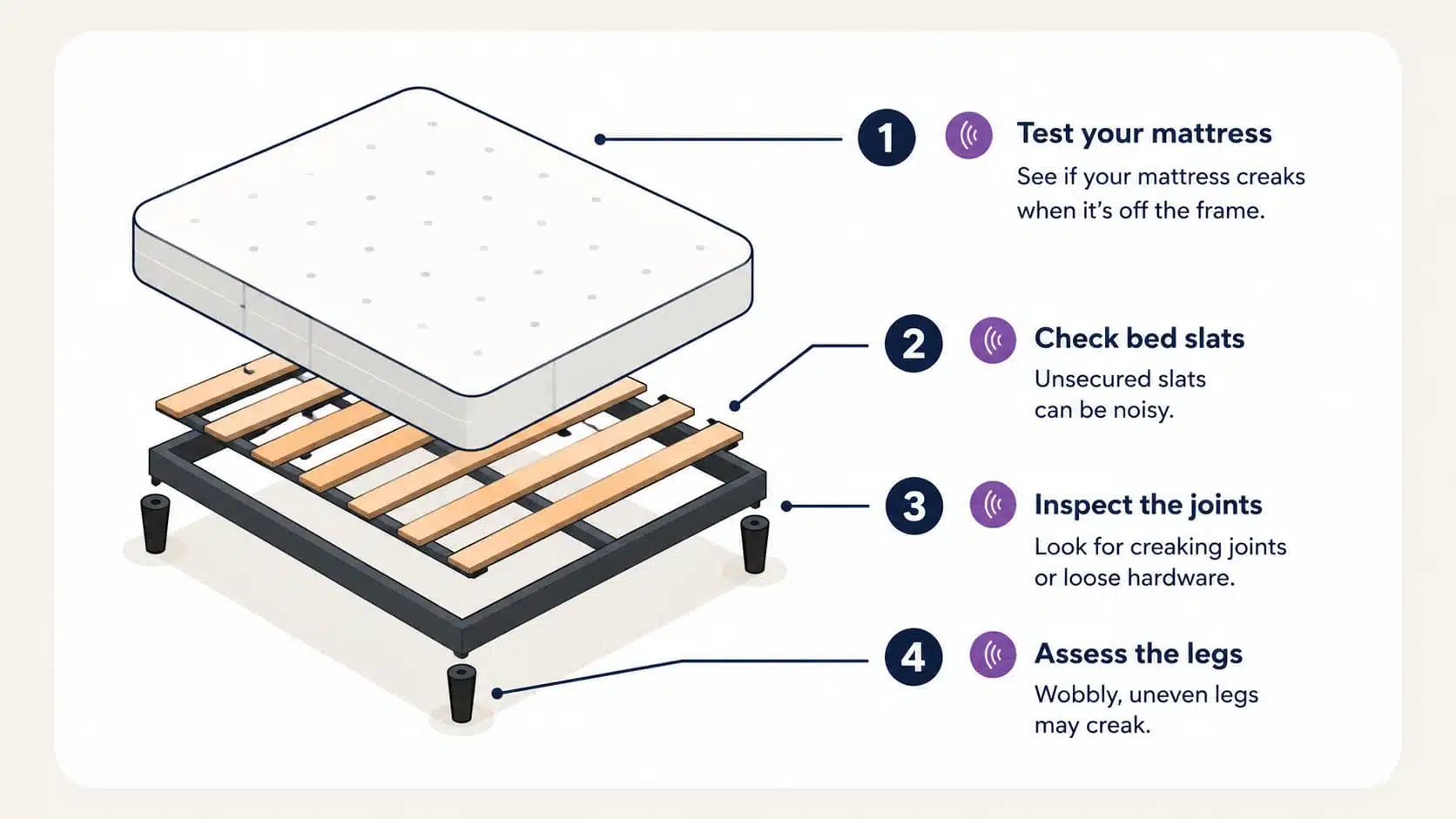
Step 1: Test the mattress on its own. Strip the bed, lift the mattress off the frame, and place it on the floor. Press down and shift your weight around it. If it squeaks on the floor, the noise is coming from inside the mattress (worn coils in an innerspring or hybrid). If it is silent, the mattress is not the problem.
Step 2: Test the box spring. If you have a box spring, place it flat on the floor without the mattress on top. Push down on the corners and edges. A squeak here means the box spring’s internal frame or springs need attention.
Step 3: Test the bare frame. With the mattress and box spring removed, press down on the frame at every joint, corner, and slat. Have someone help if you can: one person presses while the other watches and listens closely. Mark any spots that move or creak with a piece of tape so you do not lose track.
Step 4: Check the floor contact. Once the frame seems solid, put everything back together and check whether the legs are sitting level. On hardwood or tile, a leg that does not sit flat will rock and squeak with every movement.
How to Stop a Squeaky Bed: Fixes That Work
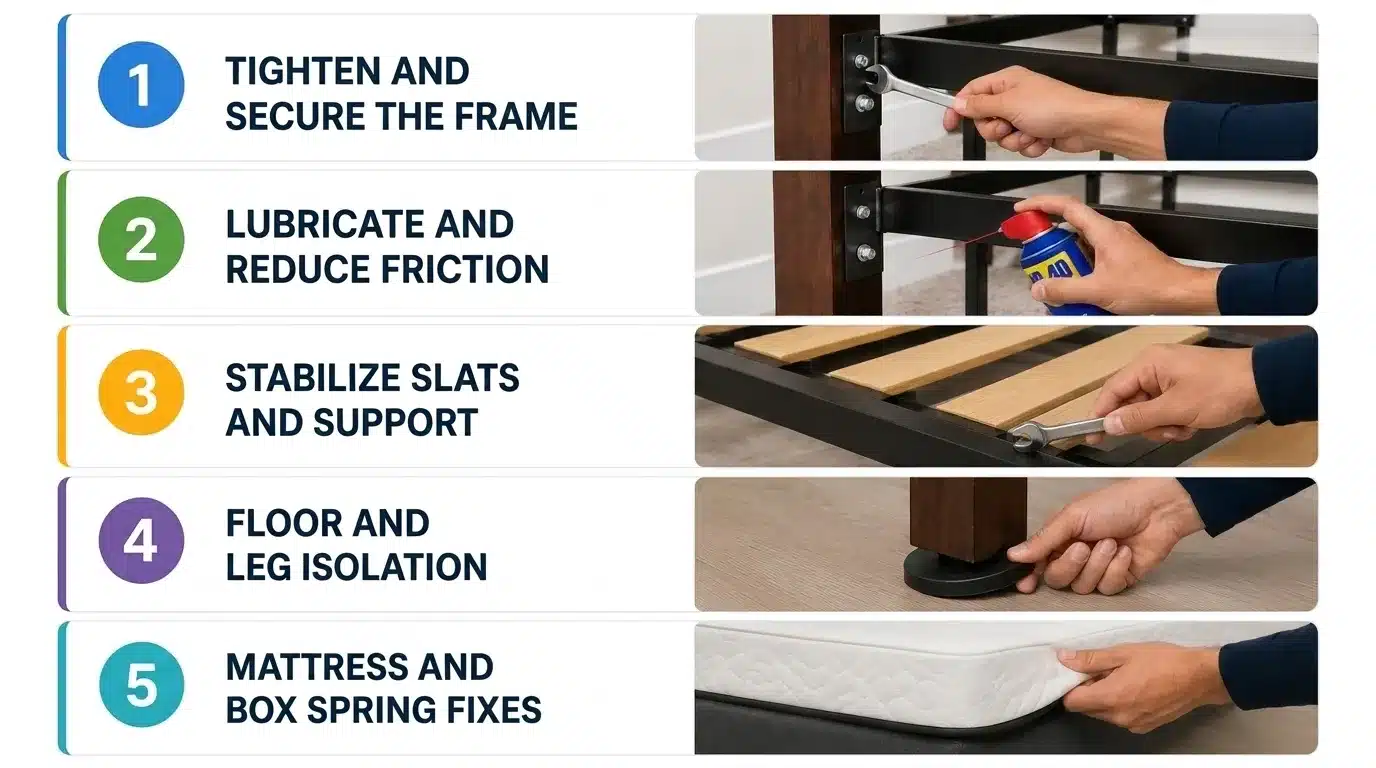
A squeaky bed can usually be fixed by tightening loose parts, lubricating areas where surfaces rub, or adding padding to reduce contact. Understanding the parts of a bed can help identify where the squeak originates.
Most of these jobs take less than 30 minutes and only need basic tools. Going through each part of the bed one step at a time makes it much easier to find and fix the right spot.
1. Tighten and Secure the Frame
Loose bolts and screws are one of the most common reasons a bed frame starts to make noise. Remove the mattress and check every connection point on the frame, including the side rails, headboard, and footboard.
Use a wrench or screwdriver to tighten each bolt until it is snug, but do not overtighten as this can strip the threads.
If a bolt no longer holds, swap it out for a new one and add a washer for a better fit. Retighten after a few nights if needed, since movement can reseat the joints.
Several users also report that tightening only the visible bolts did not solve the squeak because hidden headboard connectors were still loose.
2. Lubricate and Reduce Friction
When tightening the bolts does not stop the noise, friction between parts is likely the problem.
For metal frames, use silicone spray or white lithium grease on contact points. WD-40 can help temporarily, but it may wear off quickly.
For wooden frames, rub bar soap, candle wax, or beeswax along the areas where parts touch. You can also place felt pads, cork pieces, or fabric strips between contact points to stop surfaces from rubbing against each other.
3. Stabilize Slats and Support
Slats that move or sit unevenly can create a lot of noise over time. Remove the mattress and check whether each slat is properly seated in the frame.
A common fix shared on DIY forums is to add felt tape between the slats and frame rails to prevent wood-on-wood rubbing.
Press down on each one to feel if any rock or shift.
Lay felt tape or thin rubber padding along the frame rails where the slats rest. For slats longer than 48 inches, adding a center support beam can prevent the middle from flexing and making noise.
4. Floor and Leg Isolation
Many users found the floor was the actual source of the noise rather than the bed frame itself, especially on hardwood and tile surfaces.
This happens most often on hardwood or tile floors, where the legs can slide and shift.
Place rubber furniture pads or felt pads under each bed leg to stop the movement. If the floor is uneven, place small pieces of cardboard or thin wood under the shorter legs to level the bed and reduce unwanted noise.
5. Mattress and Box Spring Fixes
If the noise comes from the mattress or box spring, rotate the mattress 180 degrees to shift pressure to a less-worn area.
A mattress topper may reduce motion transfer and make minor squeaks less noticeable, though it will not fix damaged coils.
Placing a thin sheet of plywood or a bunkie board underneath adds support and can stop the squeak.
Starting with the simplest fixes, like tightening bolts and adding padding, takes care of the problem most of the time.
If the noise keeps coming back after trying everything, it is a sign that a part of the bed has worn out and needs to be swapped out.
When to Replace a Mattress or Box Spring?
Not every squeak can be fixed with wax or tightened bolts. If the noise keeps coming back after trying all the basic fixes, the mattress or box spring is likely too worn out to stay quiet.
A mattress that sags in the middle, feels uneven, or causes back pain in the morning often means it’s time for a new mattress. Most mattresses last between 7 and 10 years.
Box springs also wear out over time, usually within 8 to 10 years, and should be replaced when they make a consistent noise, show visible damage like broken slats or bent springs, or no longer hold the mattress flat and even.
Long-Term and Preventive Tips
Fixing a squeak is only half the job. A few simple habits kept up over time can stop the noise from coming back.
- Tighten all bed frame bolts and screws regularly since loose hardware is the most common cause of squeaks.
- Apply silicone spray on metal joints or beeswax on wooden contact points to reduce friction and noise.
- Add felt pads or rubber washers between slats, rails, and bed legs to stop rubbing and movement.
- Rotate the mattress every three to six months to prevent uneven wear and pressure on coils.
- Check that the bed sits level on the floor and place padding under unstable legs to stop shifting and creaking.
Staying on top of basic bed maintenance does not take much time or money. Checking the frame every few months and keeping parts well-padded goes a long way.
A bed that gets regular attention is far less likely to develop a squeak in the first place.
Common Mistakes to Avoid
Most people try to fix a squeaky bed by going after the most obvious parts first. A few common errors along the way can make the problem harder to solve and cause it to come back sooner.
| Mistake | Why It Fails | Quick Fix |
|---|---|---|
| Over-lubricating joints | Attracts dust and worsens noise | Thin layer only, wipe excess |
| Ignoring floor and leg contact | Legs shift and squeak, too | Rubber or felt pads under legs |
| Assuming mattress squeaks can always be fixed | Worn coils cannot be repaired | Test on the floor, replace if needed |
| Tightening only visible bolts | Hidden loose bolts bring noise back | Check every bolt on the full frame |
| Using the wrong lubricant | WD-40 is less effective on wood, and wax fails on metal | WD-40 for metal, beeswax for wood |
| Overtightening bolts | Strips threads, cracks frame | Snug only, add a washer if needed |
Taking shortcuts when fixing a squeaky bed often causes the noise to return within a few weeks. Getting the fix right the first time takes a little more care but reduces the need for repeated work.
Treating each part of the bed as a possible source from the start saves a lot of time and effort.
Conclusion
Knowing how to stop a squeaky bed means better sleep, less pain, and more energy during the day.
A quiet bed is not a luxury. It is something worth fixing for the sake of your health and daily rest. Most squeaks take less than an hour to address with basic tools.
The fix does not have to be expensive or time-consuming. Most people find the source within minutes and silence it the same day.
Stop putting up with broken sleep over a problem that has a real solution. Pick a starting point, act on it, and give yourself the rest you have been missing.
Frequently Asked Questions
Does a Memory Foam Mattress Squeak?
Memory foam and latex mattresses do not have metal springs, so they do not squeak on their own. If a memory foam bed makes noise, the sound is coming from the frame, box spring, or foundation underneath it.
Can Humidity Make a Wooden Bed Frame Squeak?
Changes in humidity cause wood to swell and contract, making the parts of a wooden frame rub against each other. This gets worse during seasonal changes and is most common in older wooden frames kept in rooms with poor air circulation.
How Long Does It Take to Fix a Squeaky Bed?
Most fixes take less than 30 minutes when the source is a loose bolt, worn slat, or friction between parts. More involved repairs, like replacing hardware or adding a bunkie board, may take up to an hour.