


You’re shopping for a new T-shirt or a fresh set of bed sheets, and you see two options: modal and cotton. Cotton is familiar; you know what to expect.
Modal, on the other hand, sounds softer and more premium, but it’s not always clear how it actually performs.
When comparing modal fabric vs cotton, that choice matters more than it seems. Pick the wrong one, and you could end up with fabric that feels uncomfortable in the heat, wears out faster, or simply doesn’t match how you use it day to day.
Understanding how these two fabrics differ in feel, durability, and moisture handling makes it much easier to choose the one that actually works for you.
What is Modal Fabric?
Modal is a semi-synthetic fabric. The modal fabric is made from beech tree pulp.
Beech wood chips are broken down, and the cellulose inside is pulled out and spun into smooth, soft fibers.
So when people ask “what is modal made of,” the simple answer is: beech tree pulp that goes through a chemical process to become fabric.
It is not fully natural like cotton, nor fully synthetic like polyester. It sits right in the middle. The result is a fabric that is soft, light, and smooth, with a texture similar to silk.
Modal Fabric Benefits
Modal stands out because it combines comfort, performance, and low-maintenance care in a way that few other fabrics do.
- Extremely Soft: Modal fibers are very fine, making the fabric feel softer and smoother than most cottons.
- 50% More Absorbent Than Cotton: According to Lenzing AG, modal absorbs 50% more moisture than cotton, thanks to micropores inside the fabric that pull sweat away from the skin and release it into the air faster.
- Lightweight and Drapes Well: It feels airy and moves with your body, which makes it great for modal underwear, loungewear, and activewear.
- Natural Stretch: Modal has inherent elasticity that allows it to stretch and move with the body, even without added spandex or elastane. Cotton has no natural stretch.
- Resists Pilling: Modal’s long, smooth fiber structure means it resists pilling significantly better than cotton. Cotton fibers are shorter and rougher, which makes them more prone to forming those surface fuzz balls over time.
- Vibrant Color Retention: Modal’s high dye uptake means colors stay brighter and more vivid after repeated washing compared to cotton.
Drawbacks of Modal Fabric
Modal isn’t perfect, and its strengths come with a few trade-offs. Before choosing it, it’s worth understanding where it falls short in everyday use.
- Less Durable Under Rough Use: Modal can be less abrasion-resistant and more prone to heavy wear than cotton, so it may not hold up as well in long-term, high-stress use.
- Sensitive to Heat: High temperatures during washing or drying can damage the fibers, causing shrinkage or weakening over time.
- Usually More Expensive: Modal typically costs more than regular cotton, especially in higher-quality garments.
- Chemical Residues in Non-Certified Modal: Because modal requires chemical processing, non-certified versions may contain residual chemicals that can irritate very sensitive skin. If this is a concern, look for OEKO-TEX certified modal or TENCEL Modal, or choose organic cotton instead.
Real-world examples: Modal works really well in hot-weather clothing, gym wear, and underwear. Anything that sits close to your skin is a good use for modal.
What is Cotton Fabric?
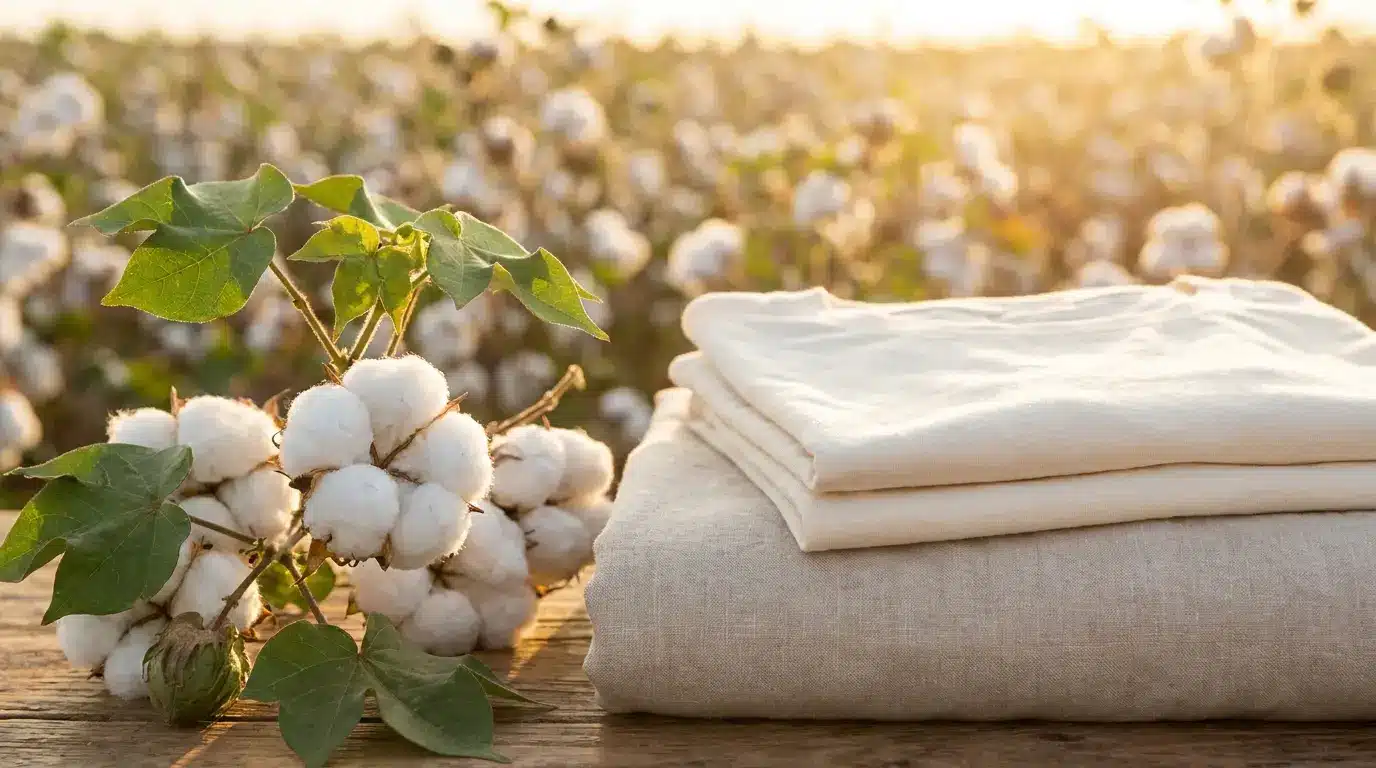
Cotton is a natural fiber. It comes from the fluffy bolls of the cotton plant and has been used in clothing for thousands of years. Ongoing cotton fiber research continues to improve its quality, durability, and sustainability.
There are different types: regular cotton, organic cotton, Egyptian cotton, and Pima cotton. Egyptian and Pima cotton are the premium versions; they have longer, softer fibers.
Cotton is used in almost everything: t-shirts, jeans, bed sheets, towels, socks. It is the most widely used fabric in the world for a reason.
Benefits of Cotton Fabric
Cotton remains popular because it balances durability, comfort, and affordability better than most fabrics. It may not feel as premium as modal, but it performs reliably in everyday use.
- Durable and Long-Lasting: Cotton’s durability allows it to withstand external forces, making it suitable for structured pieces like jackets, jeans, and workwear.
- Affordable: Cotton is widely produced and available at scale, which keeps it more affordable than most fabrics.
- Easy to Care for: You can wash it, dry it, and it holds up fine with basic care.
- Hypoallergenic and Chemical-Free: Cotton is naturally hypoallergenic and involves no synthetic chemicals in the fiber itself, making it the safer choice for people with very sensitive skin or chemical sensitivities.
Drawbacks of Cotton Fabric
Cotton is reliable, but it comes with trade-offs. Its weaknesses become more apparent under certain conditions, especially in heat and heavy use.
- Holds Moisture: Cotton absorbs sweat well but dries slowly, which can leave the fabric feeling damp and heavy in humid conditions.
- Prone to Shrinking and Wrinkling: Without proper care, cotton can shrink in hot washes and often requires ironing to maintain a neat look.
- Feels Heavier in Warm Weather: Compared to lighter fabrics like modal, cotton can feel thicker and less comfortable in high heat or humidity.
Real-world examples: Everyday t-shirts, bed sheets, bath towels, cotton is the go-to for all of these.
Modal vs Cotton, Quick Answer Modal is better for softness, moisture control, and comfort in warm weather. Cotton is better for everyday use, durability, and saving money. If you want the best of both, a modal-cotton blend is a smart choice. |
Modal vs Cotton: What are the Key Differences?
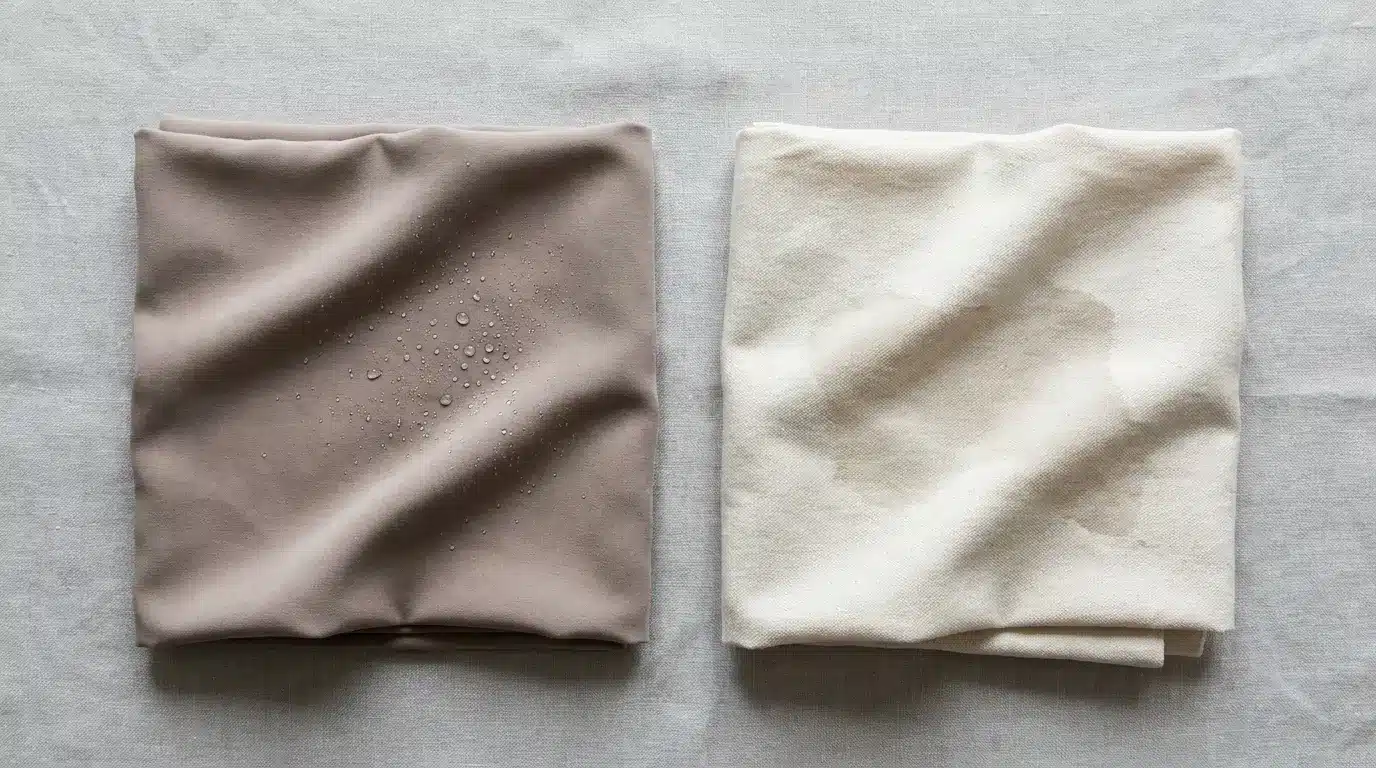
Before diving deeper, here’s a quick side-by-side comparison to highlight how modal and cotton differ in the areas that matter most for comfort, performance, and long-term use.
| Feature | Modal | Cotton |
|---|---|---|
| Softness | Very soft, silky | Soft (varies) |
| Breathability | High | High |
| Moisture | Wicks & dries fast | Absorbs & holds |
| Durability | Moderate | High |
| Shrinkage | Low | Moderate |
| Cost | Higher | Affordable |
Fabric performance depends not just on the fiber, but also on how it is made, including weave, thickness, and finishing.
The table gives you a clear snapshot, but the real difference lies in how each fabric performs in specific situations. The next sections break that down so you can decide what actually works for you.
Is Modal Breathable?
Yes, modal is breathable. Modal dries quickly and manages moisture efficiently, while cotton absorbs and holds moisture. Even though cotton remains breathable, it can feel heavy and damp against the skin when wet.
So both fabrics breathe, but they handle sweat differently. Modal dries faster. Cotton absorbs more moisture but holds it longer, which can feel damp and uncomfortable in hot weather.
For summer or high-humidity days, modal often feels drier because it wicks moisture and dries faster.
Modal vs Cotton: Detailed Comparison
Both fabrics have real strengths. The right choice depends on what you need from your clothing. Here is how they stack up across six key areas.
1. Softness and Comfort
Modal wins here. It has a silky, smooth feel that standard cotton simply cannot match. The fibers in modal are finer, which is why it feels so gentle against the skin. High-quality cotton, like Egyptian or Pima, can come close, but regular cotton feels noticeably rougher.
If you wear something directly against your skin all day, like underwear or a t-shirt, modal will feel more comfortable from the first wear.
2. Breathability and Temperature Control
Both fabrics are breathable, so neither will leave you feeling suffocated. Both fabrics are breathable, but in heat and humidity, modal has an advantage in moisture management.
It dries faster and does not hold onto sweat the way cotton does. Cotton tends to feel heavy and damp once it absorbs moisture.
Modal keeps you feeling lighter and cooler throughout the day. For summer clothing or anything you wear during physical activity, modal handles warm conditions better than cotton.
3. Moisture-Wicking Ability
Modal generally absorbs and releases moisture more efficiently than cotton, which can make a noticeable difference in comfort. Modal pulls sweat away from your skin faster and releases it into the air more quickly.
Cotton absorbs moisture well but holds onto it, which leads to that damp, sticky feeling on hot days. If you sweat a lot or live in a humid place, modal helps keep you drier and more comfortable throughout the day.
4. Durability and Longevity
For heavy, everyday use, cotton is often the more durable choice, though strength depends on fabric quality, weave, and processing.
Modal holds its color well, and pilling depends more on fabric quality and construction than the fiber itself, but its fibers can break down faster under rough use or harsh washing.
If you need fabric that survives hard wear for years, cotton is the safer bet.
5. Maintenance and Care
Modal resists shrinking and wrinkles less than cotton, but it is more sensitive to heat and typically requires gentler washing. It does not shrink much after washing and rarely wrinkles, so you can take it out of the wash and wear it without much effort.
Cotton, especially in its pure form, is known to shrink after hot washes and often needs ironing to look neat.
If you want clothing that stays in good shape with minimal effort, modal saves you time and keeps its size and softness wash after wash.
6. Environmental Impact
Both modal and cotton are biodegradable, which is a good starting point.
Modal is often marketed as more sustainable because it can use less water at the raw-material stage, but its overall environmental impact varies widely, as chemical processing and manufacturing methods also play a significant role.
Conventional cotton farming uses large amounts of water and relies heavily on pesticides; the cotton’s water impact on freshwater systems and ecosystems is well documented.
Organic cotton is a much better option if you want a natural fiber with a lower environmental footprint. Between regular cotton and modal, its environmental impact can be lower in some cases, especially when produced using closed-loop processes.
Modal vs Cotton Sheets: Which Is Better for Bedding?
Both fabrics make popular bed sheets, but they feel quite different:
- Modal sheets feel silky and smooth against the skin, wick moisture well for hot sleepers, and resist shrinking and pilling after washing. They drape elegantly and stay soft wash after wash.
- Cotton sheets (especially percale and sateen weaves) offer a crisp or smooth feel, are highly durable, and work well in all climates. Egyptian and Pima cotton sheets are exceptionally soft but come at a premium price.
For hot sleepers or anyone who wants a silky, low-maintenance option, modal sheets have a clear comfort edge. For durability and a traditional linen-closet staple, cotton remains the standard.
Which Fabric Should You Choose: Modal vs Cotton

Choosing between modal and cotton comes down to how and where you plan to use it. Instead of thinking in general terms, it helps to match each fabric to specific situations where it performs best.
For hot weather, summer clothing, gym wear, and underwear, modal is generally the better choice.
It handles sweat more efficiently, dries quickly, and feels softer on the skin, making it more comfortable in warm and humid conditions, especially when you’re looking for hot-weather fabrics.
However, it is not ideal for rough use, high-heat washing, or situations where long-term durability is the top priority.
Cotton works better for everyday clothing, bed sheets, and heavy-use items. It is stronger, more affordable, and handles repeated washing well.
The trade-off is that it can feel heavier in humidity, take longer to dry, and require more maintenance, like ironing.
In simple terms, modal is built for comfort and performance, while cotton is built for durability and practicality. The right choice depends on whether you value feel or long-term toughness more in your daily use.
Final Verdict
Most people are fine with cotton. It is affordable, widely available, and strong enough for everyday use.
But if comfort is your top priority, especially for underwear, activewear, or anything you wear in warm weather, modal is often the better choice.
In the debate of modal fabric vs cotton, modal stands out for its softness, faster drying, and better feel against the skin. If you want the best of both worlds, go with a modal-cotton blend.
It gives you comfort without giving up too much durability.
Frequently Asked Questions
Is Modal Fabric Good for Sensitive Skin?
Yes, modal is very gentle because of its smooth fiber structure, which reduces friction on the skin. It is often a better choice for people who are irritated by rougher fabrics.
Does Modal Fabric Pill Over Time?
Modal resists pilling significantly better than cotton. Its long, smooth fibers are less prone to the surface fuzz that forms on shorter cotton fibers. Lower-quality modal blends can still show some wear over time, but fiber-for-fiber, modal holds its appearance longer than regular cotton.
Which Fabric is Better for Travel, Modal or Cotton?
Modal is better for travel because it is lightweight, wrinkle-resistant, and dries quickly after washing. Cotton can feel heavier and takes longer to dry, which is less convenient on the go.