



Memory foam cleans up well when you know what not to do first.
Most cleaning mistakes happen because foam behaves differently from every other surface in your home: it absorbs liquid fast, dries slowly, and reacts badly to heat and harsh chemicals.
After nearly a decade in bedding product development and material sourcing, including time at foam production facilities, I learned how memory foam’s open-cell structure actually works and what genuine care it needs.
The right method is simpler than most people expect.
This guide covers how to clean a memory foam mattress from routine freshening to stubborn stain removal, which products to use by stain type, and the specific mistakes that can cause permanent damage to the foam you are trying to protect.
Can You Wash a Memory Foam Mattress?
The short answer is no, you cannot wash a memory foam mattress in the traditional sense.
Memory foam is open-cell polyurethane foam, featuring interconnected cells that allow airflow, but this same structure also makes it highly absorbent, meaning liquid can seep deep into the foam and become difficult to remove.
Submerging it, hosing it down, or running it through any kind of washer will break down the foam’s internal structure, leaving you with a lumpy, deformed mattress and, even worse, a perfect breeding ground for mold and mildew.
After spending time at foam production facilities, I saw this firsthand: samples exposed to prolonged moisture lost their compression recovery and developed visible cell breakdown within days. The open-cell structure that makes memory foam so comfortable is the same structure that traps moisture long after the surface has dried.
According to the U.S. Environmental Protection Agency, wet or damp materials should be dried within 24 to 48 hours to prevent mold growth, which can lead to severe diseases like asthma.
Memory foam, with its absorbent open-cell structure, may require additional drying methods to meet this timeline.
What you can safely wash is the removable mattress cover (check the care label first) and spot-clean the foam itself using gentle methods like baking soda, diluted vinegar, or a mild detergent spray, but never a soak.
Note: Memory foam absorbs liquid quickly and can get damaged with excess moisture, so it needs gentle, low-water cleaning methods to stay safe.
Why Keeping Your Memory Foam Mattress Clean Matters
Cleaning your memory foam mattress is not just about hygiene; it directly impacts your sleep, health, and how long your mattress actually lasts. Here are the key benefits you should know.
- Reduces Allergens and Dust Mites: Regular cleaning removes dust mites, pet dander, and pollen.
- Prevents Mold and Mildew Growth: By removing trapped moisture and sweat, you reduce the risk of mold and mildew growth in the foam. Learning how to sanitize a mattress helps protect both the mattress and your lungs.
- Extends Mattress Lifespan: A well-maintained memory foam mattress can last 8 to 10 years, while a neglected one can break down within 4 to 5 years.
- Eliminates Odors and Bacteria: Deep cleaning neutralizes sweat, urine, and body-oil odors, keeping your sleeping space fresh, sanitary, and genuinely inviting every night.
- Improves Sleep Quality: A clean, allergen-free mattress supports deeper, uninterrupted sleep by reducing nighttime sneezing, itching, congestion, and restless tossing and turning.
A clean mattress is the foundation of healthy sleep. By spending just an hour every few months on proper care, you protect your health, your wallet, and your nightly rest.
Before You Start: Check Your Care Label and Warranty
| Do this before anything else. Every memory foam mattress comes with a law tag or care label that lists cleaning limits, drying instructions, and approved products. Using the wrong cleaner or too much moisture can void your warranty coverage. If your mattress has a removable cover, check whether it is machine washable before attempting to remove or wash it. When in doubt, contact the manufacturer first. |
What You Need to Clean a Memory Foam Mattress
Before cleaning your memory foam mattress, gather a few simple tools and materials. Keeping everything ready makes the process easier and helps you clean gently.
| Tools | Materials |
|---|---|
| Handheld vacuum | Dish soap |
| Soft brush attachment | Hydrogen peroxide |
| Crevice tool | Water |
| Soft brush | Baking soda |
| Soft cloth | Mattress protector |
Use white cloths only. Colored towels can transfer dye onto the foam, especially when moisture is involved, creating a second stain on top of the first.
These tools and materials help remove surface dirt, stains, and odors without using too much moisture. Always clean gently to protect the memory foam.
How to Clean a Memory Foam Mattress
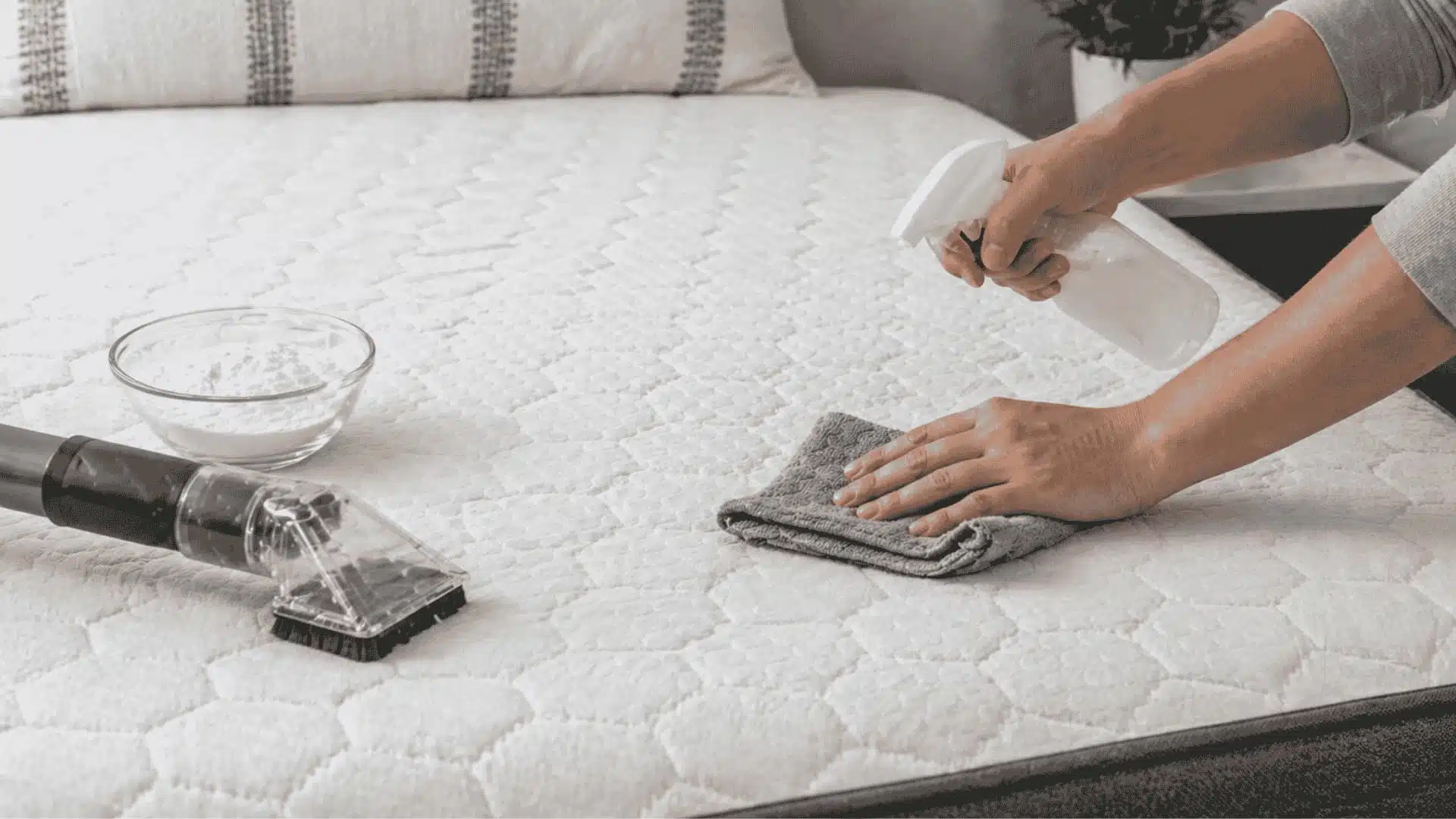
Cleaning a memory foam mattress requires gentle care, as too much water can damage the foam. These simple steps help safely remove dust, stains, and odors.
Step 1: Remove Bedding and Vacuum the Mattress
Take off all sheets, blankets, and mattress protectors before cleaning. Use a handheld vacuum with a soft brush attachment to clean the mattress surface. Go over the top, sides, seams, and corners.
A crevice tool can help remove hidden dust, hair, and dirt from tight areas.
Step 2: Spot Clean Any Stains
Mix a small amount of dish soap, diluted hydrogen peroxide, and water. Before applying, test the solution on a small hidden area, as hydrogen peroxide may lighten or discolor memory foam or fabric.
Dip a soft cloth into the mixture and gently clean the stained area. Do not pour the cleaner directly on the mattress.
Scrub lightly, then blot with a slightly damp cloth to lift the stain without soaking the foam.
Step 3: Deodorize With Baking Soda
Sprinkle a generous layer of baking soda over the stained or smelly area. Baking soda helps absorb odors and leftover moisture from the mattress surface. Let it sit for several hours, or longer if the smell is strong.
This step helps with sweat, spills, and general mattress freshness.
Step 4: Dry the Mattress Completely Before Remaking the Bed
Vacuum the mattress thoroughly to remove all baking soda. Leave the mattress uncovered with a fan running for airflow.
Plan for at least 4 to 8 hours of drying time under normal conditions; humid rooms take longer. Avoid hair dryers, space heaters, and prolonged direct sunlight; foam cells warp above 140 degrees Fahrenheit.
A box fan at room temperature is the safest method. A dehumidifier in the room speeds the process. Do not put sheets back on until the mattress feels completely dry to the touch.
Step 5: Protect the Mattress From Future Spills
Once the mattress is clean and dry, add a mattress protector. It helps guard against stains, spills, sweat, and dirt. You should also air out the mattress from time to time by removing the sheets for a few hours.
This helps reduce moisture buildup and keeps it fresher longer.
Video Tutorial
A special thanks to Top To Bottom Cleaning for their helpful cleaning tips, which guided these steps and offered practical, easy-to-follow advice.
Best Memory Foam Mattress Cleaner Options
Choosing the right cleaner matters just as much as the cleaning method. Memory foam is sensitive to moisture and harsh chemicals, so it’s best to stick with gentle, low-residue options that clean without soaking or damaging the material.
1. Homemade Cleaning Solutions
Simple household items can work well for everyday cleaning and light stains.
Vinegar + Water Mix
Mix equal parts white vinegar and water in a spray bottle. Lightly mist the stained area and blot with a clean cloth. This helps break down odors and mild stains without leaving strong residue.
Always use a small amount and let the mattress dry fully.
Baking Soda
Baking soda is useful for removing odors and moisture. Sprinkle it over the mattress surface and leave it for a few hours. Then vacuum it completely.
It works well for sweat smells and general freshness, but may not remove deep stains on its own.
2. Store-Bought Cleaners
If you prefer ready-made options, choose cleaners that are safe for foam and fabric surfaces.
Enzyme-Based Cleaners
These are commonly used for tough stains like urine, sweat, and pet accidents. They break down organic matter instead of just masking the smell. Use a small amount and blot gently to avoid soaking the foam.
Non-Toxic Formulas
Look for cleaners labeled as non-toxic and safe for upholstery. These are less likely to leave harmful residue or damage the foam.
Avoid anything with bleach, ammonia, or strong solvents, as they can weaken the mattress structure over time.
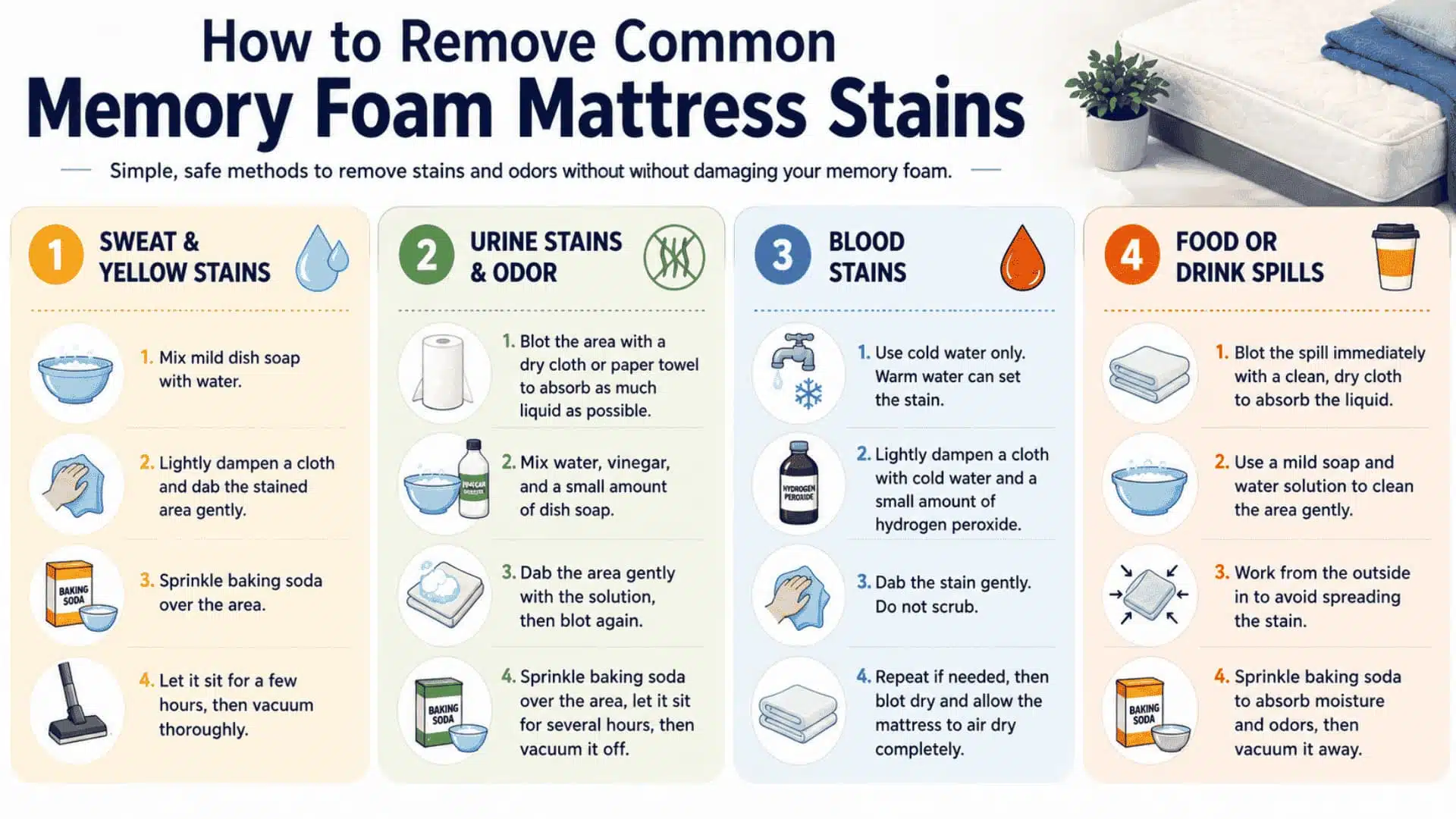
Cleaning Mistakes to Avoid While Cleaning Your Mattress
Cleaning a memory foam mattress the wrong way can cause permanent damage. Avoid these common mistakes to protect the foam structure, prevent odors, and keep your mattress in good condition.
- Soaking the Mattress: Using too much water can penetrate the foam, making it hard to dry and increasing the risk of mold growth.
- Using Bleach or Ammonia: Harsh chemicals like bleach or ammonia can break down foam material, discolor surfaces, and leave strong, harmful residues.
- Ironing or Hot-Air Drying: High heat from irons or dryers can damage the foam structure, causing it to lose shape and reduce overall comfort and support.
- Exposing it to Direct Sunlight for Too Long: Short exposure helps drying, but long exposure can weaken foam and make it brittle over time.
- Skipping the Mattress Protector: Not using a protector leaves your mattress exposed to spills, sweat, and dirt, making cleaning harder and reducing its lifespan.
Avoiding these mistakes keeps your mattress safe, clean, and long-lasting. Gentle care, low moisture, and the right tools make a big difference in maintaining comfort and hygiene.
How Often Should You Clean a Memory Foam Mattress?
Keeping a regular cleaning schedule helps maintain hygiene, reduce allergens, and extend the life of your memory foam mattress without needing frequent deep cleaning.
| Task | Frequency |
|---|---|
| Vacuum surface | Monthly |
| Deodorize with baking soda | Every 2–3 months |
| Deep clean | Every 6 months |
| Wash protector | Weekly–biweekly |
| Replace mattress | 7–10 years |
Following a simple routine keeps your mattress fresh and comfortable. Regular light cleaning prevents buildup, while occasional deep cleaning helps maintain a healthier and longer-lasting sleeping surface.
Real Cleaning Experiences Users Shared Online
Sometimes the best cleaning hacks don’t come from brand blogs; they come from real people sharing what actually worked in their bedrooms.
I’d try an upholstery cleaner where you spray, rub area, allow to dry and vacuum. But you could also get one of those zipper covers that block bed bugs, dust, spills, etc. Reddit
Using harsh chemicals such as bleach will damage the foam materials. Instead, use a homemade solution of 1 part mild detergent and 2 parts water shaken in a spray bottle until dissolved. Quora
These real-world tips show that you don’t need expensive products or harsh chemicals, just a little patience and the right gentle approach.
Conclusion
Keeping your bed fresh starts with learning how to clean memory foam mattress safely and regularly.
Gentle cleaning methods, such as light vacuuming, baking soda, and mild spot treatment, help remove dirt, stains, and odors without harming the foam. Avoid soaking, harsh chemicals, or high heat, as these can damage the structure.
With regular care and a mattress protector, your mattress can stay cleaner and last longer. Try these simple steps and see the difference in your sleep quality.
Share your own cleaning tips in the comments or save this guide for your next cleanup day.
Frequently Asked Questions
How Do I Deep Clean My Memory Foam Mattress?
Vacuum thoroughly, spot-clean stains with mild soap and water, sprinkle baking soda for hours, then air dry completely.
How Do I Clean Pee Off My Memory Foam Mattress?
Blot immediately, spray a vinegar-water mix, sprinkle baking soda overnight, vacuum the next morning, and let it air dry.
Is Memory Foam Ruined if It Gets Wet?
Not always, but prolonged moisture can damage its structure, cause mold, and permanently ruin the foam if not dried quickly.