





Waking up with itchy red marks and no idea where they came from can feel really unsettling. Fleas in bed signs are easier to spot than most people think.
The most common ones include itchy bites on the skin, tiny black specks on sheets or pillows, pets scratching more than usual, and flea activity on nearby soft surfaces like carpets, blankets, and pet beds.
Spotting these signs early makes it much easier to act fast and fix the problem. If you are already dealing with flea dirt on your bed, that is often the first concrete sign that fleas have made their way in.
What are the First Signs of Fleas in Bed?
Most people notice something is wrong before they ever spot an actual flea. These are the four signs that show up first.
Itchy Bites that Appear After Sleeping
Flea bites are small, red, and often appear in clusters on the ankles, legs, or exposed skin after sleeping. They look similar to mosquito bites, so checking for other signs is important too.
Tiny Black Specks on Sheets or Mattress Seams
Tiny dark specks on sheets or mattress seams are often flea dirt, the waste product of fleas, made of dried blood. On light bedding, they look like black pepper and are an early warning sign.
Pets Scratching More than Usual
A pet that suddenly scratches, licks, or bites its fur more than usual may be reacting to fleas. Pets that sleep near the bed can keep bringing fleas back if they are not treated.
Fleas Jumping on Bedding or Nearby Fabric
Adult fleas are tiny, dark brown, and move very fast. They are easiest to spot on light-colored bedding or blankets. Most people only catch a quick glimpse before losing sight of them completely.
Seeing two or more of these signs together is a strong signal to act. Simultaneously checking the bed, the nearby fabric, and the pets gives the clearest picture.
What Do Fleas in Bed Look Like?
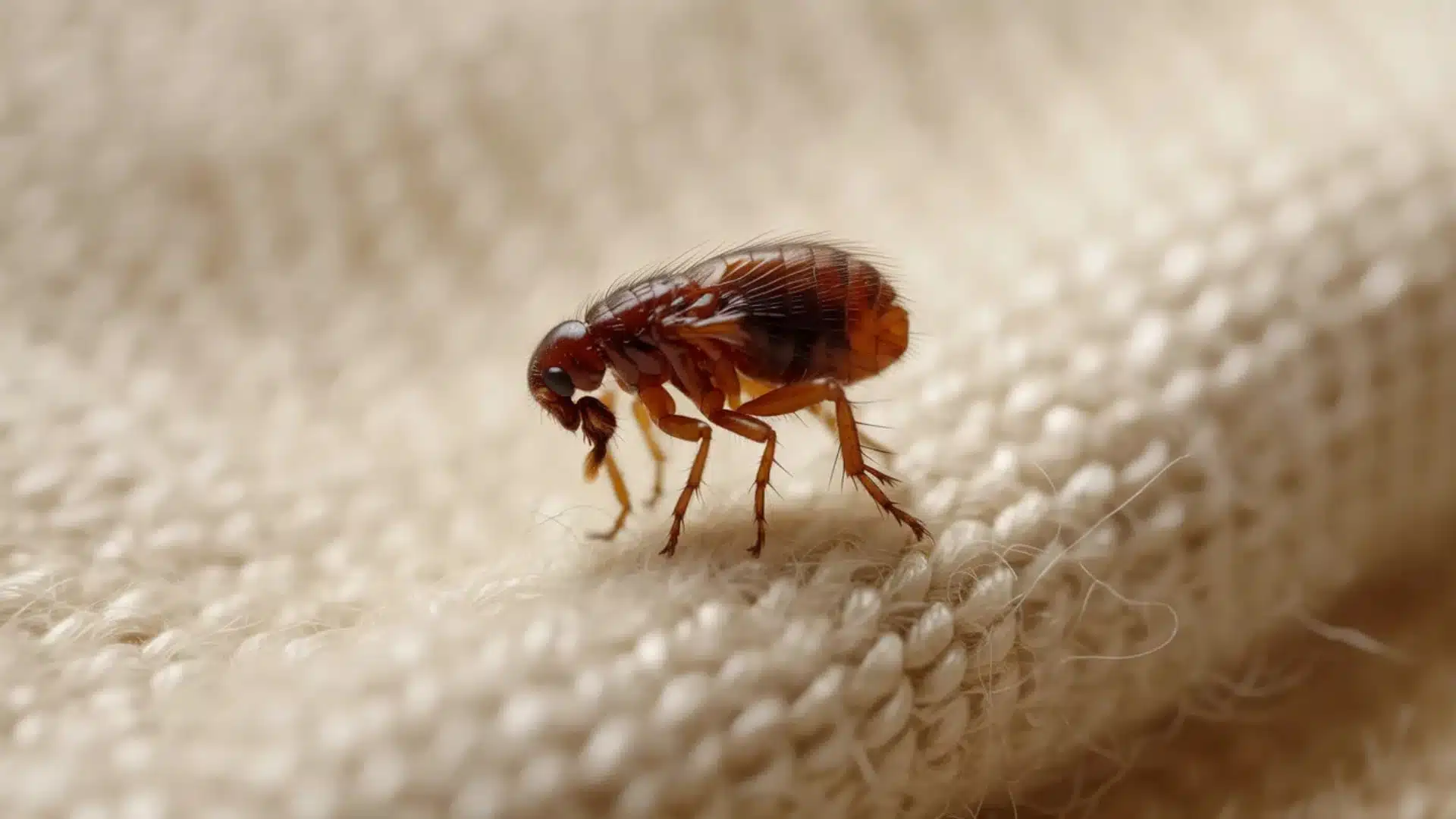
Knowing what to look for makes it easier to tell fleas apart from other common bugs or debris. Understanding what fleas look like up close on both bedding and pets helps you identify them before things get worse.
- Adult fleas: They are roughly the size of a sesame seed, dark brown, and flat. They jump fast and are hard to catch once spotted.
- Flea dirt: Tiny dark specks on sheets or mattress seams may be flea dirt. A damp cloth test that leaves a red stain confirms it.
- Flea eggs: Eggs are off-white and smaller than a grain of sand. They fall from pets onto bedding and hatch into new fleas quickly.
- Larvae and pupae: Young fleas prefer dark spots, such as carpet edges, floor cracks, and spaces under the bed rather than the mattress.
- Nearby fabric: Blankets, pet beds, and soft surfaces close to the bed can harbor more fleas than the mattress itself.
Not every stage of a flea is easy to spot, but each one leaves behind clues. Checking the bed, the floor around it, and nearby fabric together gives a much better chance of catching the problem early.
Where to Check for Fleas in and Around Your Bed?
Checking only the mattress is usually not enough. Start with the sheets, blankets, and pillow edges, looking closely at seams and folds where flea dirt tends to collect.
Lift the mattress and inspect the box spring underneath. Check pet bedding nearby, since it is often the first place fleas show up.
Look along carpet edges, rugs, upholstered furniture, baseboards, floor cracks, and the space under the bed where eggs and larvae tend to hide.
How Fleas Get in Your Bed and How to Keep Them Out?

Fleas usually enter through a specific route. Without knowing the source, getting rid of them becomes much harder.
- Pets sleeping on the bed are the most common cause. They carry fleas indoors and transfer them onto sheets and blankets while resting.
- Flea eggs fall off pet fur onto bedding and hatch over time, which is why infestations can seem to return after cleaning.
- Fleas from nearby carpets and rugs spread into the bed area. Cleaning only the mattress without treating the surrounding room allows the problem to continue.
- Year-round flea prevention for pets is one of the most effective ways to stop fleas from coming back, even for pets that stay indoors.
- Regular vacuuming of carpets, rugs, and bedroom corners removes eggs before they hatch. Consistency over several weeks matters more than one deep clean.
Addressing the source and the bed at the same time gives the best chance of keeping fleas away for good.
When to Call a Pest Control Expert?
Home treatments work for mild cases, but some situations need professional help. If bites keep appearing after cleaning, hidden flea stages may still be present.
Fleas spreading into carpets, couches, or multiple rooms means the problem is too large to handle alone.
If pets remain uncomfortable after treatment, or if it is hard to tell fleas apart from bed bugs, a professional can correctly identify the problem and treat it more effectively.
Conclusion
Fleas in bed signs are easy to miss at first, but they add up quickly. Itchy bites, black specks on bedding, pets scratching, and flea activity on nearby fabrics are all signals worth taking seriously.
The key is to treat the full room, not just the mattress. Check pet bedding, wash sheets in hot water, and vacuum consistently.
Have you spotted any of these signs at home? Drop a comment below and share what worked for you.