




You measured the mattress. You picked a thread count. You even matched the color to your headboard. Then the sheet arrived, and it wouldn’t stay on past Tuesday.
Getting bed sheet sizes wrong is one of those small mistakes that compounds every single night. A loose corner, a sheet that bunches, fabric that pools at the foot instead of tucking cleanly it adds up faster than you’d expect.
I cover every standard U.S. bed sheet size in straightforward charts, from Twin to California King, including both fitted and flat styles, with mattress depth fully accounted for.
No guesswork, no revisiting the returns page, no second-guessing your cart. Just the right size, picked with total confidence, the first time around.
Bed Sheet Sizes at a Glance
Finding the right fit starts with knowing the numbers. Here is an overview of the most common U.S. bed sheet size ranges, including fitted sheets, flat sheets, and pillowcases, based on typical retailer dimensions.
1. Fitted Sheet Sizes (U.S. Standard)
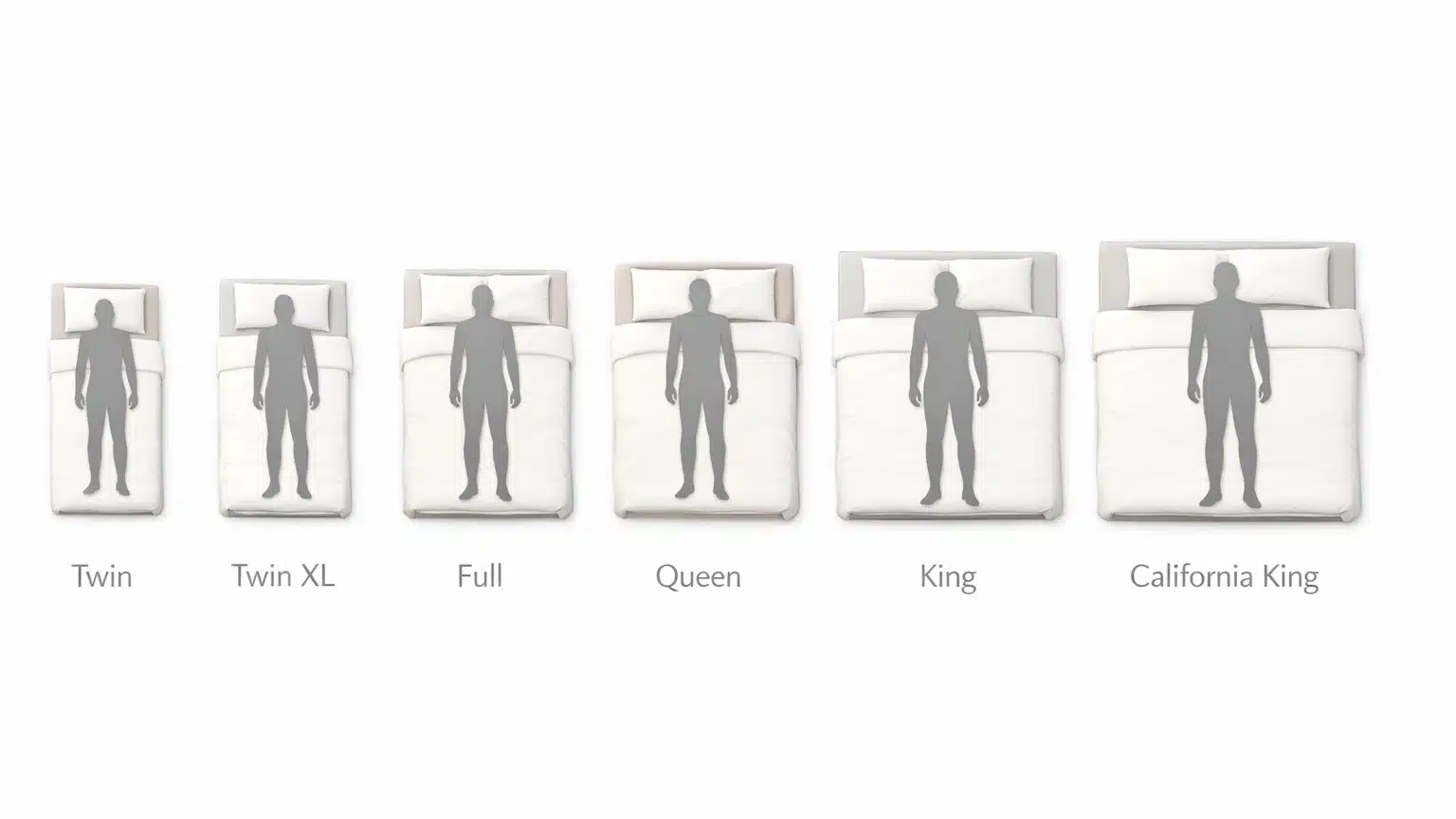
Fitted sheets need to match your mattress width, length, and depth. The pocket depth is just as critical as the surface dimensions; a sheet that doesn’t account for mattress thickness will pop off the corners.
Below are typical fitted sheet dimensions across common U.S. bed sizes, based on widely used retail ranges.
| Bed Size | Mattress Dimensions (Typical) | Fitted Sheet (W x L – Typical Range) | Pocket Depth (Varies by Brand) |
|---|---|---|---|
| Twin | ~38″ x 75″ | 38–40″ x 75–77″ | ~10–14″ (often labeled standard) |
| Twin XL | ~38″ x 80″ | 38–40″ x 80–82″ | ~10–14″ |
| Full / Double | ~54″ x 75″ | 54–56″ x 75–77″ | ~10–15″ |
| Full XL | ~54″ x 80″ | 54–56″ x 80–82″ | ~10–15″ |
| Queen | ~60″ x 80″ | 60–62″ x 80–82″ | ~12–16″ (often labeled deep) |
| Olympic Queen | ~66″ x 80″ | 66–68″ x 80–82″ | ~12–16″ |
| King | ~76″ x 80″ | 76–78″ x 80–82″ | ~12–16″ |
| California King | ~72″ x 84″ | 72–74″ x 84–86″ | ~12–16″ |
| Split King | 2x ~38″ x 80″ | 2x Twin XL fitted sheets | ~12–16″ |
When in doubt about pocket depth, it’s safer to size up; a slightly deeper sheet will stay secure, while a shallow one will pop off the corners.
Note: Some deep or extra-deep fitted sheets can accommodate mattresses up to 18–22 inches thick, depending on the brand.
2. Flat Sheet Sizes (U.S. Standard)
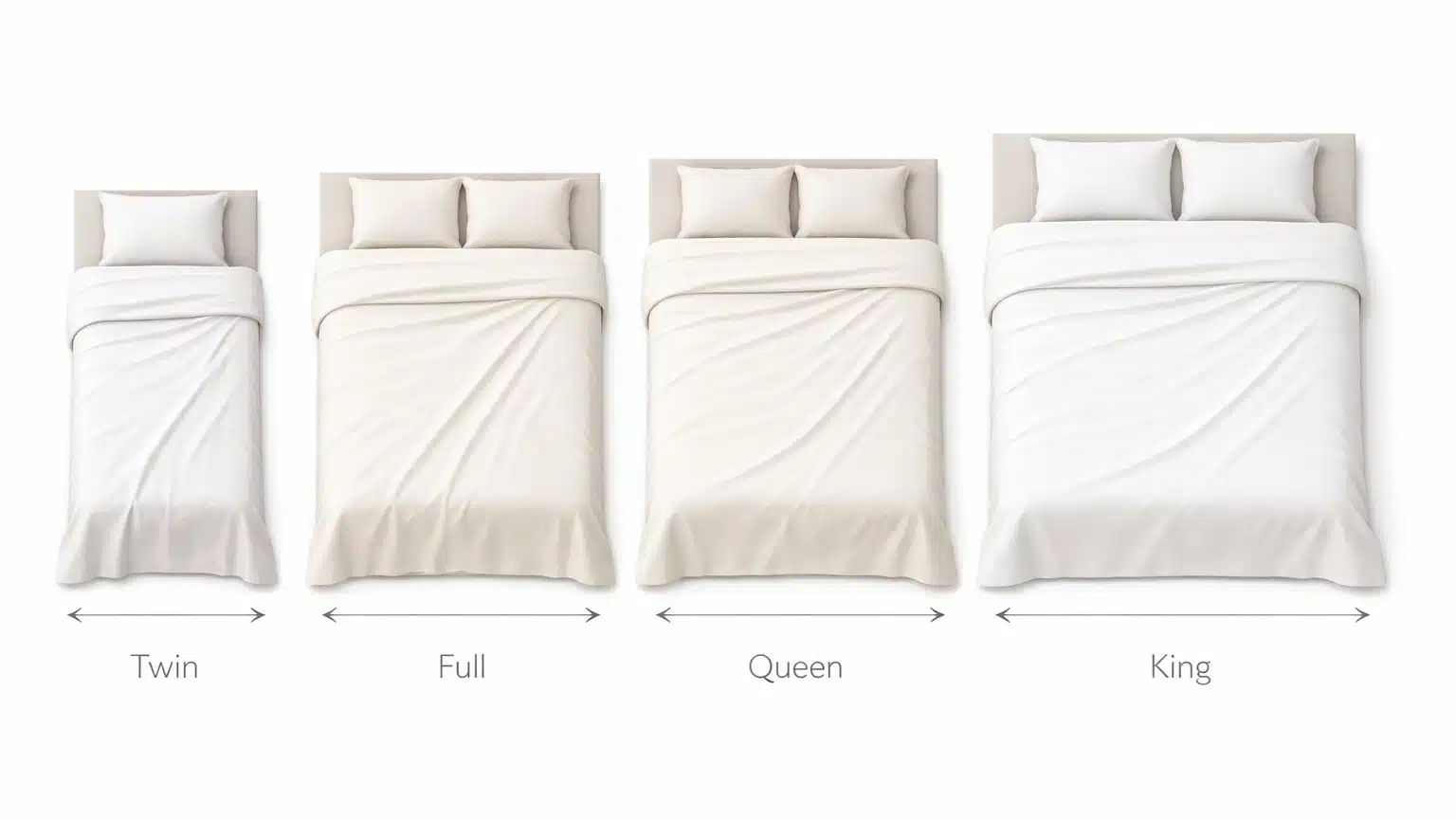
Flat sheets are cut larger than the mattress to allow for tucking and draping on the sides, and a full size flat sheet typically offers enough coverage for a Full or Double bed.
A useful note: Full and Queen flat sheets often share the same dimensions, giving you some flexibility.
| Bed Size | Flat Sheet Dimensions (Typical Range) |
|---|---|
| Twin | typically 64–70″ x 94–100″ |
| Twin XL | typically 64–70″ x 98–104″ |
| Full / Double | typically 80–84″ x 94–100″ |
| Queen | typically 88–92″ x 100–104″ |
| King | typically 106–110″ x 100–104″ |
| California King | typically 106–110″ x 100–104″ |
Keep in mind that King and California King flat sheets share the same dimensions, so they are often interchangeable for top-of-bed use.
3. Pillowcase Sizes (U.S. Standard)
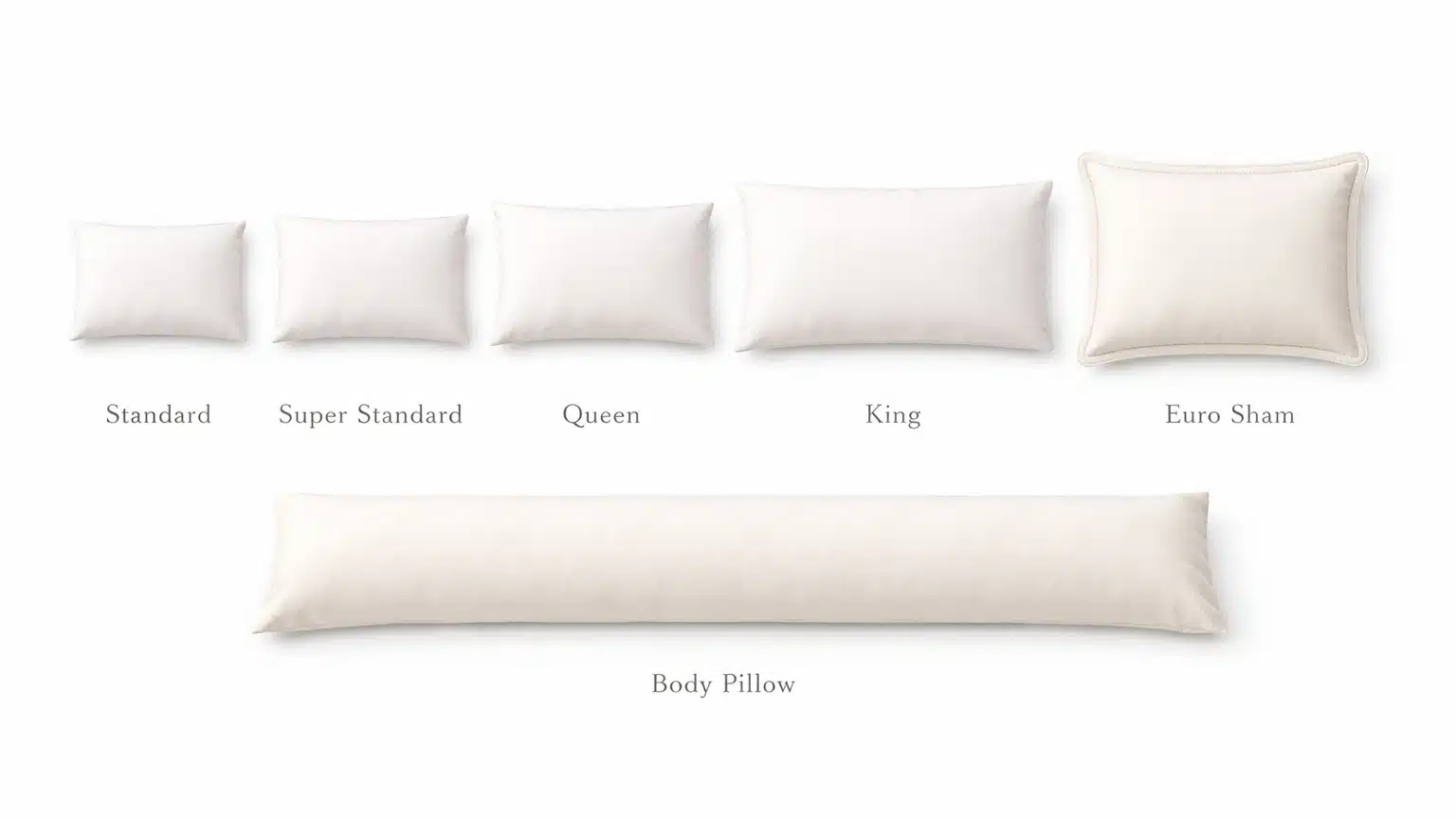
Pillowcase sizing is often overlooked when assembling a sheet set, but an oversized pillowcase on a standard pillow looks sloppy, and a snug one on a king pillow won’t close properly.
| Pillow Type | Pillow Dimensions (Typical) | Pillowcase Dimensions (Typical Range) |
|---|---|---|
| Standard | typically 20″ x 26″ | usually 20″ x 30–32″ |
| Super Standard | typically 20″ x 28″ | usually 20″ x 32–34″ |
| Queen | typically 20″ x 30″ | usually 20″ x 30–34″ |
| King | typically 20″ x 36″ | usually 20″ x 40–42″ |
| Body Pillow | typically 20″ x 54″ | usually 20″ x 54–60″ |
| Euro Sham | typically 26″ x 26″ | usually 26″ x 26–28″ |
Full and Queen beds typically fit two Euro shams, while King beds can accommodate three.
Matching your pillowcase to both the pillow size and bed size keeps the overall look clean and proportional, but keep in mind that pillowcases are usually slightly longer than the pillow for an easier fit and closure.
Standard and Queen pillowcases are often interchangeable, with Queen cases offering a slightly looser fit.
What Each Bed Size Actually Means
Understanding mattress dimensions helps you pick sheets with confidence if you’re outfitting a child’s room, a guest bedroom, or a spacious primary suite.
1. Twin and Twin XL
Twin beds are compact at 38″ x 75″, and the standard twin sheet size makes them ideal for children’s rooms, bunk beds, and tight spaces.
Twin XL sheets are the same width but add 5 inches of length, making them the standard choice for college dorm rooms and taller individuals who need the extra legroom.
2. Full / Double
At 54″ x 75″, the full size bed sheet size corresponds to a mattress that offers noticeably more width than a Twin.
It works well for a single adult who wants room to stretch, a guest bedroom, or anyone who shares space with a pet. Full XL (54″ x 80″) provides additional length for taller sleepers.
3. Queen
The most popular mattress size in the United States, the Queen measures 60″ x 80″. It comfortably fits two adults, suits most bedroom layouts, and offers the widest selection of sheet styles, colors, and materials at retail.
The Olympic Queen (66″ x 80″) is a specialty size slightly wider and less commonly stocked.
4. King
At 76″ x 80″, King beds offer generous room for couples and anyone who values personal space.
King sheets are notably wider than Queen sheets, and are not interchangeable; using a King flat sheet on a Queen bed results in significant excess overhang.
5. California King
The California King(72″ x 84″) is narrower than a standard King but longer, making it the preferred choice for taller individuals.
Despite similar names, California King and standard King sheets are not always compatible; always check both width and length before purchasing.
6. Split King
A Split King uses two Twin XL mattresses side by side on a shared base. This setup works well with adjustable bed frames and with couples who have different firmness preferences.
Each side requires its own Twin XL fitted sheet, though one King flat sheet typically covers both.
How to Measure Your Mattress for the Right Sheet Size
Grabbing a measuring tape before you shop saves you from the frustration of returns.
Mattress dimensions on product tags don’t always account for pillow-tops, foam layers, or wear-related expansion.
Here’s what to measure:
- Width: Measure across the widest point of the mattress, from side to side.
- Length: Measure from the head of the mattress to the foot.
- Depth / Height: Measure from the floor surface of the mattress to the top, including any pillow-top or mattress topper.
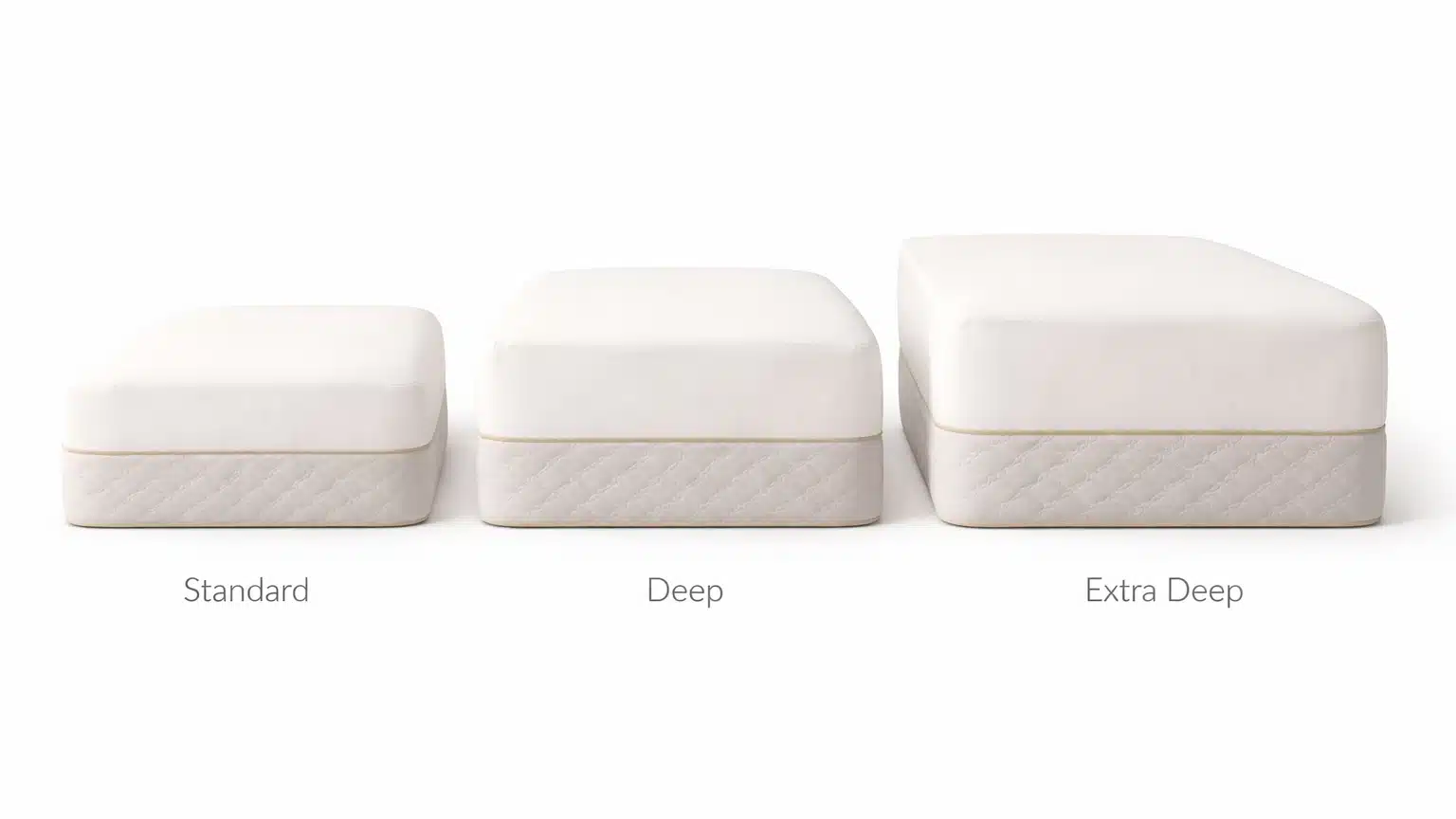
Once you have the depth, use this general guide to choose your pocket size:
| Mattress Depth | Common Label (Varies by Brand) |
|---|---|
| Up to ~12–14″ | Often labeled standard |
| ~13–16″ | Often labeled deep pocket |
| 16″–22″+ | Often labeled extra-deep |
Pocket depth labels such as standard, deep, and extra-deep are not universal and can vary significantly across brands. Always check the exact pocket depth in inches.
Common Sheet Sizing Mistakes to Avoid
Even with a size chart in hand, a few recurring errors trip people up when purchasing bed sheets.
- Using King sheets on a Queen bed: The fitted sheet won’t anchor properly, and the flat sheet will drape unevenly on both sides.
- Ignoring pocket depth: Standard sheets on a thick pillow-top mattress will spring off the corners within minutes of making the bed.
- Confusing California King with King: These two sizes share no sheet compatibility despite the similar name. Cal King sheets are longer and narrower.
- Assuming Full and Queen are close enough: Full size sheet dimensions for fitted sheets are typically 54″ x 75″, while Queen fitted sheets are 60″ x 80″, a 6-inch width difference that matters significantly for a snug fit.
- Buying pillowcases without checking pillow dimensions: Standard and Queen pillowcases are often grouped together in packaging, but differ by up to 4 inches in length.
Each of these mistakes is easy to avoid, with a quick measurement of your mattress and pillows before shopping, covers them all in one go.
Sheet Sizing Across Countries: A Quick Comparison
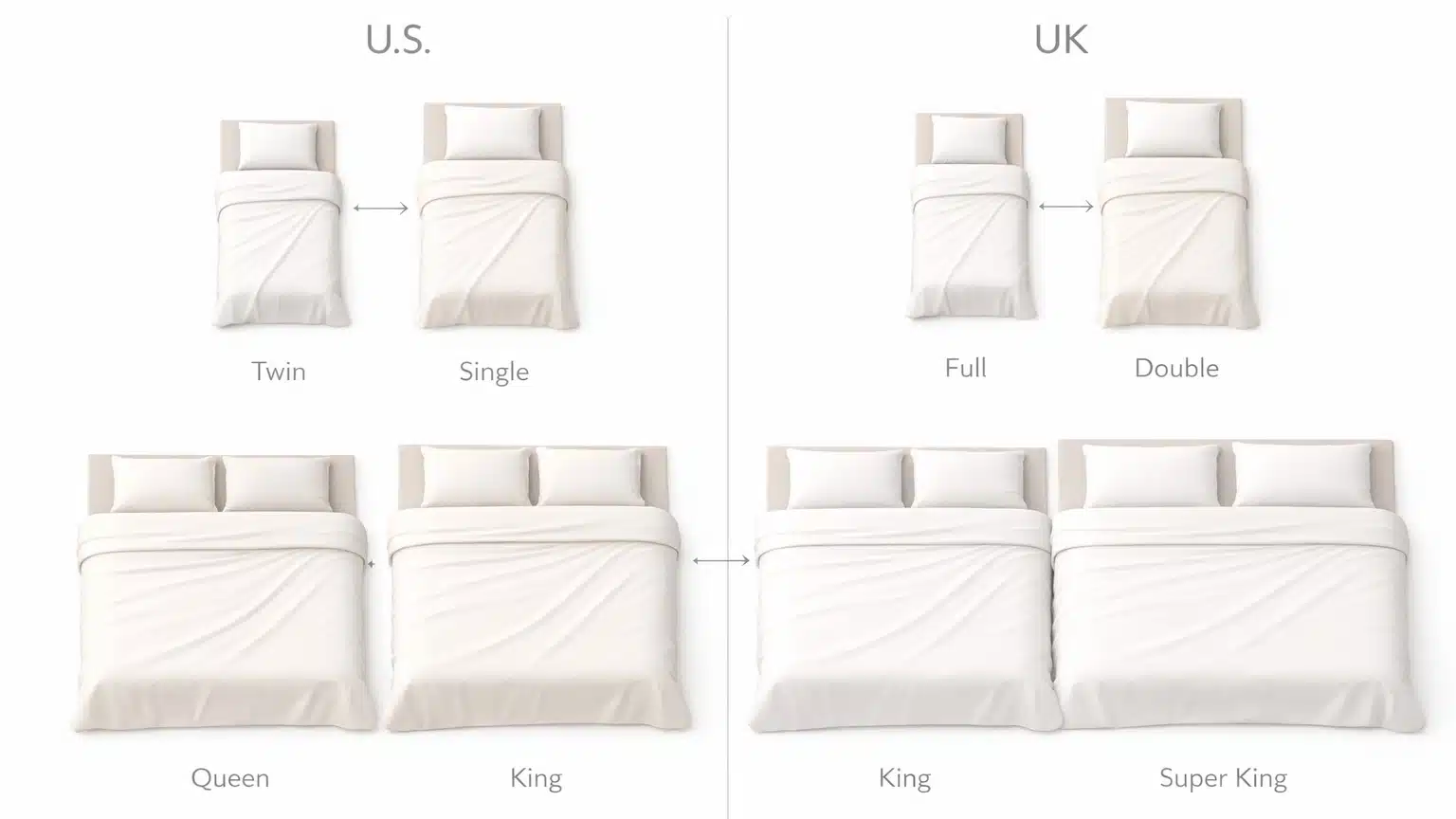
If you’re purchasing bedding from an international retailer or comparing U.S. sizes to those used abroad, the differences can be confusing.
Naming conventions and exact measurements diverge significantly between regions.
| Bed Type (U.S.) | U.S. Dimensions | UK Equivalent | UK Dimensions |
|---|---|---|---|
| Twin | 38″ x 75″ | Single | 36″ x 75″ |
| Full / Double | 54″ x 75″ | Double | 54″ x 75″ |
| Queen | 60″ x 80″ | King | 60″ x 78″ |
| King | 76″ x 80″ | Super King | 72″ x 78″ |
| California King | 72″ x 84″ | No direct equivalent | — |
The U.S. Twin is slightly wider than the UK Single. The U.S. Queen is closest in size to the UK King, though there is a minor length difference. There is no direct UK equivalent for the California King.
Australia’s mattress sizes are broadly similar to U.S. and Canadian standards, with minor dimensional variations between brands.
Canadian sizes match U.S. sizes for all common categories: Twin, Full, Queen, and King.
Always verify exact measurements when ordering from international retailers, as identically named sizes may vary by up to an inch.
Also check centimeter (cm) conversions, as variations can occur due to metric-to-inch differences and regional manufacturing standards.
When shopping across borders, treat size names as starting points rather than guarantees, the actual dimensions matter.
Conclusion
Choosing the correct bed sheet sizes is less about memorizing a chart and more about measuring your mattress once and shopping with confidence.
From a compact Twin to a California King, every bed has a precise sheet dimension, and understanding the difference between fitted depth, flat sheet drape, and pillowcase sizing puts you well ahead of a poor purchase.
Use the tables in this post as your go-to resource, factor in mattress depth carefully, and always verify measurements before ordering from international retailers.
The right sheets mean a bed that looks sharp, stays put through the night, and makes every morning noticeably easier.
A small amount of prep work today saves you from a frustrating, time-consuming return process tomorrow.
Frequently Asked Questions
Can I Use Queen Sheets on a Full Mattress?
Technically, yes, but the fit will be loose, and the fitted sheet won’t stay anchored. Queen fitted sheets are 6 inches wider than Full, so expect bunching and corner pop-offs throughout the night.
What Pocket Depth Should I Choose for a Mattress with a Pillow-Top?
For mattresses around 11–15 inches, many brands label sheets as deep pocket, while thicker mattresses (16 inches or more) are often categorized as extra-deep, though these labels can vary by retailer.
Are King and California King Sheets Interchangeable?
No. Despite the similar names, these are two distinct sizes. California King sheets are longer and narrower than standard King sheets, and swapping them will result in a poor fit on either mattress.