




=
Choosing between a pillow sham and a pillowcase can feel confusing, especially when both look similar at first glance.
While they’re often mistaken for one another, each plays a distinct role in the comfort and appearance of your bed.
Pillowcases are designed for everyday sleeping, offering softness and protection for your pillow. Pillow shams add decorative structure, texture, and style to your bedding.
Understanding what sets them apart makes it easier to create a bed that feels comfortable and looks polished.
From materials and types to sizes, care, and selection tips, this introduction sets the foundation for choosing the right option for your space.
Why the Confusion?
Pillowcases and pillow shams are often mistaken for one another because both wrap around a pillow and can look nearly identical from the front, especially in product photos.
The overlap in terms like “pillow cover” also leads many shoppers to assume they serve the same purpose.
The difference becomes clearer once you look at how each one is made. Pillowcases usually have a simple open end designed for everyday use, while shams include decorative fabrics, flanged edges, and hidden closures.
Knowing these small but important details makes it easier to tell them apart and choose the right one for your bed.
What Is a Pillowcase?
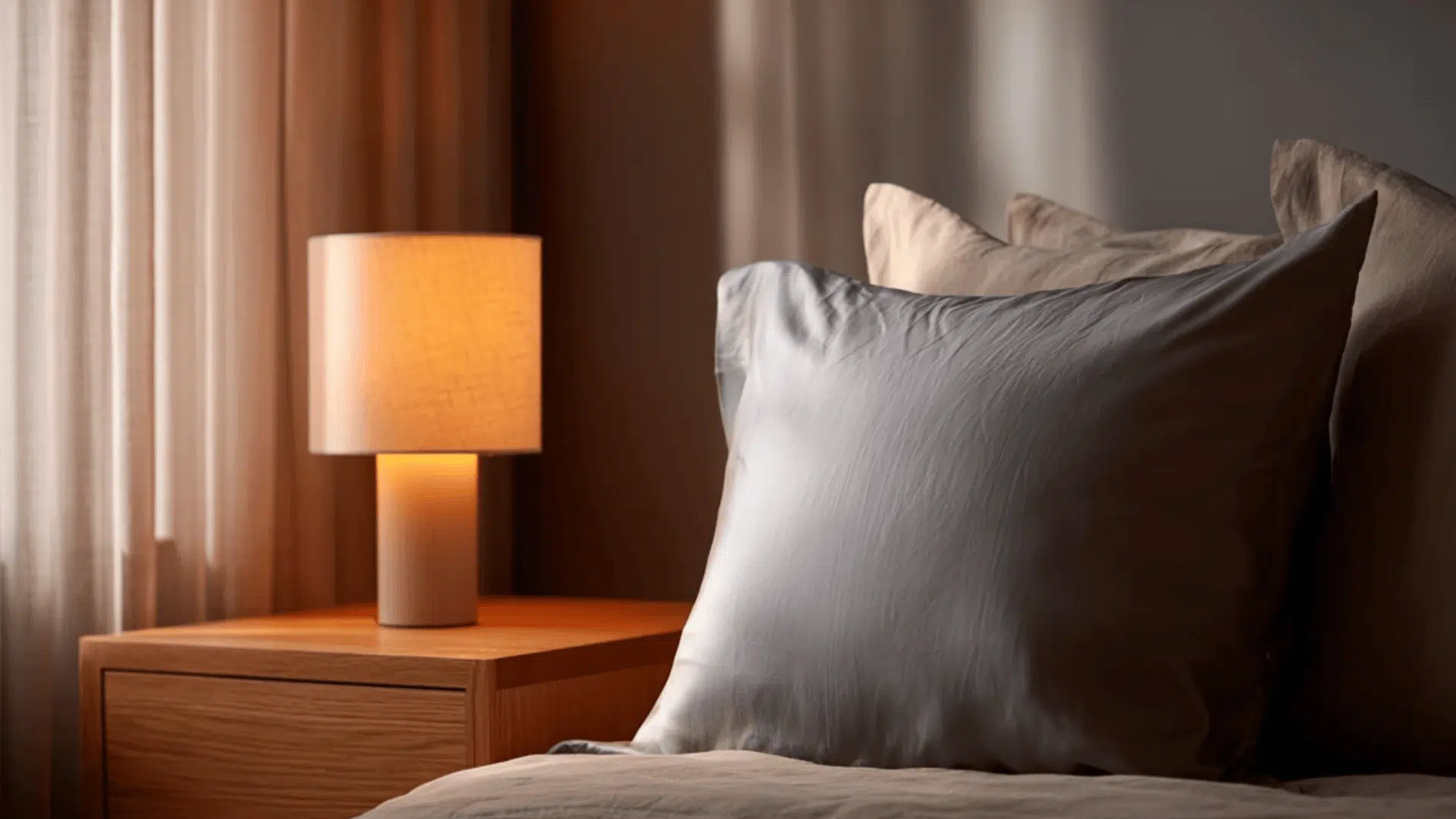
Designed to protect your pillow from sweat, oils, and daily buildup, this soft cover creates a cleaner, more comfortable surface while improving the overall hygiene of your sleep environment.
Since not all materials offer the same benefits, there are different types to suit various comfort and care preferences.
- Cotton: Naturally breathable, durable, and gentle on skin; available in crisp percale or smooth sateen for different comfort preferences.
- Satin: Smooth, low-friction texture that helps minimize hair breakage and facial creases, offering a sleek feel at an affordable price.
- Polyester: Cost-effective, wrinkle-resistant, and colorfast, though less breathable, making it a better fit for cooler sleepers.
- Silk: Luxurious, hypoallergenic, and temperature-regulating with excellent benefits for maintaining moisture, reducing friction, and supporting healthier skin and hair.
Choosing the right fabric improves comfort, supports better sleep quality, and helps your bedding stay fresher over time. Keep in mind that certain fabrics are also more prone to yellowing over time, so the material you choose can affect how often you need to wash or replace your pillowcase.
What Is a Pillow Sham?
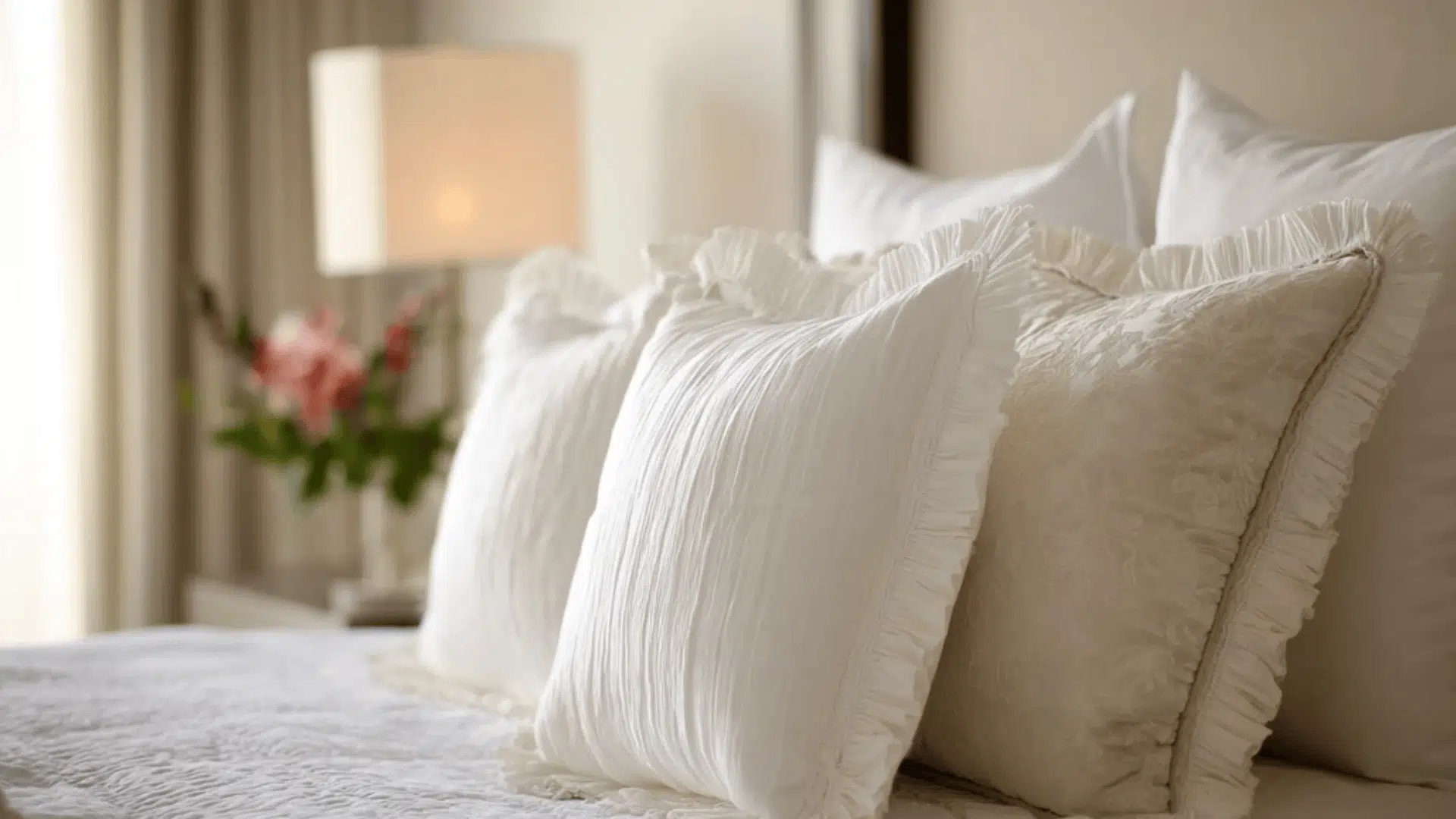
Designed with finished edges and a hidden back opening, it conceals the pillow while adding structure, texture, and visual appeal to a neatly made bed.
Since these covers are more decorative than functional, many people remove them before sleeping to maintain their shape and detailing. Because every bedroom aesthetic is different, there are various types to choose from.
- Standard Sham: Fits regular-size pillows and coordinates with bedding sets for a cohesive, balanced look across twin, full, or queen beds.
- Quilted Sham: Features stitched patterns that add texture, weight, and dimension, creating a rich, layered appearance.
- Flanged Sham: Includes a fabric border around all edges for a crisp, tailored style that mimics a refined, hotel-inspired finish.
Selecting the right style improves your bed’s overall presentation, adds depth to your decor, and gives your space a more refined, finished feel.
Major Difference Between the Two
A few core differences help distinguish these two bedding essentials, making it easier to choose the right option for comfort and style.
| Feature | Pillowcase | Pillow Sham |
|---|---|---|
| Purpose | Made for sleeping comfort and hygiene. | Made for decoration and styling the bed. |
| Placement on Bed | Placed behind or underneath decorative pillows. | Displayed at the front or top for visual impact. |
| Closure Type | Usually, an open-end design is for easy use. | Hidden back closures like an envelope, zipper, or buttons. |
| Fabric Weight | Lightweight for breathability and comfort. | Heavier or textured to upgrade the appearance. |
| Comfort Level | Soft and suitable for sleeping on. | Less comfortable for sleep due to the structure and detailing. |
These distinctions make it simpler to decide which option supports your everyday comfort and which improves the overall look of your bedding.
Pillowcase and Sham Size
Choosing the correct size helps your pillows hold their shape, sit properly, and create a balanced look on your bed.
1. Pillowcase Sizes
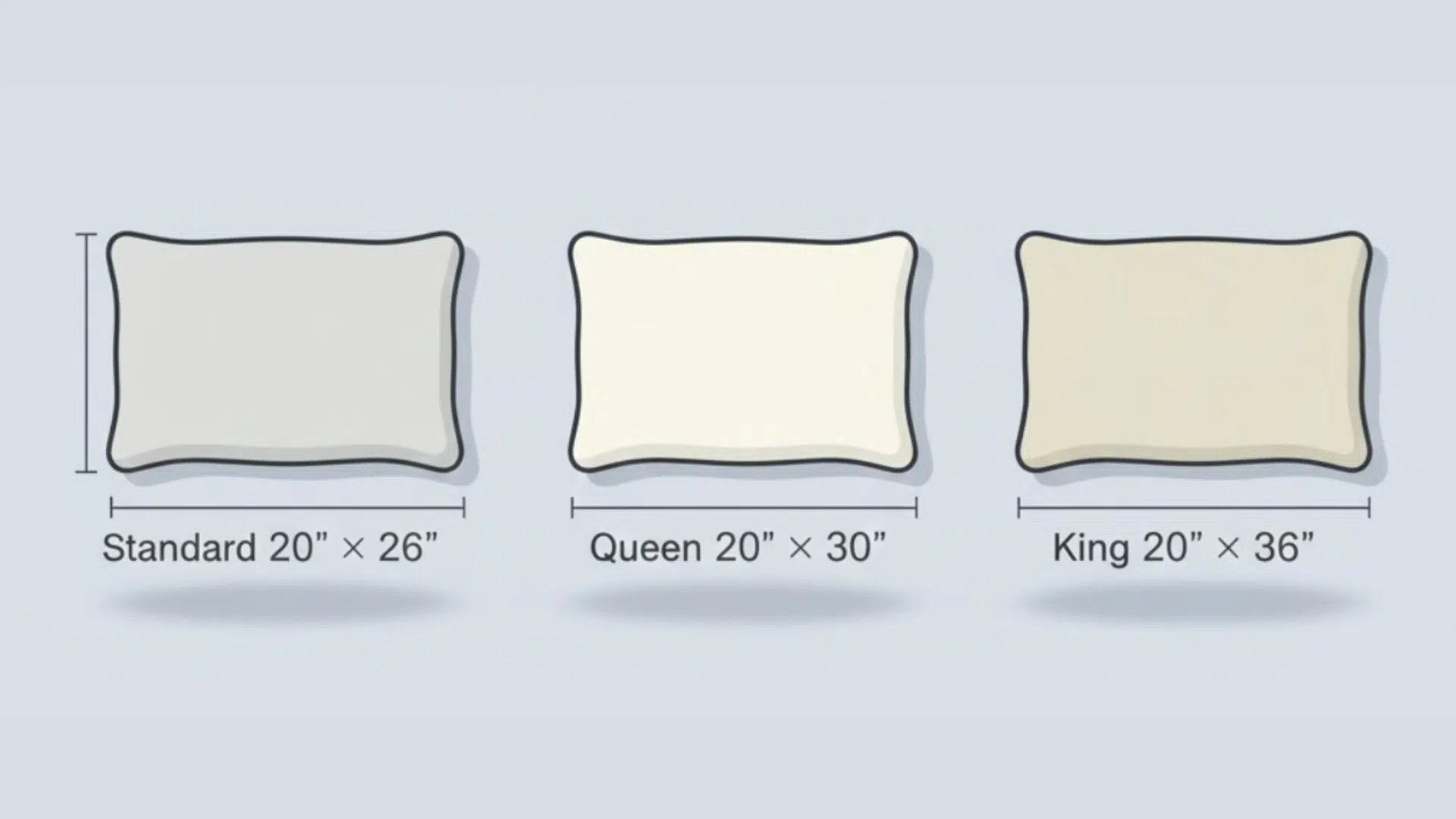
Sizing is based on three main dimensions commonly used across most bedding collections.
- Standard: 20″ × 26″
- Queen: 20″ × 30″
- King: 20″ × 36″
2. Pillow Sham Sizes
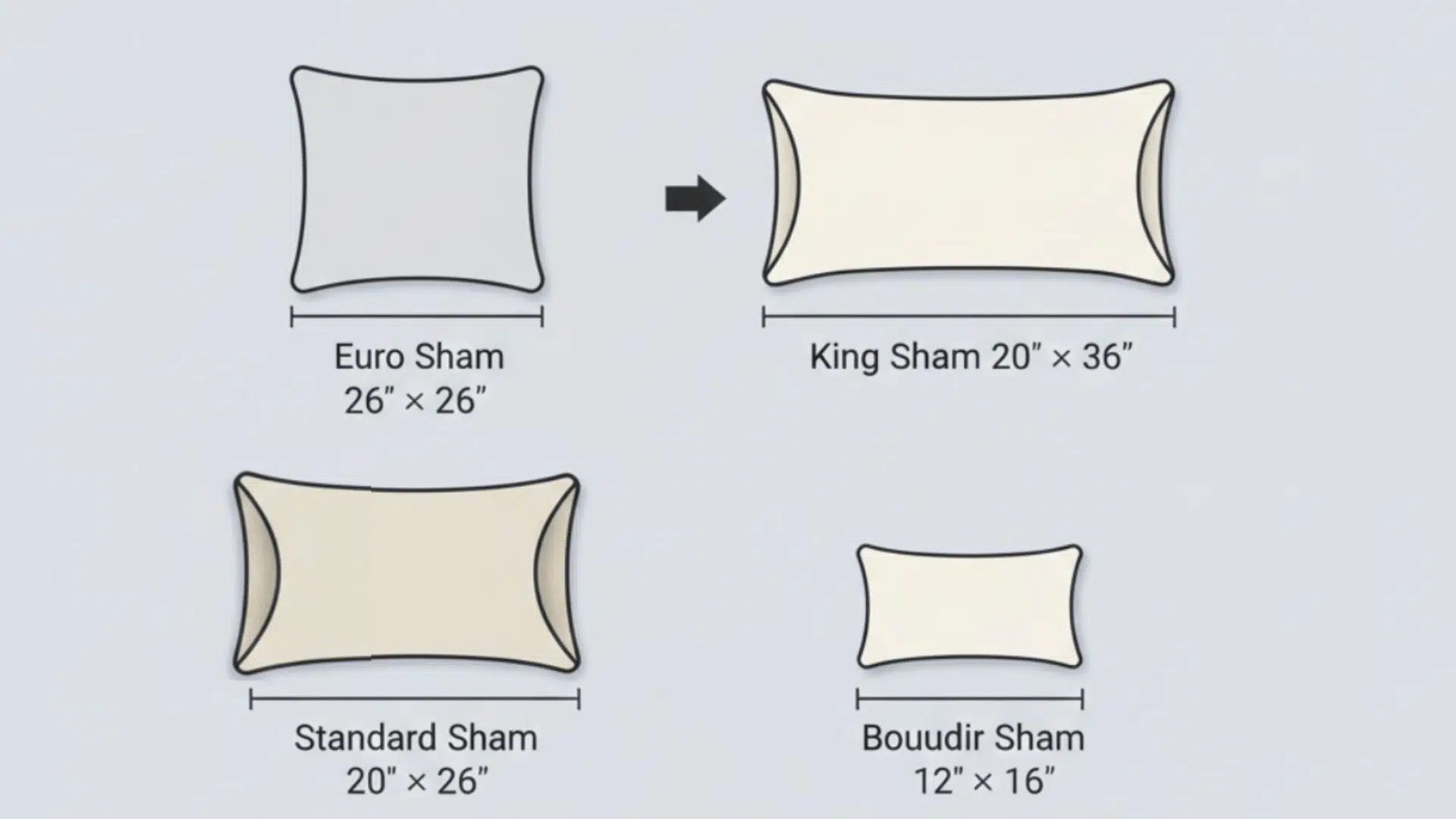
Decorative options come in multiple shapes to create layered styling and add visual depth to your bedding.
- Standard Sham: 20″ × 26″
- King Sham: 20″ × 36″
- Euro Sham: 26″ × 26″
- Boudoir Sham: 12″ × 16″
Choosing the right sham size helps your bedding look intentional, supports layering, and upgrades the overall style of your bedroom. For help building out the full pillow layout, the 2-2-1 pillow rule is a practical guide for arranging shams and sleeping pillows together.
How to Choose the Right Option
Selecting the right option depends on how you use your bedding, whether for sleep, style, comfort, or creating a polished bedroom look.
| Situation / Need | Pillowcase | Pillow Sham |
|---|---|---|
| Keeping your pillow clean during nightly sleep | ✔️ | ✔️ |
| Adding height and layered dimension to bedding | ✔️ | |
| Reducing friction to protect hair health | ✔️ | |
| Matching coordinated pieces for a styled bedroom | ✔️ | ✔️ |
| Achieving a luxurious, hotel-inspired finish | ✔️ | |
| Choosing an affordable and low-maintenance option | ✔️ | |
| Supporting sensitive skin with gentle materials | ✔️ | ✔️ |
A thoughtful choice ensures your bedding supports comfort, improves style, and creates a balanced, polished appearance that suits your personal sleep and décor needs.
How to Care for Pillowcases and Pillow Shams
Keeping your bedding clean and well-maintained helps preserve freshness, extend its durability, and support better comfort throughout everyday use.
- Wash pillowcases frequently: at least weekly or every 3–4 days for oily or acne-prone skin.
- Follow correct washing methods: warm or hot water for cotton, gentle cold cycles with mild detergent for silk.
- Replace aging cases: typically every 1–2 years when fabric thins, pills, stains, or loses softness.
- Wash decorative shams sparingly: about once a month or every 2–3 weeks if slept on occasionally.
- Handle shams gently: use delicate cycles, spot-clean embellishments, and store in a dry place to maintain structure.
Thoughtful care improves freshness, protects fabric quality, improves comfort, and keeps both pillowcases and shams looking beautifully maintained over time.
Mistakes to Avoid When Choosing Pillowcases and Pillows, Shams
Choosing the right option can improve both comfort and style. Avoiding a few simple mistakes can help your bedding look better and feel more put-together.
- Assuming pillowcases and shams serve the same purpose
- Choosing based only on appearance without thinking about daily use
- Forgetting to check the closure style before buying
- Adding too many decorative shams, which can make the bed look crowded
- Replacing one item without considering how it works with the rest of the bedding
Avoiding these mistakes can help you build a bedding setup that feels practical and looks well-styled. It also makes it easier to choose pieces that suit your space without creating clutter or confusion.
Making The Decision
Pillowcases and pillow shams serve different roles: one focuses on comfort, while the other upgrades the look of your bed.
Pillowcases protect the pillows you sleep on, offering softness and support throughout the night.
Shams act as decorative covers, adding structure, texture, and style to your bedding while requiring less frequent cleaning.
Using both creates a balance of practicality and visual appeal. Choose your pillowcases based on comfort needs, skin or hair concerns, and preferred materials.
Select shams that complement your bedroom’s design and coordinate with your bedding.
Combine both for a comfortable, stylish setup, and boost your sleep space by choosing options that match your routine and style.
Frequently Asked Questions
Can Pillow Shams Be Used Without a Matching Bedding Set?
Yes, they can stand alone, adding contrast or texture to effortlessly enhance simple bedding.
Do Pillowcases Affect How Long a Pillow Lasts?
Yes, proper cases reduce wear, protect filling, and help pillows maintain shape longer.
Are Euro Shams Only Suitable For Large Beds?
No, they work on any bed size, adding height, balance, and decorative structure.
Should Pillow Shams Be Stuffed Tightly Or Loosely?
A snug fit creates a cleaner structure, sharper edges, and a more polished decorative appearance.