



What is a sherpa blanket? You’ve probably seen one draped over a couch or felt that impossibly soft texture at a friend’s place. Maybe you even own one but never knew its name.
These blankets have been showing up everywhere lately. Coffee shops, dorm rooms, your neighbor’s patio chair. There’s something about them that makes people stop and touch.
They look simple enough. But run your hand across both sides, and you’ll notice something odd. One side feels completely different from the other, and that’s just the beginning.
There’s a reason these blankets have quietly become a staple, and it’s not what you’d expect.
What Is a Sherpa Blanket?
A sherpa blanket has two sides that feel completely different. One side is usually smooth fleece or microfiber. The other side? That’s the sherpa part, and it’s textured like sheep’s wool.
You can spot the Sherpa side instantly. It has a bumpy, fluffy texture with tiny curls. Run your fingers through it, and you’ll feel those little nubs catching on your skin. The smooth side glides under your palm.
Most sherpa blankets are synthetic, made from polyester. But they’re designed to replicate the look and feel of real sheepskin without the weight or price tag of actual wool.
What Is the Difference Between Fleece and Sherpa?
People mix these up all the time, and honestly, it’s easy to see why. They’re both soft, both synthetic, and both keep you warm. But put them side by side, and the differences become obvious.
| Aspect | Fleece | Sherpa |
|---|---|---|
| Texture | Smooth on both sides with a consistent feel | Bumpy and textured like wool on one side |
| Thickness | Thinner and more lightweight | Thicker and bulkier overall |
| Warmth | Warm but less insulating | Traps more heat due to texture |
| Appearance | Flat, even surface | Fluffy with visible curls and nubs |
| Weight | Light and easy to pack | Heavier and takes up more space |
Fleece works well when you want something light. Sherpa is what you grab when the temperature really drops, and you want that extra layer of cozy.
Common Uses of Sherpa Blankets

Sherpa blankets don’t just sit folded on your bed looking pretty. They come in various sizes, from throw blankets to full-size, so you can find one that fits your needs.
- Couch throws: Toss one over your sofa, and it’s there whenever you need it. Movie nights get instantly better.
- Bed layering: Add it on top of your comforter when winter hits. The extra warmth makes a difference.
- Outdoor events: Bring one to football games, camping trips, or bonfires. It handles cold bleachers and chilly nights.
- Car blankets: Keep one in your trunk for emergencies or road trips. You never know when you’ll need it.
- Pet bedding: Dogs and cats love burrowing into that fuzzy texture. Just prepare for some fur sticking to it.
They adapt to whatever situation calls for warmth and comfort. And once you start using one regularly, regular blankets start feeling a bit disappointing.
Pros and Cons of Sherpa Blankets
Nothing’s perfect, and sherpa blankets are no exception. They’ve got some really great qualities, but there are also a few things that might bug you depending on what you need.
| Pros | Cons |
|---|---|
| Extremely warm and cozy for cold weather | Takes up more storage space than regular blankets |
| Soft texture feels good against your skin | Can get too hot during the warmer months |
| Durable and holds up well over time | Attracts pet hair and lint easily |
| Affordable compared to wool blankets | Heavier to carry around or travel with |
| Easy to clean in most washing machines | May pill or mat if not cared for properly |
You’ll need to decide what matters more to you. The warmth and comfort usually win out, but those drawbacks are worth knowing about before you buy.
When to Choose Sherpa vs Fleece
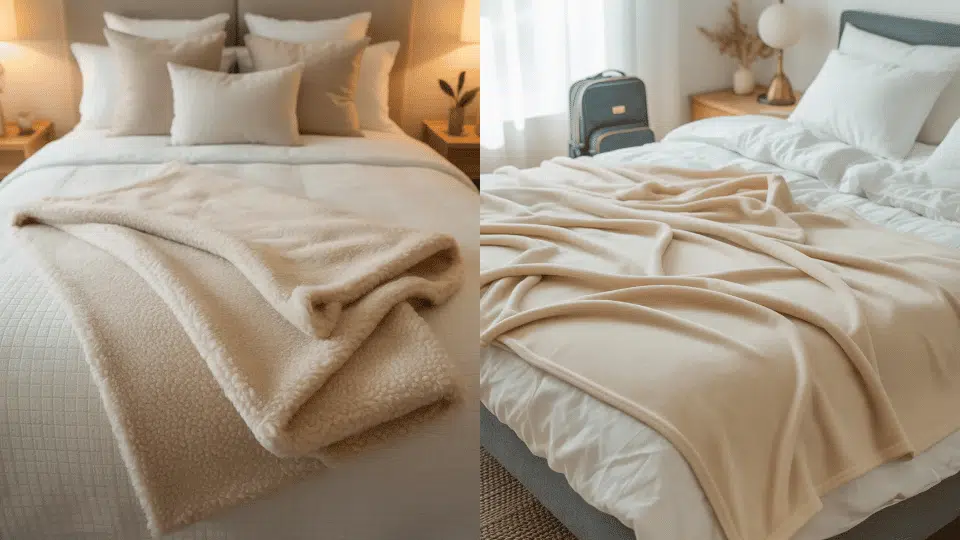
Both blankets have their place, and picking the right one depends on what you’re actually doing with it. Temperature and portability make the biggest difference.
Choose Sherpa When:
- You’re dealing with genuinely cold weather and need serious warmth
- You want something plush to snuggle into on the couch
- Weight doesn’t matter because it’s staying in one spot
- You prefer that thick, woolly feel against your skin
Choose Fleece When:
- You need something lightweight for travel or camping
- You’re layering it with other blankets instead of using it alone
- Storage space is tight, and you can’t spare room for bulk
- You want something easier to wash and dry quickly
Match the blanket to the situation. Cold winter nights call for a sherpa, but fleece works better when you’re on the move.
How Much Does a Sherpa Blanket Cost?
Sherpa blankets come in a wide range of prices, so you can usually find one that fits your budget. Smaller throw blankets often cost between $20 and $40, while larger or thicker options can go over $80.
If you choose a premium brand or extra-soft material, the price may be even higher. You do not always need the most expensive option, though.
Many affordable sherpa blankets still feel soft, warm, and comfortable for everyday use. The size, fabric quality, and brand usually make the biggest difference in cost.
Sherpa vs Other Blanket Materials
Sherpa isn’t the only option out there, and sometimes other types of blanket materials actually work better. Comparing them side by side shows you what you’re getting into.
| Material | Warmth | Weight | Texture | Best For |
|---|---|---|---|---|
| Sherpa | Very warm | Heavy | Thick and fluffy | Cold nights at home |
| Cotton | Breathable, less warm | Medium | Crisp and natural | Year-round use |
| Wool | Extremely warm | Heavy | Coarse but insulating | Extreme cold |
| Microfiber | Lightly warm | Very light | Silky smooth | Summer or air conditioning |
Each material does something different. Sherpa sits somewhere in the middle for warmth, but wins on texture and comfort for most people.
How to Care for Your Sherpa Blanket
Sherpa blankets can last for years, but only if you treat them right. Mess up the washing process, and that fluffy texture turns into a matted mess.
- Wash in cold water: Hot water breaks down the fibers, causing them to clump together. Stick to cold or warm at most.
- Use gentle detergent: Skip the harsh chemicals and fabric softeners. They leave residue that weighs down the fluff.
- Air dry when possible: Heat from the dryer can damage the texture. Hang it up or lay it flat instead.
- Low heat if you must use a dryer: Sometimes, air drying isn’t an option. Keep it on the lowest setting and check it often.
- Brush out matted areas: A soft brush can revive flattened spots after washing.
Take care of it properly, and your sherpa blanket stays soft season after season. Ignore these steps, and you’ll be shopping for a replacement sooner than you’d like.
The Bottom Line
So, what is a sherpa blanket? It’s that two-sided blanket with the fuzzy, textured side that feels like wool but costs way less. You get warmth, softness, and something that actually lasts when you take care of it right.
Picking between fleece vs sherpa blanket comes down to what you need. Cold weather? Sherpa wins. Traveling light? Grab fleece instead.
Now you know what makes these blankets different and how to keep yours in good shape. Don’t let another winter pass without a blanket that does the job.
Ready to stay warm? Pick up a sherpa blanket and feel the difference yourself.
Frequently Asked Questions
Which Is Warmer, Flannel or Sherpa?
Sherpa is warmer than flannel. It has a thick, fluffy texture that traps more heat, similar to wool. Flannel is soft and warm, but it is thinner and better suited to mild cold than to very cold nights.
What Blanket Will Keep You the Warmest?
Sherpa blankets are among the warmest options because they hold heat well. Wool blankets are also very warm and work well in cold climates.
Is Sherpa More Expensive or Fleece?
Sherpa is usually a bit more expensive than fleece. This is because it is thicker and designed to feel like wool. Fleece blankets are more budget-friendly and easier to find at lower prices.