




If you’re shopping for a single-sleeper bed and landed on “twin vs twin xl size,” the decision comes down to one question: how tall is the person who will sleep on it?
That’s genuinely it. The width is the same. The materials and construction largely overlap. The only factual difference is a 5-inch difference in mattress length.
Below is everything you need to know: dimensions, which size fits each, bedding compatibility, cost differences, and a few scenarios most guides skip.
Exact Dimensions: Twin vs Twin XL
The standard dimensions used by most U.S. mattress manufacturers are:
Twin: 38 inches wide × 75 inches long (3.17 ft × 6.25 ft)
Twin XL: 38 inches wide × 80 inches long (3.17 ft × 6.67 ft)
That’s it. Same width. Five extra inches of length on the Twin XL.
A small number of manufacturers list the width as 39 inches rather than 38. Most use 38. Measure your specific mattress before buying a fitted sheet to avoid a sizing mismatch.
| Spec | Twin | Twin XL |
|---|---|---|
| Width | 38 inches | 38 inches |
| Length | 75 inches | 80 inches |
| Surface Area | 2,850 sq in | 3,040 sq in |
| Best For | Kids, bunk beds, tight rooms | Teens, adults, college dorms |
| Fits Standard Bunk Bed | Yes | No (5-inch overhang) |
| Same Length as Queen/King | No | Yes (all are 80 inches) |
| Split King Compatible | No | Yes (2 Twin XLs = 1 King) |
| Sheets Interchangeable | No | No |
| Typical Price Difference | — | About $50–$150 more |
Which Size Fits Your Height?
This is the deciding factor for adults. A twin mattress is 75 inches long, 6 feet, 3 inches. That sounds like enough, but your pillow sits at the top and pushes your body several inches down the mattress.
Realistically, 75 inches works well for sleepers up to about 6 feet tall. A Twin XL at 80 inches provides the extra length taller sleepers need.
A Rough Guide by Height:
Under 5’5″, Standard Twin is a comfortable fit 5’5″ to 6’0″, Either size works; Twin XL gives more breathing room. Over 6’0″ Twin XL is the better choice
One thing worth saying plainly: If the issue is width, feeling cramped side to side, neither twin nor twin XL solves that.
Both are 38 inches wide, and what that measurement actually feels like on a bed surprises some buyers who only see the number on paper.
To gain sleeping width, you’d need to step up to a full-size mattress (54 inches wide) or larger.
Who Each Size is Actually for
Both sizes serve different sleepers well. Matching the right one to your situation saves money and prevents a frustrating return.
Choose Twin if:
- It’s for a child under 10 years old
- You need it to fit a bunk bed
- The bedroom is very small
- Budget matters, and the extra 5 inches of length won’t realistically be used
- You need broader accessory availability
Choose Twin XL if:
- The sleeper is taller than 6 feet
- It’s for a college dorm (most U.S. dorms use Twin XL)
- It’s for a teenager still growing
- You want a split king setup on an adjustable base
- You’re an adult who wants more legroom on a narrow bed
Neither choice is wrong; it simply comes down to height, room, and how long the mattress needs to last.
College Dorms: Why Twin XL Became the Standard
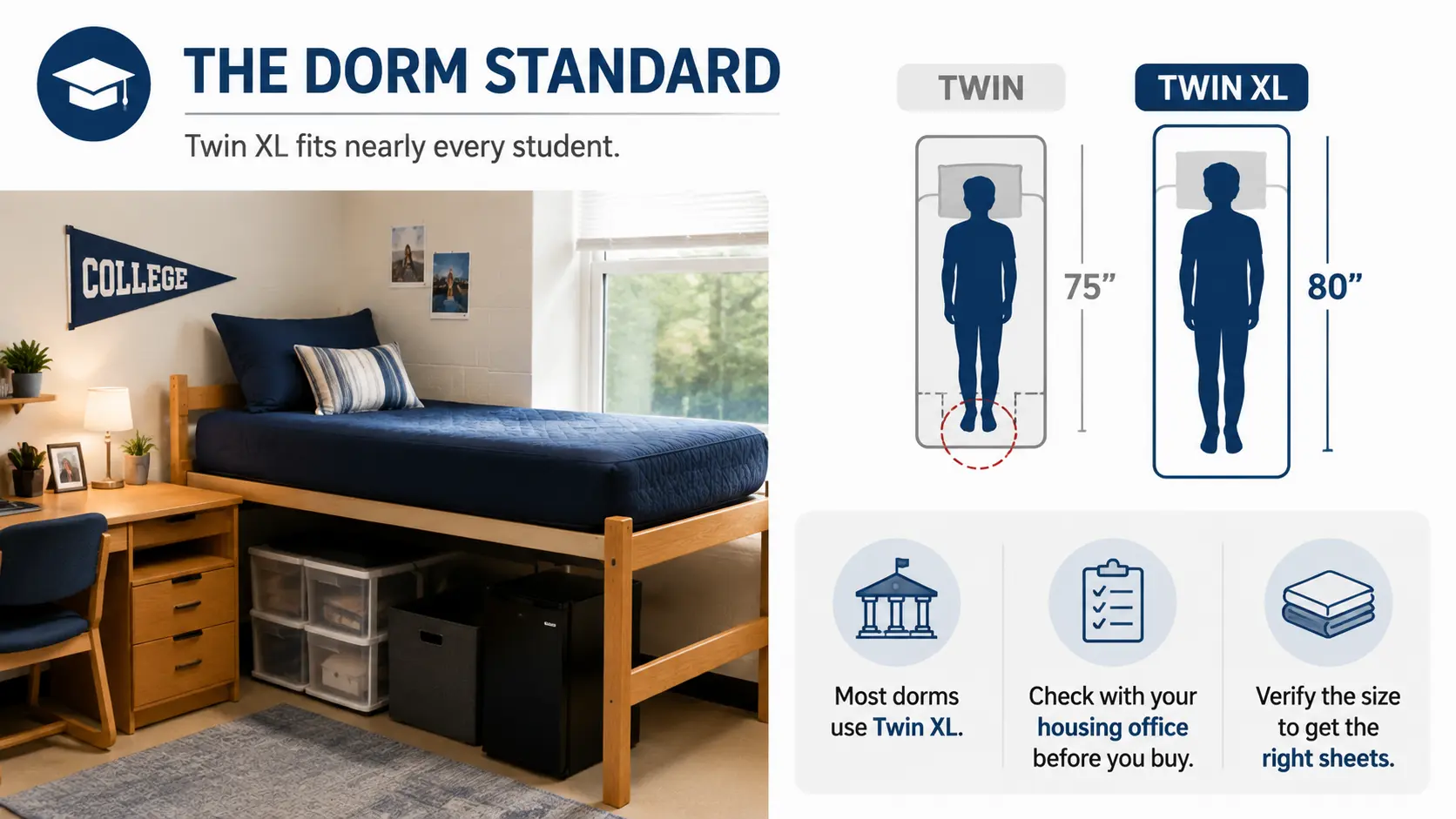
Most U.S. college dorms furnish their rooms with Twin XL beds. The reason is practical; students arrive at varying heights, and 80 inches accommodates nearly everyone.
A standard twin at 75 inches leaves tall students with their feet hanging off the end.
If you’re heading to a dorm and aren’t sure which size the school uses, check with your housing office before buying bedding.
Most colleges list the mattress size in their move-in materials. Buying the wrong sheets before you confirm the size is an easy mistake to avoid.
The Split King Setup: A Reason Adults Choose Twin XL
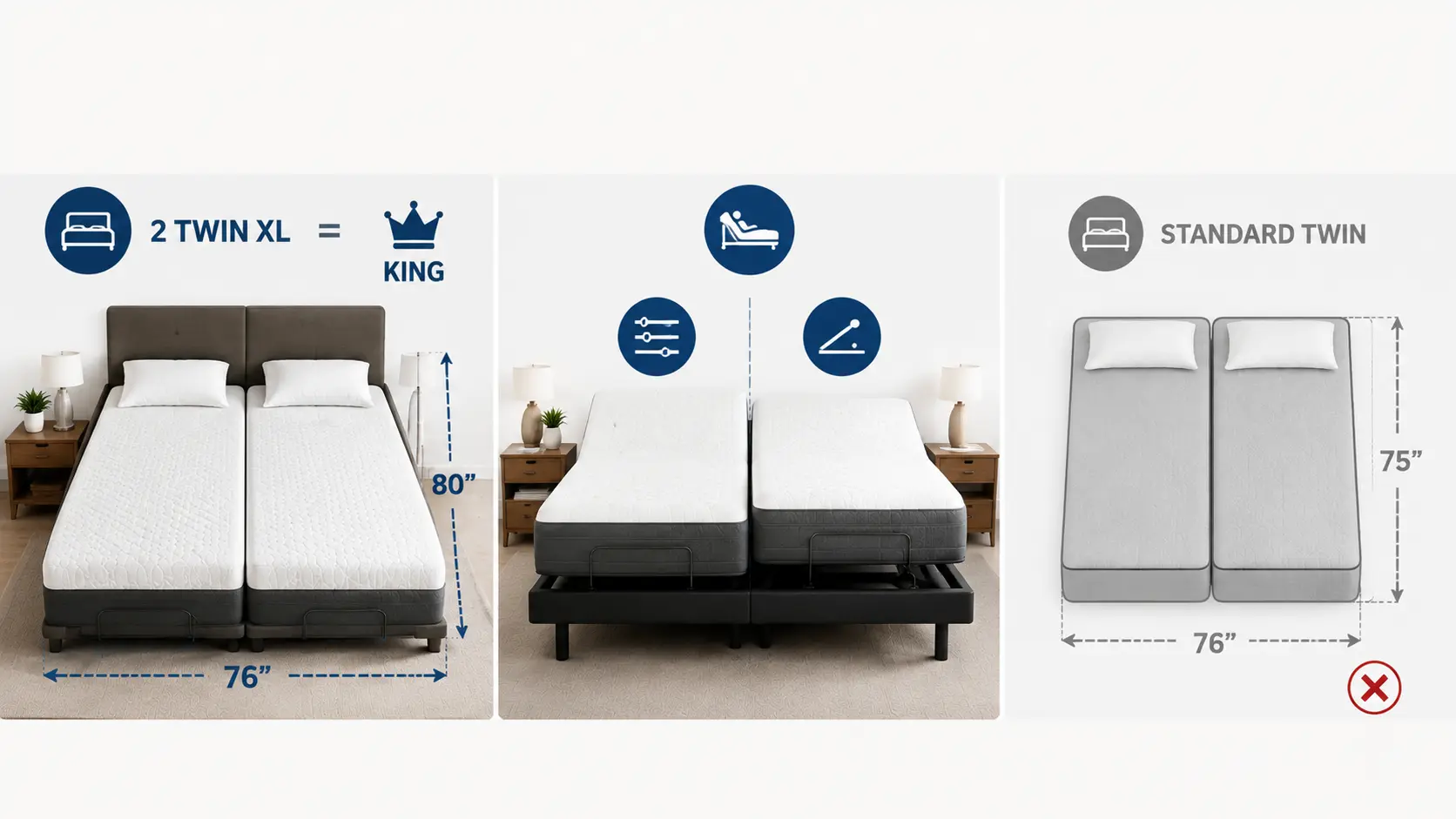
Two Twin XL mattresses placed side by side equal exactly a king-size mattress: 76 inches wide and 80 inches long.
This is the basis of the “split king” setup used on adjustable bed bases, which lets two sleeping partners independently adjust their firmness and incline.
Standard twin mattresses are 75 inches long, which is 5 inches shorter than a king. They don’t work in this configuration. Only Twin XL does.
Bedding: Sheets are Not Interchangeable
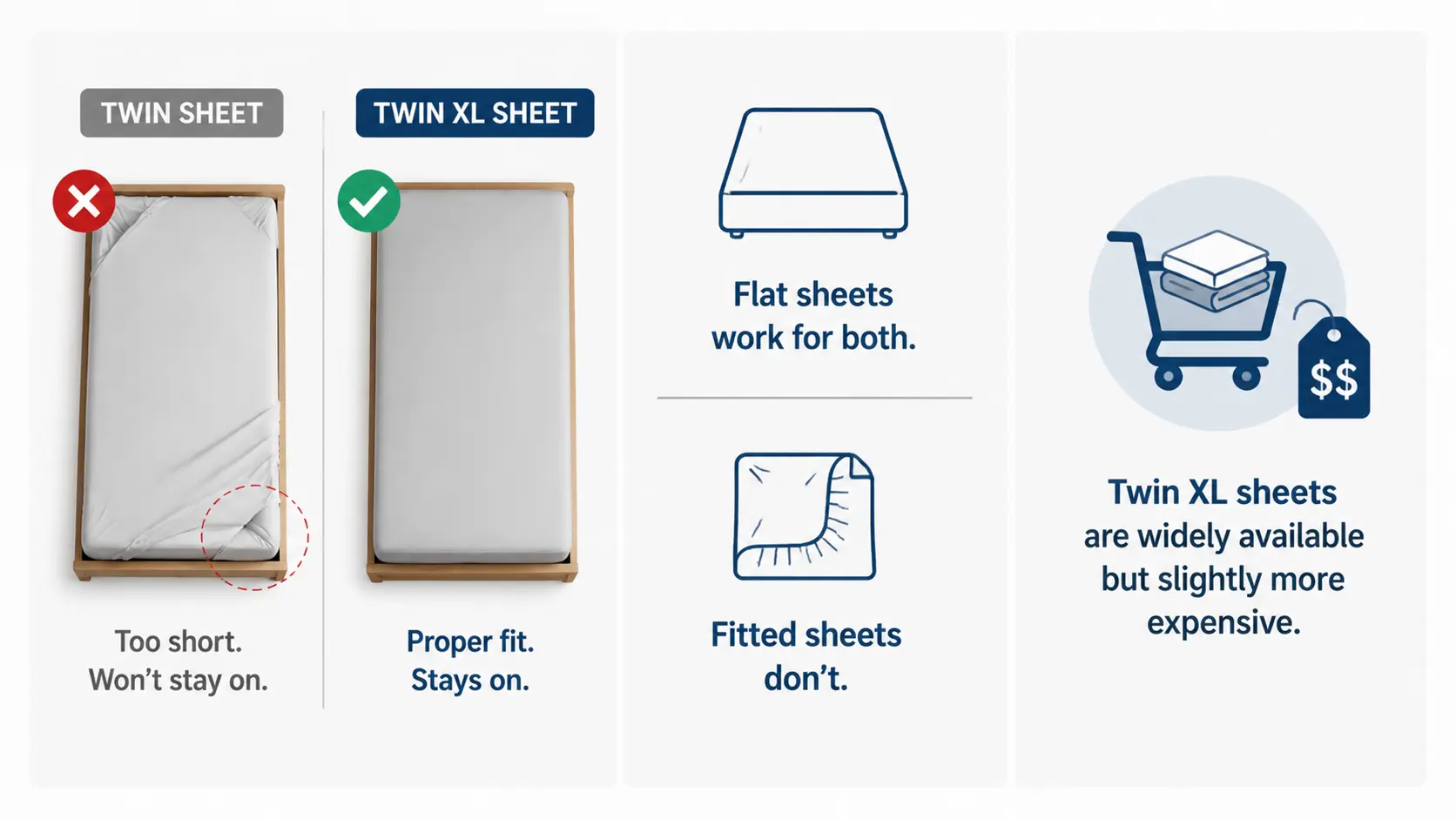
Twin fitted sheets are too short for a Twin XL mattress. They won’t reach the corners and will pop off during the night. You need Twin XL-specific fitted sheets for a Twin XL mattress.
Flat sheets may technically cover both sizes, but fitted sheets won’t. If you already own a set of standard twin sheets and are switching to a Twin XL, factor in the cost of new bedding.
Twin XL sheets are widely available but slightly more expensive than standard twin sheets, and the same sizing logic applies to how blankets fit a twin-size mattress, which trips up many first-time buyers.
Room Size: Does the Extra 5 Inches Actually Matter?
In most rooms, no. Both sizes fit in a room as small as 7 × 10 feet with space for a nightstand and walking room.
The 5-inch length difference only becomes relevant if the bed runs up against a wall, closet door, heating vent, or window sill.
Measure the available wall length before buying. If there’s a physical restriction at the foot of the bed, confirm the Twin XL won’t cause a problem. In most standard bedrooms, it won’t.
Price Difference Between Twin and Twin XL
Twin XL mattresses typically cost $50 to $150 more than a comparable twin from the same brand.
The gap isn’t large, but it adds up when you include bedding, Twin XL sheets, mattress protectors, and bed frames, which are also slightly more expensive because they’re less common than standard twin accessories.
Not every mattress brand offers Twin XL as an option. If you’re buying for a child’s room and they’re under 6 feet tall, the standard twin is the more affordable and more widely stocked choice.
Quick Decision GuideBuying for a child under 10 or need a bunk bed → Standard Twin Heading to a college dorm → Twin XL (confirm with your school) Sleeper is over 6 feet tall → Twin XL Tight budget and sleeper is under 6 feet → Standard Twin Want a split king adjustable base setup → Twin XL × 2 Not sure and the sleeper is between 5’5″ and 6’0″ → Twin XL; more room rarely hurts |
The Bottom Line
Twin vs twin XL size comes down to a single practical question: does the person sleeping on it need more than 75 inches of length?
If they’re under about 6 feet tall, a standard twin works fine. If they’re taller, heading to college, or you want a split king setup, Twin XL is the right call.
The width is identical. The construction is the same. The price gap is real but not dramatic. Those 5 extra inches are the whole story.
Measure your room, confirm the dorm size if that’s the context, and pick accordingly.
Frequently Asked Questions
What is the Exact Size Difference Between a Twin and a Twin XL?
Both are 38 inches wide. The only difference is length: a standard Twin is 75 inches long, and a Twin XL is 80 inches long. That’s 5 extra inches on the Twin XL, and nothing else changes.
Can I Use Twin Sheets on a Twin XL Mattress?
No. Standard Twin fitted sheets are too short for a Twin XL and won’t stay on the mattress. You need Twin XL-specific fitted sheets.
Do Two Twin XL Mattresses Make a King?
Yes. Two Twin XL mattresses side by side measure 76 × 80 inches, the same as a standard king. Two standard twins don’t work for this because they’re only 75 inches long, 5 inches short of king length.
Will a Twin XL fit in a Standard Bunk Bed?
Most standard bunk beds are built for Twin mattresses (75 inches). A Twin XL would overhang by 5 inches, which is a safety issue. Check your bunk bed’s specifications, but generally, Twin XL and standard bunk frames are not compatible.