



Crib blankets come in a wider range of sizes than most new parents expect, and the wrong choice makes itself known quickly. You may end up with a blanket that bunches up and cannot be tucked, or one so small it slides off during a nap.
Standard crib blanket dimensions run from about 30×40 inches up to 45×60 inches, but the right size depends on your baby’s age, how you plan to use it, and whether it is going into a standard crib or a mini.
There is also a safety layer that shapes every blanket decision in the first year of life. This is covered in full below, along with when it becomes safe to introduce overnight blanket use.
Here you will find each blanket type explained by size and stage, a full comparison chart, material guidance, and a clear answer to when it is safe to introduce a crib blanket for overnight sleep.
What is a Crib Blanket and Why Does Size Matter?
A crib blanket is a small, lightweight blanket designed for babies, usually used around the crib or during supervised time.
| Safe Sleep Reminder: The American Academy of Pediatrics (AAP) recommends keeping all loose blankets, pillows, and soft objects out of a baby’s sleep space for the first 12 months. A firm mattress with a fitted sheet is all that is needed. For warmth, use a sleep sack or wearable blanket instead. |
Size matters because a blanket that is too large can bunch up and be hard to manage, while a very small one may not provide adequate coverage.
Most crib blankets are made to be easy to handle for everyday tasks like cuddling, travel, or supervised rest. Choosing the right size helps make daily use more practical and comfortable for both parent and baby.
What is the Standard Crib Blanket Size?
There isn’t one fixed standard crib blanket size, but most fall within a common range. A typical crib blanket measures about 30 x 40 inches (76 x 102 cm).
Some are smaller, around 30 x 36 inches, while larger options can reach 45 x 60 inches.
These blankets are not made to fit a crib mattress exactly. Instead, they are sized for easy use during supervised time, cuddling, or travel.
For reference, a standard crib mattress is about 28 x 52 inches, and a mini crib is around 24 x 38 inches. Smaller blankets usually work better for mini cribs and everyday handling.
Types of Baby Blankets and Their Uses
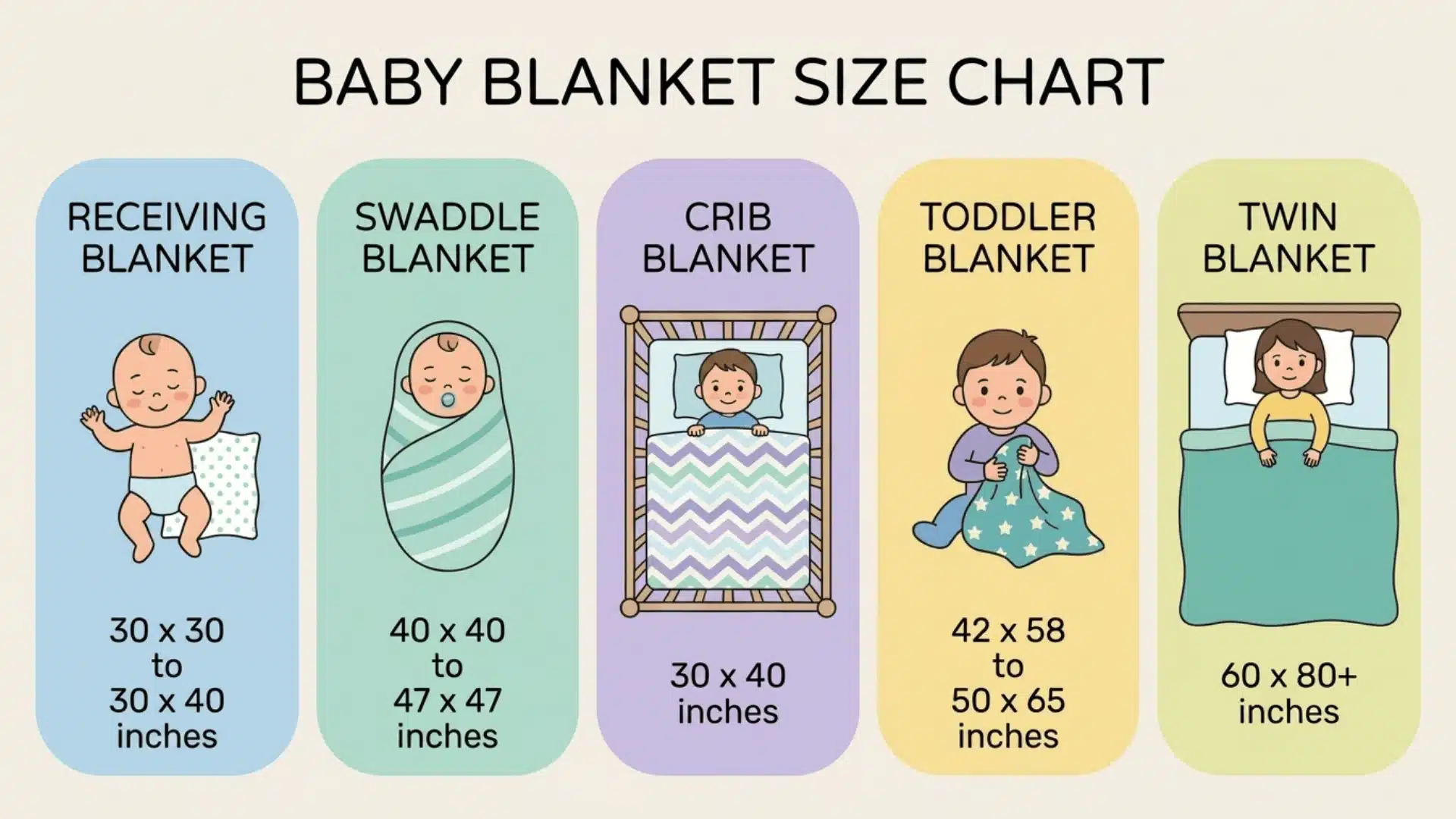
Not all baby blankets serve the same purpose, and understanding the different blanket types helps you choose with confidence.
1. Receiving Blankets
Receiving blankets are small, lightweight, and incredibly versatile. They’re ideal for swaddling newborns, covering during feeds, or lying flat for diaper changes.
Thin enough to fold into a diaper bag, they’re a newborn essential, though not suited for unsupervised crib sleep.
2. Swaddle Blankets
Swaddle blankets are used to wrap newborns snugly, helping them feel secure and reducing the startle reflex. They are made from breathable materials like muslin or cotton blends, sometimes with a bit of stretch for easier wrapping.
Swaddling is typically used from birth until the baby shows signs of rolling over, usually around 2 to 4 months. After this stage, swaddling should be stopped for safety reasons.
3. Crib Blankets
Crib blankets come in different thicknesses, from lightweight cotton and muslin to warmer fabrics like fleece, depending on the material and use. For safety reasons, loose blankets should not be used in a crib for sleep during the first 12 months.
They are more commonly used after infancy or during supervised awake time. Common materials include cotton, fleece, and minky, chosen based on comfort and season.
4. Toddler Blankets
Toddler blankets are a natural step up from the crib stage. Slightly larger and cozier, they’re designed for toddler beds and children aged 1 to 4.
Often featuring fun prints and characters, they give little ones something they’ll actually want to snuggle with.
5. Twin Bed Blankets
Twin bed blankets are made for older children who have moved into a twin-size bed. They are larger than toddler blankets and provide full coverage for regular sleep, helping keep kids warm and comfortable through the night.
These blankets are designed for everyday use as children grow and need more space while sleeping.
Crib Blanket Size Comparison
Understanding how crib blankets compare with other baby blankets helps you choose the right one for each stage and use.
| Blanket type | Typical size | Best for |
|---|---|---|
| Receiving blanket | 30 x 30 in / 30 x 40 in | Newborn swaddling, diaper changes, and general use |
| Swaddle blanket | 40 x 40 in / 47 x 47 in | Wrapping and calming newborns (0–8 weeks) |
| Crib blanket | 30 x 40 in to 45 x 60 in | Crib or toddler bed, supervised use, 12+ months |
| Toddler blanket | 42 x 58 in / 50 x 65 in | Toddler beds, post-crib stage (1–4 years) |
| Twin bed blanket | 60 x 80 in+ | Older children moving to a full bed |
There is some overlap between crib and toddler blanket sizes. The main differences come down to material, use, and design rather than size alone.
Material Considerations for Crib Blankets
Choosing the right fabric can make a big difference in how a crib blanket feels, washes, and works through the year. These simple points can help you narrow it down.
Cotton: A popular everyday choice. It is breathable, easy to wash, and works well in most seasons without trapping too much heat.
Muslin cotton: A lighter cotton with a looser weave. It feels airy, works well in warmer weather, and stays soft against delicate skin.
Minky: Minky fabric is a plush, heavier fabric that feels very soft. It is better for cooler rooms and may not be the best pick for babies who get warm easily.
Bamboo: A soft, breathable option that can help with temperature balance. It is often chosen for sensitive skin and for families who prefer natural fabrics.
These fabric differences can make shopping easier and help you choose a crib blanket that suits your baby’s comfort and your home.
When Can Babies Start Using a Crib Blanket?
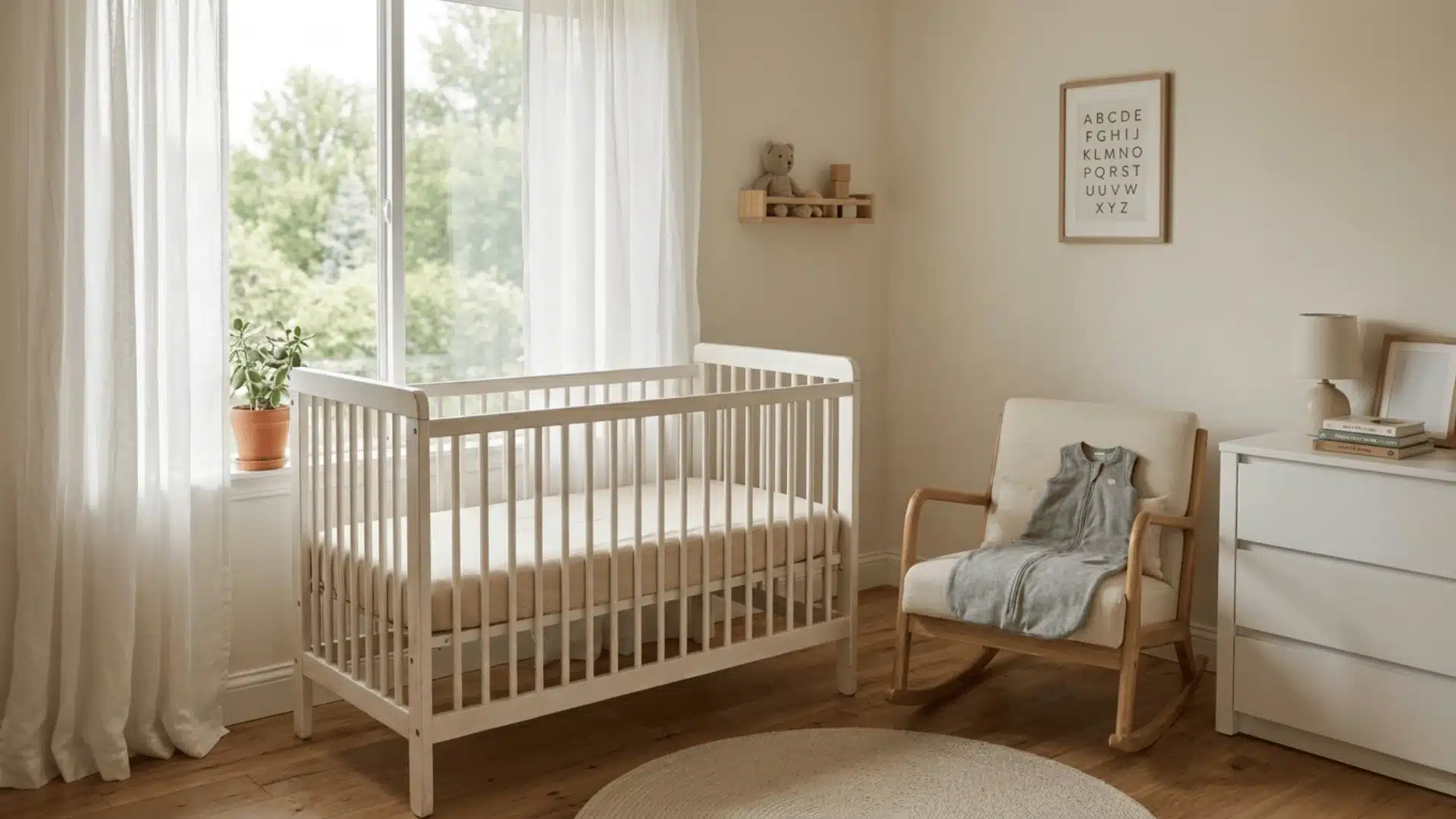
Timing matters when it comes to crib blankets, and safety guidance is clear about when to introduce them.
The American Academy of Pediatrics recommends keeping loose blankets out of a baby’s sleep space for the first 12 months. A firm mattress with a fitted sheet is all that’s needed during this stage.
For warmth, a sleep sack or wearable blanket is a safer option. Unlike loose blankets, a sleep sack stays on the baby’s body and cannot bunch up over the face. They come in varying tog ratings, such as 0.5 tog for warm rooms and 2.5 tog for cooler nights, so you can match the warmth level to the room temperature without adding loose fabric.
After 12 months, a lightweight blanket can be introduced during supervised naps. By around 18 to 24 months, many toddlers are ready for regular overnight use.
Every baby is different, so it’s always a good idea to check with your pediatrician if you’re unsure.
With safety in mind, the next step is choosing the right crib blanket size for your baby.
Signs It Is Time to Size Up from Crib to Toddler Blanket
Most children are ready for a larger blanket somewhere between 18 months and 3 years, often around the time they move to a toddler bed. A few signs to watch for:
- Feet consistently poke out the bottom during sleep
- The blanket no longer covers your child from chest to toes
- They keep pulling the blanket off because it is too restrictive
- You have moved them to a toddler or twin bed with open sides that need more coverage
A toddler blanket in the 42×58 to 50×65-inch range gives enough room for active sleepers to move without losing coverage. If your child is a restless sleeper, sizing up a little earlier is worth it.
How to Choose the Right Crib Blanket Size?
Choosing the right crib blanket size is easier when you focus on a few practical things that matter in daily use.
Measure Your Mattress First: Standard crib mattresses are 28 x 52 inches, but mini cribs are smaller, so always check before buying.
Mattress Size for Your Child’s Age: For babies under 12 months, use blankets only during supervised, awake time; for toddlers, a 45 x 60-inch blanket works well.
Think About how You Will Use It: For travel or quick use. A lighter blanket is easier; for toddler beds, a slightly larger size offers better coverage.
Pick a Material that Suits Your Climate: Breathable cotton works for warmer homes, while thicker fabrics are better for cooler spaces.
Choose a Practical Size: A 45 x 60-inch blanket gives enough room to grow without feeling too bulky.
Check Safety Labels: Look for certifications like Oeko-Tex or GOTS for safer fabric choices.
With these simple checks, you can choose a crib blanket that feels practical, comfortable, and suited to your baby’s stage and routine.
Conclusion
Choosing the right crib blanket size helps make daily care more comfortable and organized for both parent and baby.
From small swaddles to larger toddler blankets, each size supports a different stage and use.
Safety is important, especially for babies under 12 months, when loose blankets should not be used for sleep. Knowing standard measurements and materials can help you make better decisions while shopping.
If you still have questions about crib blanket size, leave a comment below and share your thoughts or experience.
Frequently Asked Questions
How Many Crib Blankets Do You Need for a Baby?
Most parents keep about 2 to 4 crib blankets for convenience. This allows rotation for washing, travel use, and different weather conditions, even though they are not used in the crib for infant sleep.
Can Crib Blankets Be Used as Stroller Blankets?
Yes, crib blankets can often be used in strollers when the baby is awake or supervised. Their size makes them useful for light coverage on outings, especially in mild weather.
Do Crib Blankets Need to Be Washed Before First Use?
Yes, it is recommended to wash crib blankets before first use. This helps remove manufacturing residues, dust, and chemicals from packaging, making the fabric softer and safer for a baby’s skin.