


Rayon and cotton are both widely used in clothing, and at first glance, they can seem quite similar.
Both are soft, comfortable, and commonly found in everyday wear.
They differ in important ways, including how they feel on the skin, how breathable they are, how easy they are to maintain, and how long they last with regular use.
Choosing the wrong fabric can lead to discomfort or extra care while washing.
Understanding the difference between rayon and cotton helps you make better buying decisions based on your needs. If you want something stylish, breathable, durable, or easy to care for every day.
Rayon vs Cotton: Key Differences at a Glance
Not sure which fabric suits you better? This quick comparison will make it easy.
| Feature | Rayon | Cotton |
|---|---|---|
| Type | Semi-synthetic | Natural |
| Feel | Silky, smooth | Soft, comfortable |
| Breathability | Good | Excellent |
| Durability | Weaker when wet | Strong when wet |
| Shrinkage | Shrinks more | Shrinks once |
| Washing | Hand wash or dry clean | Machine washable |
| Cost | Cheaper | Slightly costlier |
| Eco-Friendliness | Uses chemicals | Uses more water |
Each of these points is covered in detail in the sections below.
What is Rayon Fabric?
Rayon is a semi-synthetic fabric made from wood pulp. It comes from natural sources, but it is processed with chemicals. That is why it is not fully natural like cotton.
Rayon feels soft, smooth, and light. It often feels l ike silk or soft cotton, and it drapes well, but if you have never worn it before, you might be wondering exactly how rayon feels on your skin before buying.
This unique feel comes from the way the fabric is made, where natural wood pulp is processed into soft fibers.
You will mostly find rayon in dresses, tops, kurtis, and curtains.
Bottom line: Rayon is style on a budget.
What is Cotton Fabric?
Cotton is a natural fabric made from the fibers of the cotton plant. It is one of the most commonly used fabrics in the world.
Cotton is known for being soft, breathable, and skin-friendly. It allows air to pass through easily, which makes it perfect for hot weather.
It is also strong and easy to maintain, making it well-suited for daily use.
You will find cotton in t-shirts, shirts, bedsheets, and towels.
Bottom line: Cotton is comfort you can count on.
5 Key Differences Between Rayon and Cotton
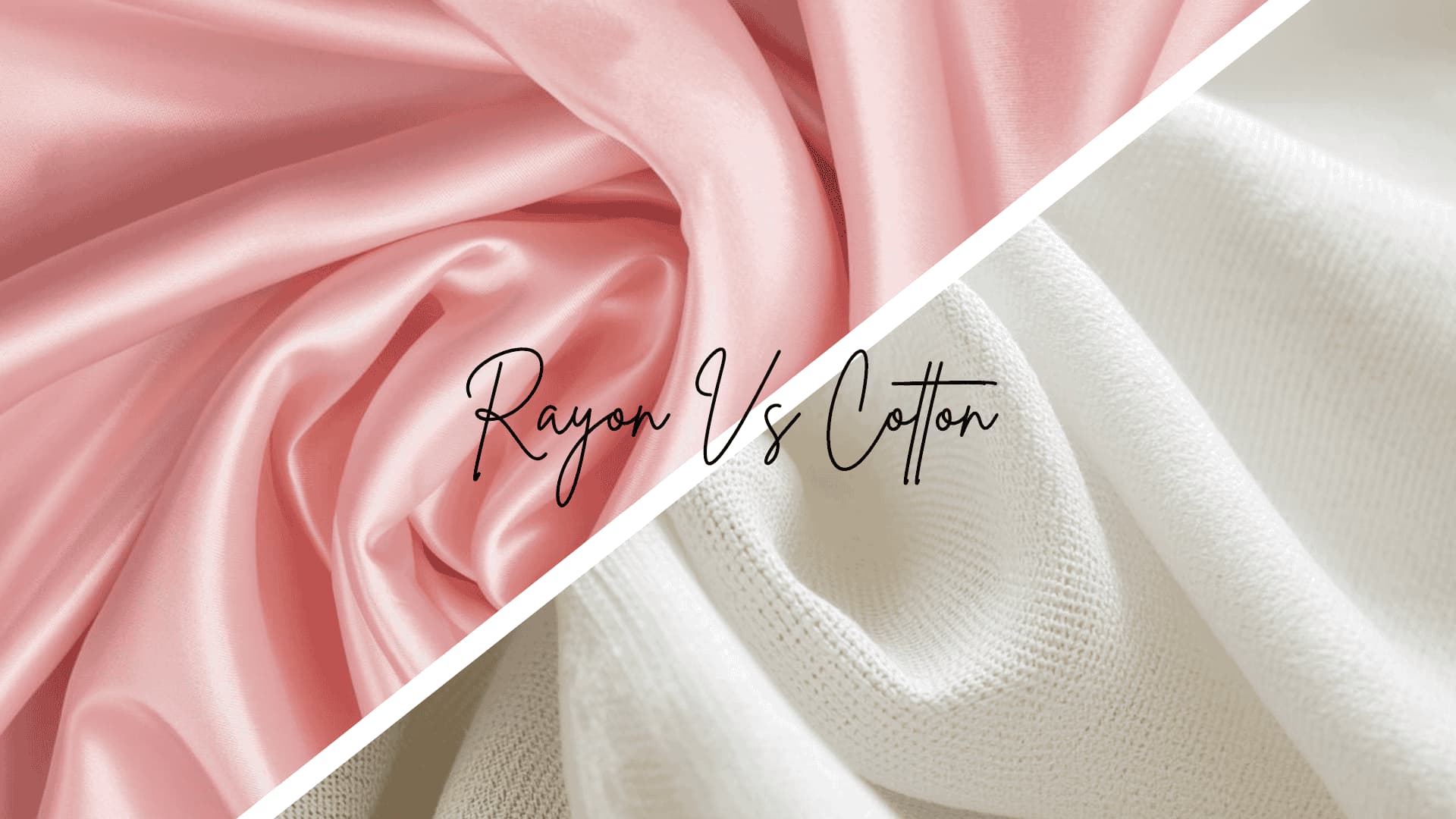
Rayon and cotton may look similar, but they feel different and work better for different needs, weather, and everyday use.
1. Feel and Comfort
- Rayon: Smooth, soft, and slightly silky. That silky feel is no accident; it comes directly from how rayon fiber is manufactured at a molecular level.
- Cotton: Soft, natural fabric that feels gentle on the skin and provides comfort for long hours of daily wear.
Best pick: Cotton for daily comfort, rayon for a dressy look.
2. Breathability
- Rayon: Lightweight fabric, but it does not allow as much airflow, so it may feel slightly warm in hot and humid weather.
- Cotton: Highly breathable fabric that allows air circulation, keeping your body cool, fresh, and sweat-free in summer conditions.
Best pick: Cotton for hot weather.
3. Durability
- Rayon: A less durable fabric that can lose strength when wet and may not last long with frequent washing and rough use.
- Cotton: Strong and durable fabric that can handle regular washing and daily use without losing its shape or strength easily.
Best pick: Cotton for long-term use.
4. Care and Washing
- Rayon: Requires gentle washing and careful handling, as it can shrink or get damaged easily if not washed properly.
- Cotton: Easy to wash and maintain; requires no special care and works well with regular machine washing.
Best pick: Cotton for easy care.
5. Price
- Rayon: Generally more affordable fabric, making it a good option for stylish clothes at a lower price range for buyers.
- Cotton: Price depends on quality, but offers better long-term value due to durability and comfort for everyday use.
Best pick: Rayon for lower cost, cotton for better value.
Blending Rayon and Cotton
Yes, you can. Cotton-rayon blends are quite common, and you will find them in many everyday clothes.
The blend works well because it combines the best of both. You get cotton’s strength and rayon’s softness in one fabric.
These blends are widely used in T-shirts, casual wear, and activewear.
If you are buying a blended fabric, look for 60% cotton and 40% rayon. This ratio strikes a good balance between comfort, durability, and feel.
Eco ImpactCotton uses more water during farming, while rayon involves chemical processing. Both affect the environment in different ways; the full picture is more nuanced than it looks, and rayon’s role in sustainable fashion is worth knowing if that matters to your buying decisions. |
Final Thoughts
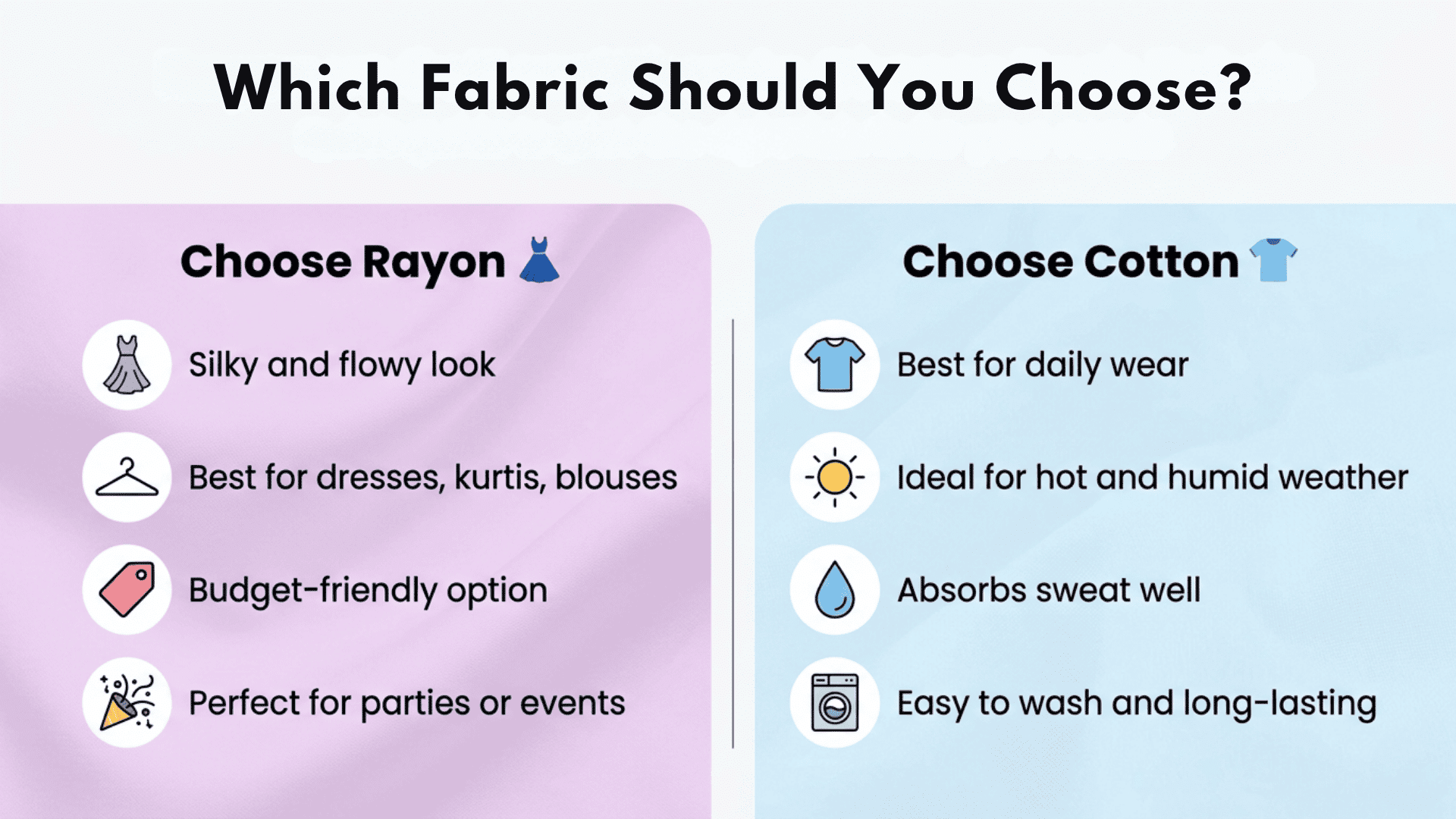
Rayon and cotton are both great fabrics. But they serve different purposes.
Rayon is your go-to for style, flow, and affordability. Cotton is your everyday companion for comfort, durability, and easy care.
The right choice depends on what you need. Dressing up for an occasion? Pick rayon. Wearing something all day in the heat? Go with cotton.
When in doubt, a cotton-rayon blend gives you the best of both.
Which fabric do you wear the most? Drop it in the comments below. It might just help someone else make the right choice.
Frequently Asked Questions
Is Rayon Better Than Cotton for Summer?
Cotton is better for summer. It absorbs sweat well, keeping the body cool and comfortable.
Is Rayon Safe for Skin?
Rayon is generally safe. But for sensitive skin, cotton is a better choice. Since rayon is made through a chemical-heavy process that starts with raw plant pulp, people with sensitive skin should check the fabric type before buying.
Which Fabric Lasts Longer, Rayon or Cotton?
Cotton lasts longer. It handles regular washing and daily wear much better than rayon does.