





Notice tinywhite specks on the bed where your cat usually naps? Those could be cat flea eggs on the bed sheets.
Fleas lay eggs on cats, and these eggs fall off wherever your pet rests, including your bed. Since cats spend hours sleeping on soft blankets and pillows, beds often become a common spot for eggs to collect.
They are very small and easy to miss at first, which can make the problem grow quickly.
Knowing how to spot cat flea eggs on bed sheets early helps you take action, clean properly, and stop fleas from spreading further in your home.
What Are Cat Flea Eggs?
Flea eggs are tiny white ovals that adult fleas lay on cats. They’re about the size of a grain of fine table salt (0.3–0.5 mm), making them hard to see.
The eggs don’t stick to fur. Instead, they fall off onto carpets, furniture, and bedding where cats spend time.
Fleas go through four life stages. First comes the egg. Then it hatches into a larva, which looks like a small worm. Next, the larva turns into a pupa inside a cocoon. Finally, an adult flea emerges.
This whole cycle takes a few weeks. When eggs land on bed sheets, they can hatch and grow into more fleas. That’s why catching them early matters so much.
What Do Cat Flea Eggs Look Like On Bed Sheets?
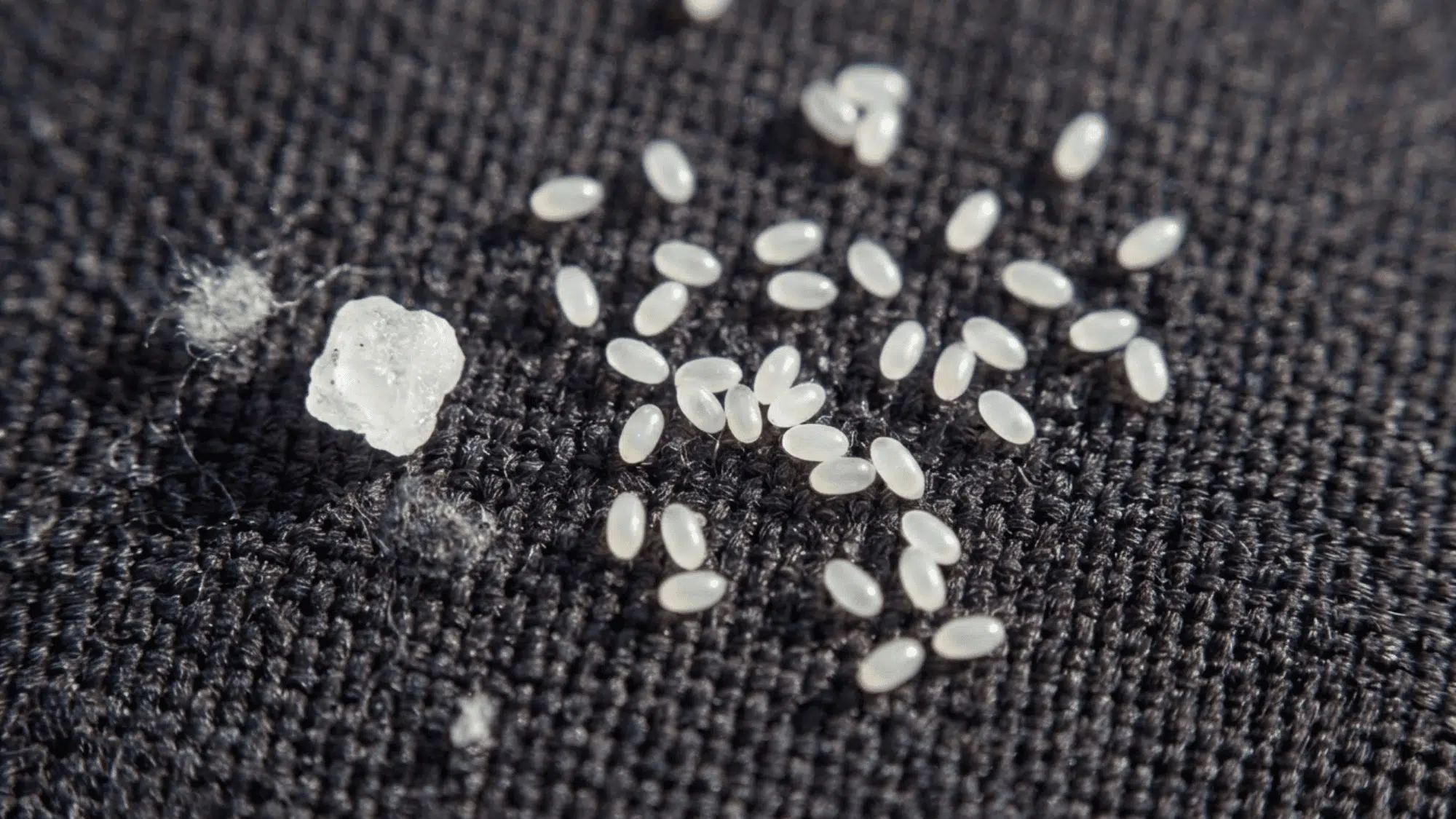
Spotting flea dirt on bed sheets takes a careful eye. These eggs are so small that most people mistake them for dust, lint, or other marks.
Common Appearance Clues
- Tiny white ovals: Flea eggs are about the size of a grain of salt or a speck of dust. They measure less than half a millimeter long.
- Pearl-white color: The eggs have a smooth, shiny surface that looks almost translucent. They’re pure white or slightly off-white.
- Easy to confuse: At first glance, flea eggs look just like lint, salt grains, or bits of dandruff scattered on fabric.
- Smooth texture: Unlike rough dust particles, flea eggs feel smooth when touched. They can roll easily across sheets.
Flea Eggs Vs. Dandruff, Dust, And “Flea Dirt”
- Flea eggs: Oval-shaped, white, smooth, and uniform in size. They don’t stick to fabric and roll when touched.
- Dandruff: Irregular flakes that are flat and white. They tend to stick to fabric more than eggs do.
- Dust: Gray or tan particles with rough edges. Dust clumps together and looks uneven.
- Flea dirt: Dark brown or black specks that look like ground pepper. This is actually flea waste. When wet, it turns reddish-brown because it contains digested blood.
Easy At-Home Checks To Confirm What You’re Seeing
- Check seams and corners first: Eggs tend to collect in the creases where sheets tuck under the mattress and along the edges of pillowcases.
- Look in fabric folds: Anywhere the sheet bunches up or wrinkles, it becomes a hiding spot for eggs to settle.
- Inspect your cat’s favorite napping spots: The area where your cat sleeps most often will have the highest concentration of eggs.
- Use a white paper test: Place a white paper towel on the sheet and gently brush the surface. Eggs will show up clearly against the white background.
These simple checks help confirm whether those white specks are really flea eggs. Taking a few minutes to inspect the bed properly saves time and stress later.
How Do Cat Flea Eggs Get On Your Bed?
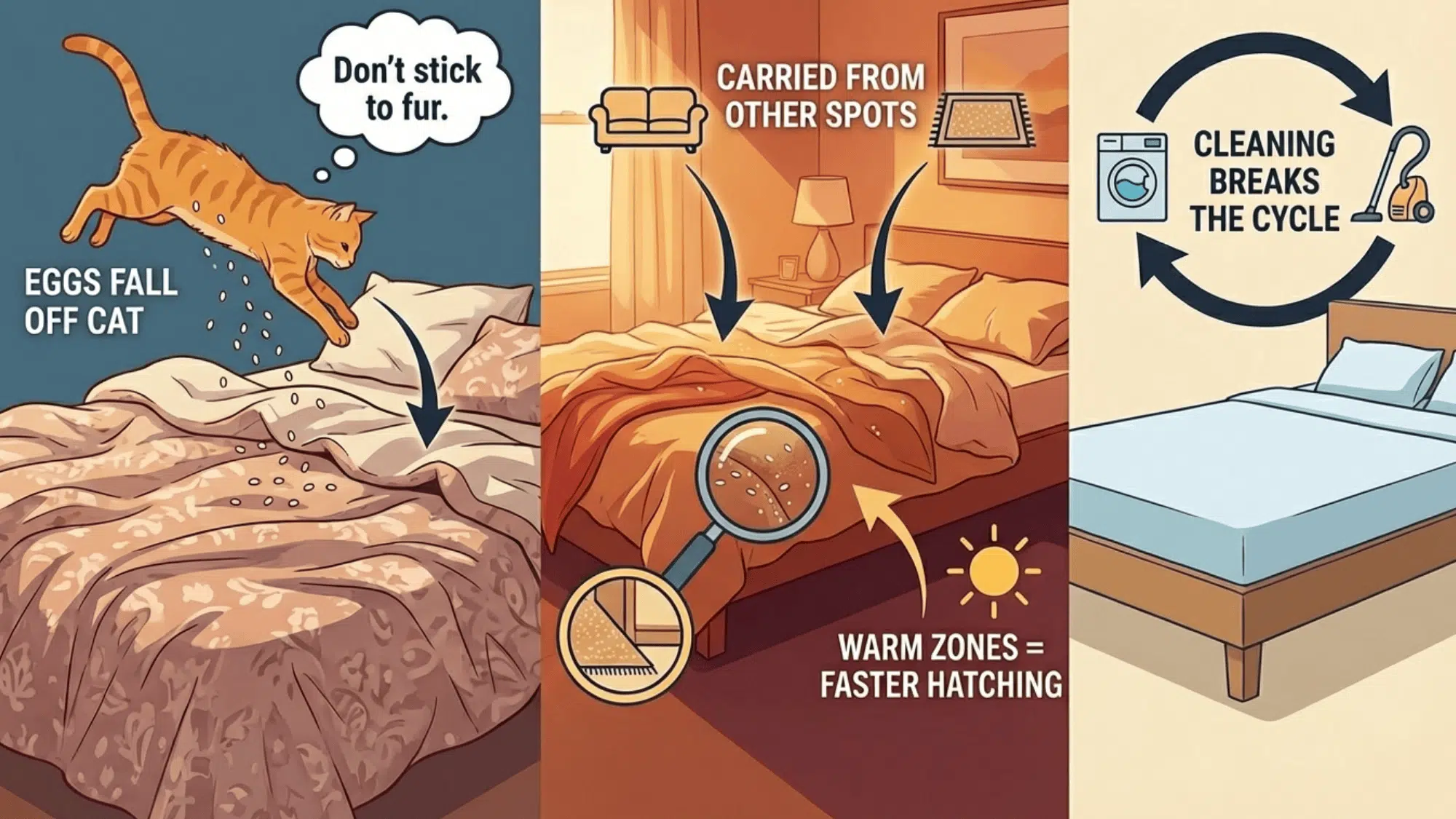
Flea eggs reach bed sheets when cats jump up or rest on the bedding. The eggs don’t stick to fur, so they fall off wherever the cat goes.
Cats also carry eggs from other favorite spots, like the couch or carpet, straight to the bed. Bedrooms become perfect flea zones because they stay warm, which helps eggs hatch faster.
Sheets and blankets create hiding spots in folds and seams. Since cats return to their beds repeatedly for comfort, the cycle continues until everything is cleaned thoroughly.
Can FleaEggs Live on Bed Sheets Without a Cat?
Flea eggs can stay on bed sheets for a short time, even if a cat is not around. They fall off the cat and settle into folds, seams, and fabric creases.
However, they do not truly “live” or spread on their own without a host.
To hatch and grow, they need the right conditions, such as warmth, humidity, and tiny bits of organic matter. If there are no pets in the home, the cycle usually stops after a while.
Still, eggs can hatch into larvae, so cleaning bedding quickly helps prevent the problem from growing.
Signs You Have Cat Flea Eggs In Your Bed
Recognizing the signs of cat flea eggs on bed sheets takes a bit of detective work. Fleas leave clues on your cat, on people, and throughout the bedroom. Knowing what to watch for helps catch the problem early.
| Signs of Your Cat | Signs on People | Signs on the Bed and Bedroom |
|---|---|---|
| Excessive scratching, especially of the neck, back, and tail | Red bumps on ankles, legs, or arms after sleep | White specks in sheet creases where cat naps |
| Red bumps, scabs, or raw patches on the skin | Very itchy bites with red halos | Dark pepper-like specks (flea dirt) near eggs |
| Obsessive grooming or stops grooming completely | Bites in clusters of two or three | Small brown jumping bugs on or near the bed |
| Patches of missing fur from scratching | Can look like mosquito or bed bug bites | Eggs in seams, edges, and corners |
Spotting these signs early makes treatment easier and faster. The sooner fleas are caught, the less chance they have to spread throughout the home.
Taking action right away protects both pets and people from ongoing discomfort.
What Pet Owners and Vet Techs Recommend
Several pet owners described spotting tiny white specks on bedding or clothes, along with sudden itching and a flea-like bug jumping nearby.
A vet tech said it can be hard to confirm eggs by sight, but the mix of scratching, specks, and sightings often suggests fleas.
The most common advice was to start a reliable flea treatment from a vet or a proven monthly medication and keep it going for at least three months to break the flea life cycle.
People also stressed frequent vacuuming of floors, beds, and pet areas, plus washing bedding often to reduce reinfestation.
How To Get Rid Of Cat Fleas On Your Bed

Getting rid of cat flea eggs on bed sheets requires thorough cleaning. Each step builds on the last to break the flea life cycle completely. Following these steps in order gives the best results.
Step 1: Strip, Bag, And Move Laundry The Right Way
Remove all bedding carefully without shaking it. Shaking spreads eggs onto the floor and carpet. Roll the sheets and blankets tightly, then place them straight into a large plastic bag.
Seal the bag and carry it directly to the washing machine to keep all eggs intact.
Step 2: Wash And Dry Bedding On Heat That Works
Wash in the hottest water the fabric allows, followed by at least 30 minutes on high heat in the dryer, which is what reliably kills eggs and larvae. This temperature kills eggs, larvae, and adult fleas on contact. Include sheets, blankets, comforters, pillow covers, and mattress protectors.
After washing, dry everything on the highest heat setting for at least 30 minutes to eliminate any survivors.
Step 3: Deep-Clean The Mattress And Bed Frame
Vacuum the entire mattress, paying close attention to seams, tufts, and corners where eggs hide. Use the vacuum attachment to reach cracks in the bed frame, slats, and headboard joints.
Sprinkling baking soda may help absorb odors and loosen surface debris, but it does not kill flea eggs. Thorough vacuuming is the key step.
Step 4: Clean The Area Around The Bed
Vacuum all floors around the bed thoroughly, including under the bed and along baseboards. Wash or steam clean any rugs near the sleeping area.
Clean out under-bed storage boxes and vacuum the inside of nearby furniture drawers. Mop hard floors with hot, soapy water to catch any eggs that fell during the cleaning process.
Step 5: Treat Your Cat And Any Other Pets In The Home
Use vet-approved flea treatment on all pets immediately, even if only one cat shows signs of fleas. Untreated pets will keep laying new eggs and restart the entire cycle.
Talk to a vet about the best treatment options, which might include topical medications, oral pills, or flea collars for ongoing protection.
These steps work together to eliminate fleas at every life stage. Skipping even one step can allow the problem to continue. Once the bed and pets are treated, the focus shifts to keeping fleas away for good.
Natural Remedies For Cat Fleas In Bed
Natural methods can support flea control when used alongside proper treatment. These options work best as extras, not replacements for thorough cleaning and vet-approved medications.
What Can Help As Add-Ons (Not The Only Fix)
Heat remains the most reliable natural tool against fleas. Washing bedding in hot water at least 130 degrees kills eggs and larvae instantly. Frequent vacuuming removes eggs from mattresses and floors daily.
There are also scents that fleas hate that can be used safely around the home, though these work best as a supporting measure rather than a standalone fix.
Safety Notes for Cats and Bedrooms
Avoid essential oils on bedding or near cat sleeping areas. Many oils, like tea tree and peppermint, are toxic to cats. Skip salt or diatomaceous earth on mattresses, as these irritate cat paws and lungs.
Never spray homemade vinegar solutions without testing first. Stick to plain hot water and mild detergent for the safest approach. Choose methods that won’t harm cats.
Natural add-ons can help, but should never replace proven flea control methods. Always put cat safety first when choosing any cleaning product or remedy.
Preventing Fleas from Returning

Stopping fleas from coming back requires consistent effort and smart habits. Prevention focuses on breaking the flea life cycle before it starts again. These simple steps keep beds and homes flea-free long term.
- Keep Cats off the Bed: Keep cats off the bed for at least two weeks during treatment to stop new eggs from dropping.
- Wash Bedding Regularly: Wash all bedding in hot water twice weekly until fleas are completely gone from the entire home.
- Vacuum Daily: Vacuum carpets, furniture, and floors daily for two weeks to remove eggs before they hatch into larvae.
- Clean Pet Bedding: Wash cat beds and blankets in hot water weekly to kill eggs and larvae throughout the treatment period.
- Use Flea Prevention: Use monthly flea prevention medication year-round as recommended by your vet for all household cats and pets.
Consistency makes all the difference in flea prevention. Skipping even one step can allow fleas to restart their life cycle. Sticking with these habits protects both pets and people from future flea problems.
When to Seek Professional Help?
Sometimes flea problems become too large to handle with basic cleaning alone.
If bites persist even after washing bedding and vacuuming regularly, fleas may be hiding in deeper areas, such as carpets or cracks.
Seeing fleas in more than one room is another clear sign that the problem has spread.
At this point, home methods may not be enough. Pest control experts can treat hard-to-reach places like carpet padding, wall edges, and floor gaps with products that keep working over time.
It is also worth knowing that squishing fleas is not an effective removal method and can make the situation harder to manage.
Conclusion
Finding cat flea eggs on bed sheets can feel stressful at first, but taking the right steps makes a big difference.
Start by confirming what those white specks are, then wash all bedding in hot water and dry on high heat. Vacuum the mattress, bed frame, and nearby areas to remove hidden eggs.
Treat all cats and pets with vet-approved flea medication right away. Repeat cleaning for at least two weeks to break the flea life cycle. Consistency matters, as missing a step can allow fleas to return.
Acting early helps protect your home. Have tips or questions? Share them in the comments below.
Frequently Asked Questions (FAQs)
Can Flea Eggs Spread Through Laundry?
Yes, eggs can move between sheets and blankets, but washing in hot water kills them.
Are Flea Eggs Visible With A Regular Magnifying Glass?
They are very tiny, so a magnifying glass may help spot them clearly.
Can Other Pets Spread Flea Eggs To My Bed?
Dogs, rabbits, and even ferrets can carry fleas and deposit eggs on bedding.
Do Flea Eggs Survive On Hardwood Floors?
They can fall on floors but need warmth and organic debris to hatch.