



Getting the right blanket size can make all the difference between a cozy, restful night and waking up with your feet sticking out in the cold.
Many people choose a blanket based solely on their mattress size, but that’s not always the best approach.
For instance, while a queen mattress is 60 x 80 inches, a queen blanket typically measures between 90 x 90 and 100 inches. Those extra inches help keep shoulders, legs, and feet covered through the night.
From tiny loveys for newborns to king-size blankets for couples, each size serves its purpose.
A few extra inches can completely change how warm and comfortable a blanket feels through the night.
Understanding Blanket Sizes and Their Importance
A well-fitting blanket does something most people never stop to think about. It traps a thin layer of warm air close to the body, helping maintain the steady temperature needed to stay asleep through the night.
Too small, and that warm layer slips out through the gaps. An oversized blanket can feel bulky or harder to manage, especially on smaller beds.
Blanket size also affects sleep quality, comfort, and how a bedroom looks day to day.
Proper drape improves both comfort and the overall look of the bed. Getting the dimensions right is one of the simplest upgrades anyone can make to their sleep setup.
Blanket Sizes Compared to Person
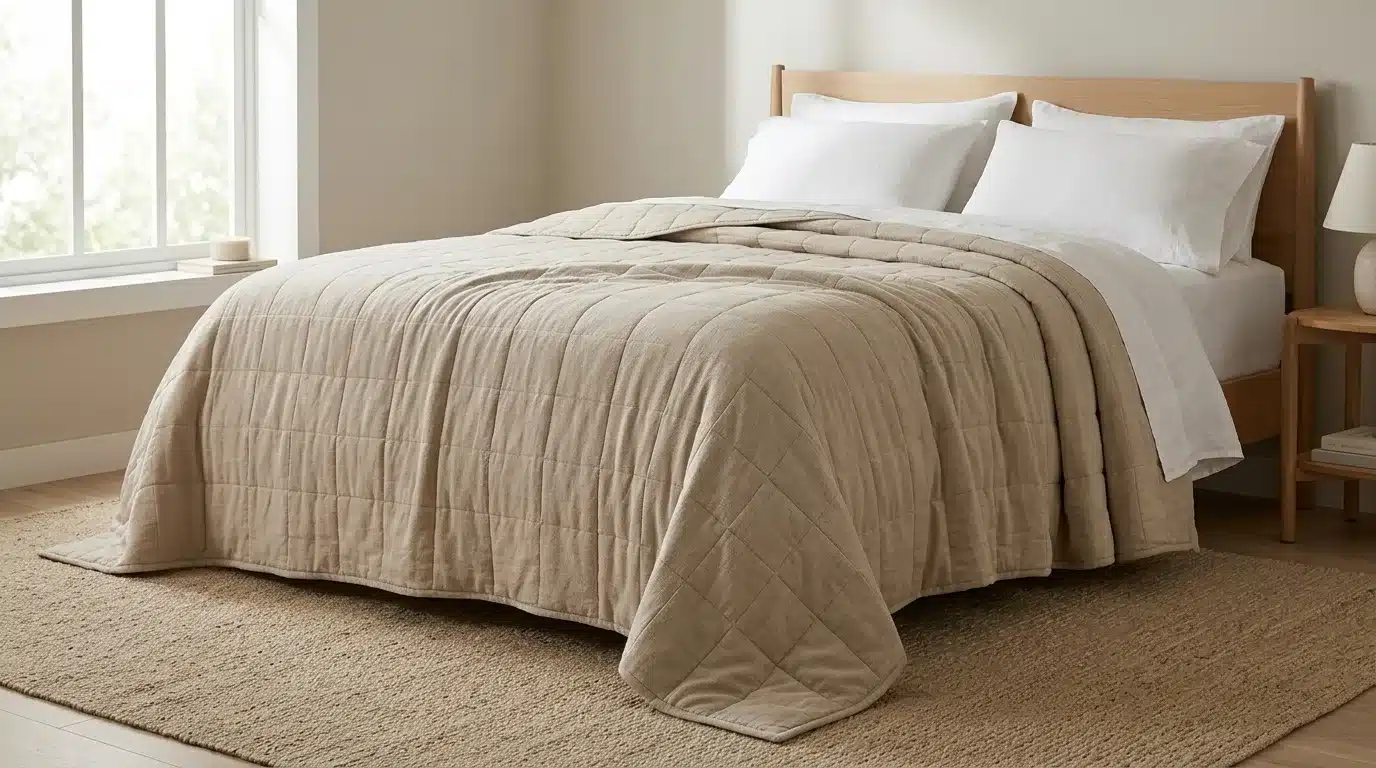
Choosing a blanket without considering body size is one of the most common bedding mistakes people make. A blanket that fits a child will leave an adult shivering by midnight.
One that works for a petite person may feel like dragging a parachute around for a taller one.
Knowing how blanket sizes compare to a person’s height and build takes all the guesswork out of shopping and helps you sleep much better every night.
1. For Babies and Toddlers
Babies need different blankets at every stage. A lovey is just 12 x 12 inches for tiny hands. Receiving blankets are 40 x 40 inches for swaddling.
Stroller blankets run 22 to 30 inches wide and 30 to 36 inches long. Crib blankets are typically 45 x 60 inches and are better suited to toddlers.
The American Academy of Pediatrics recommends keeping all loose blankets out of a baby’s sleep space until they reach 12 months old.
2. For Kids
A throw blanket at 50 x 60 inches works well for smaller children who curl up on the couch. For kids sleeping in a twin bed, a 66 x 90-inch twin blanket is a much better fit.
Taller kids and pre-teens often feel more comfortable with a full-size option. Always match the blanket to both the child’s height and their bed size for the right coverage throughout the night.
3. For One Adult
A 50 x 60-inch throw covers the lap and torso for lounging on a sofa. For full-body coverage in bed, an oversized throw (60 x 80 inches) or a twin blanket (66 x 90 inches) works much better.
Most adults feel comfortable with a blanket that reaches from the shoulders to the toes.
A twin-size blanket works well for most average-height single sleepers.
4. For Tall Adults
Standard blankets can leave taller people with cold feet, since most top out at 90 inches. An oversized throw, around 60 x 80 inches, or a queen-size blanket provides better coverage.
People over six feet tall do well with a queen or king-size blanket, which can run up to 100 inches long.
California king blankets, measuring around 102–104 × 106–108 inches, are narrower but longer than a standard king and are another great pick for tall sleepers who are tired of uncovered feet.
5. For Couples
A queen blanket at 90 x 100 inches can work for a smaller shared bed, but it often leads to cover pulling due to its narrower width.
A king blanket at 108 x 90 to 100 inches gives both people plenty of room and ensures both sleepers have enough coverage
Couples sharing a king bed will always be better off with a proper king-size blanket rather than squeezing into a queen.
Matching a blanket to your body size and sleep setup makes a real difference in how comfortable your nights feel. Whether you sleep alone, share a bed, or are shopping for your little one, the right size keeps everyone warm and comfortable from the first hour to the last.
Standard Blanket Sizes Chart
Picking the wrong blanket size means cold feet at 2 AM or a bed buried under way too much fabric.
Keep in mind that while blanket dimensions are often matched to bed sizes, personal coverage may vary based on height, body type, and sleeping preferences.
The chart below lines up every common size so you can shop with confidence.
| Blanket Type | Dimensions (inches) | Dimensions (cm) | Fits Which Bed | Best For | Person Coverage |
|---|---|---|---|---|---|
| Throw | 50 × 60 | 127 × 152 | No bed | Sofa lounging, layering | 1 person |
| Twin | 66 × 90 | 168 × 229 | Twin / Twin XL | Kids, dorms, solo sleepers | 1 person |
| Full | 85 × 90 | 216 × 229 | Full / Double | Teens, single adults | 1–2 people |
| Queen | 90 × 100 | 229 × 254 | Queen | Couples, master bedrooms | 2 people |
| King | 108 × 100 | 274 × 254 | King | Couples who want extra space | 2+ people |
| California King | 102–104 × 106–108 | 259–264 × 269–274 | California King | Tall sleepers, longer beds | 2 people |
Throws work best draped over a sofa arm for one person. Twin blankets cover single beds with a clean hang on each side.
King and California King sizes give couples enough fabric so nobody ends up tugging the covers away from each other at night.
King Size Blanket Dimensions Explained
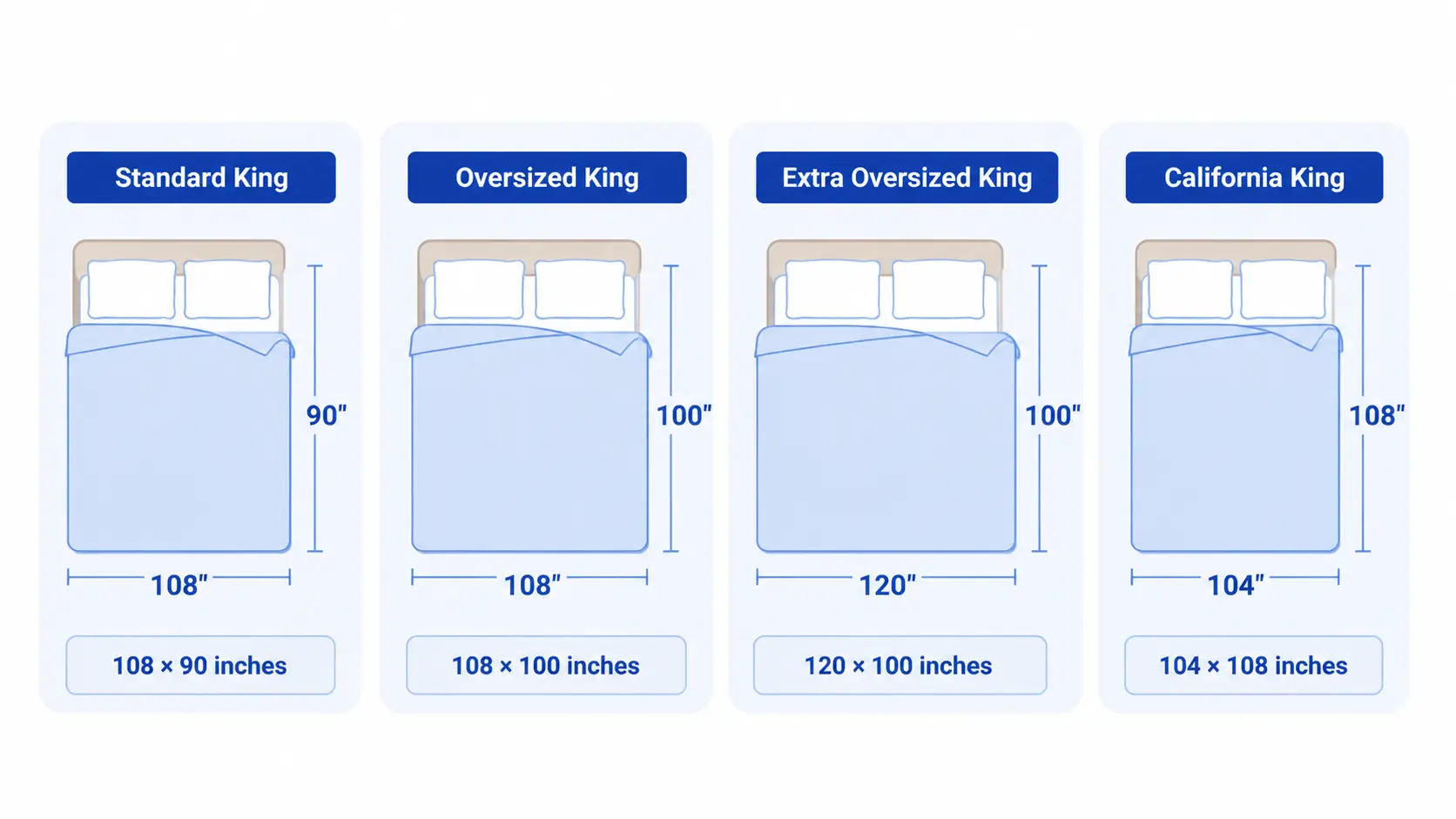
King blankets come in several common sizes, with larger options offering better side coverage for couples, tall sleepers, and thicker mattresses.
Blanket dimensions can also vary depending on the fabric, brand, and intended bed style. Some people prefer oversized blankets because they provide more drape and reduce blanket pulling during sleep.
Choosing the right king blanket size improves comfort, warmth, and overall bed coverage. The right dimensions also help the blanket hang more evenly across the sides of the mattress.
Oversized Blanket Sizes
Oversized blankets are designed for people who want extra coverage beyond standard bedding dimensions.
They are especially popular with couples, taller sleepers, and anyone using a deep or pillow-top mattress who needs more fabric along the sides.
Oversized queen blankets are typically 98 x 98 inches, while oversized king blankets can be 120 x 100 inches or larger, depending on the brand. The added width helps reduce blanket pulling during sleep and creates a fuller look across the bed.
Many people also prefer oversized blankets during colder months because the extra fabric keeps more of the body covered through the night.
As modern mattresses continue to get thicker, oversized bedding has become a practical option rather than just a luxury upgrade for many households today.
How to Choose the Right Blanket Size
Picking the right blanket takes more thought than just grabbing the closest size on the shelf. Your height, mattress depth, sleeping habits, and who shares your bed all point you toward the right fit. These five factors make the whole process much simpler.
- Start with your height: A throw at 50 x 60 inches is ideal for lounging. Sleepers need a twin blanket at minimum, and taller adults over six feet need a queen or longer.
- Match the bed size: Blankets are bigger than mattresses by design. Add 6 to 12 inches of drape per side so the fabric hangs evenly over both edges.
- Check mattress depth: Thick mattresses eat up more blanket fabric along the sides. Mattresses over 12 inches deep often benefit from one size up for proper drape and coverage.
- Think about sharing: Two sleepers need at least a queen blanket for a queen bed. A king blanket fits a king bed better and reduces overnight cover pulling.
- Consider material shrinkage: Cotton and wool can shrink 3 to 5 percent after washing. Always check the care label and size up if you plan to machine wash often.
A few quick measurements before you shop saves a lot of trouble later. The right blanket stays put all night, looks great on the bed, and keeps everyone comfortable year-round.
Blanket Size vs Comforter Size vs Throw Size
Blanket, comforter, and throw sizes differ in both purpose and dimensions.
Throws are the smallest option, usually around 50 × 60 inches, and are mainly used for sofa lounging, layering, or decorative styling.
Blankets are larger, lightweight layers designed for everyday warmth and are available in twin, queen, king, and California king sizes.
Comforters are thicker, filled bedding pieces made to serve as the primary bed covering, especially during colder months.
While blankets focus on flexibility and layering, comforters provide fuller insulation and a more finished bed appearance. Choosing the right size depends on mattress dimensions, body coverage needs, and how the bedding will be used.
Getting that right from the start means less guessing and better sleep every night.
Blanket Sizes by Material and Use
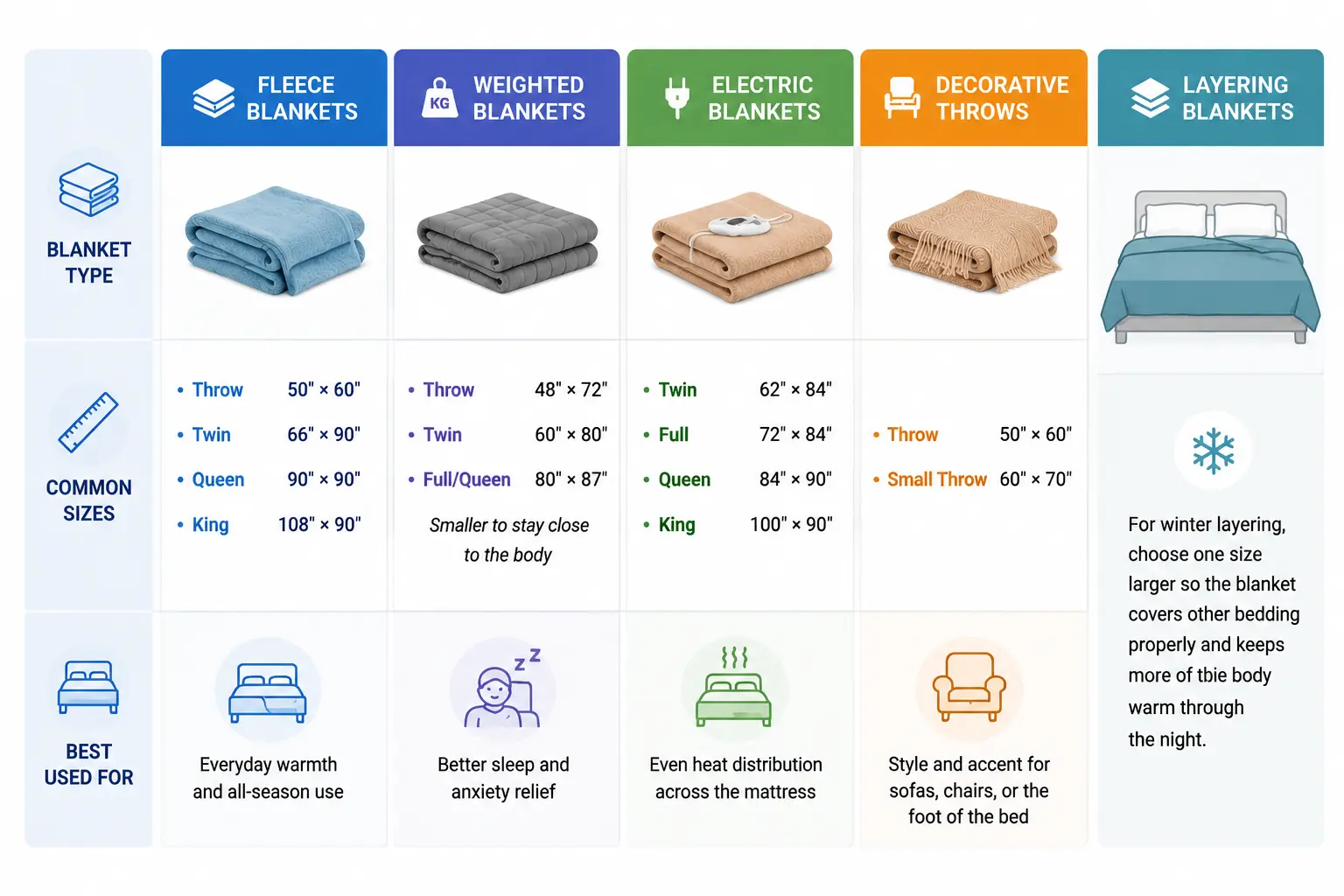
Blanket size changes based on how the blanket is used and what it is made from. Fleece blankets are usually lightweight and come in throw, twin, queen, and king sizes for everyday warmth.
Weighted blankets are smaller because they are meant to stay close to the body rather than hang over the edges of the bed. Electric blankets often match mattress sizes closely for even heating across the surface.
Decorative throws are smaller and work best on sofas, chairs, or the foot of the bed. Layering blankets during winter is usually done with one size larger so they cover other bedding properly and keep the body warmer through the night.
Common Blanket Sizing Mistakes
Small sizing slip-ups can leave you cold at night or stuck with a blanket that bunches up on both sides. Most of these mistakes are easy to skip once you know what to look for.
- Buying based on mattress size: A queen mattress is 60 x 80 inches, but its blanket runs 90 x 90 to 100 inches for proper side draping.
- Choosing a throw for sleeping: A 50 x 60-inch throw covers only part of the body. It is too short for full-body coverage during sleep.
- Forgetting mattress thickness: Deep or pillow-top mattresses over 12 inches use up extra blanket fabric on the sides, reducing the amount of fabric hanging over the sides.
- Confusing king and California king: A standard king blanket is wider. A California king blanket is longer and slightly narrower than a standard king blanket. Grabbing the wrong one means a poor fit.
Getting the right blanket size takes only a few extra minutes before you buy. Measure your mattress, factor in the depth, and always check the product dimensions rather than relying on the label alone.
Conclusion
The right blanket size keeps the entire body covered, fits the mattress properly, and reduces the need for constant adjusting during the night. A quick measurement before buying prevents most sizing mistakes completely.
A child on a twin bed, a tall adult craving full-length coverage, or two people sharing a king all have different needs.
Getting familiar with blanket sizes compared to a person turns a confusing shopping trip into a two-minute decision.
Measure the mattress, factor in the depth, and match the blanket to the sleeper. Get that part right and cozy, comfortable nights follow naturally.
Disclaimer: The blanket dimensions provided in this guide are based on widely accepted industry standards. Actual measurements may vary by brand, manufacturer, and material. Always check the product label or listing before purchasing.
Frequently Asked Questions
Is a King Blanket Too Big for A Queen Bed?
A king blanket at 108 x 90 to 100 inches fits perfectly on a queen bed and creates extra drape on both sides, making it a solid pick for couples.
What is the Standard King Blanket Size?
The standard king blanket size is 108 x 90 to 100 inches. This covers a 76 x 80-inch king mattress with about 16 inches of drape on each side.
How Big Should a Blanket Be for One Person?
A twin blanket at 66 x 90 inches covers one adult person from shoulders to toes. Taller adults may need a 90-by-100-inch queen for full head-to-toe coverage.
What Blanket Size Is Best for Tall People?
Tall people over six feet do best with a queen at 90 x 100 inches or a California king at 102–104 × 106–108 inches for full-body coverage.