





Waking up in the middle of the night can happen during normal sleep, but stress, caffeine, and other sleep disorders make it harder to settle it again.
The question: “Why do I wake up in the middle of the night?” becomes more useful when you notice what happens afterward: do you drift off, or spend the next hour awake?
Some people scroll on their phones until they feel exhausted and fall asleep with their phone in hand, and sometimes it works, but it’s not a good practice.
As a health coach, I recommend starting with that distinction.
Falling asleep easily does not guarantee uninterrupted sleep, and the pattern of your awakenings can help you decide what to change or discuss with a doctor.
Why Do I Wake Up in the Middle of the Night
Sleep moves through different sleep cycle stages throughout the night.
Brief awakenings can happen between them, sometimes without you remembering.
An awakening becomes more disruptive when something keeps you alert or repeatedly interrupts your rest.
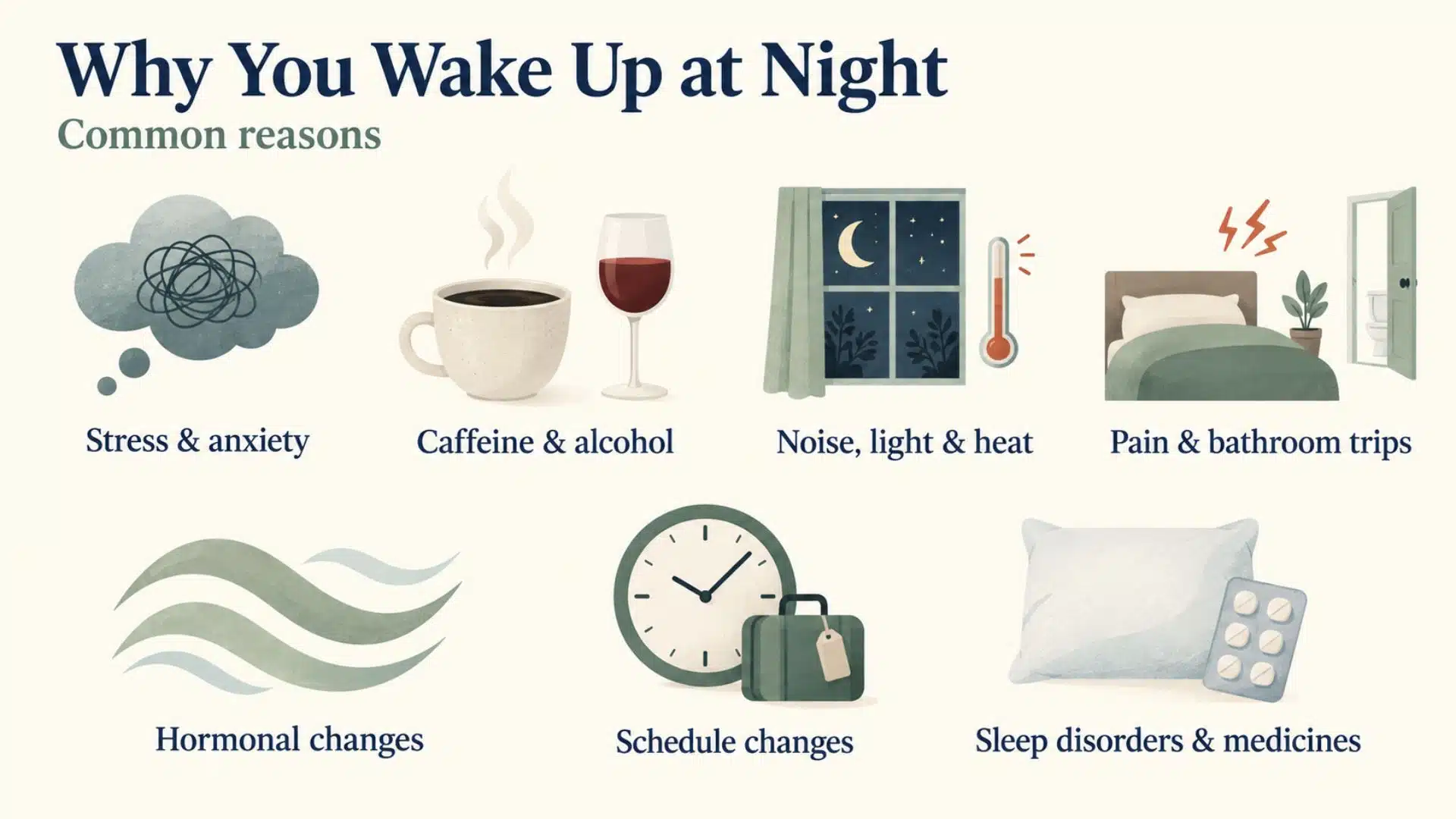
Stress, Anxiety, and Racing Thoughts
You can feel exhausted at bedtime and still wake with your mind working through tomorrow’s problems. Stress can interfere with sleep, while frustration about being awake adds another layer of tension.
Notice what occupies your thoughts after waking. Planning, replaying conversations, or calculating how tired you will feel tomorrow can keep the cycle going. Anxiety and depression may also contribute to ongoing sleep difficulties.
Caffeine, Alcohol, and Nicotine
Caffeine can affect sleep hours after you consume it. Coffee is only one source; tea, energy drinks, some sodas, and pre-workout products also count.
Alcohol creates a different problem. It may make you drowsy initially, then leave sleep more fragmented later. Nicotine can also interfere with sleep. Falling asleep quickly after using a substance does not mean it helps you stay asleep. NIH sleep guidance covers these contributors.
Noise, Light, and an Overheated Bedroom
A room that felt comfortable at bedtime may become warm before morning. A partner starts moving, a pet jumps onto the bed, or a phone notification lights up the nightstand.
Look for actual disturbances before buying anything. If light reaches your pillow, address the light. If you wake hot, check your bedding and room temperature. A sleep product is useful only when it solves the problem you have.
Bathroom Trips, Acid Reflux, and Pain
A full bladder, heartburn, back pain, or a painful leg cramp can interrupt sleep. These deserve attention beyond trying harder to relax.
Large late meals may worsen reflux, while drinking heavily near bedtime can increase bathroom trips.
However, frequent urination is not always a fluid-timing issue. Mention repeated bathroom awakenings to your clinician, particularly if they continue despite reasonable adjustments.
Hormonal Changes and Aging
Perimenopause can bring hot flashes and night sweats that interrupt sleep. Pregnancy, the postpartum period, and menstrual changes can also affect sleep through a mixture of physical changes, discomfort, mood, and altered routines.
Sleep patterns may become more fragmented with age. Still, don’t automatically dismiss new or worsening symptoms as aging or “just hormones.”
Travel and Changes to Your Sleep Schedule
Crossing time zones, sleeping in an unfamiliar room, or changing work hours can disturb your usual sleep timing.
Consider recent changes even if they seem unrelated. An earlier alarm, later bedtime, or different weekend routine may help explain when the problem began.
Sleep Disorders and Certain Medicines
Sleep apnea can cause repeated breathing interruptions during sleep. Loud snoring, gasping, or breathing pauses noticed by a partner warrant medical attention.
Restless legs syndrome involves an urge to move the legs, often with uncomfortable sensations during rest. It differs from a sudden, painful muscle cramp.
Some medicines can also disturb sleep.
Ask a clinician or pharmacist about a possible connection if awakenings began after starting a medicine or changing its dose. Do not stop prescribed treatment yourself.
How to Fall Back Asleep After Waking Up
The aim is to reduce alertness and frustration. You don’t need a perfect routine or to make sleep happen on command.
- Leave the clock alone. Turn the display away and resist checking your phone. Counting remaining sleep hours can create pressure without helping you rest.
- Address immediate discomfort. Use the bathroom if needed, adjust your bedding, or follow your existing care plan for a condition that causes nighttime discomfort.
- Try gentle relaxation. Breathe slowly and comfortably. Alternatively, gently tense and release muscle groups one at a time, skipping painful areas. Let this be a way to settle rather than a test you must pass.
- Get up if you remain awake. After roughly 20 minutes, estimated without watching the clock, move to a comfortable chair. Read something quiet or listen to calming audio with the screen off. Keep enough light to move safely, but avoid bright overhead lighting.
- Return when sleepy. Look for heavy eyelids or difficulty following your reading. If you become fully awake again, repeat the quiet break as needed.
Avoid turning this time into an opportunity to answer emails, pay bills, or catch up on news.
Johns Hopkins Medicine recommends leaving bed during prolonged wakefulness to help preserve the association between bed and sleep.
Why You Keep Waking Up at the Same Time Every Night

Waking up at 3 a.m. can feel suspiciously precise. However, the time on the clock does not identify the cause.
A regular bedtime may produce a recurring sleep pattern. The same environmental disturbance may also happen nightly, such as heating switching on or noise outside. Waking can become an anticipated pattern, particularly when you start worrying about that hour.
Pay attention to accompanying symptoms and how long you remain awake. The same waking time can occur in people with very different circumstances. It does not, by itself, establish high cortisol, low blood sugar, or a hormone disorder.
Is Waking Up Every Night Normal
Brief waking followed by an easy return to sleep can be normal. It is more concerning when awakenings are prolonged, distressing, or leave you struggling during the day.
Instead of aiming for a night you never remember waking, consider how rested and functional you feel. Repeated tiredness, irritability, or difficulty concentrating provides useful context.
Why You Can Fall Asleep Easily but Cannot Stay Asleep
Falling asleep and staying asleep are separate parts of the experience. You may be sleepy enough to drift off at bedtime, yet stress, discomfort, or another disturbance may still interrupt your night.
Persistent difficulty staying asleep or falling back asleep is often called sleep maintenance insomnia. It describes the sleep problem, not its cause.
Physical exhaustion does not rule it out. If you already exercise and follow a bedtime routine, adding more effort may not address what is waking you.
How to Reduce Nighttime Wake-Ups
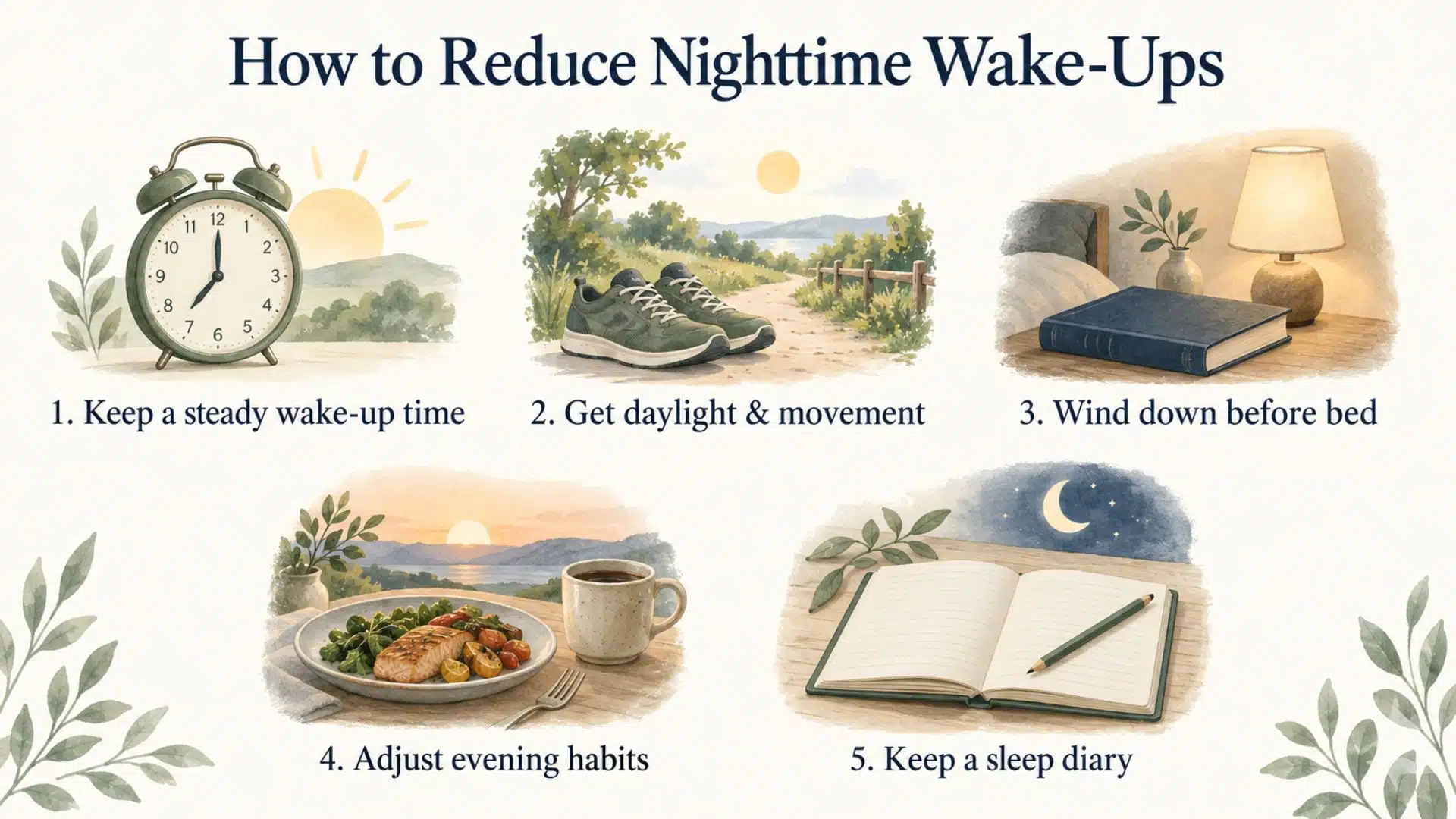
I recommend choosing one or two changes that match your pattern. Use a sleep hygiene checklist to identify a starting point, then give yourself time to notice what helps.
1. Keep a Consistent Wake-Up Time
Use a reasonably consistent wake-up time, including after a disrupted night. Go to bed when sleepy rather than spending extra hours in bed trying to compensate.
Long or late naps can make nighttime sleep harder for some people. If naps seem connected to your awakenings, adjust their timing or duration. These habits are among Mayo Clinic’s recommendations.
2. Get Daylight and Regular Physical Activity
Make room for daylight and movement during the day. A walk can provide both without requiring a new fitness plan.
If intense late workouts leave you feeling alert, try moving them earlier.
Don’t assume exercise is the problem just because nighttime waking began around the same time.
3. Make Room for Winding Down
Give unfinished tasks somewhere to go before bedtime. Write down tomorrow’s priorities, then close the notebook.
A quiet routine can help create a transition from activity to rest, but daytime stress deserves attention too.
Short breaks, manageable workloads, and appropriate mental health support may matter more than adding another bedtime ritual. Texas Health’s advice includes getting daylight, staying active, and managing daytime stress.
4. Adjust Evening Food and Drink Habits
If you use caffeine later in the day, try an earlier cutoff and observe your sleep. Cutting back on evening alcohol is another useful place to start.
If heartburn keeps waking you, elevating your bed for reflux may reduce nighttime discomfort.
For reflux, watch large meals close to lying down. For bathroom awakenings, avoid drinking a large amount right before bed, while staying hydrated during the day.
Don’t automatically add a bedtime snack. It may be unnecessary and could aggravate reflux.
5. Keep a Simple Sleep Diary
For one to two weeks, record your bedtime, wake-up time, estimated awakenings, and next-day tiredness.
Add relevant details such as caffeine, alcohol, medicines, pain, or night sweats.
Complete it in the morning. Approximate entries are enough; tracking should not become another reason to watch the clock.
Why Sleep Aids May Not Solve Nighttime Waking
A product that makes you drowsy may not address pain, breathing interruptions, reflux, or ongoing sleep-related worry.
Melatonin is not a universal solution for staying asleep, and persistent awakenings are not a reason to keep increasing the dose. Over-the-counter sleep medicines also have limitations and potential side effects.
Magnesium receives plenty of attention online, but there is insufficient rigorous evidence to establish its effectiveness for insomnia.
If you regularly need something to sleep, discuss the pattern with a clinician instead of cycling through products.
When to Talk to a Doctor About Interrupted Sleep
Arrange an appointment if repeated awakenings affect your concentration, mood, work, or ability to function.
You do not need to wait months when symptoms are already troublesome.
Seek evaluation for gasping, choking, or witnessed breathing pauses. Recurring pain, frequent urination, and persistent night sweats also deserve discussion.
A clinician may review your sleep diary, health history, medicines, and symptoms. Clinicians select tests based on the findings; not everyone with nighttime waking needs a sleep study.
For chronic insomnia, cognitive behavioral therapy for insomnia, or CBT-I, is usually a first treatment option.
It addresses behaviors and thoughts that maintain sleep difficulties and goes beyond general advice about a dark bedroom or an earlier caffeine cutoff.
Getting Back to More Restful Nights
Start with the detail you can act on: a late coffee, an overheated bed, or worries that follow you into the night.
Make one relevant adjustment and note what happens over the next week or two.
If nothing obvious explains the waking, bring that information to a clinician.
You don’t need a flawless bedtime routine to deserve help, and persistent sleep trouble isn’t a failure of discipline.
The next step should clarify the problem, not make bedtime more demanding.
Frequently Asked Questions
Why Do I Wake Up in the Middle of the Night for No Reason?
The trigger may not be obvious. Brief awakenings can occur normally, while subtle discomfort or sleep disruption may go unnoticed. Duration and daytime effects help distinguish the concern.
Why Do I Keep Waking Up Every Hour After Falling Back Asleep?
Repeated awakenings can have several causes, including ongoing disturbances or a sleep disorder. The hourly pattern alone cannot identify which one; persistent, unrefreshing sleep deserves evaluation.
Why Do I Wake Up After Four Hours of Sleep?
Four hours is not a diagnostic threshold. Your sleep timing and potential triggers matter more than the exact interval, especially if you remain awake or feel tired afterward.
Should I Sleep In After a Bad Night?
Generally, keep your usual wake-up time rather than shifting your schedule substantially. If you are dangerously sleepy, avoid driving or other activities that require sustained attention.