





You work your ass off all day, drag yourself through the evening, and spend half the time thinking about finally getting into bed.
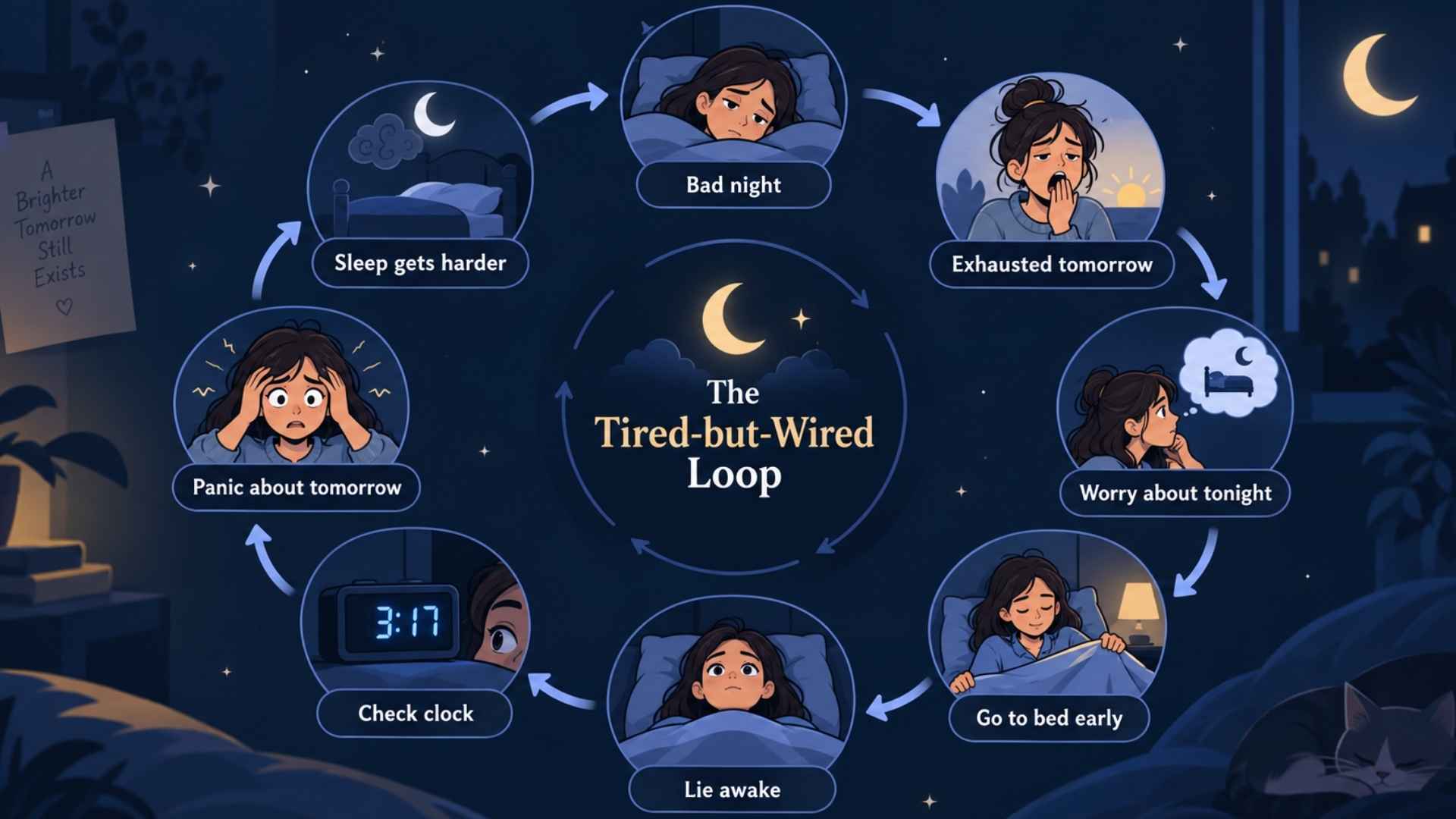
Then the lights go out, your head hits the pillow, and somehow your brain decides this is the perfect time to wake up.
Your eyes feel heavy, your body feels drained, but your thoughts keep running like they have somewhere to be. It is frustrating because being this tired should mean falling asleep easily, right?
Not always. My body may have clocked out, but my brain apparently missed the memo. That is where the problem usually starts.
Why Am I Tired but Can’t Sleep?
Feeling tired does not always mean your brain is ready to sleep. That is why the question “why can’t I sleep even though I’m tired?” feels so confusing.
Your body may be drained, while your brain stays switched on because of stress, too much caffeine, late naps, screen time, or an irregular sleep schedule.
Sometimes you become “tired but wired,” physically exhausted but mentally alert. Being overtired can actually make it harder to settle down, especially if your thoughts start racing the moment the room gets quiet.
Your internal body clock also matters. If your sleep pressure and natural sleep timing are out of sync, you may feel exhausted without actually feeling sleepy enough to drift off.
Tired and Sleepy Are Not Actually the Same Thing
Tired and sleepy sound the same, but your body treats them differently.
- Tired or fatigued means you feel drained, low on energy, mentally worn out, or just done with the day.
- Sleepy means your body is actually pushing you toward sleep. Your eyes may keep closing, your head may nod, and staying awake starts to feel difficult.
You can be completely exhausted without feeling truly sleepy. That is where the confusion starts.
Two main things determine when you fall asleep. First, sleep pressure builds the longer you stay awake, like a battery draining throughout the day. Second, your body clock decides when your brain expects sleep and when it expects you to stay alert.
If those two are not lining up, your body may be begging for rest while your brain is still saying, “Nope, we are apparently awake.”
Why Can’t You Sleep Even Though You’re Tired?

There is rarely just one reason. Stress, overtiredness, late naps, caffeine, an off-track sleep schedule, or an underlying sleep problem can leave the body exhausted while the brain stays stubbornly awake.
Stress and Racing Thoughts at Night
The room finally gets quiet, and suddenly tomorrow’s deadlines, old conversations, money worries, and relationship drama all want attention. Then comes the dreaded sleep math: “If I fall asleep now, I can still get six hours.”
Worrying about getting enough sleep, even under a calming weighted blanket, can make the problem worse by keeping the mind alert.
Being Overtired Can Make You Feel Wired
Sometimes exhaustion does the opposite of what you expect. Instead of peacefully passing out, you feel irritated, foggy, restless, and strangely alert.
Racing thoughts may start, followed by reaching for the phone because sleep clearly is not cooperating. Basically, the body is cooked while the brain is still taking side quests.
An Irregular Sleep Schedule Can Throw Off the Body Clock
Going to bed at midnight one night and 3 a.m. the next can confuse the body’s internal timing. Sleeping late on weekends, shift work, travel, or suddenly going to bed much earlier after a bad night can do the same.
A more regular routine helps the sleep-wake cycle know when bedtime is coming.
Late or Long Naps Can Reduce Sleep Pressure
A nap is not automatically bad. Sometimes you genuinely need one. But a long or late-afternoon nap can reduce the sleep pressure that has been building since morning.
By bedtime, the body may feel less ready to sleep. If nighttime sleep is becoming difficult, notice when and how long those daytime naps happen.
Caffeine and Nicotine Can Keep the Brain Alert
That afternoon coffee, energy drink, strong tea, pre-workout, or nicotine may be doing more than keeping the afternoon slump away. These stimulants can interfere with falling asleep, although sensitivity varies from person to person.
Alcohol is different: it may make you drowsy initially but can lead to lighter, more interrupted sleep later.
Doomscrolling Can Keep the Brain in Day Mode
“One more reel” can easily become another 45 minutes. Phones bring bright light, messages, videos, news, and emotional stimulation into the exact moment the brain should be winding down.
Electronic devices near bedtime can interfere with the sleep-wake cycle, so scrolling until your eyes hurt is not exactly helping the cause.
Insomnia May Be Part of the Problem
One rough night does not automatically mean insomnia. The condition can involve trouble falling asleep, staying asleep, or getting good-quality sleep despite having enough opportunity to rest.
According to the NIH, chronic insomnia happens at least three nights a week, lasts longer than three months, and is not fully explained by another health problem.
Another Sleep or Health Condition May Be Involved
Sometimes the problem goes beyond bedtime habits. Sleep apnea, restless legs symptoms, body-clock disorders, thyroid conditions, anemia, ongoing back pain, anxiety, depression, or certain medicines may affect sleep or leave you exhausted during the day.
Persistent tiredness deserves a proper check rather than endless guessing at 2 a.m., especially when it keeps affecting daily life.
Is it Overtiredness or Could It Be Insomnia?
Overtiredness and insomnia can feel similar, but the pattern is usually different. Overtiredness often follows too little sleep or several exhausting days.
You may feel drained yet strangely wired, with racing thoughts or difficulty settling down. Cleveland Clinic notes that overtiredness can leave the body exhausted while the brain remains alert.
Insomnia, on the other hand, involves repeated trouble falling asleep, staying asleep, or getting good-quality sleep even when there is enough time and opportunity to rest.
It may also begin affecting concentration, mood, and daytime energy. The National Heart, Lung, and Blood Institute considers insomnia chronic when it occurs at least three nights a week for three months or longer.
What Can I Do When I’m Tired but Can’t Sleep?
Start with what can help tonight, then make a few small changes over the next week. The goal is not perfect sleep hygiene, just fewer things working against sleep.
- Stop forcing sleep: Telling yourself “I need to sleep now” usually adds pressure. Aim to rest and let sleepiness come back on its own.
- Stop checking the clock: Turn it away and quit calculating how many hours remain. Sleep math rarely makes anyone feel calmer.
- Put the phone down: Skip work emails, news, arguments, and endless scrolling once you are in bed. Give your brain less to process.
- Leave bed when you are wide awake: Sit somewhere quiet in dim light, do something calm, and return once you start feeling sleepy again.
- Choose something deliberately boring: Try a physical book, slow breathing, gentle music, or simple visualization instead of searching for the perfect sleep trick.
- Wake up around the same time: A fairly steady wake time helps your body clock stay on track, even after a rough night.
- Get some morning daylight: Natural light earlier in the day gives your body a clearer signal that daytime has started and helps reinforce sleep timing.
- Watch late caffeine: Coffee, tea, energy drinks, and pre-workout can affect people differently. Notice how late caffeine changes your own sleep.
- Keep naps earlier and shorter: Naps can help, but long or late naps may leave you less sleepy when bedtime finally arrives.
- Make the bedroom feel like nighttime: Keep it dark, quiet, comfortable, and slightly cool. A better sleeping temperature can make settling down easier.
You do not need to overhaul your entire routine overnight. Pick two or three changes, try them consistently for several days, and notice which ones actually make bedtime feel easier.
When Should You Talk to a Doctor?
It is worth talking to a doctor if sleep problems keep returning, especially when they start affecting work, school, mood, memory, or concentration.
You should also get checked if you snore loudly, notice breathing pauses at night, feel an uncomfortable urge to move your legs, or struggle with severe daytime sleepiness.
Medication changes can matter too, so mention if your sleep worsened after starting or adjusting a prescription. Ongoing trouble sleeping several nights a week for months deserves medical attention rather than more trial and error at home.
Depending on your symptoms, a doctor may review your sleep habits and medical history, suggest a sleep diary, order blood tests, or recommend an overnight sleep study.
Have a Good Night
There is something especially annoying about being exhausted all day, only to become wide awake the second your head hits the pillow. But sleep is not a switch you can bully into working.
Instead of collecting another dozen “sleep hacks,” start noticing the pattern behind your rough nights. Sometimes one small change tells you more than ten new tricks ever could.
Sleep usually gets harder when I turn it into tonight’s biggest mission. So rather than fighting the pillow, give your body a little space, fix what keeps throwing it off, and let sleep find its way back.
Frequently Asked Questions
Does Eating Late Affect Sleep Quality?
Heavy meals close to bedtime may trigger reflux, bloating, or discomfort, making it harder to relax and settle comfortably afterward.
What Happens If I Exercise Too Close to Bedtime?
Intense evening workouts may leave some people feeling alert, while gentle stretching or walking can help the body wind down.
Why Do Hormonal Changes Sometimes Disrupt Sleep?
Shifts during menstruation, pregnancy, or menopause can affect body temperature and comfort, making sleep less predictable each night.
How Does an Uncomfortable Mattress Affect Sleep?
Poor support or pressure points can cause aches and frequent position changes, making it harder to relax fully at night.