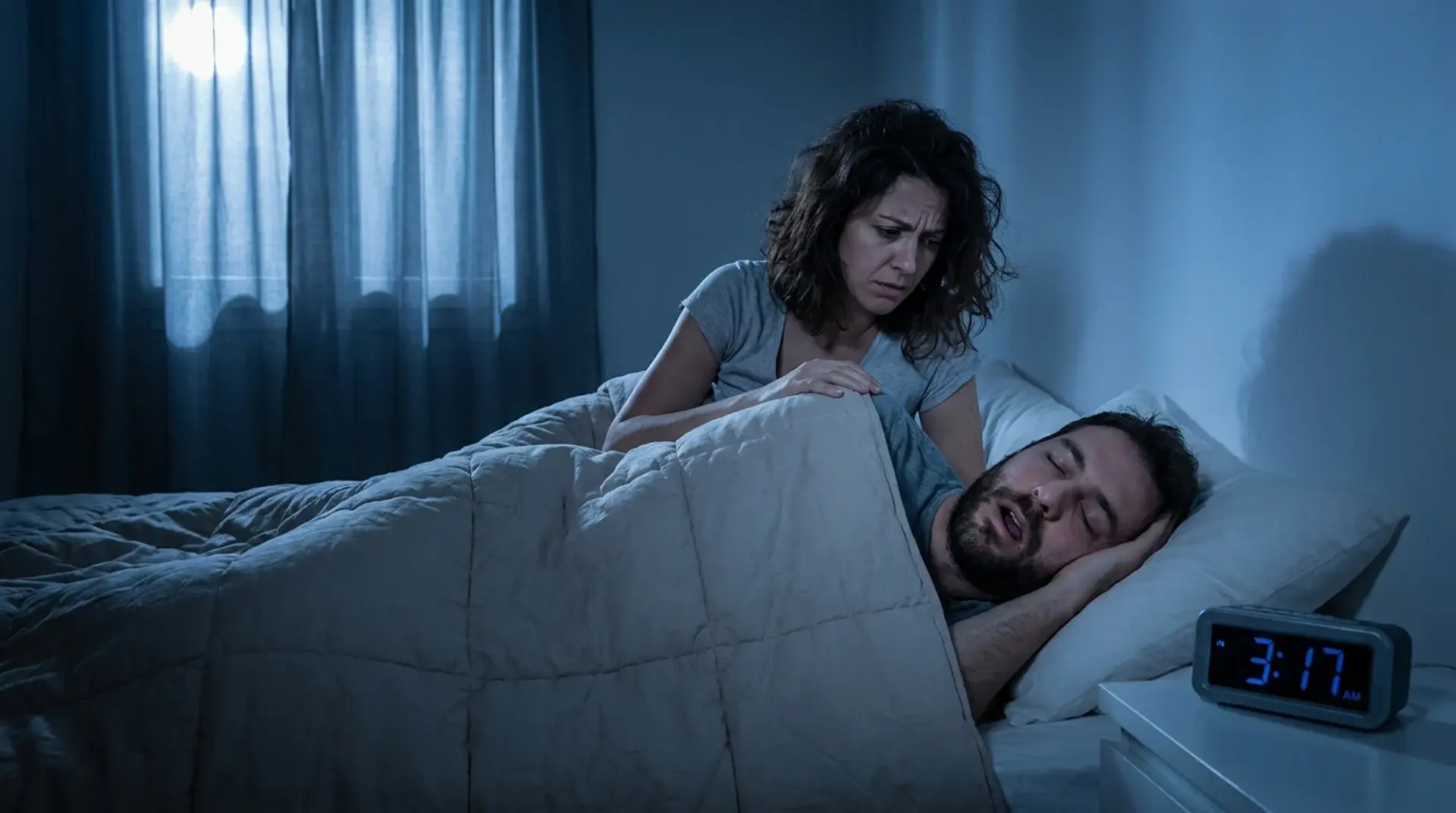

That ripping sound when you peel a strip off your nightstand might be the most effective five seconds of your bedtime routine.
Nasal strips work by gently lifting the sides of your nose, widening the nasal passages so air moves through more easily instead of vibrating soft tissue at the back of your throat.
Do nasal strips help with snoring? For many people, yes, especially when the issue starts with nasal congestion or a naturally narrow airway.
They will not fix snoring caused by sleep apnea or excess throat tissue, but as a low-cost first step, they are worth trying before anything more complicated.
Do Nasal Strips Really Help With Snoring?
Yes, nasal strips can help, but only for some people, and mainly for one reason: they open up narrow or blocked nasal passages.
The catch is that snoring doesn’t always start in the nose. A lot of snoring comes from the throat, where the soft palate or tissue near the back of the mouth vibrates as air passes by.
A nasal strip physically cannot reach that area, so it has no effect there. That’s why results vary so much from person to person.
Someone whose nose gets stuffy every allergy season may notice a real difference. Someone whose nose is already clear, but who snores loudly from throat tissue vibrating, likely won’t notice much change at all.
Nasal strips are best thought of as a simple aid worth testing, not a guaranteed cure.
How Do Nasal Strips Work?
Nasal strips improve airflow through the nose, not by changing the airway deeper in the throat. They are simple external devices designed to create more space inside narrow nasal passages.
- Nasal strips are adhesive bands that stick across the bridge of the nose and are also known as external nasal dilators.
- They contain a flexible support band that gently pulls the sides of the nose outward when placed correctly.
- This outward lift slightly widens the nostril opening, creating more room for air to pass through.
- They may help when nasal passages feel restricted because of allergies, a cold, congestion, or naturally narrow nasal anatomy.
- The goal is to reduce airflow resistance so breathing through the nose feels easier during sleep.
- They only address nasal airflow problems and cannot prevent snoring caused by throat tissues, tongue position, or airway collapse.
In simple terms, nasal strips are a mechanical solution for a mechanical problem. They can improve airflow through the nose, but they don’t fix every cause of snoring.
What Does Research Say About Nasal Strips for Snoring?
Research shows mixed results. Early studies found reduced snoring, but later reviews suggest nasal strips mainly improve nasal airflow and may help only people with congestion-related snoring.
Study | Participants | Finding |
|---|---|---|
Habitual snorers without sleep apnea | Partner-rated snoring decreased after 14 nights of use | |
People with chronic rhinitis | Snoring frequency dropped, but loudness and sleep measures largely unchanged | |
Systematic review | Improved nasal breathing, but no meaningful improvement in OSA outcomes |
The takeaway isn’t that nasal strips don’t work at all; it’s that they work inconsistently, and mostly for a specific kind of snoring: the kind tied to nasal congestion rather than the throat.
How to Test Nasal Strips at Home
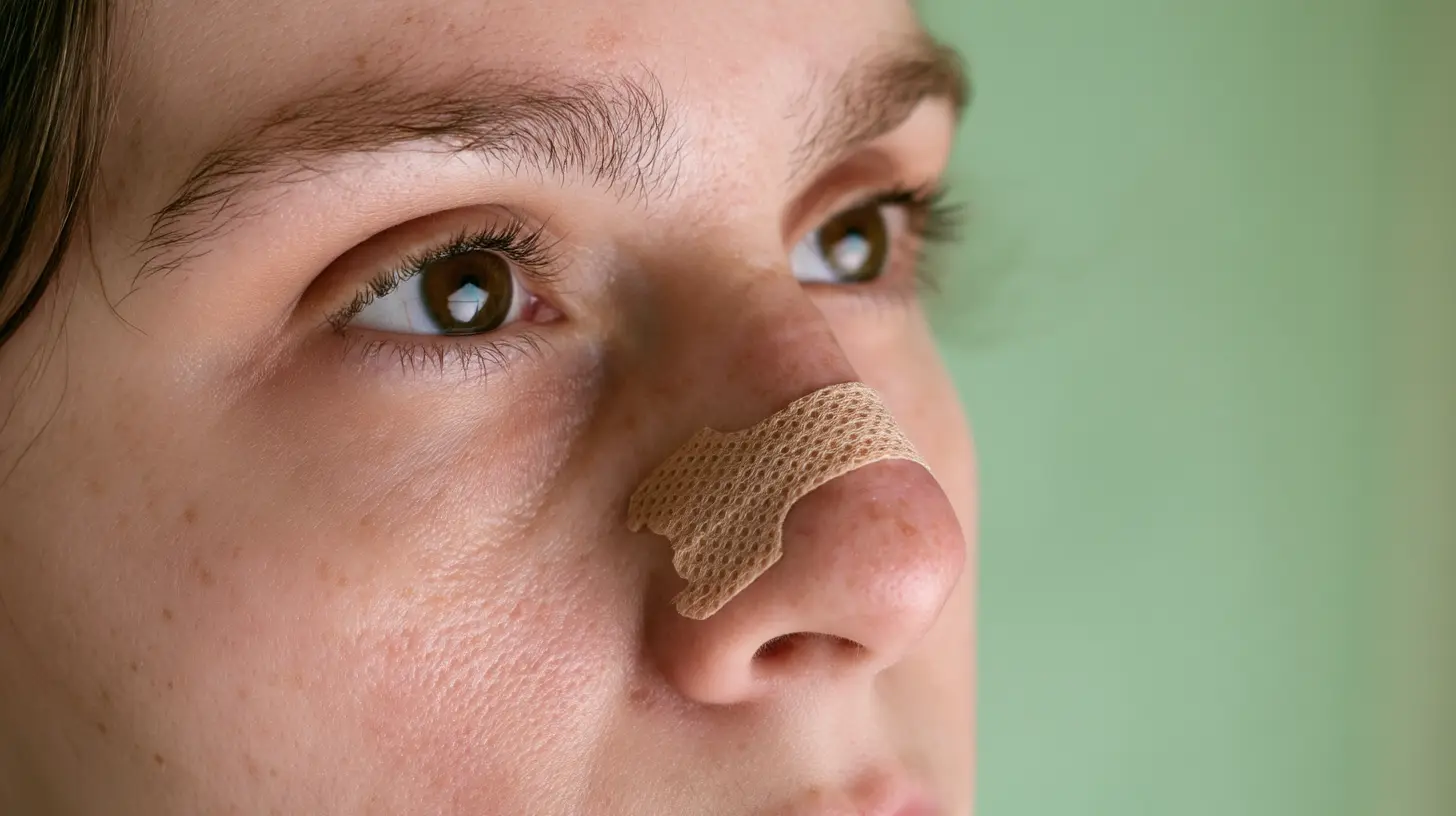
To see whether nasal strips help, use them consistently for several nights and track changes in breathing, comfort, and snoring, rather than judging after one use.
- Start with clean, dry skin so the adhesive holds.
- Position the strip across the widest part of the nose, right above the nostril flare.
- Use the same product for at least five to seven nights in a row.
- Keep your other sleep habits consistent during the test (same bedtime, same alcohol intake, etc.)
- Ask a bed partner whether the snoring has changed, or use the same recording method each night for comparison.
- Note anything else: easier nasal breathing, less dry mouth, skin irritation, or the strip coming loose.
Consistency matters more than any single night. One quiet night doesn’t prove they work, and one loud night doesn’t prove they don’t.
Side Effects of Nasal Strips and Who Should Not Use Them
Nasal strips are generally safe for most people, but they may cause minor skin irritation or discomfort. They only widen the nasal passages and do not treat snoring caused by throat blockage or sleep apnea.
- Skin irritation: The adhesive can cause redness, itching, or mild irritation, especially for people with sensitive skin.
- Discomfort during removal: Pulling off the strip may feel uncomfortable or remove small amounts of skin oil, particularly with frequent use.
- Poor fit: A strip that is too tight or placed incorrectly may cause discomfort and provide little benefit.
- Not suitable for sleep apnea: People with loud snoring, breathing pauses, gasping, or choking during sleep should not rely on nasal strips as a treatment.
- Avoid on damaged skin: Do not apply nasal strips over cuts, rashes, sunburn, or irritated areas around the nose.
- Limited benefit for nasal blockage causes: Severe congestion, nasal polyps, or structural issues like a deviated septum may require medical treatment instead.
Nasal strips can provide temporary relief for some people by improving nasal airflow, but they don’t solve every type of snoring. Persistent symptoms may need a proper evaluation.
Nasal Strips vs. Other Anti-Snoring Products
Nasal strips are one of many snoring solutions. Comparing options helps you choose the right one based on the cause.
Option | Best Suited For | Main Advantage | Main Limitation |
|---|---|---|---|
Nasal strips | Nasal congestion or narrow passages | Simple and drug-free | Only affects the nose |
Internal nasal dilators | Nasal restriction | Opens nostrils from the inside | Can feel uncomfortable |
Oral appliances | Snoring from deeper airway narrowing | Targets the jaw and throat airway | Usually needs a professional fitting |
Positional therapy | Back-sleeping snoring | No device inside the nose or mouth | Mainly helps positional snoring |
Congestion treatment | Allergy or cold-related blockage | Addresses the root nasal issue | Depends on the underlying cause |
Reviews comparing over-the-counter mechanical nasal dilators have found more consistent evidence for internal devices, while external strips like Breathe Right have shown weaker results overall, especially for sleep apnea-related outcomes.
For adults who need more than a nasal fix, the American Academy of Sleep Medicine and the American Academy of Dental Sleep Medicine recommend professionally fitted oral appliances to treat primary snoring and as an option for obstructive sleep apnea when a person can’t tolerate CPAP or prefers an alternative.
The joint clinical practice guideline recommends oral appliance therapy for adult patients with obstructive sleep apnea who are intolerant of CPAP therapy or prefer alternate therapy, and it also supports oral appliances as an effective treatment for primary snoring in adults.
Other Ways to Stop Snoring
Nasal strips are just one option, and not the most effective one for most people.
An estimated 90 million Americans report snoring at some point, according to the American Medical Association, and researchers have tested several other approaches head-to-head.
- Mandibular Advancement Devices: These mouthguard-style devices shift the lower jaw forward during sleep, helping prevent airway collapse. Research suggests they can reduce snoring by improving airflow and keeping the throat more open.
- Positional Therapy: Positional therapy encourages side sleeping because lying on the back can narrow the airway. Wearable devices that alert users when they turn over may help reduce snoring episodes.
- Weight Loss: Losing excess weight can reduce pressure around the neck and throat, helping improve airflow during sleep. Even modest weight loss may decrease snoring severity in some people.
- Cutting Back on Alcohol and Sedatives: Alcohol and sedatives relax throat muscles, increasing airway vibration during sleep. Limiting these substances before bedtime may help keep the airway more stable and reduce snoring.
- Treating Nasal Allergies and Congestion: Managing allergies, nasal blockage, or congestion can improve airflow and reduce mouth breathing. Treatments like saline rinses, allergy medicines, or medical advice may address the underlying cause.
- CPAP for Sleep Apnea: CPAP uses continuous air pressure to keep the airway open during sleep. It is commonly prescribed for obstructive sleep apnea after evaluation through a sleep study and diagnosis.
The right snoring solution depends on its cause. Lifestyle changes, sleep adjustments, and treatments may help, but persistent snoring with breathing pauses or fatigue requires medical evaluation for possible sleep apnea.
Can Nasal Strips Help With Sleep Apnea?
No, nasal strips are not a treatment for obstructive sleep apnea.
They may make nasal breathing feel easier for some people, but easier nasal breathing doesn’t stop the deeper, repeated airway collapse that defines sleep apnea.
Both older and more recent research reviews have not shown meaningful improvement in major sleep apnea outcomes from nasal dilators alone.
Are Nasal Strips Worth Trying for Snoring?
For people with mild, uncomplicated snoring, nasal strips are a simple, low-risk option. They are easy to use, but their effectiveness depends on what is causing the snoring.
Benefits | Limitations |
|---|---|
Easy to use with no learning curve | Results vary from person to person |
Drug-free and noninvasive | Adhesive may irritate the skin |
Affordable and widely available | May loosen or fall off during sleep |
May improve nasal airflow | Does not address throat-based snoring |
Can help identify if nasal blockage is contributing to snoring | Does not treat sleep apnea |
Nasal strips are worth trying if you suspect nasal congestion is affecting your breathing at night, but they are not a solution for every type of snoring.
When Should You See a Doctor About Snoring?
Simple fixes like nasal strips are fine to try on your own, but some signs call for a medical evaluation instead:
- Snoring happens almost every night
- You or a partner notice pauses in breathing
- You wake up gasping
- Daytime sleepiness is severe or affects your day
- Snoring continues despite trying simple fixes
- Nasal blockage is persistent or mostly on one side
Sleep medicine organizations recommend that a medical provider diagnose conditions like obstructive sleep apnea rather than relying on self-diagnosis or at-home guesswork alone.
Conclusion
Nasal strips can be a practical option when snoring is linked to nasal congestion or naturally narrow nasal passages. They’re simple, affordable, and may improve airflow for some people, but they won’t help snoring caused by the throat or airway collapse.
A short trial, five to seven nights, is usually enough to tell if nasal blockage is playing a role. If nothing changes, the cause is likely elsewhere.
If snoring comes with breathing pauses, choking, or daytime tiredness, talk to a healthcare professional rather than relying on nasal strips alone.
This article is for general information and isn’t a substitute for medical advice. Talk to a doctor about persistent snoring, especially if it happens alongside breathing pauses, gasping, or daytime fatigue.
Frequently Asked Questions
Do Breathe Right Strips Help with Snoring?
They can help people whose snoring is linked to nasal congestion, but research shows mixed results for overall snoring loudness and frequency.
Can You Wear Nasal Strips Every Night?
Yes, nasal strips are generally safe for nightly use, though some people experience mild skin irritation from repeated adhesive use over time.
Do Nasal Strips Work for a Deviated Septum?
Sometimes. They may slightly improve airflow, but a significantly deviated septum often needs a more targeted medical or surgical solution.
Are Internal Nasal Dilators Better than Nasal Strips?
Neither is clearly superior. Some people find internal dilators more effective, while others prefer the comfort and simplicity of external strips.