


Grounding sheets connect your body to the earth’s electrical charge while you sleep. Researchers have studied the benefits of grounding sheets on sleep, stress, pain, and inflammation, but current evidence remains limited.
Marketing pages often make grounding sound like settled science. It isn’t. Some findings look promising, especially around sleep and stress, but sample sizes are small and independent replication is still lacking.
Here is what the science actually shows, what a six-week trial run looked like in practice, and where the marketing gets ahead of the evidence.
What Are Grounding Sheets?
Grounding sheets, also called earthing sheets, are bedding made with conductive threads, usually silver or carbon fiber, woven into the fabric. A cord runs from the sheet to a grounded wall outlet or a separate grounding rod outside.
“Grounding” and “earthing” mean the same thing here. Both describe physically connecting your body to the earth’s natural electric charge, the same effect you’d get from walking barefoot on grass or wet sand.
The sheet does not send electricity into your body. It works the other way.
Skin contact with the conductive fibers lets your body’s charge equalize with the earth’s, the same as standing barefoot outdoors would.
Do Grounding Sheets Actually Work?
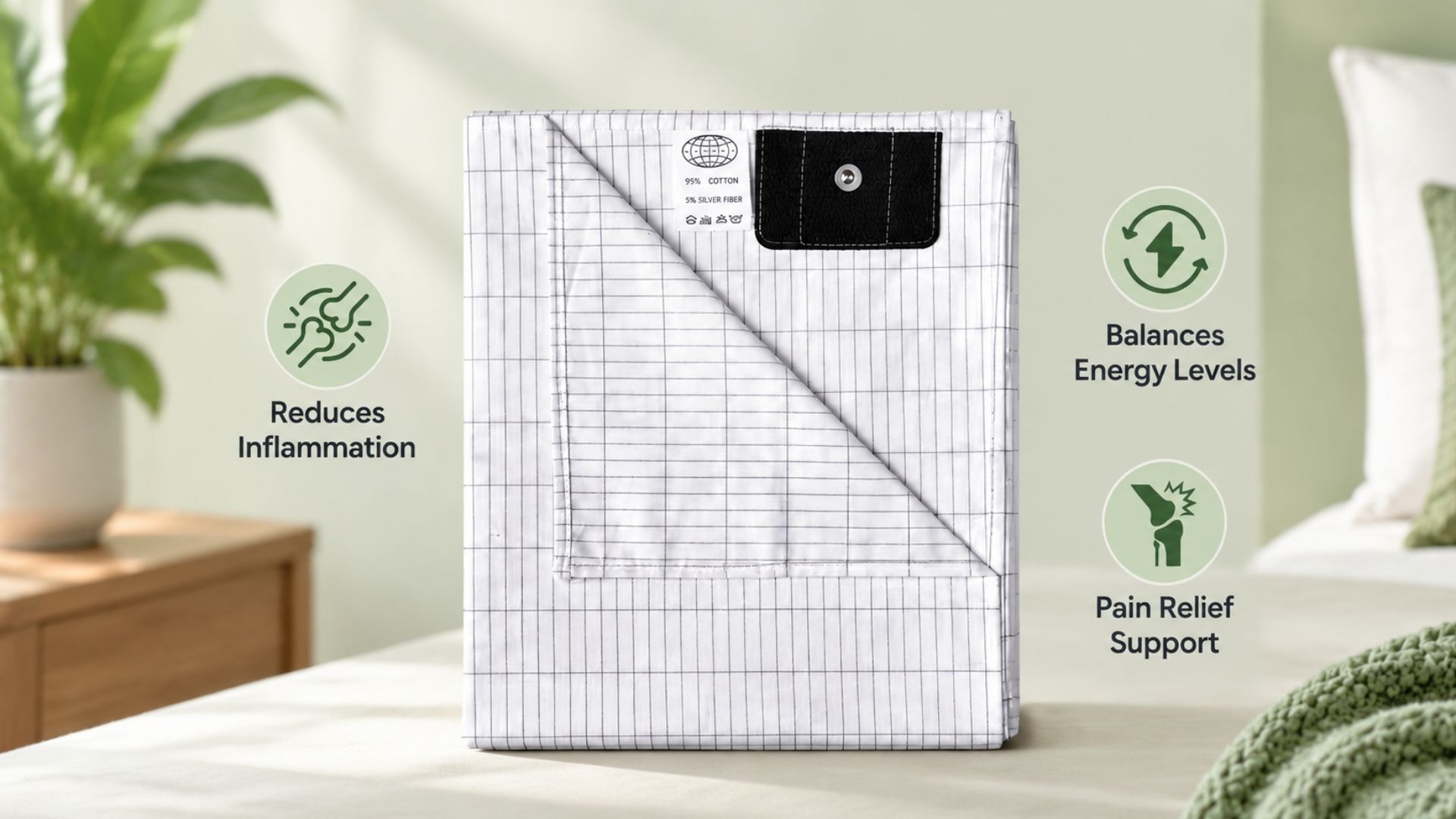
That depends on what you mean by “work.” The electrical connection itself is real and measurable. A few studies have confirmed that lying on a grounded sheet or mat changes the electric field around the body. What is still unproven is whether that change leads to any health benefit you would actually feel or measure over time.
In small published trials, participants using a grounded sleep system have reported faster sleep onset and fewer nighttime wake-ups within a few weeks of consistent use.
The data lined up with how sleep felt night to night, though a new sheet alone can make anyone pay closer attention to their sleep, which is worth factoring in before crediting the sheet itself.
Researchers run into a few consistent problems with grounding studies:
Issue | Why it matters |
|---|---|
Small sample sizes | Several key studies involved fewer than 30 people, some as few as 8 |
Weak study design | Many lack a control group or proper blinding |
Funding conflicts | Some research was conducted or funded by people with a financial stake in grounding products. |
Limited replication | Few independent labs have repeated the original findings |
None of that means grounding does nothing. That kind of conflict is exactly why independent replication matters here — and why it’s still missing.
Until that happens, it is hard to say how much of any reported benefit comes from the earth’s electrons versus a placebo effect or simply paying more attention to sleep.
The Theory Behind Grounding and Its Science
The idea traces back to a 2004 study by Ghaly and Teplitz, one of the earliest to test grounding sheets on sleep and cortisol.
It found that participants who slept grounded had cortisol rhythms that normalized over time, along with reported improvements in sleep.
The pain-reduction findings often paired with this study actually come from separate grounding research, covered further down. The sample was small, and the authors acknowledged that larger studies are needed.
Everyday life (insulated shoes, sitting on furniture, staying indoors most of the day) disconnects the body from that charge.
Direct skin contact with a grounded surface is thought to let free electrons flow into the body, where they may act as antioxidants and neutralize the free radicals linked to chronic inflammation.
A 2012 review published in the Journal of Environmental and Public Health and indexed on PubMed also suggested possible effects on inflammation, blood flow, and stress hormones. Several of the review’s authors are affiliated with the Earthing Institute and grounding product companies, the same funding-conflict pattern noted elsewhere in this article.
The same review also found that researchers need larger, independently funded studies before they can draw firm conclusions.
Grounding Sheets Benefits Researchers Have Studied
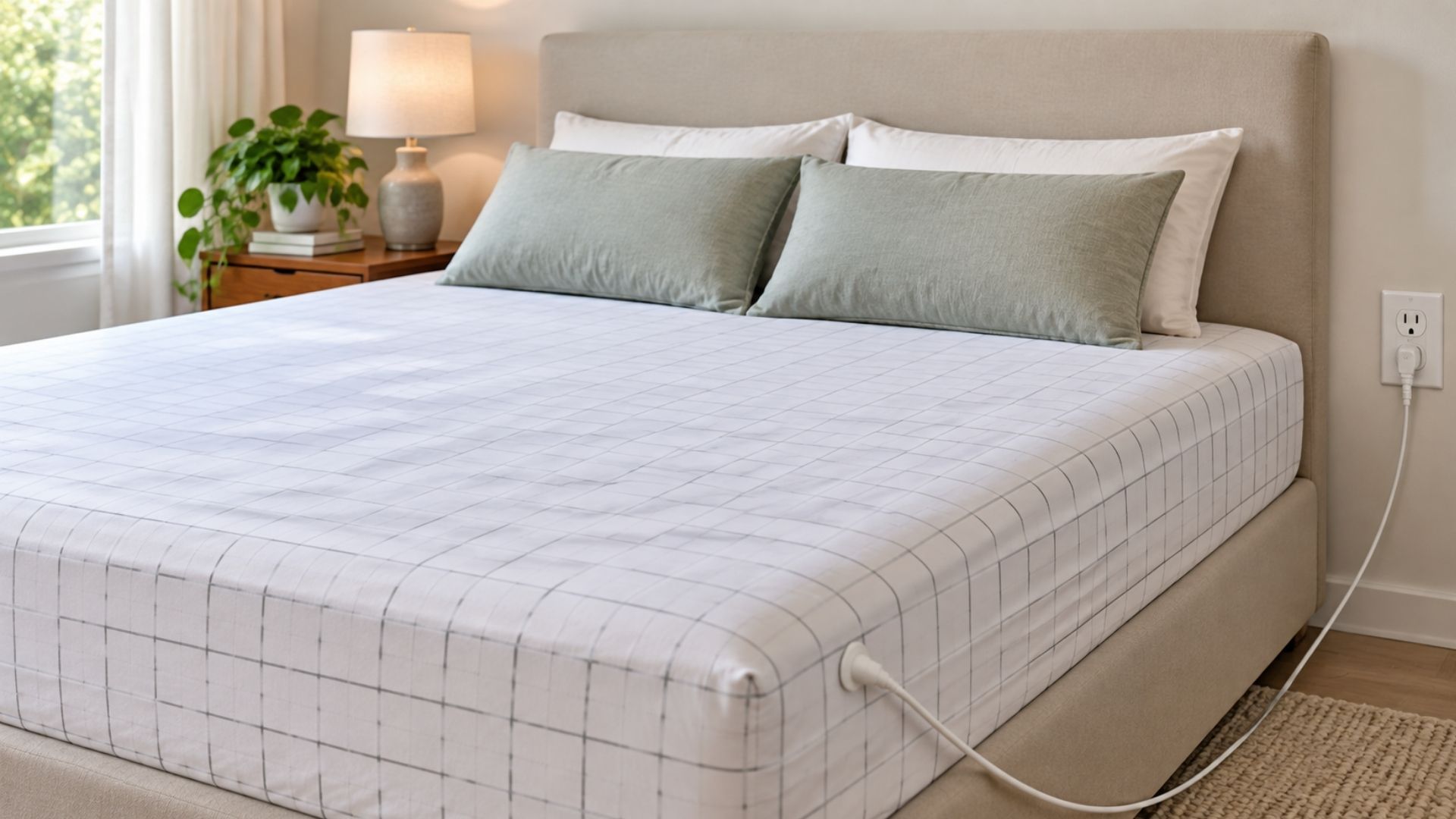
Most grounding research clusters around a handful of areas: sleep, stress, inflammation, and post-exercise recovery. Findings are usually described as preliminary rather than confirmed, for the same sample-size and funding-conflict reasons covered above.
- Sleep and stress. A small pilot study found changes in sleep complaints and cortisol patterns among people who slept grounded. Some users report falling asleep faster or waking less often, but self-reported experiences do not carry the same weight as a controlled trial.
- Muscle recovery and pain. One frequently cited study followed just eight people after exercise and found that those who slept grounded reported less pain and showed lab markers suggesting faster muscle recovery. The study’s own authors pointed out the small sample.
- Inflammation and blood flow. A handful of pilot studies have measured changes in inflammatory markers and blood viscosity after grounding sessions. Results point in a positive direction.
- Blood pressure. A small case series reported lower blood pressure readings among people with hypertension after grounding, though a larger trial has not replicated this.
Larger, independently funded research has not yet caught up with any of these early signals.
Grounding Sheets Benefits vs Popular Health Claims
Marketing pages tend to stack up a long list of promises. Some have early research behind them. Others do not hold up to scrutiny at all. Here is how the most common claims compare to what has actually been tested.
Claim | Current evidence |
|---|---|
Better sleep | Early findings from small studies |
Lower stress or cortisol | A few pilot studies suggest possible effects |
Reduced inflammation | Preliminary evidence only |
Faster muscle recovery | Limited to one small study |
Lower blood pressure | One small case series, not replicated |
Disease prevention | Not established |
Improved immunity | Not proven |
It helps to separate early research signals from claims that have not been tested at all. Repeating a claim on a product page often enough does not make it true.
Are Grounding Sheets Safe to Use?
Generally, yes, when used the way they are meant to be used. A few things matter for safe use.
- Confirm the outlet you are plugging into is properly grounded, ideally with an outlet tester
- Follow the setup instructions that came with the product
- Skip a sheet with a damaged cord or frayed conductive fibers
- Keep up with wash care so the silver or carbon threads stay conductive.
- Unplug the sheet during thunderstorms, since lightning can travel through grounding systems
None of this is complicated, but skipping any one of these steps is usually where the rare complaints about grounding products come from.
Do Grounding Sheets Cause Side Effects?
A handful of users mention tingling, mild headaches, or feeling unusually tired the first few nights. These reports are mostly anecdotal, and current research does not confirm them as a common reaction.
A board-certified sleep medicine physician interviewed by WebMD noted that these sensations may reflect increased body awareness or a placebo response rather than a physiological effect of grounding itself.
In most cases, any odd sensation fades within a few nights. Grounding sheets are not a substitute for medical treatment. If something feels off well beyond that point, or you have an ongoing health condition, it is worth checking with a doctor rather than pushing through it.
Grounding Sheets vs Grounding Mats
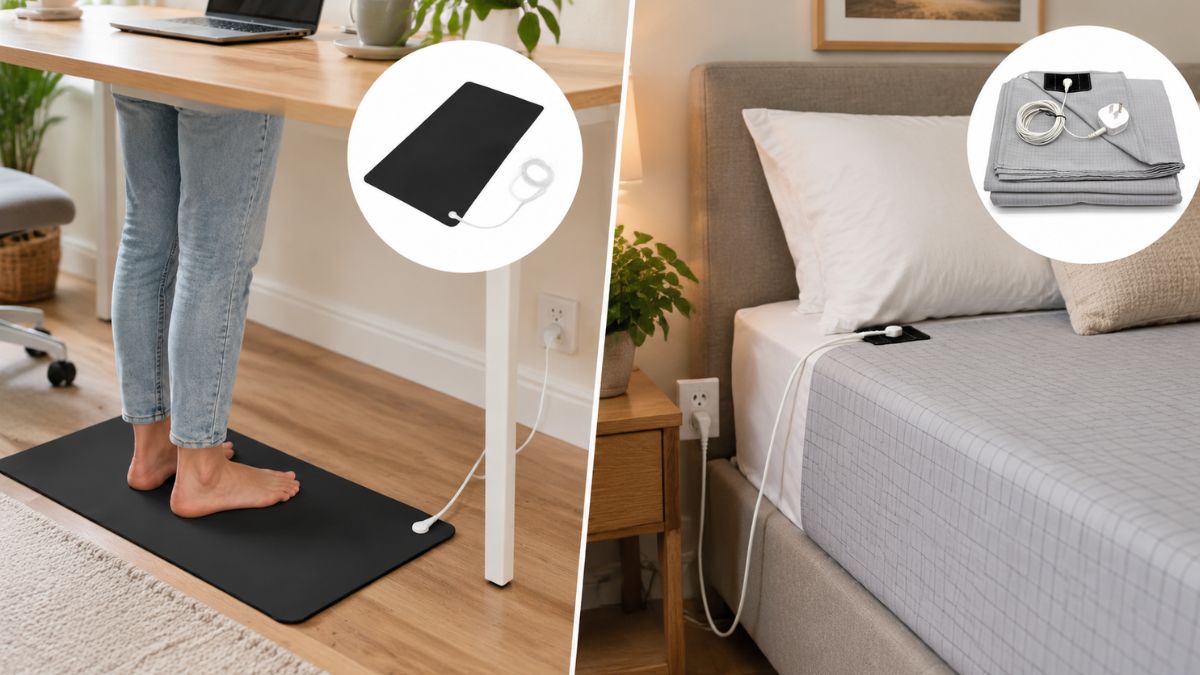
Grounding sheets and grounding mats work similarly, but you use them differently. You usually place a grounding mat under your feet while sitting, standing, or working.
A grounding sheet fits standard bedding sizes, so you can use it while sleeping.
A mat can be a simple way to try grounding during the day, such as while working at a desk. A sheet allows longer contact because you can use it while resting at night.
Both options follow the same idea of connecting your body to the ground. The better choice depends on how you want to use grounding in your daily routine.
How to Use Grounding Sheets Correctly
Getting the setup right can help you use a grounding sheet properly and avoid common mistakes. Before using one, make sure the grounding connection works and follow the product instructions carefully.
- Confirm the grounding connection is working before use.
- Place the sheet so the conductive area touches your skin during sleep.
- Keep the conductive panel in direct contact with your skin.
- Wash the sheet according to the care instructions to protect the fibers. Following the right routine to wash sheets properly can help maintain the fabric and keep the sheet in good condition.
- Track changes for a few weeks before judging results, as one good or bad night may not show the full effect.
A proper setup helps you get a clearer idea of how the sheet affects your sleep and comfort. Keep your expectations realistic and focus on long-term patterns rather than quick changes.
Grounding Sheets Compared With Proven Sleep Habits
It helps to keep some perspective here. A few sleep habits already have decades of solid research behind them:
- Keeping a consistent sleep and wake schedule
- Keeping the bedroom cool and dark
- Cutting back on caffeine in the evening
- Managing stress during the day
Grounding sheets work best as an addition to habits like these, not a replacement. If your sleep routine is already inconsistent, the sheet alone is unlikely to fix that. Your overall sleep setup also matters, and comfortable bedding materials like microfiber sheets can help create a better sleep environment.
Final Verdict
Grounding sheets may be worth trying if you are curious about earthing and want to add something new to your sleep routine.
Current research shows some interesting possibilities, especially around sleep and stress, but the evidence is still not strong enough to call them a proven health solution.
They work best as a small addition to healthy habits, not a replacement. Keep expectations realistic, watch for changes over time, and focus on what actually improves your comfort and sleep quality.
Frequently Asked Questions
How Long Does It Take for Grounding Sheets to Work?
Research doesn’t show a fixed timeline. Some people notice a difference within a few nights, others need two to six weeks of steady use, and some report no noticeable effect at all.
Can Grounding Sheets Reduce Inflammation?
A few small studies have measured changes in inflammatory markers after grounding, but the evidence is not strong enough yet to call grounding sheets an anti-inflammatory treatment.s
Are Grounding Sheets Safe to Sleep on?
Yes, for most sleepers, as long as the outlet is properly grounded and the cord and fibers are in good condition. They are not meant to replace a doctor’s care for an ongoing health issue.
What is the Difference Between Grounding and Earthing?
Nothing meaningful. The terms are used interchangeably to describe connecting the body to the earth’s electric charge, whether through bare feet outdoors or a conductive product like a sheet or mat.