
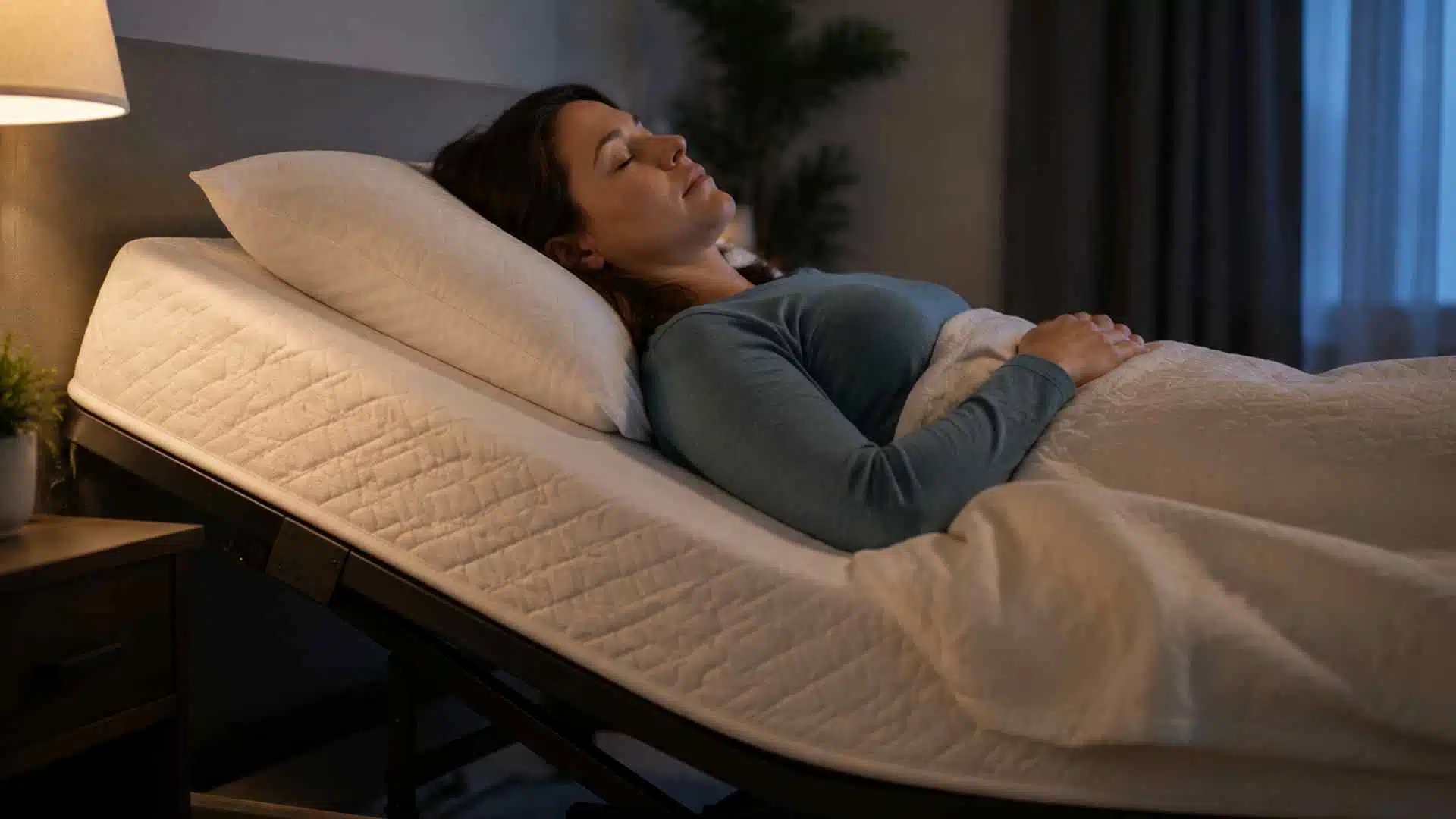



A new mattress, back pain is not unusual, even when the new bed is a clear upgrade from the old one.
Many people experience some soreness during the first few weeks of switching to a new mattress.
This happens because the body has spent months or years adapting to an old surface, and a fresh one asks the spine and muscles to work differently.
The confusion often comes from not knowing whether the soreness is a normal adjustment phase or a sign that the mattress is wrong for the body.
Most sleepers notice stiffness in the first few nights, followed by a gradual improvement over several weeks.
Can a Mattress Cause Back Pain?
Yes, a mattress can cause or worsen back pain, especially right after a switch.
A new surface changes pressure points, spinal support, and sleep posture all at once. The body needs time to adapt, much like when wearing in new shoes.
Most discomfort is temporary and tied to the adjustment period rather than the mattress itself.
Problems usually point to a mismatch when pain lasts beyond a month or feels sharp rather than achy.
Is It Normal to Have Back Pain on a New Mattress?Mild soreness or stiffness during the first 1 to 3 weeks is common and usually not a warning sign. The body is adapting to new levels of firmness and support. This phase passes faster when the mattress gets nightly use without long breaks. |
What Causes Back Pain After a New Mattress?
Several factors combine to cause early discomfort after switching mattresses. Below are the most common causes of back pain from a new mattress.
- Mattress firmness mismatch: Too firm increases pressure points at the shoulders and hips. Too soft causes spinal sinking and lower back strain.
- Lack of spinal alignment support. Poor lumbar support leads to morning stiffness and an uneven sleep posture.
- Body adjustment period: Muscles and the spine need time to adapt to a new surface and a different level of resistance.
- Old mattress comparison effect: Switching from a worn-out mattress can feel odd at first, even when the new one is better for the back.
These causes usually fade as the body settles into the new sleep surface over several weeks.
Read real Reddit discussions about new mattress back pain and see how users compare comfort, soreness, and sleep changes after switching from hotel to home mattresses.
New Mattress Back Pain Timeline
The adjustment period varies from person to person, but most sleepers follow a similar pattern. The table below shows what to expect at each stage.
| Stage | What Happens |
|---|---|
| First 1-3 nights | Body shock from a new firmness or support level |
| First week | The muscle adaptation phase begins |
| 2-3 weeks | Typical adjustment window for most sleepers |
| Beyond 30 days | Possible mismatch between body and mattress |
Pain that steadily improves through these stages is normal. Pain that gets worse past 30 days often signals a fit issue rather than a break-in phase.
How to Know If Your New Mattress is Causing Back Pain
Tracking patterns over a few weeks helps separate normal adjustment from a real mismatch. These signs point to the mattress as the source.
- Morning pain vs daytime pain pattern: Pain that is worst right after waking and eases during the day often points to the sleep surface.
- Pain location mapping: Lower back, upper back, or hip pain can show where support is missing.
- Sleep quality changes: Lighter or more broken sleep since the switch suggests the body has not adapted yet.
- Tossing and turning signals: Frequent position changes during the night often mean the body is searching for relief.
These patterns, tracked over two to three weeks, give a clear picture of whether the mattress fits.
Different Mattress Types and Their Impact
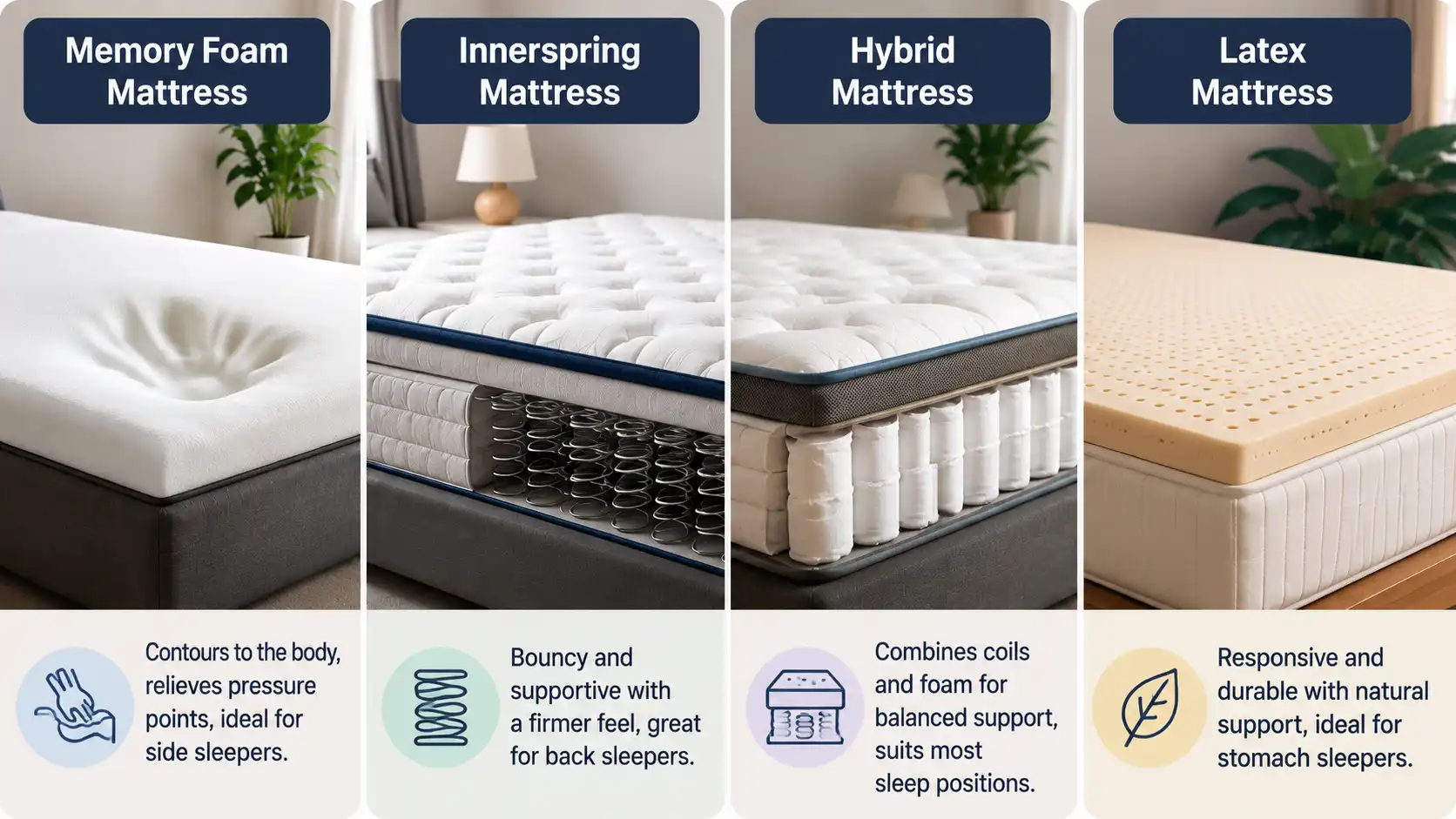
Mattress material changes how the body adjusts and how long that adjustment takes.
1. Memory Foam Mattresses
Memory foam contours closely to the body but can trap heat and allow the midsection to sink if it is too soft.
People with lower back pain sometimes feel relief once the foam fully softens, usually within a few weeks of nightly use. Side sleepers often benefit most from this material.
Pro tip: Keep the room cool for the first week so the foam responds properly to body heat.
2. Innerspring Mattresses
Innerspring beds offer a bouncier, firmer feel with less body contouring.
They can create pressure points at the shoulders and hips if the coil gauge is too firm for the sleeper’s weight.
Back sleepers with a lighter frame often do well on this type.
Pro tip: Add a thin topper if pressure points appear in the first two weeks.
3. Hybrid Mattresses
Hybrids combine coils with a foam or latex top layer, balancing support with some contouring.
This mix often shortens the adjustment period compared with all-foam beds. Most sleep positions adapt well to a medium-firm hybrid.
Pro tip: Rotate a hybrid mattress monthly to even out wear in the coil layer.
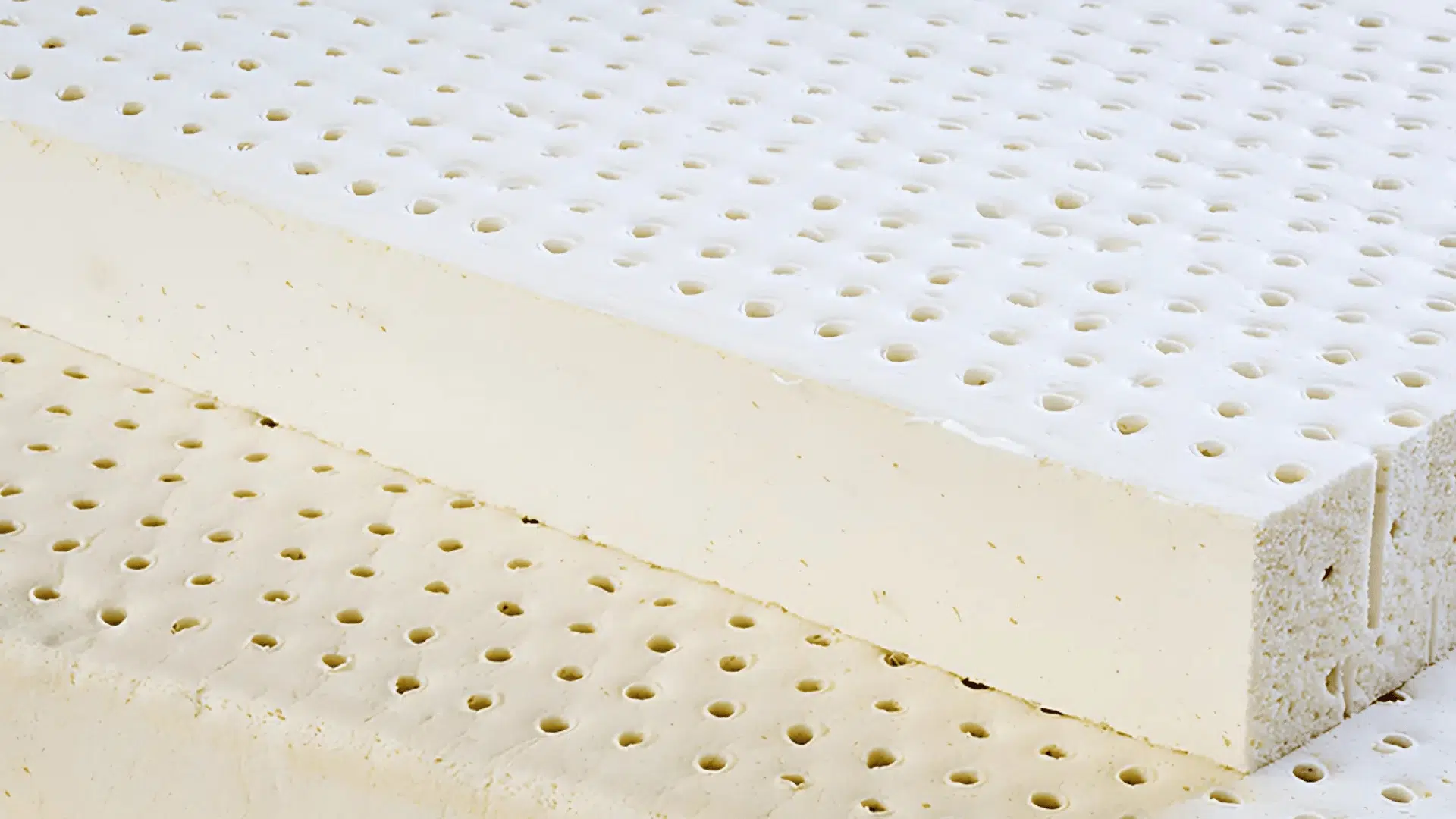
4. Latex mattresses
Latex offers responsive support with less sinking than memory foam, which helps keep the spine in a neutral line.
It also stays cooler and breaks in faster for many sleepers. Stomach sleepers tend to benefit from its firmer push-back.
Pro tip: Choose a firmer latex option if stomach sleeping is the main position.
Different mattress types affect spinal alignment, pressure relief, and overall sleep comfort in different ways.
Choosing the right type can significantly reduce back pain and improve recovery during sleep.
Sleep Position and New Mattress Back Pain
Sleep position changes how a new mattress affects the back during the adjustment phase.
- Side sleepers: Hip and shoulder pressure changes are common since side sleeping needs more cushioning at these points.
- Back sleepers: A lumbar gap can form if the mattress does not properly fill the curve of the lower back.
- Stomach sleepers: Spine compression risk rises in this position, especially on mattresses that are too soft in the midsection.
Knowing your usual sleep position makes it easier to spot which pressure points need extra support.
A topper or pillow adjustment can often fix position-related soreness without a full mattress change.
How to Fix New Mattress Back Pain
Give the body time to adjust before assuming the mattress is wrong, since most discomfort fades within a few weeks.
Use a pillow that matches the sleep position to keep the spine in line through the night.
Rotate or flip the mattress if the manufacturer allows it, since this can even out early impressions.
A mattress topper can correct minor firmness issues without replacing the whole bed.
Check the bed base, since a worn or mismatched frame can undo even a well-made mattress.
When Your New Mattress is Not the Problem
In a few cases, back pain has little to do with the mattress itself. These factors can cause or worsen pain regardless of the sleep surface.
- Existing back conditions: A herniated disc or arthritis can flare up independent of the mattress. The National Library of Medicine notes that chronic back pain is often linked to arthritis or extra wear and tear on the spine.
- Poor sleep posture habits: Awkward positions or unsupported limbs can strain the back on any mattress.
- Inactive or weak core muscles: Weak core support places more load on the lower back during sleep.
- Stress-related muscle tension: Stress can tighten back muscles, leading to morning soreness unrelated to the bed.
If these factors apply, a new mattress alone will not solve the pain. Addressing the root cause alongside better sleep support gives the best results.
Should You Return Your New Mattress
Most mattress brands offer trial periods between 90 and 365 days, giving enough time to judge fit before committing.
Returning makes sense when the pain is sharp, worsens over time, or is accompanied by numbness or tingling.
Sticking with the mattress a bit longer makes sense if soreness is mild and slowly improving week by week.
Reviewing sleep quality, pain location, and pain timing over the trial period helps make the right call.
How Long Should You Wait Before Deciding
Use these checkpoints to judge whether the mattress fits before the trial period ends.
| Checkpoint | What to Watch For |
|---|---|
| 7-night rule | Initial shock should start easing |
| 14-night adjustment window | Muscle soreness should be reduced |
| 30-night decision point | Pain should be mostly gone or much improved |
Reaching the 30-night mark with little improvement is a strong signal to consider an exchange.
Conclusion
New mattress back pain is common, and in most cases, it settles within a few weeks as the body adjusts to new support.
Paying attention to where the pain shows up, how it changes throughout the day, and how it shifts over the trial period makes it easier to determine whether the mattress is the right fit.
Small steps like adding a topper, checking the bed base, or rotating the mattress can improve comfort without requiring a full replacement.
Give the adjustment phase a fair chance, but trust the body if pain keeps building past 30 nights.
Frequently Asked Questions
Can Mattress Off-Gassing Cause Back Pain Symptoms?
Off-gassing itself does not cause back pain, but headaches from VOCs can be mistaken for it. Air out the mattress for 24 to 72 hours before use.
Does an Old Bed Foundation Cause Back Pain with a New Mattress?
Yes, a sagging or widely spaced slat foundation can prevent proper support. Even a high-quality mattress will feel uncomfortable without a solid, compatible base underneath.
How Often Should You Replace a Mattress to Avoid Back Pain?
Most mattresses need replacing every 7 to 10 years. Worn-out support and sagging often lead to back pain that a new, properly fitted mattress can resolve.