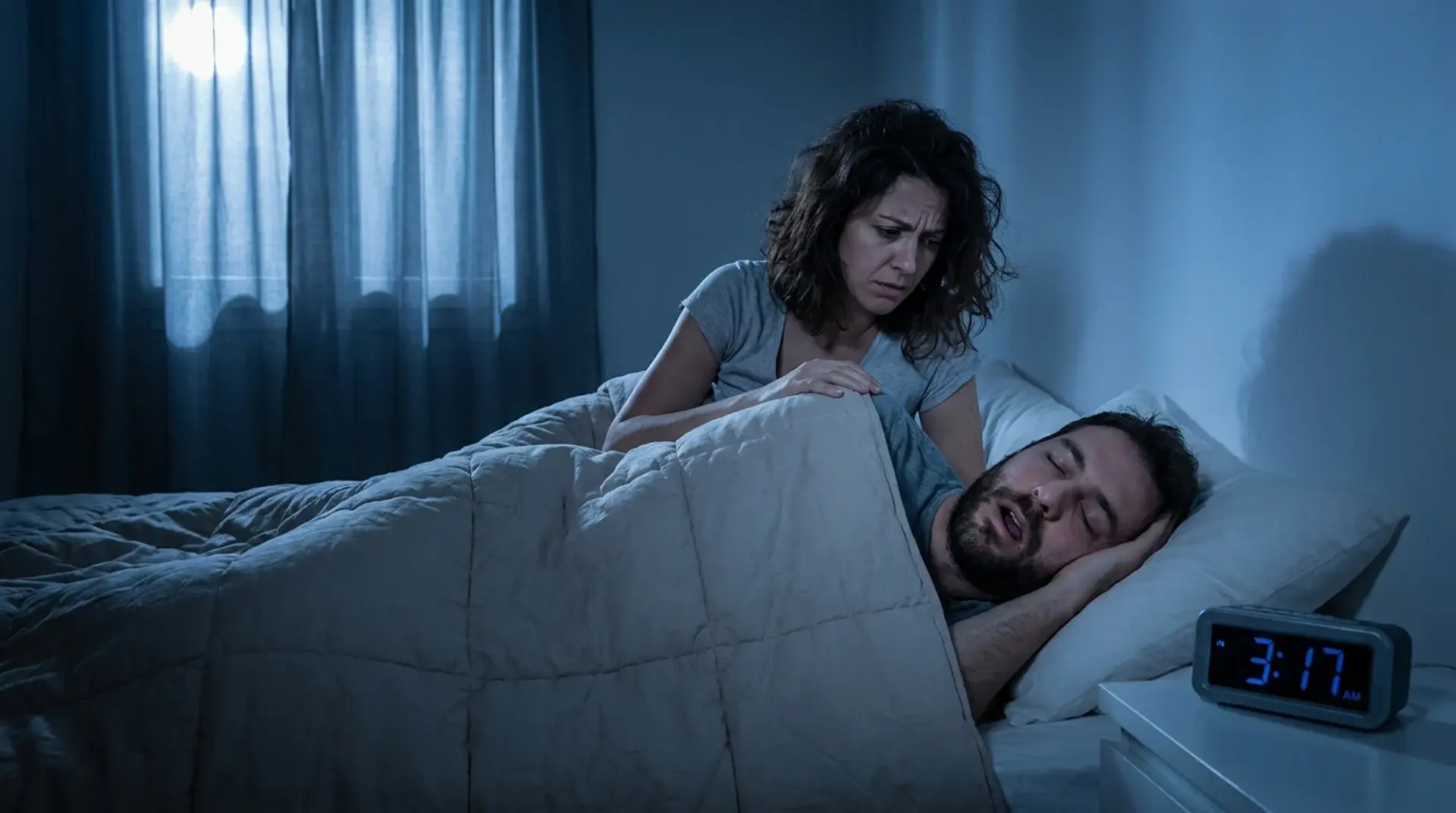




You toss and turn all night, and your pillow takes the hit. Sweat, skin cells, and oils build up faster than you think, and memory foam is no exception.
But when it comes time to clean it, most people freeze because memory foam is not your average pillow. So, can you wash memory foam pillows without ruining them? Yes, but the method matters more than you think.
Done wrong, you can break down the foam, invite mold, or shorten its lifespan overnight. What follows covers exactly what works, what destroys your pillow, and how to keep it fresh for years.
Can You Wash Memory Foam Pillows
Washing a memory foam pillow does not mean what it means for your regular cotton pillow. The rules are different, and skipping that fact is where you go wrong.
Memory foam is an open-cell material, so it soaks up water like a sponge and holds it deep inside. That trapped moisture breaks down the foam cells over time, leaving you with a flat, lumpy pillow that never recovers.
Full submersion is the real problem here. Spot cleaning targets a small stained area with minimal moisture, while a full wash means wetting the entire pillow.
One is safe. The other needs a very careful, controlled process, or you will regret it. Knowing the difference protects your pillow.
Note: Before anything else, check the care label on your specific pillow. Manufacturers include cleaning instructions tailored to their foam type, and following them is always the safest starting point.
What You Need Before You Start
|
Step-by-Step Process to Clean Memory Foam Pillows
Cleaning your memory foam pillow the right way takes about twenty minutes of actual work. The rest is just drying time.
Step 1: Remove the Pillow Cover and Wash Separately
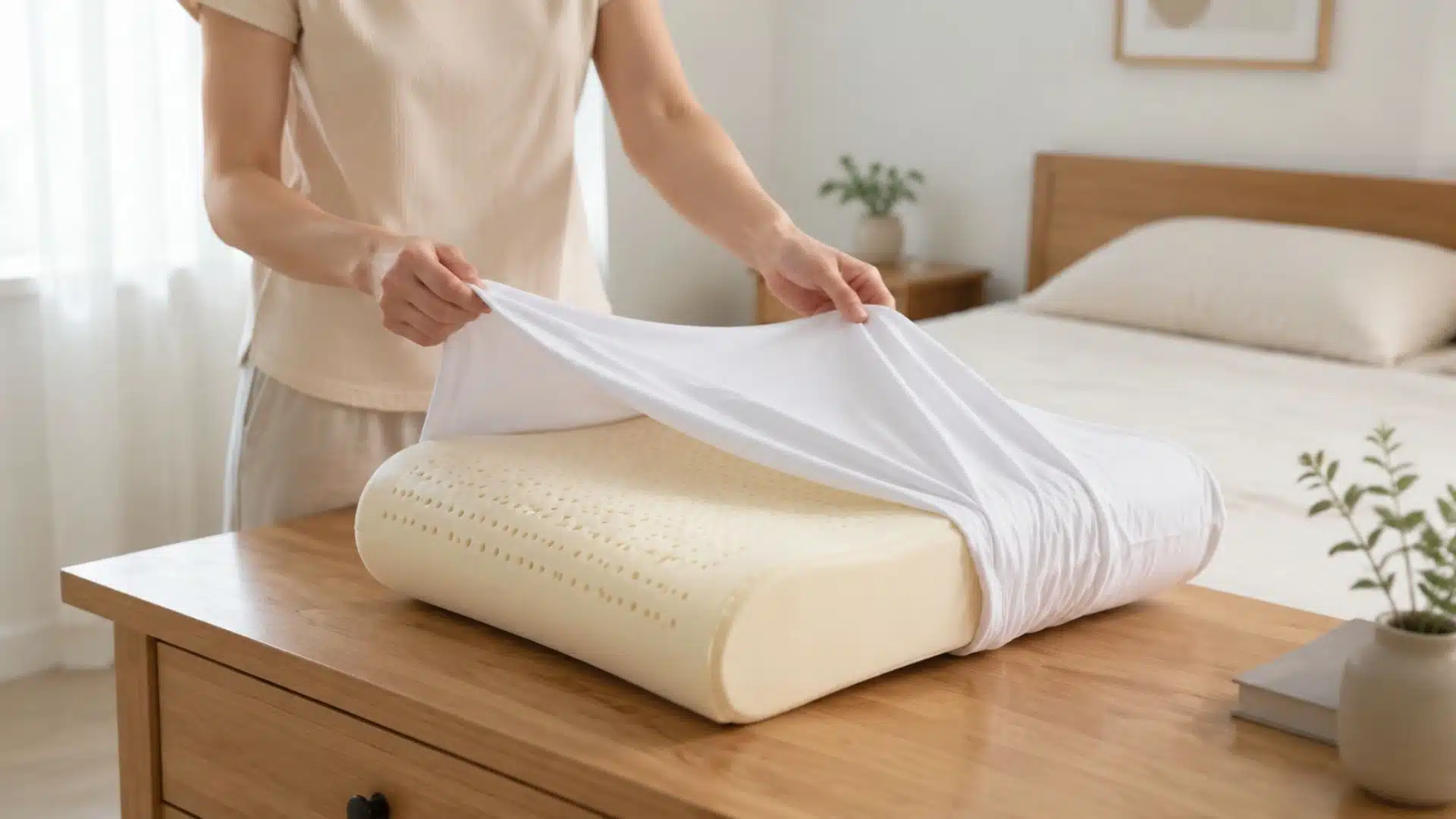
Your pillow cover does most of the dirty work, so start there. Pull it off and toss it in the washing machine on a gentle cycle.
Washing it separately keeps excess moisture away from the foam and helps your pillow stay fresher, longer, between cleans.
Step 2: Vacuum Surface Dust and Debris
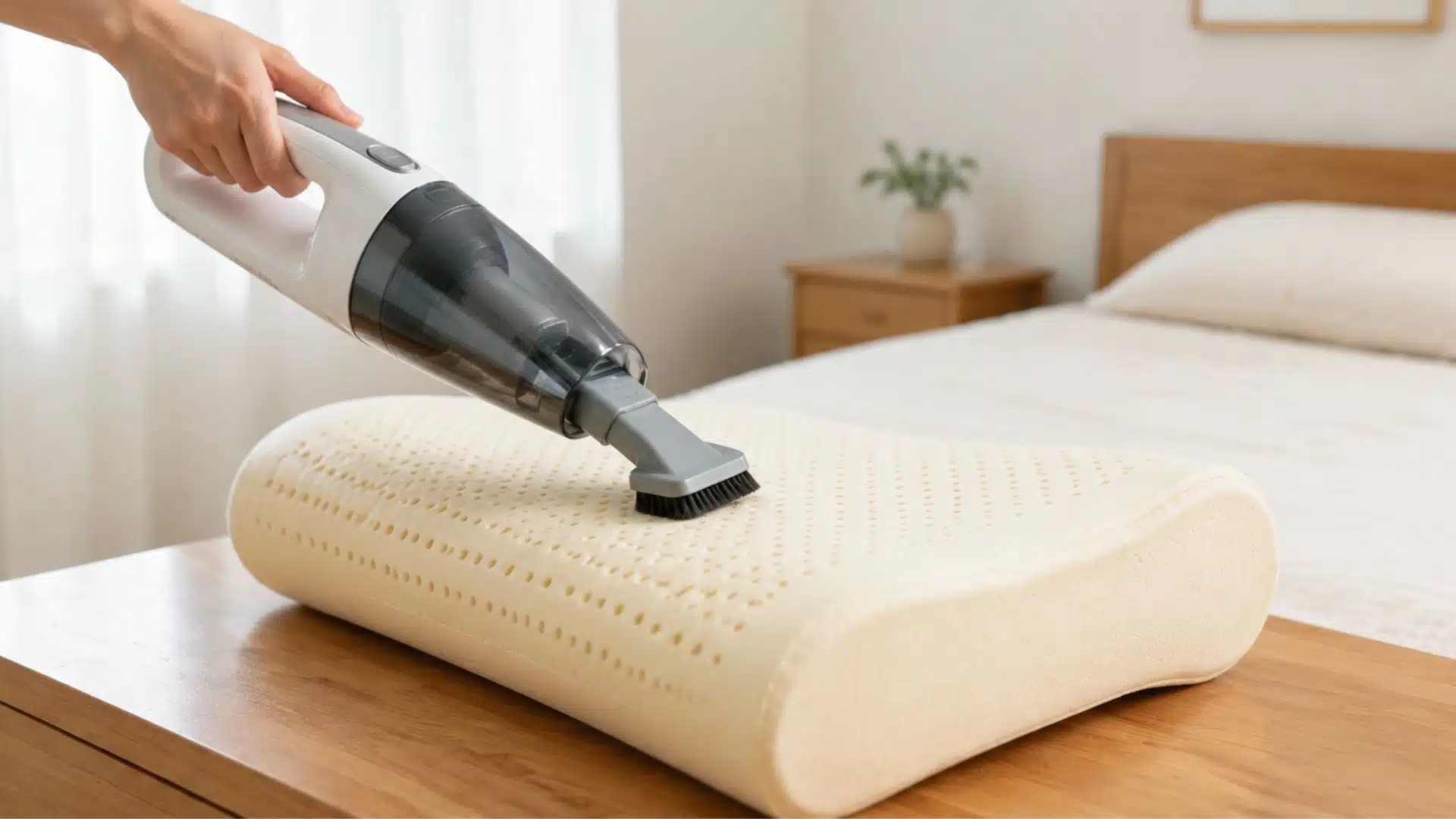
Before any liquid touches the foam, run a vacuum over the entire surface. Dust, dead skin, and debris sit on top and work their way deeper once wet.
A quick pass lifts all of that off before cleaning begins, so you are not pushing dirt further into the foam during the process.
Step 3: Prepare a Mild Cleaning Solution
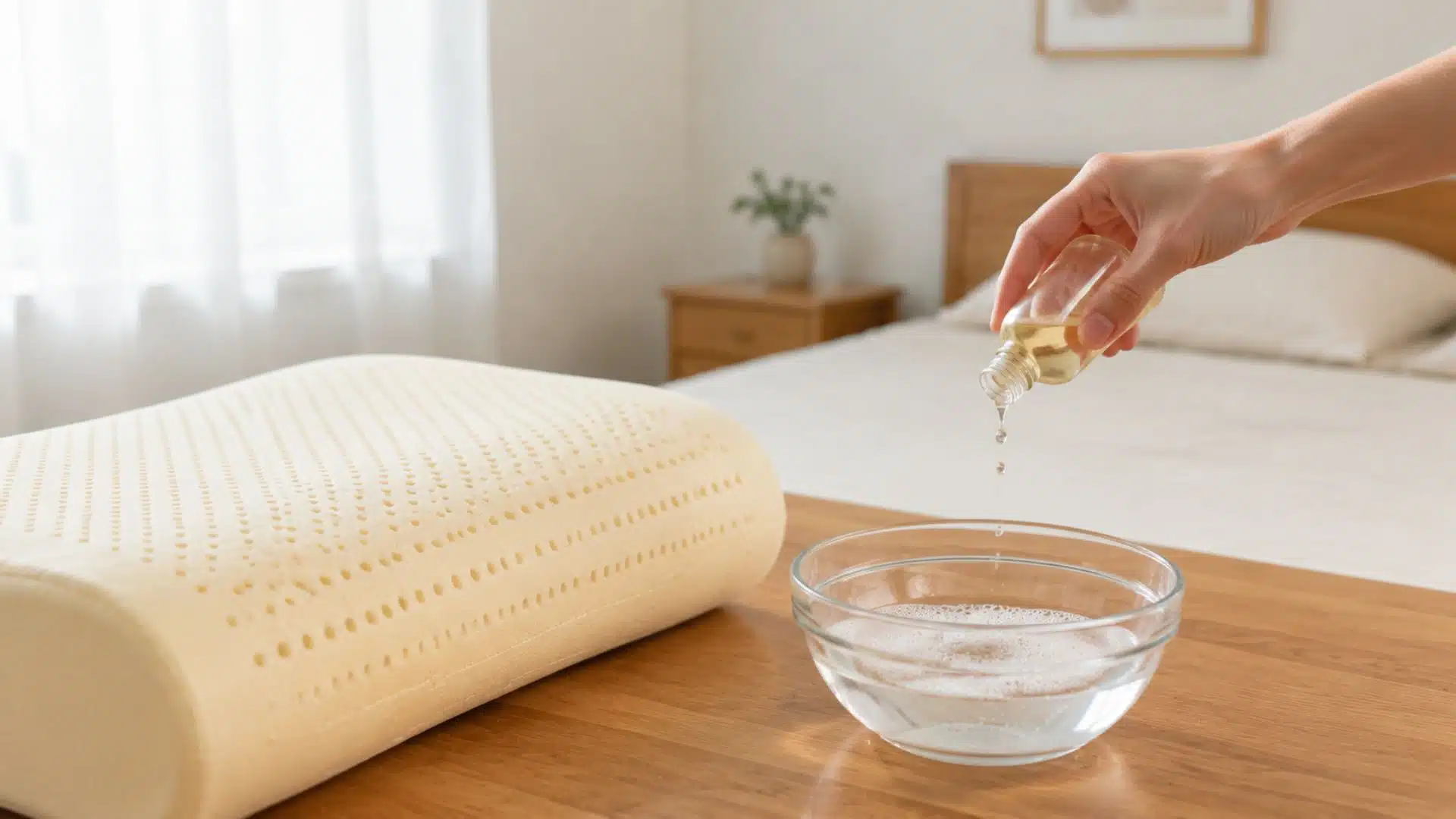
Mix a few drops of mild dish soap or baby shampoo with cool water in a bowl. You do not need much at all. Hot water is a bad idea because it affects the foam’s texture over time. Keep it cool and light, and the solution will do its job without any side effects.
Step 4: Dab Stains Gently
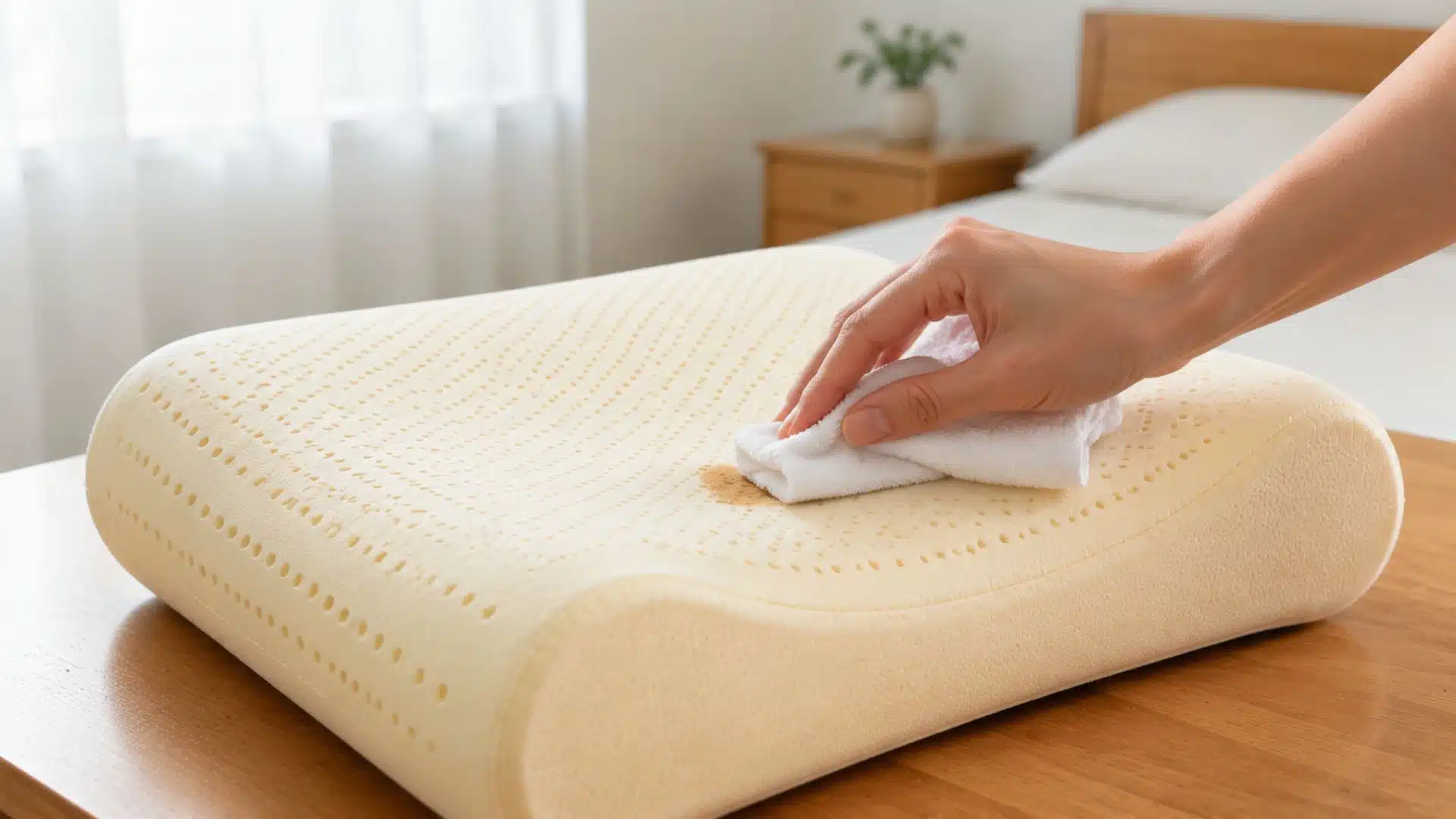
Dip a clean cloth into your solution, wring it out well, and press it onto the stain. Do not rub. Rubbing spreads the stain and pushes it deeper into the foam cells. Dabbing lifts it out gradually, so work from the outer edge inward and repeat until the stain fades.
Step 5: Wipe with a clean, damp cloth
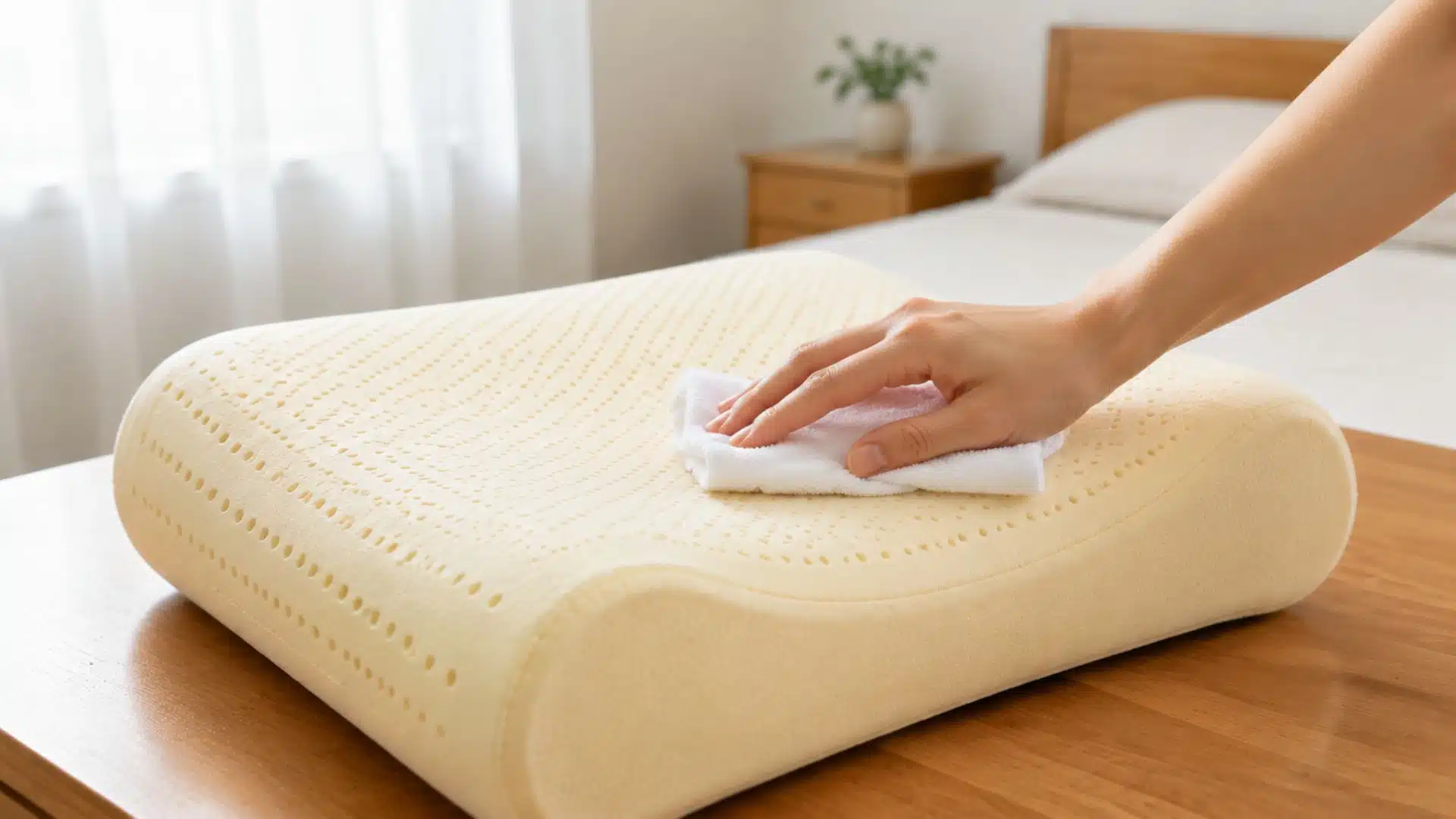
Once the stain is gone, go over the area with a fresh, damp cloth to remove any soap residue. Soap sitting in the foam attracts more dirt over time.
Wring the cloth out well before wiping, and keep your strokes light. One or two passes are all it takes.
Step 6: Press Out Excess Moisture
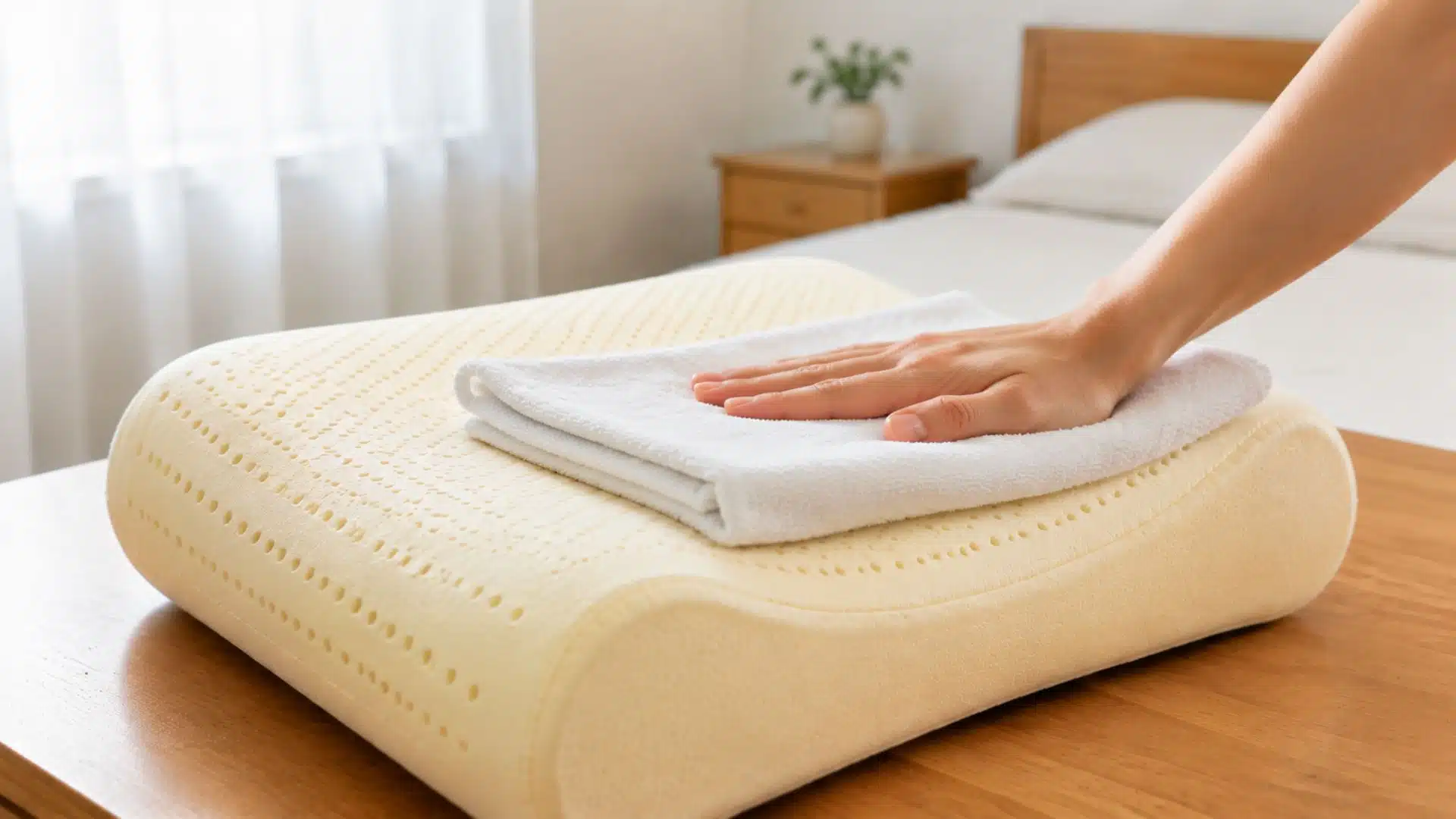
Lay a dry towel over the damp area and press down firmly. Do not twist or wring the foam at any point. Memory foam is more fragile than it looks when wet, and wringing tears the structure from the inside. Pressing pulls moisture out without putting any stress on the material.
Step 7: Air Dry in a Well-Ventilated Area
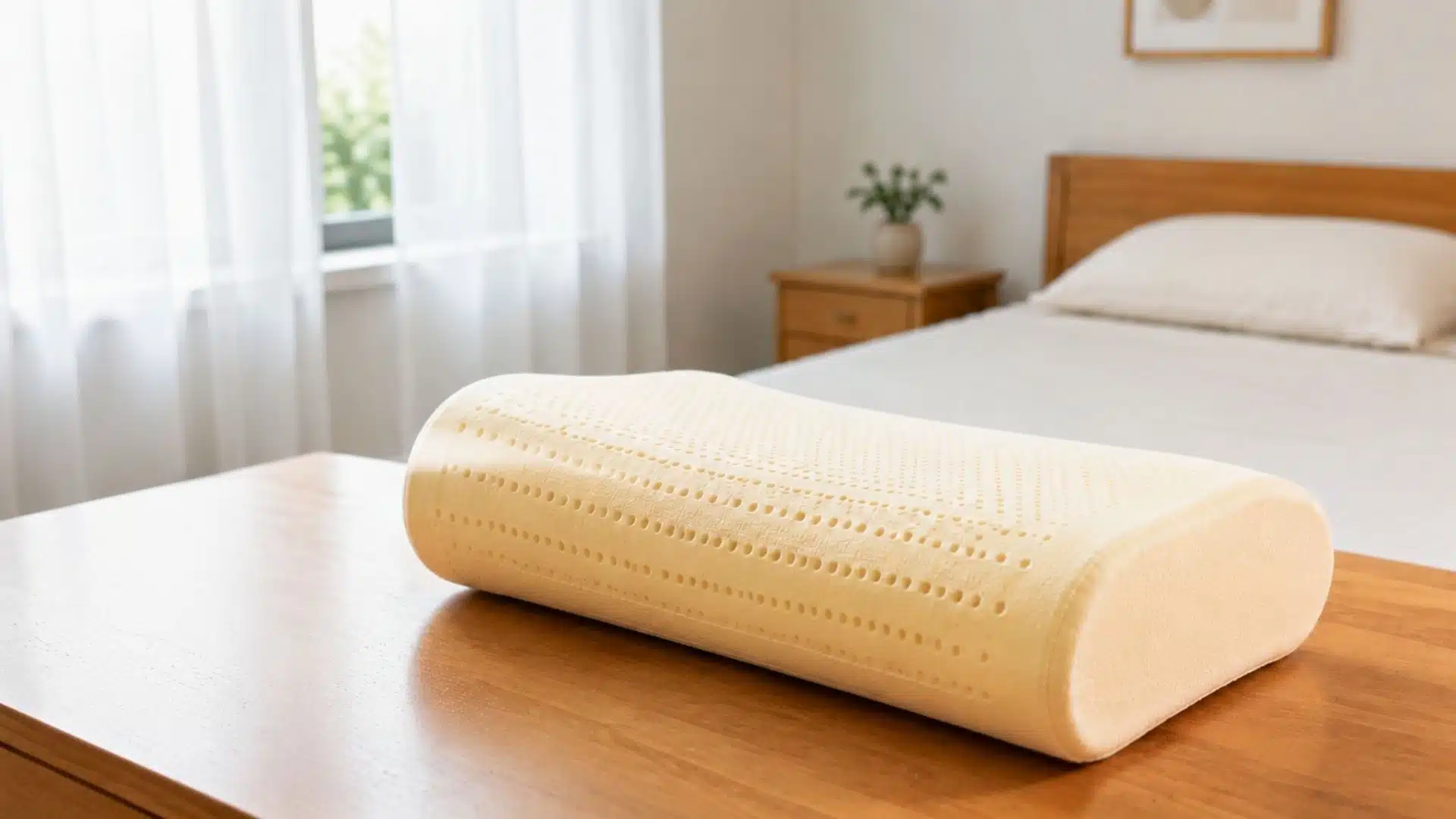
Set the pillow flat in a spot with good airflow and let it dry fully before using it again. Do not use a dryer or direct sunlight for long periods, as heat breaks down foam over time.
A nearby fan speeds things up safely. Make sure it is dry all the way through before the cover goes back on.
Follow these steps every few months, and your pillow will stay clean, fresh, and in good shape for much longer than you would expect.
Ways to Wash Memory Foam: What Works and What Doesn’t
Not every cleaning method is safe for memory foam, and some common ones can do real damage fast. This table breaks it down so you know exactly what to use and what to skip.
| Cleaning Method | Is It Safe? | Why It Works or Why It Doesn’t |
|---|---|---|
| Machine wash | Not safe | The agitation cycle tears apart the open-cell foam structure from the inside |
| Hand soaking | Safe with care | Handwashing with lukewarm water is acceptable if done gently, and the pillow is fully dry. Careless soaking without proper drying leads to mold. |
| Spot cleaning | Safe | Targets only the stained area with minimal moisture, keeping the rest of the foam dry |
| Vacuum cleaning | Safe | Pulls out dust, skin cells, and allergens without introducing any moisture at all |
| Sun drying | Safe (limited) | Gentle heat speeds up drying, but too much direct sun softens and warps the foam over time. |
When in doubt, less is always more with memory foam. Stick to the safe methods in this table, and your pillow will hold its shape and last much longer.
How to Deep Clean to Remove Stains and Odors?
Stains and odors are the two most common reasons people need to clean their memory foam pillows. Handling each one correctly saves your pillow.
1. Light Stains
Light stains are usually fresh marks that sit on the surface and haven’t soaked deep into the foam yet. These are the easiest to handle if treated quickly and gently before they settle further into the material.
- Materials to Use: Clean white cloth, mild dish soap, cool water
- Steps to Follow: Dampen your cloth lightly with the soap-and-water mixture. Press it onto the stain and dab gently until it lifts. Do not rub, or you will spread it further into the foam.
2. Deep Stains
Deep stains take longer to develop and usually sit further inside the foam, making them a bit more stubborn. Even so, they can still be treated safely with a gentle, patient approach rather than harsh cleaning.
- Materials to Use: Clean cloth, baking soda paste, cool water
- Steps to Follow: Mix baking soda with a small amount of water to make a paste. Apply it directly to the stain and let it sit for thirty minutes. Wipe it off with a damp cloth and let the area air-dry completely.
3. Baking Soda for Odor Absorption
Odors can build up inside memory foam because it naturally holds moisture and air. Baking soda helps neutralize smells by drawing them out of the surface without needing excess liquid or harsh chemicals.
- Materials to Use: Baking soda, soft brush, or hand
- Steps to Follow: Sprinkle a generous layer of baking soda over the entire surface of the pillowcase. Let it sit for at least two hours, or overnight if the smell is strong. Vacuum it off completely and flip the pillow to repeat on the other side if needed.
Note:For protein-based stains such as blood, sweat, or pet accidents, an enzyme-based cleaner is more effective than baking soda. Apply a small amount directly to the stain, let it sit for 15 minutes, then blot with a damp cloth and air-dry fully.
4. Vinegar Solution for Mild Disinfecting
White vinegar is useful for reducing bacteria and mild odors when used in a controlled way. It should always be applied lightly so the foam does not become saturated or take too long to dry.
- Materials to Use: White vinegar, water, spray bottle, clean cloth
- Steps to Follow: Mix equal parts white vinegar and water in a spray bottle. Lightly mist the surface, since you want just enough to cover it without soaking the foam. Wipe with a clean cloth and air dry completely before use.
How Often Should You Clean a Memory Foam Pillow
You do not need to wash your memory foam pillow every week, but you should not wait until it smells either. A full clean every two to three months works well for most people. But if you sweat a lot at night, deal with allergies, or share your bed with a pet, bump that up to once a month.
Your pillowcase does the heavy lifting between washes. Swap it out weekly, and you cut down on how much grime actually reaches the foam. Small habit, big difference.
And if you notice yellowing or a stale odor before your next scheduled clean, do not wait; that is your pillow telling you it needs attention now.
Drying Memory Foam Pillow Properly
Cleaning your memory foam pillow is only half the job. How you dry it decides whether all that effort was worth it. Skipping full drying is the fastest way to grow mold inside your pillow. You will not see it, but you will smell it.
Trapped moisture quietly spreads through the foam cells, and once it sets in, it does not come out. Air-drying is your only safe option, sincememory foam pillows cannot be dried in a dryer, and prolonged sun exposure can also break down the foam over time.
Set the pillow flat with good airflow around it, as memory foam holds moisture longer than it looks, a minimum of 24 hours, since foam thickness varies and the inside stays damp long after the surface feels dry. When it feels dry on the outside, press into the center. If it feels cool or heavy, it needs more time.
When to Replace a Memory Foam Pillow
Memory foam pillows generally last 18 to 36 months with proper care. Even with the best cleaning habits, the foam degrades over time and loses the support properties that make it worth using.
The same applies to other pillow types, too, where wear timelines vary by material.
| Warning Sign | What It Means |
|---|---|
| Loss of shape | The foam no longer bounces back after use and stays flat or uneven |
| Persistent odor | Smell persists even after cleaning, meaning mold or bacteria has set in deep. |
| Flattened support | The pillow feels too thin to support your head and neck properly anymore |
| Visible wear or crumbling foam | Foam is breaking apart physically, and no cleaning will reverse that |
Common Mistakes to Avoid
Most memory foam pillows do not wear out on their own. They get damaged by the wrong cleaning choices, and a few happen more often than you would expect.
- Soaking the pillow in water: Memory foam absorbs water deeply and takes forever to dry, which leads straight to mold growth inside the foam.
- Applying strong chemicals– bleach and harsh cleaners- breaks down foam cells fast, leaving the material brittle and weak.
- Drying in closed or humid spaces: Without airflow, moisture stays trapped, and mold can set in before the pillow ever feels dry.
- Twisting or wringing foam: Foam is fragile when wet, and even a single wring can cause internal tears that permanently ruin the support.
Final Thought
Yes, you can wash memory foam pillows, but rushing the process is what ruins them. Foam needs patience, not speed.
Skip the washer, keep things gentle, and always let your pillow dry all the way through before it touches your bed again. That single habit decides whether your pillow lasts another year or falls apart in a month.
Your pillow does a lot of quiet work every night, so give it the same care back. A few minutes of proper cleaning now save you from buying a replacement sooner than you should have to.
Frequently Asked Questions
Can You Put Memory Foam Pillows in the Washing Machine?
No, machine washing breaks down the foam’s internal structure and ruins the pillow’s shape for good.
How Do You Clean Memory Foam Pillows at Home?
Spot-clean with a damp cloth and mild soap, then air-dry completely before using it again.
Can Memory Foam Pillows Get Wet?
They can, but deep saturation damages the foam cells and creates conditions for mold growth inside.
What Is the Safest Way to Dry Memory Foam Pillows?
Air-dry flat in a well-ventilated space for 6 to 12 hours, away from direct heat.