


Spending years sourcing fabrics for the bedding industry means handling a lot of materials, and minky stands out every time. The moment you touch it, you understand why it sells the way it does.
A minky blanket is a plush, lightweight blanket made from 100% polyester microfiber, constructed to mimic the texture of mink fur without any animal materials.
The fibers are finer than a human hair and knitted into a dense pile that stays soft through repeated washing.
From baby showers to living room couches, minky blankets keep showing up because they genuinely hold up better than most alternatives in their price range.
This guide covers what they are, how they differ from similar fabrics, what to look for when buying one, and how to keep one in good shape for years.
What is a Minky Blanket?
A minky blanket is a plush blanket made from polyester microfiber fabric, known for its velvety texture and above-average warmth.
The name comes from its resemblance to mink fur, though no animal materials are used in production.
What Is Minky Fabric? (And What Is Cuddle Fabric?)
“Minky” is the general industry term for this style of plush polyester fabric. Shannon Fabrics, a California-based textile company founded in 1995 by Ebrahim Pairavi, is one of the most recognized manufacturers in this space.
Their signature line, Cuddle fabric, became their core wholesale offering and is widely considered the highest-quality version of minky available to craft buyers.
Cuddle fabric is essentially Shannon Fabrics’ premium version of minky, the same polyester microfiber construction, but sold under their brand and widely considered the highest-quality version available to craft buyers.
If you’ve shopped in quilt stores, on Etsy, or through craft suppliers, you’ve likely seen Cuddle fabric and minky used interchangeably.
Today, the minky/Cuddle category covers dozens of manufacturers and is sold across baby, home, and gift markets worldwide.
What are Minky Blankets Made Of?
‘What is minky fabric made of?’ comes down to one material: 100% polyester microfiber, with fibers finer than a strand of human hair. These fibers are knitted into a dense base, then brushed to lift the surface and build up that raised, velvety pile.
A finishing process helps maintain the fabric’s softness, allowing it to withstand regular washing. The backing varies by product.
Some blankets use a cotton or fleece lining for added warmth, while others go double-sided with minky on both faces. Weighted versions add a layer of glass beads or poly pellets between the two outer layers.
One spec worth knowing when comparing brands is GSM (grams per square meter). This measures how much fiber is packed into the fabric. Higher GSM means a denser, heavier pile that tends to feel softer and hold up longer.
Most standard minky blankets run between 280 and 380 GSM. Premium options, including many from Shannon Fabrics, exceed 400 GSM. If you are comparing two blankets and cannot feel the difference by touch, the GSM number is the clearest indicator of quality.
The construction is simple, but every layer has a clear job, and that combination is what makes a minky blanket feel so different from anything else.
Characteristics of Minky Blanket
Minky blankets stand out from regular throws for several good reasons. Here is a clear look at what makes them different.
- Ultra-Soft Feel: Made from polyester microfiber, the surface is smooth and velvety against the skin.
- Lightweight Yet Warm: Provides steady warmth without adding heavy bulk.
- Long-Lasting Softness: Holds texture and shape well through regular washing.
- Generally considered hypoallergenic: Gentle on sensitive skin and safe for babies, though reactions can vary depending on the user.
- Weighted Options Available: Some versions include glass beads for added pressure and comfort.
These traits make minky blankets a solid pick for daily use. They suit all ages, from newborns to adults. Once you try one, a standard throw will not feel the same.
Different Types of Minky Blankets
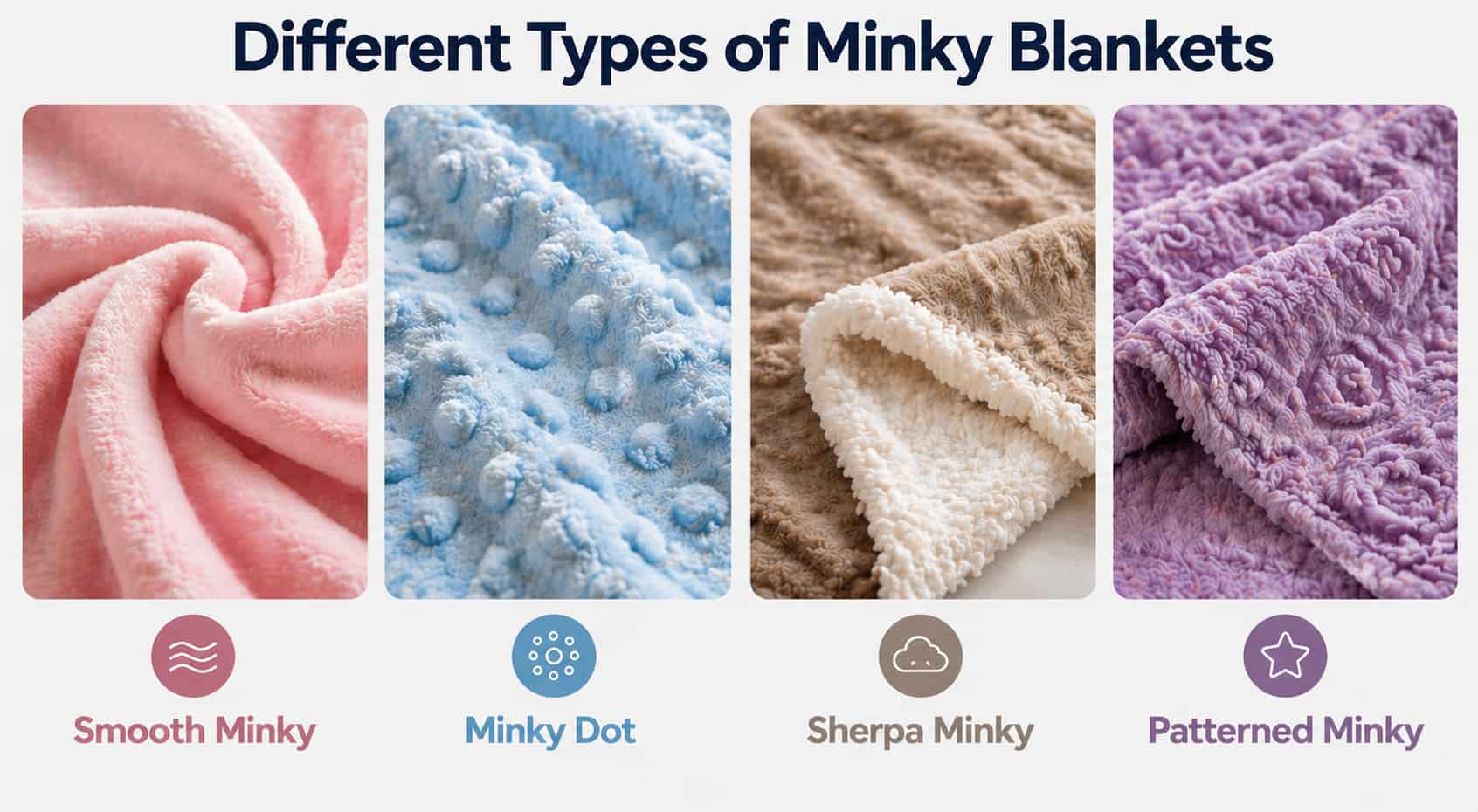
Not all minky blankets are the same. The fabric comes in several versions, each with a slightly different texture and feel. Knowing the difference helps you pick the right one for your needs.
Smooth Minky: The classic version. It has a flat, silky surface that feels cool and soft against the skin. It’s a popular choice for baby blankets and everyday throws where a clean, simple texture is preferred.
Minky Dot: This version has small raised dots across the surface, adding a subtle texture you can feel with your fingers. It’s a favorite for sensory blankets and items made for young children.
Sherpa Minky: A longer-pile minky variety with a fuller, warmer texture that mimics the feel of sherpa. Available in single or double-sided constructions, it is one of the warmest options in the minky category.
Patterned Minky: This version features surface patterns such as swirls, stripes, or animal prints built into the fabric itself. It adds visual interest without affecting the soft feel underneath.
Each type uses the same polyester microfiber base, so the core softness stays consistent across all of them. The texture on top is really the only thing that changes from one version to the next.
Popular Uses for Minky Blankets
Most people pick up a minky blanket for one reason and end up using it for five. A minky blanket fits into daily life in ways most blankets do not. This fabric shows up in everyday products across all age groups.
1. Baby Blankets
Minky blankets are the most common pick for newborns and infants. The hypoallergenic surface sits gently against sensitive skin without irritating it, and the lightweight warmth makes it easy for parents to use year-round.
They are also one of the most popular items at baby showers. The combination of softness, safety, and durability makes them a gift that gets daily use rather than sitting on a shelf.
2. Couch Throws
A minky blanket draped over the back of a couch gets used more than most people expect.
It offers steady warmth for movie nights and cold afternoons without feeling heavy or stuffy. The softness holds up well through regular pulling, folding, and washing without breaking down.
3. Weighted Blankets
Minky is a popular outer layer for weighted blankets. The plush surface stays comfortable against the skin while the inner glass beads or poly pellets handle the pressure, making selecting the right weight important for comfort.
It holds its softness through frequent washing, which matters since weighted blankets tend to see heavy daily use from the start.
4. Travel Blankets
Minky travel blankets pack smaller than they look and still provide real warmth on long flights and road trips. They fold down easily and take up little space in a bag.
The polyester build also holds up well through the repeated washing that comes with frequent travel use.
5. Bedding Layer
Placed over a sheet or tucked under a duvet, a minky blanket adds soft, consistent warmth without trapping too much heat overnight.
The polyester base doesn’t absorb moisture easily and dries quickly, though it may trap heat and feel less breathable in some conditions. It works well with most standard bedding setups without adding unwanted bulk.
Pros and Cons of Minky Blankets
Minky blankets have a lot going for them, but, like any product, they come with a few drawbacks. Learn about both sides before you decide.
Pros
Most blankets make you choose between soft and durable. Minky doesn’t ask you to pick.
- Extremely Soft: The polyester microfiber surface feels plush right out of the packaging and can maintain its softness after multiple washes when properly cared for, though results vary based on fabric quality and washing methods.
- Durable and Long-Lasting: The tightly knit fibers help reduce pilling and flattening, though this can vary depending on fabric quality and use over time.
- Easy to Maintain: Machine washable and dries relatively quickly, making it a practical choice for everyday use.
- Wide Variety of Textures: From smooth and flat to dotted and sherpa, there’s a minky type that works for almost every preference.
All of that in one blanket is hard to beat at most price points.
Cons
Minky is a great fabric, but it does have a few real limitations worth knowing about.
- Slippery when Sewing: The surface shifts easily during cutting and stitching, which makes it trickier to work with than cotton or fleece.
- Can Feel Too Warm in Hot Climates: The same heat-trapping quality that makes it cozy in winter can feel uncomfortable in summer.
- Premium Versions Can Be Expensive: Thicker pile or custom-printed minky blankets tend to cost more than standard blanket options.
- Attracts Lint and Pet Hair: The raised fiber surface easily picks up lint and pet hair, requiring frequent rolling or brushing.
Knowing the downsides upfront saves you from any surprises after purchase. Weighed together, the pros clearly outweigh the cons for most buyers.
For comfort, durability, and ease of care, minky blankets hold their ground well against other options in the same category.
Minky vs Other Blanket Materials
There are many different types of blankets available in the market. Choosing a blanket often comes down to more than just how it looks on the bed. Material affects how it wears, washes, and holds up over time.
| Features | Minky Fleece | Cotton | Sherpa | Regular Fleece |
|---|---|---|---|---|
| Texture | Plush, velvety, silky | Smooth, woven | Fluffy on one side, smooth knit on the other side | Smooth to fuzzy |
| Warmth | Medium – high | Low – medium | High | Medium – high |
| Weight | Light – medium | Light – medium | Medium – heavy | Light – heavy |
| Softness | Very soft, silky | Varies by weave | Very soft, wool-like pile | Soft; varies by type |
| Best for | Baby blankets, sensory use, comfort throws | Summer, breathable comfort, sensitive skin | Cold-weather bedding, coat linings, outdoor gear | Everyday blankets, outdoor use, pet beds |
| Care | Cold/gentle wash; no fabric softener; low heat | Cold/warm wash; heat-tolerant | Cold/gentle wash; low heat; no high heat | Cold/gentle wash; low heat or air dry |
Each material has its place depending on the season, the user, and the budget. For most buyers comparing options, the right pick usually comes down to climate and how the blanket will actually be used day to day.
How to Care for a Minky Blanket?
Minky blankets are low-maintenance, but a few wrong moves in the laundry can flatten the pile or shorten the blanket’s lifespan. Following the right steps keeps it soft and in good shape for years.
- Wash in Cold Water: Always use a cold, gentle cycle. Hot water breaks down the polyester microfiber faster and can cause the fabric to lose its shape over time.
- Skip Fabric Softener: Softener coats the microfibers, gradually breaking down the plush texture. It may feel good after one wash, but it causes long-term damage to the pile.
- No Bleach: Bleach weakens polyester fibers and can cause discoloration. Stick to a mild, dye-free detergent for best results.
- Air Dry when Possible: Lying the blanket flat or hanging it to dry is the safest option. It prevents shrinkage and keeps the pile intact.
- Use Low Heat if Machine Drying: If air drying isn’t an option, use the lowest available dryer setting. High heat flattens the pile and is the most common reason minky blankets lose their softness.
Taking a little extra care with washing and drying makes a real difference in how long a minky blanket holds up. The fabric is built to last, and with the right routine, it stays just as soft as the day you bought it.
Are Minky Blankets Worth It?
Minky blankets cost more upfront than a standard fleece or cotton option. Most ready-made throws fall between $30 and $80, while premium and custom-made versions can range from $100 to $300 or more, depending on size, fill weight, and fabric quality.
That price gap is easier to justify when you factor in how long a well-made minky blanket actually lasts.
The polyester microfiber construction resists the wear that breaks down cheaper blankets within a season or two.
The softness stays consistent, the fabric holds its shape, and it doesn’t need to be replaced as often. For anyone treating it as a long-term comfort purchase rather than a quick buy, the value tends to hold up well over time.
Who Should and Should Not Buy a Minky Blanket?
Minky blankets are a solid pick for parents of newborns, texture-sensitive kids, cold sleepers, people in recovery, and gift buyers looking for something that feels premium and lasts.
The hypoallergenic, low-friction surface makes it a good fit for anyone who needs soft fabric against the skin daily.
It’s not the right choice for everyone, though. Hot sleepers will find the dense pile traps too much body heat in warm conditions.
Anyone sensitive to synthetic fabrics should check the material before buying.
Pet owners deal with faster fur buildup on the raised surface, and the blanket needs cold-water washing, no fabric softener, and low-heat drying to stay soft.
Conclusion
A minky blanket is one of those purchases that tends to quietly earn its keep. The softness is real, the durability is real, and once you know how to care for it, the lifespan is genuinely good.
For most buyers, the main decision comes down to pile type and weight: a smooth minky for everyday use, a dotted version for sensory comfort, or a sherpa style for maximum warmth.
If you are buying as a gift, a classic smooth or patterned minky is usually the safest pick since it works for all ages.
Check the GSM where you can, skip the fabric softener, and wash cold. That is all it takes to get years of use out of one of the better comfort buys in the blanket category.
Frequently Asked Questions
Are Minky Blankets Safe for Babies?
Minky blankets are generally safe for babies when used under supervision. However, they should not be placed in cribs for unsupervised sleep.
Is Minky Fabric Natural or Synthetic?
Minky fabric is fully synthetic. It’s made from 100% polyester microfiber, which means it contains no natural fibers like cotton or wool. That’s what gives it the consistent softness and durability.
Do Minky Blankets Get Hot?
Minky microfibers trap body heat efficiently, which makes them warm and cozy in cooler temperatures. In hot climates or during summer months, they may feel too warm to sleep comfortably.
How Long Do Minky Blankets Last?
With proper care, a good-quality minky blanket can last several years. The polyester microfiber construction resists pilling and fiber breakdown, so the softness and shape stay intact through regular washing and daily use.