




An old mattress often gets pushed aside without much thought. It ends up in a garage, by the curb, or in the back of a truck. Butmattress disposal is not as simple as tossing it out.
Millions of mattresses are thrown away each year, and many end up in landfills where they take up space for a very long time. That creates a bigger problem for the environment than most people realize.
Many people also do not know their best options; some mattresses can be recycled, some can be donated. Others need special handling. A little guidance can make the process much easier.
Smart mattress disposal helps reduce waste, protects local communities, and keeps useful materials from being lost. Small choices here can make a real difference.
Why Mattress Disposal is a Growing Environmental Problem
Most people don’t think twice about tossing out an old mattress, but the environmental cost is far greater than it seems.
Over 18 million mattresses are discarded in the United States each year, with roughly 50,000 ending up in landfills every single day
A single mattress takes up nearly 40 cubic feet of landfill space and can take decades to break down in landfills. As they break down, the materials inside- foam, synthetic fabrics, and metal- may contribute to landfill pollution as synthetic materials slowly break down over time, threatening local ecosystems.
What makes this worse is that most of it is entirely avoidable. Up to 90% of a typical mattress is made from recyclable materials, including steel coils, wood, foam, and cotton.
The problem isn’t the mattress; it’s the lack of awareness about responsible disposal. That’s exactly what this guide is here to fix.
Signs Your Mattress Needs to Go
Not sure if it’s actually time to replace your mattress? These five warning signs will help you decide before disposal becomes overdue.
- Visible Sagging or Body Impressions: Deep dips where you sleep mean the mattress no longer supports your spine properly.
- Waking Up With Aches and Stiffness: Persistent back or joint pain that disappears after getting up signals insufficient mattress support.
- Stubborn Odors or Stains: Deep-set smells and stains indicate a buildup of bacteria, sweat, and allergens inside the mattress.
- Noisy Springs or Structural Damage: Creaking coils, visible tears, or exposed inner materials mean the mattress is structurally beyond saving.
- Bed Bugs or Mold Growth: Any infestation or mold presence means the mattress cannot be donated; dispose of it immediately.
If any of these signs sound familiar, it’s time to stop second-guessing. The sooner you dispose of it responsibly, the better for your health and the environment.
How to Dispose of a Mattress: 6 Responsible Options Ranked
There is no single way to dispose of a mattress. The right option depends on your mattress condition, location, and how eco-friendly you want the process to be.
1. Mattress Recycling (Best Eco-Friendly Choice)
Recycling is, hands down, the most responsible way to dispose of a mattress. Up to 90% of mattress materials, including steel coils, foam, wood, and fabric, can be recovered and reused.
You can drop it off at a local recycling center or schedule a convenient pickup for a small fee, typically $10-$40, depending on your location and whether you choose pickup or drop-off.
2. Donate Your Old Mattress
If your mattress is still in decent condition, no stains, odors, or structural damage, donating it is a great way to give it a second life.
Organizations like The Furniture Bank Network and Habitat for Humanity ReStores accept gently used mattresses and deliver them to families in need.
Many offer free scheduled pick-ups, making the entire donation process easy and hassle-free for you.
3. Sell or Give It Away Online
A mattress in good shape can easily find a new home online. Platforms like Facebook Marketplace, Craigslist, and OfferUp let you list it for free or at a small price.
Always be honest about the mattress’s condition in your listing, include clear photos, and be mindful of your personal safety when arranging pickups or meetups with potential buyers or takers.
4. Upcycle or Repurpose the Materials
Upcycling is a creative and eco-friendly alternative to throwing your mattress away. Once dismantled, the foam can be repurposed into pet beds, cushions, or DIY pillows.
Steel springs can be sold as scrap metal or transformed into unique home decorative pieces. The wooden frame can be composted or repurposed for small home improvement or garden projects around the house.
5. Hire a Junk Removal or Haul-Away Service
If transporting the mattress yourself isn’t an option, a professional junk removal service is a convenient and stress-free solution. These companies pick up your old mattress from your home for a fee of $40 to $175.
Some services may, depending on local facilities, recycle or donate usable mattresses on your behalf rather than sending them straight to a landfill unnecessarily.
6. Curbside Pickup or Landfill Drop-Off (Last Resort)
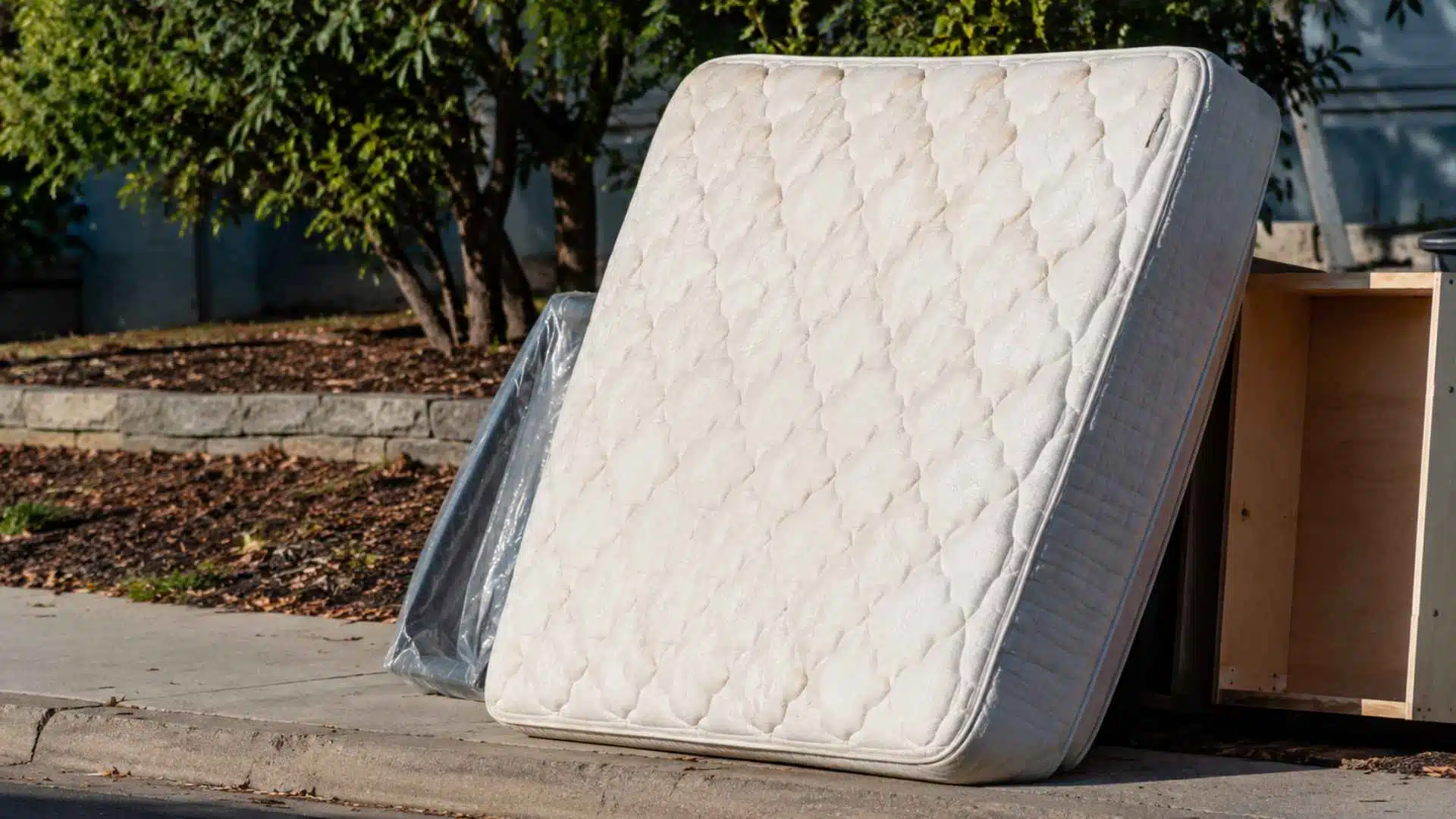
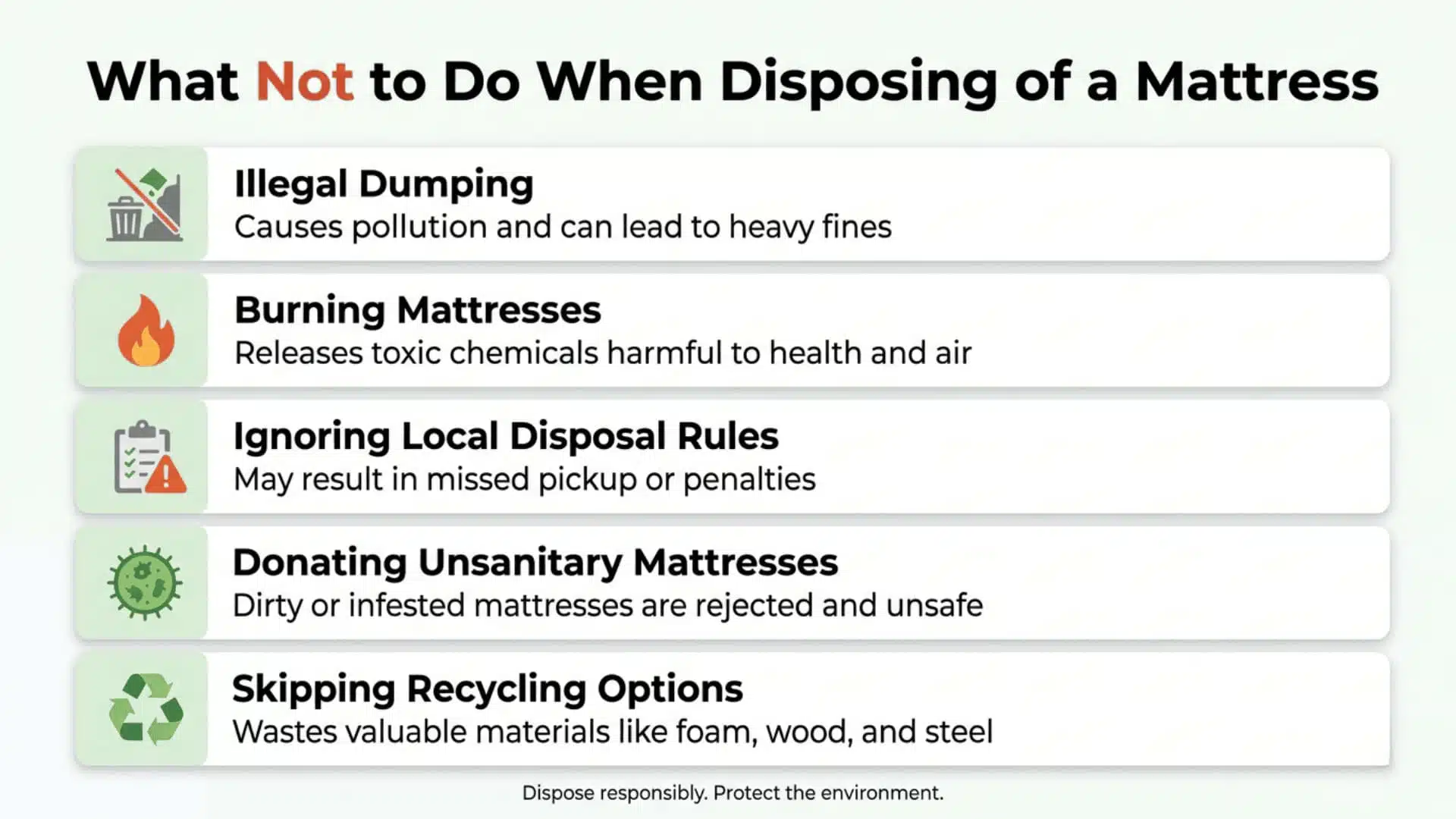
When no other option is available, curbside pickup or landfill drop-off is your last resort. Before placing your mattress outside, always check local ordinances; many cities require it to be wrapped in plastic, and some prohibit curb disposal entirely.
Some municipalities also hold designated heavy garbage days for bulky items. Ignoring these rules can result in fines or the mattress simply not being collected.
Mattress Disposal Rules and PenaltiesIllegal mattress dumping can result in local or state fines, and some cities may refuse pickup if the rules are not followed. The EPA warns that illegal dumping harms communities and the environment, while California’s Used Mattress Recovery and Recycling Act requires proper end-of-life handling for mattresses. Check the official rules before disposal: EPA Illegal Dumping and California Mattress Law. |
How to Dismantle a Mattress for Recycling (Step-by-Step)
If your local recycling facility requires the mattress to be broken down before drop-off, wear gloves, eye protection, and a dust mask before starting, especially when handling older mattresses that may contain dust, mold, or sharp metal components.
Here’s how to do it safely and efficiently:
- Cut the Cover: Use a utility knife to carefully cut along the edges and peel away the outer fabric cover.
- Remove the Foam Layers: Strip away all foam or padding inside, separating it from other materials.
- Cut the Metal Coils: Use pliers or wire cutters to snip the metal wires connecting the coils and remove them.
- Dismantle the Wood Frame: Break apart or unscrew the wooden border frame from the base of the mattress.
- Sort All Materials: Separate steel, foam, wood, and fabric into inpidual piles for recycling or proper disposal.
Once dismantled, your mattress becomes easier to recycle, significantly reducing landfill waste. Taking the time to separate materials ensures a more eco-friendly disposal process and supports responsible recycling practices.
Local Mattress Disposal Options Near You
Searching for mattress disposal near you in California is easier when you start with verified statewide and local resources. These options help you recycle, donate, or arrange responsible, compliant pickup.
Choosing the right local mattress disposal option helps you reduce waste, comply with regulations, and protect the environment. Beyond the statewide resources listed above, residents can also explore mattress removal services near Placerville, CA, for doorstep pickup with eco-friendly disposal built in.
What to Do With Your Bed Frame During Disposal
When replacing your mattress, don’t overlook the bed frame; it also requires proper handling and disposal. Bed frames are often made from materials such as wood, metal, or a combination of both, which means many parts can be reused or recycled rather than thrown away.
If your bed frame is still in good condition, consider donating it to local charities, shelters, or organizations that accept furniture. Selling or giving it away through online platforms is another practical option.
For damaged frames, metal components can typically be taken to scrap yards, while untreated wood may be repurposed for DIY projects or disposed of through appropriate recycling channels.
Some junk removal services also handle bed frames along with mattresses, offering a convenient solution. By disposing of your bed frame responsibly, you minimize waste and make the most of reusable materials.
Wrap Up
Mattress disposal is more than simply removing an unwanted bed from your home. It’s a chance to reduce landfill waste, protect the environment, and use recyclable materials through responsible choices like recycling, donating, or reusing.
From identifying when it’s time to replace your mattress to exploring the best disposal options and properly handling your bed frame, every step contributes to a more sustainable outcome.
Making smarter decisions about mattress disposal today can have a lasting impact on the environment.
When it comes to mattress disposal, will you choose convenience or make the responsible choice that truly matters?
Frequently Asked Questions
Can I Put a Mattress out with Regular Trash?
Sometimes, but local rules vary. Many cities require wrapping, scheduling a pickup, or bulky-item collection before curbside disposal.
Can an Old Mattress Be Recycled?
Yes. Most mattresses contain recyclable materials such as steel, foam, wood, and fabric, but availability depends on local recycling programs.
Can I Donate a Used Mattress?
Yes, if it is clean, odor-free, stain-free, and structurally sound. Mattresses with mold or bed bugs cannot be donated.