





Imagine falling asleep in under 10 minutes every night, feeling calm and secure from the moment you pull up your covers.
Weighted blankets make this possible by using gentle pressure to trigger your body’s natural relaxation response.
The science is simple – deep pressure stimulation releases feel-good chemicals that reduce anxiety and improve sleep quality.
But here’s the catch: choosing the wrong weight can ruin the entire experience. Too light and you won’t feel the benefits.
Getting the weight right changes your weighted blanket from a trendy purchase into a nightly sleep solution that actually works.
What is a Weighted Blanket and Why Does Weight Matter?
A weighted blanket is a regular blanket filled with tiny glass beads or plastic pellets to make it heavier.
The extra weight creates gentle pressure on your body, which helps release calming chemicals in your brain. This feeling is called deep pressure stimulation.
Getting the weight right is key to getting these benefits. A blanket that’s too light won’t create enough pressure to help you relax.
One that’s too heavy can make you feel stuck, overheat, or have trouble moving during sleep.
How Do Weighted Blanket Calculators Work?
Most weighted blanket calculators use a simple math formula to help you choose. The standard rule is to pick a blanket that weighs about 10% of your body weight.
Some experts suggest a range of 8% to 12% of your body weight for more flexibility.
Here’s how the math works: If you weigh 150 pounds, multiply by 0.10 to get 15 pounds. Some calculators add 1-2 extra pounds for comfort, so you might choose a 16 or 17-pound blanket.
The same formula works with kilograms – just multiply your weight by 0.10.
Special Considerations for Kids, Adults, and Couples
The basic 10% formula works as a starting point, but different age groups and sleeping arrangements need special adjustments.
Understanding these variations helps you choose the safest and most comfortable weight for your specific situation.
1. Children
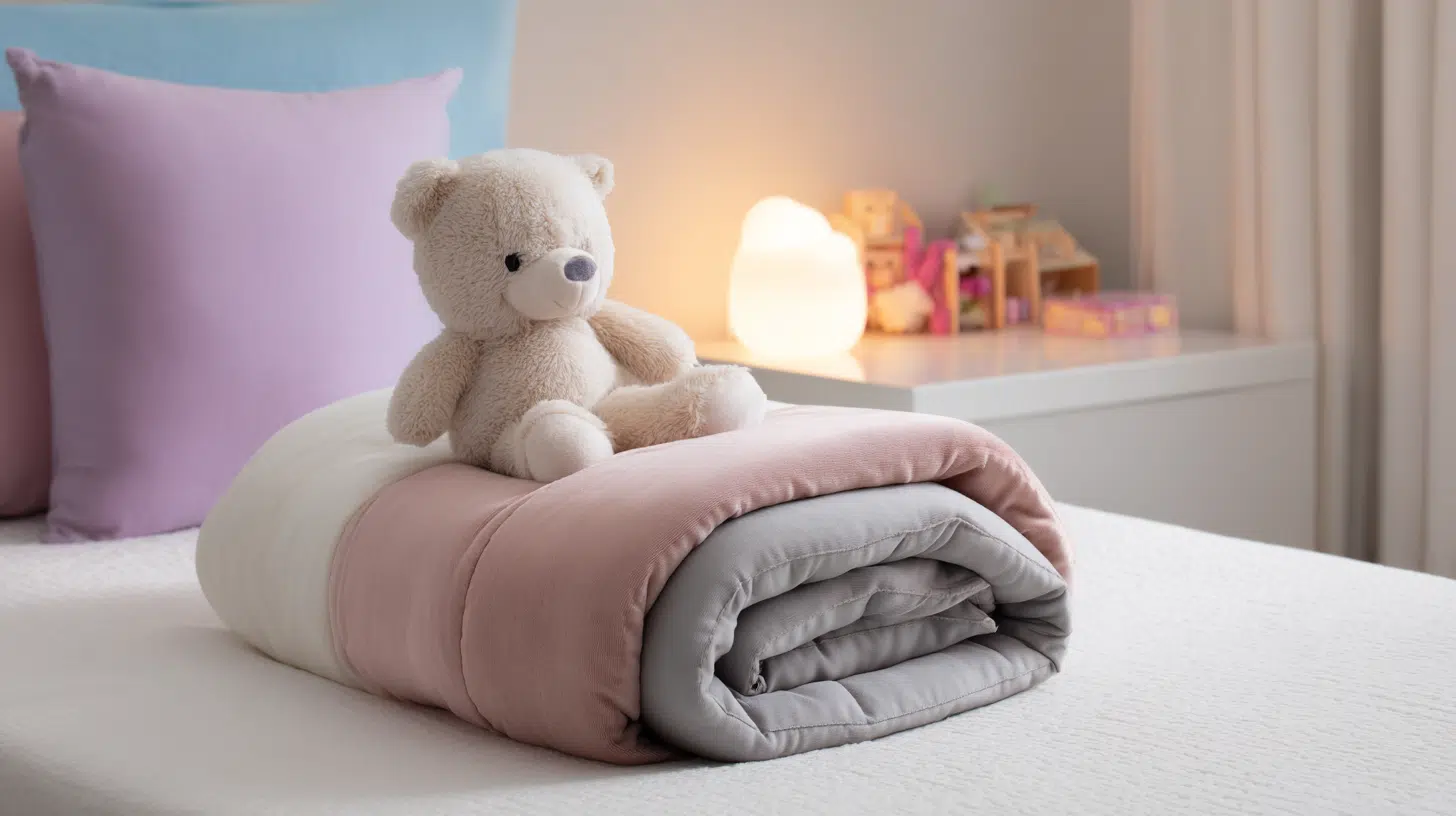
Children need extra care when choosing weighted blankets because their smaller bodies are more sensitive to weight.
Use 10% of the child’s weight plus 1-2 pounds as your starting calculation. Always check with your pediatrician before introducing a weighted blanket to make sure it’s safe for your child’s specific needs.
Never use weighted blankets for babies under 2 years old, as they pose safety risks.
Start with short supervised sessions during the day to help your child get comfortable with the feeling before nighttime use.
2. Adults
Adults have the most flexibility when choosing weighted blanket weights within the 8-12% range of their body weight.
If you like feeling more secure and cozy, lean toward the heavier end of the range. If you move around a lot during sleep or get hot easily, try the lighter end first.
You can always exchange for a different weight if your first choice doesn’t feel right. Most adults find their sweet spot within 1-2 pounds of the 10% calculation.
3. Couples
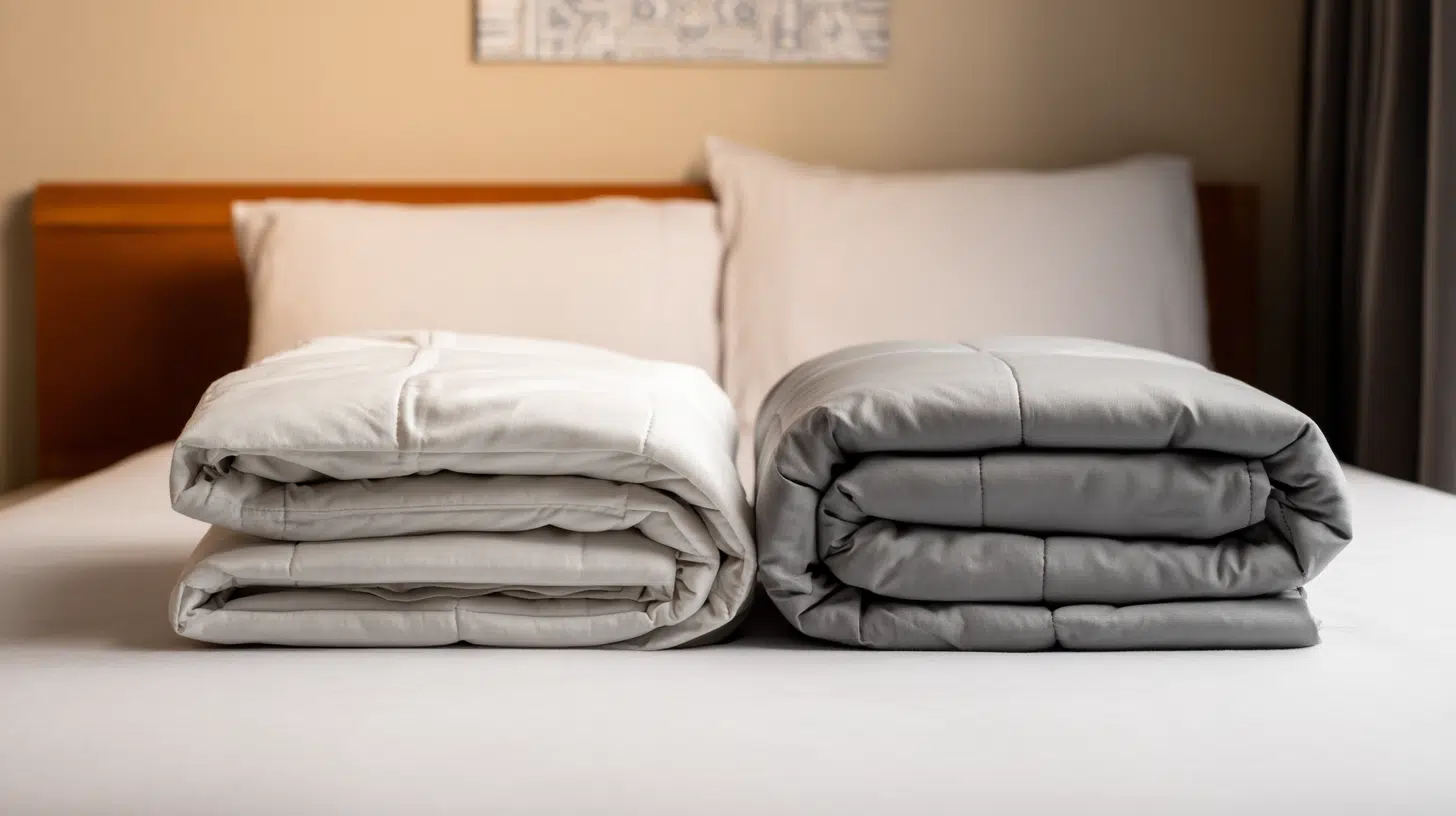
Couples have two main options when it comes to weighted blankets for shared beds. Calculate 7.5-10% of your combined weight for one large blanket that covers both of you.
Alternatively, buy separate blankets in your individual calculated weights for personalized comfort. Separate blankets work better if you have very different weight preferences or sleep styles.
Consider the extra cost and bed space needed when deciding between one shared blanket or two individual ones.
Weighted Blanket Size & Weight Chart (Quick Reference)
| Body Weight | Blanket Weight Recommendation |
|---|---|
| 60–80 lbs | 6–8 lbs |
| 80–100 lbs | 8–10 lbs |
| 100–120 lbs | 10–12 lbs |
| 120–140 lbs | 12–14 lbs |
| 140–160 lbs | 14–16 lbs |
| 160–180 lbs | 16–18 lbs |
| 180–200 lbs | 18–20 lbs |
| 200–250 lbs | 20–25 lbs |
Note: These are starting points – always choose what feels most comfortable for you personally.
Additional Factors to Consider
Beyond the basic weight calculation, several other factors can make or break your weighted blanket experience. These considerations help you fine-tune your choice for maximum comfort and safety.
- Personal preference – Some people naturally like more pressure while others prefer lighter touches. Your comfort should always come first, even if it means going outside the standard formula.
- Sleep style – If you toss and turn a lot, try a lighter blanket so you can move easily. If you sleep still and calmly, you might enjoy a heavier weight.
- Health conditions – Talk to your doctor before using a weighted blanket if you’re pregnant, elderly, or have breathing problems. Some medical conditions make weighted blankets unsafe.
- Materials and filling – Glass beads are smaller and distribute weight more evenly than plastic pellets. Cooling fabrics help if you get hot at night, and hypoallergenic options work for sensitive skin.
What to Expect When Using Your Weighted Blanket

Understanding both the benefits and challenges helps you make the best choice for your needs.
Benefits You Can Expect
Most people notice positive changes within the first few nights of using their weighted blanket.
- Better sleep quality – The gentle pressure helps you fall asleep faster and stay asleep longer throughout the night.
- Reduced anxiety – Deep pressure stimulation naturally calms your nervous system and reduces stress hormones.
- Less tossing and turning – The weight keeps you in place, leading to more restful and uninterrupted sleep.
- Morning alertness – Better sleep quality means you wake up feeling more refreshed and ready for the day.
Common Challenges and How to Overcome Them
Every weighted blanket user faces some adjustment period and practical considerations.
- Initial heaviness – Start with shorter periods during the day to get used to the weight before using it all night.
- Temperature concerns – Choose breathable fabrics like bamboo or cotton, and consider a lighter weight if you sleep hot.
- Care and cleaning – Look for removable covers that are machine washable, as full blankets can be hard to clean.
- Size limitations – Weighted blankets are usually smaller than regular comforters, so you might need to adjust your expectations.
Practical Tips for Choosing Your Weighted Blanket
Start by using online calculators or weight charts as your baseline, but remember these are just starting points.
Try to test blankets in stores when possible, or buy from companies with good return policies.
Consider the practical details before buying.
Check washing instructions, warranty length, and customer reviews. Some blankets need professional cleaning, while others have removable, washable covers.
For gifting, err on the lighter side for safety and comfort.
It’s easier for someone to get used to a lighter blanket than to struggle with one that’s too heavy. Include the gift receipt so they can exchange it if needed.
Conclusion
The 10% body weight rule and online calculators give you a great starting point for choosing your weighted blanket weight.
Remember that personal comfort matters more than following formulas exactly. Some people prefer lighter or heavier blankets based on their sleep style and preferences.
Weighted blankets can improve your sleep quality and reduce anxiety when you find the right weight and size.
Take time to consider all the factors – your body weight, sleep habits, health conditions, and personal preferences. Most people find that their perfect weighted blanket brings better rest and more peaceful nights.
What weight range sounds right for your body and sleep style? Share your weighted blanket experience or questions in the comments below!
Frequently Asked Questions
Can A Weighted Blanket Be Too Heavy?
Yes, blankets over 12% of your body weight can restrict movement and cause discomfort, so stick to the recommended ranges for safety.
Can Pets Use Weighted Blankets?
Small pets should avoid them entirely, but large dogs might enjoy lightweight blankets designed specifically for animals.
Are Weighted Blankets Safe For Children And the Elderly?
Children over 2 can use them with proper weight calculations, but elderly people with mobility issues should consult doctors first.