




Your baby’s first bed is more important than you might think.
Most new parents spend hours researching car seats and strollers, but many don’t give much thought to crib mattress sizing.
But here’s what we wish someone had told us: getting the mattress size wrong can actually be dangerous. Too small, and there are gaps where little arms or legs could slip through. Too big, and it won’t sit properly in the crib frame.
The tricky part? Not all “standard” crib mattresses are created equal. Some brands run slightly different sizes, which can catch even the most prepared parents off guard.
This guide walks you through everything about crib mattress dimensions, from exact measurements to measuring your crib at home.
What are Standard Crib Mattress Dimensions?
Federal law sets the minimum crib mattress size at 27¼ inches wide by 51 5/8 inches long. This isn’t just a suggestion – it’s required by the Consumer Product Safety Commission (CPSC) for safety reasons.
Most mattresses you’ll find in stores are sold as 28 inches by 52 inches. These slightly larger dimensions still meet safety standards while giving manufacturers a bit more room to work with.
Why These Exact Numbers Matter?
These measurements aren’t random. They’re designed to create a snug fit in standard cribs, which is crucial for your baby’s safety.
When a mattress fits properly, it prevents dangerous gaps where tiny fingers, toes, or even heads could get stuck. The tighter the fit, the safer your baby will be.
Why Crib Fit Matters: Safety & Snugness
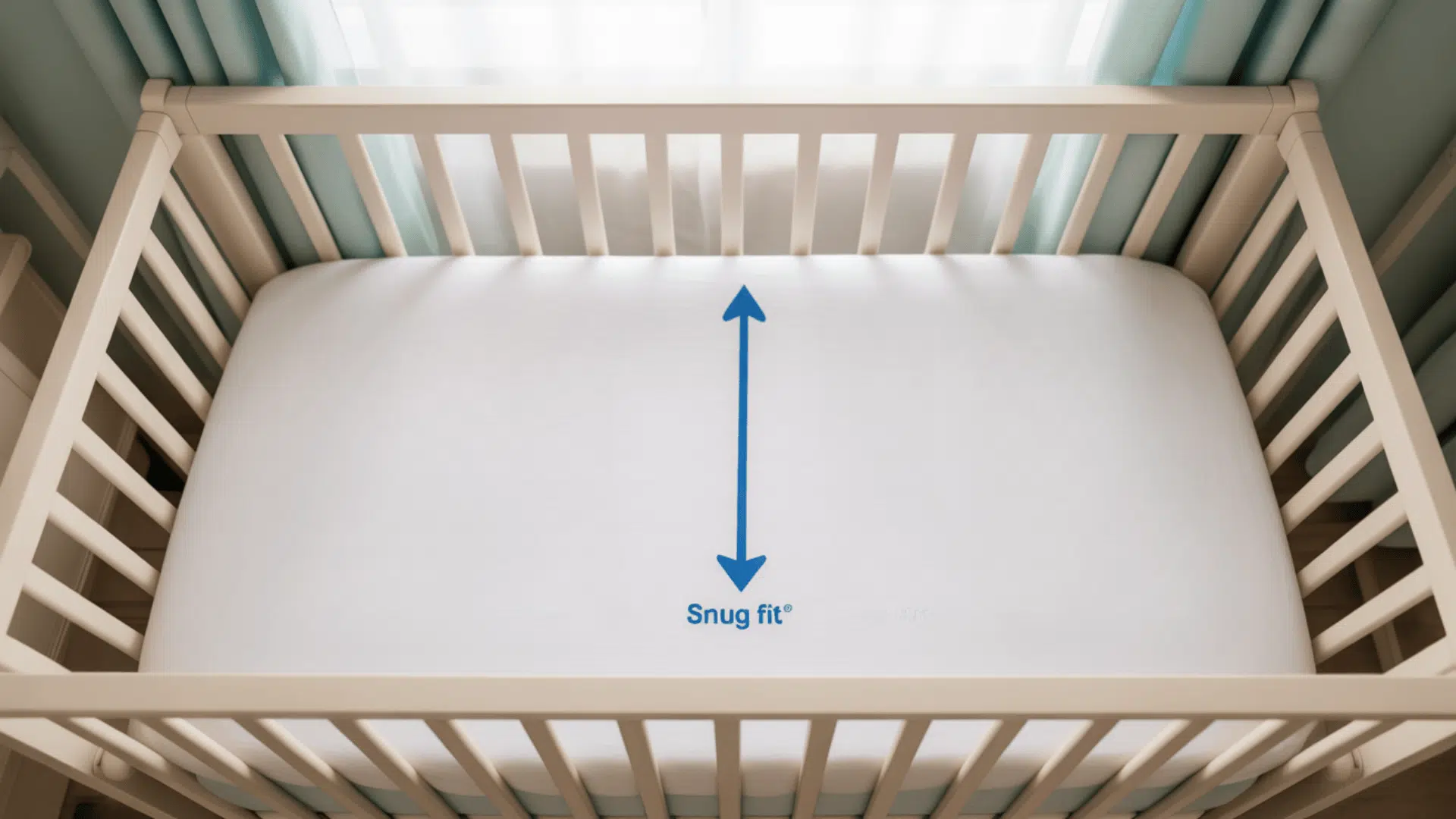
Here’s something that might surprise you: more babies are injured by poorly fitting mattresses than you’d think.
That innocent-looking gap between the mattress and crib rail? It’s actually dangerous. Babies can get their arms, legs, or heads trapped in spaces that seem too small to matter.
Infants don’t have the strength to free themselves if they get stuck. What looks harmless to adults can be life-threatening to babies.
The Two-Finger Test

After placing the mattress in the crib, slide your hand along each edge. Try to fit your fingers between the mattress and crib sides.

More than two fingers fit? Return the mattress immediately. It's too small and unsafe.

Two fingers or less? Perfect. Your baby can sleep safely.
Even newborns move around more than parents expect. They wiggle, roll, and scoot during sleep. A properly fitted mattress keeps all that movement safely contained.
Think of it as invisible bumpers that guide your baby back to center. No gaps mean no worries.
Not All Cribs Are Created Equal: Size Variations You Should Know
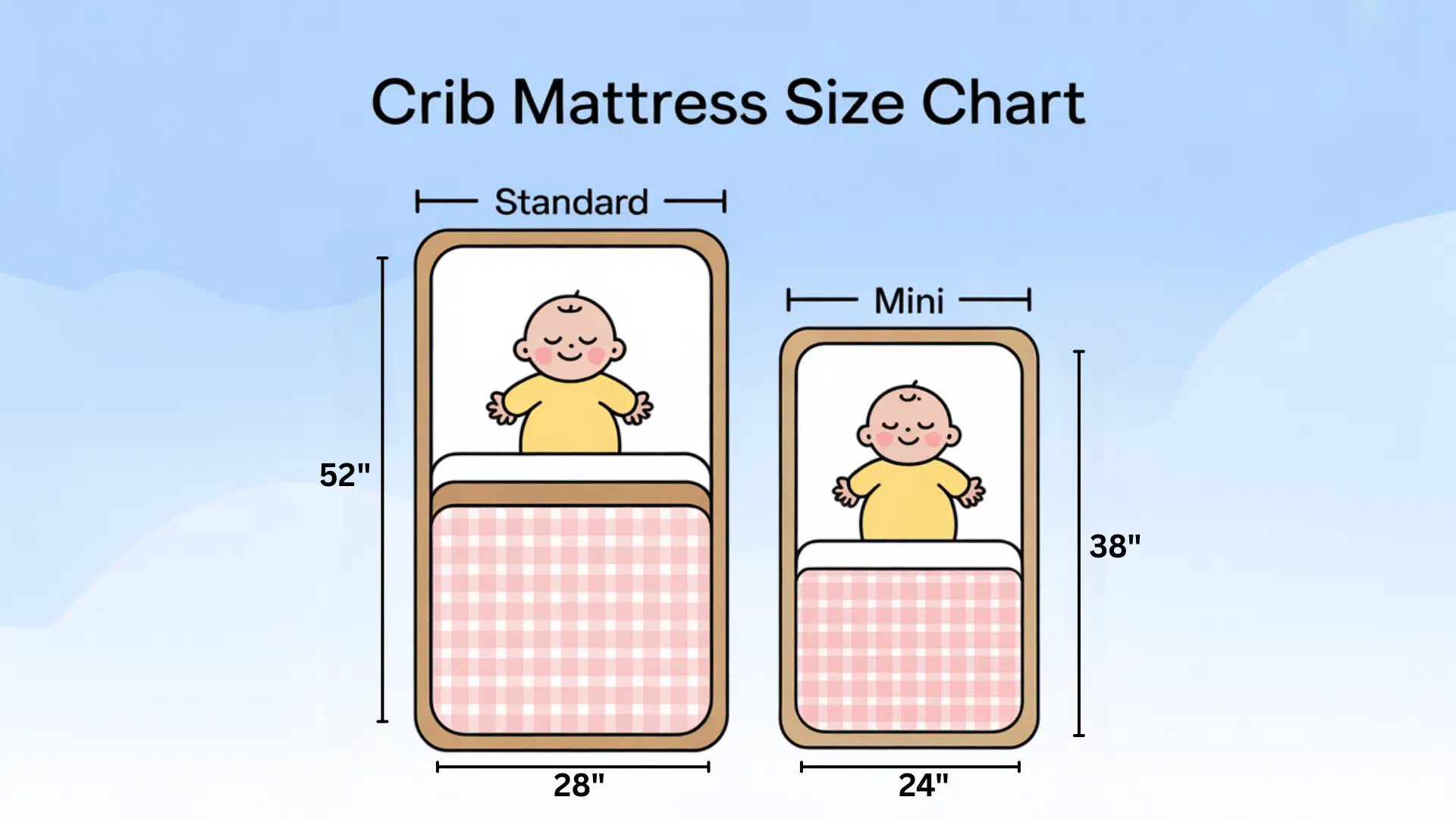
Think all cribs use the same mattress size? Think again. While most follow standard dimensions, there are several variations that might catch you off guard.
- Standard cribs offer the longest use and best mattress selection.
- Mini cribs save space, but your baby outgrows them faster.
- Shaped cribs, like oval or round designs, need custom mattresses that cost more.
| Crib Type | Mattress Dimensions | Best For | Lifespan |
|---|---|---|---|
| Standard Crib | 28″ × 52″ | Most families have, longest use | Birth to 2-3 years |
| Mini Crib | 24″ × 38″ | Small spaces, apartments | Birth to 18 months |
| Shaped Crib | Custom (varies) | Designer nurseries | Varies by design |
What This Means for You
Standard cribs offer the best value and longest use for most families. You’ll find the widest selection of mattresses at every price point.
Mini cribs work great for tight spaces or as travel beds for grandparents’ houses. Just plan to transition to a bigger bed sooner than expected.
Shaped cribs make stunning statement pieces but limit your mattress options. Custom mattresses often take weeks to arrive and cost significantly more.
Remember: never mix mattress sizes. A mini mattress in a standard crib creates dangerous gaps that put your baby at risk.
How to Measure Your Crib Correctly
Here’s a parenting truth nobody talks about: Even “standard” cribs aren’t always standard. Those tiny measurement differences? They can mean the difference between a perfect fit and a safety hazard.
Just grab a tape measure and something to write with. This takes five minutes but could save you hours of returns later.
Step 1: Measure Length First
Put your tape measure at one end of the crib interior. Stretch it to the other end. Don’t measure the outside frame – only the inside where the mattress will sit.
Write down the exact number. It might be 52 inches, or it could be 51.75 inches. Every decimal matters.
Step 2: Check the Width
Now measure across the short side. Again, inside edges only. You’re looking for something close to 28 inches, but don’t worry if it’s slightly different.
Step 3: Don’t Forget Depth
Measure from the top rail down to where the mattress sits. This tells you how thick your mattress can be while keeping the sides safe and high.
Choosing the Best Crib Mattress (Beyond Size)
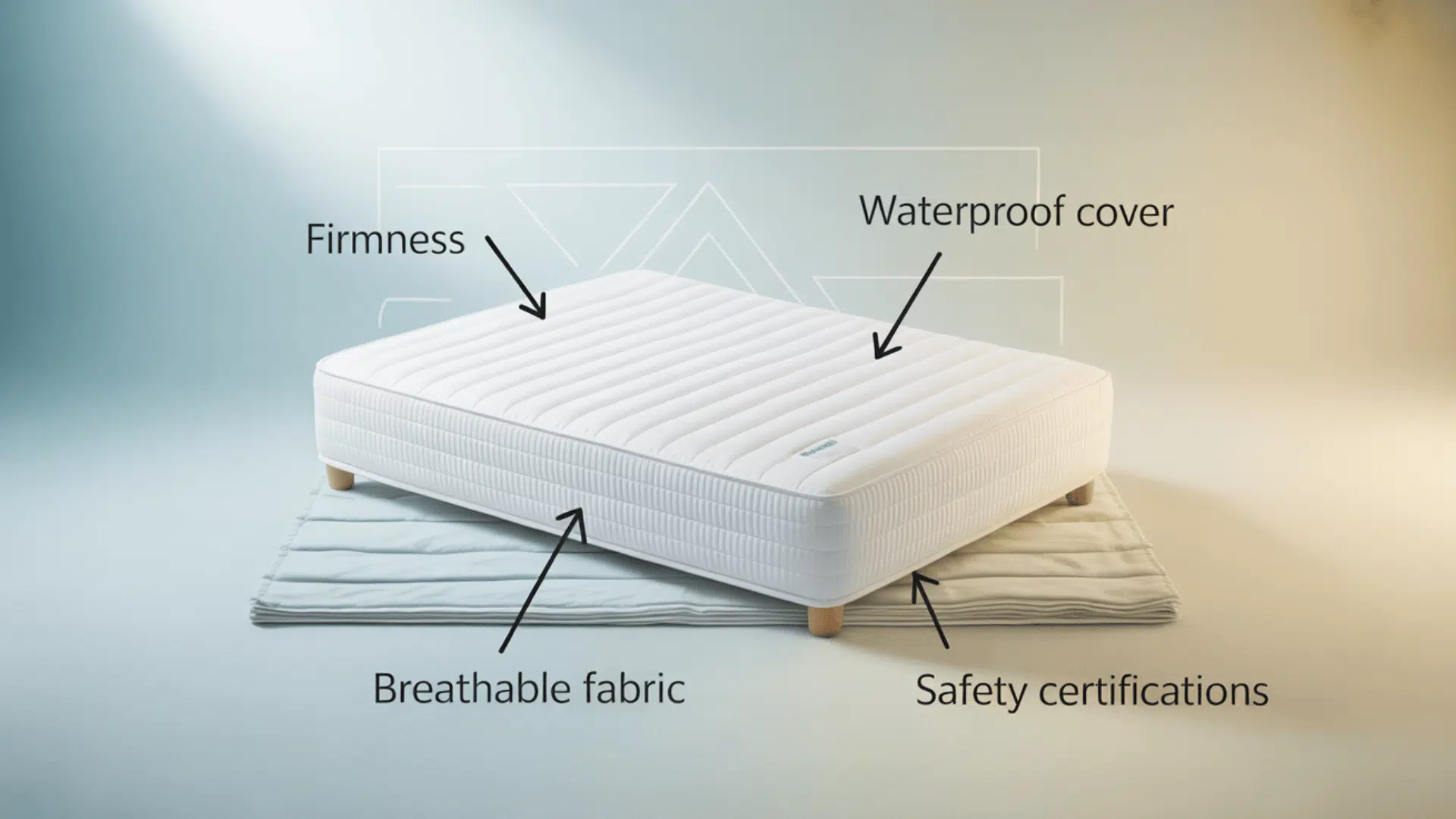
Getting the right dimensions is just step one. The perfect crib mattress combines proper sizing with features that protect your baby and give you peace of mind.
Fueling Safety: Firmness, Materials & Certifications
Here’s what surprises new parents: baby mattresses should feel almost uncomfortably firm to adults. Soft might seem cozy, but it’s actually dangerous for infants.
A firm surface prevents suffocation risks, especially for newborns who can’t lift their heads yet. When you press down on a good mattress, it should bounce back immediately without leaving any dents or impressions.
What to Look For in Materials:
- Waterproof covers that handle diaper leaks
- Breathable construction to prevent overheating
- Chemical-free materials without flame retardants or VOCs
Safety Certifications That Matter:
| Certification | What It Means |
|---|---|
| CertiPUR-US | Foam meets strict safety standards |
| GREENGUARD Gold | Low chemical emissions tested |
| Oeko-Tex Standard 100 | Textile safety verified |
Long-Term Value: Convertibility & Durability
Many cribs convert to toddler beds, and your mattress should work for both stages. Standard 28 × 52-inch mattresses fit most conversion kits perfectly, meaning one purchase can last from newborn through preschool.
Some mattresses offer dual-firmness designs with a firm infant side and slightly softer toddler side. This gives you the safety newborns need and the comfort toddlers prefer.
Look for warranties of 10 years or more as a sign that the manufacturer stands behind their product.
The best strategy? Buy after your crib is assembled so you can test the fit immediately.
Your Baby’s Safe Sleep Starts Here
Choosing the right crib mattress dimensions isn’t just about following guidelines; it’s about creating a safe sleep environment for your most precious person.
Remember the essentials: standard mattresses measure 28 × 52 inches, but always measure your specific crib first. Use the two-finger test to ensure proper fit. Never compromise on size, even if it means returning a mattress.
Beyond dimensions, prioritize firmness and safety certifications. A well-fitting, firm mattress will serve your family from newborn nights through the toddler years.
Your baby deserves safe, comfortable sleep from day one.
Ready to find the perfect mattress? Start by measuring your crib today; your baby’s safety depends on getting this right.