




Some quilts make you stop at the flea market table before you know why.
The Irish Chain quilt pattern is one of them. I have picked up more Irish Chain quilts from estate sales and vintage markets than any other design, and they almost always hold up well.
That durability is not accidental. The design rewards good technique: consistent cutting, careful pressing, and repeating the same simple block until the whole surface builds into a diagonal chain.
It suits beginners because the construction is forgiving, and it rewards experienced sewers because contrast and color choice can push the result in every direction.
This guide covers how to make the Irish Chain quilt pattern step by step, including the double version, ten variations, and fabric tips that make a real difference.
What is an Irish Chain Quilt Pattern?
An Irish Chain quilt is a traditional patchwork design built from repeating square units, often using nine-patch blocks and alternating plain blocks to create a linked-chain effect.
The single Irish Chain is usually a two-fabric design, while the double Irish Chain typically uses three fabrics and produces a denser chain motif.
The earliest known American Irish Chain quilt has been dated to 1814 by quilt historian Barbara Brackman, and the design remained popular through the 19th and 20th centuries.
What makes the origin story interesting is that an 1805 quilt made in County Clare, Ireland by Margaret Kee uses a near-identical structure but was known locally as the “American Chain.”
Whether the pattern originated in Ireland or America remains genuinely uncertain. What is clear is that it has been stitched continuously for over 200 years without going out of circulation.
It stays popular because the construction is simple and beginner-friendly.
Single vs. Double Irish Chain Quilt Pattern
Both versions of the Irish Chain quilt pattern look great, but they work differently. This comparison helps you choose the right one before you start cutting fabric.
| FEATURE | SINGLE IRISH CHAIN QUILT PATTERN | DOUBLE IRISH CHAIN QUILT PATTERN |
|---|---|---|
| Look | One chain design | Two interlocking chain lines |
| Blocks | Nine-patch and plain blocks | More complex nine-patch or multi-unit blocks |
| Fabric | Usually two fabrics | Can be made with two or more fabrics |
| Skill Level | Beginner-friendly | Confident beginner to intermediate |
| Time | Quicker to make | Takes longer due to more piecing |
| Cutting | Less cutting required | More cutting required |
| Piecing | Simple and repetitive | More detailed and precise |
| Best For | First quilts and simple projects | More detailed quilts with a stronger visual pattern |
| Contrast | Easier to read | Works best with a stronger contrast |
| Finish | Light and simple appearance | Denser and more structured appearance |
Now that you can see how the two versions compare, it helps to know where this pattern came from. The next section covers the history behind the Irish Chain quilt pattern.
Materials Required
Before you start sewing your Irish Chain quilt pattern, gather everything on this list. Having your tools and fabric ready saves time and keeps your workflow steady throughout.
| MATERIAL | QUANTITY | USE |
|---|---|---|
| Background fabric | 1–1.5 yards (for a small throw) | For cutting 6.5-inch plain squares |
| Solid jelly roll (2.5″ strips) | 1 roll | For solid strips in nine-patch strip sets |
| Printed jelly roll (2.5″ strips) | 1 roll | For printed strips in nine-patch strip sets |
| Backing fabric | 3–4 yards (depending on quilt size) | For the back of the finished quilt |
| Batting | 1 piece (quilt size) | For the middle layer of the quilt |
| Binding fabric | 0.5–0.75 yard | For finishing the quilt edges |
| Sewing machine | 1 | For piecing and assembling the quilt |
| Rotary cutter | 1 | For cutting strips and squares accurately |
| Quilting ruler | 1 | For measuring 2.5-inch segments and 6.5-inch squares |
| Cutting mat | 1 | For safe and precise cutting |
| Iron | 1 | For pressing seams flat |
| Ironing surface | 1 | For pressing fabric and blocks |
| Pins or clips | As needed | For holding fabric pieces in place while sewing |
Consider pairing your cotton or printed strips with soft minky fabric for the backing to add extra plushness and warmth to the finished quilt.
Step-By-Step Guide to Make an Irish Chain Quilt Pattern
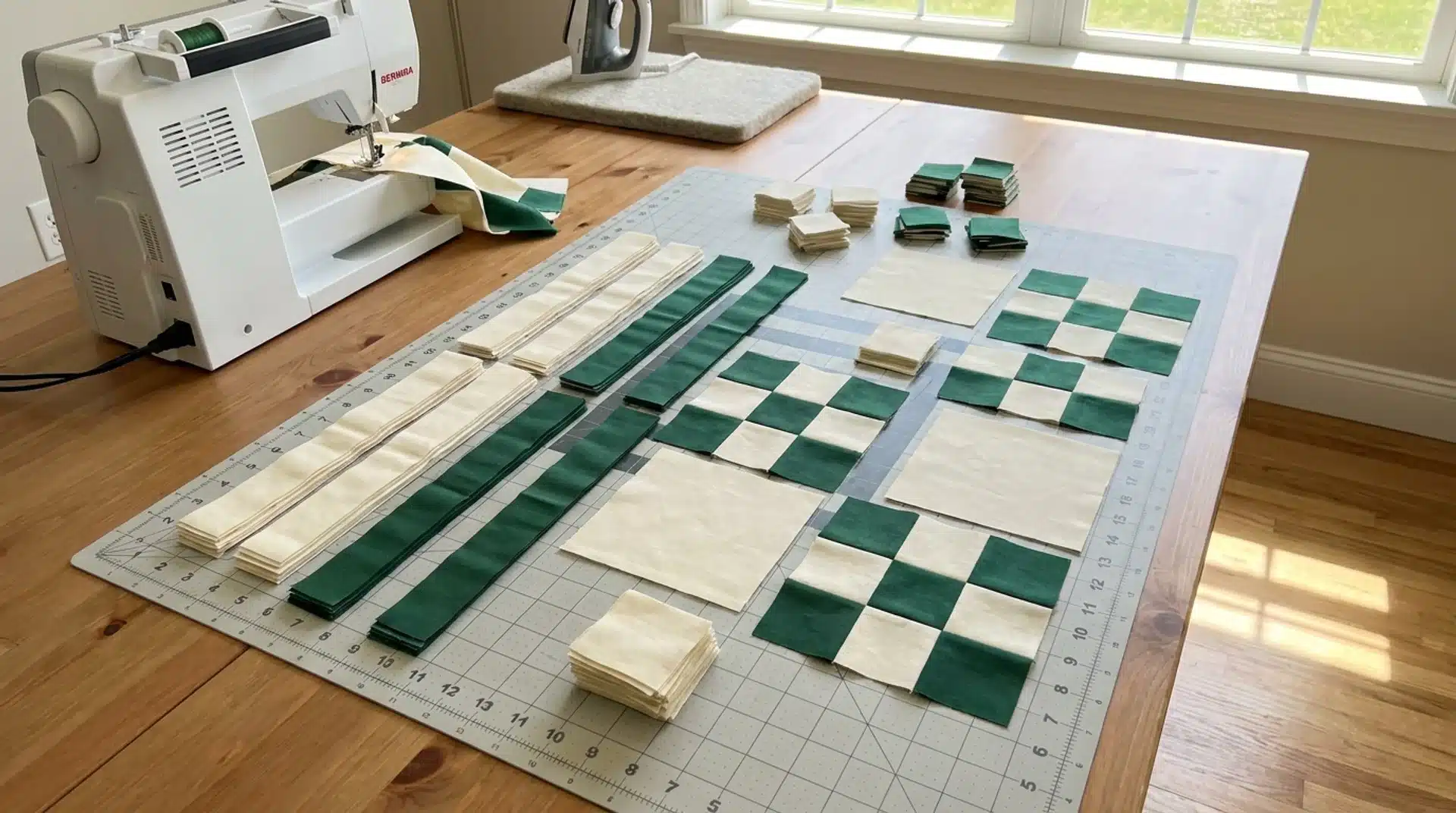
These steps cover everything you need to make a basic Irish Chain quilt pattern from start to finish. Work through each step in order to keep your blocks accurate and your layout clean.
Step 1: Cut and Sort the Fabric Pieces
Start by gathering one printed jelly roll, one solid jelly roll, and background fabric. Keep the printed and solid strips separate.
The quilt uses equal amounts of print and solid strips, so the chain is clearly visible, rayon blends can also work well in the printed sets for added drape and softness.
From the background fabric, cut 6.5-inch strips, then cut those strips into 6.5-inch squares.
Step 2: Sew the Two Strip Sets
Make two kinds of strip sets for the nine-patch blocks. In the first set, sew a solid strip between two printed strips. In the second set, sew a printed strip between two solid strips.
Press the first set toward the middle and press the second set toward the outside so the seams line up well later.
Step 3: Cut the Strip Sets Into 2.5-Inch Segments
After pressing the strip sets, cut them into 2.5-inch segments if you are using 2.5-inch-wide strips, such as jelly rolls. If your strip width is different, match the segment size to that width for consistent blocks.
Cut all pieces first and place them in separate piles for easier mixing. This helps create a scrappy look. Trim the strip edges if needed to keep cuts even and maintain accurate block size.
Step 4: Sew the Nine-Patch Blocks
Lay out each nine-patch block in three rows. Use the strip set with the printed center for the top and bottom rows, and the strip set with the solid center for the middle row.
Sew the rows together, matching the seams carefully. Press the finished block open and check that it measures about 6.5 inches.
Step 5: Cut the Background Squares and Lay out the Quilt
Cut the background fabric into 6.5-inch strips, then cut those into 6.5-inch squares. On a flat surface, alternate one nine-patch block with one plain square across the row.
Repeat this layout row by row. As the rows build, the Irish Chain pattern starts to appear without any extra block design work.
Step 6: Sew the Rows Together to Finish the Quilt Top
Sew each row together first, then join the rows to complete the quilt top. Check that the blocks stay in the correct order so the chain runs across the quilt clearly.
The quilt can be made wider or longer depending on the number of blocks, though it is often made one row longer than wide.
Video Tutorial
For more detailed instructions, refer to the YouTube video by Missouri Star below:
With the steps complete, it helps to know the most common quilt sizes. The next section covers standard dimensions to help you plan your finished quilt.
Common Irish Chain Quilt Sizes
Knowing standard sizes helps you plan your Irish Chain quilt pattern from the start. The right size guides your fabric needs and overall sewing time.
- Baby/Crib Size (42″×42″ or 42″×54″): A beginner-friendly option that uses less fabric and makes a thoughtful, handmade gift.
- Lap Size (50″×60″): A popular choice for the double Irish chain quilt pattern, ideal for daily use.
- Throw/Twin Size (60″×80″): Works well for a bed or couch and needs consistent block sizing throughout.
- Queen (about 90″×90″+) and King (about 108″×108″+): Use 3.5″ or 5″ squares and plan fabric carefully.
Now that you know the sizes, it is time to look at the different versions of the pattern. The next section covers the most popular variations of the Irish Chain.
Irish Chain Quilt Pattern Ideas and Variations
The Irish Chain quilt pattern comes in several versions. Each one has a different look and skill level, so there is a good fit for every quilter.
1. Braided Chain Pattern

The braided chain gives the Irish Chain quilt pattern a woven, interlocked look. It uses careful fabric placement to create the illusion of braiding. This version adds visual depth without changing the basic square construction.
- Materials Required: Sewing machine, rotary cutter, ruler, cutting mat, iron, pins
- Fabric Requirements: Three to four fabrics in graduated tones, about 3–4 yards total, depending on size
- Steps to Follow: Plan color placement carefully, cut uniform squares, assemble blocks in the correct order, and lay out rows to create the braid effect
2. Double Irish Chain

The double Irish chain quilt pattern creates two chain lines running across the quilt. It uses more pieced blocks and works best with three colors.
The layout takes more planning than the single version. It suits confident beginners who are ready to work with a slightly more detailed block arrangement.
- Materials Required: Sewing machine, rotary cutter, quilting ruler, cutting mat, iron, pins
- Fabric Requirements: Two contrasting fabrics for the chain, one background fabric, about 3–4 yards total for a lap size
- Steps to Follow: Cut squares, sew five-patch and plain blocks, alternate blocks in rows, sew rows together
3. Triple Irish Chain
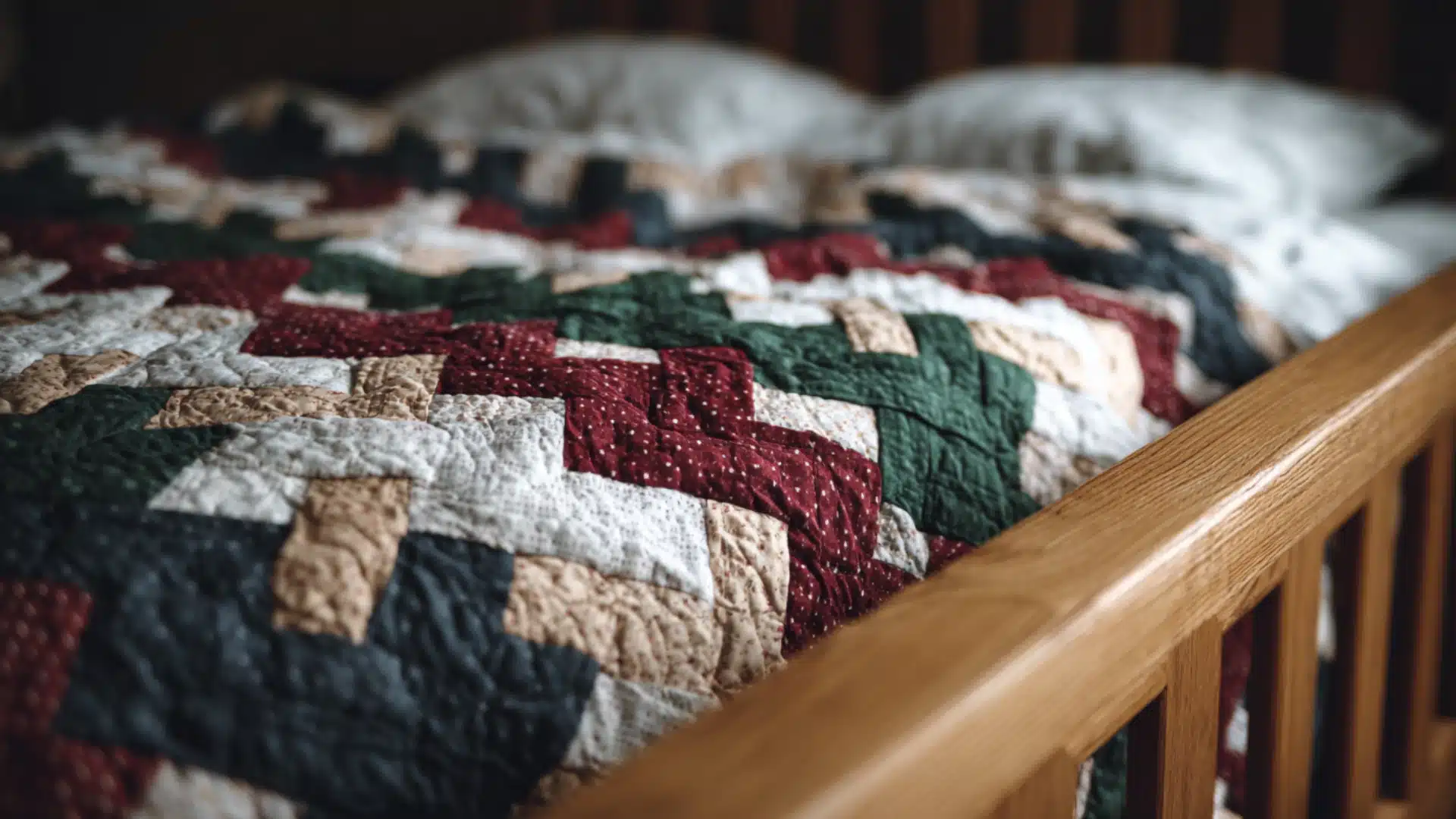
The triple Irish Chain adds a third chain line to the design. This version has a rich, dense look that fills the quilt surface. It takes more time and careful block placement.
This version works best for intermediate quilters who are comfortable with precise cutting and consistent seam allowances throughout.
- Materials Required: Sewing machine, rotary cutter, ruler, cutting mat, iron, pins
- Fabric Requirements: Three chain fabrics plus one background fabric, approximately 5–6 yards total for a throw size
- Steps to Follow: Cut multiple square sizes, piece complex blocks carefully, alternate blocks in a planned layout, and press and join rows
4. Jelly Roll Irish Chain
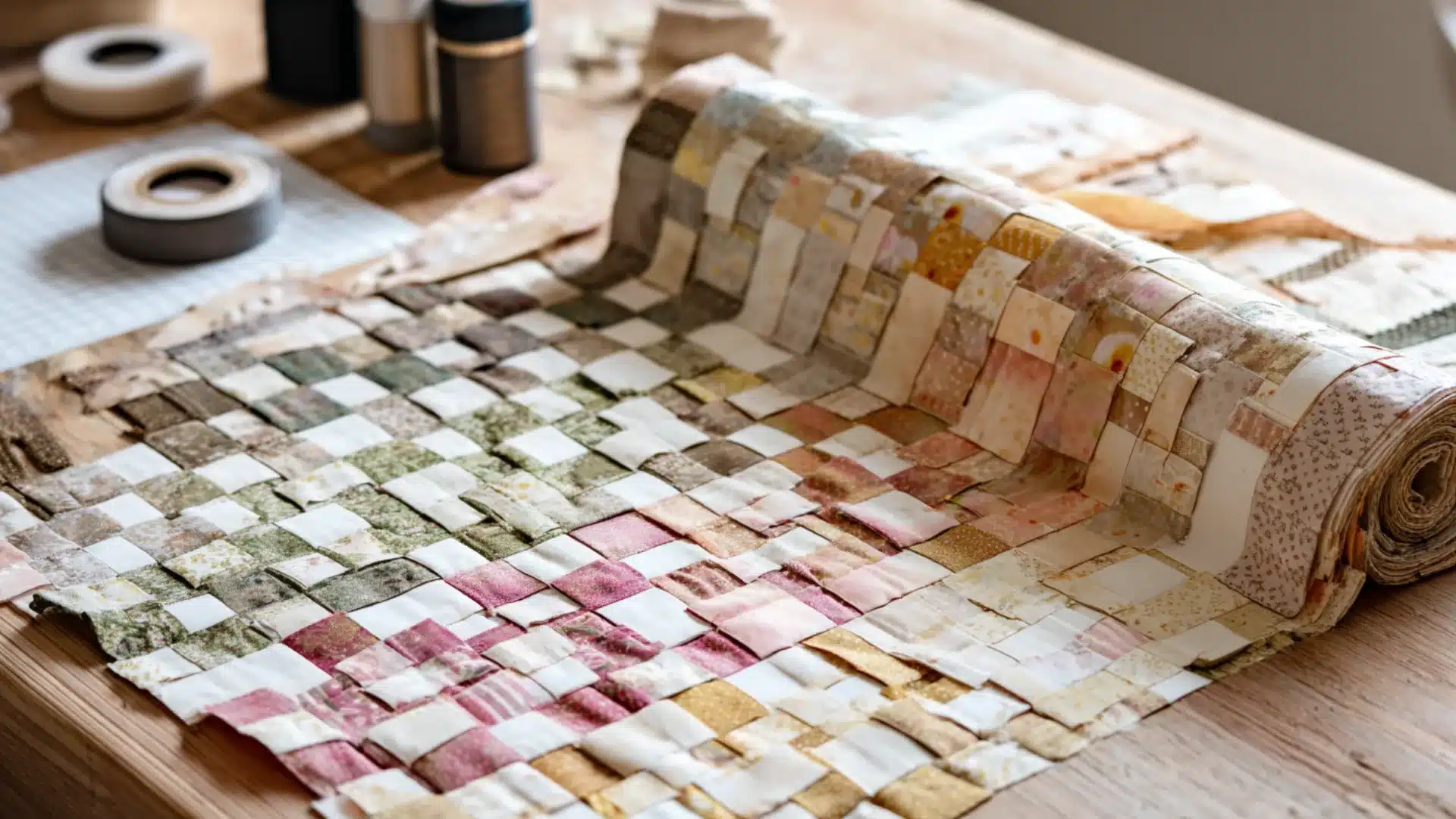
A jelly roll Irish Chain uses pre-cut 2.5-inch strips to speed up the process. The strips sewn into nine-patch blocks can be quickly and with less prep work.
This version works well for the double Irish chain quilt pattern, too. Coordinated jelly rolls make color selection simple and keep the chain looking balanced.
- Materials Required: Sewing machine, rotary cutter, ruler, cutting mat, iron, pins
- Fabric Requirements: Three chain fabrics plus one background fabric, approximately 5–6 yards total for a throw size
- Steps to Follow: Cut multiple square sizes, piece complex blocks carefully, alternate blocks in a planned layout, and press and join rows
5. Nine-Patch Irish Chain
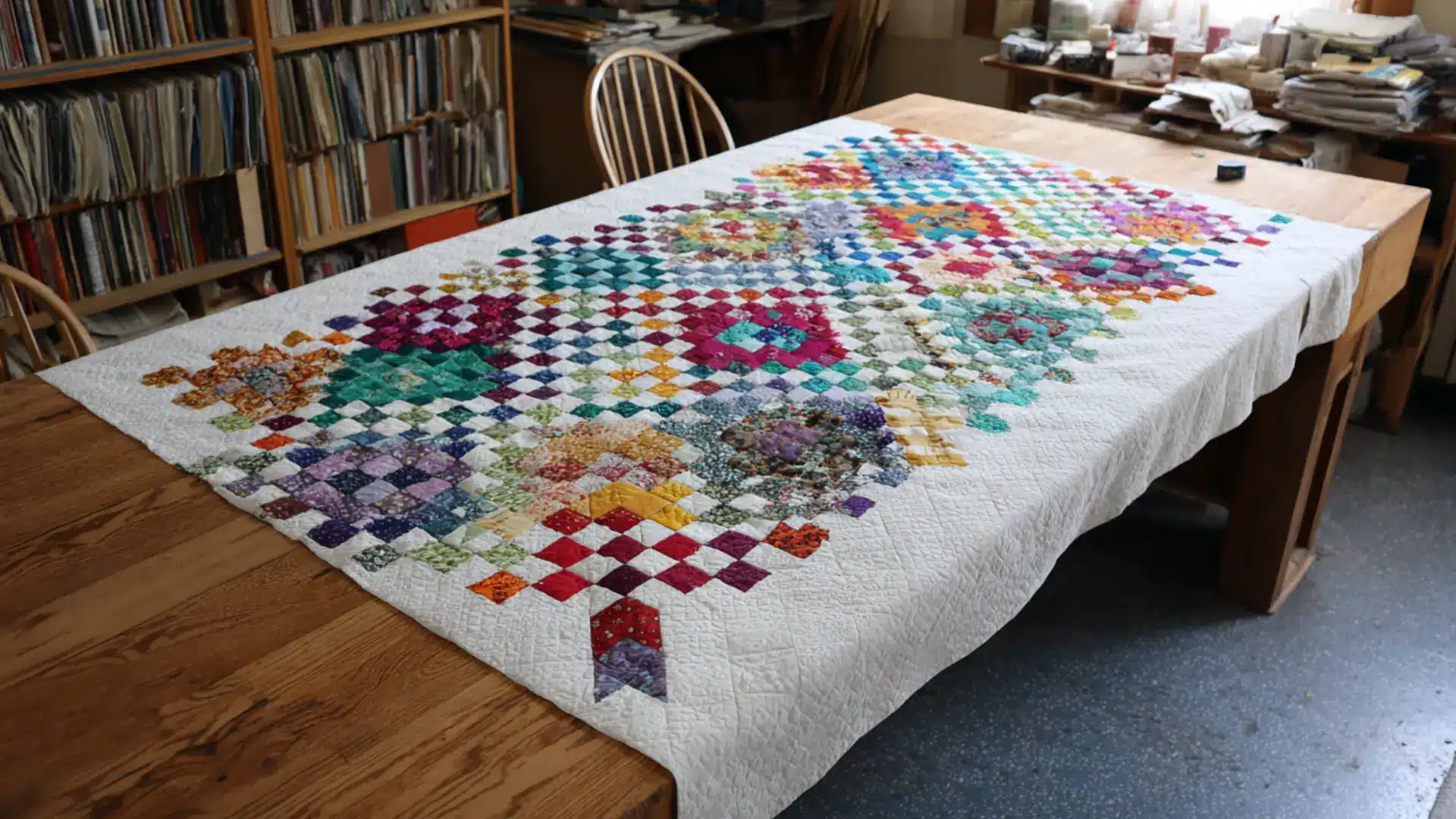
The nine-patch Irish Chain builds the chain entirely from nine-patch blocks. Each block uses a set color arrangement that creates the chain when placed next to plain squares.
This version is straightforward and repeatable. It is a solid choice for beginners who want a structured pattern with a clear, predictable result.
- Materials Required: Sewing machine, rotary cutter, ruler, cutting mat, iron, pins
- Fabric Requirements: Two fabrics for the nine-patch blocks and one background fabric, about 2–3 yards total for a lap size
- Steps to Follow: Sew strip sets, cut into segments, assemble nine-patch blocks, alternate with plain squares, sew into rows
6. Snowball Variation
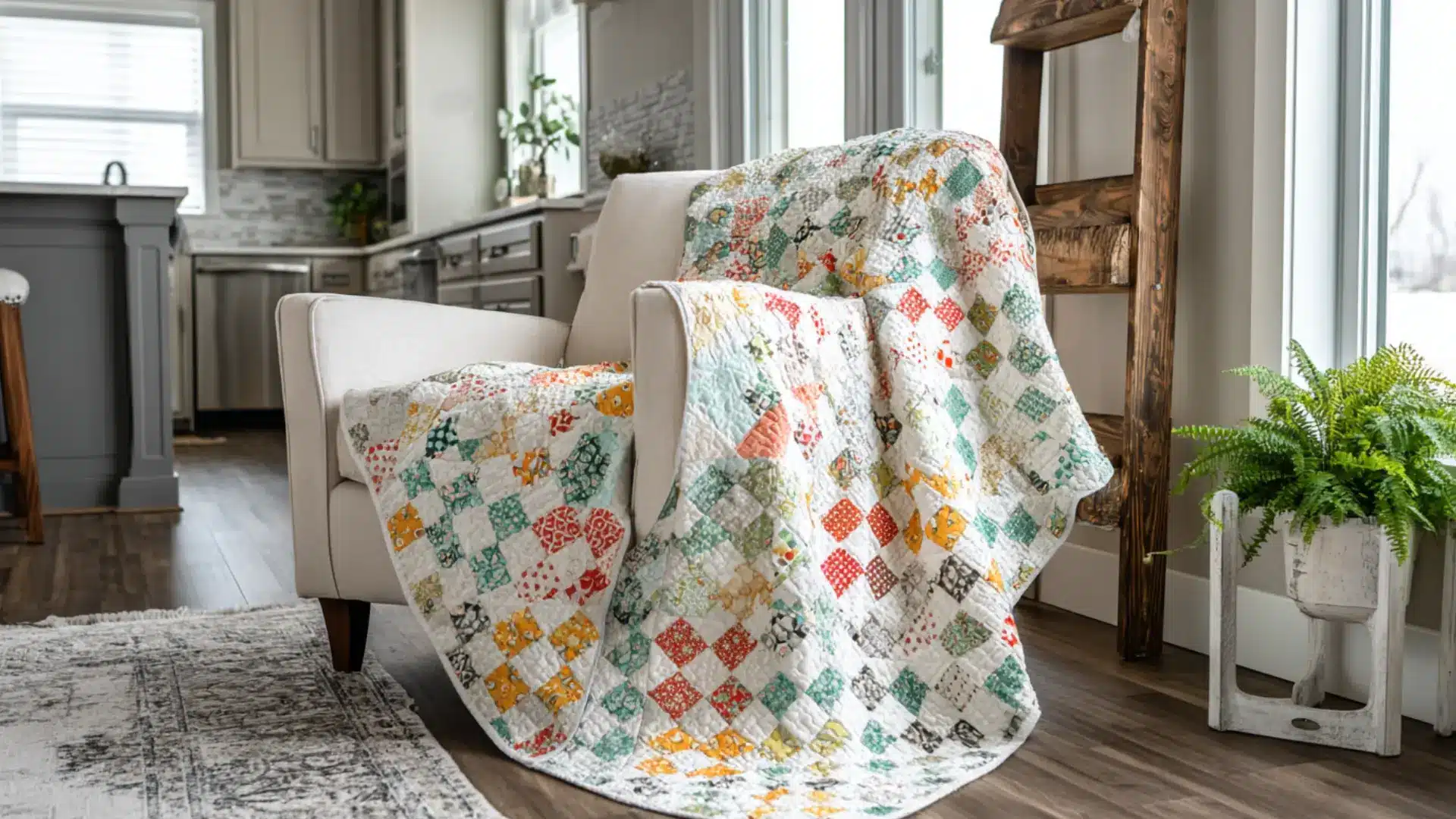
The snowball variation adds clipped corners to the plain blocks, creating a rounded look between the chain squares. It softens the overall design while keeping the Irish Chain quilt pattern structure intact. This suits quilters who want a less rigid finish.
- Materials Required: Sewing machine, rotary cutter, ruler, cutting mat, iron, pins, corner triangle pieces
- Fabric Requirements: Chain fabric, background fabric, and small corner squares in a contrasting color, about 3 yards total
- Steps to Follow: Sew corner triangles onto plain squares, press, assemble with nine-patch blocks, lay out in rows, join rows carefully
7. Ohio Star Hybrid
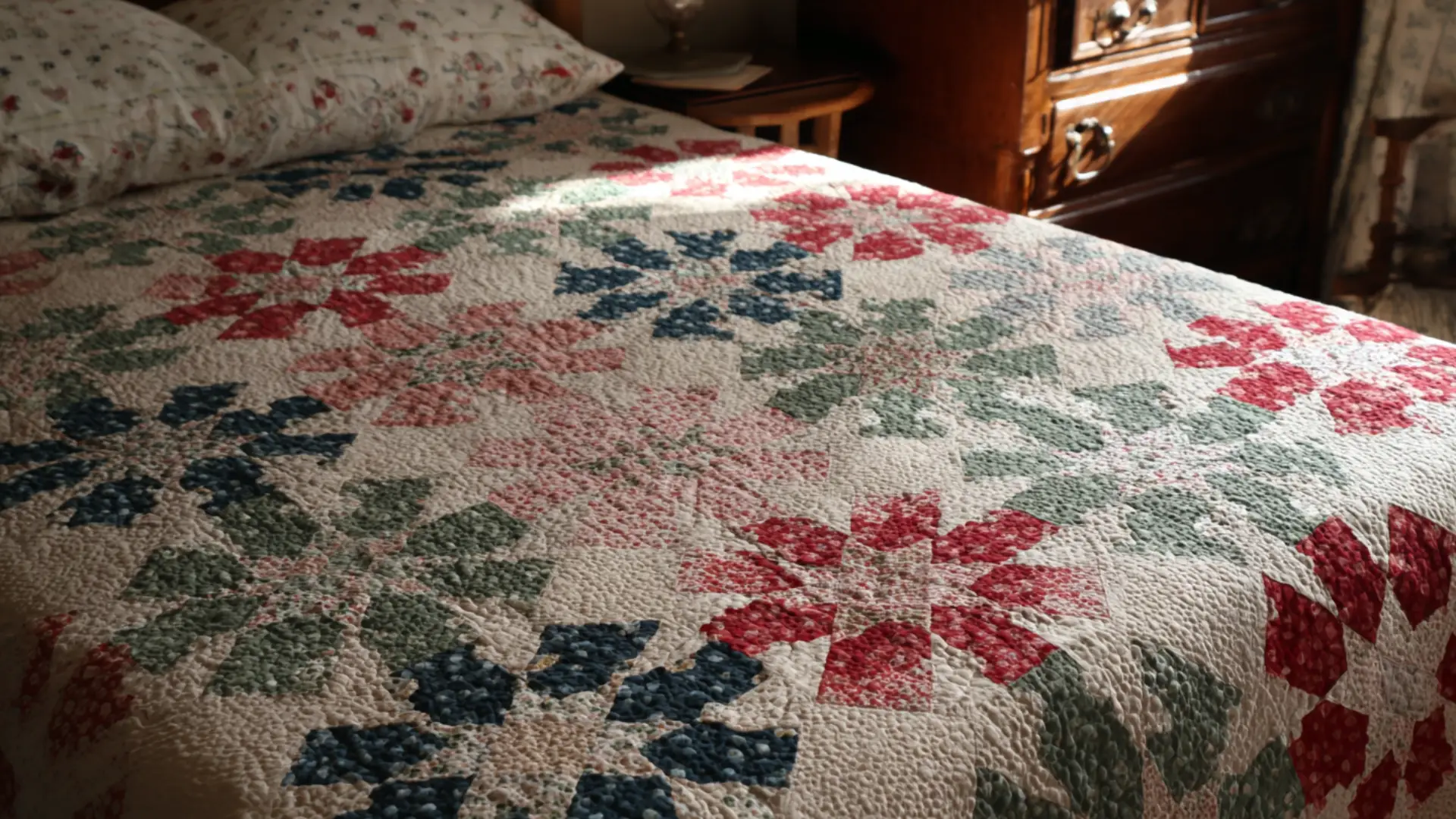
This version combines the Irish Chain quilt pattern with Ohio Star blocks. The star blocks replace the plain squares, adding detail between the chain sections. It takes more time but produces a rich, traditional finished quilt.
- Materials Required: Sewing machine, rotary cutter, ruler, cutting mat, iron, pins
- Fabric Requirements: Three fabrics minimum, about 4–5 yards total for a throw size
- Steps to Follow: Piece Ohio Star blocks separately, alternate with chain blocks in the layout, match seams carefully, press well, join rows
8. Jumbo Irish Chain
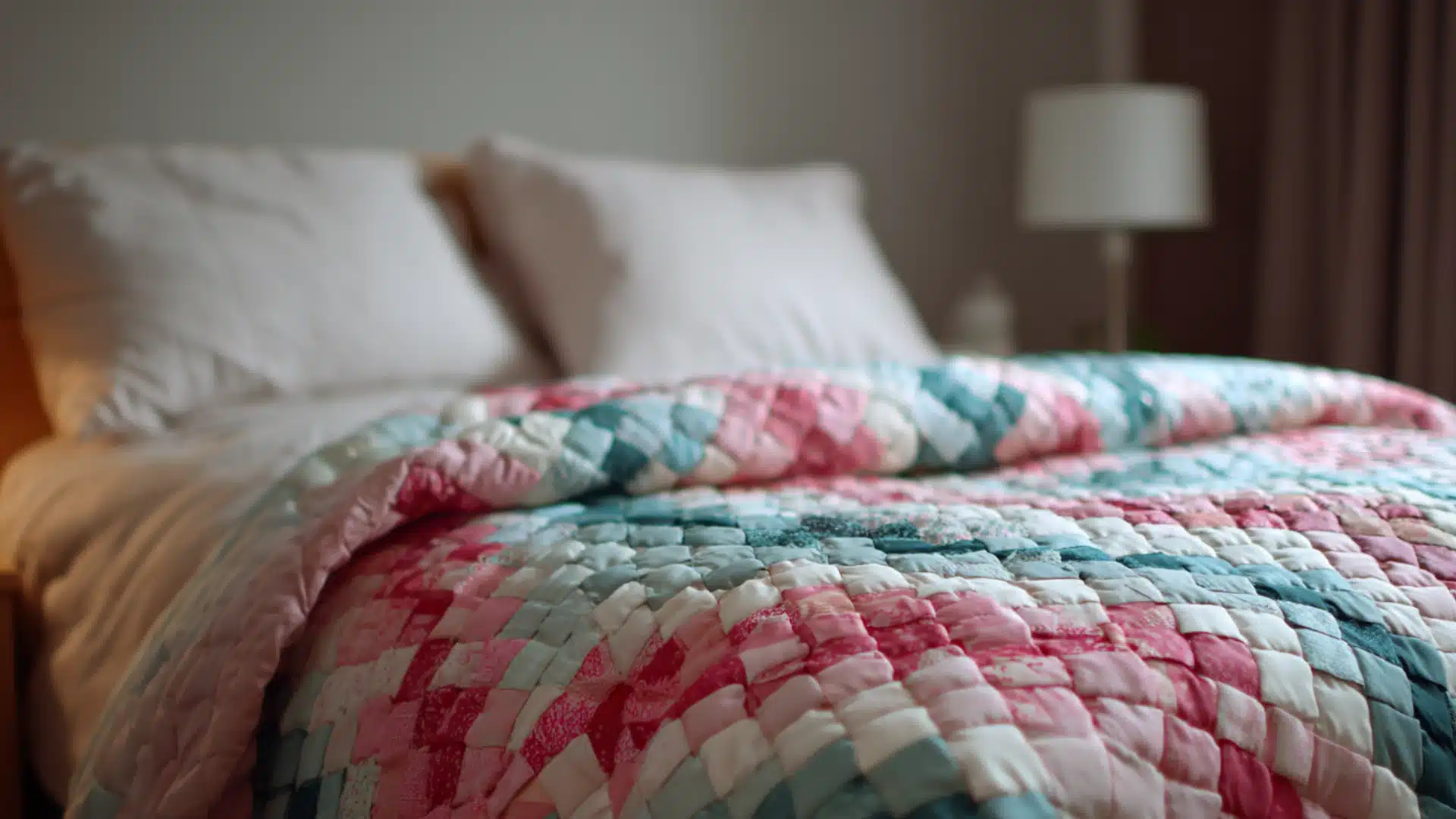
The jumbo Irish Chain uses larger squares, typically 3.5 or 5 inches, to speed up cutting and sewing. It works well for larger quilts, like queen- or king-size quilts. Fewer but larger pieces make this version faster to complete.
- Materials Required: Sewing machine, rotary cutter, ruler, cutting mat, iron, pins
- Fabric Requirements: Two to three fabrics, about 5–7 yards total, depending on the finished size
- Steps to Follow: Cut larger squares, sew into blocks, alternate chain and plain blocks, lay out in rows, join and press
9. Crib Irish Chain
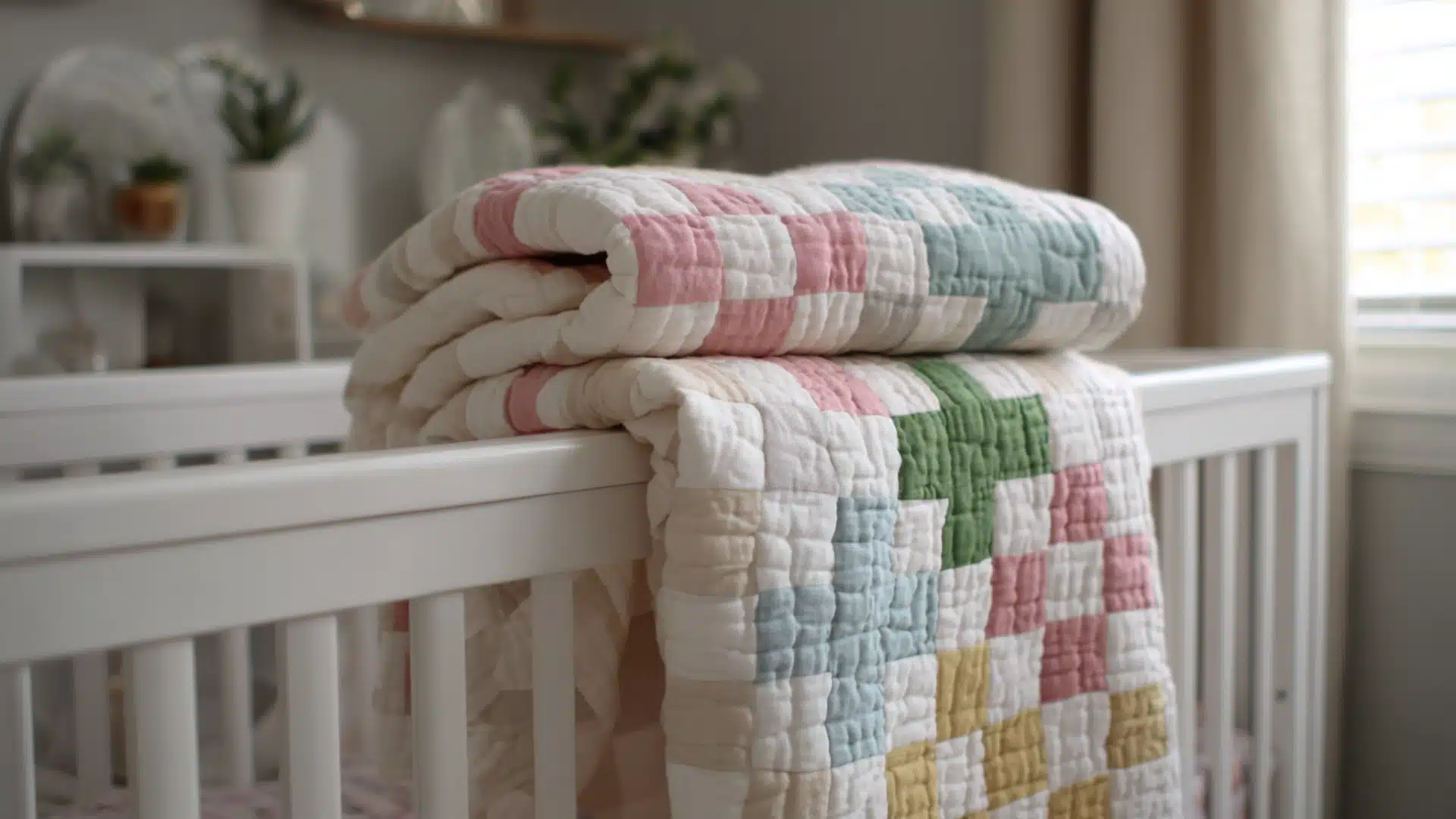
The crib Irish Chain is a smaller version of the classic design, sized around 42 by 54 inches. It uses smaller squares and fewer blocks, making it ideal for beginners. This size also works well as a handmade gift.
- Materials Required: Sewing machine, rotary cutter, ruler, cutting mat, iron, pins
- Fabric Requirements: Two fabrics, about 1–1.5 yards each, plus backing and batting
- Steps to Follow: Cut 1.5 or 2-inch squares, sew nine-patch blocks, alternate with plain squares, assemble rows, finish with backing and quilting
10. St. Patrick’s Day Irish Chain
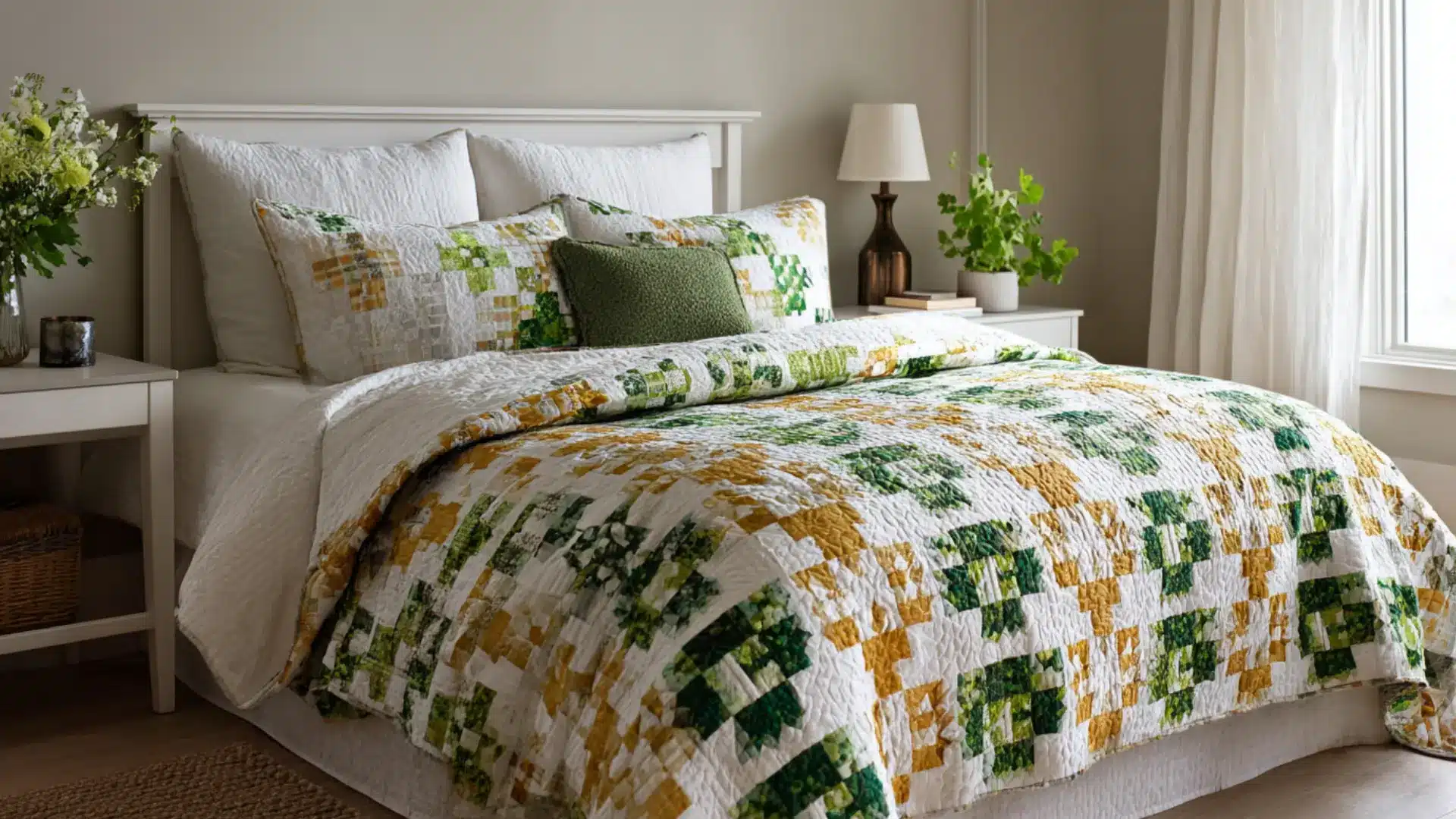
This version uses green, white, and gold fabrics to give the Irish Chain quilt pattern a festive seasonal look. The color placement follows the same block structure as the classic design. It makes a fun project for quilters who enjoy themed makes.
- Materials Required: Sewing machine, rotary cutter, ruler, cutting mat, iron, pins
- Fabric Requirements: Green, white, and gold fabrics, about 2–3 yards total for a lap size
- Steps to Follow: Cut squares in the chosen colors, sew nine-patch blocks using the planned color order, alternate with plain white squares, join rows, and press flat
Once you pick a variation, the next step is choosing your fabric. The next section shares practical tips to help you cut, sew, and finish your Irish Chain quilt with confidence.
Tips for Irish Chain Quilt Pattern
Starting your first Irish Chain quilt pattern is easier when you know a few simple tricks. These tips help you cut, sew, and finish with more confidence.
- Cut with Care: Use a rotary cutter and a ruler to achieve clean, straight squares every time.
- Press Seams Flat: Press each seam after sewing to keep your blocks neat and the chain pattern aligned.
- Sew a Scant Quarter-Inch Seam Allowance: A slightly smaller seam allowance helps your blocks come out the right size.
- Work in Sections: Sew your squares into rows first, then join the rows together for easier handling.
- Check as You Go: Measure your blocks often to catch any sizing issues before they add up.
These simple habits help you build good sewing skills that last beyond this project. In the final section, we wrap up everything covered and help you decide where to begin your Irish Chain quilt.
Wrapping It Up
The Irish chain quilt pattern is one of the best starting points in quilting. It uses simple squares, a clear layout, and basic sewing steps that build real skills over time.
From picking fabric to sewing the final row, each step covered here moves toward a finished quilt worth keeping or gifting.
The double Irish chain quilt pattern takes things further for those who want more detail and a richer look.
The key is to start simple, work at a steady pace, and enjoy the process.
Have you tried the Irish Chain quilt pattern before? Share your experience in the comments below, or bookmark this page to come back to it when you are ready to begin your next Irish chain quilt project.
Frequently Asked Questions
How Much Fabric Do I Need for an Irish Chain Quilt?
It depends on the size. A lap quilt needs about 2–3 yards of each of two fabrics. Always buy a little extra for cutting mistakes.
Can I Use Precuts for an Irish Chain Quilt?
Yes. Jelly rolls and charm packs work well. They save time on cutting and come in coordinated colors, making fabric selection much easier.
What is the Best Block Size for an Irish Chain Quilt?
A 6-inch finished block is the most common choice. Beginners often use 2.5-inch squares, which are easy to cut and sew accurately.