





Most people think eating anything before bed is a bad idea. But peanut butter is a little different.
It is packed with protein, healthy fats, and an amino acid called tryptophan, which your body uses to produce sleep hormones like serotonin and melatonin. So instead of disturbing your sleep, a small spoonful of peanut butter can actually help you sleep.
The healthy fats in peanut butter digest slowly, which means your body gets a steady release of energy through the night. This keeps your blood sugar stable and prevents those midnight hunger pangs that wake you up at 2 AM.
More and more people are adding it to their night routine, not just for sleep, but also for muscle recovery and weight management. It is affordable, easy, and takes less than a minute to have.
Does Peanut Butter Help You Sleep?
Yes, peanut butter can help you sleep better, and there is actual science behind it. Peanut butter contains tryptophan, an essential amino acid your body cannot produce on its own.
Once you eat it, tryptophan converts into serotonin, which then turns into melatonin, the hormone that signals your body it is time to sleep.
But here is the key. Tryptophan works better when paired with a carbohydrate. Something like a banana or a whole-grain Toast helps tryptophan reach the brain faster, making the whole process more effective.
Peanut butter also contains magnesium and vitamin B6, both of which support deeper, more restful sleep.
A real-world study conducted by the NIH among firefighters found that eating peanut butter before bed for 7 weeks improved sleep quality and morning alertness. That is not just theory, it is tested results.
Peanut Butter Before Bed for Weight Loss: Myth or Reality?✕ MYTH Many believe that peanut butter before bed causes weight gain. But that’s not the whole story. ✓ REALITY When consumed in moderation, peanut butter can actually support weight loss by boosting thermogenesis and aiding muscle repair, which speeds up metabolism. Stick to 2 tablespoons of natural peanut butter. |
Key Benefits of Eating Peanut Butter at Night
Peanut butter is not just a tasty snack. Eaten at night in the right amount, it can do some genuinely useful things for your body while you sleep.
1. Keeps You Full Through the Night
The protein and healthy fats in peanut butter digest slowly, providing a steady release of energy.
This helps prevent midnight hunger and stops you from reaching for unhealthy snacks first thing in the morning, which can support weight loss by reducing late-night snacking.
Pro Tip: Pair it with a glass of water before bed to aid digestion and stay hydrated.
2. Stabilizes Your Blood Sugar
Peanut butter contains potassium, magnesium, and fiber, which work together to keep blood sugar levels steady overnight. This is especially useful for people with diabetes or those who feel low on energy in the morning.
Pro Tip: Choose natural peanut butter with zero added sugar to get this benefit fully.
3. Supports Muscle Recovery While You Sleep
Your muscles repair themselves while you rest. The protein in peanut butter provides the amino acids your body needs for overnight repair, making it a great option for people who exercise regularly.
Pro Tip: Have it within 30 minutes of your bedtime for better overnight muscle protein synthesis.
4. Helps Reduce Stress Before Bed
Peanut butter naturally suppresses cortisol, the hormone linked to stress and anxiety. Lower cortisol levels at night help your body relax faster and transition into deeper sleep more easily.
Pro Tip: Combine it with warm milk or chamomile tea for an even calmer bedtime routine.
5. It is Good for Your Heart
Peanut butter is rich in monounsaturated fats, particularly oleic acid. These healthy fats help lower bad cholesterol levels over time, making your nightly spoon of peanut butter good for your heart, too.
Pro Tip: Stick to two tablespoons maximum. Going overboard adds calories without any extra heart benefit.
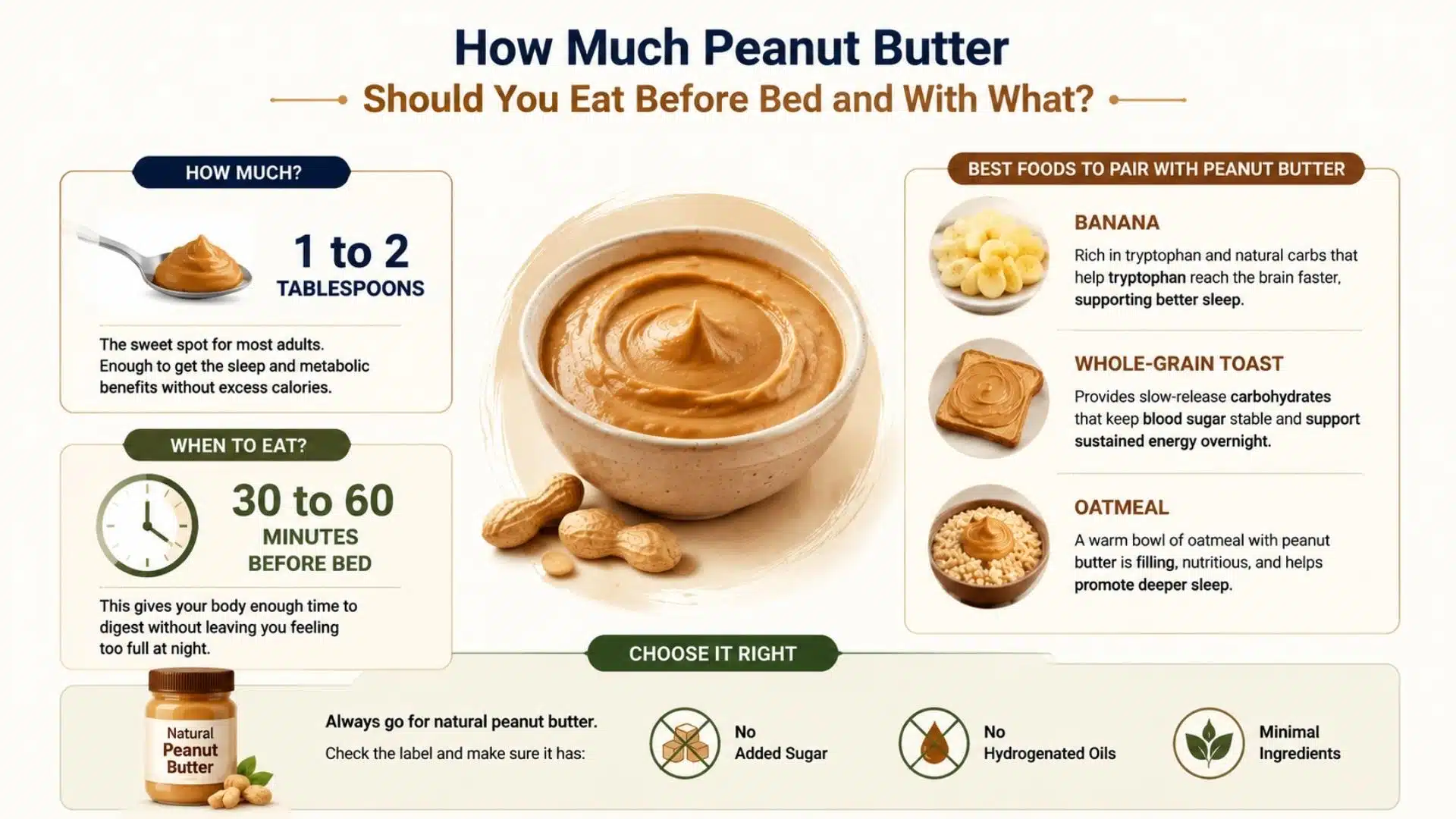
How to Choose the Right Peanut Butter for Bedtime
Not all peanut butter is created equal, and the type you choose matters more than most people realize. Here is what to look for on the label:
Ingredients list: The only ingredients should be peanuts and, if desired, a small amount of salt. If you see hydrogenated oils, corn syrup, or added sugar listed, put it back. Those additives cancel out the blood sugar and sleep benefits.
Oil separation is a good sign: Natural peanut butter separates because it contains no stabilizers. Stir it once when you open the jar and store it upside down to make mixing easier each time.
Peanut allergy or sensitivity? Almond butter is a solid alternative. It has a similar fat and protein profile, also contains tryptophan, and is gentler on some digestive systems. Cashew butter works too, though it is slightly higher in carbohydrates.
When You Should NOT Eat Peanut Butter Before Bed
Peanut butter is healthy, but it is not for everyone. Knowing when to avoid it is just as important as knowing why to eat it.
- Peanut Allergy: If you are allergic to peanuts, skip it completely. Even a small amount can trigger a serious reaction.
- Acid Reflux or GERD: High-fat content can worsen heartburn when you lie down shortly after eating. If reflux is a concern, eat it at least 90 minutes before bed rather than right before, or switch to a lower-fat nut butter, such as powdered peanut butter mixed with water.
- Already at Your Calorie Limit: Two tablespoons add around 200 calories. Eating it on top of a full day can cause a gradual calorie surplus.
- Wrong Type of Peanut Butter: Processed versions with added sugar and oils cancel out every benefit. Always read the label before buying.
- Sensitive Stomach or IBS: High-fat, high-fiber foods can cause bloating or discomfort at night if your digestive system is sensitive.
Listen to your body. If peanut butter leaves you uncomfortable at night, switch the timing or try a smaller portion before cutting it out completely.
Is Peanut Butter Before Bed Safe for Diabetics?
For diabetics, choosing the right bedtime snack is important. Eating the wrong thing at night can cause blood sugar to spike or drop, both of which are harmful. Peanut butter, however, is one of the safer options.
It has a low glycemic index, which means it does not cause a sudden rise in blood sugar. Instead, the protein and healthy fats digest slowly and release energy steadily through the night.
This helps prevent overnight hypoglycemia, which is a sudden drop in blood sugar that many diabetics experience while sleeping.
Stick to one tablespoon of natural peanut butter with no added sugar. Pairing it with a small, low-GI carbohydrate like a few whole-grain crackers can further stabilize blood sugar without spiking it.
Always consult your doctor before making any dietary changes, especially if you are managing diabetes or blood sugar conditions.
Wrapping Up
Peanut butter before bed is not a trend. It is a simple, affordable habit backed by real nutrition science.
It helps you sleep better, keeps your blood sugar stable, supports muscle recovery, and can even help with weight management when eaten in the right amount.
You do not need expensive supplements or complicated routines to sleep better and feel more recovered in the morning. Sometimes the answer is already sitting in your kitchen cabinet.
Have you tried eating peanut butter before bed? Drop your experience in the comments below. It might just help someone else sleep better tonight.
Frequently Asked Questions
Can I Eat Peanut Butter Every Night?
Yes, as long as you stick to one to two tablespoons and choose natural peanut butter. Making it a daily habit is fine for most healthy adults. Just make sure it fits within your overall daily calorie intake.
What is the Best Snack Before Bed?
Peanut butter paired with a banana or whole-grain toast is one of the best bedtime snacks. It combines protein, healthy fats, and carbohydrates that work together to support sleep, blood sugar stability, and overnight recovery.
What is the Best Time to Eat Peanut Butter Before Bed?
30 to 60 minutes before bed is the ideal window. This gives your body enough time to begin converting tryptophan into serotonin and melatonin before you fall asleep, without leaving you so full that it disrupts your ability to drift off.
Can I Use Almond Butter Instead of Peanut Butter?
Yes. Almond butter has a similar nutritional profile, protein, healthy fats, and tryptophan, and it works just as well as a bedtime snack. It is a good option if you have a peanut allergy or sensitivity, or simply prefer the taste.