




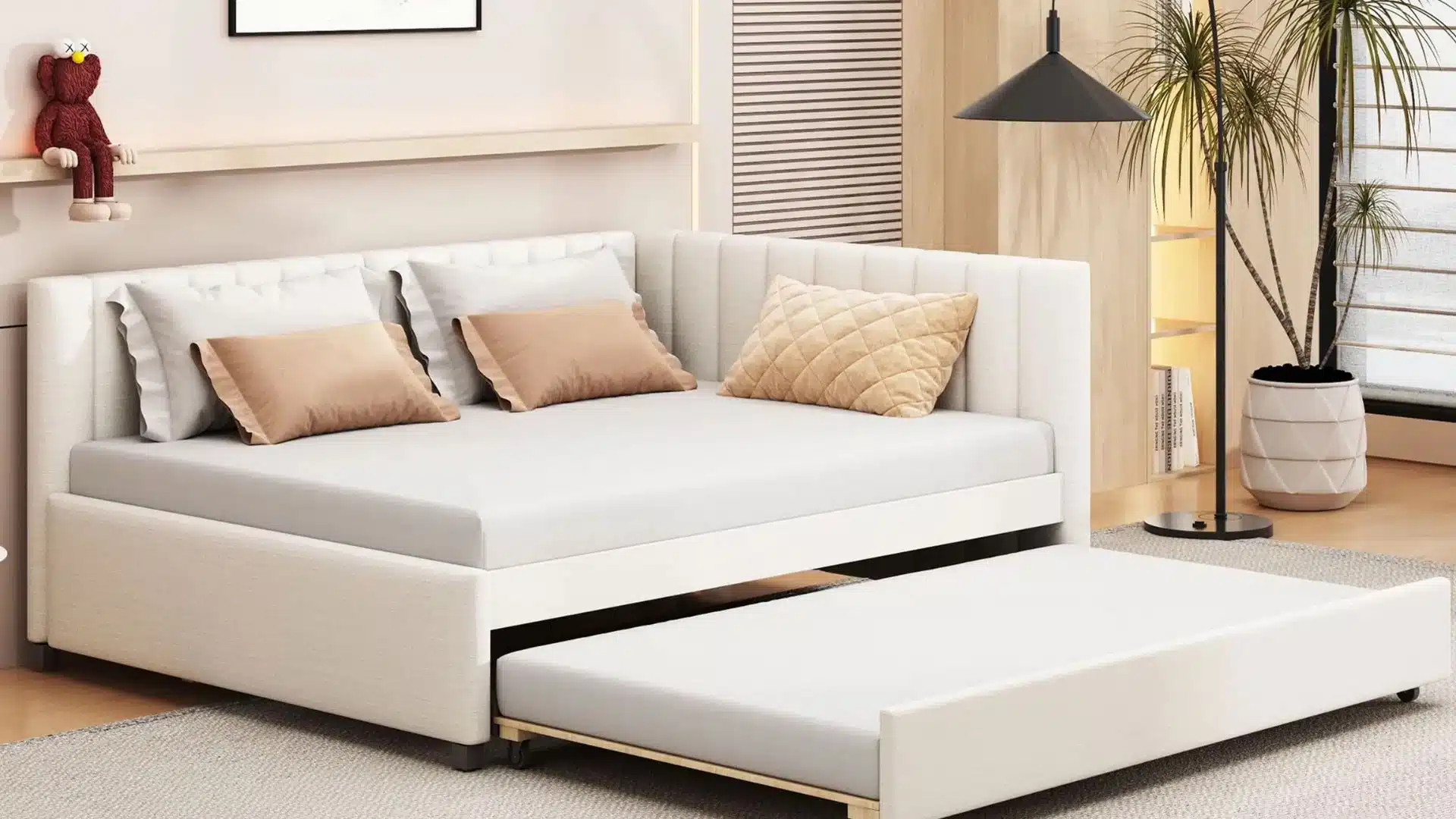
A bad night’s sleep is frustrating. And sometimes, the mattress is the problem.
Most people focus on firmness or material when buying a mattress. But thickness? It often gets skipped. That is a bigger mistake than most people realise.
Too thin, and the mattress may wear out faster, especially with regular adult use, though durability depends heavily on materials and construction.
Too thick, and it raises the bed so high that getting in feels like climbing. The right thickness affects comfort, support, and even how well the mattress fits the bed frame.
This mattress thickness guide covers everything needed to make the right call.
From understanding different thickness ranges to figuring out what works best for different body types and sleep positions, every answer is right here. No confusing terms. No fluff. Just clear, useful information.
Why Mattress Thickness Matters More Than You Think
Most people spend a lot of time choosing between memory foam and innerspring, or debating firmness levels, but mattress thickness often gets overlooked. That is a mistake.
The thickness of your mattress directly influences how well it supports your body, how long it lasts, and whether it fits your existing bed frame. A mattress that is too thin may compress under your weight over time, leaving you with inadequate spinal support and waking up sore.
On the other hand, a mattress that is excessively thick can make getting in and out of bed difficult, drive up the cost, and even cause fitted sheets to slip off.
Beyond comfort, thickness also affects your total bed height, which matters more than most people realise, especially for elderly sleepers, children, or anyone with mobility concerns.
In short, getting the thickness right is just as important as getting the material or firmness right.
Mattress Thickness Chart at a Glance
Mattress thickness ranges from 2 inches to over 16 inches. Here is a quick reference chart to help you understand where each profile sits and who it suits best.
| Thickness | Profile Type | Best For |
|---|---|---|
| 2 to 5 inches | Low Profile | Kids, bunk beds, stowaway beds |
| 5 to 8 inches | Slim Profile | Limited mobility, guest beds |
| 8 to 12 inches | Standard Profile | Most adults use it every day |
| 12 to 16 inches | Deep or Thick Profile | Heavy sleepers, side sleepers |
| 16+ inches | Extra Thick Profile | Luxury sleepers, couples |
Each profile serves a different purpose. Your ideal range depends on your body weight, sleep position, and the type of bed frame you are using.
Mattress Thickness Explained by Profile Type
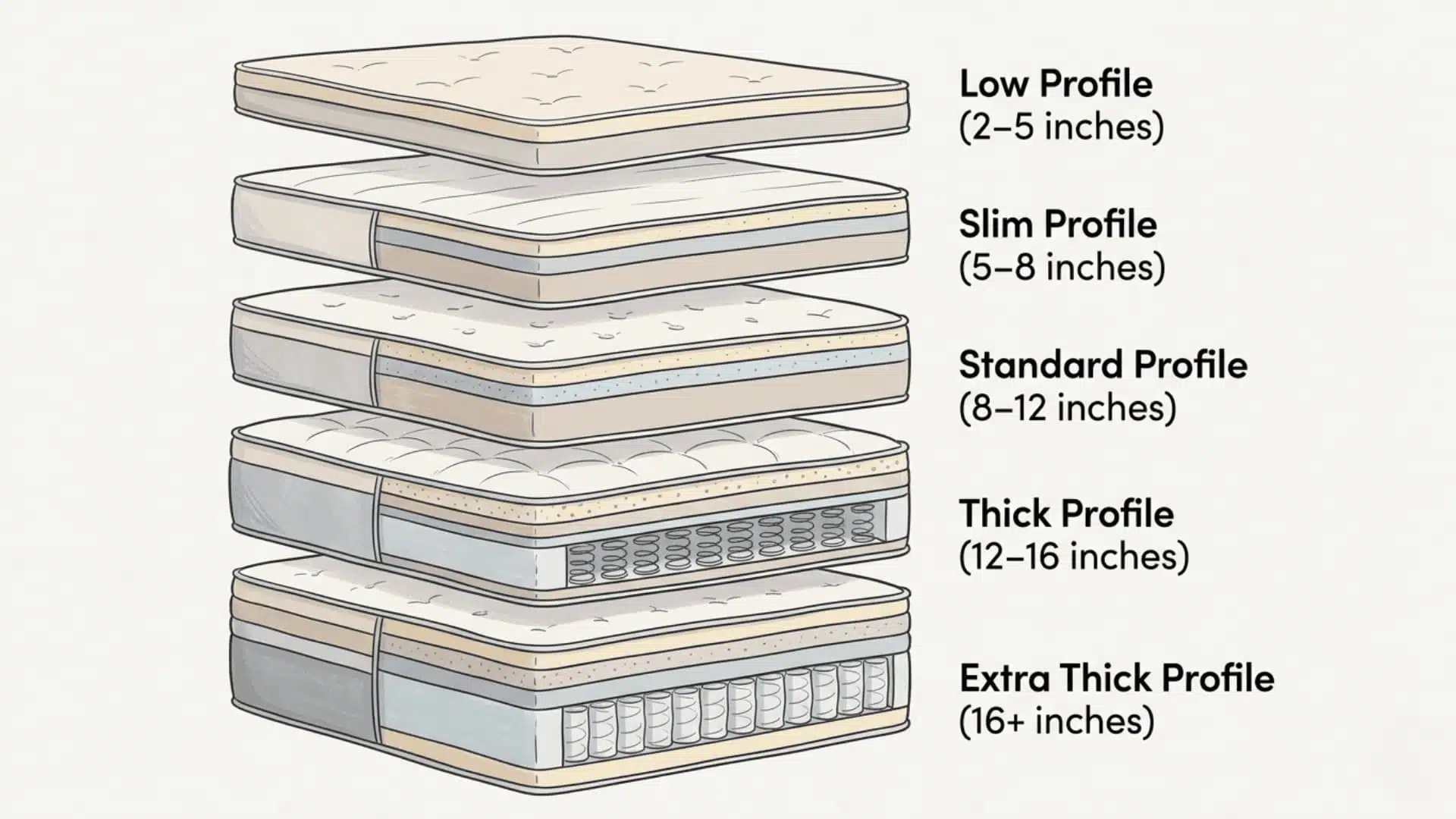
Understanding each thickness range in detail helps you move beyond the numbers and make a choice that genuinely suits your sleep needs and lifestyle.
1. Low Profile [2 to 5 Inches]
Low-profile mattresses are best suited for children, bunk beds, and stowaway setups where vertical space is a constraint. Because children weigh significantly less than adults, a 2- to 5-inch mattress provides adequate support without unnecessary bulk.
However, this range lacks the multi-layer construction required for adult primary sleepers to experience consistent comfort, pressure relief, and long-term durability.
Note: True low-profile mattresses (2–5 inches) are less commonly available for standard adult beds. Most shoppers will find suitable alternatives starting from 6 inches.
2. Slim Profile [5 to 8 Inches]
Slim-profile mattresses work well for guest rooms, temporary sleeping arrangements, or sleepers who prefer a lower bed height for easier movement in and out. They are also practical for individuals with limited mobility.
That said, without a well-designed internal foam layer, this range may fall short of delivering the consistent pressure relief and support that adult sleepers need nightly.
Shop here:
- NapQueen 8 Inch Bamboo Charcoal Memory Foam Mattress
- Zinus 8 Inch Green Tea Essential Memory Foam Mattress
3. Standard Profile [8 to 12 Inches]
This is the most widely recommended range for adult sleepers and accounts for the majority of mattresses sold today. It provides enough room for a proper comfort layer, a transition layer, and a support core to coexist.
A 10-inch mattress, for example, typically delivers balanced pressure relief, spinal alignment, and durability, making it a reliable fit for most sleep positions and body types.
Shop here:
4. Deep or Thick Profile [12 to 16 Inches]
This range is ideal for heavier sleepers, side sleepers, and couples sharing a bed. The thicker comfort layer cushions pressure points around the hips and shoulders more effectively and resists compression over time. It also accommodates two different body types well.
The trade-offs include a higher price point and the need for deep-pocket fitted sheets to properly cover the added mattress height.
Shop here:
5. Extra Thick Profile [16 Inches and Above]
Extra-thick mattresses deliver a plush, hotel-like sleeping experience with multiple comfort layers built on a solid support core. They are engineered for maximum cushioning and are often found in luxury or pillow-top models. However, they are significantly heavier and harder to maintain.
The increased bed height can also be a challenge for shorter individuals or elderly sleepers, making it harder to get in and out comfortably.
Shop here:
Mattress Layers That Determine Its Thickness
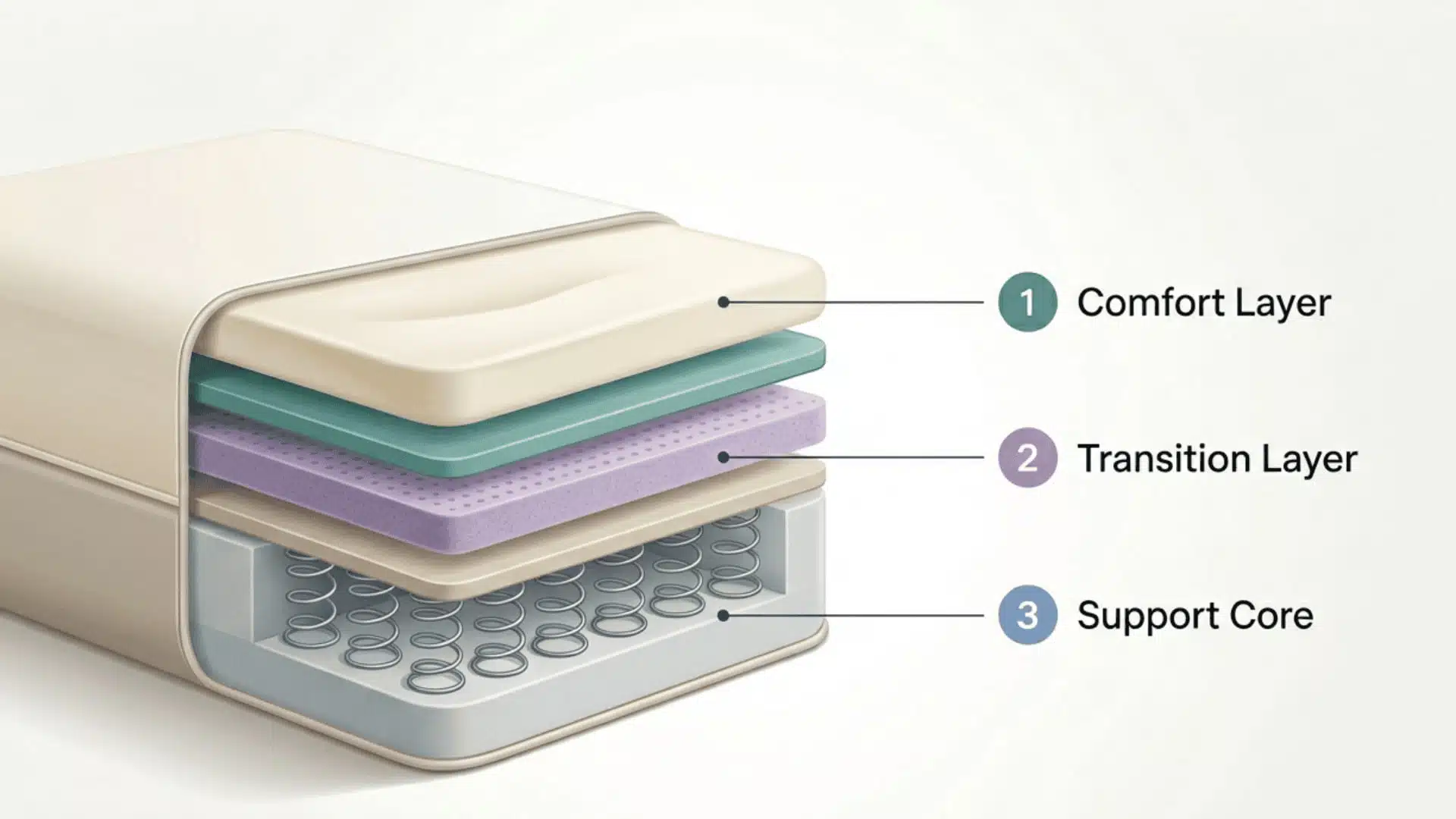
Mattress thickness is the combined height of multiple internal layers. Each layer serves a distinct purpose in how the mattress feels, supports, and lasts.
- Comfort Layer: The topmost layer is made from memory foam, latex, or wool. Usually 2 to 3 inches thick, it handles pressure relief and cushioning.
- Transition Layer: A middle layer found in higher-quality mattresses. It bridges comfort and support, adding 1 to 2 inches while improving motion isolation and responsiveness.
- Support Layer: The base foundation, typically 4 to 6 inches of high-density foam or coils. It maintains spinal alignment and largely determines a mattress’s overall durability.
Understanding these layers helps you evaluate whether a mattress at any given thickness is genuinely well-constructed or simply padded to appear thicker than it actually is.
Thickness Is Not the Same as Quality
A thicker mattress is not always a better mattress. While extra thickness can improve cushioning and support, it only works when the materials inside are high-quality.
A well-built 10-inch mattress with high-density foam or a durable coil system can easily outperform a thicker 14-inch mattress made with lower-grade materials. What truly determines comfort and longevity is how the mattress is constructed, not just its height.
The combination of a pressure-relieving comfort layer, a supportive transition layer, and a strong base core plays a bigger role in performance than thickness alone.
In many cases, added height simply means extra padding rather than better support.
That is why thickness should be viewed as just one factor in your decision.
When comparing options, focus on material quality, density, and overall construction rather than assuming that a thicker mattress will automatically last longer or feel better.
Choosing the Right Mattress
The right mattress thickness is rarely a one-size-fits-all answer. Your sleep position, body weight, bed frame, and personal circumstances all point to different ideal ranges.
1. Sleeping Position
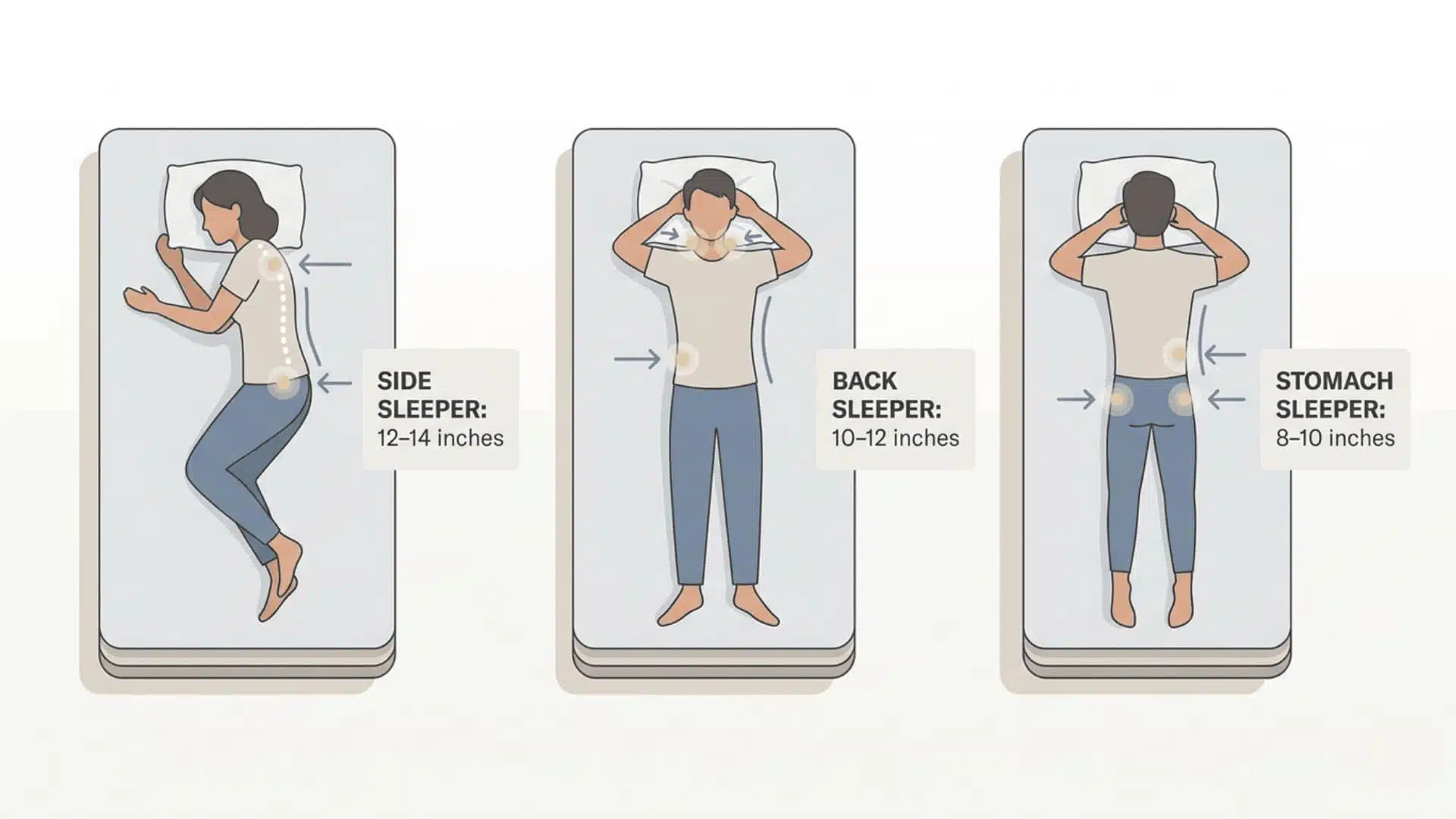
Your sleep position determines how much cushioning and support your body needs. Side sleepers often benefit from thicker mattresses (12 inches or more), as they provide better cushioning for pressure points like the hips and shoulders.
However, firmness and pressure relief are more important than thickness alone.
Back sleepers generally do well with medium thickness (around 10 to 12 inches), provided the mattress maintains proper spinal support.
Stomach sleepers are better suited to 8 to 10 inches, as excessive thickness can cause the midsection to sink and strain the lower back.
2. Body Weight
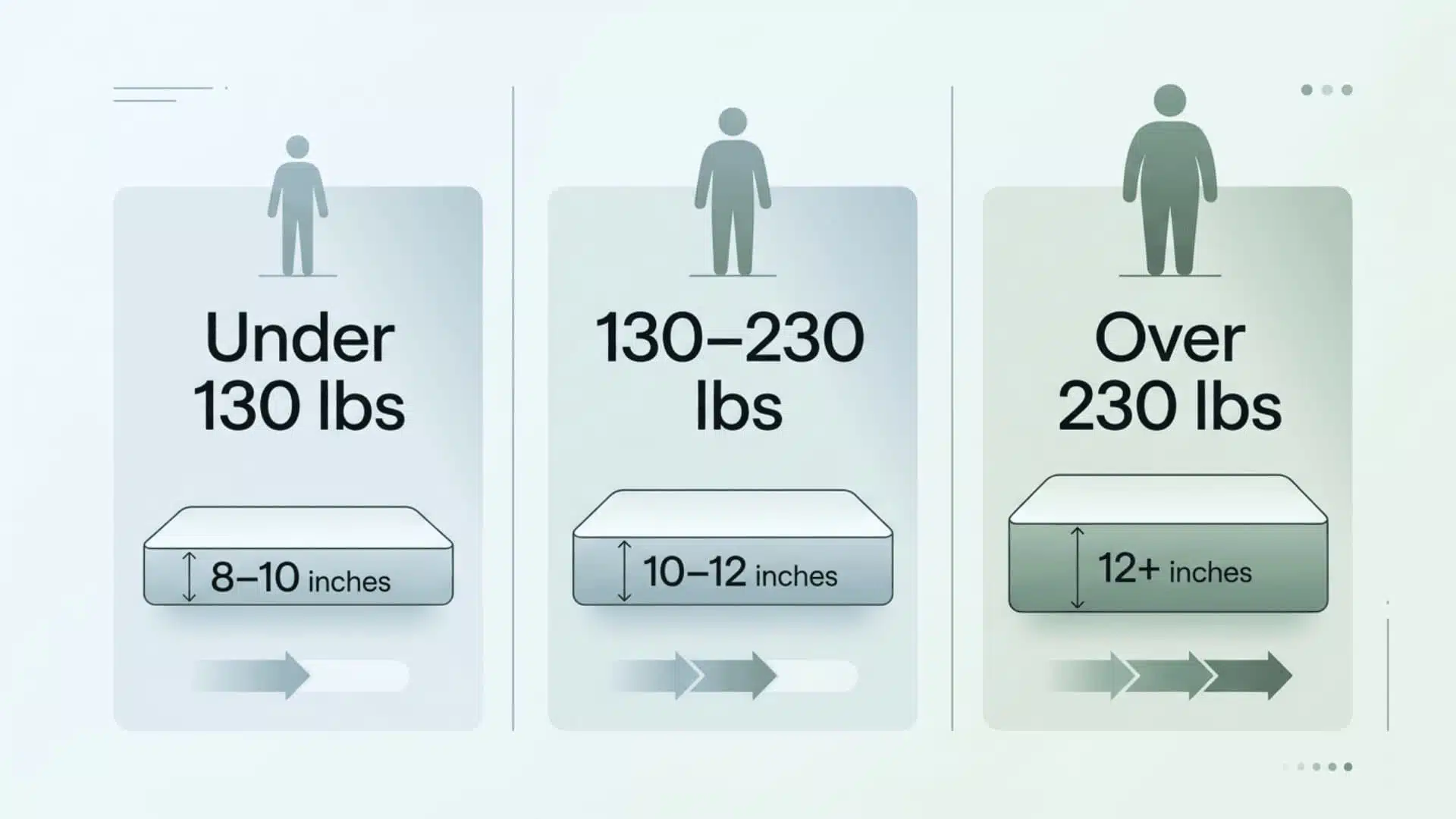
Body weight is one of the most reliable indicators of the thickness you need. Lighter sleepers under 130 lbs generally do well with 8 to 10 inches, as they do not exert enough pressure to compress thinner layers.
Average-weight sleepers between 130 and 230 lbs are best served by the 10- to 12-inch standard range. Heavier sleepers over 230 lbs should consider a mattress 12 inches or more to prevent premature compression and maintain consistent support.
3. Bed Frame Compatibility
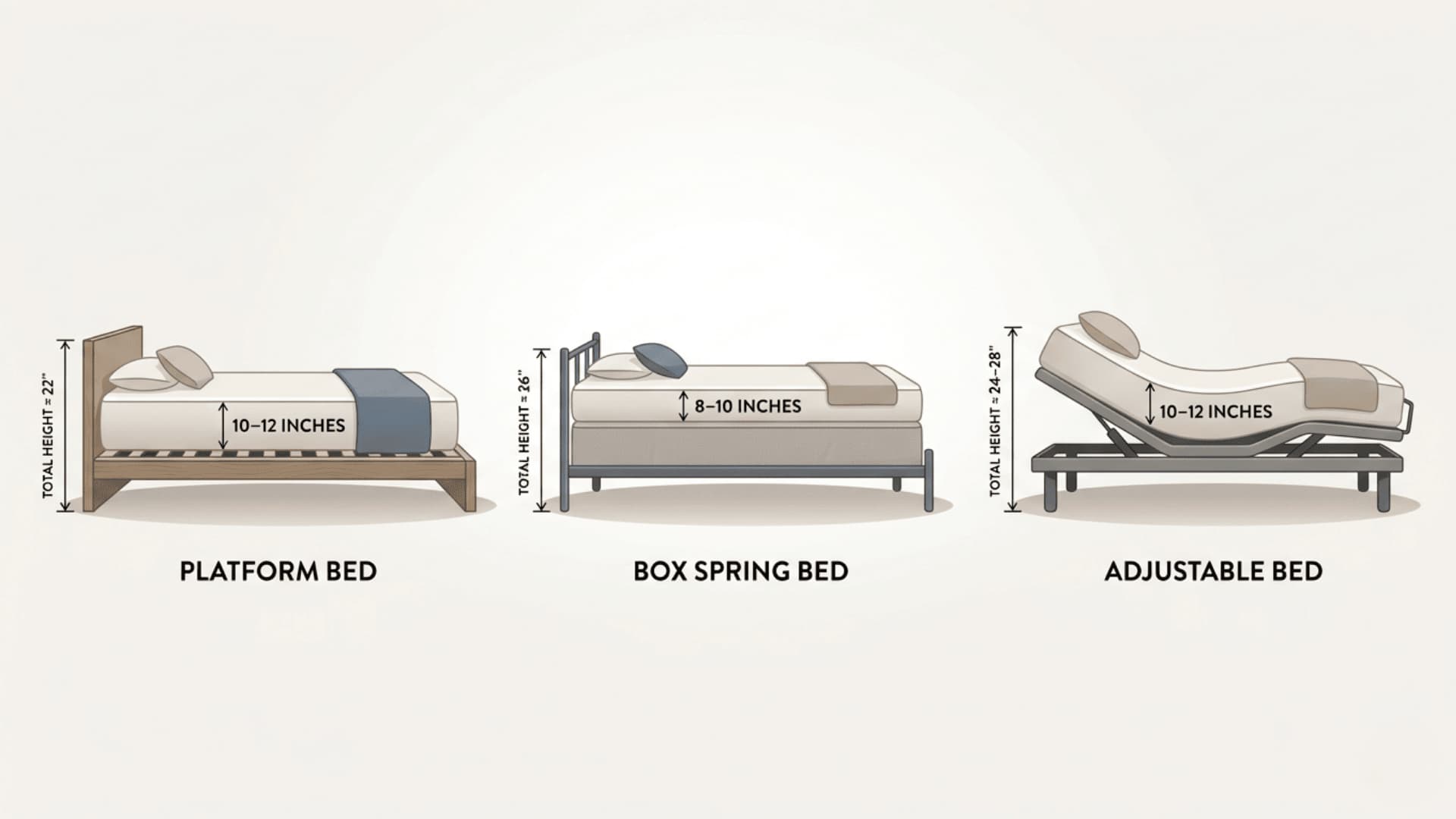
Mattress thickness affects your total bed height, which must work with your existing frame. Platform beds sit low to the ground, so a thicker mattress of 10 to 12 inches helps bring the sleeping surface to a comfortable height.
Box spring setups already add significant height, making a slimmer mattress a more practical choice. For adjustable bases, compatibility depends on mattress design.
Foam mattresses are typically more flexible, while hybrids vary. Always check manufacturer guidelines to ensure proper performance.
4. Specific User Needs
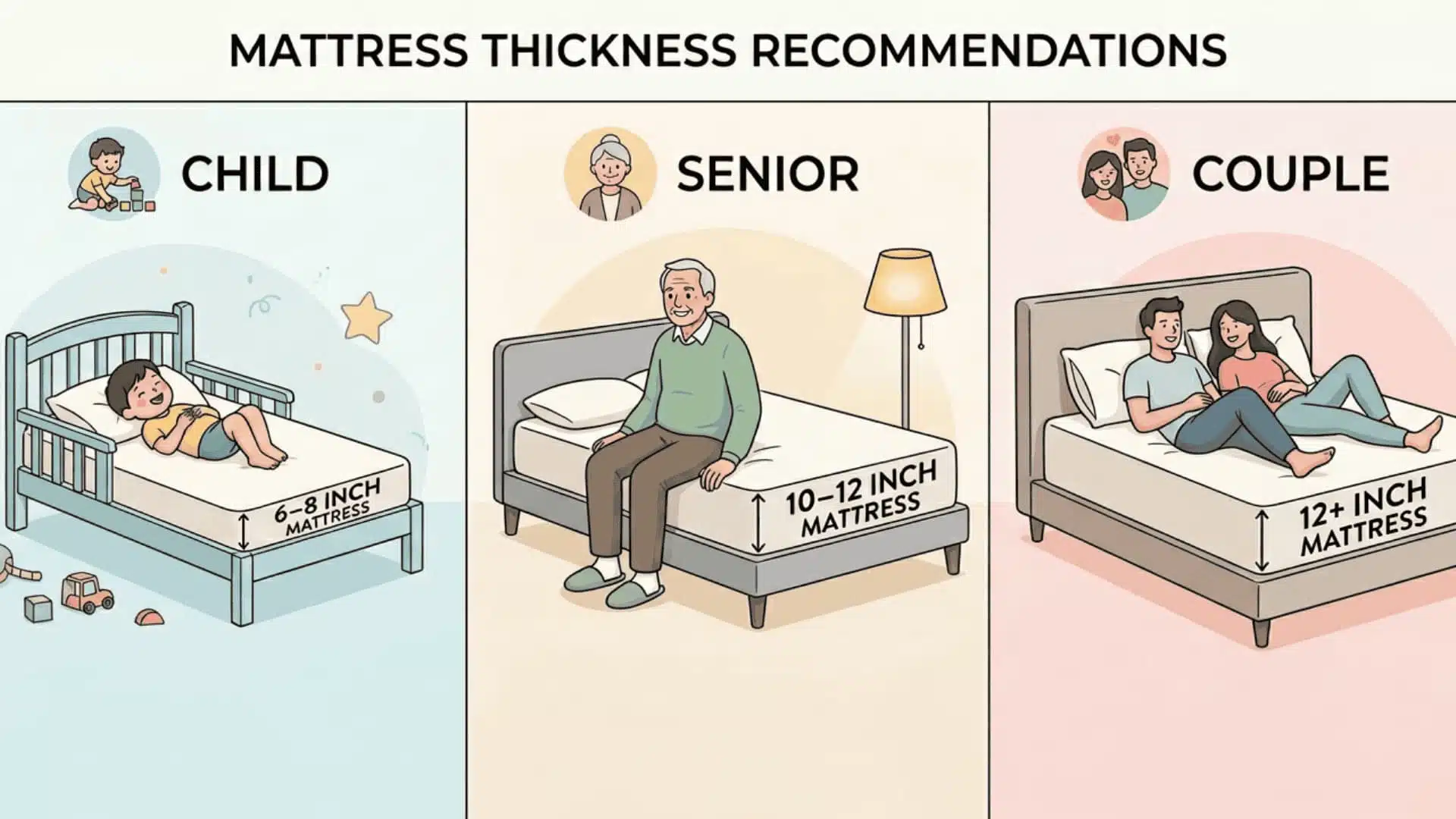
Different users have different priorities beyond sleep position and weight. Children sleep best on low- to slim-profile mattresses between 6 and 8 inches, as their lighter frames do not require deep cushioning.
Seniors and individuals with mobility concerns benefit from a total bed height of around 25 inches, which usually means pairing a medium-height frame with a 10 to 12-inch mattress.
Couples sharing a bed often do best with 12 inches or more to accommodate two body types and reduce motion transfer.
Thick and Thin Mattress Compared
Before settling on a thickness, weigh the practical trade-offs of going thicker or thinner. Here is a side-by-side comparison to make that decision easier.
| Basis | Thick Mattress | Thin Mattress |
|---|---|---|
| Thickness Range | 12 inches and above | 8 inches and below |
| Pressure Relief | Superior cushioning for hips, shoulders, and back | Adequate for lighter sleepers only |
| Durability | Resists compression longer due to more layers | May wear out faster under regular adult use, depending on material quality |
| Cost | Higher price due to more materials | More budget-friendly and widely available |
| Bed Height | Raises total height, may need a lower frame | Keeps bed height manageable and accessible |
| Best For | Heavy sleepers, side sleepers, and couples | Kids, guest rooms, and travel use |
Neither option is universally better. Match your choice to your body type, sleep habits, and bed setup to get the most out of whichever thickness you go with.
How Mattress Thickness Changes Over Time
A mattress does not stay the same thickness throughout its life. Over months and years of regular use, the comfort layers at the top begin to compress and lose their original shape, a process commonly known as sagging.
This is most noticeable in the areas that bear the most weight, typically around the hips and shoulders. A mattress that starts at 12 inches may perform more like a 10-inch mattress within a few years if the comfort layer breaks down.
Thinner mattresses tend to show this wear faster, as they have fewer layers to absorb and distribute sustained pressure. Higher-density foam and quality coil systems slow this process down considerably.
Knowing this, it is worth investing in a mattress with a durable support core from the start rather than compensating with a topper later.
Conclusion
Mattress thickness is not a detail to figure out after the purchase. It shapes how well you sleep, how long your mattress lasts, and how well it works with your body and bed setup.
The right thickness depends on a combination of factors, including your sleep position, body weight, bed frame height, and how the mattress is built on the inside.
The right mattress thickness feels good from the first night and holds up that way for years to come.
If you are shopping for the first time or replacing an old mattress, use this as your starting point.
Still unsure which thickness is right for you? Drop your sleep position and body type in the comments, and we will help you narrow it down.
Frequently Asked Questions
Does Mattress Thickness Affect Back Pain?
Yes, but support and firmness matter more than thickness. A well-supported spine reduces back pain regardless of mattress height.
Is a Thicker Mattress Always More Comfortable?
Not always. Comfort depends on materials and firmness, not just thickness. A poorly built thick mattress can still feel uncomfortable.
How Do I Choose Mattress Thickness for My Bed Frame?
Consider total bed height. Combine the mattress and frame heights to ensure easy access and a proper fit with sheets and the headboard.