

A bad mattress does not just ruin one night. It ruins every morning that follows. If the words euro top and pillow top have been popping up during your mattress search and leaving you more confused than before, you are not alone.
Most people mix them up. They look alike. They feel similar at first. And most stores do not explain the difference. But the euro top vs. pillow top distinction is not just a label.
It is a real difference in how the mattress is built, how it holds up over time, and which type of sleeper it actually suits. Soft or supportive. Plush or structured. Short-term comfort or long-term durability.
By the end, you will know exactly which one fits your sleep style and your budget.
What Is a Pillow Top Mattress?
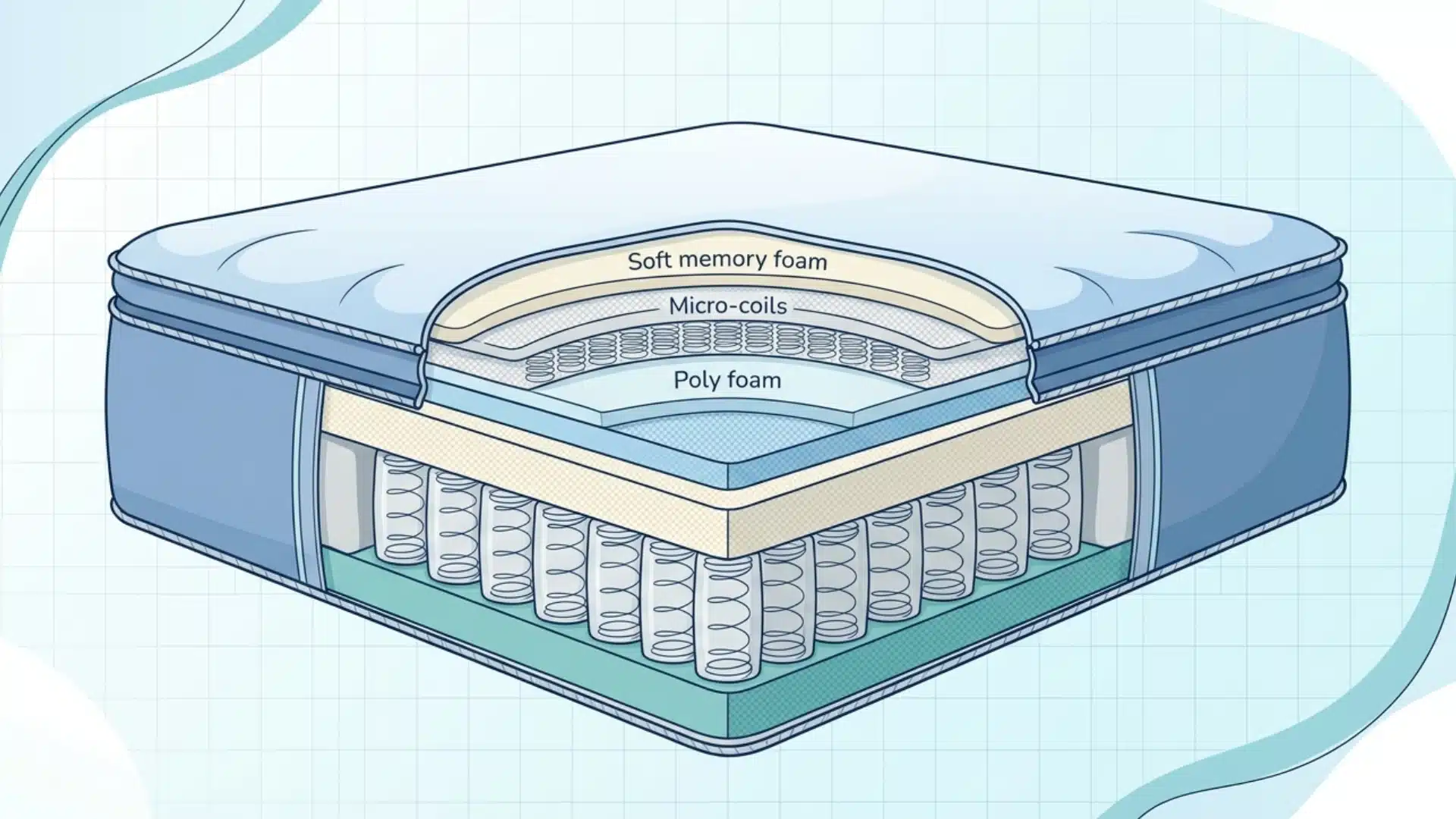
A pillow-top mattress has an extra layer of soft padding sewn right onto the top of the mattress cover. This layer sits above the main mattress body. It creates a visible, puffy look around the top edges.
You can usually spot it by the small gap or “ledge” where the top layer meets the rest of the mattress. The padding is typically 1 to 4 inches thick. It can be made from memory foam, polyfoam, fiberfill, or latex.
Most pillow-top mattresses sit on an innerspring or hybrid base. The feel is soft and cloud-like. Your body sinks in slightly across the whole surface. It works well for people who prefer a plush, cushioned sleep surface.
Advantages and Disadvantages of a Pillow Top Mattress
A pillow top can feel soft and welcoming, but that comfort comes with trade-offs. These pros and cons make it easier to see where it works best.
| Pros of Pillow Top | Cons of Pillow Top |
|---|---|
| Soft, plush surface that feels comfortable from the first night | The top layer can sag or develop body impressions over time |
| Good pressure relief for side sleepers with hip and shoulder pain | Shorter lifespan compared to Euro top mattresses |
| Widely available across many brands and price ranges | Weaker edge support due to the soft, sewn-on padding |
| More affordable than most Euro top options | Not ideal for heavier sleepers who need firmer, lasting support |
| Provides a cloud-like feel without needing a separate mattress topper | Can feel uneven after regular use in the same sleep spot |
These points show why pillow tops suit some sleepers better than others. Next comes the Euro top, which offers a different mix of comfort, support, and lifespan.
What Is a Euro Top Mattress?
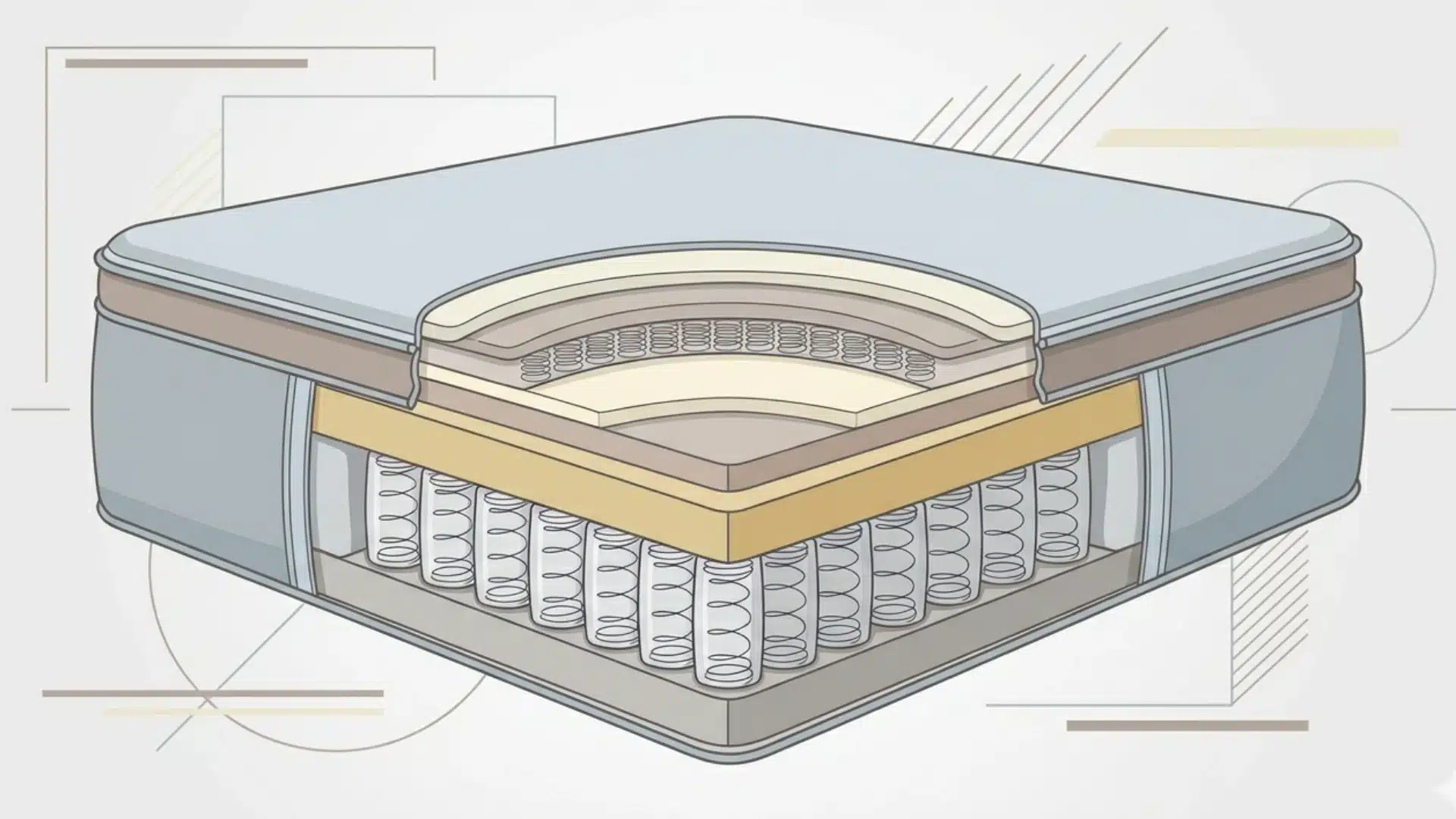
A Euro top mattress is a type of pillow top. But it has one key difference in its construction. The extra padding layer is stitched beneath the mattress cover, not on top of it.
This gives the mattress a flat, even look. There is no visible gap or puffy ledge along the edges. The surface looks clean and uniform from all sides. Euro tops are usually filled with dense foam, fiberfill, or wool.
These materials tend to be firmer and more supportive than those in a standard pillow top. You will most often see Euro tops on premium innerspring, hybrid, and luxury mattresses.
The feel is still soft and comfortable, but with a bit more structure and support underneath. This type of support can help maintain proper spinal alignment, which is important when choosing the best mattress for back pain.
Advantages and Disadvantages of a Euro Top Mattress
Like any mattress type, a euro top comes with clear strengths and a few trade-offs. Knowing both sides helps you decide if it is worth the investment
| Pros of Euro Top | Cons of Euro Top |
|---|---|
| Holds shape better over time | Usually costs more |
| Less likely to sag or form body impressions | May feel too firm for some sleepers |
| Better edge support | Offers less pressure relief for side sleepers |
| Good motion isolation for couples | Fewer budget-friendly options |
| Works well for back, stomach, and combination sleepers | Flat look may feel less cozy |
With both mattress types defined, the real comparison can begin. The next section breaks down how they differ across construction, feel, durability, and more.
Key Differences Between Euro Top and Pillow Top
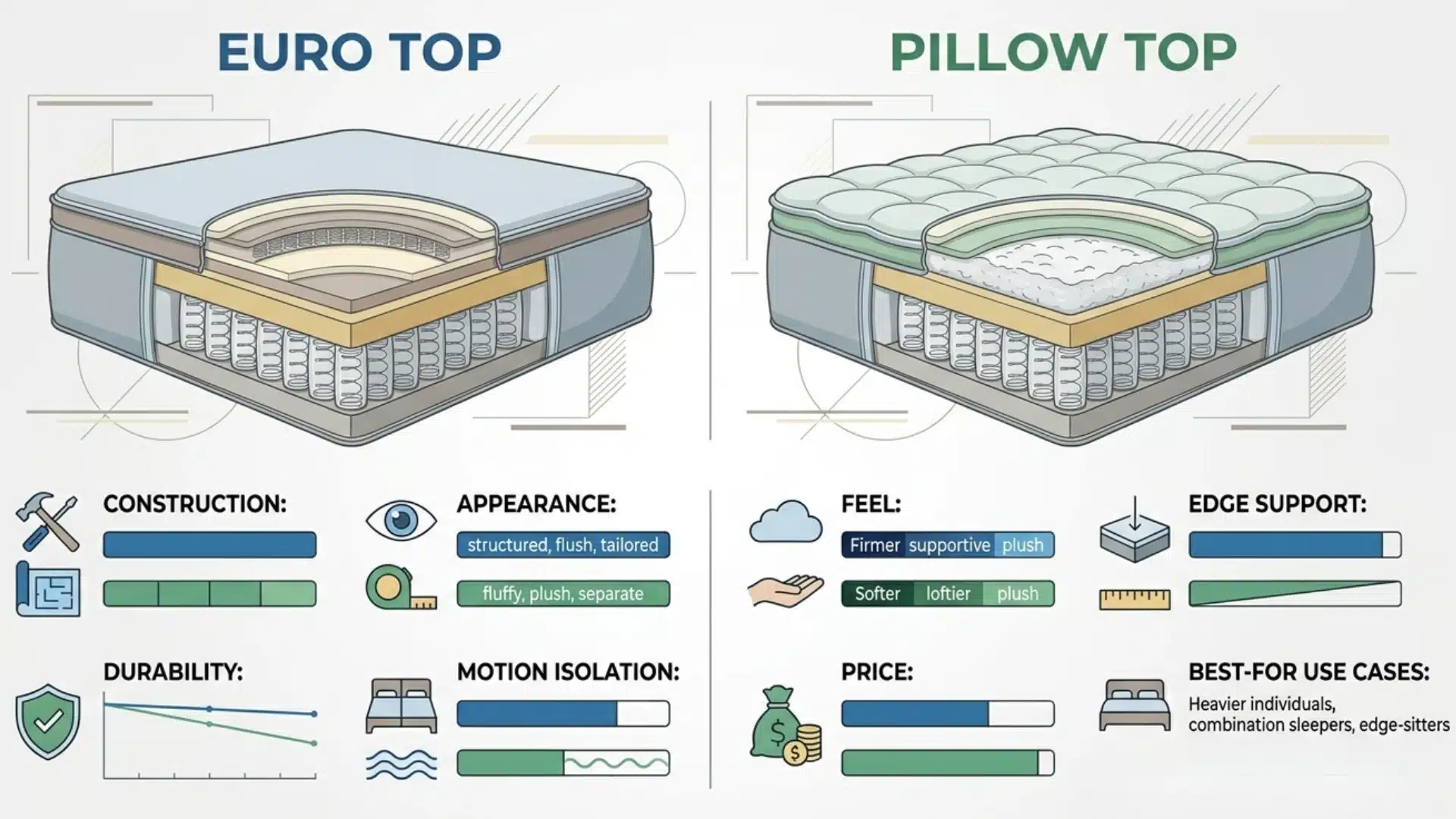
Both mattress types add extra cushioning for a softer sleep. But they differ in build, feel, and long-term performance. Your sleep habits, body type, and even your bed size play a role in choosing the right mattress.
1. Construction
A pillow top has its padding sewn to the mattress cover. You can see and feel the separation. A Euro top has its padding stitched beneath the cover.
The layers are tightly integrated. This makes the Euro top feel more like one unified mattress rather than two separate parts stacked together.
2. Appearance
Pillow tops have a rounded, puffy look. The top layer extends visibly beyond the mattress edges, creating a small gap or indent.
Euro tops look flat and even on all sides. There is no visible ledge or separation. If you prefer a clean, structured look on your bed, a Euro top will suit that better.
3. Feel
Pillow tops feel soft and sink-in from the first touch. They give a plush, cloud-like comfort across the whole surface. Euro tops also feel soft, but with a firmer base.
The denser materials provide a balance of cushioning and support. You get comfort without feeling like you are sinking too far into the mattress. This balance often comes down to plush vs firm mattress choices, which can change how a mattress feels overall.
4. Durability
Pillow tops tend to wear out faster. The top layer can compress over time, leading to visible body impressions or sagging in the spots where you sleep most.
Euro tops hold their shape longer. The padding is secured beneath the cover and uses denser materials. This helps the mattress stay more even and supportive over the years.
5. Motion Isolation
Both types absorb some motion, but neither is the best choice for heavy motion isolation on its own. Euro tops perform slightly better here.
The denser, firmer padding reduces movement transfer a bit more. If you share a bed and light movement wakes you up, a Euro top may help you sleep more quietly.
6. Edge Support
Pillow tops often have weaker edges. The soft, sewn-on layer does not extend fully to the sides, which can make the edges feel compressed or unstable.
Euro tops offer better edge support. The flush, even construction keeps the surface more consistent from center to edge. This makes it easier to sit or sleep near the sides of the bed.
7. Price
Pillow tops are generally more affordable. They are widely available across budget and mid-range mattresses. Euro tops tend to cost more.
They use denser materials and are more common in premium or luxury mattress lines. The higher price usually reflects better build quality and longer durability over time.
Performance differences only tell part of the story. The right mattress top also depends on how you sleep, and that is exactly what we cover next.
Which Mattress Type Is Best for Your Sleep Style?
Your sleep position affects how much cushioning and support you need. Here is how each mattress type fits different sleepers.
| Sleeper Type | Better Choice | Why It Fits Better |
|---|---|---|
| Side Sleepers | Pillow Top | The softer padding cushions the shoulders and hips, which can help reduce pressure points. |
| Back Sleepers | Euro Top | The firmer underlying support helps keep the spine aligned without letting the hips sink too deeply. |
| Stomach Sleepers | Euro Top | It offers enough firmness to keep the midsection from sinking too far into the mattress. |
| Combination Sleepers | Euro Top | It provides more balanced support across different sleep positions throughout the night. |
| Couples | Euro Top | Denser materials can reduce motion transfer and offer more stable edge-to-edge support. |
| Heavier Sleepers | Euro Top | The denser construction tends to resist compression better and maintain support over time. |
Matching your sleep position is one piece of the decision. The next section helps narrow it down further based on your personal needs and preferences.
Which Mattress Top Is Right for You?
Choosing between a euro top and a pillow top does not have to be complicated. Your sleep habits, body type, and budget are all you need to decide.
Choose a Pillow Top If:
- You want a softer, more cushioned sleep surface
- You prefer a deeper sink-in feel
- You want a lower upfront price
- You care more about plush comfort than long-term shape retention
- You do not mind replacing your mattress sooner if needed
Choose a Euro Top If:
- You want a more balanced mix of softness and support
- You want a mattress that keeps its shape longer
- You care about stronger edge support
- You share the bed and want less movement across the surface
- You are willing to pay more for longer-lasting comfort
You now have everything you need to make a confident call. The final section ties it all together so you can move forward with the right choice.
The Bottom Line
Choosing between a euro top vs pillow top comes down to a few simple things. A pillow top gives soft, plush comfort at a lower price. It works well for side sleepers and lighter sleepers.
A Euro top offers firmer support, better durability, and holds its shape longer. It suits back sleepers, heavier sleepers, and couples.
Neither is perfect for everyone. The right choice depends on sleep position, body weight, budget, and how long the mattress needs to last.
Still unsure which one feels right? Drop a question in the comments below. And if this breakdown helped, bookmark the page for the next time a mattress decision comes around.
Frequently Asked Questions
Are Eurotops Good for Side Sleepers?
Yes, Euro top mattresses can work well for side sleepers, but it depends on firmness. A softer Euro top can cushion the shoulders and hips while still giving support.
How Long Do Eurotop Mattresses Last?
Euro top mattresses usually last around 8 to 10 years. Their padding is built into the mattress, so it does not shift or wear out as quickly. This helps them keep their shape and support for a longer time.
Are Euro Top Mattresses Good For Your Back?
Yes, Euro top mattresses are generally good for your back. They provide a mix of comfort and support, which helps keep the spine aligned. This can reduce strain on the lower back, especially for back and combination sleepers.