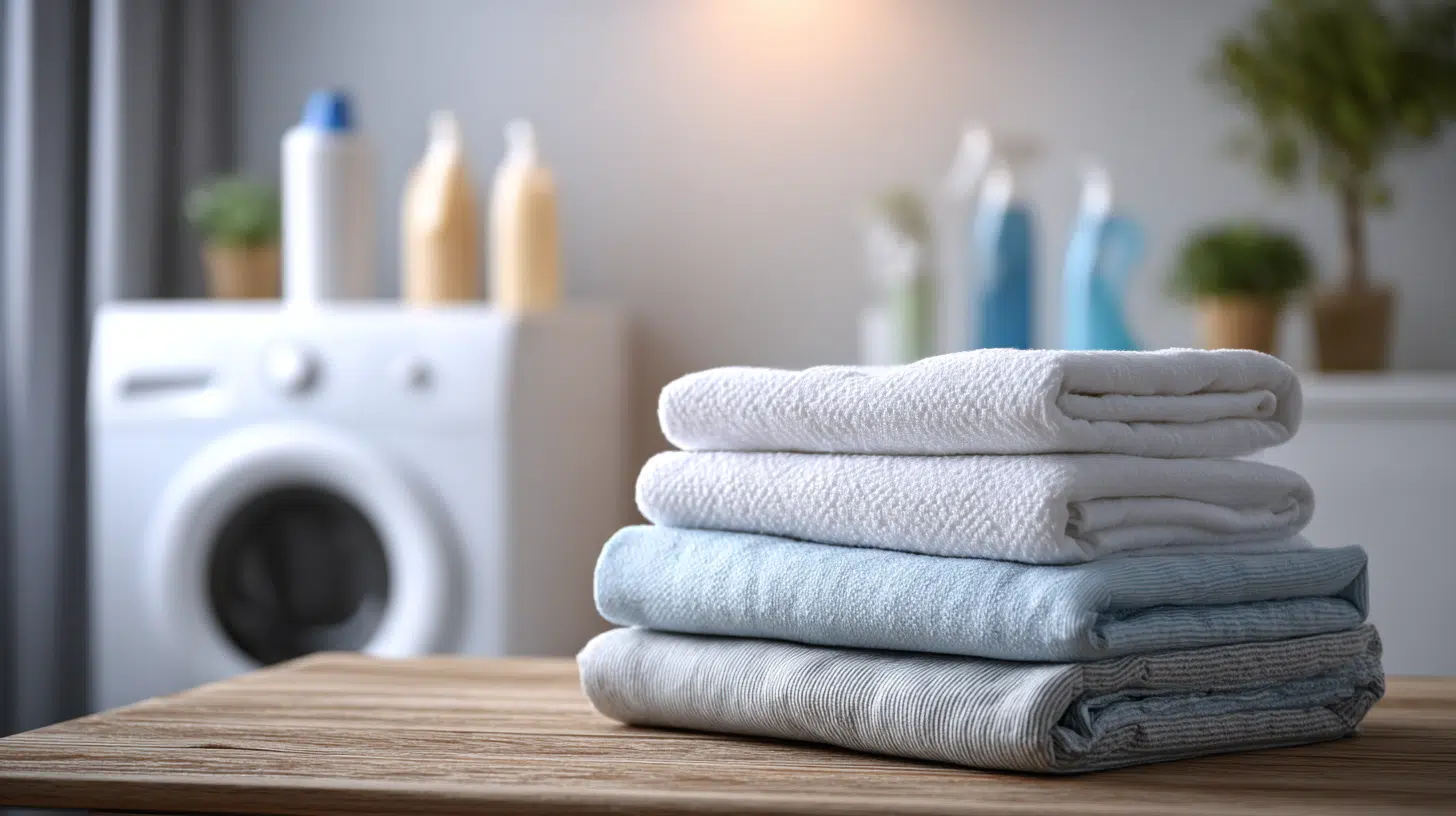


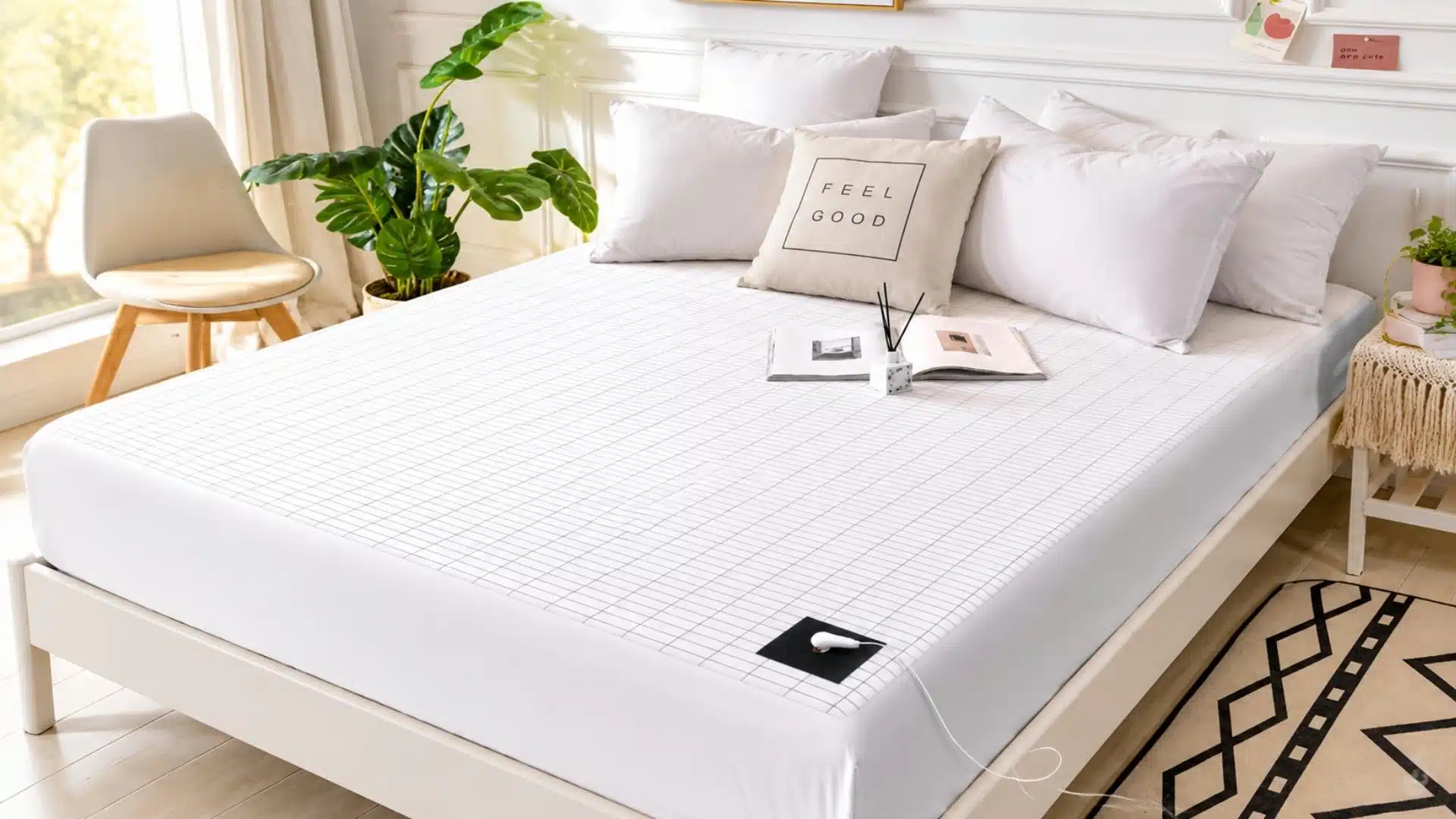

Shopping for new bed sheets can feel overwhelming with so many options available. One of the biggest decisions you’ll face is choosing between sateen versus percale sheets.
Both are made from cotton, but they feel completely different and work better for different types of sleepers.
Understanding the key differences between these two popular weave styles will help you pick the perfect sheets for your bedroom.
If you’re a hot sleeper who needs cooling bedding or someone who loves that silky-smooth luxury feel, we will break down everything you need to know.
By the end, you’ll know exactly which type of sheet will give you the best night’s sleep.
What is Cotton Percale?
Cotton percale is a type of fabric made using a simple weaving pattern called “one-over-one.”
This means each thread goes over one thread and under the next, creating a basic checkerboard pattern. When people say “cotton percale,” they’re referring to both the cotton material and the special weave style.
This weaving method gives the fabric some unique qualities that make it different from other cotton fabrics. Cotton percale has a crisp, clean feel that’s similar to a fresh dress shirt. It’s also lightweight, which makes it comfortable to sleep under.
The fabric has a matte finish instead of a shiny look, and it’s very breathable, allowing air to flow through easily.
What are Percale Sheets?

Percale sheets are bed linens made using the percale weave, usually from 100% cotton.
You’ll often find these sheets in fancy hotels because they give that crisp, fresh feeling that makes beds feel professionally made.
Percale sheets are perfect for people who sleep hot because the breathable weave helps keep you cool all night long. They’re also great if you love that “fresh sheet” feeling every time you get into bed.
The crisp texture stays consistent even after many washes. Because they’re so breathable and lightweight, percale sheets work especially well during summer months or if you live somewhere with a warm climate year-round.
What is Sateen?
Sateen is a different type of weave that creates a much smoother fabric than percale. Instead of the simple one-over-one pattern, sateen uses a “three-over-one” or “four-over-one” weave.
This means each thread goes over three or four threads before going under one. This special weaving style gives sateen its signature smooth, silky texture that feels luxurious against your skin. Sateen fabric also has a subtle shine that catches the light.
The fabric is heavier and warmer than percale, so it traps more heat while you sleep. Sateen sheets are also more wrinkle-resistant than percale. Many people confuse sateen with satin because they feel similar.
Key Differences of Sateen vs. Percale

When choosing between sateen and percale sheets, understanding their differences helps you pick the right option for your sleep style. While both are usually made from cotton, they feel completely different because of how they’re woven. The weaving pattern affects everything, from how it feels against your skin.
Material Characteristics
Both sateen and percale sheets are typically made from 100% cotton, but their weaving patterns make them totally different. Percale uses a simple one-over-one weave that creates a tighter, more breathable fabric. Sateen uses a three-over-one or four-over-one weave that makes a denser, smoother material.
Percale has a matte finish with no shine, while sateen has a subtle sheen that reflects light. Both can have similar thread counts, but sateen feels softer at lower thread counts because of its weave style.
Texture and Feel
Percale sheets feel crisp, cool, and lightweight against your skin. They’re similar to sleeping on a freshly ironed dress shirt – clean and structured. Sateen sheets feel silky, smooth, and drapey. They have a more luxurious feel and are warmer to the touch.
Your preference usually depends on whether you like that crisp, hotel-fresh feeling or prefer something smoother and cozier. Many people also choose based on the season or their personal comfort level when sleeping.
Pros and Cons of Sateen and Percale Sheets
Trying to decide between sateen and percale? Here’s a straightforward comparison that highlights what each type does best and where they fall short.
| PERCALE SHEETS | SATEEN SHEETS | |
|---|---|---|
| Pros | Crisp and breathable – keeps you cool all night | Silky-smooth and soft – luxurious feel from day one |
| Great for hot sleepers – perfect for warm weather | Warmer and cozier – ideal for cool sleepers | |
| Durable over time – lasts for years with proper care | More wrinkle-resistant – stays neat with minimal effort | |
| Cons | Wrinkles easily – may need ironing for a neat appearance | Less breathable – can trap heat during sleep |
| May feel rough initially – takes time to soften up | May pill with heavy use – fabric balls can form over time | |
| Can feel too cool in winter – not ideal for cold sleepers | Slightly heavier – can feel too warm for some people |
Your choice depends on whether you prioritize breathability and crispness (percale) or smoothness and warmth (sateen). Consider your sleep temperature and texture preferences when making your decision.
Which One Is Right for You?
Choosing the right sheets comes down to your sleep style and what feels best to you. Think about how you sleep and what kind of feel you like when you get into bed.
Choose Percale if:
- You sleep hot and need cooling sheets
- You prefer crisp, lightweight bedding
- You live in a warm or humid climate
- You like that fresh “hotel bed” feeling
- You don’t mind ironing occasionally
Choose Sateen if:
- You want ultra-soft, smooth sheets
- You tend to sleep cold or live somewhere cool
- You don’t want to deal with wrinkles
- You prefer a more luxurious, silky feel
- You like heavier, cozier bedding
Remember, there’s no wrong choice here. Both percale and sateen make great sheets when you pick the one that matches how you like to sleep. Consider your climate, sleep temperature, and texture preferences to make the best decision for your bedroom.
That’s a Wrap
Now you know the main differences in the sateen versus percale debate and can make a smart choice for your bedroom.
Percale offers crisp, breathable comfort that’s perfect for hot sleepers, while sateen provides silky smoothness and warmth for those who prefer a more luxurious feel.
Remember to think about your sleep temperature, climate, and texture preferences when making your final decision. Both options make excellent sheets when matched to the right sleeper.
Have you tried either sateen or percale sheets before? Share your experience in the comments below and let us know which type you prefer and why!