





Have you ever wondered if it’s okay to place your mattress directly on the floor?
The short answer is: yes, you can, but it’s not always the best idea without a little extra protection.
While sleeping with your mattress on the floor can be cozy, minimalist, and cost-friendly, it also comes with challenges like poor airflow, moisture buildup, and even potential warranty issues.
The good news? You don’t need to invest in a bulky bed frame to solve these problems.
By knowing what to put under the mattress on the floor, you can improve comfort, support, and hygiene, making your floor-level sleep setup healthier and more durable.
Let’s walk through exactly why you need a layer beneath your mattress, and which options work best.
Why Not Put a Mattress on the Floor?
Placing your mattress on the floor may seem easy, but it can cause problems for your comfort, health, and mattress lifespan:
- Poor ventilation: Trapped moisture can lead to mold, mildew, and allergy issues.
- More allergens: Dust, dirt, and pet hair collect faster at floor level.
- Insect exposure: Being close to the ground increases the chance of bedbugs, ants, or other pests.
- Warranty risks: Some brands void coverage if the mattress isn’t on a proper base.
Without a protective layer, your mattress can wear out faster, become less hygienic, and lose warranty protection.
Best Materials to Use Beneath a Mattress on the Floor
The right base can protect your mattress, improve airflow, and boost comfort. Here are four of the best options:
1. Plywood or Wooden Boards

This simple, budget-friendly option provides firm support, prevents sagging, and slightly improves airflow for better mattress durability.
| Feature | Details |
|---|---|
| Benefits | Firm support prevents sagging, slightly elevates the mattress for ventilation |
| Pros | Affordable, easy to size, widely available |
| Cons | Hard surface, best paired with a pad or topper |
| Best For | Budget-friendly, simple structural support |
Pro Tip: Sand plywood edges and add a breathable pad to prevent snags and increase comfort.
2. Bunkie Board
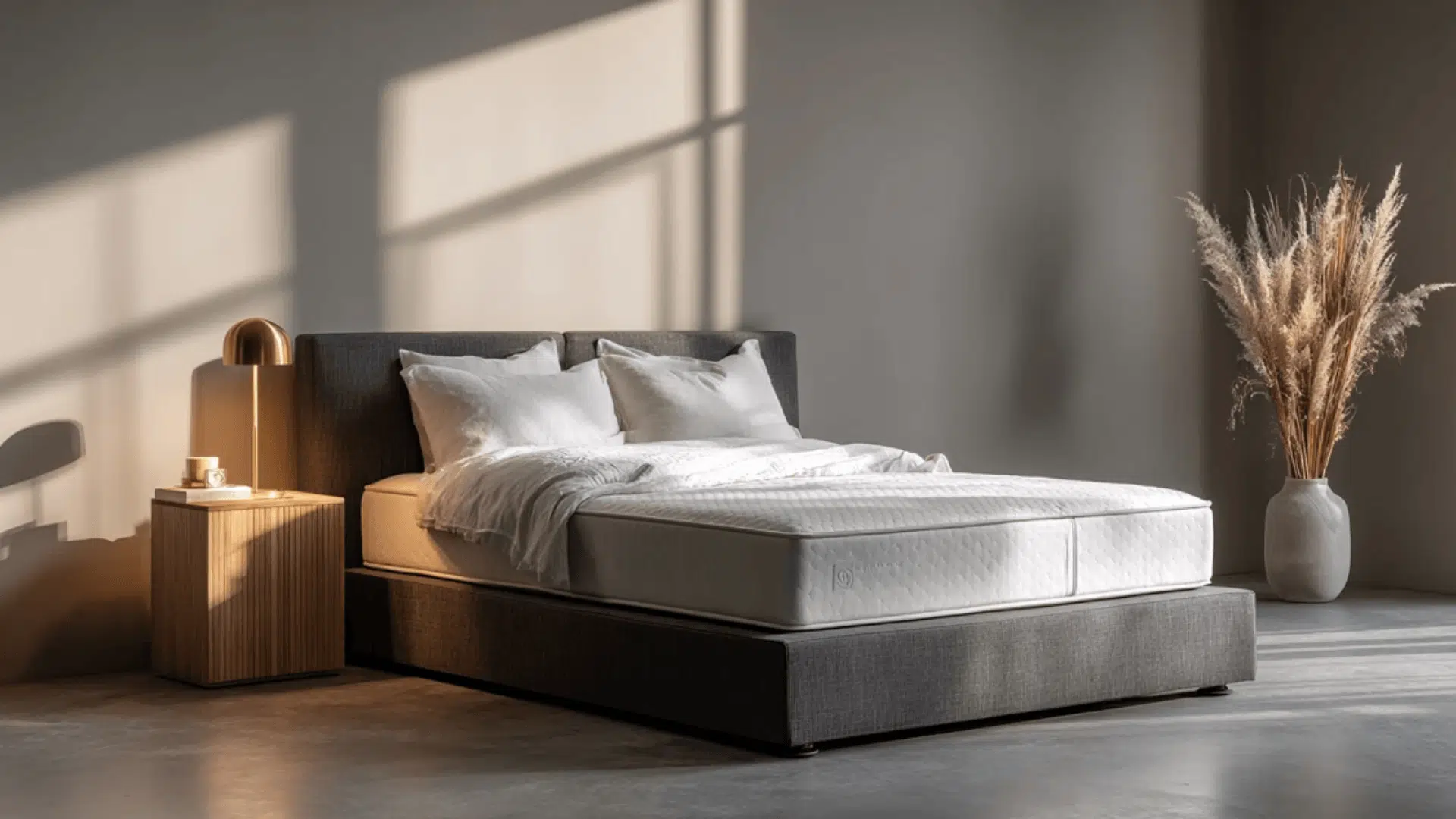
Low-profile board that evenly distributes weight, giving your mattress long-term stability without adding unnecessary height.
| Feature | Details |
|---|---|
| Benefits | Even weight distribution, strong support for foam/hybrid mattresses |
| Pros | Durable, professional finish, long-lasting |
| Cons | More expensive than plywood; heavier to move |
| Best For | Long-term, high-quality mattress support |
Pro Tip: Choose a fabric-covered bunkie board to reduce slipping and protect the mattress underside.
3. Tatami Mat

Traditional Japanese woven mat offering firm, breathable support while adding a natural, minimalist touch to your bedroom.
| Feature | Details |
|---|---|
| Benefits | Breathable, firm woven straw surface; reduces moisture buildup |
| Pros | Eco-friendly, stylish, and excellent ventilation |
| Cons | Firm feel may not suit everyone; higher cost |
| Best For | Humid climates, minimalist or Japanese-inspired rooms |
Pro Tip: Vacuum and sun-dry tatami mats regularly to maintain freshness and prevent odors.
4. Coconut Coir Mat

Natural, mold-resistant surface that keeps your mattress dry and well-ventilated, ideal for humid or coastal areas.
| Feature | Details |
|---|---|
| Benefits | Mold-resistant, highly breathable, natural material |
| Pros | Eco-friendly, durable, and great airflow |
| Cons | Can be firm; limited availability |
| Best For | Tropical/coastal areas and allergy-conscious sleepers |
Pro Tip: Use a fitted sheet or thin topper to add comfort without blocking airflow
Benefits of Adding a Layer Under a Floor Mattress
Adding something beneath your mattress isn’t just about looks; it can improve comfort, hygiene, and durability:
- Improved airflow: Prevents trapped moisture, mold, and musty odors.
- Better hygiene: Blocks dust, dirt, and allergens.
- Enhanced support: Keeps the mattress from sagging or shifting.
- Longer lifespan: Reduces wear from friction and moisture.
- Custom comfort: Adjusts firmness, warmth, or softness to your liking.
The right layer protects your mattress, supports your body, and creates a cleaner, healthier sleep space.
Types of Mattresses You Can Put on the Floor

Not every mattress works well directly on the floor; some handle the lack of airflow and support better than others.
Memory foam mattresses conform well to your body but need a moisture barrier to prevent mold. Latex mattresses are naturally resistant to dust mites and mold, making them an excellent floor option.
Hybrid mattresses provide balanced comfort and support, though you should check the manufacturer’s guidelines before floor use.
Innerspring mattresses can be placed on the floor, but may feel firmer without a base. Futons are lightweight, designed for floor sleeping, and easy to fold and store.
DIY vs. Store-Bought Options
When deciding what to put under a mattress on the floor, you can go for a DIY approach or choose ready-made products; each has its advantages.
DIY Options
Making your own base can be affordable and customizable, giving you flexibility while saving money.
- Plywood sheets: Cut to mattress size, sand edges, and place underneath for solid, low-cost support.
- Layered cardboard: Temporary, budget-friendly fix that works as a dust barrier.
- Homemade bunkie board: Assemble wood planks and fabric for a sturdy, personalized support system.
Store-Bought Options
Pre-made bases are designed for durability, style, and performance, often offering better ventilation and longevity.
- Bunkie boards: Professionally built for even support and extended mattress life.
- Roll-up slat bases: Lightweight, portable slats that improve airflow and prevent sagging.
- Tatami mats & coir bases: Eco-friendly, stylish, and excellent for breathability in humid climates.
DIY is great for tight budgets and customization, but store-bought bases usually provide superior durability, moisture control, and finish.
Expert Tips for Safe and Comfortable Floor Sleeping
Choosing the right layer is only half the work; proper care and upkeep will help your mattress last longer and stay comfortable.
- Lift and air out your mattress weekly to prevent moisture buildup and odors
- Clean the floor often to reduce dust, dirt, and allergens
- Use a dehumidifier in humid climates to keep the mattress dry
- Match the base to your sleep style for better comfort
- Rotate the mattress every 2–3 months to prevent uneven wear
- Check your mattress warranty before placing it on the floor
With regular maintenance and smart care habits, your floor mattress setup can remain fresh, supportive, and healthy for years.
Final Thoughts
Sleeping with your mattress on the floor can be a cozy, stylish, and space-saving choice when you set it up the right way.
Adding the right base, whether it’s plywood, a bunkie board, a tatami mat, or a moisture barrier, protects your mattress, improves airflow, and keeps your sleep environment fresh.
The goal is to find a balance between comfort, support, and breathability so your setup works for your body and your space.
If you’re ready to make floor sleeping work for you, start by choosing a foundation from the options above and give your mattress the healthy, long life it deserves. Your back and your sleep will thank you.
Frequently Asked Questions
Can I Put A Memory Foam Mattress Directly On The Floor?
Yes, but use a moisture barrier to prevent mold and ensure airflow for better durability and hygiene.
How Do I Prevent Mold Under A Floor Mattress?
Lift and air out the mattress weekly, use breathable materials underneath, and keep the room well-ventilated.
Which Mattress Type Is Best For Floor Sleeping?
Latex and memory foam work well, offering comfort and support while resisting dust mites and moisture buildup.
Does Putting A Mattress On The Floor Void The Warranty?
Some brands void warranties without proper support, so always check manufacturer guidelines before floor placement.